Tag: A Dose of God Today

  • Not Yours or Mine but HIS

    Not Yours or Mine but HIS

    Advertisements

    October 4, 2020 – 27th Sunday in Ordinary Time

    Click here for the readings (https://bible.usccb.org/bible/readings/100420.cfm)

    Homily

    For pasalubong, a madre once bought a box of munchkins from dunkin doughnut. While waiting for their flight, a family sat beside her at the pre-departure area. Giving in to her cravings for sweets, the sister took a munchkin from the box, and enjoyed eating it. Suddenly, from the same box the little boy also took and ate one. She did not mine at first, thinking the boy must be hungry. But then, the ate also took and ate one. This has upset the madre but she just ignored it and took one for herself. But then so did the nanay and tatay. This really irritated her that she glared at the family who was consuming the rest of the munchkins. But what really infuriated her was when the nanay took the last munchkin and offered it to her. Now indignant and so enraged, the sister stood up and changed her seat. But later on, when she opened her tote bag to get her purse, she saw, much to her embarrassment and shame that inside her bag was her own box of munchkins unopened. “Opps, hindi pala kanya yon.”

    Sometimes it is good to examine and ask ourselves: “What are the things that we claim as being rightly ours and yet are not truly ours?” This may not only be material possessions but could also be our status in society used to lord over others… titles used for personal advantages, prejudices and biases harbored towards others… or self-righteous behaviors that makes us feel morally better or more privilege or important than others. Sometimes, we are not different from that madre. We sometimes claim these privileges, which do not really belong to us, that we come to think and believe that they are only ours to own. Worse, we are sometimes greedy enough to claim that we are the rightful owners of the munchkins and it is only us to have and enjoy.

    Certainly Jesus would not tolerate and justify such behavior of distinctiveness, self-righteousness, greed and conceit. This is what Jesus criticizes here in our gospel today. 

    By telling us the parable of Ungrateful Tenants, he reminds us that God has already done His part for our salvation, and that we should also do our part. And our part is not to hoard, accumulate and own all the blessings He has given us but to produce its fruits and share it with others. Here, Jesus strongly condemned the Pharisees and scribes of his time and warns us of our tendency to be so pre-occupied with honor, recognition, privileges, titles, and social status – thinking and claiming that we are greater compared to others, and much worse, even resorting to greed, fraud, and murder, (pangdaraya, kaswapangan at pagpatay) in order to protect and maintain such claim.

    For Jesus, the Kingdom of God is wider than our human standards of social status and privileges. He reminds us today that we are not the rightful owners but mere tenants, sharers, benefactors or stewards of God’s graces. We cannot exclusively claim ownership and privilege for what we have, because everything we have is a gift from God.  For Him, God’s Kingdom is more like a big farm where all of us participates and shares in the production and fruits of the bounty, where each of us has something to contribute and benefit from, since no one is too poor who cannot share with others and no one is too rich who does not need others. 

    Our Eucharist today has a simple message: What you enjoy now are not only fruits of your labor but most of all, God’s gifts.  All of these are God’s blessings to you and for all of us. Accept the Gift, but don’t forget to acknowledge and thank the Giver. Be fruitful and share the fruits of God’s kingdom to others, for all these are not yours or mine, but His.

    Life on quarantine during these pandemic times do make us reflect and realize that our life is essentially on-loan, a God-given chance to live and create this life now. What we have now are just but borrowed time, talents and treasures to make life fruitful and bountiful for all. Somehow pandemic times is God’s way of pruning and forming us to be who we are and we should be – His stewards, mere tenants of His creation. Grant us, O Lord the humility to trust your Ways of creating anew our lives according to your Will. Amen.

    By  Fr. Aphelie Mario Masangcay, CSsR (a former Filipino Redemptorist Missionary for Filipino Migrants in South Korea who, due to immune compromised diabetic condition, stationed back home  in the Philippines for now).

  • Will you also reject God?

    Will you also reject God?

    Advertisements

    October 4, 2020 – 27th Sunday in Ordinary Time

    Click here for the readings (https://bible.usccb.org/bible/readings/100420.cfm)

    Homily

    Being rejected or to experience rejection is truly a terrible experience. When someone you love, a friend or family member rejects you for being who you are and for what you have done, is so painful. This experience creates emptiness in us and feelings of not being loved, not being wanted. This experience makes us worthless and useless, thus, traumatic. We experience this also in our workplaces when a co-worker and/or  your employer get angry at you and shows sour attitude towards you. Or when your work has been rejected or a proposal has not been approved because of their biases with you.

    In our community, there are many forms of rejection also that sometimes we are not aware of. We could just reject those whom we think are useless. We could easily not pay attention to those who do not belong in our circle of friends. We could just dismiss a person just because of appearance, education, family background or culture.

    These kinds of rejections are not alien to God. Our Gospel this Sunday tells us that God is also experiencing rejections from us. Yes, God has been rejected by us in many ways. Jesus describes this in the parable. The tenants of the vineyard rejected the emissaries of the landowner by killing them, and even his own son.

    This describes on how Israel repeadtedly rejected Yahweh by murdering the prophets sent for Israel’s conversion. However, the people’s response was of violence. The people rejected God’s messengers and killed them. It culminated in the life of Jesus, the Son of God. Indeed, Jesus, even though he is the Son of God had also been rejected. Only few recognized him as the Messiah. Many, especially the leaders of the Jewish people, failed to recognize and even refused to believe that he is indeed the Messiah. Hence, they killed him by nailing him on the cross, a shameful way of killing.

    God is still being rejected by us until today. We are doing it in many ways and even in creative ways. We reject God because we want our own ways. We reject him because we want to believe what we like to believe. We fall short on this when we think that we know better than God. That is why, we have the tendency to linger on GUILT, to always feel guilty of what we have done instead of feeling sorry of our sins and ask God’s forgiveness and accept God’s mercy.

    We reject God when we refuse to recognize his many appearances through the people we encounter. We reject God when we fail to recognize his presence in each of us. We reject God when we judge others. We reject God when we tend to believe that sinners such as alcoholics, drug addicts are less humans than us. Thus, we tend to believe that they are worthless and are good for nothing. We reject God when we continue to deprive others, when we continue to oppress and refuse to extend help to those who are in need. We reject God when we fail to see his face in each of us especially among us sinners, the poor and the oppressed.

    God hungers for you and me. He hungers for our attention and love. He hungers for our goodness and generosity that we are called to show to the needy; because in these ways we become a people of God who shows what is just, lovely, pure and gracious as what St. Paul told us in the second reading.

    God calls us today to recognize him, to feel his presence and to listen to what he is saying to us. I would like to invite you then to close your eyes… and remember those times when you failed to recognize God by rejecting the goodness of others, by judging the weaknesses of others, and by not accepting and embracing your own gifts, talents and also failures and weaknesses in life.

    Let us be sorry then, and ask God’s forgiveness so that we will be able to feel and recognize him in us and through others. In this way, we may able to receive the Body of Christ in our Eucharistic Celebration with joy in our hearts. Hinaut pa.

    Jom Baring, CSsR

  • Guardian Angels

    Guardian Angels

    Advertisements

    October 2, 2020 – Friday of the 26th Week in Ordinary Time

    Memorial of the Holy Guardian Angels

    Click here for the readings (https://bible.usccb.org/bible/readings/100220.cfm)

    Homily

    Do we all have guardian angels? Yes. Our Catholic tradition believes in the existence of angels. Just 3 days ago (September 29), we celebrated the feast of Archangels Michael, Raphael and Gabriel. They are the only angels being named in the Bible because of the great importance they played in the history of our salvation. Moreover, there are multitude of angels aside from them as it is also written in the Holy Bible in both Old and New Testaments.

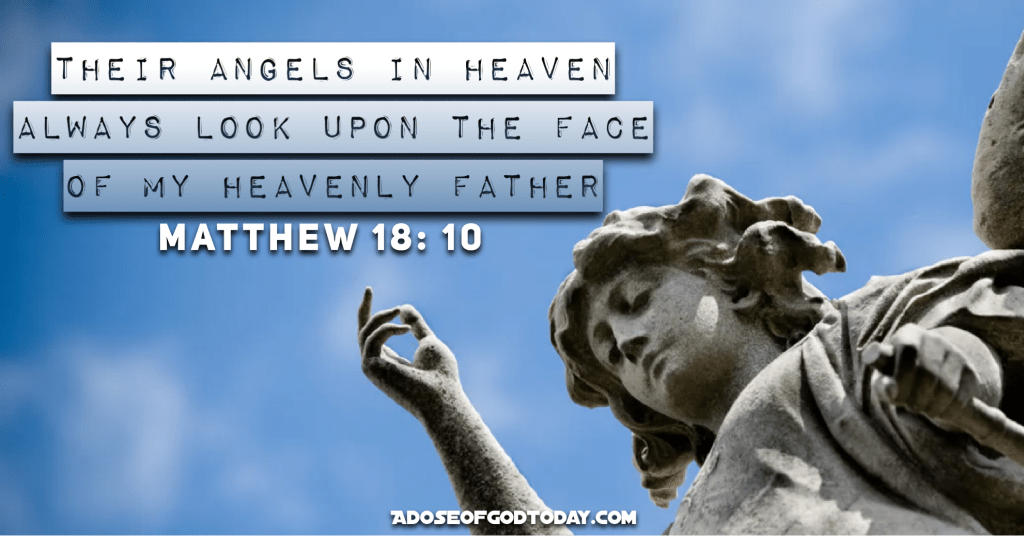
    In today’s Gospel, as we celebrate the feast of Guardian Angels, Jesus reminds his disciples of the angels who protects and guides the “little ones.” These angels always look upon the face of the heavenly Father, meaning, they too are very close to God. This closeness suggests that angels are indeed powerful intercessor of the “little ones” to God, the Father.

    As we celebrate this beautiful devotion to the Guardian Angels, let us see a bit deeper God’s invitation for us today through the Gospel.

    The question on “Who is the greatest in the Kingdom of heaven?” seemed to be a recurring concern among the disciples. They must have been very curious to know about this that at one time they were arguing on who was the greatest among them. They wanted security in the kingdom and they wanted assurance. Each of them showed to one another how worthy they were. However, this only revealed their self-entitlement. But then, the kingdom of heaven is not something that will be rewarded like a form of compensation to a person.

    The kingdom of heaven is a sheer gift of God to us. And this gift is given to the “little ones” and not to the self-entitled and assuming people, and most especially not to controlling and dominating people whose intention is to subdue others in order to gain more for themselves.

    The “little ones” are disciples of the Lord who in their smallness embrace God’s grace. These little ones trust in the providence of God. Thus, the “little ones” are symbolized by the image of a child. Each of the disciples, like us today, is called to become childlike. Nevertheless, not that we become children once again, but that we learn the qualities of children by being dependent to God and trusting God’s love. Moreover, like the children, we are called to be welcoming and embracing to the many surprises of God for us.

    As we become like children, Jesus also calls us “not to despise” the “little ones,” the other disciples of the Lord, the least in our community, the poor and the sick because they too are God’s “little ones.” God’s “little ones” have protectors and powerful intercessors who are angels. These angels are indeed mighty for they are always near God, looking upon the glory of God. This suggests the intimacy of the angels being shared with God because of their closeness. They surely, are our most influential friends before God.

    Hence, today, as we are called to acknowledge our guardian angels, acknowledge also that each of us has one who is always there on our side. We do not have to know their name or even assign name to our guardian angels. God intends that they remain nameless to us because naming them means having control over them. Our guardian angels are higher beings than us and we can never have control over them.

    Our Guardian Angel’s presence with us is enough assurance that God is also with us. As we grow our devotion to our Guardian Angel, may each of us become each other’s guardian angel in human form. Protect, guide, and bring those people around us to be closer to God. May our friends and family members will truly feel God’s presence in us and through us. Hinaut pa.

    Jom Baring, CSsR

  • A FAMILY PRAYER FOR OUR BELOVED DEAD

    A FAMILY PRAYER FOR OUR BELOVED DEAD

    Advertisements

    The whole month of November, and particularly, November 2 – All Souls’ Day, is a traditional time for visiting the graves of our beloved dead (from the ORDO 2020). It has been our long tradition to visit and pray for the dead. Others would even spend the whole day or even the whole night at the cemetery on this special day for the dead. Relatives from all over the place would take time to visit. This has become an occasion of family gathering in remembering the life of those who have passed away.

    This tells us of our deep connection with the dead, with our beloved dead, who have become a big part of our personal and family history. Thus, All Soul’s day is also a time of remembering the grace of persons of those who have died and to thank the Lord for the opportunity given to us to meet and encounter those people ahead of us.

    It is just right that our visit become a day of prayer for them and with them. We believe in the Communion of Saints, and many of our beloved dead though were not publicly recognized as saints in the Church, have also lived a holy and humble life. And so we too ask their prayers for us that they may become our intercessors and guardians. For those who need our prayers and remembering for the forgiveness of their sins, we continue to pray for them that in God’s mercy, they too will be welcomed in God’s kingdom.

    And because of the Covid-19 pandemic brought havoc into our way of life, disrupting what we used to do, the government set health measures this year. We are being prohibited to visit on the Day of the Saints and of the Souls, the cemeteries. Yet, remember, that we can still visit the place of burial of our loved ones in some other days. So, do not worry. There are still many days available in visiting them. In your visit, always remember to observe the health measures as to wearing of mask, hand sanitation and if other people are around too, then, observe physical distance. As you decide to visit them, pray as a family.

    Below is A Family Prayer for our Beloved Dead which can be downloaded. It is in PDF file. You may choose to view it through your smartphone, iPad or tablet or print a copy. Feel free to download it and share.

    May you find this simple prayer helpful in your visits and prayers for your beloved dead. God bless and stay safe!

    Jom Baring, CSsR

  • Front-liners at home

    Front-liners at home

    Advertisements

    October 1 , 2020 – Thursday of the 26th Week in Ordinary Time (Memorial: St. Therese of the Child Jesus)

    Click here for the readings (https://bible.usccb.org/bible/readings/100120.cfm)

    Homily

    As the Corona Virus Pandemic continues to bring disorder in our way of life and as we continue to be limited in our movements especially with our religious practices essential to our faith, some parents and grandparents have expressed their worries as to the faith formation of the young generation. The Holy Eucharist and other public celebration of the Sacraments including catechetical gatherings intended for the younger generation, remain to be banned from the vast majority. Though many cities have been allowed to have the public religious gathering by 50% of the building/Church’s capacity, yet, minors and Senior Citizens are still discouraged to be present physically.

    This poses a concern as to how we continue the moral and spiritual formation of the young and the continual spiritual nourishment of the older ones. Consequently, the Church have found ways on how to reach out to those who are excluded particularly now through the use of social media. Yet, this might not be enough since not everyone can access it and the Church’s programs may not be appealing to the young.

    More than ever, the Church is in need of the “active participation” of parents, grandparents and young adults to be at the frontline in terms of moral and spiritual formation of the younger generation.

    Today’s Gospel reminds us of this mission we share from the 72 disciples sent ahead by Jesus to the cities where he intended to visit. They were Jesus’ front-liners at that time. Jesus sent them ahead to announce to them that God’s Kingdom is at hand. They were to prepare the hearts of the people who have been longing to see God and to experience good things from the Lord as what our Psalm proclaims today.

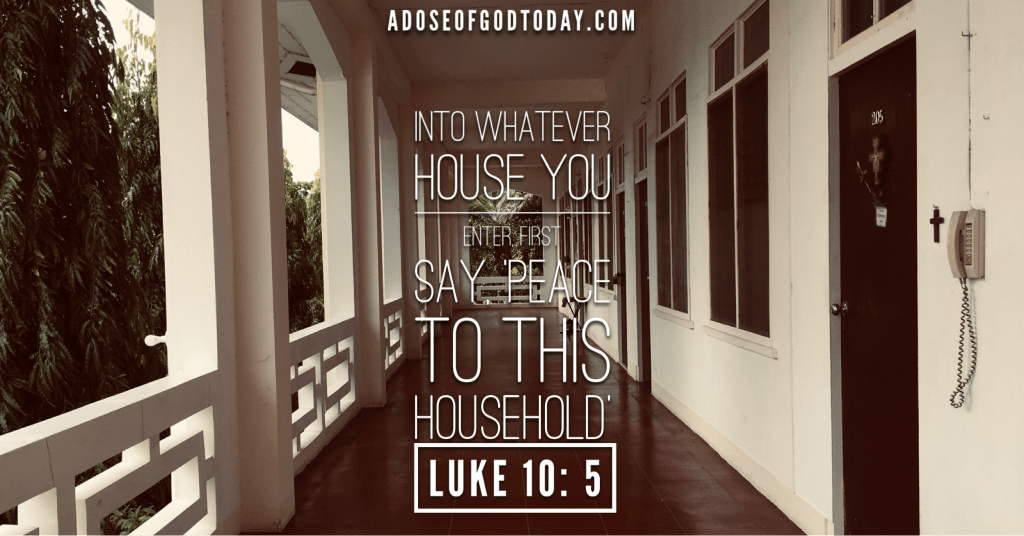
    Thus, the 72 disciples were told to bring peace to every household they visit. Even if there was the possibility of being rejected by those who were not ready, they were still to bring peace. As they were told to stay with those who welcomed them, the disciples were told to accept their hospitality and also to bring healing to those in pain, wounded, and sick.

    These were ways of nurturing those hearts who were longing to see God, to bring hope to those who were in despair and give hope to those who find life difficult and miserable.

    This is also the call to each of us now especially with you parents, grandparents and adults who live among and with the younger generation. Your presence is needed even more now to be those disciples of the Lord in your own context, that is, to be front-liners at home.

    You have this very important role to play to serve as front-liners, to prepare the hearts and mind of the younger ones, to nurture and develop their young faith and relationship with God.

    St. Therese of the Child Jesus, whose feast we celebrate today, reminds us of the mission we share with one another. St Therese is even called as the Patron of Mission even though she herself stayed most of her life inside the convent. Her little ways, her compassion and thoughtfulness to her sisters, her prayers and devotion were her ways of participating in God’s mission.

    Thus, for all of us too, we do our little and humble ways in participating in God’s mission. Parents, grandparents and adults, again, do your little ways in educating and nurturing the younger ones. Be welcoming to their different responses and be accepting to their ways of doing things and in relating with God. Affirm them and appreciate their efforts.

    But remember, to nurture and to develop one’s relationships with God is not done through “imposition” or by “force.” Never impose and never use force in nurturing the young ones. They learn by example. They admire through our sincere words and actions. They see and recognize God through us.

    In this way, we may be able to truly bring peace in our homes and bring healing into the hearts of our own family and friends. Hinaut pa.

    Jom Baring, CSsR