Category: AUTHORS

  • Our Witnessing of HIM

    Our Witnessing of HIM

    November 20, 2022 – Solemnity of our Lord Jesus Christ, King of the Universe

    Click here for the readings (https://bible.usccb.org/bible/readings/112022.cfm)

    Usually during Eucharist, after the homily, we stand up and renew our faith by saying the words: “I believe in God, the Father Almighty..” These words are the very foundation of our Christian faith and of our Eucharistic celebration. By professing our Christian faith, we renew our Christian commitment and we articulate our witnessing to God’s salvation through our Lord Jesus Christ.

    There are moments, however that we express our faith without any serious intentions and commitments. There are moments that some would even say these words halfheartedly and without sense & spirit at all. Like a memorized formula, saying those words without meaning it. Worse, others cannot even memorize those words. I remember once, during Baptism and Easter Vigil Mass, where we usually renew our faith, when the priest: “Do you believe in God the Father?”, rarely you would hear a loud response: “I do believe”. Others would not even respond at all, as though they don’t care if we and they believe at all.   

    Today, we celebrate the solemnity of Christ the King. We honor the kingship of Jesus Christ in our lives today. However, we hear from our gospel today that Jesus, our King is not only a crucified king but also a king who is rejected, insulted, dishonored, and humiliated by the people. We cannot deny in our gospel today that Jesus Christ is a harassed, rejected, disgraced, maltreated, and persecuted King. Indeed, they proclaimed Jesus as King, but a Redeemer king who cannot even redeem and save himself – a king without a throne, and worse crucified on a cross. 

    We do need to seriously reflect our gospel today, for it challenges us to deeply understand our faith not only on his Kingship but most of all our faith in Jesus himself. We might ask ourselves: “Do we really acknowledge and believe Jesus as Christ the king?” or “Are we like, Pontius Pilate who admits or not, because others say so?” “Before me, who is Jesus? Who do I say Jesus is?”. Or perhaps ask ourselves: “who and what do I believe and worship? Is it God whom we believe and worship? Or we rather believe and worship our life, work, honor, wealth, and others than God himself?”

    This is a concrete call for us Christians to look deeply into our own personal commitment to what and who we really believe in. We honor Jesus today, our Christ and our King whom people have persecuted, humiliated, maltreated and rejected. “Would you still consider him as your King? Would you recognize and bear witness to Him as your king? Or would you reject, dishonor, and persecute him again like what others did and are doing today?”
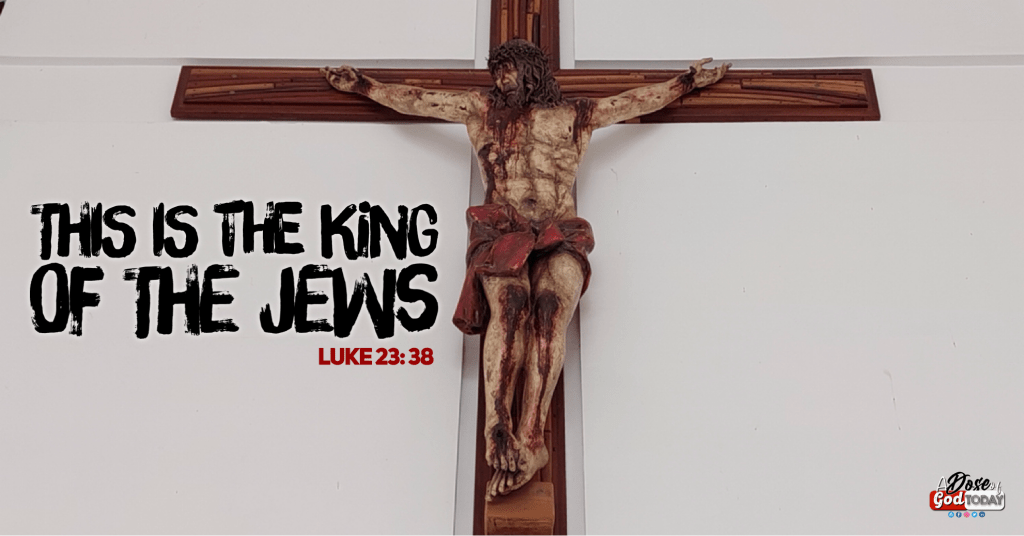
    God’s kingdom then does not rest only the kingship of Christ but on our authentic witnessing and commitment of our faith in Jesus Christ. As His Witnesses now, we consider Jesus as our King, not only because of what he has done but most of all on His own commitment towards the Father and for the salvation of all. God’s kingdom and the kingship of Jesus Christ do not only mean name, power, and prestige of Jesus but moreso our heartfelt and wholehearted profession, proclamation, witnessing and commitment to God’s salvation through our faith in Jesus Christ. The kingdom of God then requires our total and authentic commitment to Christ, as Christ commits himself to us & our Father.

    Again, here in our celebration today, we Christians are called to proclaim and witness our faith in Jesus Christ. As Jesus bears witness to his great love to the Father, we are also invited to the same total and wholehearted dedication and faith in Jesus. Brothers and sisters, as Christians, we should not be ashamed to express and proclaim our faith to ourselves, to each others and to others. As Filipino Catholics, we look also forward now to the next 500 years of our Christian faith & witnessing here & abroad.

    As we end and about to begin a new liturgical year, let our eucharist today be  another beginning to renew our faith, that is to make our faith better than ever.  Amen.

  • Sweet and Sour

    Sweet and Sour

    November 18, 2022 – Friday of the 33rd Week in Ordinary Time

    Click here for the readings (https://bible.usccb.org/bible/readings/111822.cfm)

    One of the popular Filipino dishes is “Sweet and Sour” which could be of fish, pork or chicken mostly. Even in any celebration, one could have this dish. Its sweetness and the sourness and the balance of the two would usually what gives us satisfaction in our appetite. However, there is another “Sweet and Sour” that is neither of fish, pork or chicken, but the Word of God. This is the sweet and sour that John in his Book of Revelation talked about.

    John had this visions where he took and swallowed the small scroll which contains the Word of God. Its taste was sweet as honey on the mount but sour on the stomach. This tells us about God’s word and God’s desire for us as revealed in the Holy Scriptures.

    God’s word may sound nice and wonderful to our hearing yet when we are called to absorb and practice it into our life and daily affairs, God’s word many become sour or even bitter. Why? Because God’s word would challenge us, disturb us and reprove us of our wrongdoings, of our wrong beliefs, of our selfish tendencies or our evil intentions.

    This was what John was told to do – to prophesy again about many peoples, nations, tongues and kings. The call to prophesy is not to tolerate any evil deeds or pamper powerful people with flattery words but to disturb them, their indifferent hearts and from their comforts.

    This is what we witnessed in today’s Gospel. Jesus entered the temple area and saw the disgrace and desecration done to the holy temple. Jesus could not tolerate it anymore or turn a blind eye once more to the corruption and abuse going on perpetrated by the merchants and temple authorities.

    The temple became “a den of thieves” where merchants imposed high prices of temple commodities such as the animal-sacrifices. Because of their monopoly and connivance with the temple authorities they had the control of the supply and demand and thus can easily manipulate the prices and exchange rates of foreign coins to temple coins.

    This was corruption and abuse against the ordinary people whose main intention was to pray to God. Thus, these money-motivated merchants and temple authorities desecrated the holy temple through their corrupt and unjust practices. Jesus stood up against this and drove them out of the temple area. Because of this also,  the chief priests, scribes and leaders of the people became more hostile against Jesus. They wanted to kill him because he was bad for their business.

    Today, the Lord calls us now – to take the Word of God be integrated into our life. This tells us that our Christian faith is not just a segment or a mere part of our life. Rather, our faith in the Lord encompasses our whole life and whole person.

    Thus, we are called to integrate it into our daily life, thoughts, actions, dreams and hopes. With this, we too are called to let the Word of God challenge us and to disturb us when we have become cold, indifferent and unjust. We too are called to uphold honesty, justice, fairness and compassion in our work, business, studies and relationships that we may become true Christians today. Kabay pa.

  • When God Visits Us 

    When God Visits Us 

    November 17, 2022 – Thursday of the 33rd Week in Ordinary Time

    Click here for the readings (https://bible.usccb.org/bible/readings/111722.cfm)

    How conscious am I of God’s many visits? Certainly, the Lord visits us because God desires that we shall be blessed by His divine presence. Yet, we could be more preoccupied with many things in life that we would take for granted God’s visits or not fully aware of His presence in us. The demands in our work, responsibilities at home or our studies or some other issues and concerns could sometimes be overwhelming that we lose the time to be more sensitive of God’s presence and even of the presence of people around us. The Lord, surely, comes to us and appears in ways that can be so ordinary and in ways we do not expect.

    This is what we have received in today’s Gospel. Luke described to us how Jesus wept over Jerusalem because its people did not recognize that the Lord has already come and visited them. Jesus was constantly rejected because his appearance was not the way they expected it to be. The Messiah was believed to come majestically, with countless armies who shall defeat all enemies of Israel.

    Let us remember, that this Gospel of Luke was also already written after the destruction of the Temple in Jerusalem. The Jews were shocked and in turmoil because of such abomination. Luke reminds us that our rejection of God leads us to misery and separation from the grace of God.

    Hence, the Lord wept because he felt sad on how the people responded with cruelty and rejection against him. God only desires our freedom and salvation through our friendship with Him. However, we could be more focused on many things other than what God is offering us. Yet, the Lord is never tired of visiting us and letting us know that he has come to visit us, to offer his friendship with us and bring us into freedom, into peace and fullness of life.

    This is where we also find God’s invitation for us today. The Lord continues to reach out to us, to visit us and to let us know that he is with us. God’s presence in our life will surely enrich our Christian faith as well as our relationships and daily affairs. It is our hope that as we carry things, we too shall grow in our awareness of God’s presence and let that divine presence give a significant impact into our daily life. There are at least three simple things I would like you to remember to grow in our awareness of God’s visits.

    First, begin your day in prayer. There is no need for a long and wordy prayer but at least spend a moment of silence to recognize the Lord and his invitations for us day by day.

    Second, bring the Lord with you. Whether you are going for work, for school or staying at home be aware that the Lord is with you. The Lord is not just in our moments of prayers or on Sundays in the Church. Allow the presence of the Lord to be there intertwined in your work, studies and house chores.

    Third, recognize the Lord with people around you. This might be quite challenging especially when we encounter an annoying workmate, a bully at school, a problematic family member or an unjust person during the day. However, in any and in every situation, the Lord calls us to recognize him and respond to his invitations. In such a way, such awareness of God’s presence will help us to respond in compassion, in love, in showing concern or perhaps standing up for what is right and just, in defending the weak and in denouncing what is evil and unjust present in our community. Kabay pa.

  • How do I respond to God?

    How do I respond to God?

    November 16, 2022 – Wednesday of the 33rd Week in Ordinary Time

    Click here for the readings (https://bible.usccb.org/bible/readings/111622.cfm)

    There are three kinds of people in today’s parable of Jesus. In each, the Lord calls us to identify ourselves and draws us to be converted to him if we would find ourselves with those who were far from the Lord and did not respond to God’s invitations.

    The first are those who rejected the king. These people despised the nobleman that they even sent a delegation to declare their rejection of the king. However, these were same people who wanted to claim the throne. They wanted to rule, gain control and power for themselves. Yet, at the end, when the king finally returned they were slayed and died.

    This tells us that our total rejection of God’s friendship and salvation and of our desire to become like “god” means death to us. It is only in embracing the Lord who has come to be with us that we also find the fullness of life and not in being separated from God and from others.

    The second are the servants who responded well to the king. They listened and did what the king commanded them. As a result, they became fruitful and were rewarded generously by the king. These servants proved that even in small matters they can be trusted.

    This is a response that comes from faith and of the awareness of God’s generosity in us. Each of us is gifted and a steward of God’s gifts. Our faith as well as our person must also grow and become mature that we may become fruitful and productive. This will be evident in our relationships and in our way of life as Christians who invest in kindness and goodness, in concern and love, in understanding and community building.

    The third were those who retreated in fear but indifferent. They were represented by the servant who did nothing after receiving the gold coin. He rather retreated in fear and hid. Indeed, the servant showed no response, unmotivated, unenthusiastic and unchallenged. His reason was fear of losing yet he also remained unproductive and un-creative.

    Fear is therefore not the right attitude towards God and faith. The spirit of God gives us the confidence and strength yet when fear paralyzes us to become the person God wants us to be, then, this is not from God. The Lord continually calls us to overcome that fear and embrace rather the confidence and strength that God gives us.

    We now ask ourselves, how do I respond to God? What do I make of my faith? How do I relate with people? What do I do with the talents, potentials and responsibilities I have?

    As we are led today to see and recognize our failures, we may also come closer to the Lord who calls us to be productive, to become mature and to become more welcoming of his many invitations for us. Kabay pa.

  • Being Lukewarm leads to death

    Being Lukewarm leads to death

    November 15, 2022 – Tuesday of the 33rd Week in Ordinary Time

    Click here for the readings (https://bible.usccb.org/bible/readings/111522.cfm)

    When a heart becomes “lukewarm,” it is neither moved nor affected in any way from what is happening around. A lukewarm-heart becomes indifferent, denying or incapable of understanding others and seeing others or worst no compassion towards others. It is equivalent to say that we have become “numbed and insensitive.” This leads to spiritual death and deaths to our relationships with people, disconnected with what surrounds us.

    This is what John confronted in today’s first reading calling out the Christians in Sardis and Laodicea who were neither hot nor cold, but lukewarm. They seemed to have lost the spirit or denied perhaps the spirit of God among them because of the challenging and difficult circumstances. Moreover, another reason was the affluence they have experienced. The Christians became rich, comfortable and gained influence that they thought they have no need of anything not even God. This was a clear denial of God and made the self to be at the center.

    This what made the first Christians in these cities to be lukewarm for they were neither anymore moved nor challenged by the Gospel and by the needs and sufferings of their neighbors. The SELF has become the most important. Comfort, material riches and influence intoxicated the self to the point that they have become detached.

    Yet, John expressed his love for these people and did not want to lose them. Hence, John said, “For those whom I love, I reprove and chastise. Be earnest, therefore, and repent.” John called them again because he wanted to gather them and to let the Lord work more wonders with these people.

    This is how we also witnessed the conversion of Zacchaeus in the Gospel. Zacchaeus who were unmoved by the difficulties of his fellow Jews over the high taxes imposed on them, finally found meaning in his life. Though Zacchaeus tried to look for Jesus, but little did he know that the Lord was first looking out for him. Jesus was in search for Zacchaeus because the Lord has a surprise for him.

    We heard that as soon as Jesus saw Zacchaeus from a tree, Jesus called him by name and declared to bring blessings into the home of Zacchaeus. This encounter was not merely a meeting of the two, but it was the Lord’s way of letting Zacchaeus know his own pains and suffering, his own sins and failures, yet, the Lord remains all-embracing and forgiving. This moved Zacchaeus very much and found himself once again, loved and forgiven.

    Such encounter also made Zacchaeus to come closer to the Lord that as a sign of his own conversion, he offered to repay those whom he extorted. The presence of Jesus in his house is God’s presence indwelling. Freedom and life has come to Zacchaeus and to his household.

    The Lord also invites us today to allow him to confront us when we have become lukewarm, unmoved, unmotivated and unenthusiastic. Like Zacchaeus may we find forgiveness and the fullness of life in Jesus and in our true human relationships and not in our personal comforts, not in our affluence and not in our successes. Kabay pa.