Tag: Saints

  • A Healer. A Friend. A Preacher.

    A Healer. A Friend. A Preacher.

    October 18, 2022 – Feast of St. Luke, Evangelist

    Click here for the readings (https://bible.usccb.org/bible/readings/101822.cfm)

    We, as Church today, owe a lot to the evangelist, St. Luke. The Gospel according to him and the Acts of the Apostles which is also believe to have come from the tradition of Luke were two great accounts that tell us more about Jesus, his ministry and the early life of the first Christians.

    It is through St. Luke’s account that we have today a lively, heartwarming and inspiring characters of Jesus as described to us in the Gospel. Luke particularly emphasized the character of Jesus that showed compassion and mercy to the sinners, to those who suffer not just of physical and spiritual illness but also those who were subjected to public humiliation and indifference. This is how the poor, the oppressed and the less fortunate were given special attention by Luke.

    Thus, as we celebrate the feast of St. Luke today, there are things in his holy life that we can learn today and that serve as the invitations for us to grow in our Christian faith.

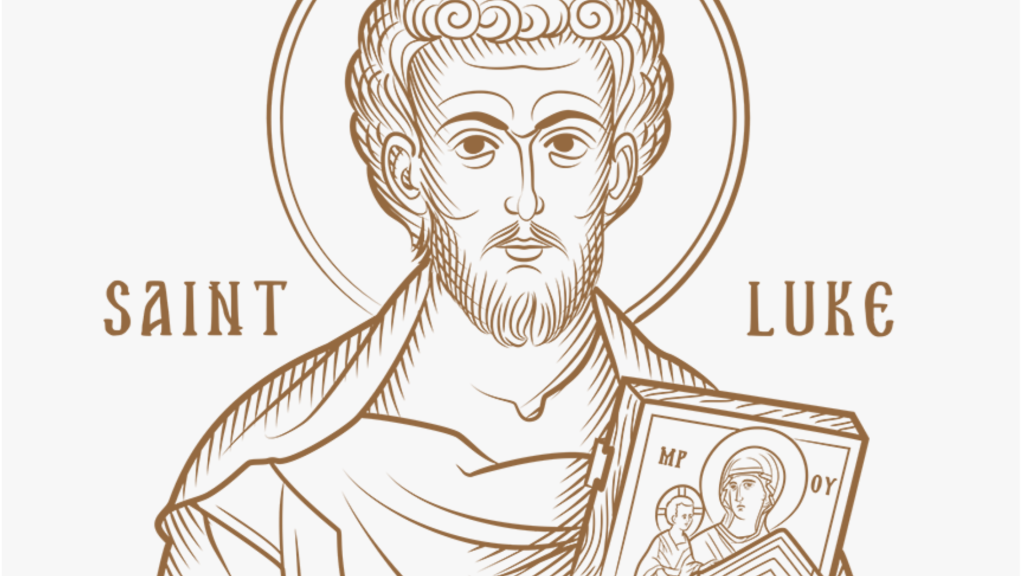
    Luke as healer. Luke is the patron of physicians and surgeons since Luke himself was a doctor or a healer. Though it was believed that Luke was actually a slave, but it was common at that time that even slaves were given the opportunity to learn medicine in order to serve the family of their masters. Luke learned well the art of healing that when he was graced with faith, he too continued his gift of healing to people. Indeed, Luke allowed the Lord to make him an instrument of healing. This is depicted in the many healing stories that Luke emphasized in the Gospel because Luke can relate well how healing help people to live life fully.

    Luke as a faithful friend. Paul in his Second Letter to Timothy confessed that many of his friends had deserted him. Only Luke remained at his side to which Paul was very grateful. Luke, despite the many challenges he and Paul experienced remained at the side of the Apostle to assist him in the mission of preaching the Gospel and brining the presence of Christ to the Gentiles. Luke was a Gentile himself, a Greek from Antioch, Syria and was converted to Christ. Luke lived his life to the full and living it at the service of the Gospel with Paul. This was how Luke proved his faithfulness to Christ by being a faithful friend and companion of Paul.
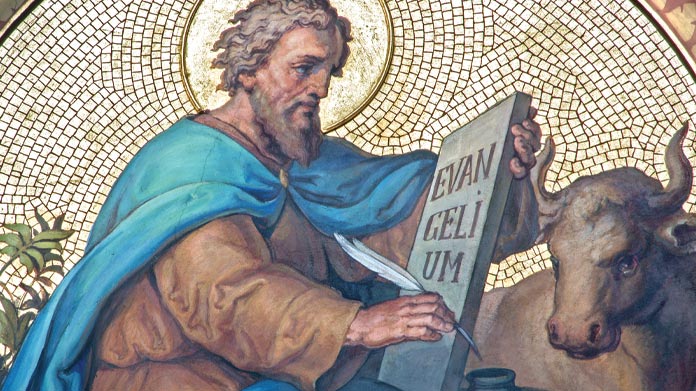
    Luke as a preacher. Luke was also well-educated in classical Greek. This was the reason why we have the Gospel and the Acts of the Apostles. Luke communicated well the story of Jesus to his audiences with the intention to bring more people closer to Jesus by knowing him, his mission and his very life even though he did not meet Jesus personally. In fact, Luke saw the life and mission of our Lord Jesus as God’s visitation to us. This is evident at how the Gospel contains stories of visitations like that of Gabriel to Mary, the visit of Mary to Elizabeth, of Jesus to Zacchaeus’ house, etc. In today’s Gospel passage Jesus also sent 72 disciples to every town and place he intended to visit. In this way, Luke through his writings bring us closer to Jesus who comes to visit us as he too was being visited by the Lord.

    Hence, on this feast of St. Luke, we too are called to become agents of healing into our homes and communities. We too are called to become a friend who shall be able to give assurance and confidence to friends who felt alone, afraid and lonely. And lastly, to be a preacher of God’s visitations by actively sharing our God-experiences so that we may be able to bring others closer and intimately to Jesus. Kabay pa.

  • A Continual Conversion of the Heart

    A Continual Conversion of the Heart

    January 25, 2021 – Feast of the Conversion of St. Paul

    Click here for the readings (https://bible.usccb.org/bible/readings/012521.cfm)

    Have you ever experienced in your life where you thought that everything is well and perfectly in order? Or an experience where we have decided alone to take this path or that direction because we have completely believed in our own capacity and principles? Yet, at the end we found ourselves broken into pieces because all along we were not doing the right thing. 

    Saul or Paul had this kind of experience. Saul really thought that he was a righteous man and that he was a very good man, that he did things well and that he was successful in everything. He thought he was holy and righteous enough for God. He was full of zeal and very convinced of the direction he was taking in life.

    Being a righteous Jew, he wanted to defend the Jewish religion against all its enemies. This made Saul to persecute the followers of the Way (the old name of the Christians) whom he believed to be threats to their established religion.

    Yet, he did not know that he was very misguided, that he was not seeing the right things. In fact, Saul was not aware that he was being blinded by his own self-righteousness and rigidity to the Jewish law by persecuting the early Christians. He was not aware of that but not until he was able to encounter the Lord on the ROAD TO DAMASCUS.

    Remember, the Lord is the Light of the World, it was very symbolic that Saul had become aware of his own blindness when he encountered the True Light, Jesus. When light shone upon him then he became aware that he was in darkness, his spiritual blindness manifested through his physical blindness. That awareness of his own blindness prompted him to seek healing. A servant of the Lord, Ananias was instrumental to Saul’s healing and recovery of sight, thus, he was able to see clearly.

    This encounter with the light, with Jesus is the very experience of conversion of Saul who later on was known as Paul, a symbol of a new beginning and a new mission to fulfill. Paul through that encounter with the Risen Lord transformed his life and re-evaluated everything in his life as a Pharisee and as a person. As a result, he became an apostle to the Gentiles and a very important figure in the history of early Christianity by founding Churches and writing letters in the New Testament.

    This brings us then to the invitation of this feast. We are called to a continual conversion of our hearts – because we have also our own blindness, especially when we think that we are righteous enough before God, thinking that that gives us the power to persecute others and eliminate those who are against us. We can be blinded by our own complacency thinking that going to church even on a regular basis and just by saying our memorized prayers everyday are enough before God. We can be blinded by our arrogance that we can do things perfectly even without the help of God. We can be blinded by our own opinions by insisting that what we believe is true but without minding the facts. We can be blinded also by our own weaknesses when we think that we are already trapped in that weakness and thus, couldn’t move anymore and couldn’t do anything.

    There is always something more and this is what the Lord is telling us today by making us remember that story of conversion of Paul – that being a Christian, our faith in Jesus is not only about the observance of laws and doctrines but also showing mercy to others as what Paul experienced in his encounter with the Risen Lord. And that experience will move us to preach the Gospel – this is basically what our gospel reading is telling us now. Preach the Gospel – your God experiences – to all by our words and example.

    Thus, we are reminded today to COME TO THE LIGHT AND NOT TO BE AFRAID OF HIM – to come nearer to Jesus. We come to him in the hope that we too will become aware of our own blindness – of that self-righteousness, of those arrogant opinions of ours, of that complacency and self-pity in us – so that we will be able to seek healing. When this happens, God will certainly inspire us to become preachers of the good news to all by our words and deeds. Hinaut pa.

  • Growing in Friendship with God everyday

    Growing in Friendship with God everyday

    Advertisements

    November 1, 2020 – Solemnity of All Saints

    Click here for the readings (https://bible.usccb.org/bible/readings/110120.cfm)

    Homily

    There is something I want to ask you now. I want you to close your eyes for few moments and in silence, remember the face of your best-friend, that great friend or friends of yours whom you are most comfortable with, that great friend who is always ready to listen and comfort you, that great friend who knew your deepest secrets and pain in life, who has been with you through thick and think, in joy and sorrow.

    Our friends are indeed, gifts to us. Through them and with them, life becomes more colorful, entertaining as well as comforting. As we discover the person of our friends, we too, through them discover more ourselves. That intimacy and affection shared with our friends become the source of our strength especially when life seemed to be not favorable to us. Though, we may not see every day those close friends of ours, yet, our friendship with them stays.

    With this experience of friendship, this reminds me of the saints, whom we remember today. Saints who are also called as friends of God have this special bond with the Lord. Surely, each saint had their own friends too and through their human experience of friendship, they developed their friendship with God.

    “This friendship with God made each saint to be more familiar with God’s voice, more aware of the promptings of the Holy Spirit, and responsive to the invitations of the Lord.”

    Thus, the presence of the Saints in the Church brings us into an awareness on how God works every day in our life. The life of a saint and all those who have lived a holy and joyful life is a manifestation on how God transforms human life creatively and wonderfully through friendship.

    This means that living a holy life is a constant calling of friendship with God. We may struggle to identify God’s voice in the midst of so many voices. What makes a person holy then, is his/her daily commitment in choosing God and allowing God to transform him/her every day. This tells us that saints also experienced mistakes, failures and sins. They too are haunted by their own insecurities and guilt, unfaithfulness and inconsistencies, selfish desires and demons. Yet, every time they fell down, they rose up and chose God again. Indeed, this makes the saints to become closer to God because they grew in friendship with God by knowing themselves and recognizing God every day.

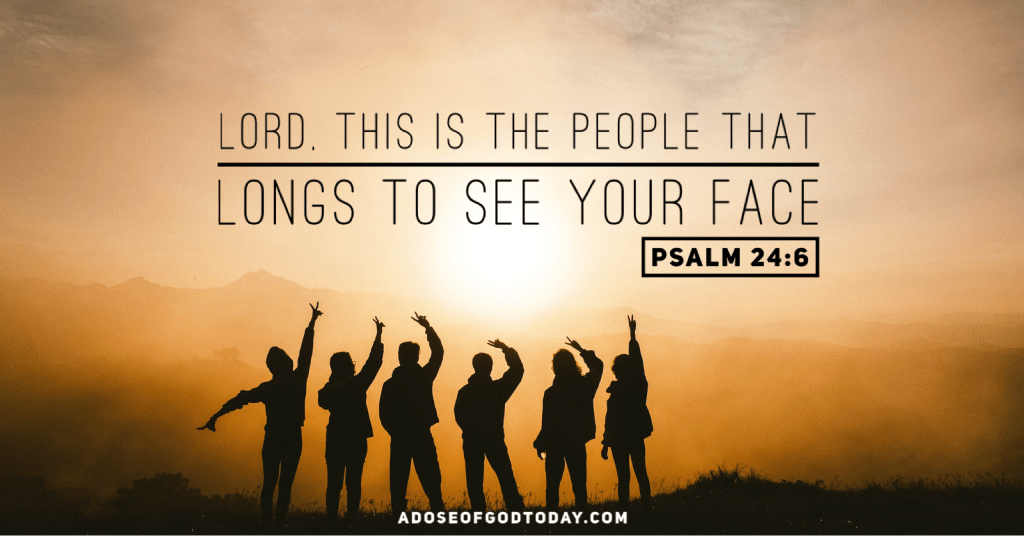
    This tells us of that desire of the human heart to long for God. Indeed, our very life finds its purpose and meaning with God. This is what our Psalm proclaims to us, “Lord, these are the people who longs to see your face.” Our longing for God also explains our deepest hunger and thirst for intimacy and love. God satisfies our deepest longing which sometimes human connection cannot satisfy. Yet, our human experiences of friendship point and bring us to God.

    This is the invitation for us today, that each of us, like all the saints whom we remember today, will grow in friendship with God by knowing ourselves through our weaknesses and strengths and recognizing God who touches every moment of our life.

    Moreover, the Gospel of Matthew which reminds us of the Beatitudes, are the very attitudes of those who are growing in the friendship of God. We become blessed and discover more graces when we begin to realize that we are not the center of everything, but God. The attitudes of dependence and confidence in God, of gentleness and mercy and the desire to be a person for others are fruits of that friendship with God.

    “Thus, difficult situations are turned into graces. Failures are turned into opportunities and windows for mercy. Friendship is turned into door of conversion and blessing.”

    Again, in the first letter of John, we are reminded that we are God’s children, and this is who we are. We are God’s beloved sons and daughters. It is God who claims that we are His. Hence, we too can confidently say now, I am God’s beloved and God is my dearest friend!”

    Allow this powerful words and our powerful God to transform us today and the rest of our life just as saints were transformed!

    Whatever difficulty we are experiencing at this moment, never lose hope with yourself or with God because God never loses his hope in us. Believe in your friendship with God.

    Hopefully, by being more aware of our identify as God’s children, we too shall grow every day in our friendship with God and with one another. Remember this too, “a true friend of God recognizes the face of God with others,” with our brothers and sisters and with the rest of God’s creation. Hinaut pa.

    Jom Baring, CSsR

  • Of Pride and Humility

    Of Pride and Humility

    Advertisements

    November 1, 2020 – Solemnity of All Saints

    Click here for the readings (https://bible.usccb.org/bible/readings/110120.cfm)

    Homily

    What makes angels & saints blessed? What makes devils & sinners cursed?

    St. Augustine once said: “It was pride that changed angels into devils; it is humility that makes men as angels.” It is a matter of pride & humility then that makes people saints or sinner, angels or saints.

    You see, pride is concerned with WHO is right; humility is concerned with WHAT is right. Though both are concerned about right, pride is more on the authority & power, against humility, which is more on the moral principles of right & good. Pride encourages us to scream, “That’s just the way I am” in the hope that we will not hear the soft whisper of humility, asking us, “Yes, but is that the way you should be?”. “Well, this is Me… but should Me be it?” Ganito kasi ako… pero dapat ba akong ganito? Ani naman gud ko… pero angayan ba nga ani lang ko? Pride is being influenced by Shallow Loud Noisy voice of the evil that makes us artificial/fake/plastic, while humility is being inspired by Gentle yet Deep Soft Sound of the Spirit that makes us real & true, warts & all, broken yet blessed before God and others.

    In the Sermon of the Mount, Jesus in our gospel proclaims us through the Beatitudes how Blessed we are (for the Kingdom of God, comfort, inheritance, satisfaction, mercy, being God’s children & Kingdom of Heaven). We are blessed not because of our actions – of what we have done & doing in our lives but moreso because of God’s graces – of what God gives us & God is doing in our lives. We are more so blessed then because of God grace & action, regardless of our doings. However, God’s gift of blessings for us is fully enjoyed & fulfilled in life if and when we are humble enough to acknowledge, value and share these with others. Our humility makes us more well-disposed and appreciative of the fruits of God’s blessings in our lives, and willing to partake it with others, though our pride could render us insensitive and hinders us to fully benefit from God’s grace, and thus making ours and other people’s lives miserable and cursed.

    Today is All Saint’s Day. We honor ALL saints – both the recognized & unrecognized officially by Church. You see, saints or saintly people are in essence like us Christians who humbly witnesses in their faith and lives God’s blessings to all. They are Christians like us – “the people that longs to see your face, O Lord”, who not only by their words & deeds but also by their faith and life, have struggled and still struggling (along with suffering, mistakes, & success) to be humbly real and true to their chosen vocation in life & to fulfill their special mission in God’s grace and kingdom, and in effect have greatly influenced other people’s faith & life.

    Simply put, saints are fellow-Christians who have greatly infected and influenced now our very person and faith as Christian. Somehow and in someway, because of them & through them, we become Christians now. So, think of all saintly people whom you have crossed paths in life and have made you know, love & follow Christ in your life. Perhaps parents, grandparents, relatives, teachers, neighbors, catechists, friends, priests, sisters – both living and dead. Yes, both living and dead, as long as they have influenced and are still greatly influencing your life then-now and always as Christian, because they are & have been SAINTS to you and others. Remember and include them in your prayers these days. Eternal rest to those who have already gone before us. More blessings & witnessing for those who are still with us now, like you and I are still humbly leading our Christian lives saintly – struggling to be true to our calling, fulfilling our mission to be witnesses of God’s blessings and hoping also to influence other’s faith and life – blessed yet broken we maybe.

    Again, being blessed or being cursed, being saint or sinner is a matter of humility and pride.  Our life nowadays amidst quarantine during pandemic times can be a Curse if and when in pride we are ungrateful, ungracious, and greedy of God’s blessings before us… but can be a Blessing if and when we humbly recognize, value, and share God’s blessing with one another, especially those who are in need at this time. We all do need God’s blessings at this time in history. So Let us be a Blessing than a Curse to one another. Rather than remain to be a proud sinner (a pain in the… neck 😉), try to be a humble saint (a helping hand, a gentle presence, a lending ear) to others. With the examples & witness of the saints, may we joyfully admit How Blessed we are by humbly saying: “This is not mine only but Ours to Share” & not by proudly insisting: “This is Mine alone and not yours”. So may it be. Hinaut pa unta. Amen.

    By  Fr. Aphelie Mario Masangcay, CSsR 

  • Trying to Touch God

    Advertisements

    October 28, 2020 – Wednesday, Feast of St. Simon and St. Jude, Apostles

    Click here for the readings (https://bible.usccb.org/bible/readings/102820.cfm)

    Homily

    When we get sick, we normally ask others to help us so that we feel better. Though others would self-medicate, but still reach out for some remedies when one feels sick. We usually seek the company of others too when we are bombarded with problems. Others who feel shy to ask help or feel awkward in reaching out to friends, deal with their own problems. When problems and issues become overwhelming, this result to unhealthy coping like alcoholism, drug abuse, self-isolation and depression.

    This tells us of our humanity and of that longing to be connected, be supported and be helped. And because others find it difficult to seek proper help or address in a healthy way their problems and issues, then, they tend to disconnect from others and retreat into isolation. This unhealthy reaction could have been influenced by a person’s upbringing or because of an unsupportive and indifferent environment within the family or workplace. Yet, despite such environment, people would manage to cope though sometimes in unhealthy ways.

    Today, as we celebrate the feast of St. Simon called the Zealot and St. Jude the son of James, we too are reminded of our desire to be helped, to be healed and to be free. The two are one of the twelve chosen by Jesus after his intense praying. Jesus, indeed, prayed to the Father, before he called the twelve men to become part of his ministry to heal and give life, to known God’s presence and to live in God’s presence.

    Moreover, these two, Simon and Jude proved that their encounter with Jesus changed their entire life. Their ordinary life became extra-ordinarily wonderful though challenging. In fact, Simon who was called “Zealot,” believed strongly in the importance of following the Jewish law. In his search and effort to become righteous, he encountered Jesus and realized that the Lord is the very fulfillment of what he was trying to follow. Jude, also known as Thaddeus, is a patron of desperate people, of those who feel there is no one else to turn to. Jude earned this because of his witness to Jesus that despite his fears and inconsistencies, he allowed the Lord to transform him.

    These two apostles must have been part of the many people who followed Jesus and wanting to touch the Lord. The people were trying to touch Jesus because they wanted to touch God and be healed by the Lord. This desire of the people revealed that human longing to be connected, be supported and be healed by God.

    Power abundantly came out from Jesus because he has so much love for us, so much compassion for all of us. Thus, all those who were seeking to be healed and be freed and have life, were given the grace. This ministry was shared by Jesus to his apostles. Each apostle became a living presence of Jesus to others that others too experienced God’s wonder through them.

    This is also the call and invitation for us today that as we face our own issues and problem in life, concerns and struggles, let us also try to touch the Lord. Certainly, God invites us to touch him and God even waits that we touch him because this will mean that we allow the Lord to heal us, to make us free and to transform our life.

    We will surely be able to touch God when we also begin to open up ourselves and recognize that we need help and we need others to help us. We will be able to touch God when we sincerely and consciously approach the Sacraments in faith. We too are able to touch the Lord when we become more aware of ourselves and aware of what others are also struggling in life. As we touch God and allow the Lord to touch us, we may also truly experience a healing encounter with God, in both of our mind and body, so that we too will in return be part of the ministry of the apostles in brings to Lord to others. Hinaut pa.

    Jom Baring, CSsR