Tag: Passion of the Lord

  • Remembering, Reconnecting, Responding

    Remembering, Reconnecting, Responding

    April 2, 2023 – Palm Sunday of the Lord’s Passion

    Click here for the readings (https://bible.usccb.org/bible/readings/040223.cfm)

    On this Palm Sunday of the Lord’s Passion, we blessed our palms to remind us of Jesus’ triumphant entry in Jerusalem, only to be handed over to death. He was arrested, tortured, abused and humiliated, carried his own cross to Calvary, crucified while onlookers waited for him to die hanging on that cross. The palms that symbolized Jesus, revered to be king, but riding on a donkey, culminated in that shameful and painful death on the cross.

    Thus, as we enter the Holy Week and being reminded fn the story of the suffering and death of Jesus, there are three invitations that I would like to share with you today. These three invitations will hopefully guide us in our journey in life with Jesus.

    First, REMEMBERING. To remember a painful memory is not easy. When we do this even with our painful memories in the past, of the trauma, shame and guilt that happened to us, we feel discomfort. Some may even try to escape to forget that painful memory. Yet, this is what we do now as we remember, recall and recover the story of Jesus who after preaching to the people the Kingdom of God and making difference into lives of the distressed, the sick, the lonely, the sinners and abandoned, was being betrayed by his own disciple, denied by a friend, and left alone on the cross.

    In our remembering, we honor the pain, the shame and the guilt that surround in the story of Jesus as well as in our own stories. As Jesus struggled to find meaning in his suffering as expressed in his words, “My God, my God, why have you abandoned me?” let us also find meaning and God’s presence in our own painful and shameful stories.

    Despite the pain and the seemingly absentee-God as we face our own suffering as individuals and as a people, let us also allow the Spirit to bring us further in this journey. This is the second invitation.

    The second is RECONNECTING. In remembering the passion and death of Jesus it also allows us to remember our own stories, we may realize how far we gone away from our painful past. In our attempt to forget, cover and bury what was shameful and filled with guilt, we could have pretend as if nothing was wrong or nothing happened.

    We let the words of Prophet Isaiah be our prayer, “Morning after morning, he opens my ear that I may hear,” so that we may be able to listen well to the voice of God speaking within us and through our human experiences. As we reconnect with the past, we also reconnect with our emotions that may still be overwhelming for us. We reconnect with ourselves and find our re-connection with God who has been with us all along even in our darkest moments in life.
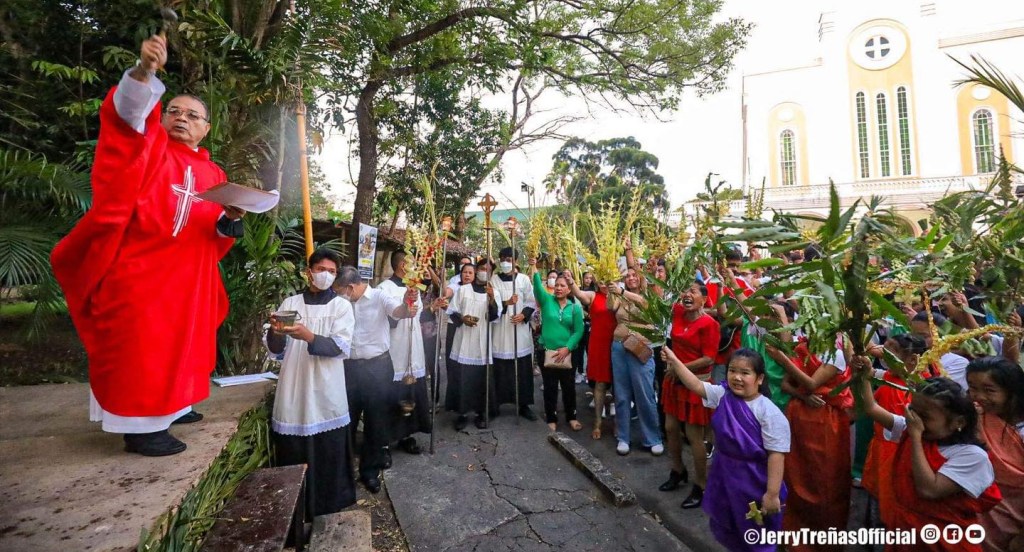
    Photo from JerryTreñasOfficial Facebook

    In reconnecting, we bring our heart and mind into prayer, into contemplation even when we are faced with difficult life experiences and situations that may be challenging to comprehend. In prayer and contemplation, we give ourselves to God just as Jesus gave up his spirit to the Father. This is where we are called to grow in our confidence and faith in the Lord who promised to be with us always and who shall never ever leave our side. And this confidence brings us into the third invitation.

    The third is RESPONDING. Jesus even at his death proved that God’s power of love and mercy outdone human sin and death. Even in death, Jesus responded to bring life and freedom. The Gospel described that “the veil in the sanctuary of the Temple was torn into two from top to bottom. The earth quaked, rocks were split, tombs were opened, and the bodies of many saints who had fallen asleep were raised.” This was how the death of Jesus made the heaven opened for all and brought hope to the dead.

    Hence, as we remember and reconnect, let our heart be filled with God’s presence to empower us by finding healing and freedom, life and renewal. This only means that we won’t allow any painful or shameful memory to dampen our spirit into hiding and pretensions. Do not settle to seek temporary comforts but rather go beyond and seek the Lord. The Lord desires our reconciliation and healing and so let us embrace that grace offered by the Lord to us, as Jesus gave up his spirit for us.

    To respond then, is to be able to get out beyond ourselves and become life-giving, spirit-inspiring and heart-renewing. Kabay pa.


  • Getting Started

    Getting Started

    April 1, 2023 – Palm Sunday of the Lord’s Passion

    Click here for the readings (https://bible.usccb.org/bible/readings/040223.cfm)

    “What would Jesus say? What would Jesus’ advice to us these days?” As we begin Holy Week today, we review first the lessons we might have learned about our faith & life from Sundays of Lent.

    In the 1st Sunday, with the Lord’s temptation, we are made aware that our experiences of life-temptations are but test of faith to rise & stand up for our faith. 2nd Sunday reminds us that like His transfiguration, our prayer life is our chance to meet Him & our Father personally, and to listen to God’s agenda rather than our own business. With the Samaritan Woman, 3rd Sunday teaches us that our experiences of dryness in faith & relationships invite us to remain steadfast & be open to know Him more deeply, and so renew our faith in Him intimately. The healing of the blind man in 4th Sunday shows us that our spiritual sight & blindness are limiting & limited, and so we need to widen our view of life & try to consider life from God’s perspective, will & plan than our own. The raising of Lazarus last Sunday challenges us that in our misfortunes, disappointments, & frustrations in life, we are to believe & trust in Him who is the Resurrection & the Life for all ends not in death but in God’s glory.

    Now today is Palm Sunday – marks the beginning of our Holy Week this year. These coming days of the week is our time and space to BE with our God. This week is our God-time and God-space. Particularly this week is more than just our chance to be with God but moreso, God’s chance to be with us. Meaning, this week is not only our time and space with God but more so GOD’s time and space with us.

    It is more like, God through Jesus must be first and foremost Be with us rather than We must be with God. The center or focus of this week then is not ourselves but God. This week is not about us and ourselves but about HIM and His being with us now. This is our chance then to experience, encounter and meet God in His own terms and not on our own terms. The best attitude then is to let Him set the agenda, activities, schedules, and venue of this week. Meaning, to let Him takes the steering wheel – let Him drive your life this week – let God be God, not be a god as we want or need Him to be. 

    To do this and make the best of this week, allow me to suggest some appropriate approaches.

    First, RECALL. As I have said, this is not about us but about Him. So, once again be reminded, that is to put into our minds – God’s story with Us which is the Jesus story. We are to call again and remember what God did, does and is doing to us through the life and mission of Jesus Christ. So, time and space to Recall, Remind, Remember God’s story with us through Jesus rather our story with God.

    Then, REFLECT. This is an invitation to mirror back God’s story with and along our faith-stories these past few months. In other words, Manalamin. To look and see our faith-life experiences from the point of view of God’s story and less from our own perspective. Meaning, Be moved. Be disturbed. Be influenced. Be shaken. Be challenged. Be transformed by God’s story, presence, words, movements, plans, agenda and will for us – you and I now.

    And above all, RESPOND to what, when, how, when and where God is calling, inviting, and leading you now in whatever faith-life commitment you choose to be. Meaning, whether you are ordained, married, professed, or baptized Christian, be a BETTER Christian as you choose and committed to be.

    We begin Holy Week today. Recall, Reflect, and Renew what God did, does and is doing in You and Us now by being with God, not in our own terms but in His own terms.

    Consider that it was once said: “Jesus did not say, ‘I am finished’, but said: ‘It is finished’. He is just getting started.”

    May we have a blessed and inspiring week ahead.

    So Be it. Amen.

  • Total surrender to God and putting our life in Him

    Total surrender to God and putting our life in Him

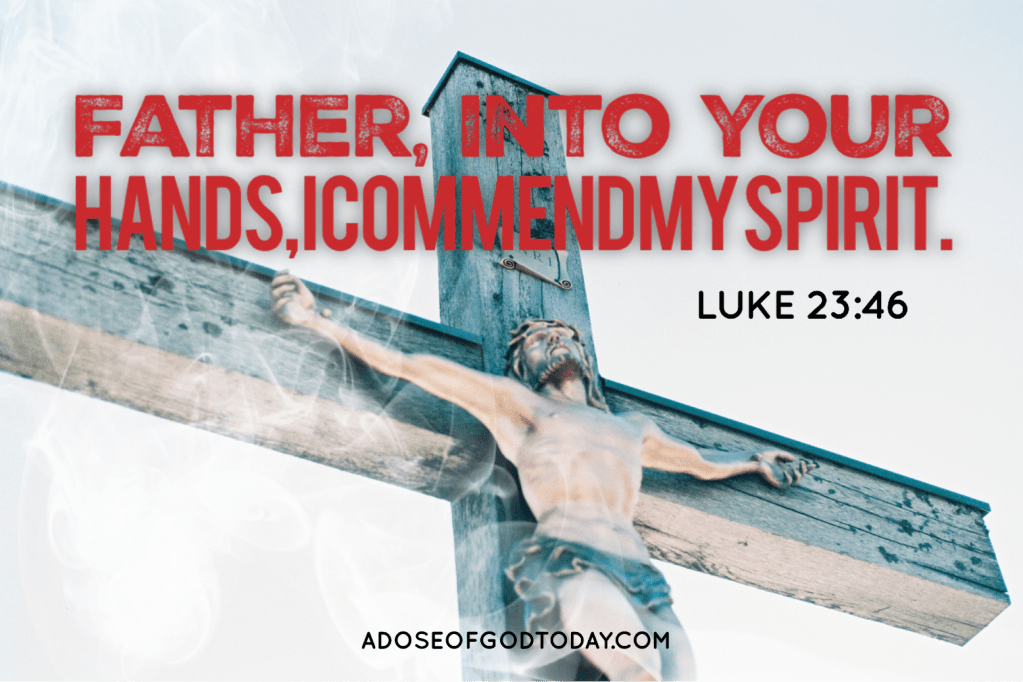
    “Father, into thy hands, I commend my spirit.” (Luke 23:46)

    The Seventh of the Seven Last Words of Jesus on the Cross.

    Shared by Bro. Froilem Bonn Barreto, CSsR, on Good Friday, Siete Palabras

    When I was informed to be the seventh sharer for this Siete Palabras, I asked myself silently, why me? What will I say since it is going to be live-streamed on Facebook. However, my formator told me that the seventh, which is “Father, into thy hands, I commend my spirit,” fits me well. Trusting in the support that was given to me by my formator, I accepted this task to courageously speak in front of you about my reflection and to share something about my life. 

    One of the most challenging and difficult times in our life is when we get into an experience where seemingly life does not allow us to breathe, and when life seems so unfair. When this thing happens, it does not meet our expectations. It does not let us see the beauty of life. This experience only brings us pain and misery instead of joy and comfort. 

    Like the rest of you, I too, have my own share of life’s ups and downs. I joined the seminary right after I graduated from high school. I enjoyed my seminary formation. However, as the old saying goes, “life is not a bed of roses.” 

    It was in 2002 when my life started to change. I was then a fresh graduate from college, working as a faculty member in a college institution when my mom passed away. She died of cancer at the age of 43. With my mom’s untimely death, things changed. Her death would mean missing a lot of things: her, waking us up early in the morning and cooking our meals. For me, I would surely miss her putting a hand towel on my back when I would sleep because I sweat a lot. 

    I believe that the words of Jesus “Father, into your hands, I commend my spirit,” invite us to re-examine our relationship with God. 

    I was not done yet in grieving over my mom’s death when another unpleasant surprise beset my family. In December of 2006, while on a mission exposure, around 2 a.m.,  I received a phone call. A  woman on the other line was crying, and it took her a while until she was able to tell me the reason for her call – my aunt said that my father died of cardiac arrest. I was speechless. I did not know how to react. The first thing that I thought was my siblings. What I remembered then was that I caught myself picking and packing up my stuff because I wanted to go home. With my parents’ death, life will never be the same. 

    Growing up without my parents was a life filled with uncertainties. It felt like groping in the dark. I was anxious most of the time but I pretended to be strong. As the eldest in the brood of six, I was forced to take up a responsibility that was too heavy for me. I left the seminary and embraced anxieties and the responsibility to become a mother and a father not only to my siblings but myself as well. 

    It was difficult growing up without those people who are supposed to be there for their children. I was faced with a whole lot of concerns and issues ranging from personal, psycho-emotional, financial, and a lot more. And so, I braced myself. I worked hard from being a faculty member to being a customer service representative to being a resto-bar singer. On my rest days, I sang at weddings and other occasions just to augment the salary that I was receiving from the company. 

    But often, I caught myself complaining to God. In my moments of solitude, I kept on telling myself, had only my parents lived, we would never have experienced this kind of life. This particular experience created in me a feeling of resentment towards God.

    In my prayer, I questioned him, “What kind of God are you?”, “What have we done, Lord, to deserve this?” Is the offering of my life to follow you not enough that in exchange, you are treating me like this? It is unfair! 

    In other words, I blamed God. I blamed him for everything. I was at the brink of losing my faith. I stopped going to church. And, what I disliked the most during those times was when people would come to us and comfort us by saying, “God has a purpose for doing this” and “God has a reason for everything.” Such insensitive comments! 

    I would react by saying, “kindly stop over spiritualizing things.” But like any other telenovelas, the story continues, the drama anthology continues. In 2006, a sister of mine, closest to me, was diagnosed with lupus, an autoimmune disease that has no cure at all. A health condition that is slowly killing her. She has been in and out of the hospital. She has two lovely and adorable kids. And thinking about her health condition bothers me a lot. In my prayer, I asked God, “Lord, please don’t allow her children to experience what we have experienced growing up without a mother.” I even shared this with my formator in one of our colloquiums. I expressed to him my fears and anxieties over the things that are beyond my control. 

    My dear brothers and sisters, Jesus’ last words are very powerful and compelling, I asked myself, why despite his agony, the humiliation he experienced, and unbearable pain on the cross, Jesus never blamed his Father. He instead uttered these words like a perfect prayer from the depths of his heart “Father into your hands, I commend my spirit.” 

    Into your hands, I commend my spirit” is part of the psalm traditionally believed to be written by David and prayed by devout Jews. No wonder Jesus himself uttered these words before he breathed his last.  It is a prayer of complete surrender, a prayer of unwavering trust to his Father. Jesus entrusted himself to his Father. “Father, into your hands, I commed my spirit” speak of a deep level of intimacy of Jesus with his Father. This line demonstrates what it is to be in a relationship with God. We see here that trust is such an essential element in a relationship. It is where a relationship should be anchored. We can only entrust something when we trust the other. There can be no genuine relationship when trust is absent. Trust brings a relationship to a deeper level and we see this concretely in the life of Jesus. No amount of pain, humiliation, and persecution prevented him from fulfilling his mission. This is because Jesus trusted his Father wholeheartedly.

    Oftentimes, when we are faced with problems and difficulties, when we are carrying heavy crosses, our human tendency is that we lose track of our faith. We rely much on our human capacities and strengths. We become too focused on our suffering and pain, on what we can do to the extent that our energies are depleted, and we become exhausted. We start to complain, self-pity, regret, become anxious about what the future holds, and perhaps blame others, or even blame God. Jesus has given us a glorious example of total surrendering to God. 

    I believe that the words of Jesus “Father, into your hands, I commend my spirit,” invite us to re-examine our relationship with God. 

    Do we trust God wholeheartedly? It is so easy to say I believe in God, and I trust in Him when everything that happens is favorable to us. The real test of faith is when life offers us exactly the opposite, “Do we still manage to say, Yes Lord, I trust in you?

    Trusting God does not remove our pains and suffering but transforms the meaning of these things in our life. Our faith and trust in God will sustain us as we go through this life, like Jesus whose trust in God sustained him in and through his sufferings even up to death, his death on the cross. 

    We continue to ask for the grace of God to strengthen our faith, to trust in His words, “come to me, all who labor and are heavily laden, and I will give you  rest. .. for my   yoke is easy, and my burden light.” God is indeed faithful to His promises. 

    Let me end this sharing with a song that speaks about total surrender to God and putting our life in Him. Let this be my prayer for you and your prayer for me as we continue this journey called life. 

    Click here for the full video (https://www.facebook.com/OMPHRedemptoristDavao/videos/2986892808037601/)

  • FORGIVENESS: A RADICAL LOVE

    FORGIVENESS: A RADICAL LOVE

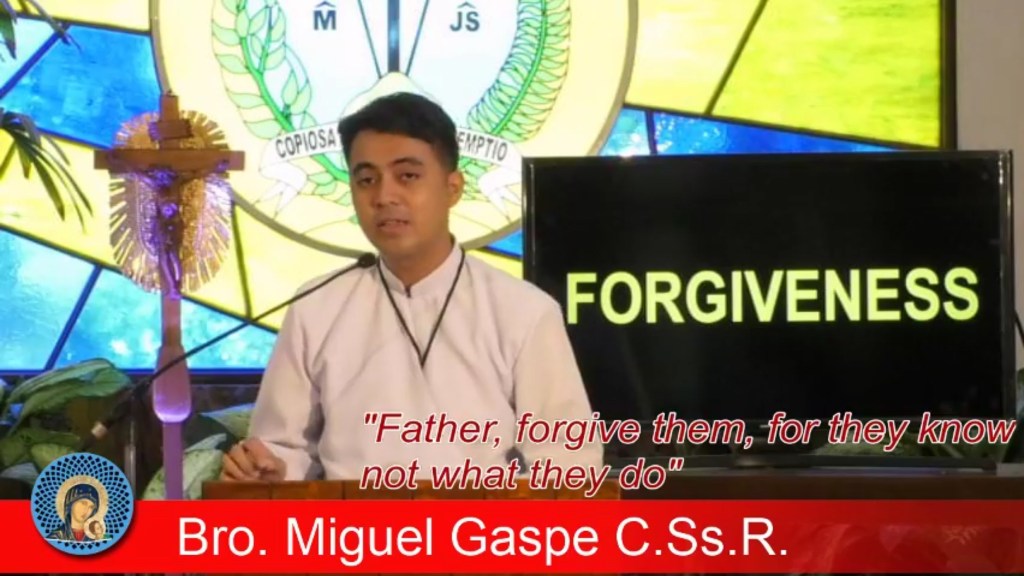
    FATHER, FORGIVE THEM, FOR THEY KNOW NOT WHAT THEY DO (Luke 23:34)

    The first of the Seven Last Words of Jesus on the Cross.

    Shared by Bro. Miguel A. Gaspe, CSsR on Good Friday, the Siete Palabras.

    Click here for the link of the Video (https://www.facebook.com/OMPHRedemptoristDavao/videos/2986892808037601/)

    Forgiveness, indeed, is of God, and it is only through His grace that we may be able to give it to persons who have wronged us. 

    “Radical Love” is a documentary on forgiveness and healing of Ms. Cherry Pie Picache. Cherry Pie, is a Filipino actress, best known for her dramatic roles in Movies and Television. The film captures her experience of meeting her mother’s murderer five years after the dreadful event. One of the highlights in that film features the most heart-wrenching scene where Cherry was able to forgive her mother’s murderer. As she underwent the process of healing, she affirmed how difficult and challenging it is to forgive the person who literally “broke her life.” 

    In her words, “It took me a lot of courage, strength, and prayers from God to be able to forgive the person who murdered my mother.” Painful though it is, She took the road of forgiveness for her to be healed and move on. Her story is indeed exceptional, but for many who are drenched in pain, grief, and revenge, to forgive is such a rare thing do. What does it mean to forgive and how to forgive?

    We look back to the scene where Jesus uttered these words, Jesus at this hour was on the brink of death, nailed to the Cross with the Roman soldiers at his feet. As he addressed these men, we could picture how exhausting the scene was. By this time, these Roman soldiers had been executing many criminals and had seen death day after day.  They are reduced to mere functionaries. They have no choice and freedom to do what is just and right at that moment as they were only following orders.  Familiarity with violence and brutality causes these soldiers to be numb and deaf with their emotions. Their society has allowed them to be stripped of their dignity as human persons gifted with freedom and compassion. It is in this human frailty and desperate condition where Jesus uttered to them, “Father, forgive them for they do not know what they are doing?

    Like us, Jesus understands what it means to be a human person. He showed in his life that a human person is a being created, loved, and cared for by God.  Jesus believes that in every human person, there lies within goodness. Despite our weaknesses, short-comings, and sinfulness, each has the capacity to go beyond our human conditions. Each of us is called towards goodness. Each of us can share this innate goodness to our fellow beings. When Jesus addressed “Father, forgive them…” these are not words of condemnation and self-righteousness. Instead, these are words of prayers addressed to his Father. Even in suffering, He went beyond our underlying tendency for revenge and offered a path for us to be reconciled with God, our Creator. Forgiveness, for Jesus, is an act of prayer and unselfish concern for the good of the other.

    Does forgiveness also mean to forget? I think we are familiar with the phrase “to forgive is to forget.” Forgiveness, to some, may come in the non-recognition of the wrong done. Or to forget, others would condone the transgression in exchange for shallow healing and reconciliation. But if we look into the truth of its meaning, forgiveness in Greek means “to send away.” A word used for commercial language meaning “to release from an obligation or to cancel one’s debt.” That is why in other translations of the “Lord’s Prayer,” sin or transgressions is equated with debts. In Matthew, it says, “forgive us from our debts as we forgive our debtors.” To cancel one’s debt includes a thorough acknowledgment of the debt owed by that person.  In other words, from every transgression we commit with ourselves and with others is a debt we owed to God. And this debt has to be paid in full. 

    Here comes the Good News. The debts we owed to others, to our environment, and God, are now paid in full, with and through, Jesus our Lord. His life, death, and resurrection are in itself the entire process of what it means to forgive and be forgiven. Forgiveness is a process where it involves acceptance of undergoing pain, anger, and grief which in the end will lead to an experience of “resurrection.” What it requires is our openness and obedience to the movements of God’s Spirit already working within us. 

    In the film’s last scene, as Cherry was able to meet the Convict, both of them were in tears. She could not imagine doing such an impossible thing of finding the grace to forgive. What is most striking in their encounter was that she was able to bless and pray for the healing of her mother’s murderer. She forgave not only for her good but to the person who wronged her, who is significantly in need of healing as well. 

    Watching that scene made me realize that it only brought into reality what Jesus’ words on the Cross truly meant. Forgiveness, indeed, is of God, and it is only through His grace that we may be able to give it to persons who have wronged us. 

    My brother and sisters, today is a time of grace, let these words of Jesus penetrate in our hearts. Let his words be a reminder that God, our Father, is madly in love with us despite and in spite of our human conditions. And in realizing this truth, may we see that innate goodness which moves us to a genuine reconciliation with our brothers and sisters in Christ. My friends, let us ask to our Father for that grace.

  • WHAT MAKES GOOD FRIDAY, GOOD?

    WHAT MAKES GOOD FRIDAY, GOOD?

    April 10, 2020 – Tenebrae: Morning Prayer of the Passion of the Lord

    Sermonette Shared by Bro. Vincent Chloe Que, CSsR

    “And have faith in the resurrection, have faith that better days will come in God’s perfect time.”

    Greetings of Peace!

    We are in the liturgical time called Holy Week, and today is Good Friday. But what makes this week Holy? Or this day Good? Is it not that were are reminded today of a terrible suffering, an unimaginable fate that befalls Jesus, our Lord? In fact, this morning’s prayer is called Tenebrae, which is a Latin word that means “darkness.

    Brothers and sisters, what makes it holy and good is precisely presence of Jesus, even in darkness, even in suffering. Suffering is a human reality that many have tried to explain. Yet Jesus never explained it, instead he willingly suffered so that in our suffering we will meet him there. Amidst this Pandemic, we find ourselves vulnerable and in great suffering:

    • As we are confined in our homes, under quarantine, we may experience anxiety and fear. Yet last night we remember Jesus in the garden sweating blood in deep anxiety and fear for death is lurking around.
    • Because of physical distancing and travel bans we may be separated from our loved ones or unable to hug and kiss our elderly parents and young ones, we may feel lonely. Yet we remember how lonely Jesus was when his friends abandoned and even denied him.
    • Our “frontliners” come face to face with danger on a daily basis, their burden is compounded by the lack of support for them. Yet we remember Jesus facing Pilate, scourged, mocked, and sentenced to death.
    • When our daily-wage earners are forced to stay home even if it means losing their means of sustenance, today we remember Jesus forced to carry his heavy cross.
    • And when we are sick or when we feel God has abandoned us, the voice of Jesus reechoes: “my God, my God, why have you forsaken me.”
    • And yes, even in death, Jesus is there.

    But also, two days from now, Jesus is also present in Easter: in our recoveries, in the heroism of our frontliners and our daily victories in fighting this pandemic. Yes Jesus is present in our Joys and in our triumphs! Indeed the cross would not make full sense without the empty tomb. 

    Today we begin the paschal triduum. Pascha or Pesach means passage. A capuchin priest, Fr. Cantalamessa referred to this as: “the passage of the Jewish people from slavery to freedom, the passage of Christ from this world to the Father, and the passage from sin to grace for those who believe in him.”

    John the evangelist also sees the passion, death, and resurrection as one event, one moment. Let us bask in Hope, something that these days’ celebration brings. Hope, Pope Francis says, is not an illusion, if we put our hope in Christ, it is never wasted.

    Therefore, brothers and sisters, a great invitation is before us in these trying times and as we celebrate the Holy Week, let us unite our suffering with the suffering of Jesus, allow these to purify us and bring us back closer to God, let us entrust to him our anxieties… rest assured that He understands us. And have faith in the resurrection, have faith that better days will come in God’s perfect time. This is what makes this week holy and this day good, we are celebrating a perfect act of Love by our God who, even in our sinfulness, will never ever abandon us. 

    Have a blessed days ahead!