Tag: Fullness of life

  • We all have been Graced

    We all have been Graced

    October 22, 2022 – Saturday 29th Week in Ordinary Time

    Click here for the readings (https://bible.usccb.org/bible/readings/102222.cfm)

    Do I feel inadequate? Do I feel insecure in one or many aspects of my life? Do I feel lacking in confidence and self-trust? Do I feel lacking in faith? The feelings of insecurities and insufficiencies from ourself could have come from our tendency to compare oneself from what others have and dwelling so much to the things we do not have. We could also have this belief when we too are constantly told that we are hopeless and that nothing is good about us. This can be very true to people especially with those who were subjected to humiliation and abuse that happened at home, at school, at work or even in our communities.

    This affects so much a person to the point that he/she can no longer see and recognize anything good in himself/herself or even outside the self. Certainly, when we fall into this trap, there is a need for us to be helped and to be reminded of who we are really. This is an invitation to discover and re-claim our person and the graces that we all have according to the measure of Christ’s gift.

    This is the good news for us today. St. Paul in his letter to the Ephesians, addressed and reminded the Christian in the city of Ephesus of the graces they have received from the Lord. Christ who is the source of gifts, graces us individually. St. Paul described it further, “he (Christ) gave gifts to all… that he might fill all things.”

    What Paul tells us is God’s desire that we may all be filled through his gifts. This is something we can discover and ought to recognize and claim. We have been graced indeed, particularly of God’s presence, of the gift of faith and of the gift of friends and community.

    Hence, Paul reminds us also to grow in our knowledge of the Son of God, in Jesus. In knowing Jesus and recognizing how the Lord works in us, then, the more we shall also discover his gifts, his invitations for growth and come to know more ourselves. Knowing Jesus then, is also an invitation to our self-maturity, to our own growth in mind, in heart and in spirit. This is the significance of Paul’s hope, that we may not remain infants who are easily carried away by human trickery, deceit and abuse.

    The hope to fully grow and therefore, become fruitful is the invitation that we also have in today’s Gospel parable of the fig tree. The owner who expressed hopelessness in the fruitless tree wanted it to be cut down. Yet, in the person of the gardener, he intervened and promised to cultivate the tree. The gardener saw hope in the fig tree. Indeed, there was still hope for the fruitless tree. Perhaps, the tree was not taken care of in the past many years. It was left uncultivated and unfertilized. The promise of the gardener is an act of giving more attention to the tree, of taking care of it and of not giving up on it.

    This is also an invitation for us. We may come to give more attention to the gifts the Christ has given us, to cultivate, nourish and develop our gifts, whatever they are. We may also consciously know Christ more and encounter the Lord in our life and in the life of others so that we may grow in our knowledge of him and in our knowledge of ourselves so that we may have our fill and the fullness and fruitfulness of life. Kabay pa.

  • UNDERSERVING yet Graced and Loved

    UNDERSERVING yet Graced and Loved

    October 17, 2022 – Monday of the 29th Week in Ordinary Time

    Click here for the readings (https://bible.usccb.org/bible/readings/101722.cfm)

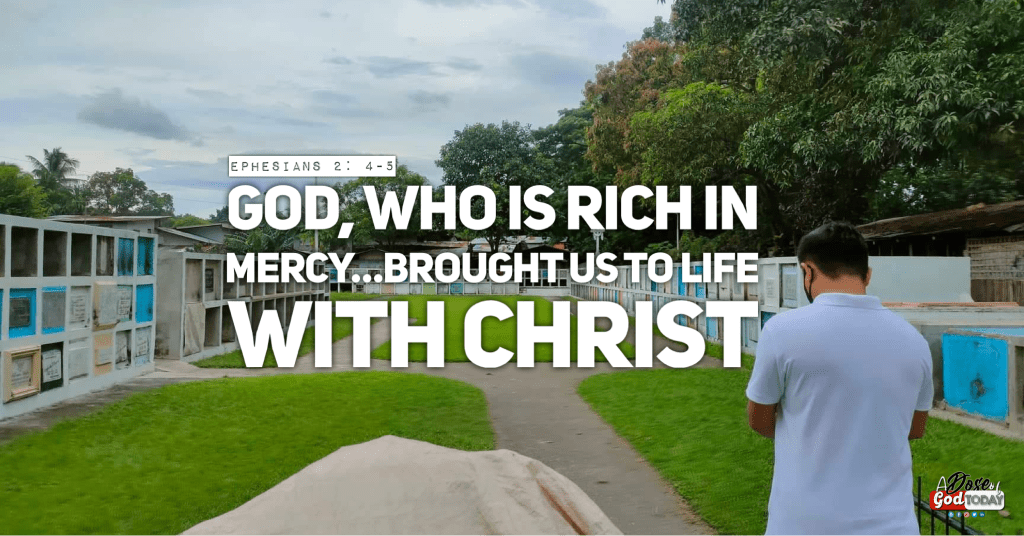
    This is who we are – UNDERSERVING yet we are graced and loved by God who would do everything to liberate and empower us from whatever that is preventing us to live life to the full. This is how Paul captured such image of ours before God in his letter to the Ephesians, “you were dead in your transgressions and sins… but God who is rich in mercy, because of the great love he had for us… brought us to life with Christ (by grace you have been saved).”

    Let us become more conscious of this and claim such grace from the Lord. This act is indeed God’s initiative, out of that great love we are shown mercy and brought to life. We realize how each of us matters in God even though we are not deserving in anyway. Paul further tells us, “For by grace you have been saved through faith, and this is not from you; it is the gift of God; it is not from works, so no one may boast.”

    Yes, it is a sheer gift of God! A gift that offers us freedom and peace, reconciliation and the fullness of life with Christ.

    This is how we also understand the parable of Jesus in today’s Gospel from Luke. Jesus did not condemn people who are rich materially. The warning of Jesus is directed towards a heart that has become dependent on possessions to the point that greed consumes the person. Total dependence on material possessions or whatever possessions we may have or “things that possessed us,” lead our hearts to greed. Greed keeps us away from others and from God because it worships not the Lord but something and someone else. Greed corrupts the hearts and destroys our relationships.

    This makes any person to be distanced from the grace of God, away from the company of true friendship and love from the community because the person grows to be vicious and self-centered. This is what the Lord wants anyone to be free from. When we become dependent and totally occupied by something else rather than by our relationship with God and with one another, then, we become prisoners of our own human desires and selfish tendencies. This is the transgressions and sins that Paul tells us.

    Jesus invites us to invest and be rich in what matters to God. This means that as God has shown us mercy because of his great love for us, we are offered and given life with Christ. This is the fullness of life.

    Thus, what matters to God is for us to replicate what we have received, that is, to show mercy to our brothers and sisters, to express concretely our love for each other and to God and to become life-giving persons. The fullness of life is not being experienced alone but can only be experienced within the context of our community. Hence, it is by being able to give life, inspire life and heal life in our families, group of friends, workplaces, organizations and communities that we shall also truly experience the fullness of life with Christ. Kabay pa.

  • The Cycle of Blaming

    The Cycle of Blaming

    February 13, 2020 – Saturday of the Fifth Week in Ordinary Time

    Click here for the readings (https://bible.usccb.org/bible/readings/021321.cfm)

    “No, not me! It was her!” The Man must have pointed his judging finger to the woman who gave him the fruit. Yet, the woman too responded, “Not me either. It was the serpent!” Both of them denied responsibility of eating the fruit and realized that they were naked. Both succumbed to the blame-game to deny full responsibility to their disobedience.

    However, what was really the issue in this story? Was it because of eating a desirable fruit? Was it because of the presence of the serpent that tempted them? Or the presence of evil around?

    Both of them, the woman and the man, were tempted not just by the desirable fruit to eat. The fruit was only a symbol of a greater temptation. The serpent that was very cunning, engaged the woman in a conversation by asking, “Did God really say that you will die?” It was only an opening of the serpent’s temptation for both man and woman to believe that they can become like God. This means that the temptation was in believing that they will be in complete control of everything. They must have believed too that they did not have everything in paradise. And so the unquenchable desire to have everything must have consumed them. They can only have everything if they too will become like God.

    Yet, the moment they tasted the fruit and came to know what is good and what is evil, they too realized their smallness before God. This was how they hid from the Lord God. They knew that they have sinned and that sin led them to fear. Fear is filled with guilt and shame. This is the reason why Adam and Eve were hiding. Their nakedness tells us of their guilt. Yet, their guilt never assumed the responsibility that they have sinned. As a result, they became trapped in the cycle of blaming. Adam blamed Eve. And Eve blamed the Serpent. And perhaps, we as readers, might also blame God for putting the serpent among them.

    Because of this, the intimacy between man, woman, and God was shattered. In the same way, man and woman lost their closeness with God. It was them who distanced from God. Thus, sin, without acknowledgment makes us hide yet, it leads to destruction and to death.

    However, this is also how God intervenes. God calls us and God continues to find us not to condemn us or to destroy us but to renew us, to recreate us, to give us the fullness of God’s grace and presence. This is how the Gospel tells us also of the heart of Jesus. Jesus felt the hunger of the people. Jesus felt their need to be filled and be satisfied.

    That is why, God calls and finds us when we try to hide because of shame and guilt. God does that because as the Gospel said, the “heart of Jesus is moved with pity.”

    Let us also remember, when we ty to separate and distance from God, God initiates to come to us to invite us to come closer to Him in humility and to end the cycle of blaming. Thus, let not our fear, guilt and shame prevent us from seeking God’s mercy. God offers the abundance of grace through the sacraments, let us come and be renewed, be recreated and be given the fullness of God’s grace. Hinaut pa.

  • Life is in Jesus

    Life is in Jesus

    January 8, 2021 – Friday after Epiphany

    Click here for the readings (https://bible.usccb.org/bible/readings/010821.cfm)

    When many of us are confined at home because of the pandemic and restrictions in going outside our residence, the rise of the Plantitos and Plantitas (the popular name of those who develop the love of planting) also emerged. Our boredom at home wonderfully bore fruit by becoming more connected with the earth. When we learn how to plant, we also learn how to touch in order to nurture life.

    Touching with the motivation of caring brings wonder and joy in us. This is the reason why many of us find comfort and pleasure in nurturing the life of the plants. More than this, we too are called to nurture human life, to inspire life and heal life. This is what Jesus shows us today.

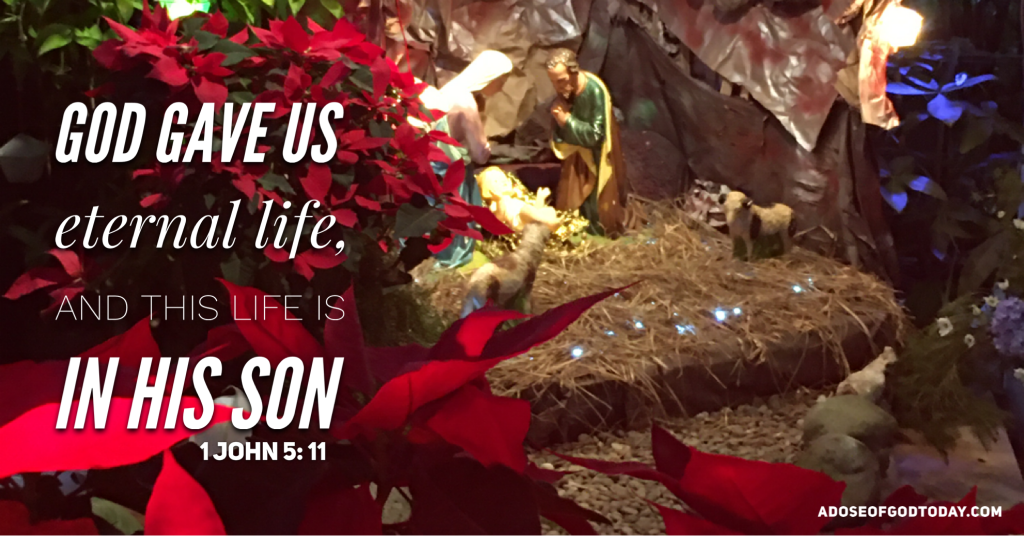
    Our readings today remind us of this. The first reading from the First Letter of John tells us that “God gave us eternal life, and this life is in his Son, Jesus.” We find this life in Jesus, our Lord.

    John mentions two important and recurring words in today’s reading that tell us that life is indeed in Jesus. These words are testimony and possession.

    The word testimony refers to the witnessing of the Father in the life of Jesus. The testimony of the Father to His Son is the confidence of the Father. This also means that the confidence of God in us will be revealed in our life by having Jesus. This is not about giving testimony to God, but God giving testimony to us through the wonders that God can do for us.

    The word possession means our possession of Jesus, the Son of God in our life. Having Jesus is letting Jesus fulfill his promise to us. Having the Lord in our life is allowing the Lord to do what he desires to do in our life.

    Such testimony and possession of Jesus bring us into the Gospel story. A man full of leprosy fell prostrate and pleaded with Jesus. The man asked the Lord to reveal God’s testimony of bringing healing and fullness of life. The man asked, “Lord, if you wish, you can make me clean.” He allowed the Lord to work wonders in him and to let God give testimony through the gift of healing.

    In this way, Jesus touched the man to heal him and bring him that fullness of life. Jesus’ touch surely brought healing and life because his touch was motivated by care and compassion, by love.

    Today, let us be conscious of this invitation to have Jesus in our life and to discover that eternal life or the fullness of life is in Jesus. As we touch people through and by our life, always bring healing and bring life not corruption of life and not violence to life. Allow also the Lord to give testimony to us by making ourselves always open to God’s plan for us. Hinaut pa.

  • God’s Heart is Moved with Pity

    God’s Heart is Moved with Pity

    December 2, 2020 – Wednesday of the First Week of Advent

    Click here for the readings (https://bible.usccb.org/bible/readings/120220.cfm)

    Homily

    My heart is moved with pity. The words of Jesus must have been ringing into the ears and hearts of his disciples. God is moved. God feels our pain. God feels the emptiness and longing of our hearts. The Book of Prophet Isaiah tells us about this too, “The Lord will wipe away the tears from all faces.” God shall take away our pain and sadness. Again, on this first week of Advent, we take comfort in this promise of God who is with us. The journey of this Advent is to make our heart and mind more confident in God, to be more assured of God’s abiding presence in us.

    Hence, the Gospel of Matthew reminds us how Jesus attended, welcomed and healed those crowds who brought the heaviness and hungers of their hearts and different illnesses to him. Jesus cured and satisfied them all. He made the mute speak, the deformed whole, the lame walk, and the blind see.

    Moreover, Jesus wanted his disciples to be also moved with pity. Jesus wanted that the hearts of his disciples will also experience the power of being moved by others. To be moved with pity allows us to feel the heart of another. This allows us to understand them, to be in solidarity with them and to journey with them. Such solidarity will lead us into healing and freedom, which is the very experience of those people healed and freed by Jesus.

    This means that the journey towards healing, freedom and fullness of life is not achieved when we are alone. It cannot be achieved when we distance ourselves from our friends and family, our community, and from the Church.

    That is why, as the heart of Jesus was moved with pity, he too asked his disciples to participate and join with him. His question, “How may loaves do you have?” must have been a question with a deeper meaning. Jesus was not just asking about the number of the physical loaves of bread, but also the availability of the hearts and presence of the disciples. Indeed, that question meant more than loaves.

    The disciples responded not just with seven loaves, but also with few fish. This food was all they had, yet, God asked everything. And they all gave them up for others. It must not be easy to give up all you have for the sake of others. That food, if one would think, would not have been enough just for the 13 of them. How could that little they have, feed hundreds of people?

    We usually think for ourselves and prioritize our own needs. However, the disciples, out of obedience to Christ, gave everything they had at that moment for the sake of those in need at that moment. This was the beginning of the wonder and amazement.

    Those seven loaves and few fish given out of generosity and obedience to Christ were blessed, given thanks, and broken. Those were distributed to all of those who were hungry, to satisfy them and fill their emptiness. Yet, what was blessed, given thanks and broken and was shared became abundant before the eyes of the disciples. As people partake with their bread and fish, people were satisfied and there was more than enough. This was how they collected the left-over that filled seven baskets. The number of fullness.

    What had been satisfied were not just those who were hungry but also the givers. Indeed, the journey taken by the disciples to fill the hunger and emptiness of the people became their own journey also to experience both physical and spiritual satisfaction and fullness of life with the people and with the Lord.

    Today, Jesus also invites us to be moved with pity that with him and with the disciples, we too shall bring out those little things that we have, and to offer them to God so that many will be able to receive. We shall see the wonder, then, when the small or little things from us are given generously because we will surely be able to respond to the different forms of hungers around us. Hunger is not just limited with physical hunger for food but also for love, for affection, for justice and for peace.

    The symbol of seven loaves and few small fish are not just limited with material possessions that we have. These also include our talents, capacities, expertise, our time and effort, our presence and our very person.

    While the Lord assures us and promises satisfaction from our own hungers in life, hopefully, we too will be like his disciples who became instruments of satisfying not just ourselves, but also our brothers and sisters. Hinaut pa.