
February 21, 2021 – First Sunday of Lent
Fr. Manoling Thomas, CSsR
Click here for the readings (https://bible.usccb.org/bible/readings/022121.cfm)
The Gospel evangelists: Matthew, Mark, and Luke mentioned Jesus’ experience of temptation when he spent 40 days in the dessert. Mark has the shortest account, just in two sentences [Mk. 1: 12-13]! Today’s Gospel [Mk. 1: 12-15] has actually two episodes: 1) the temptation story; and b) a “summary statement” regarding Jesus’ preaching in Galilee. I will only focus on the first episode: the temptation story!
In Mark’s version there are three important words to remember: 1) the desert [wilderness]; 2) the wild beasts [animals]; and 3) the angels.
For the Jews, the word “desert/wilderness” has many associations. Moses spent 40 days of fasting in the desert for the sinfulness of the people that Yahweh asked him to bring to the Promised Land [Dt. 9:18]. Elijah made a 40-day journey through the desert of Horeb, after which, he was renewed, re-invigorated and re-energized for his mission to Israel [1 Kgs. 19:8]. The Hebrew people, after leaving Egypt, spent 40 years travelling through the desert, on their way to the Promised Land. During that journey, many times, Israel’s fidelity to the Lord was put to the test! Jesus, in today’s Gospel, spent 40 days in the desert, the battleground between him and Satan! The “desert” then, can be a place of liberation or failure; or a place of joy and a deepening of one’s commitment!
Both the “wild beasts” and the “angels” were with Jesus in the desert! Jesus had to struggle with the “wild beasts” but in that struggle, the “angels served him” [Mk. 1:3]. The angels’ caring for Jesus reveals God’s presence with Jesus in the desert!
The “wild beasts” represent the threatening and harmful presence of the evil forces, while the “angels” represent the gentle and protective presence of God and the forces of the Good!
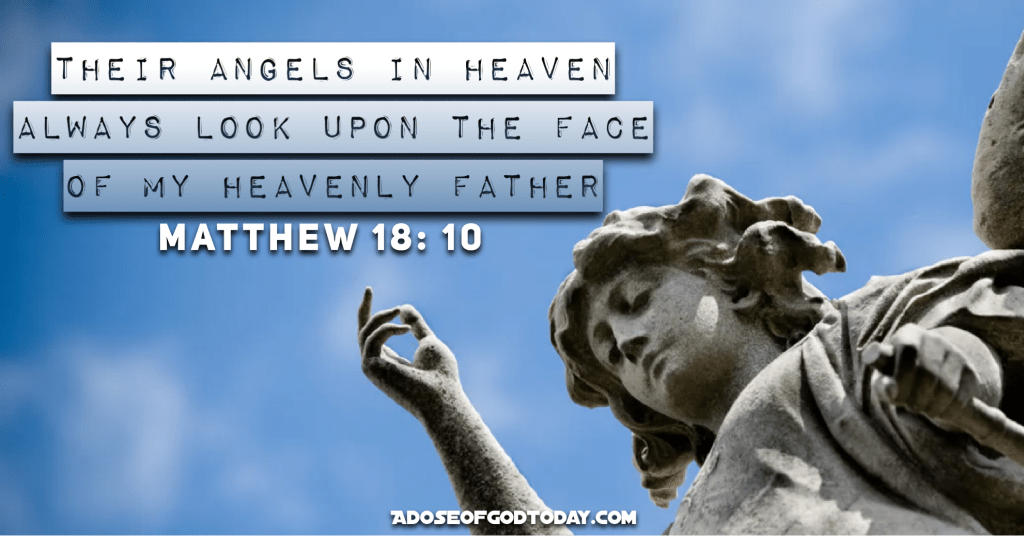
The idea of “angels” underwent a development in the understanding of the Jews. In Genesis 3: 24, “angels” were portrayed as “prison guards” employed by God at the gate of paradise so that our first parents who were driven out would not be able to enter again! In the Book of Exodus [23:20ff] Yahweh sent an angel to the Israelites to guide, protect and lead them in their journey through the desert. God gave us the Angels to be our mentors and companions in our journey in life. In the Catholic tradition we celebrate the feast of our Guardian Angels [October 2]!

What do the “desert”, the “wild beasts” and the “angels” signify in our lives? The world outside, and our “inner world” are the battleground of the forces of evil and Satan on the one side; and the forces of goodness and of the Kingdom of God on the other. That battleground is our “desert” We stand between these two opposing forces competing for our attention, our choice; and our loyalty!
The presence of evil and of good, are both outside and inside of us! Carl Jung, a famous psychologist wrote that some time in our life we have to face and to wrestle with our own inner “demons” or “monsters” or “wild beasts”. Of course Carl Jung used these terms figuratively! Jesus too had to wrestle with his own “demons” or “monsters”. When one succeeds in that wrestling, the “demons” or “monsters” are tamed and actually become our “slaves” or “servants”. Jesus succeeded in taming those “wild beasts” outside and inside of him. Jesus defeated Satan in the desert!
The “wild beasts” within us can take the form of bitterness, cynicism, depression, hopelessness, mediocrity or compromise with the Evil One!
The invitation [temptation] of the Evil One can be enticing and tricky! Often Satan does not appear to us like the scary, repulsive, or ugly creature often depicted in horror movies. Satan can disguise himself as “an angel of light” [2 Cor. 11: 14]. These “wild beasts” can appear in sheep’s clothing to entice us to accept their harmful and fatal proposals again subtly presented as good, and gratifying! They promise instant and quick happiness and satisfaction! An example of these is the prohibited drugs! Accepting these offers in the long run will prove to be harmful, detrimental, fatal; and dehumanizing for us! We end up the real losers!
The “angels” are also present, ministering to us, as they did to Jesus in the desert. The power of the Kingdom of God is both within [Lk. 17:21] and outside us! The Holy Spirit had been poured within us at our baptism.
In your life, who or which force has a stronger influence or greater hold on you: the forces of the wild beasts; or the caring and protective power of God’s angels? Which of these forces do you usually listen to and follow?
 A DOSE OF GOD TODAY