Tag: A Dose of God Today

  • SEEK LOVE, SEEK PEACE

    SEEK LOVE, SEEK PEACE

    February 19, 2023 – Seventh Sunday Ordinary Time

    Click here for the readings (https://bible.usccb.org/bible/readings/021923.cfm)

    As my niece was growing up, it was also the time that we directly and indirectly taught her ways of behaving and of different attitudes, which may be good or bad. Unconsciously, there were many things and ways that we taught to the child that were not really good. For instance, when she would misstep and fall, she would cry because of pain. Our immediate response is to comfort the child and tell her, “hapaka ang salug aron makabalos ka” (hit the floor so that you may have your revenge).Then, this would somehow bring comfort to her as if hitting back would take away the pain.

    A situation like this can easily be taken for granted since this looks and sounds normal to us. However, what we are not aware of is that we are actually introducing a very unhealthy attitude to the child. In fact, this kind of situation would only teach children the “culture of revenge” and the “culture of hate.” It is a form of teaching a child not to be comfortable with pain but to take comfort with vengeance. Hence, this is an unconscious way of teaching hatred to a young heart. Yet, is this the attitude and way of life that Jesus is teaching us as his disciples now?

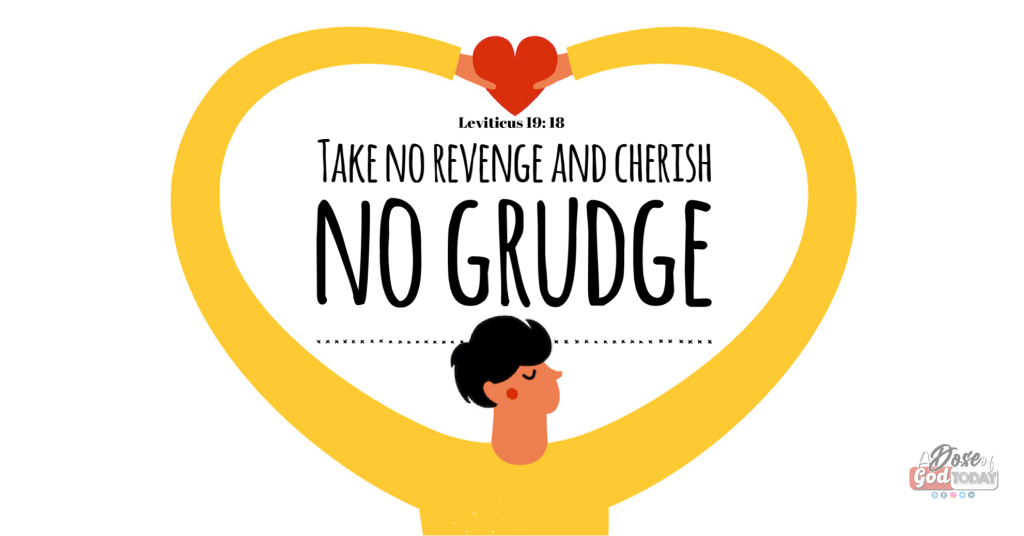
    Well, we have heard from the Book of Leviticus what the Lord said to the Israelites, “You shall not bear hatred for your brother or sister in your heart… Take no revenge and cherish no grudge against any of your people. You shall love your neighbor as yourself.” The Lord God commanded this because this is how the Lord shows his heart and compassion to the people despite their unfaithfulness and sins. Moreover, the Psalm today also expressed God’s nature, “The Lord is kind and merciful.”

    This nature and attitude of God is the call for all of us Christian believers. Jesus also tells us, “be perfect, just as your heavenly Father is perfect.” This perfection, which is much better translated as completeness or wholeness, that Jesus said, is meant to love all, not just loving those who are close to us but also those whom we do not like, those who caused us pain and shame, those who betrayed us and those whom we hate and those who have hatred against us.

    Indeed, it is also true that this sounds impossible to do especially if we would follow what Jesus said, “when someone strikes you on your right cheek, turn the other one as well.” This really sounds ridiculous and outrageous not just to us now but also to people who listened to Jesus at that time. We can possibly ask, “How can I love someone who betrayed me? How can I love the person who abused us, physically, materially, emotionally o sexually?

    Let us remember that it is certainly true that there may be people who caused pain to us and even unrepairable damage to us, but then, let us also be honest that we too, may have caused pain and damage to others in one way or another, or in many ways which we may not be totally aware of.
    So, what is this message of Jesus really all about? Love and peace, not hatred, not vengeance, not violence. This is what Jesus revealed to us. This is the very experience of Jesus with his Father in heaven as well. Indeed, the Lord God is not a violent Father. The Lord God cares for all sinners and righteous alike. And that God’s power rests in unconditional love and not in bringing us to damnation and eternal death because the Lord is slow to anger and does not hate.

    From this realization of God’s nature and attitude towards us, we are called to grow and become more like Jesus – in the sense, that we become “a complete person or a whole person” as Psychology says. Being a complete and whole person means a person who is healed through forgiveness, love and peace, who does not nurture grudges and not being controlled by anger or hatred.

    Indeed, we are called to get rid of that culture of hate, revenge and violence because healing, reconciliation and peace are not possible when we linger on these attitudes.

    This challenges us now that in our relationships, as we may face the possibilities of being hurt, let us also do our best not to keep feeding our hearts with hate and the thirst for revenge and violence. Let us also consciously teach our children of the culture of forgiveness and not the culture of hatred. Kabay pa.


  • The Tower of Babel

    The Tower of Babel

    February 17, 2023 – Friday 6th week Ordinary Time

    Click here for the readings (https://bible.usccb.org/bible/readings/021723.cfm)

    The Book of Genesis speak of the human tendency to be proud and arrogant. And the tower of Babel tells us of this human aspiration to be powerful and become like God, as people said, “Come, let us build ourselves a city and  tower with its top in the sky, and so make a name for ourselves.” Yet, this made the people to be exclusive and arrogant.

    Indeed, the tower of Babel expressed earthly power and riches. Humanity believed that these things were enough for them to make a name for themselves and become powerful like God who created the world. Hence, as those who built the city and the tower, became exclusive, they also refused God’s command to fill the earth. The people decided to just stay in that place, in that city and not anymore share their knowledge, experiences, graces and riches in other parts of the earth. They have become comfortable there to the point that they did not want to go out from their comforts.

    However, it was said that the Lord had seen this and realized as well the evil intentions in the hearts of the people. This was the reason why the Lord scattered them by confusing and dividing them. When they spoke differently, people did not understand and did not care to understand each other.

    From here, we realize that our human efforts and aspirations when they only come from greed, pride and arrogance to become great and powerful like God, are certainly worthless. Our mere human success, wealth and power are not the keys to be great in the eyes of God.

    This realization brings us then into the message of our Gospel today. Jesus expressed a way of life that was different from the people who tried to build a city and the tower of Babel. Jesus tells us that to be a true disciple of him is not about boasting oneself, of our successes in life, of our influence and power over others. A true disciple, rather, is a person who denies himself for the sake of others, who carries his own cross and follows Jesus. A true Christian then is a person who remains humble before God, who recognizes his/her smallness and dependence, yet, also embraces the presence of God who gives him/her the strength to carry the cross.

    Let us remember, that human effort and strength and our successes in life are not evil. In fact, these are gifts from the Lord and not reasons that we become greedy and self-righteous people. What we have received, achieved or accumulated in this life give us the opportunities to be able to share our gifts, our talents and ourselves to our community.

    This calls us now that our families, groups, organizations, and communities become inclusive and welcoming. Indeed, to be inclusive and to be hospitable are natural to a Christian home, to a Christian organization or community. May that spirit lead us to give, to share and to reach out even to those who are different from us. Hinaut pa.

  • I am now establishing my covenant with you

    I am now establishing my covenant with you

    February 16, 2023 – Thursday Sixth Week in Ordinary Time

    Click here for the readings (https://bible.usccb.org/bible/readings/021623.cfm)

    The Book of Genesis in the story of Noah with God, we have heard how the Lord renewed the covenant with the whole human family. The Lord God still sees hope in us. And the wonder of this renewal of the covenant with God, as God says, “I am now establishing my covenant with you,” carries with it the call and responsibility to nurture, cherish, develop and give life.

    What does it mean? As the Lord renews the covenant, God also demanded an accounting for the life of every animal and an accounting for every human life. This is not a threat from God but rather the Lord wants us to value every life. This is how the Lord wants us to flourish and discover the wonder of life here on earth and be embraced by life itself through the whole creation of God. Every creature of the Lord reflects God’s goodness and love and every human being also reflects and carries God’s image.

    Thus, the call to be fertile and multiply must be understood within the context of life, in nurturing, cherishing, developing and giving life. This indeed, calls us to defend life from anything that will suppress life, abuse life and destroy life.

    The very covenant that we have with God is a testament of that life and promise of the fullness of life. The rainbow is not just some ideological color, however, it is a biblical sign of God’s presence among us, a sign of life and a sign of renewal.

    This calls us further to commit ourselves into that covenant with God so that we too shall become cooperators of God’s action and presence in the world in bringing and giving life. This can be fully expressed in our homes, communities and organizations, and into our relationships. Every time we give hope to those who felt hopeless, every time we give a helping hand to those who need it, every time we give more attention in taking care of animals and of nature – these are simple ways of expressing that covenant and call to give life.

    In a way, the Gospel today tells us also how Peter recognized the fullness of life in Jesus as he confessed that indeed, Jesus is the Christ. However, after realizing that Jesus is to be persecuted, will suffer and die, Peter retreated from his commitment to be with Jesus, the Christ.

    Like Peter, if we confess that Jesus is the Christ, our Lord and Savior, then, this confession implies commitment and risk. After all, when we commit ourselves to somebody we love, risks and sacrifices are implied.

    Thus, as we embrace the covenant God made with us, may we come to fully commit in that relationship with the Lord. Let us therefore, allow our human relationships and relationship with the rest of the created world to be fertile where we can multiply love and multiply life. Hinaut pa.

  • Jesus touched for the second time

    Jesus touched for the second time

    February 15, 2023 – Wednesday of the Sixth Week  in Ordinary Time

    Click here for the readings (https://bible.usccb.org/bible/readings/021523.cfm)

    For the second time, Jesus has to do it again. The blind man still could not see clearly when Jesus touched his eyes the first time. Yet, another interesting part of this healing story was on how Jesus brought the blind man away from people and out of the village and then told the man to go home but not to go back to the same village where he had been.

    This tells us that healing may not be instant and that it takes patience because healing is a process. Hence, the man was healed not just with his physical blindness but also of his spiritual blindness. The darkness that covered his eyes prevented him to not just see but also not to recognize. Hence, Jesus told him not to go back to the village of Bethsaida. That village became a symbol of unbelief, sin and rejection of God’s presence. Jesus was not welcomed there because people wanted to remain  in their wicked way of life. The people did not want Jesus to change them, to heal them and to renew their life. Thus, going back in that village would only make the man go back to the same cycle of darkness in his life.

    Indeed, the healing of this blind man tells something about the disciples and about us today. Jesus has to take the man outside the village with his disciples so that they may see and realize their blindness. The disciples have been with Jesus and have seen great things that Jesus did to the people. Yet, the disciples remained spiritually blind. Their minds were still clouded with doubts and fears. They could have seen something about Jesus but could not see it clearly.

    This blind man represented the disciples, no doubt. As Jesus did the healing, notice, that the man was not immediately healed. We may wonder, why was he not healed immediately and completely? Was it because the man doubted Jesus? Or was it because of his lack of faith?

    What was only certain was that the eyes of that man were still prevented by some darkness. He still could not see clearly. However, Jesus remained patient with the man. He did not condemn the man for having a lack of faith. Jesus has to do it again so that the man could see clearly and to take away the darkness that covered his eyes.

    Jesus was doing the same thing also with his disciples. The disciples were spiritually blind because they have not yet figured out at this moment who Jesus really was. They were still anxious of what to eat and what to do even though Jesus was with them. Hence, Jesus taught something to them through the healing of this blind man.

    We too are just like the disciples and that blind man. We could have claimed that we have seen and understood something about our faith, about the Church, about Jesus or even about other people and ourselves, yet, not completely. Not completely and not clearly because we might be prevented by our fears, anxieties, by our pain and trauma or even biases. We might also be trapped in the cycle of self-pity or self-righteousness and arrogance, in the cycle of blaming others over our failures or in bitterness and hatred, or in the cycle of habitual sins, addictions or unhealthy coping mechanisms because we find life already dark and hopeless.

    It would be good for us today to identify and recognize aspects and areas in our life that prevent us from truly believing in Jesus, from truly believing that we can be healed, be at peace and reconciled, be free and truthful about ourselves and to what surrounds us today.

    Let us be assured also that Jesus will be patient with us. So, let us allow him to touch us even for a second time so that any forms of darkness in our eyes and hearts may disappear and that we may see Jesus clearly among our sisters and brothers, no matter who they may be. Let us allow Jesus to challenge and to bring us out of those unhealthy cycles that only bring us to darkness and blindness. May the grace of healing grant us freedom, peace and life. Hinaut pa.                 

  • Be Influenced by Love and Concern

    Be Influenced by Love and Concern

    February 14, 2023 – Tuesday of the Sixth Week in Ordinary Time

    Click here for the readings (https://bible.usccb.org/bible/readings/021523.cfm)

    What and who is it that can easily influence you? Indeed, each of us can be easily influenced by many things and people around us. Sometimes, we may not be aware what really influences our thoughts and hearts because we are not aware of our environment. The popularity of the Social Media, of Facebook, YouTube, Twitter, TikTok and Instagram bring so much influence into our individual lives and even into the consciousness of the society. This is how these social media platforms crept and reshaped cultures, social status, gender, age, even beliefs and values.

    However, when one is not also aware of the kind of influences that he or she is welcoming, those influences may bring the person into better or into worst. Moreover, even our own words, spoken or written, can also influence others to become better or to become worst. The rise of fake news and disinformation entertained by many has been very damaging into our culture and relationships. People who are not aware of the sources and the credibility of the reports, are being deceived and in effect brought more damage to the community by spreading them.

    Such is the warning that Jesus reminded to his disciples. The Lord firmly warned his friends, “Watch out, guard against the leaven of the Pharisees and the leaven of Herod.” The leaven being used to make the dough to rise, was used as an image by Jesus to depict the silent but cunning influence of the Pharisees and of Herod. The passive yet indifferent, aggressive and oppressive attitudes of the Pharisees and of Herod can become attractive to people who tend to seek recognition and praise and those who tend to worship the powerful and the corrupt, the arrogant and the aggressive.

    These tendencies were also present among the disciples. This was the reason why Jesus reminded them when they began to worry of having not enough bread. Even until that moment, they did not yet recognize that the Lord was with them and had already worked wonders by feeding thousands of people. This prompted Jesus to ask them, “Are your hearts hardened?”

    Moreover, The Book of Genesis reminds us also of a disheartening event as God regretted and his heart was grieved. God found evil in the hearts of humanity. The hearts has been influenced and consumed by wickedness and evil that God decided to wipe out the earth and reshape it. Yet, Noah found favor with the Lord. Noah was neither influenced nor consumed by evil, but by love and concern. This was how the Lord found hope in us to reshape the earth and renew our hearts.

    Today, like the disciples and like what happed in the story of the Book of Genesis, the Lord also calls us to watch out of those distractions that may lead us away from the grace of God and from God’s presence. We may always realize that God is working wonders in us and through us.

    Thus, recognize today those wonders that God is doing to you. Let not our hearts be influenced by passivity, by indifference, by arrogance, by aggression or by any fake news about God, about ourselves and about others. Rather, look always of those many wonders that God is doing in our lives. Be influenced by God’s grace in our sacraments. Be influenced by His words in the bible. Be influenced by the Holy Spirit. And as this Valentine’s Day reminds also, be influenced by love and concern and not by hatred and indifference.  Kabay pa.