Category: Year 2

  • What matters most is what comes out from our heart

    What matters most is what comes out from our heart

    February 12, 2020 – Wednesday of the 5th Week in Ordinary Time

    Click here for the readings (http://www.usccb.org/bible/readings/021220.cfm)

    Homily

    How do we understand the human heart?

    From a medical point of view, it is a “hollow muscular organ” that serves as a pump controlling the blood flow into our body.

    From a psychological aspect, the heart refers to the emotion of a person, the “affective aspect” of an individual.

    However, from a biblical point of view, and from the understanding of Jesus, the “heart” is more than a muscular organ and more than the emotion of a person.

    The heart is the person’s individuality and the primary aspect of our personhood – that makes us who we are. It is where we are affected by a relationship with God and with one another.

    This is what Jesus was talking about in the Gospel when he refers to the human heart. There was this law among the Jews that prohibits certain kinds of food that they should not eat. There were also practices that one should observe before eating because they have believed that those food and if those practices are not carefully followed like washing before eating, they will compromise the person. It means that, when a Jew does not follow the prescribed law in eating then he/she commits sin and becomes unclean.

    However, Jesus criticized the people of his time for making those laws more important. Hence, he said that no matter what kind of food or drink we take it would not affect our human heart. What matters most is what comes out from the human heart.

    Today, Jesus is challenging us to discern and see the values that we nurture in our hearts.

    If we are nurturing hate, anger and suspicion then the way we relate with others is motivated by these and so we become persons who always see negative in everything. Hate, anger and suspicion make our relationships bitter and insecure. It is the same when our hearts will only seek self-approval, personal gain and entitlement. Through these deep motivations in our hearts then we become self-serving Christians who will only think of the self even at the expense of other people.

    We are called now to nurture the values of the Gospel in our hearts that will make us confident in God who loves us. Thus, our heart shall only seek truth and honesty, trust and faith. Yes, truth and honesty  – so that our hearts will not remain pretentious and arrogant, and we will not cover ourselves with the façade of a good image; but honest enough to recognize our weaknesses, failures and sins. This will hopefully make us more trustful and faithful to God who promised to show mercy on us, to help us and to redeem us. 

    In order to make our hearts more like Jesus, let us ask the guidance of Our Mother of Perpetual Help that our heart may become always attuned to the Gospel by listening to the Word of God and in welcoming Jesus in our hearts. Hinaut pa.                                                             

    Jom Baring, CSsR
  • Our Sacred Encounter with God

    Our Sacred Encounter with God

    February 2, 2020 – Feast of the Presentation of the Lord

    Click here for the readings (http://www.usccb.org/bible/readings/020220.cfm)

    Homily

    The gospel that we have heard today reminds me of the inspiring presence of our grandmothers and fathers in our church. Most of our regular church-goers are the senior citizens. They have developed it into a habit and at the same as a devotion to meet the Lord daily in their life.

    In this mass, let us particularly acknowledge their presence in our community and thank them for the witnessing they have shown to us, the younger generation.

    The gospel of Luke tells us of these two elderly man and woman, Simeon and Anna respectively. Both of them were patiently waiting to witness the coming of the Christ. They must have experienced boredom and anxiety as they waited for the Lord to come. Yet, all those dull moments, anxiety and even disappointments in the past were all gone at the arrival of the baby Jesus. 

    Forty days after the birth of Jesus, the baby was brought to the Temple by Mary and Joseph. The coming of Jesus into the Temple was very symbolic. The arrival of Jesus’ presence consecrated the Temple. The Temple is a space where God and the humanity meet. This very space is now consecrated by the very presence of Jesus.

    The meeting was further symbolized by the encounter of the Old and the Young, of Simeon and Anna and of the Holy Family. From this encounter, God’s invitations and surprises are being unfolded to us.

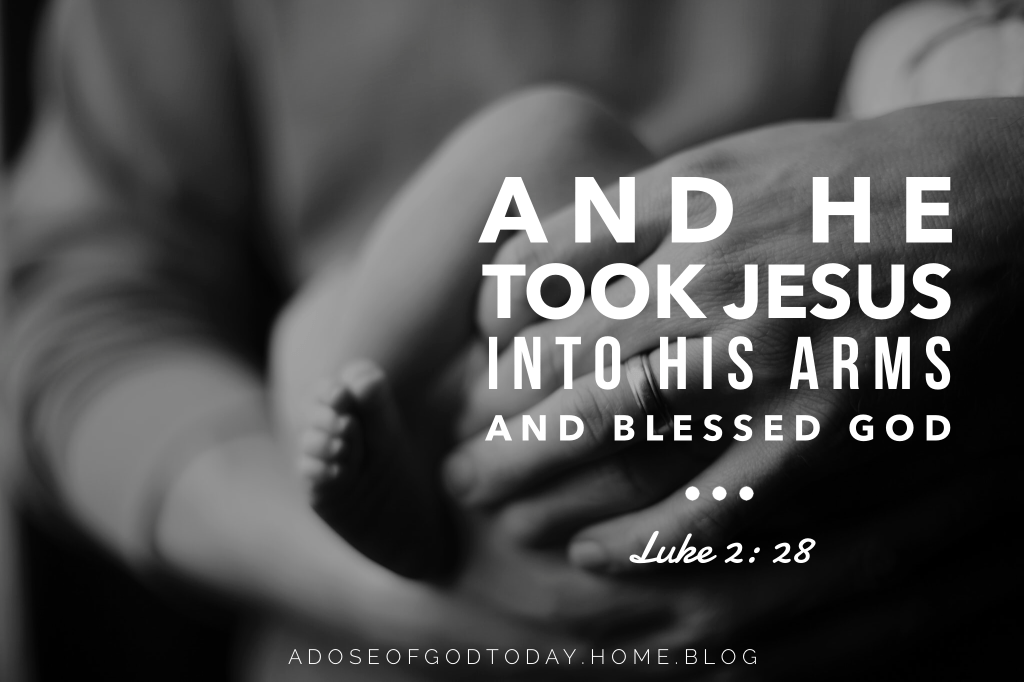
    Simeon upon meeting the Lord, held the baby Jesus in his arms. He carried Jesus which promoted him to bless God. Simeon must have longed to see the Lord but what was given to him was more than seeing God. He was able to touch and carry the Lord in his arms. He must surely had been overwhelmed, felt unworthy yet drawn towards God at the same time.

    This encounter of Simeon with Jesus made him to prophesy. Yet, his vision was entirely based on memory. He remembered that God has promised to be with his people, to send the Messiah. At last Simeon had seen this to come true and seen again how Jesus will become a light for everyone. Jesus is a light who shall illumine every darkness in our hearts and lives.

    Moreover, the prophetess Anna would always go to the Temple because of her desire of seeing and meeting the Messiah. For many years, she persisted despite the dull and boring days that she had to spend while waiting for the Messiah to come. However, her faith bore fruit when Jesus arrived. At last, Anna met and encountered the Messiah. 

    It was not difficult for her to recognize Jesus because her heart was ready and open for his coming. Thus, she immediately recognized the Lord and was delighted for that encounter. That encounter too changed her life completely.

    From these encounters on this Feast of the Presentation of Lord, there two invitations for us. 

    First, like Simeon, let us allow God to encounter us that we may be able to hold him in our arms. Holding God in our arms is more than feeling his presence but being convinced of his presence in our life. To hold God in our arms also means to be in touched with God, with ourselves and with what surrounds us that include our brothers and sisters and rest of God’s creation. To hold God is to be welcoming to all.

    Second, like Anna, let us always desire to meet God whenever and wherever we are at this very moment. Let us remember, if we desire to encounter God, God desires it all the more to encounter us. And may our encounter with Jesus cast out our anxiety, boredom and doubts for his presence brings us joy, freshness and life. 

    Like them, we may become convinced in what we believe by translating our faith not just into words but also concrete actions of love and kindness. Hinaut pa.

    Jom Baring, CSsR

  • Jealousy is poisonous

    Jealousy is poisonous

    January 23, 2020 – Thursday of the 2nd Week in Ordinary Time

    Click here for the readings http://www.usccb.org/bible/readings/012320.cfm

    Homily

    When I was younger I felt that I was more deserving of more love and praise from my parents than my younger brother who would always fail in his exams. When our parents give us the same amount of allowance I would complain that I did better in my exams. I demanded that I should have more and he should have less because I studied well than him. 

    I would feel jealous every time our parents would give more attention to him than to me. And thus, I sought more praises, attention and rewards from my parents through my good works at school but looking down and bullying my younger brother. 

    This tendency to look great and accumulate more praises and rewards, only poisons our hearts and relationships. It makes our heart unwelcoming to others whom we think are lesser than us.

    St. James said in his letter said that “where jealousy and selfish ambition exist, there is disorder and every foul practice (James 3:16).” This tells us that when we become jealous of others, we will tend to get aggressively what we wanted. Our selfish ambition will make us resort to corrupt practices, such as in deceiving and manipulating others.  

    This attitude portrays a self-image that is dominating, powerful and that must be considered master and above everybody else. However, this attitude would consider others as lesser and not important. It is in fact a boastful self, arrogant and vain, but insecure deep within. Indeed, jealousy poisons our hearts and this was the case of King Saul. 

    He became insecure and felt jealous of the young David. As King he believed that the people should give more praises to him and not to David, who had become a hero by defeating Goliath and the Philistines. 

    His sense of self-entitlement seemed to have clouded his heart and mind. Indeed, as king, he felt that the people should give more credit to him. By being jealous of the achievement of David, he felt threatened to the point of planning to kill an innocent boy. 

    This tells us that when a powerful person becomes jealous and insecure, and driven by a sense of entitlement, the person can be very dangerous. This person will dominate and manipulate and even do things aggressively just to satisfy his/her insecurity.

    What Jesus is inviting us today is that we come to him with all our insecurities. Rather than looking and searching for our self-satisfaction from other things, let us focus our eyes and attention to Jesus. 

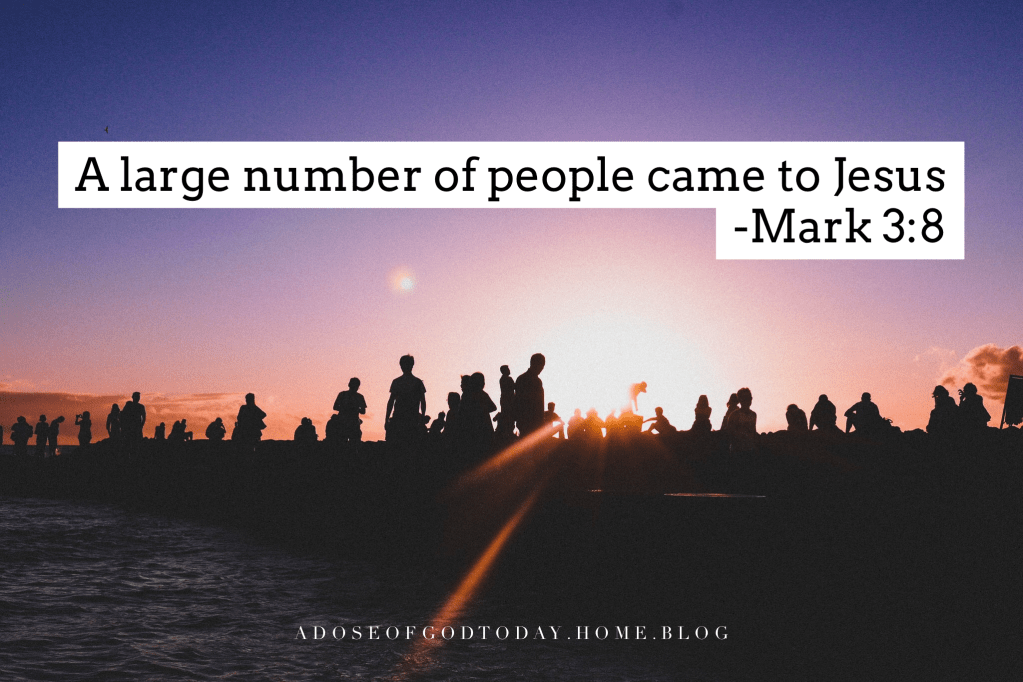
    This is what we have heard from the Gospel. People from many places followed Jesus because they have recognized that it would only be Jesus who can satisfy their hunger and thirst for love and acceptance, can heal their sickness, can reconcile them with God and can grant freedom from their sins. With Jesus they have become secured.

    Let us be secured then with Jesus and find assurance in his presence. Let us not to be jealous of what others have achieved but to be more confident of God’s presence in us. Hinaut pa.

    Jom Baring, CSsR

  • Seek help when encountering a bully-giant

    Seek help when encountering a bully-giant

    January 22, 2020 – Wednesday of the 2nd Week of Ordinary Time

    Click here for the readings http://www.usccb.org/bible/readings/012220.cfm

    Homily

    What is it that you find most difficult to deal with now – that you consider as the “bullying giant” of your life at the moment? 

    Each of us would have different answers. Others might have the difficulty of the upcoming exams for students or others would have relationships at the brink of breaking. Others also might be suffering from some sickness. Others as well are troubled for losing one’s job. Some of us also might be struggling with some destructive habits and addictions.

    Indeed, there might be more than what I have mentioned. Personally, when I was younger I have this difficulty of presenting myself before a big crowd. Just by standing in front, it frightened me very much because of a very low self-esteem. I believed that I was so worthless and was good for nothing. Yes, that kind of belief I had before was one the most difficult things I had to face. I needed to recognize what I am good at, by looking at my strengths and not to dwell so much of what I can’t do and what I didn’t have. In fact, this was my biggest giant I had to face and conquer. True enough, as I was “rediscovering” myself with the help of friends and mentors I have arrived at a level of being grateful of who I am, thus, becoming more confident and accepting of who I am and of what I am capable of. 

    This experience reminded me of our first reading today. It is also about facing a giant and conquering fear.

    We are very familiar with this story of the little shepherd boy, named David and the bully giant, Goliath. The Hebrew people were threatened by other nations especially by the Philistines who wanted to conquer Israel. The giant Goliath was the image of that bully neighbor of Israel, the Philistines. Goliath had killed so many armies since he was so big and so strong. The soldiers of King Saul were so frightened because they have witnessed how this Goliath killed their friends in the battle field. They were actually at the brink of surrendering to the enemy. However, here comes the little shepherd boy who came with his sling shot and five stones. He presented before the king and volunteered to fight against Goliath. David, though so small, was confident and unafraid.

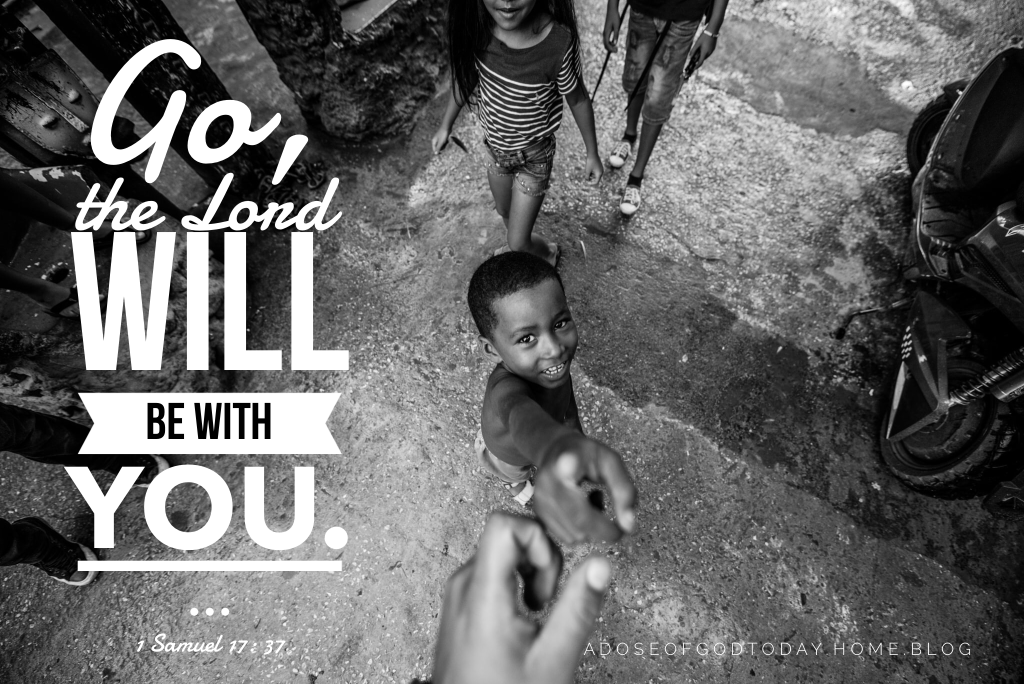
    How come? This is David’s secret. David was confident and unafraid because the Lord promised him, “I will be with you!” Yes, this confidence was shown in the attitude of David. When Goliath advanced, David in response met him. David did not wait for Goliath but he too actively advanced to show to Goliath that he was not afraid of him. And the reason? David was confident that God is with him!

    This is God’s message for us today.

    We are all aware that life may not be easy. There will be challenges and difficulties in our relationships with others and with ourselves. Let us just be conscious that we also have this tendency to take things by ourselves alone, thinking that we can do things and solve problems by ourselves alone. Like for example, when we deal with our own problems, we might tend to keep it to ourselves and refuse to seek help from others. Surely, it would be almost impossible for us to deal that problem. Especially with destructive habits or addictions that we have developed through time. Like addictions in computer games, alcohol, drugs, gambling, or sex – these addictions cannot be dealt alone. We need the company and guidance of others. Thus, we are reminded today to face our difficulties by seeking the help of friends.

    And most importantly, to remember that when we face the troubles of our life, the challenges that we have now, we are not all alone because God has promised us that he will be with us! Yes, the Christmas that we have just celebrated last month has reminded us of the birth of the Emmanuel, the God-with-us. God has come to live among us! Thus, as we face the troubles and difficulties of our life, let us be confident also like David in facing those bullying giants because God is truly our friend, refuge and defender. Hinaut pa.

    Jom Baring, CSsR

  • A Touch that heals

    A Touch that heals

    January 16, 2020 – Thursday First Week in Ordinary Time

    Click here for the readings http://www.usccb.org/bible/readings/011620.cfm

    Homily

    14 years ago I met, Nanay Elisabeth, an old lady with leprosy. Life was so difficult because she was poor. But once, she shared with me an experience. In her younger years, she was into scavenging garbage in Cebu. One early morning, as she approached a garbage bin to collect recyclable materials, she found something. She actually found “someone” inside the garbage bin that others might have thought, was a trash. Nanay Elisabeth found a newly born baby girl in that garbage bin. She named her Nancy. Nancy, perhaps, a reason why she was thrown away, was because Baby Nancy had a cerebral palsy. But what was more heartwarming there, was Nanay Elisabeth’s unconditional love for the baby. The baby was unwanted. But for Nanay Elisabeth, all her love and affection were for Nancy. She brought Nancy home and did all her best to let Nancy feel that she is loved and treasured.

    It is a story that proves kindness and love in the human heart that values human life and worth despite its seemingly ugliness. It tells us that no matter how poor we are, wounded or imperfect we are in the eyes of many – we can give life to others by touching the lives of those who need most of our love and kindness.

    It brings me into the story that we have heard in the Gospel. It is about a leper who found love and kindness in Jesus. In the Biblical times, a leper was nobody. When somebody is infected with leprosy, the person is removed from the community. It means that the person is forced to leave from the comfort of friends, family and relatives. 

    The Jews at that time believed that leprosy is an ultimate punishment for sin. A leper is considered a terrible sinner punished by God and thus unclean, unworthy and worthless person. It was a form of treating a leper as less than human or not human at all.

    But then our Gospel tells us a shocking and moving turn of events. A leper should never come closer to a Jew and a Jew should also immediately avoid any contact with a leper. However, a leper confidently came closer to Jesus asking the Lord to cure him. But what was more mind-blowing for the people to see was Jesus’ gesture towards the leper. 

    Jesus touched the leper!

    The Lord touched a worthless, unclean and less-human leper. The touch of Jesus destroyed the wall of indifference among the Jews towards the leper. The touch of Jesus assures the leper that he is not worthless at all, not less human but, loved and cherished by the Lord who longs to see him joyful and healed.

    Indeed, Jesus was moved to touch the leper because the Lord looked with PITY on him. This feeling of pity is not a “shallow feeling” that we usually have when we see a beggar or a person with difficulty, and then we feel pity, but we go along with our life and forget about the person. No, it is not that way. 

    What Jesus felt was true pity where he too felt the sorrow and pain of the leper. This moved him to do something, and that is, to touch the leper in order to heal him. By doing that, Jesus broke the barriers of disgust, shame and fear that prevent the leper to be accepted by the community. 

    This is what the Lord wants us to realize today – to recognize those people in our community who have been left out, abandoned and disgusted by many, so that, like Jesus we may also be able to touch them and show kindness and love.

    Let us also not forget that each of us has our own leprosy, imperfection and sins that would qualify us as worthless before God. However, God felt pity upon us and thus became human like us so that he may touch us to heal us. Let us then, share to others the touch of God that we have experienced so that like Nanay Elizabeth who despite her own situation, we may also be able to give joy to those who are sad, to give hope to those who are hopeless, and to give healing as we care to touch the lives of others. Hinaut pa.

    Jom Baring, CSsR