Category: Weekday Homilies

  • Have the Courage and Faith to be Childlike

    Have the Courage and Faith to be Childlike

    December 11, 2020 – Friday of the Second Week of Advent

    Click here for the readings (https://bible.usccb.org/bible/readings/121120.cfm)

    Homily

    Children are particularly special to Jesus because the Kingdom of God belongs to them. This is because of the characteristics associated to the children. Children express their dependence to adults and tend to be trusting, welcoming and open to surprises. Their simplicity makes them sensitive to God.

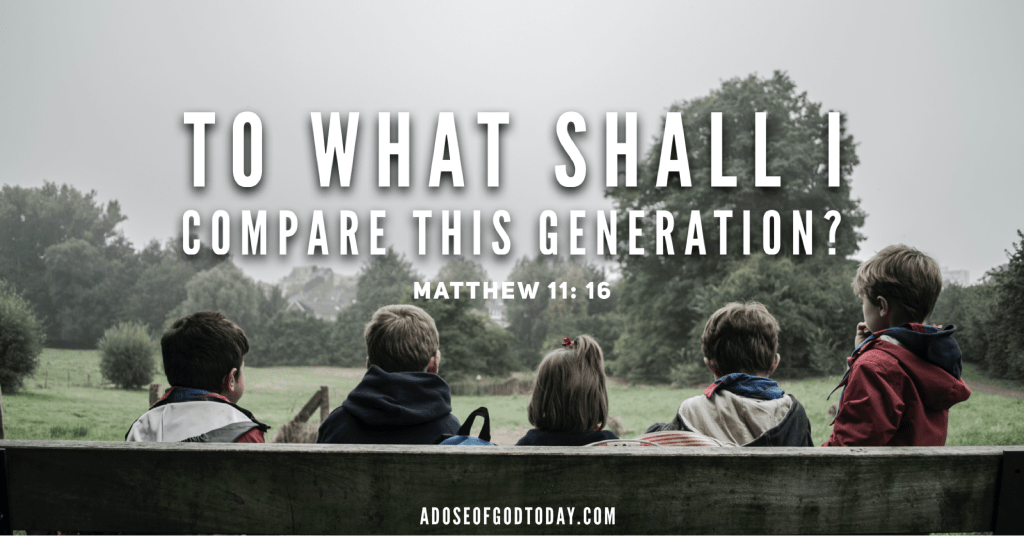
    Jesus used the image of children in the Gospel, however, this mirrors the attitude of unbelieving people.  Children have both strengths and weaknesses. In the parable of the kingdom of God, Jesus pointed to us the strength of being “childlike.” And in today’s Gospel, Jesus emphasized the dark side of becoming “childish.”

    Being “childish” reveals our negative and selfish attitudes. A child can throw up tantrums when displeased and does not get what he/she wanted. This attitude of a child is an unconscious form of control and manipulation to get what he/she desired.

    Being childish is being selfish to get what we want no matter how unfair that would be to others. Being childish focuses on what “satisfies me” and on what “I can gain.”  To be childish prevents us to “listen” to what is more important. It also prevents us to believe and to accept other ideas because we are already convinced of our own judgments and beliefs. Thus, being childish is also characterized by being indifferent.

    This was the attitude of those people who rejected Jesus as well as John the Baptist. So, what was Jesus really doing? Jesus was very unconventional because he ate and drank with sinners. He touched and mingled with the sick and the unclean people. Jesus preached a loving and forgiving God the Father. He was from Galilee, from an insignificant town called Nazareth. He was not a well-known intellectual and did not come from a rich and influential family. And all that Jesus did was a threat to the status quo.
    The Chief Priests of the Temple and the Pharisees were already contented with the comfort that they had, with the power and influence that they were enjoying. They were privileged people and the ordinary ones would almost worship them. They preferred a strict and unforgiving God because it was through that belief that they could advance their self-interest. They used their position in the society to enrich themselves at the expense of the poor.

    That is why; they were against Jesus because he was changing their ways. Their hearts were filled with bitterness, hate, anger and the desire to have more; in other words, they were filled with themselves, worshipping their very selves. This is idolatry.

    These were the reasons why they could not accept Jesus or even recognize the presence of God in Jesus. They rejected John the Baptist by accusing him of being possessed by a demon for being different and radical. They rejected and despised Jesus, accusing him for being a glutton and drunkard because Jesus ate and drank with sinners and the poor.

    Being childish makes us blind to what God shows us now. This attitude makes us “blind” to what is happening around us today. We refuse to see the suffering of others because we tend to only see ourselves. This attitude would also make us deaf to what God is telling us now. It makes us deaf to the many cries of those who are suffering.

    The Lord invites us not to be childish anymore and to turn away from that attitude and become childlike. This is the invitation today, as we continue our journey in this Season of Advent. Let us pray that we may have the courage and the faith to become childlike who can see and hear God in the lives of those who are suffering and among our loved ones. Hinaut pa.

  • God holds us tightly because God is our help

    God holds us tightly because God is our help

    December 10, 2020 – Thursday of the Second Week of Advent

    Click here for the readings (https://bible.usccb.org/bible/readings/121020.cfm)

    Homily

    The very image of God holding us tightly is certainly a comfort to us. We have this image of God, not giving up on us but continues to hold us and to embrace us. Such image must have been the very experience of the Hebrew people in the Old Testament. Prophet Isaiah who proclaimed God’s word to us today in the first reading, tells us of this, “I am the LORD, your God, who grasp your right hand; It is I who say to you, “Fear not, I will help you (Is 41:13).”

    These comforting words in the Book of Prophet Isaiah do not only give us assurance but also empower us. God’s help empowers us because God becomes our strength, our confidence and our friend.

    In a time when we are overwhelmed with trials, with difficulties and even in struggling because of our sins, God continues to grasp our right hand. Jesus in the Gospel of Matthew also tells us that the Kingdom of heaven suffers violence and the violent are taking it by force. However, even in the midst of violence God’s justice and mercy will prevail.

    Again, this image of God not wanting to give up on us is revealed in the history of our salvation. God sent prophets to remind the people of His presence and mercy. God’s messengers and His blessings, and miracles done to the people were expressions of God grasping our hand.

    John the Baptist who was sent ahead to announce the arrival of the Messiah, was another figure and expression of God grasping our hand. Through John, who in the words of Jesus, was Elijah, the one who is to come, brought the people to repentance. John prepared the hearts of the people and reminded them of God’s mercy coming into flesh. John gave us the assurance that God comes to dwell among us and become our very help.

    God’s ultimate expression of help and presence is the person of Jesus, whose birth we shall celebrate in few weeks’ time. As we acknowledge God’s empowering presence, let us also recognize those friends and family members who in their own way held our hand and helped us to rise again and gain confidence. We have experienced their presence who refused to give up on us and continued to see hope in us. Let us be grateful to them by also giving hope and refusing to give up on anybody.

    We may become God’s presence and help to others today. Hinaut pa.

  • Are your burdens heavy? Come to Jesus.

    Are your burdens heavy? Come to Jesus.

    December 9, 2020 – Wednesday 2nd week of Advent

    Click here for the readings (https://bible.usccb.org/bible/readings/120920.cfm)

    Homily

    Are you carrying some burdens now? Are you worried at the moment? Are you afraid of something? Recognizing these questions tell us about our dispositions and even tell us about what we are hoping for. We hope to be freed from our burdens, from worries and anxieties. Yet, we cannot do this alone. We need the company of others to help us.

    Thus, we ask God to help us in our problems and concerns. However, sometimes we demand God to take them away immediately from us. But, there is a danger around here. There is a temptation in us to think of a God who does magic and can take away all those concerns that burden us at once.

    God does not offer us magic what God offers us rather, is his gentle, empowering and understanding kind of friendship. The Book of Prophet Isaiah tells us of this friendship with God. God does not grow tired or weary. God even gives us strength and life. Isaiah proclaimed this to the Hebrew people when they became hopeless because of the suffering they endured while at their exile in a foreign land. They displayed weariness and boredom because of the long wait of the coming of the Messiah. Isaiah reminded them of God who never forgets for his knowledge is without limit.

    This is what Matthew proclaimed in the Gospel. Jesus said, “Come to me, all you who labor and are burdened!” Jesus invites us to come to him and to welcome him in our life that we may be liberated from our burdens and sins, to be free from worries and anxieties.  

    Jesus tells us that God does not terrorize us with God’s might and power nor subjects us with his influence nor does magic to remove all our difficulties at once. Jesus gives us a humble invitation to come to him as our friend – a true friend who is gentle, humble and compassionate, willing to walk with us.

    As our friend,  Jesus offers us his yoke.  A yoke was put on the necks of two animals to plow the field for planting. There were usually two cows so that the weight becomes lighter and the plowing easier and faster. The yoke that Jesus speaks about is from this image. That yoke symbolizes the Gospel that we receive today – and that Gospel is Jesus the Lord himself.

    Jesus offers himself as our friend. He is not promising us to remove all troubles in life at once, as his life was also filled with pain and suffering. He tells us today that though life may be filled with worries and anxieties, fears, failures and insecurities, with shame and guilt, yet, we will never be alone in our struggle for he renews and strengthens us.

     Jesus invites us to carry those troubles with him, to pull our burdens with him, to share our trials with him, to draw strength from him and to allow him to help us. Remember, the Lord does not do good things for us, but rather, he does great things with us. He does not do miracle for us but he does it with us.

    With this experience with Jesus, we may also become willing and generous people – who will be ready to cheer up a friend filled with doubts, ready to give comfort to a friend suffering from grief and sorrow, ready to listen to a friend who needs someone to talk to, so that we too will become God’s instrument of brining freedom and inner peace to our overburdened brothers and sisters in this Season of Advent and Christmas. Hinaut pa.

  • Touch us Lord to Heal our Blindness

    Touch us Lord to Heal our Blindness

    December 4, 2020 – Friday of the First Week of Advent

    Click here for the readings (https://bible.usccb.org/bible/readings/120420.cfm)

    Homily

    The miracle of making the blind see has been foretold by the prophets. This is even a recurring theme the Bible. Our first reading from Prophet Isaiah told us that the Messiah shall open the eyes of the blind. It says, “And our of gloom and darkness, the eyes of the blind shall see.” God grants healing to our blindness and insights to our spirit.

    In our gospel, what I find interesting was the perseverance of the two blind men. They had been following Jesus, crying and shouting, “SON OF DAVID, HAVE PITY ON US!” They did not just appear from nowhere but they had been following Jesus. And if you have noticed, these two blind men were one of those who truly recognized Jesus as the Messiah despite their physical blindness. These men did not see physically the face of Jesus or see personally his other miracles. They were dependent on others who conveyed to them the person of Jesus.

    It is good then for us to look closely at this particular scenario of the two blind men meeting Jesus. The two were very desperate. They have been crying out loud, saying, SON OF DAVID, HAVE PITY, HAVE COMPASSION, HAVE MERCY ON US! Yet, Jesus seemed not to hear them. But the two persisted and still followed the Lord. But, when Jesus was about to enter a house, they were able to catch up with him, and the two seized that opportunity.

    At that moment, Jesus himself asked them, “DO YOU REALLY BELIEVE THAT I CAN HELP YOU? THAT I CAN HEAL YOU?” Without their complete trust in the Lord, Jesus cannot do anything. Surprisingly, both of them were eager in responding, YES, LORD, WE BELIEVE IN YOU! AND WE TRUST IN YOU!

    The trust of these blind men allowed Jesus to TOUCH them gently and lovingly. And their eyes were opened. What they received was more than physical sight, they gained insight too by seeing the Lord. That experience overwhelmed their hearts with joy and gratefulness. Despite the command of Jesus not to tell others about it, they cannot but share to others what they have experienced.

    Jesus indeed is the Messiah and the two blind men taught us that we will only recognize the Lord through the eyes of faith, of complete trust in the Lord even if the Lord seems not to hear our prayers or seems to have not seen our difficulty in life. However, with fervent prayer and unwavering trust in God who loves us, God will also ask us, “DO YOU REALLY BELIEVE IN ME?” It is only when we put our complete trust in the Lord, that we allow him to touch and heal us.

    Today, we are reminded to be aware of our own blindness. I am sure, there can be areas of blindness in our lives that need healing. We all struggle with weakness and disability of one kind or another, in ways where we are broken and vulnerable. These can be in terms of our own relationship with friends, family members or co-workers and even within ourselves. It is good that we identify our own blindness and ask the Lord to touch and heal us. Let this be our prayer now, to be persistent in that, that the Lord will heal our own blindness so that we will see him and know him clearly.

    In this way, we will surely be able to celebrate Christmas with a heart filled with joy and gratitude in the Lord who touches and heals us. Hinaut pa.

  • Trust in the Lord Forever

    Trust in the Lord Forever

    December 3, 2020 – Thursday of the First Week of Advent; Memorial of St. Francis Xavier

    Click here fore the readings (https://bible.usccb.org/bible/readings/120320.cfm)

    Homily

    Storms in life may struck us in the form of crisis in our family, friendship, with our health, career, or job or business. This can also be in the form of our personal struggles that we carry alone like the guilt that we hide in our hearts, our fears that paralyze us, our trauma that haunts us day and night.

    In this Season of Advent, we are reminded that as we wait for the Lord to come, we might be troubled and our hearts filled with fear. Thus, Isaiah proclaims to us today, “Trust in the Lord forever.” As Isaiah brought a joyful hope to the people of his time, and so he does again to us today. The Prophet, whose words echo until today point us how the very presence of God becomes our strength. Though we wait for God’s coming but God’s presence can be ever felt in the here and now. God sustains us. God strengthens us.

    That is why, Isaiah described God as our strong city. God surrounds us. God is beneath us. God is above us. And God is within us. This requires faith in us to trust fully the Lord who is always with us and for us. In trusting the Lord, we shall have peace because God will keep us in peace.

    Moreover, as Isaiah calls us to faith by trusting God. The Lord Jesus also calls us to action. To believe and to trust in the Lord is not a mere thought or idea and not a lip-service. This also needs action. Thus, Jesus reminds us today, “to listen to His words and acts on them.”

    By cherishing the word of God and imbibing the word into our life, thoughts and actions, then, we become a wise person, whose foundation is God, our eternal Rock. By loving the Sacred Scripture and receiving the Sacraments, we make ourselves more attuned to God’s presence. As we make ourselves available for God, this will mold us to become a person for others and with others.

    God invites us today to be with others, to allow others to be part of our life. We shall discover, then, the strength, love and support from our friends, families and communities. To trust in the Lord leads us to become confident that the Lord is with us through the people who surround us.

    As we are being tossed by the storm these days, whatever that may be, please take comfort by trusting the Lord who is with us, through our friends, families and the Church. Hinaut pa.