Category: Saints

  • We too can bring others closer to Jesus

    We too can bring others closer to Jesus

    November 30, 2022 – Wednesday Feast of St. Andrew, Apostle

    Click here for the readings (https://bible.usccb.org/bible/readings/113022.cfm)

    Who was that significant person who brought you closer to the Church and closer to Jesus? I am sure, each of us here has a particular person or people who became significant in our faith journey. Others could have their grandparents who were the very instruments for them to grow in their Catholic faith. Or perhaps a relative, a parent, a sibling or a friend, or an intimate friend who inspired us to come to Church and encounter God.

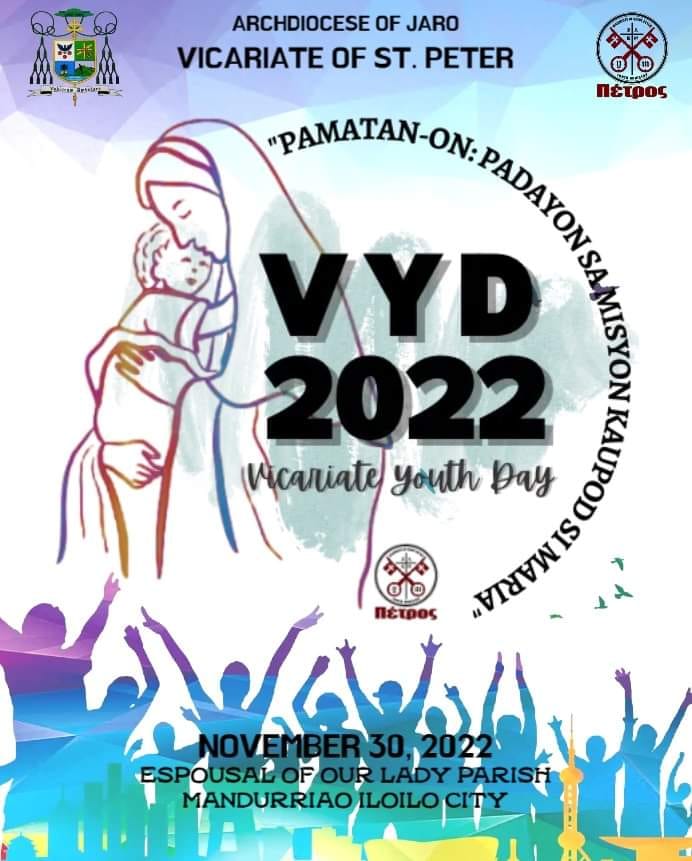
    Indeed, the celebration of our Vicariate Youth Day with its theme, “Pamatan-on: Padayon sa Misyon Kaupod si Maria,” is an expression of that experience of being inspired and motivated to come closer to the Lord. Certainly, this is a good reason to thank them for being an instrument for us in our journey of faith. So, I want you now to close your eyes and imagine that person to be in front of you and in silence, say to that person your words of gratitude for being an instrument of God for you. Say, your “THANK YOU.”

    As we express our gratitude to the people who have become significant in our journey of faith, let us be reminded as well of the feast that as a Church, we celebrate today. This is the Feast of St. Andrew, one of the original 12 apostles. So, allow me now to explore a bit this person of St. Andrew, how he has become significant to our church and on how the Lord invites us today as young people.

    You know, we know very little of St. Andrew. According to our tradition, Andrew became the first bishop in the community of Constantinople until he was martyred through crucifixion on an X-shape cross. The gospels tell us also that he was the brother of Peter. They were from Bethsaida, a town near the Sea of Galilee. In John’s gospel, we were told that Andrew was a disciple of John the Baptist at first. In the same gospel, we found that Andrew had actually brought Peter to Jesus, telling his brother, “We have found the Messiah!” In the other gospels, it was Andrew who called the attention of Jesus about the boy with 5 loaves and 2 fish. Again, it was Andrew who told Jesus that there were some Greeks who wanted to see and meet Jesus.

    From here, we can sense that Andrew was actually an apostle with a typical role. Unlike his brother, Peter, he was not able to witness the transfiguration of Jesus at Mt. Tabor. Andrew was not part of Jesus’ inner circle composed of Peter and the 2 brothers, James and John. He was in fact an ordinary guy, an ordinary apostle of Jesus.

    However, Andrew had a remarkable faith in Jesus. Remember, his brother Peter doubted and even denied Jesus three times. But for Andrew, he was the first one to realize that Jesus was truly the Messiah. In his conviction, he joyfully shared what he found to his brother. He himself became an evangelist, a preacher of the good news to his own brother. Moreover, he brought others to Jesus like the boy and those Greeks. Andrew became a bridge between Jesus and other people. Thus, Andrew became the significant person for many people to encounter and to know Jesus more.

    This is what St. Paul told us in the first reading. As there is a need but there is also beauty in sharing one’s faith in Jesus to others. And we can preach Jesus by making our faith be manifested through words and actions so that what we preach will be heard by many. Paul’s letter to the Romans would help us ponder our own call to be a kind of apostle or bearer of the good news to others like St. Andrew.

    This reminds us now of our theme in this VYD, “Pamatan-on: Padayon sa Misyon kaupod kay Maria.” Mary, is indeed, another significant person in our journey of faith. This celebration of the gift of the young people in our Vicariate of St. Peter calls us to mission by preaching Jesus through our words and actions with Mary.

    Now, we usually think that preaching is only proper to bishops, priests, and deacons. Definitely, public preaching of the gospel in liturgical occasions like what I am doing now is proper to me as a priest and not to you as lay persons. But it does not mean that you cannot preach the Gospel or share Jesus anymore to others. As young Christians, we share the prophetic role of Jesus by virtue of our baptism. It means that each of us has both the responsibility and the privilege to be God’s messenger to others, and this makes us young missionaries.

    The Gospel tells us how we are being called as young missionaries today. To each of us, Jesus says, “COME, FOLLOW ME, AND I WILL MAKE YOU FISH FOR PEOPLE! I WILL MAKE YOU MY OWN APOSTLE!” This can surely be materialized when we preach with joy by our own example. But how? These are few examples.

    First, when we are happy with what we are doing and when we are honest in our relationships and dealings with others – we preach the person of Jesus.

    Second, when we are sensitive to others and volunteer to help without any selfish motivations whenever someone needs a helping hand – then, we preach the person of Jesus.

    Third, when we become joyful givers to those who have less;  when we become more understanding and compassionate with those who are experiencing difficulties in their life; then, we preach the person of Jesus.

    Fourth, when people around us feel the deep expression of our faith as we pray in the church, in our homes or with others… then, we preach the person of Jesus.

    Fifth, when we are able to stand and fight for justice, when we are able to confront what is evil and unjust in our institutions and society, when we choose life not violence and death, then, we preach the person of Jesus.

    Friends, people will see these things and will recognize that we are Christians. Then like St. Andrew and our Mother Mary, we will be able to bring other people closer to Jesus, by becoming bearers of the Good News through our very life. Kabay pa.

  • Seeing God as He is

    Seeing God as He is

    November 1, 2022 – Solemnity of All the Saints

    Click here for the readings (https://bible.usccb.org/bible/readings/110122.cfm)

    The lives of the Saints, of those who lived a holy and a truly happy and contented life, proved to us that we are made for others and made for God. Indeed, we find the fullness of life not within us but outside of us. This is the common thing among the recognized and unrecognized saints in our Church and even those people outside our Church. People who find true joy in serving others, in giving life to others through their self-sacrifice, through their dedication and commitment to bring goodness in the lives of others were people who found true joy and contentment in life. The countless saints we have in our Church were conscious that their actions and very life were reflections of God’s presence and faithfulness.

    This is why John in his first letter reminds that “We are God’s children now… that we shall be like him and shall see him as he is.” John tells us that we shall meet God, behold God, live with and in God’s presence. And this is the fullness of life. In fact, this fact is expressed in the Psalm today that says, “Lord, this is the people that longs to see your face.”

    Moreover, this hope for the fullness of life that allows us to see God as he is, is not just limited in the future state of our life. However, the fullness of life, seeing God as he is and becoming more like God in heart and mind, can be already experienced in the here-and-now. This is what we find in the Gospel of Matthew in the famous Beatitudes of Jesus.

    This tells us that even when we are suffering, experiencing hardships in life, or being persecuted and humiliated by others can become opportunities for us to live a holy and blessed life. The Lord gives us comfort and assurance through his divine presence and promise of a blessed life. This is how we too are being called today, as we remember and celebrate the Solemnity of All the Saints, that we may also share that blessed and fullness of life.

    But let us remember, the fullness of life can only be experienced with others, with our friends and Church community, and with God just as the lives of the saints taught us. No fullness of life can be experienced when we are isolated from others or when we choose to distance ourselves from others.

    Thus, when our way of life brings us farther away from others, then we too grow to become lonely. Yet,  this will only make us more insecure and fearful, devoid of that fullness of life. Rather than life, what we will have is sadness.

    That is why, Pope Francis in his Encyclical Letter, Fratelli Tutti said, “go outside the self in order to find ‘a fuller existence in another.’ ” Meaning, that when we begin to think less of ourselves, to step outside our comfort zones, and outside our insecurities and fears, then, we also discover the fullness of life with the people around us.

    This means that to experience truly what life is, is to be able to give life. Do not be afraid then, to share your life with others. Do not be afraid to meet and encounter people. Do not be afraid of disappointments and frustrations in our relationships with people. Those are part of life that are meant to be taken as lessons.

    Thus, remember this, when we commit ourselves fully to love another, we also find joy and meaning in life. When we generously give something to someone in need, we do not only help a person but also experience the joy of helping another. Therefore, to live life joyfully and truly, is to be life-giving. May this feast inspire us then, to become modern day living saints. Kabay pa.

  • Spending the night in Prayer to God

    Spending the night in Prayer to God

    October 28, 2022 – Feast of St. Simon and St. Jude Thaddeus, Apostles

    Click here for the readings (https://bible.usccb.org/bible/readings/102822.cfm)

    Simon and Jude are two interesting characters among the chosen twelve apostles of Jesus. These two, Simon and Jude proved that their encounter with Jesus changed their entire life. Their ordinary life became extra-ordinarily wonderful though challenging.

    Simon who was called “Zealot,” believed strongly in the importance of following the Jewish law. In his search and endeavor to become righteous and to stand for what is right and just, he encountered Jesus and realized that the Lord is the very fulfillment of what he was trying to follow and hoping for. Jude or Judas the son of James, also known as Thaddeus, is patron saint of desperate people, of those who feel that there is no one else to turn to. Jude earned this because of his witness to Jesus that despite his fears and inconsistencies, he allowed the Lord to transform him.

    These two apostles must have been part of the many people who followed Jesus and wanting to learn from him, and be touched by the life of Jesus. These two, like many of those people longed for the presence of God to fulfill the desires of their hearts. This desire reveals to us of the human longing to be connected, be supported and be healed by God.

    This longing is what Paul also trying to tell us in his letter to the Ephesians, he said, “you are no longer strangers or sojourners but fellow citizens with the holy ones and members of the household of God.” Paul expressed here the intimacy and closeness shared by people like Simon and Jude with God.

    This intimacy and closeness with God is what Jesus also showed to us in today’s Gospel. Luke recounts that as Jesus called his disciples and from them chose Twelve Apostles, Jesus spent a night in prayer to God. Jesus commune with his Father in heaven.

    Prayer, indeed, is a foundation of our relationship with God. Having a capacity and time to spend in prayer to God would allow us to see and recognize God’s heart and mind in the things that we want to pursue and to do. Jesus expressed this for he chose the twelve not just out of random, but Jesus must have built relationship with them, knew them by heart, and made them his very close friends. Thus, as Jesus spend a night in prayer to God, he also wants us to learn from him.

    In prayer, let us allow the Lord to touch us and to encounter him just as Simon and Jude encountered the Lord. In prayer, let us allow ourselves to consciously spend a time with God to express to the Lord our thoughts and also to listen to Him. In prayer, let us also allow the Lord to shape and purify our decisions and actions. And in prayer, we may grow more intimate with Jesus, day by day. Kabay pa.

  • A Healer. A Friend. A Preacher.

    A Healer. A Friend. A Preacher.

    October 18, 2022 – Feast of St. Luke, Evangelist

    Click here for the readings (https://bible.usccb.org/bible/readings/101822.cfm)

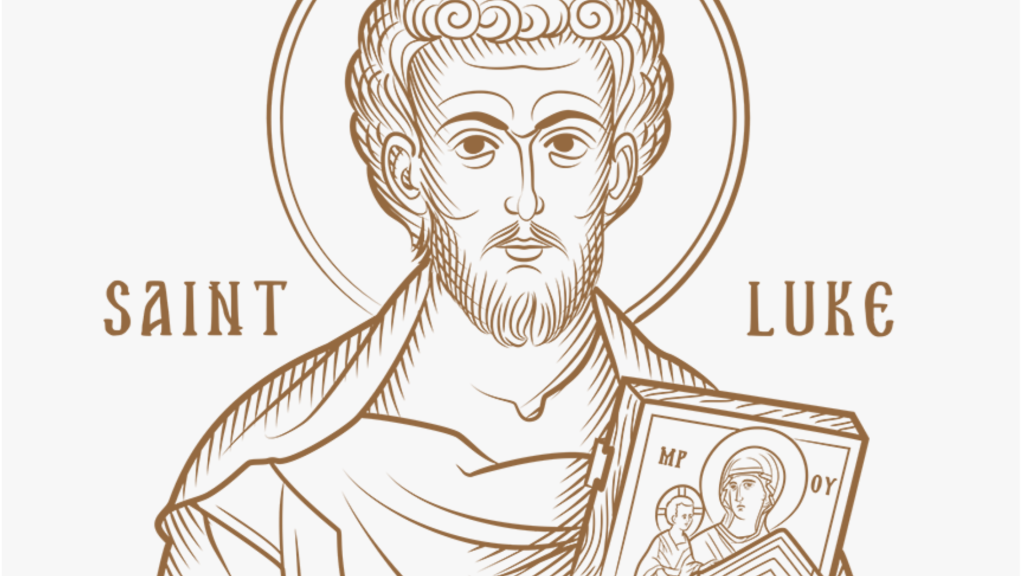
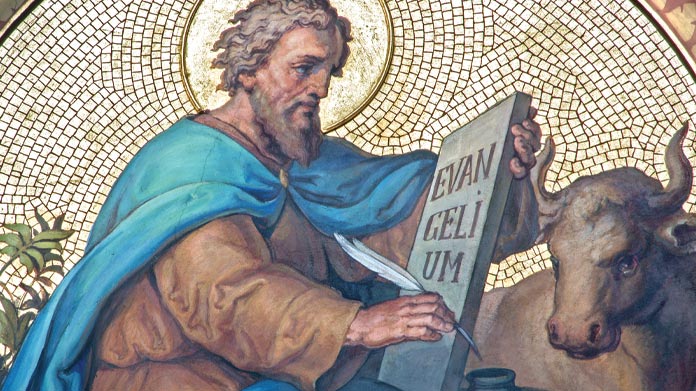
    We, as Church today, owe a lot to the evangelist, St. Luke. The Gospel according to him and the Acts of the Apostles which is also believe to have come from the tradition of Luke were two great accounts that tell us more about Jesus, his ministry and the early life of the first Christians.

    It is through St. Luke’s account that we have today a lively, heartwarming and inspiring characters of Jesus as described to us in the Gospel. Luke particularly emphasized the character of Jesus that showed compassion and mercy to the sinners, to those who suffer not just of physical and spiritual illness but also those who were subjected to public humiliation and indifference. This is how the poor, the oppressed and the less fortunate were given special attention by Luke.

    Thus, as we celebrate the feast of St. Luke today, there are things in his holy life that we can learn today and that serve as the invitations for us to grow in our Christian faith.

    Luke as healer. Luke is the patron of physicians and surgeons since Luke himself was a doctor or a healer. Though it was believed that Luke was actually a slave, but it was common at that time that even slaves were given the opportunity to learn medicine in order to serve the family of their masters. Luke learned well the art of healing that when he was graced with faith, he too continued his gift of healing to people. Indeed, Luke allowed the Lord to make him an instrument of healing. This is depicted in the many healing stories that Luke emphasized in the Gospel because Luke can relate well how healing help people to live life fully.

    Luke as a faithful friend. Paul in his Second Letter to Timothy confessed that many of his friends had deserted him. Only Luke remained at his side to which Paul was very grateful. Luke, despite the many challenges he and Paul experienced remained at the side of the Apostle to assist him in the mission of preaching the Gospel and brining the presence of Christ to the Gentiles. Luke was a Gentile himself, a Greek from Antioch, Syria and was converted to Christ. Luke lived his life to the full and living it at the service of the Gospel with Paul. This was how Luke proved his faithfulness to Christ by being a faithful friend and companion of Paul.

    Luke as a preacher. Luke was also well-educated in classical Greek. This was the reason why we have the Gospel and the Acts of the Apostles. Luke communicated well the story of Jesus to his audiences with the intention to bring more people closer to Jesus by knowing him, his mission and his very life even though he did not meet Jesus personally. In fact, Luke saw the life and mission of our Lord Jesus as God’s visitation to us. This is evident at how the Gospel contains stories of visitations like that of Gabriel to Mary, the visit of Mary to Elizabeth, of Jesus to Zacchaeus’ house, etc. In today’s Gospel passage Jesus also sent 72 disciples to every town and place he intended to visit. In this way, Luke through his writings bring us closer to Jesus who comes to visit us as he too was being visited by the Lord.

    Hence, on this feast of St. Luke, we too are called to become agents of healing into our homes and communities. We too are called to become a friend who shall be able to give assurance and confidence to friends who felt alone, afraid and lonely. And lastly, to be a preacher of God’s visitations by actively sharing our God-experiences so that we may be able to bring others closer and intimately to Jesus. Kabay pa.

  • Michael, Gabriel and Raphael

    Michael, Gabriel and Raphael

    September 29, 2022 – Feast of the Archangels Michael, Gabriel and Raphael

    Click here for the readings (https://bible.usccb.org/bible/readings/092922.cfm)

    If you have been named after one of these Archangels, then, today is truly your feast day! Those who bear these Archangels’ names also bear the ministry and mission behind their names, something that we also all share and called to be.

    Though Michael, Gabriel and Raphael are not human beings like us, but spirits, Archangels, each of them has something to teach us. Each of these Archangels reveals qualities that we can learn and develop as we relate with one another and nurture our relationship with God.

    The reason why they are traditionally called as “Archangels” and not just “angels” is because of the great importance behind the ministry given to each of them by God. This how their ministries are also revealed through their very names.

    The name “Michael” means “the one who is like God.” The Book of Revelation mentions Michael and his angels battled against the dragon identified as the Devil and Satan. Michael fights the Devil and defends the people of God. Indeed, Archangel Michael shows the might and power of God. Thus, the name and the ministry of Michael tells us how goodness will always defeat evil, and how God overpowers the Devil.

    The Archangel Gabriel will always be remembered because of the role that Gabriel played in the birth of Jesus. The name “Gabriel” means “the strength of God.” When Gabriel announced to Mary the incarnation of the Son of God through her, the Archangel also revealed how the strength of God was manifested in the ordinary life of Mary and in the smallness of the birth of a child. Gabriel also announced the birth of John the Baptish that revealed how God showed power through the childless old couple, Zechariah and Elizabeth. This child prepared the way of the Prince of Peace. The ministry of Gabriel reminds us that the strength of God is found even with the small, with the ordinary even with those that the world thought to be insignificant.

    The Archangel Raphael brings healing to people. Thus, the name “Raphael” means “God’s remedy.” In the Book of Tobit particularly in chapter 12, Raphael healed Tobit from his blindness and freed Sarah from a demon that tormented her. The ministry of this Archangel tells us how God touches us to heal us, to heal our wounded hearts, and to heal our tired bodies and tormented spirits.

    This calls us now to seek the intercession of these Archangels, and to learn from them and develop those characters that these Archangels possess.

    Thus, like Michael who is called the one who is like God, we are called to also protect others, to defend the weak and the least in our community, and not to let darkness and evil to win. As individuals and as a community, we do our best with the help of God’s grace to counter our evil desires and the evil intentions of those who are corrupt and abusive.

    Like Gabriel, who is the strength of God by announcing the coming of the Lord, we are also called to announce Jesus to all but first we are called to always welcome and embrace Jesus in our life.

    Like Raphael, who is God’s remedy, we are also called to be instruments of healing. Touch others with your kindness and concern, with your friendship and love as God touches us with his presence. Kabay pa.