Category: Feasts

  • How do we react when confronted with our failures?

    How do we react when confronted with our failures?

    October 15, 2020 – Thursday of the 28th Week in Ordinary Time

    Memorial of St Teresa of Avila, Virgin and Doctor of the Church

    Click here for the readings (https://bible.usccb.org/bible/readings/101520.cfm)

    Homily

    One time, I was asked to reconcile a church organization over a conflict that had caused hatred and division among the members. This started when a member took the risk of giving a feedback to their leadership. The person confronted them and told them about their exclusivity. The leadership seemed to favor few members over the others. The person who brought this out could not take this kind of attitude in the organization anymore. It was in the person’s best intention and good faith to improve the relationship within the organization. However, the leadership’s reaction was quite hostile. Instead of welcoming such feedback, they reacted so much to the point of finding the faults of the person who confronted them. Instead of taking it as a challenge to make themselves better, they became more exclusive and at the same time hostile to those who confronted their attitude.

    A person can be hostile when confronted with his or her failure. Even among our friends, we find it difficult to tell one another of our sins and mistakes. Others, because of such confrontation, friendship was broken. Among neighbors especially, when one begins to pinpoint the mistakes of another, this may cause endless hate-speech, gossiping, and even violent reactions. This happened in that organization whose leaders were confronted of their failure to be inclusive.

    Indeed, people who tend to display a strong image with a sense of self-righteousness will be resistant towards his or her critics. This happens to us when we think highly of ourselves that we forget how to be humble and be accepting of negative comments and confrontations.

    When we have grown to be arrogant, we display an air of contempt towards those whom we believed are threatening our good image. Thus, we become hostile and aggressive towards those who confront us and friendly only to those who flatter us.

    These are the attitudes that we find in today’s Gospel. When Jesus confronted the failures and sins of the Pharisees and scholars of the law, they became unfriendly towards him. Jesus pointed out how their ancestors, as leaders, killed the prophets in the Old Testament in order to hide their failures and sins from the people. The Jewish leaders wanted to keep the people away from the truth and away from God.

    Consequently, in order to advance their personal interest, to preserve their privileges, influence, wealth and power in the community, they developed ways of enslaving the people. They created many laws and demanded that the public must follow them literally but they themselves did not; heavy taxes were imposed upon the people but they themselves would not properly pay taxes to the temple; and they developed a gap among their people, stretching the gap between rich and poor, righteous and sinners.

    And Jesus confronted them, pointed out their failures and evil intentions. But they could not accept it. As a revenge to Jesus, they planned to silence Jesus by killing him.

    The Lord has revealed himself to them but still they refused God’s offer of salvation. These people were without faith. They did not worship God but themselves alone.

    Nevertheless, God continues to confront us of our sins and failures because the Lord desires our salvation, our freedom. Our Psalm proclaims today, “The Lord has made known his salvation.” Paul reminds us too in his letter to the Ephesians, “God chose us, to be holy and without blemish before him.”

    This is God’s desire that we will be able to claim also that we are his and called to be holy. The path of holiness involves confrontation of ourselves, of our selfish tendencies and evil intentions. By confronting ourselves and welcoming God and others to correct us, then, we embrace the grace to be transformed. This is the very life that St. Teresa of Avila embraced also. She confronted the way of life of her community that she believed had already departed from its original intention.

    St. Teresa’s journey as a reformer was not easy. She herself became a threat to many, a contradiction to those in power. Thus, she became unpopular, misunderstood, misjudged and opposed. Yet, St. Teresa would say, “God alone is sufficient.”

    God alone is sufficient.

    St Teresa of Avila

    St. Teresa of Avila whose feast we celebrate today reminds us of a person who truly found satisfaction, true comfort and riches in God. Through her closeness with Jesus, she discerned and chose God’s desire for her rather than her personal desires even if that leads to personal conflict and difficulty. She made God as the most essential in her life which made her offer also herself.

    This is what Jesus wants us to be, that we become persons who are not trapped by our mere personal desires. The Lord desires that we become free and truthful to ourselves because it is in this way the we shall also find life meaningful and become life-giving in our relationships with our family and friends and with our colleagues at work.

    Let us allow Jesus to confront us. His confrontations with us may appear in different forms. This could be through a lingering guilt and shame of the past sins that we have done, through a friend and colleague who has the nerve to confront us, and through a family member who takes the risk of making us aware of our sins and mistakes. Through them, we may welcome God’s way of transforming us everyday. Hinaut pa.

    Jom Baring, CSsR

  • In Praying the Rosary

    In Praying the Rosary

    October 7, 2020 – Memorial of Our Lady of Rosary

    Click here for the readings (https://bible.usccb.org/bible/readings/100720.cfm

    Homily

    The rosary has become a popular devotion to us. It has a rich history and miracle stories for the past hundreds of years. This repetitive form of prayer is not unique to us Catholics, but other religions too have their own similar to our rosary. Saints and ordinary faithful have been drawn to this form of prayer and have been passed down from one generation to the next.

    Many have become accustomed to wearing or bringing rosary beads and keeping them in wallets, bags, or cars. Some would consider it a spiritual weapon. Others would even believe that it is their amulet or their lucky charm.

    As we celebrate the feast of Our Lady of Rosary today, we are reminded of the significance of this ancient and popular devotion. The rosary which come from the words “rose,” is not just any amulet or lucky charm that we could carry around. It is not a way of bargaining with God that in praying the rosary God will be indebted to us that God has to grant our petitions. This is not a mere decoration of our identity but a tool for us to contemplate the life of Jesus.

    The rosary has its own history and indeed developed into a religious instrument for us to carry and pray easily the mysteries of our faith. In fact, the rosary reminds us of the life of Jesus and of Mary’s participation whose life is so significant in the story of our salvation.

    The mysteries assigned in each decade allow us to reflect on the actions of God within our human context, within human experiences. Take for example the joyful mysteries.

    The Annunciation of the Angel to Mary allows us to see how God fulfills his promise through us. Mary’s participation tells us that humanity can be pregnant with God and that we can bring God’s presence to others.

    The Visitation of Mary to Elizabeth reminds us of God visiting us in an ordinary but surprising way. When we are mindful of God’s presence, we would leap with joy just like the baby John in the womb of Elizabeth. This kind of excitement tells us how our heart and soul really long for God.

    The Birth of Jesus tells us that God is not far out there but He is here living among us. God tells us that He is not a God of anger, or punishment and condemnation but of peace and gentleness. God shows compassion to the humble and sinners for He has come to live among us.

    The Presentation of Jesus to the Temple reveals our innate desire to be with God, to dwell in the house of God, where God wants us to be.

    The Lost and Finding of Jesus reminds us of our anxieties and worries that may distract us. As Mary were so worried about Jesus, she pondered all those things in her heart that allowed her to encounter God even in a seemingly confusing situation.

    Other mysteries would certainly, also bring us deeper into the mysteries of the life of Jesus and also into our own lives. Praying the rosary is a life-journey to take with Jesus and Mary, to be able to make ourselves present in the life of Jesus. Consequently, this allows Jesus through Mary to be present in our everyday life and experiences.

    Thus, just as the disciples asked the Jesus to teach them to pray, pray the rosary also with the intention to change our heart and mind according to God’s desire for us and not the other way around. Pray the rosary and develop it into a habit but not merely to just murmur prayers, but a way to realize God’s manifestation in our life. Pray the rosary with Mary who is our powerful companion that we may also clearly see Jesus, and discern clearly His desire for us.

    Let us remember this, that as we pray the rosary, let us also allow God to be ever present in our life so that as we take our steps, we will be assured that God truly journeys with us. Hinaut pa.

    Jom Baring, CSsR

  • To Become the Living Presence of God

    To Become the Living Presence of God

    October 5, 2020 – Memorial of Blessed Francis Seelos, CSsR

    Redemptorist Missionary, Priest

    Readings

    A reading from the first letter of Paul to the Thessalonians (2:2-8)

    Brothers and sisters, as you know, we had courage in our God to declare to you the Gospel of God in spite of great opposition. For out appeal does not spring from deceit or impure motives or trickery, but just as we have been approved by God to be entrusted with the message of the gospel, even so we speak, not to please mortals, but to please God who tests our hearts. As you know and as God is out witness, we never came with words of flattery or with a pretext for greed; nor did we speak praise from mortals, whether from you or from others, though we might have made demands as apostles of Christ. But we were gentle among you., like a nurse tenderly caring for her own children. So deeply do we care for you that we are determined to share with you not only the gospel of God but also our own selves, because you have become very dear to us.

    The Word of the Lord.

    A reading from the Holy gospel according to Matthew (28:16-20)

    Now the eleven disciples went to Galilee, to the mountain to which Jesus had directed them. When they saw him, they worshipped him; but some doubted. And Jesus came and said to them, “All authority in heaven and on earth has been given to me. Go therefore and make disciples of all nations, baptizing them in the name of the Father and of the Son and of the Holy Spirit, and teaching them to obey everything that I have commanded you. And remember, I am with your always, to the end of the age.

    The Gospel of the Lord.

    Advertisements

    Homily

    Paul expressed intimately to Thessalonica his affection, “So deeply do we care for you that we are determined to share with you not only the gospel of God but also our own selves, because you have become very dear to us.” This statement of Paul was born out of friendship, of journeying together and of discovering together God’s presence and invitations in the community. Of course, this friendship was not without difficulties and challenges but filled with opportunities of learnings and knowing one another.

    This relationship was a result of that deep relationship with God. Paul and his co-ministers recognized that their ministry was not out of deceit or impure motives neither a way of pleasing others, but to please God. This tells us that Paul and his co-ministers were filled with gratitude to God. That gratefulness in them filled their hearts.

    Moreover, Paul and his co-ministers did not look at or relate with Thessalonians as people different from them, but as their brothers and sisters. Intimacy and affection towards one another without any trace of manipulation or impure motives, were present in their community. This is what made that community life-giving.

    What Paul and his friends did was a response to the words of Jesus to go and make disciples. And through their very presence being shared to the people, Jesus’ presence was ever felt as Jesus himself promised, “I am with you always.”

    This tells us that in the ministry of Paul, his presence and of his friends and of the people in Thessalonica, they have become a “collective presence of Jesus” because each of them too, was a living presence of Jesus shared to others. Being a “collective presence of Jesus” also means that our community has become the very presence of God that gives life.

    The Lord is truly with us. As Christians, we live in the grace of God because God desires to be identified with us and to live among us. Thus, each of us, whoever we are and whatever our status in life, whatever failures and sins we have committed, is being called by the Lord to be his living presence today. It is indeed the desire of God that He will be truly present in the world through us, through you and me.

    This means that each of has the capacity and gift to be the presence of God today for our brothers and sisters. This is what we remember also today, as we celebrate the feast of Blessed Francis Xavier Seelos, a Redemptorist Priest. This German Redemptorist Missionary who was sent to the United States in mid-19th Century, became a living presence of Jesus to his parishioners and to the people whom he ministered as a priest.

    Blessed Francis Seelos did not have miraculous works during his lifetime. There were no stigmata and mystical experience in him. The ordinary Blessed Francis just did his ministry and service to the people in an extra-ordinary way.

    He took care of the sick and the poor in his parish. He preached well that everyone can understand. He guided people to discover and recognize God in their life. Indeed, in this way, Blessed Francis Seelos became a living presence of God because he was grateful, his heart was filled with joy and confidence in God.

    In the same way, God also calls us to be His living presence in our own homes, workplaces and communities. God does not expect us to make miraculous and mystical activities. However, what God wants us is to express our gratitude to him in simple and creative ways that will surely allow us to make our presence as Jesus’ living presence for others.

    To be able to become God’s living presence, we need first to listen to Jesus. We are invited to allow the Lord to speak to us and to transform us in the way God desires it to be.

    As Jesus told his disciples to go to the mountain and encounter him there, we too are called to climb our own mountains of failures and mistakes, of successes and joys with others, of our personal difficulties and problems, of our issues and concerns with our work, family and or studies. Remember, even among the disciples, not all of them believed at once, others also doubted. However, the Lord encountered them according to where they were at that moment.

    The Lord will surely meet us where we are now as long as we allow him too to encounter us. Let us make an effort in encountering the Lord. Let not our anxieties and fears hold us back because Jesus himself promises us today, “I am always with you.” This is an abiding and faithful presence of Jesus that both brings comfort and challenge, light and growth. Hinaut pa.

    Jom Baring, CSsR

  • Guardian Angels

    Guardian Angels

    Advertisements

    October 2, 2020 – Friday of the 26th Week in Ordinary Time

    Memorial of the Holy Guardian Angels

    Click here for the readings (https://bible.usccb.org/bible/readings/100220.cfm)

    Homily

    Do we all have guardian angels? Yes. Our Catholic tradition believes in the existence of angels. Just 3 days ago (September 29), we celebrated the feast of Archangels Michael, Raphael and Gabriel. They are the only angels being named in the Bible because of the great importance they played in the history of our salvation. Moreover, there are multitude of angels aside from them as it is also written in the Holy Bible in both Old and New Testaments.

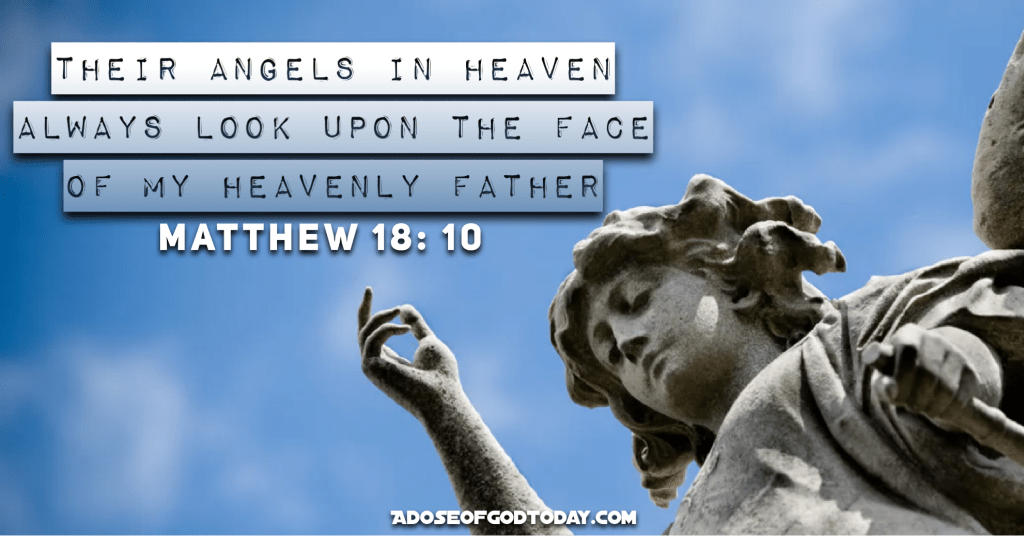
    In today’s Gospel, as we celebrate the feast of Guardian Angels, Jesus reminds his disciples of the angels who protects and guides the “little ones.” These angels always look upon the face of the heavenly Father, meaning, they too are very close to God. This closeness suggests that angels are indeed powerful intercessor of the “little ones” to God, the Father.

    As we celebrate this beautiful devotion to the Guardian Angels, let us see a bit deeper God’s invitation for us today through the Gospel.

    The question on “Who is the greatest in the Kingdom of heaven?” seemed to be a recurring concern among the disciples. They must have been very curious to know about this that at one time they were arguing on who was the greatest among them. They wanted security in the kingdom and they wanted assurance. Each of them showed to one another how worthy they were. However, this only revealed their self-entitlement. But then, the kingdom of heaven is not something that will be rewarded like a form of compensation to a person.

    The kingdom of heaven is a sheer gift of God to us. And this gift is given to the “little ones” and not to the self-entitled and assuming people, and most especially not to controlling and dominating people whose intention is to subdue others in order to gain more for themselves.

    The “little ones” are disciples of the Lord who in their smallness embrace God’s grace. These little ones trust in the providence of God. Thus, the “little ones” are symbolized by the image of a child. Each of the disciples, like us today, is called to become childlike. Nevertheless, not that we become children once again, but that we learn the qualities of children by being dependent to God and trusting God’s love. Moreover, like the children, we are called to be welcoming and embracing to the many surprises of God for us.

    As we become like children, Jesus also calls us “not to despise” the “little ones,” the other disciples of the Lord, the least in our community, the poor and the sick because they too are God’s “little ones.” God’s “little ones” have protectors and powerful intercessors who are angels. These angels are indeed mighty for they are always near God, looking upon the glory of God. This suggests the intimacy of the angels being shared with God because of their closeness. They surely, are our most influential friends before God.

    Hence, today, as we are called to acknowledge our guardian angels, acknowledge also that each of us has one who is always there on our side. We do not have to know their name or even assign name to our guardian angels. God intends that they remain nameless to us because naming them means having control over them. Our guardian angels are higher beings than us and we can never have control over them.

    Our Guardian Angel’s presence with us is enough assurance that God is also with us. As we grow our devotion to our Guardian Angel, may each of us become each other’s guardian angel in human form. Protect, guide, and bring those people around us to be closer to God. May our friends and family members will truly feel God’s presence in us and through us. Hinaut pa.

    Jom Baring, CSsR

  • Front-liners at home

    Front-liners at home

    Advertisements

    October 1 , 2020 – Thursday of the 26th Week in Ordinary Time (Memorial: St. Therese of the Child Jesus)

    Click here for the readings (https://bible.usccb.org/bible/readings/100120.cfm)

    Homily

    As the Corona Virus Pandemic continues to bring disorder in our way of life and as we continue to be limited in our movements especially with our religious practices essential to our faith, some parents and grandparents have expressed their worries as to the faith formation of the young generation. The Holy Eucharist and other public celebration of the Sacraments including catechetical gatherings intended for the younger generation, remain to be banned from the vast majority. Though many cities have been allowed to have the public religious gathering by 50% of the building/Church’s capacity, yet, minors and Senior Citizens are still discouraged to be present physically.

    This poses a concern as to how we continue the moral and spiritual formation of the young and the continual spiritual nourishment of the older ones. Consequently, the Church have found ways on how to reach out to those who are excluded particularly now through the use of social media. Yet, this might not be enough since not everyone can access it and the Church’s programs may not be appealing to the young.

    More than ever, the Church is in need of the “active participation” of parents, grandparents and young adults to be at the frontline in terms of moral and spiritual formation of the younger generation.

    Today’s Gospel reminds us of this mission we share from the 72 disciples sent ahead by Jesus to the cities where he intended to visit. They were Jesus’ front-liners at that time. Jesus sent them ahead to announce to them that God’s Kingdom is at hand. They were to prepare the hearts of the people who have been longing to see God and to experience good things from the Lord as what our Psalm proclaims today.

    Thus, the 72 disciples were told to bring peace to every household they visit. Even if there was the possibility of being rejected by those who were not ready, they were still to bring peace. As they were told to stay with those who welcomed them, the disciples were told to accept their hospitality and also to bring healing to those in pain, wounded, and sick.

    These were ways of nurturing those hearts who were longing to see God, to bring hope to those who were in despair and give hope to those who find life difficult and miserable.

    This is also the call to each of us now especially with you parents, grandparents and adults who live among and with the younger generation. Your presence is needed even more now to be those disciples of the Lord in your own context, that is, to be front-liners at home.

    You have this very important role to play to serve as front-liners, to prepare the hearts and mind of the younger ones, to nurture and develop their young faith and relationship with God.

    St. Therese of the Child Jesus, whose feast we celebrate today, reminds us of the mission we share with one another. St Therese is even called as the Patron of Mission even though she herself stayed most of her life inside the convent. Her little ways, her compassion and thoughtfulness to her sisters, her prayers and devotion were her ways of participating in God’s mission.

    Thus, for all of us too, we do our little and humble ways in participating in God’s mission. Parents, grandparents and adults, again, do your little ways in educating and nurturing the younger ones. Be welcoming to their different responses and be accepting to their ways of doing things and in relating with God. Affirm them and appreciate their efforts.

    But remember, to nurture and to develop one’s relationships with God is not done through “imposition” or by “force.” Never impose and never use force in nurturing the young ones. They learn by example. They admire through our sincere words and actions. They see and recognize God through us.

    In this way, we may be able to truly bring peace in our homes and bring healing into the hearts of our own family and friends. Hinaut pa.

    Jom Baring, CSsR