Category: Christmas Season

  • New Normal

    New Normal

    January 2, 2022 – Solemnity of the Epiphany of the Lord

    Click here for the readings (https://catholicreadings.org/the-epiphany-of-the-lord/)

    A man once asked a wise priest: “Father, how come unlike before God seems to be not talking or speaking to us anymore?” The priest replied: “It is not that God is not anymore talking or speaking to us. But rather it is that nowadays nobody is humble enough to stoop down to listen to Him. Nobody… nowadays… are humble enough… to stoop down … to listen to Him. Bihira nalang ang mga tao ngayong panahon na lumalapit sa Kanya na may pagpakumbaba upang marinig Siya at makinig sa Kanya.

    True enough that there are times in our lives that God seems to be silent and absent to us. But during those moments of our frustrations and hopelessness with God, perhaps it is better to consider not His seeming absence or silence, but rather perhaps that we have reach already too far and high in life that we don’t anymore get near and low to listen to Him. Siguro napakataas at napalayo na ng ating narating na hindi na tayo lumalapit at may pakumbabang marinig Siya at makinig sa Kanya.

    For the past Sundays, during Advent and these Christmas Seasons, we came to know several people who became involved in the birth story of Jesus and happened to encounter God and begun to know God’s will for them in life. Mary met God through angel Gabriel and became the mother of Jesus. Through a dream, Joseph became responsible poster-father of Jesus. Zacharias became the father of John, after meeting an angel in his old age. Elizabeth became pregnant with John in her old age after her husband’s encounter with the angel. Shepherds saw and learned from an angel that God’s gift to all has been borne in Bethlehem and they became witnesses (godfathers’ or ninong) of baby Jesus. And now in our gospel, the three kings come to know where baby Jesus, God-promised they have been searching, is through a bright-guiding star.

    All these people and their experiences are telling us that God had made Himself and His will know to them, and God will always continue to make manifest Himself and His will to us until now. Same way as before, we might experience once again God and His will for us now, if and when we honor our dreams, listen and witness God’s word and actions in us shown to us by his angels or messengers. God still continues to manifest or reveal Himself to us in many ways through the faith and actions of our community and church as we share each other God’s word, good advice, kind and loving service with others, and responsible guidance and parenthood of our elders and leaders. Even in a special way for us Filipino Catholic, we sense God through our kalooban and pangdama. Kilala ko siya dahil dama ko siya. Malapit ang loob ko sa kanyang salita at galaw.

    Today, in the Solemnity of the Epiphany of the Lord, marks the end of Christmas Season. Today is to remind us that more than about the three Kings, God is still making Himself and His will know to us. He is still reaching out and communicating to us many many ways. He is still talking and speaking to us, like before. All we need to do is to be humble enough to stoop down to listen and be sensitive to Him and His ways of revealing Himself to us.

    Moreover, Epiphany also reminds us that once we become humble enough to sense, hear, and honor God and His will to us now, we must change our ways.

    In our gospel today, we are reminded us of what happened when the three kings found the child Jesus lying in the manger in Bethlehem. Guided by the star, in great joy, they saw the child Jesus and they did him homage. Their encounter of Jesus and the Holy Family in Bethlehem brought the three kings great joy for they have finally found what they are looking for. With this, they offered their gifts in homage and thanksgiving to God’s greatest gift to all.

    But let us not forget that after they have witnessed the Son of God, they returned by another different way. This is not because they were afraid of Herod, but their encounter with Jesus has also changed their lives. Because of their experience with the baby Jesus, their lives were never the same again. They did not follow the usual path, but they now tread a different way, perspective, and attitude to life. Like our experience with a newly born baby, after they have recognized God in the child Jesus, the lives of the three kings were never the same again. The child Jesus brought them great joy as well as great changes in their way of life. 

    In the same way, the moment we recognize and accept the Lord, life will never be the same again. This would mean that once we listen and honor God’s will for us, life will never be the same again, for it has to change for the better. As God comes into our lives, New Normal life should be.

    As we say goodbye to Christmas season & start a New Year of pandemic realities may we be more sensitive to God’s continuing manifestations to us (His ways of making Himself and His will know to us) and be more open to be change and be responsible for the gift of life God is offering us always. Amen.

  • Parenting 101

    Parenting 101

    Decemember 26, 2021 – Feast of the Holy Family

    In our Wednesday novena to Our Mother of Perpetual Help, one intention we pray is that we may learn to adapt to our growing children. Parenthood, as we all know, is not only about raising children but also adjusting to our growing children. Thus, to parent a child is more than just caring for the growth of the children; it is also learning in the process, as children grow in maturity and age.

    Being Redemptorist missionary involved in parish, retreat, missions, and migrant ministry for many years, I became aware of the difficulties of parenthood. Difficult it is to adapt with life-changes, how much more adapting to growing children. In confessions and counseling sessions with faithful people, I become conscious of the hurts & pains suffered by both parents and children in their difficulties with parenthood. Parents hurt by their children’s disobedience, i.e., going against their will; children blaming their parents for their misfortunes in life. Sipmply because of our limitations in parenthood. Parenthood indeed is not an easy task, & rightly so that we pray to OMPH that we may learn from our experiences of adapting to the growth of our growing children.

    Today, we honor the Holy Family, the family who parent the child Jesus. Our gospel tells us that like any other family, the Holy Family also experienced the difficulties of parenthood. As parent, Joseph and Mary followed the proper traditions of raising the child Jesus. They did their best. But as we all know, they also experience how Jesus became disobedient to them, going against their will.

    Surely parents here could resonate with the hurts, pains, and anxieties they experience when children start to grow up and be on their own. Like my mother would even say, when we, her children started to have our live our own, “Kung puede palang ibalik sa tiyan.” (If I could only bring you back in my womb…) It is the same way with the experience of a hen that raises ducks as her chicks. When the duck-chicks, which by nature a swimmer, start to swim and float on a fond, the mother hen – because she cannot swim would be extremely worried and anxious that her chicks-ducks might get drowned. This is also what and how Joseph and Mary experienced parenting Jesus. When the child Jesus began to grow up in age & maturity, his parents also experienced the difficulties of parenthood.

    However, the Holy Family’s experience might teach us more about parenting and parenthood, especially in terms of adapting to our growing children.

    First, Parenthood is a whole family matter – not only of parents but also of children. To parent a family is not only about the husband-and-wife tandem in raising their children but it is more on the dynamic teamwork between parents and children. If it was difficult for Mary and Joseph to raise and adjust with Jesus, it was also difficult for Jesus to grow up in his own family. In as much as being parent is difficult, we also know that growing up maturely (to be on our own) is difficult. If Jesus only obey his parents’ will, I wonder would we able to benefit from and share with the salvation God has given us through Jesus, who did not remain a child of Mary and Joseph but become our Christ, our Savior? As the parent adjust, children also adjust.

    Second, Parenthood is also about trusting in God’s way of parenting us – of raising and forming us His children. Inasmuch as we are tasked to parent our little ones – raising and adapting to their growth, we must never forget that ultimately God is our Father, our ultimate parent; and we are all His children. If we do want the best for our children, God also knows, wants, and does what is best for each one of us. God knows what was best for us when we were children, surely, he knows what is best for us when we become mature adult parent to His little ones. If we do want our children to obey us, we also are to obey God our father who knows best & better than what we want. So, trust and have faith in God’s will, in God’s way of parenting us.

    To parent a child is to work together then with one another as family of parent and children as well as to work with and in deep faith and trust of God’s way of parenting us.

    Christmas challenges us Christian to be responsible parents of Jesus in our lives today. Parenting our growing children is also our way of being responsible to the child and adult Jesus – God’s word made flesh, into our very lives now, according to God’s will & not our own ways.

    As we celebrate the feast of the Holy Family, we pray that the Holy Family will continue to inspire all Christian families and communities in parenting our growing children for God’s glory, not ours. Amen.

  • God’s Beloved: I am & we are

    God’s Beloved: I am & we are

    January 10, 2021 – Feast of the Baptism of the Lord

    Click here for the readings (https://bible.usccb.org/bible/readings/011021.cfm)

    Who are you? How do people define yourself? How do you define yourself?

    Henri Nouwen, a known pastoral theologian and spiritual teacher once said: “We are not what we do. We are not what we have. We are not what others think of us. Coming home is claiming the truth that… I am the beloved Child of the Creator.”

    True indeed, we do tend to define our life by what we do, what we have & what others say about us. In defining ourselves, we do tend to claim & know ourselves & others by our talents, abilities, successes as well as our failures & mistakes. We do tend to see ourselves & others by our backgrounds, possessions, privileges, properties, friends, influences, power, as well as limitations, poverty, and misfortunes. We do tend to characterize ourselves & others by the praises, awards, titles, honor, as well as by the insults, gossips, & comments people say about us. We do tend to name our identity, dignity, reputations, & life-purpose by what we do & not do, what we have & we have not, and what other say & not say about us.

    Though much effort & time we have spent in life to identify ourselves & others by our actions, possessions & feedbacks, we do know deep inside that these standards are limited & limiting. These self-classifications are degrading (ka-menos) to our very person & not who we really are. Eventually we have to claim that we are more than and better than what we do, what we have, & what people say about us. Eventually we need to believe & come home to the reality that we (you & I) are God’s beloved. We need to claim & name ourselves as essentially God’s beloved Child.   

    The chance of claiming & naming ourselves as God’s beloved Child is perhaps the most profound realization & blessing we can give to God & ourselves in life. Even Jesus Himself also have to experience and went through the process of claiming & naming Himself as God’s beloved Child.

    Before launching to His mission of evangelization in sharing to the world the Gospel of Salvation, Jesus must have first gone through a lot of soul-searching as to what is His very identity, dignity, reputation & purpose. Human like us, Jesus also grappled with the basic human question: “Who am I?” and reflected with our tendency to define ourselves by our actions, possessions & feedback.

    And on His baptism by the river Jordan, Jesus came to realize & experience who He really is – God’s beloved Child. Jesus needs to hear the words of confirmation from the Father, himself saying, “You are my beloved on whom my favor rests”. Such words emphasize His very spiritual identity before God and the vision of God’s kingdom.  Here, He is reminded in a very deep way of who he really is, of his very being before God and people – that among anything else, He is God’s beloved Son. This is the very affirmation and confirmation of His being before God.  That beyond what he can do, what he can have, & what people would say about him, Jesus has to listen & honor, and claim & name for Himself that He is God’s beloved son, whom God is well pleased.

    Claiming & naming His being God’s beloved child did not only empower Jesus to now & always proclaim God’s grace of salvation to all in our world, but also serve as the content, process & spirit of His mission. As He claimed & named His very identity before God, Jesus also preached, taught & guided us the Good News that beyond what we do, what we have, & what others say about us in life, we are also essentially God’s beloved children – and that is how valuable & significant we are before God.  And same way with Jesus, we only realize & come to term with this reality by our soul-searching, claiming & naming, affirming & confirming, and until be at home & at rest with our True identity as God’s beloved Children. And only then, we can find more meaning & purpose in life when we regard ourselves & others as ultimately God’s children.

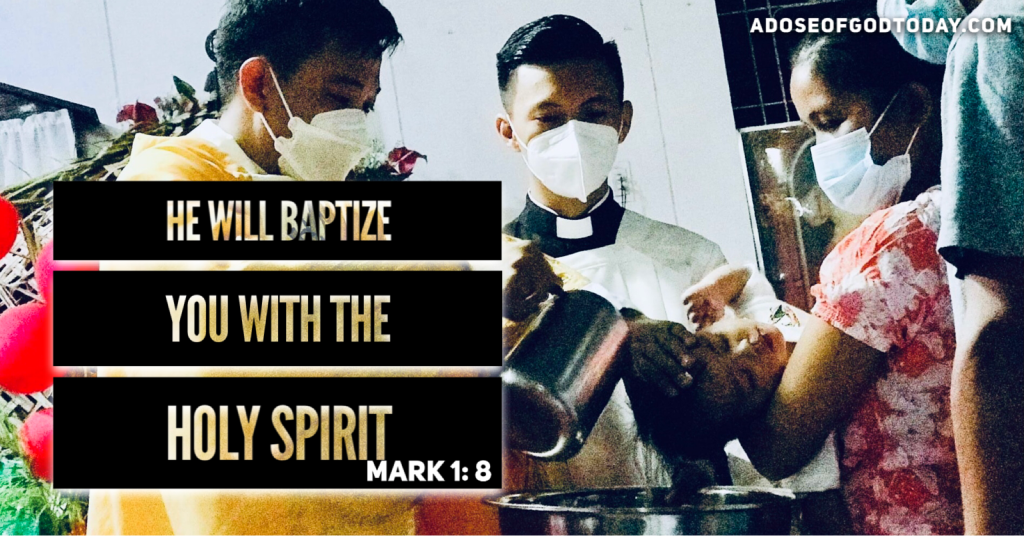
    Today on the Feast Day of the Lord’s baptism, we are reminded of who we are & how significant we really are before God & others, as God’s beloved Children. And we are also reminded on the very day of our baptism when we ourselves are consecrated, affirmed & confirmed to be always God’s beloved Child.

    This year 2021 is also a very important year for the Philippine Church. It marks not only 500 years of Magellan’s discovery of the Philippine Islands in March 16, 1521 but moreso of the first baptism happened in our land and the 500 years – five decades of Filipino Catholic faith. Although for more than three decades we have been colonized by Spanish rules, upon our independence, we did not abandon our Catholic faith but rather remain faithful to our Filipino faith that provides us the cultural values and principles that made us Filipinos as one nation and heritage, and as the only Christian nation in Asia with 86 % Catholic among more than 100 million Filipino people all over the world. In other words, as Filipino nation & society, since then & until now, we identify, define & claim ourselves as baptized Christians, beloved Children of God.

    Perhaps as we begin this New Year amidst pandemic times, the best Message you may hear today is to proclaim to yourself & other that :

    I am God’s beloved – a valued, valuing, & valuable person whom God’s favor rest & God loves now & forever.

    And as Filipino Christians, we proclaim to ourselves & others that:

    We are God’s beloved – a valued, valuing, & valuable people whom God’s favor rest & God loves now & forever. For that is who we are, who you are, & who I am. Amen.

  • There is more in our Faith

    There is more in our Faith

    January 10, 2021 – Feast of the Baptism of the Lord

    Click here for the readings (https://bible.usccb.org/bible/readings/011021.cfm)

    Are Filipinos more religious because of Covid-19? This is the title of the analysis of Jayeel Cornelio, PhD, a sociologist of religion.[1] This article was published in October 25 at rappler.com. The article discussed significant subjects particularly on the survey done by Pulse Asia last September 2020.

    The survey revealed that 51.8% of Filipinos have become more religious during this pandemic. According to Dr. Cornelio, this is not surprising because of two reasons.

    First, we are known to be one of the most religious societies in the world. And according to Pew Research Center, 96% percent of Filipinos find it “necessary to believe in God in order to be moral and have good values.”

    Second, Dr. Cornelio said, “faith is our immediate resource in times of crisis.” Citing another survey by the Veritas Truth Survey, it revealed that 89% percent of the responders of the survey said that faith is “very important” in the fight against Covid-19.

    From here, the sociologist also concluded that because of the “vulnerable social and economic context,” that is, being a third world country, the pandemic promotes a higher religiosity in us. In his words he said, people in poor social conditions such as having “inadequate health care, high incidence of conflict, and unreliable state agencies”  – people feel that they can turn to nothing else but faith in God.

    Indeed, it is when we become vulnerable and poor that we become more conscious of God’s presence. When we become more aware that we have actually nothing and are nothing in this world, that we also begin to realize of that great presence of God.

    A very comfortable life, a rich and powerful lifestyle can easily bring us into the attitude of indifference. It is indifference that prevents us to recognize that God is with us and continues to be present in the world.

    Moreover, at the end of his article, Dr. Cornelio also wrote that “there is so much more to COVID-19 than simply challenging the core of people’s religious convictions. In the end, it’s not just that Filipinos have become more religious because of this crisis. They are also beginning to seek something ‘more’ from their faith.”

    This sociological analysis brings me now to our very identity as baptized Christians. More than this survey of our religiosity, there is also a need to examine ourselves whether we have grown really in our faith, in our relationship with God and with one another. Our faith is not just about kneeling and standing, holding a rosary and saying our novenas. As Dr. Cornelio said, there is something “more” that we begin to seek from our faith. This “more” is something that I invite you now to pay attention as we celebrate this Sunday the Feast of the Baptism of our Lord Jesus.

    To be able to discern this “more” from our faith, allow me to journey with you through the readings and to see how God reveals His invitations for us today.

    In the first reading, Prophet Isaiah proclaimed the presence of the Servant of the Lord. The servant’s identity were described in three points. First, the Lord said,  “he is my chosen one with whom I am pleased.” This servant is loved very much by the Lord God, thus, God’s presence rests upon him. Second, the servant is to bring justice through compassion and gentleness of his presence and not through violence and force. Isaiah described and said, “a bruised reed he shall not break, a smoldering wick he shall not quench.” This servant is hope for those who are hopeless and are suffering. Third, the servant is to open the eyes of the blind and free prisoners and those who live in darkness. The servant who brings hope also brings peace, freedom and new life.

    The Psalm also stated this, “The Lord will bless his people with peace.” Peace here is living in the presence of God who is present in all creation. And the recognition of God’s presence in everything and in everyone brings us to show respect and love.

    This very promise of God is fulfilled and revealed in the Acts of the Apostles and in today’s Gospel. In the Acts of the Apostles, Peter proclaimed that this servant whom God chose is Jesus of Nazareth. He is anointed with the Holy Spirit and power. This is shown in the ministry of Jesus “in doing good” and in “healing the oppressed by the devil.”

    This is what we also find in the Gospel of Mark. The baptism of Jesus was a revelation to us that Jesus is the servant spoken by Isaiah. The scenarios in the Gospel are also very important told to us in three actions.

    First is the “immersion of Jesus in the water” was an expression of complete confidence in the Father. The Psalm proclaimed to us that “the voice of the Lord is over the waters, the Lord, over the vast waters.”  Here, Jesus allowed the power of His Father to embrace him.

    The second action is the “Spirit descending like a dove.” This is the very presence of God allowing our eyes to behold where it rests. The Spirit of God is in Jesus, the Lord who is among us. This tells us of the presence of God not just above us, but here among us.

    The third action is the voice heard coming from heaven saying, “You are my beloved Son, with you I am well pleased.” This has been proclaimed also by Isaiah.

    Indeed, this feast of the Baptism of the Lord tells us something important about our own baptism which we share in Jesus. This is where we also find the “more” in our faith. The “more” in our faith asks us not to be passive-believers but to be active-believers. The “more” in our faith tells us now of four points. These are invitations that you can bring with you today.

    • First, we are all loved. Never forget that.
    • Second, God’s presence is among us. We do not have to look above and seek God’s presence in the clouds. Look around also. God’s Spirit rests here among us.
    • Third, our baptism compels us to bring justice and peace. Isaiah reminds  us that this will be realized not through violence and force but through compassion and gentleness of our presence.
    • Fourth, to bring justice and peace is to also participate in the ministry of Jesus. This ministry is to open the eyes including our eyes blinded by greed, anger and indifference. And to free our hearts imprisoned by hatred, sin and guilt.

    Thus, the “more” in our faith is to make Jesus more present in our actions and words, and more present in our hearts, homes and communities. Hinaut pa.


    [1] See his article in https://www.rappler.com/voices/thought-leaders/analysis-are-filipinos-more-religious-because-covid-19

  • Life is in Jesus

    Life is in Jesus

    January 8, 2021 – Friday after Epiphany

    Click here for the readings (https://bible.usccb.org/bible/readings/010821.cfm)

    When many of us are confined at home because of the pandemic and restrictions in going outside our residence, the rise of the Plantitos and Plantitas (the popular name of those who develop the love of planting) also emerged. Our boredom at home wonderfully bore fruit by becoming more connected with the earth. When we learn how to plant, we also learn how to touch in order to nurture life.

    Touching with the motivation of caring brings wonder and joy in us. This is the reason why many of us find comfort and pleasure in nurturing the life of the plants. More than this, we too are called to nurture human life, to inspire life and heal life. This is what Jesus shows us today.

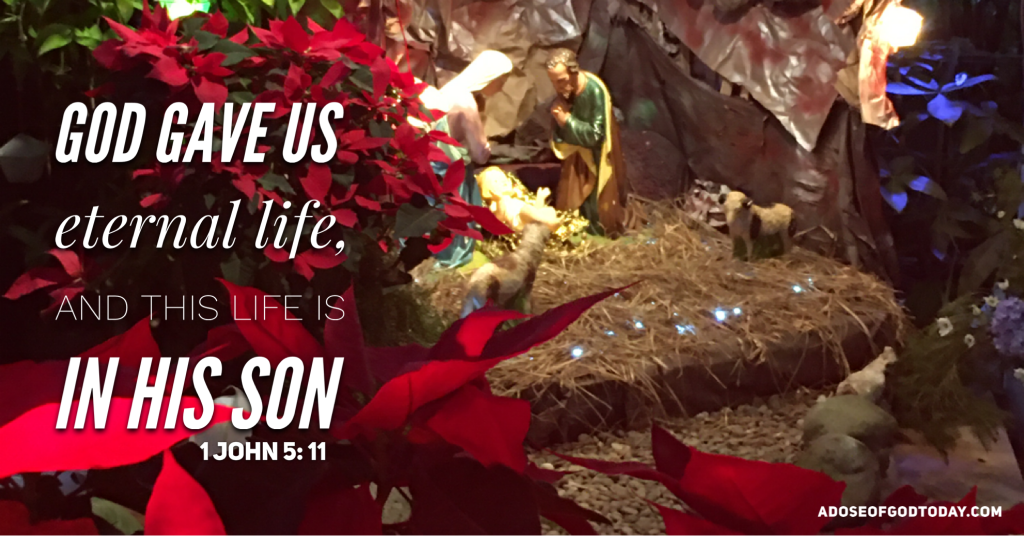
    Our readings today remind us of this. The first reading from the First Letter of John tells us that “God gave us eternal life, and this life is in his Son, Jesus.” We find this life in Jesus, our Lord.

    John mentions two important and recurring words in today’s reading that tell us that life is indeed in Jesus. These words are testimony and possession.

    The word testimony refers to the witnessing of the Father in the life of Jesus. The testimony of the Father to His Son is the confidence of the Father. This also means that the confidence of God in us will be revealed in our life by having Jesus. This is not about giving testimony to God, but God giving testimony to us through the wonders that God can do for us.

    The word possession means our possession of Jesus, the Son of God in our life. Having Jesus is letting Jesus fulfill his promise to us. Having the Lord in our life is allowing the Lord to do what he desires to do in our life.

    Such testimony and possession of Jesus bring us into the Gospel story. A man full of leprosy fell prostrate and pleaded with Jesus. The man asked the Lord to reveal God’s testimony of bringing healing and fullness of life. The man asked, “Lord, if you wish, you can make me clean.” He allowed the Lord to work wonders in him and to let God give testimony through the gift of healing.

    In this way, Jesus touched the man to heal him and bring him that fullness of life. Jesus’ touch surely brought healing and life because his touch was motivated by care and compassion, by love.

    Today, let us be conscious of this invitation to have Jesus in our life and to discover that eternal life or the fullness of life is in Jesus. As we touch people through and by our life, always bring healing and bring life not corruption of life and not violence to life. Allow also the Lord to give testimony to us by making ourselves always open to God’s plan for us. Hinaut pa.