“How often do I worry? How often do I find myself anxious of many things?”
Our worries and anxieties is part of our life the moment we have become aware of ourselves and of the world. Parents would naturally worry about their growing children. Lovers may feel anxious of the security in their relationship. Workers and professionals may worry with the demands of their work and their relationships among their colleagues and superiors. We may worry these days because we might be infected by covid with its new variant. We may worry also about the vaccine that it might have terrifying side-effects on us.
However, when our worries and anxieties reaches the smallest and most trivial things in life and settle on them, then, we will be lost and distracted so much. These trivial worries and anxieties could paralyze us to the point that we will lose our peace of mind and worst our capacity to choose and transcend difficult moments in life.
In today’s Gospel, Jesus invites his disciples to set their hearts and seek instead the kingdom of God. Jesus felt that the disciples had grown more worried about their food, their appearance before the people, their security and even their future. Because of so much worries and anxiety, they became distracted and settled only with trivial things in their life
Consequently, it made their hearts full that it prevented God to fill them, to surprise them and satisfy them. Jesus also wants us that we become free from worries and anxieties which only prevent God to come to us and fill us with his presence.
Thus, the Lord invites us today to seek God’s kingdom and His righteousness. This will brings us into confidence in God who is most generous to us. This is what we have heard from the Paul’s letter today. Paul acknowledged God’s voice saying to him, “My grace is sufficient for you.” Indeed, God’s grace sustains us and satisfies us only we are fully aware of God’s presence.
Today, we are called to seek God’s Kingdom. This means that we become more familiar with God’s presence in our everyday experiences. It is when we become familiar with His presence that we also grow in confidence and faith in God.
To seek God’s righteousness also means being more attuned with God’s desire for us. God’s desire lead us to peace, freedom and joy.
We may come and grew more in our confidence in God, whose grace is sufficient for us and therefore, find freedom from our unnecessary worries and anxieties. Hinaut pa.
Where do you find yourself during the day? What keeps you occupied and busy? What are your major thoughts and concerns? And how do you end your day?
These questions would somehow help us see the kind of life we are living at this very moment. We may find ourselves in front of our computer or smartphones because of our online job or online class. Others would find themselves wandering somewhere else or confined in a quarantine facility or at the hospital at this moment. Others also may find themselves alone and suffering.
The demands of our work and career, or demands for school assignments and projects, demands in our relationship especially from our family could occupy us a lot. Meeting the deadline, doing all our responsibilities and on how we would manage well our time, presence and resources could also become our major concern. At the end of the day, we may find ourselves exhausted, stressed, empty and alone.
To be grounded at all times is needed for our physical, emotional and spiritual well-being. This calls us to be constantly aware of our needs and of the needs around us in order to assess our priorities and to give more attention to what are most important and valuable to us. This is something important because when we are bombarded with many concerns and issues whether from our work, from our relationships or personal struggles of insecurities, anxieties and fears, then, we could easily be swayed and become lost.
Our readings today reminds us to find our heart by also finding our true treasure. We are obviously not talking about the heart as a human organ but the heart as the center of our very being. This is where we find our deepest thoughts, our deepest dreams, our true treasure and the very space of encounter with God. Where do I find my heart now? We may ask ourselves.
In Paul’s letter today to the Corinthians, he recounted to us his many experiences as a missionary and preacher of the Gospel. Paul was imprisoned, beaten, stoned, persecuted, and experienced dangers in his travels and all for the love of God. The Gospel and in sharing this Gospel to peoples and cultures made Paul busy and occupied. His ministry to preach the Gospel and to found churches consumed his energy physically, mentally and spiritually.
However, despite all the trials, he was never lost and never felt alone even though he was suffering a lot. Paul did these without any complain neither grumbles nor bitterness. Joy in sharing and giving witness to the Gospel moved Paul to do those sacrifices. In fact, this joy came from Jesus himself, the true joy of Paul, and his lasting and true treasure in heaven. This is where Paul also found his heart, his very being, touched and loved by the Lord.
Indeed, the relationship of Paul with the Lord and with the people to whom he was sent sustained him and his ministry. Paul would always see the day as something new and filled with hope, that is why he was able to continue in his ministry with joy and perseverance.
This is the invitation that we have heard also today from the Gospel. Jesus said to his disciples, “Do not store up for yourselves treasures on earth, where moth and decay destroy, and thieves break in and steal. But store up treasures in heaven.” Jesus invites us to be more conscious of things that will last. Jesus was not talking about material possessions, neither human desires for recognition and power nor human cravings for self-gratification.
Jesus invites us to give more importance to our relationships, particularly, to be daring in building intimate and deeper relationships with God, with our families and our community by giving what we have – our time and our presence.
Thus, each of us will surely be making sacrifices, we may never forget then, that all our effort, energy and presence spent to every sacrifice that we make whether at work, at school, and with our relationships – are all intended towards storing up treasures in heaven where we shall also find our heart. Hinaut pa.
Prayer is an essential dimension of our Christian life & spirituality. Our gospel today invites us to reflect upon our prayer life as followers of Christ & God’s beloved children. And, in teaching us the Lord’s prayer, Jesus reminds us not only what to pray but also how to pray & why we pray.
First, to pray is to be present before God’s presence – being present before God’s presence. When we call our God as our Father, we personally present ourselves before our God and address Him as our beloved Father (Tatay, Amahan, Papa, Aboji). Because of this, second, prayer is all about God and less about ourselves. When we pray, we do tend to be more concerned about the gifts than the Giver. Valid may our present needs and wants be, but before God’s presence, we are more than just what we need, but we pray as His Children. So, pray to the Giver, and less for the gifts. Aspire for His kingdom to come & His will be done now & always in life. Only then & after being present & hoping for God’s will that, third, we ask from Him. And we ask not for what we want but what we need because what we want might not be really what we need & better for us. Again, His will – not ours, be done. Jesus, rather teaches us to ask for three things that we really need in life now: our daily bread, forgiveness, & faith in the midst of life-difficulties.
To pray then is to be present before God’s presence, to long for His Kingdom & Will to be with us, & to ask for what we really need now than just what we want from Him. In other words, praying is our pamaraig, lambing, tenderness with our Father: a loving conversation with the Giver rather than just asking for gifts & favors.
Tatay, May Your Kingdom & Will be upon us now & grant us what we really need now – food for the journey, forgiveness for our shortcomings & strength in faith as we follow Jesus, your son in our daily struggles with life.
Why the need to ask when the Father knows what we need?
There is a need for us to identify and recognize what we truly need. To be able to see our own realities will bring us closer into humility. This helps us to also own our imperfections and failures, our issues and problems. Then, once we have become aware of our needs and true concerns, we are also able to name the grace that we need.
This has been presented to us in both readings from the letter of Paul and the Gospel. Let us see them a bit.
In the letter of Paul, we find him as if scolding the Corinthians because of their situation. Many have become confused because of the acceptance of the Corinthians of other preachers. They seemed to preach the Gospel of Christ but they only brought the people far away from the true Gospel. The “super-apostles” whom Paul called made preaching a profitable career. What they were after was not the Gospel but personal gain. Though he may have sounded angry in his letter, but his love for this Church was greater. He exhorted them to listen well and seek the will of God for them.
Paul was making them aware of their situation and making them see the problem. Only in recognizing the problem that we will be able to respond accordingly. Thus, it is only when we also become aware of our true needs that we will be able to ask the grace from the Lord.
The Gospel today leads us into this kind of response. Jesus taught his disciples on how to truly ask the Father and pray sincerely. Jesus also warned the disciples not to babble but of empty words meant to only impress people.
This means that our prayers and other forms of devotions are not meant also to impress others or to flatter or manipulate the Lord because of our long, wordy and unintelligible prayers. What the Lord wants from us is our sincere and humble hearts.
The Lord’s Prayer brings us into sincerity and humility because it acknowledges first God, our Father whose “divine will” takes priority than our own. Thus, we seek and recognize the will of God for us and not our wants. This brings us to be more aware of our needs of the present moment, of today, and not to be burdened by our past or to be anxious of tomorrow.
Indeed, the Jesus invites us and teaches us on how to seek God’s desires for us because God knows what is best for us by praying the way he prays. May this simple but powerful prayer of our Lord gives us more confidence in the presence of God dwelling among us whose only desire is the best for us. Hinaut pa.
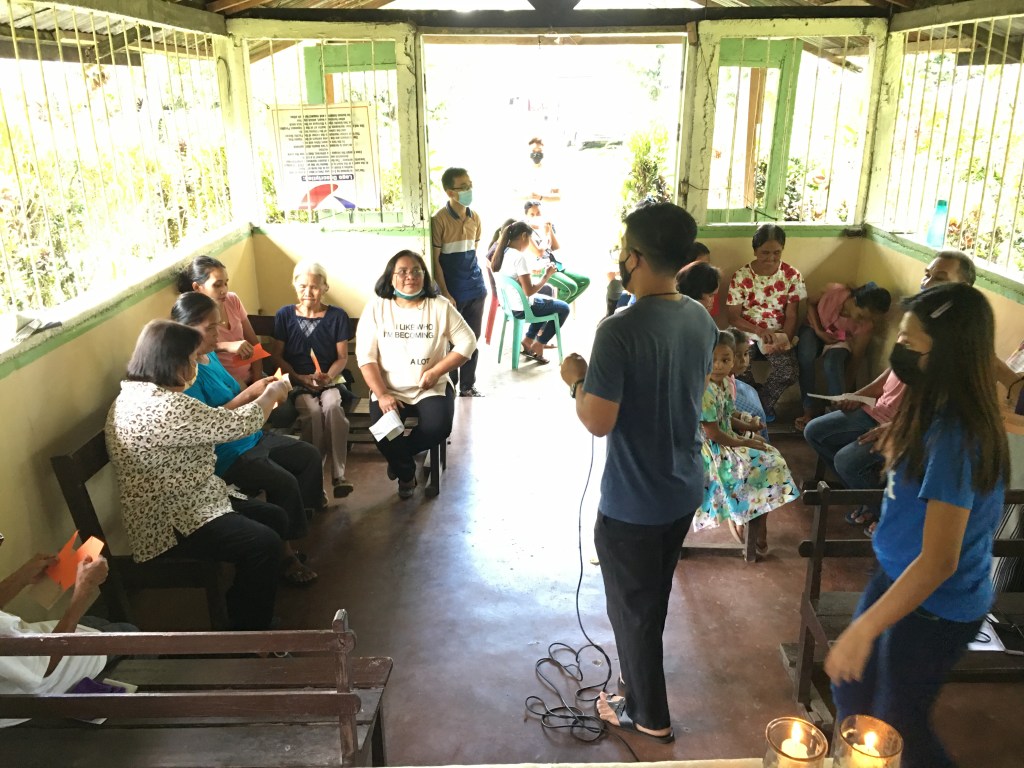
When the Parish Mission in Balabagan, Lanao del Sur was being planned, our major concern was not on security because it’s a Muslim majority community and not because of restrictions of the health protocols. These were given situations already and necessary measures were already conceptualized. The major concern was, who will be part of the mission team? As a matter of fact, there were only two young Redemptorist Priests and one seasoned Lay Missionary and the possible participation of three seminarians. Yet, this number was not enough.
In order to respond to this major concern, we need the presence of Youth-Mission Volunteers. Why the young people? The young can easily adapt and mostly characterized by their readiness to learn and unlearn.
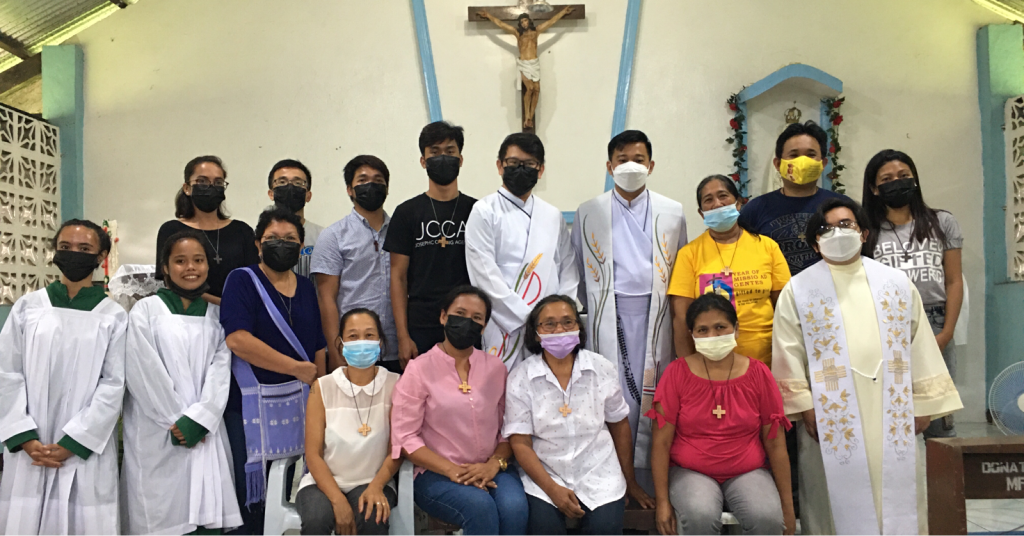
A photo after the Thanksgiving Mass at Our Mother of Perpetual Help Chapel, Purakan, Balabagan, LdS.
We have expected to have two or three Youth-Mission Volunteers. However, as soon as we have started the Parish Mission, we got two full time, two semi-full time and 2 part time Youth-Mission Volunteers. We have a total of six. This was more than enough.
Mimi
Of the six, we have Mimi, a teacher by profession. She resigned from her online teaching career few weeks before the mission began. Mimi is an active member of our Redemptorist Youth Ministry who is already serving and assisting RYM-Iligan during her free time.
Pearllyn
There was Pearllyn, known to many as La Ling. She’s a Tourism graduate, a choir leader, half Meranaw – half Christian and speaks Meranaw fluently. Herself and Mimi were our fulltime volunteers and the princesses of the team.
We have Charles, a college student and an incoming college seminarian of the Prelature of Marawi. He’s quite shy but bright, sensitive to the needs of the team and dependable. With him was Darwin, also a college student, who became a family decision-maker. He’s confident, and intelligent whose potentials and talents are about to be discovered. Both of them were our semi-fulltime volunteers. Though they were expected to join us on weekends after their online and modular classes but have been with us most of the time. This did not affect their studies though, but was able to manage their time well.
Charles, Sir John, Jom, Sir Jeorge and Darwin after the Rite of Commissioning of the four at the chapel of San Isidro Labrador Parish.
We also have with us two teachers. Sir Jeorge is an elementary teacher. He’s an in-demand teacher by the parents because of the quality of teaching he gives to his pupils. He’s gifted with patience and big amount of understanding. There was Sir John too, a friend during my novitiate year. He’s a former seminarian of the Missionaries of Jesus and now a Senior High School Teacher.
The 3-month Parish Mission would not be possible, lively and fruitful without the presence of these six gifted, talented and self-sacrificing Youth-Mission Volunteers. Each of them gave not just the best in them but the whole of their being for this mission.
Thus, being with them gave me such three wonderful experiences which I would like to emphasize.
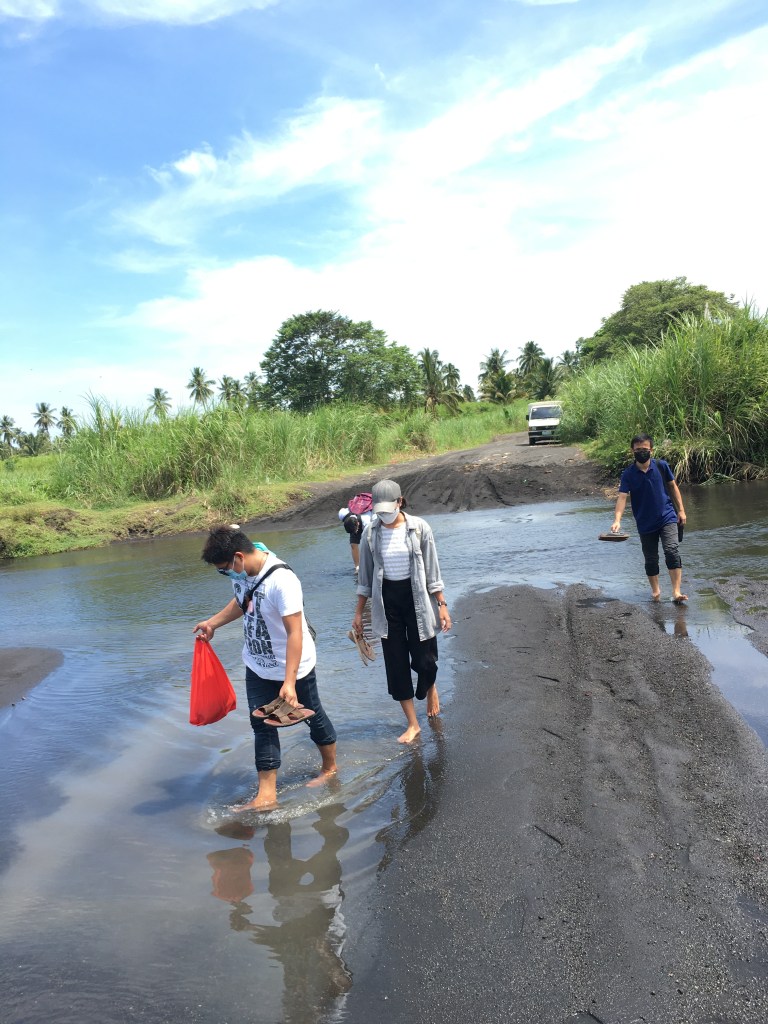
First, it was a fun-filled experience being with these guys. Our group-study sessions, dishwashing and cooking assignments, practices and module simulations were filled with laughter. We always found the brighter side of our work and of our ministry. We were not only limited to giving sessions and prayer meetings and sacraments to the people, we have also spent time together picking young ferns for salad, digging sweet potatoes, opening up coconuts, eating, playing, swimming, singing and acting.
Second, it was a spirit-filled experience being with them. We know that the spirit brings creativity, freshness and youthfulness. There was so much creativity shared and being discovered even from the altar decorations to the presentation of modules and delivery of the talks. The very presence of these Youth-Mission Volunteers brings that freshness and youthfulness in the mission.
Third, it was a God-filled experience being among them. The mission itself with the presence of the people and of these Youth-Mission Volunteers, these were the very opportunities for me to encounter God. “God is young; He is always new”, as Pope Francis said. Even despite our limitations and imperfections, God makes wonderful things out of us. This was what I have witnessed being among the Youth-Mission Volunteers because of the desire for change, for spontaneity and for life.
Out of these fulfilling experiences, there are two lessons that I have learned as a missionary priest and as a youth minister.
First, to allow the young to speak and to speak their mind and their heart. This gives a space for the young to be creative, initiative and sensitive to his and her surrounding and community. Their thoughts and ideas, no matter how naive, lacking and limited, but those are ways to expand their horizon and discover more about themselves and others.
Second, to learn with them and to become a co-learner with them. This does not diminish the direction of a team leader but it rather enhances the process of learning and unlearning things. This helps one another to slowly unravel each gifts and talents, affirm and correct one another.













 A DOSE OF GOD TODAY