Author: A Dose of God Today

  • Me & We: Seed for the Kingdom

    Me & We: Seed for the Kingdom

    June 13, 2021 – 11th Sunday in Ordinary Time

    Click here for the readings (https://bible.usccb.org/bible/readings/061321.cfm)

    A newly-graduated but non-working young millennial, while hanging-out at home and playing with his X-Box video games, was once asked by his mom to buy some fruits for meals. Though he prefers to go to a mall for convenient–sake, hesitantly he went to a nearby market. He tried to find his way looking for the fruit-stand since he was never been to this market before. Eventually he found the fruits he needed to buy at a particular fruit-stand. While paying, he jokingly said to the vendor: “Sir, I cannot help but notice you do look like Jesus Christ.” The fruit-vendor reply: “Others would say the same. But assuming I am who you seem I look alike. Do you have any questions for me?” Up for the challenge, he asked: “If you are said-to be the Christ, the savior of the world, how come the world is still a mess? Have you and God done and is doing something about these mess?” After giving much thought, the vendor answered, “For sure God has and is doing something about these mess – He created YOU.”

    Defensively, he countered: “Me, who am I to fix these mess? I am not rich, not  successful, still no-job. I am nobody, no hero. I am limited”. So the vendor further challenged him, “So what do YOU need then now to fix these mess?” He dreamingly replied, “Well if only I have more power, resources and opportunities, perhaps like in a computer game, I can be who I am and wish to be”. “That’s all?” the vendor disturbed him and then handed him something, “Take this. It got all what you need.” As he received it, he confusingly asked, “A seed? What am I do to with this seed?” The vendor replied, “Well, God has already done and doing something in creating You, and you have the seed now to do your part. It is up to you then whether to plant your seed and work out with God doing your part and growing your seed, OR do nothing with your seed, but complain, and let your world and our world still a mess.

    After Christmas, Lenten, Easter seasons where we celebrate our faith – what we believe, we are now in the Ordinary times of our liturgical year where we celebrate our life in faith, i.e. how we live, practice and witness what we believe. Jesus have much to teach us not only what we believe (Dogma) but how to live & practice what we believe (Moral). We have celebrated our Faith, but now we are celebrating our Faith-Life – our Faith & Life.

    To offer us meaning, inspiration and directions in our faith-life journey, Jesus made use of parables and our common life-experiences as life-lessons to live by. Like in our gospel today, by sharing us the parable of the growing seed and mustard seed, Jesus taught us not only about the Kingdom of God but also HOW to live our present lives along with our faith & mission in God’s kingdom.

    Here Jesus reminds us that nature and our usual human labor or work teach us that “Big things comes from small beginnings”. Yes, the sower & planter might have planted the seed and harvested the fruit but he does not know how the plant grows. And definitely he is not responsible for the seed to grow into full grain & for the smallest mustard seed to be the largest plant with large branches. It takes a lot of work on our part, AND working in partnership with God for us to fully enjoy the fruits of our labor with God. Yes, we can be the sower & planter, but God is the grower.

    With our advanced technology nowadays, we also tend to prefer to have things easy, instant, fast, disposable and convenient. In effect, we become impatient and intolerant with details and processes. We tend to value more the goals, and fruits that we undervalue & even become heartless to the growth-process, labor, and journey it takes. Like the young millennial, we tend to look at and concern more on the end-product and destination, without considering the process to make it and the travel-journey to get there.

    Never satisfied of what we have accomplished now, we rather tend to criticize & complain about our present mess without doing something about it except criticizing and complaining about it.  While we should enjoy & be satisfied to the advantages of what we have today, let us not forget the whole process-journey it takes to reach at this stage of advancement. Same as saying: While you and others enjoys and be satisfied with the fruits of your labor, let us not disregard and undervalue the efforts, work and sacrifices you have done as well as God’s work of creating you and with you for life to be better than before, better than the usual.

    In other words, to do away with the mess in life and to fully enjoy what God has given and can offer us in life now, we have to be RESPONSIBLE participants for God’s grace and work of creating and redeeming our life anew. As a wise man once penned, “Who & what you are is God’s gift to you & the world, who & what you BECOME is your gift to God & the world”.

    Especially during these pandemic times, teach & lead us Lord to cooperate with Your will & plans for us these days so that we may humbly recognize & fully enjoy the fruits of Your works for our betterment & the glory of Our Father’s Kingdom.

    So May it Be. Hinaut pa unta. Siya Nawa. Amen.
  • GOD’S RECONCILING PRESENCE IN THE HEART OF MARY

    GOD’S RECONCILING PRESENCE IN THE HEART OF MARY

    June 12, 2021 – Memorial of the Immaculate Heart of Mary, Philippine Independence Day

    Click here for the readings (https://bible.usccb.org/bible/readings/061221.cfm)

    “The love of Christ impels us.” Paul reminds us in his Second Letter to the Corinthians. This means that this love indeed urges and motivates us to go beyond and become the person God wants us to be. Hence, Paul also says, “whoever is in Christ is a new creation. The old things have passed away and new things have come.” This has been made possible because of God who came and initiated that we become reconciled with Him.

    Certainly, reconciliation with God transforms us from old into new, from death to life. Such transformation urges, impels and moves us to become a reconciling presence in our communities, in our Church and in the world.

    However, how does a reconciling presence influence others and bring change? Our Responsorial Psalm proclaims today of four main points.

    • First, it gives pardon to all our iniquities.
    • Second, it heals all our ills.
    • Third, it redeems our life from destruction.
    • And fourth, it crowns us with kindness and compassion.

    This is the experience of the Hebrew Community of which the Psalm speaks about. God’s presence in the midst of His people is a reconciling presence because the “Lord is kind and merciful.”

    Such confidence and faith in God must have filled the heart of Mary, whose Immaculate Heart we celebrate today. Her heart is immaculate because what we find there is the Lord who is kind of merciful made into man like us. Yes, the heart of Mary is filled with Jesus.

    This is the reason why Mary remained calm and at peace despite the fear and confusion she felt at the announcement of the Angel Gabriel to her, during the arrival of the shepherds when Jesus was born and now of being baffled and anxious when Jesus was lost but finding him in the Temple.

    Though she did not understand fully everything at an instant but Mary would always “keep everything in her heart.” With all the complexities, strangeness and difficulty to understand the situation, Mary keeps the Lord close to her heart. She keeps all those revelations from the Lord close to her heart that she may be able to understand them in the way God desires them to be understood.

    This was how Mary would always find wisdom and strength because with the many events that happened in her life, she might not be able to bear them all. Mary will surely remain confused, afraid and unable to decide and do anything if she chose to distance herself from the Lord by reacting out of impulse or mere emotions.

    “Keeping all those things in her heart” really means that she tried to understand how God was uncovering and revealing to her the plan of salvation. Mary realized that God reveals Himself every day. Mary did not want to miss all of them.

    Mary was able to do that because within her heart, God is already there. She has welcomed the Lord and allowed the Lord to be always in her heart. This led her into understanding from God’s perspective and so she responded to every invitation of God for her, willingly and lovingly.

    This is how we find Mary’s presence reconciling in our Christian faith because her life is an example of a perfect communion with God. We now find comfort in her, as a mother, because her human heart is touched by the Lord who is kind and merciful. Mary, indeed, has become a reconciling presence to us because we find in heart Jesus, the Lord.

    In the same way, we are called today that our hearts be also touched by the Lord, that we become more welcoming to the Lord and allow the Lord to be in our heart. Like Mary, as we allow the love of Christ to touch our hearts, it may impel us to become a reconciling presence in our homes, communities and in our beloved country, the Philippines. Hinaut pa.

  • ST. ISIDORE IN BALABAGAN: AN EXAMPLE OF LIVING A SIMPLE LIFE

    ST. ISIDORE IN BALABAGAN: AN EXAMPLE OF LIVING A SIMPLE LIFE

    by Daryl Sarabia Tecson

    All of us are called to live a good and just life. We are not called to live a perfect life because none of us humans can do that. But, how can we live a good and just life? Are we not tired of giving reasons to ourselves that humans cannot live that kind of life in reality? Yet, if we can’t, why is it that there are a lot of human beings who became saints despite their imperfections?  Could it be that it is only in our mind that we keep on saying that we can’t live that kind of life?  This is because we believe that this is the reality of our existence here on earth as humans, not like God who is perfect.

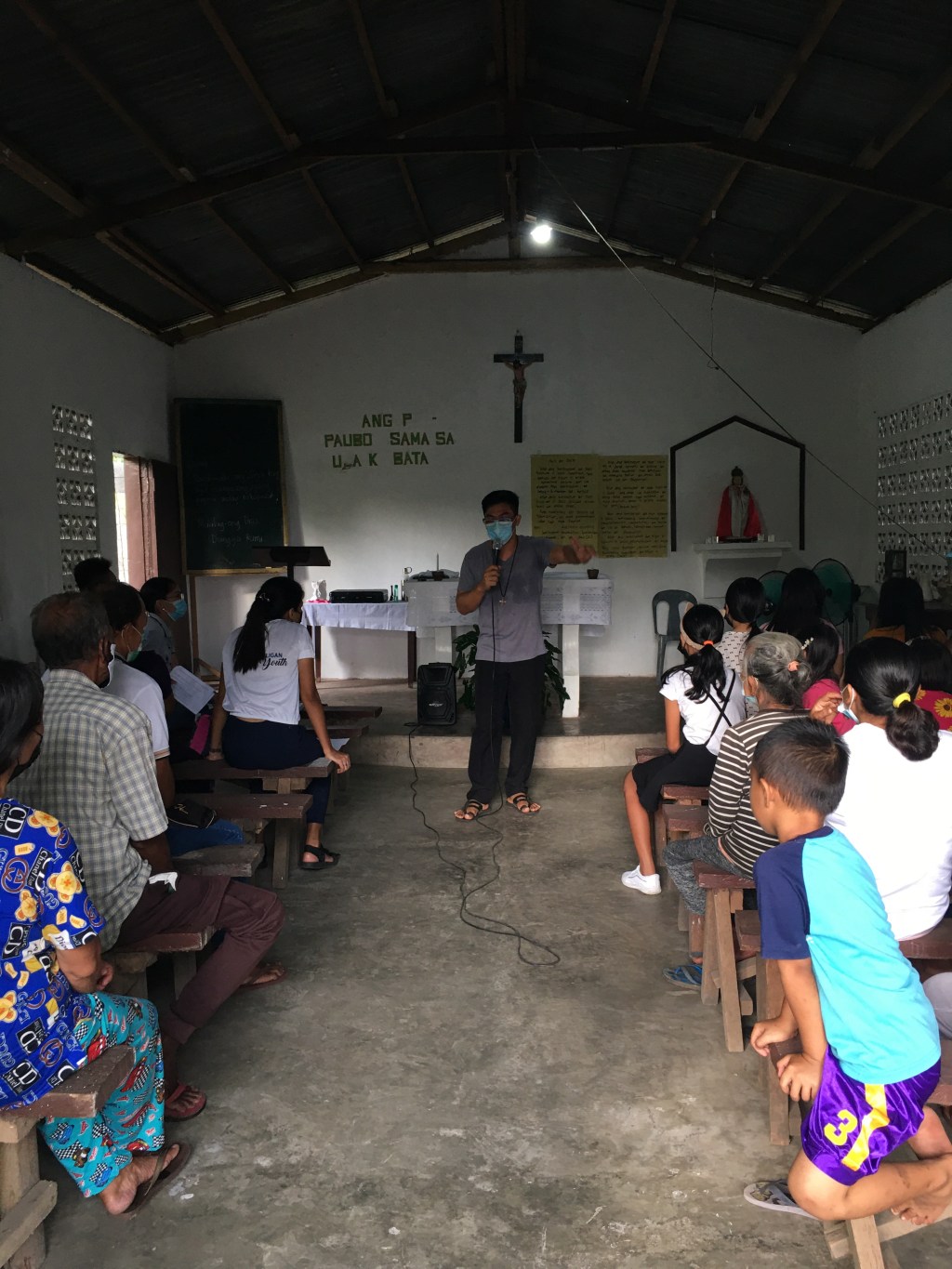
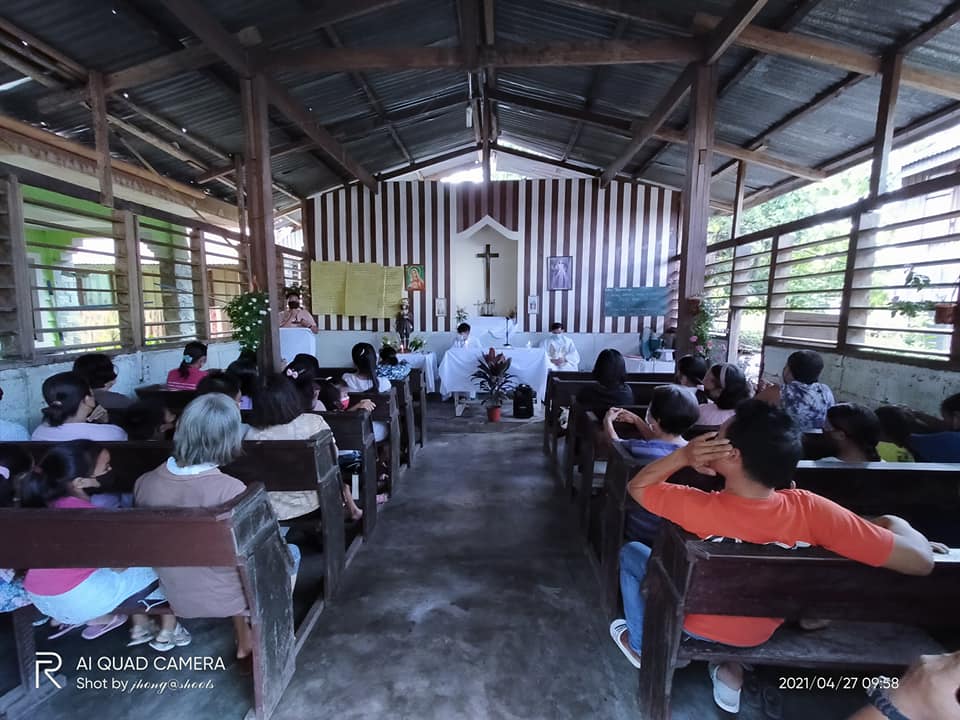
    Our mission in the parish of Balabagan , Lanao del Sur, which lasted for three months (from March to May) somehow, will answer these questions especially when one knows more about the life of Saint Isidore, their patron Saint. Majority of the population are Muslim-Maranaos. Only 20% percent are Christians, from which 5% percent are Catholics. Yet, the Christians there continue to hold on to their faith in God.

    I always believe that it is the work of the Holy Spirit when choosing a patron saint for every parish and chapel.  That is why, for me, Saint Isidore is really destined to be the patron saint of the parish of Balabagan.   Majority of the people  live a simple and harmonious life, together with their families, despite the conflicts and their bloody history. They are even surrounded by Muslim communities who also treasured their own faith, belief and culture.

    Like Saint Isidore, who was brought up in a religious family, and showed us how to live a good and just life, the whole community of Balabagan, both Christians and Muslims, showed so much compassion, and even valued their faith to God despite their differences.  These are shown through their practices and how they sacrificed their time just to praise and deepen what they believe.   

    Same with the Catholics, especially in celebrating the Holy Eucharist, they participate and respect one’s faith and belief by respecting the tradition and practices of the Muslim community.  This is also the clear message of Saint Isidore, as he was known until now, that, before he would do his work to plow his field, he would first visit some of the churches in Sevilla to pray and to celebrate the Holy Eucharist.  Because of that, Saint Isidore was known for being blessed, holy and kind to others, even to the animals.

    This is also what the community of Balabagan does at present.  Despite their own biases and reservations with other religions, still, they showed so much kindness to one another. They are all like Saint Isidore who was very approachable and kind person. Yet, this is also one of the challenges they need to look into. A challenge to be humble enough to respect and understand one another, especially with people of other religions.  The people showed much appreciation and respect to their differences in terms of culture and religion.

    Although, there were situations that brought so much pain to the Christian community, especially to the Catholics.  One of the chapels of a Christian Community experienced desecration by un-identified Maranaos.  They forcefully entered the chapel, defecated it, broke the image of Jesus on the Cross and destroyed other sacred images of the saints.  

    However,  this really communicates a message to each one of us.   In reality, we may not be able to show our love perfectly to one another, and even please anyone, yet we can always offer that little character, behavior or traits we have.  Some examples are our deep appreciation, respect, understanding and patience. And most especially our humility, no matter what culture, belief and faith we have.  

    I believe that our connection with one another is not based on our culture and religion, but a connection of humanity.  That is why, this is a deep reminder to the call of God, especially to us Catholics.  The life of St. Isidore is a clear and powerful reminder of God’s call for us to live a holy and prayerful life, to celebrate the Holy Eucharist, and to serve God’s people in whatever way we can.  

    Moreover, Saint Isidore is also known as the patron saint of nature.  That is why, it is very important for us today also to restore back our attention and care, to protect and restore the vitality of the environment.

    Lastly, we hope to deeply listen to God’s call, as to how He wants us to live in this world.  We look on the examples of our saints, like Saint Isidore, who listened well to God’s loving presence and committed his life to live a good and just life, by being simple and having a deep faith to God, that led him to be blessed, holy and humble.

    This is a reminder of God’s call for all of us to praise and glorify Him with all our hearts, so that we may be able to welcome one another into our lives, to show our respect, humility, friendship, brotherhood and understanding, despite our differences in culture and religion, and even with our own imperfections.  And we respond to this call by living simply.  Amen.

  • THE GENEROSITY OF THE PEOPLE OF BALABAGAN

    THE GENEROSITY OF THE PEOPLE OF BALABAGAN

    by Portia Awayan, FLARE

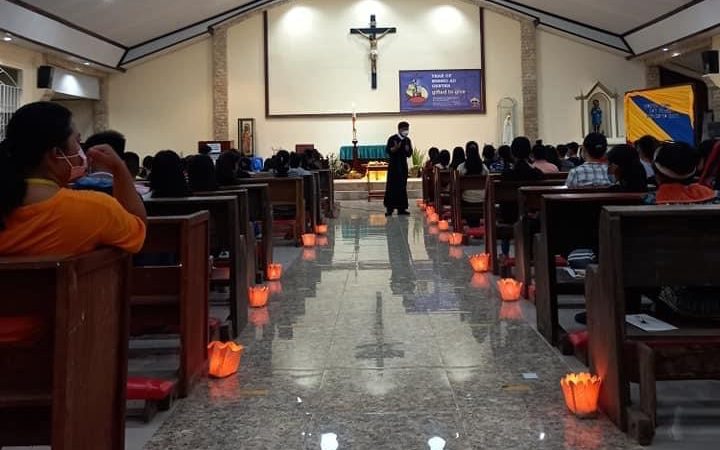
    ***From March to May, the Redemptorist Itinerant Mission Team was in the Parish of San Isidro Labrador, Balabagan, Lanao del Sur to help and facilitate the Golden (50th) Jubilee of the Parish. The three-month mission which was aimed as a way of RENEWAL AND ACCOMPANIMENT began with the Lenten Recollection in the Small Christian Communities of the Parish.

     The theme of this year’s Lenten Recollection for the parishioners of San Isidro Parish of Balabagan was “Gifted to Give,” taken from the theme of the celebration of the 5th Centenary of Christianity in our country.   The recollection aimed to deepen their reflection of this theme and relate it to the meaning of Lent. 

      The theme is taken from Matthew 10: 8, where Christ told his apostles: “Freely you have received; freely give.” It’s actually Christ’s command for his apostles to do all, to give all they’ve got for the mission.

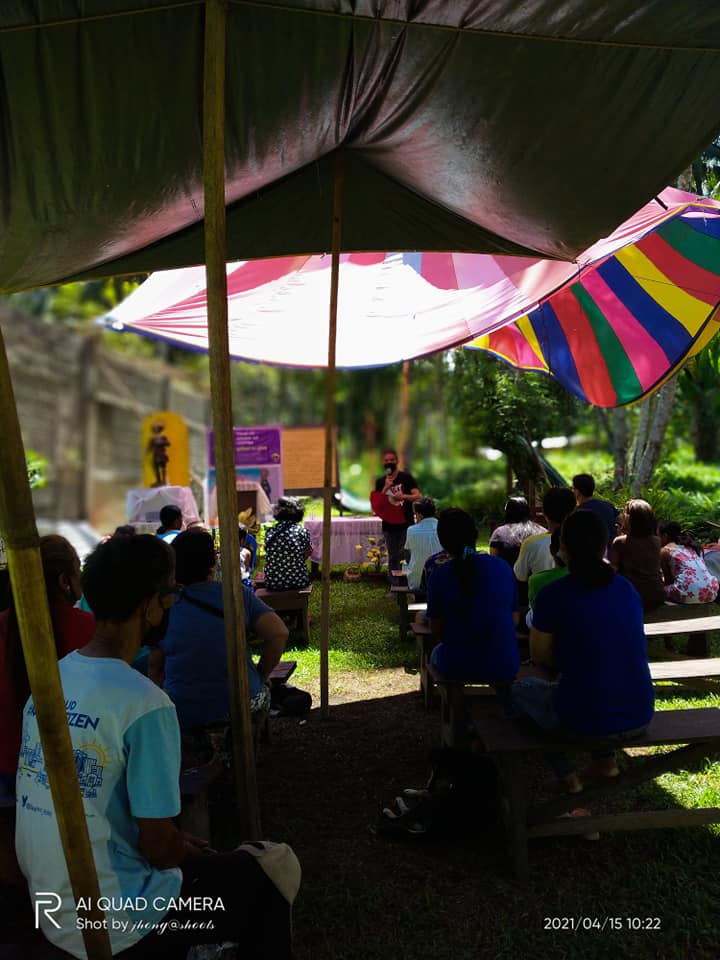
    To jump up the activity, each participant was given 5 small pieces of paper and were asked to write five of the most precious gifts they have received in their life. These could be be material things, relationships, experiences, character, etc.   Then, one-by-one, they were requested to give any of their treasured gifts to the poor, to the church, to the people of other religions, and to the mission.  

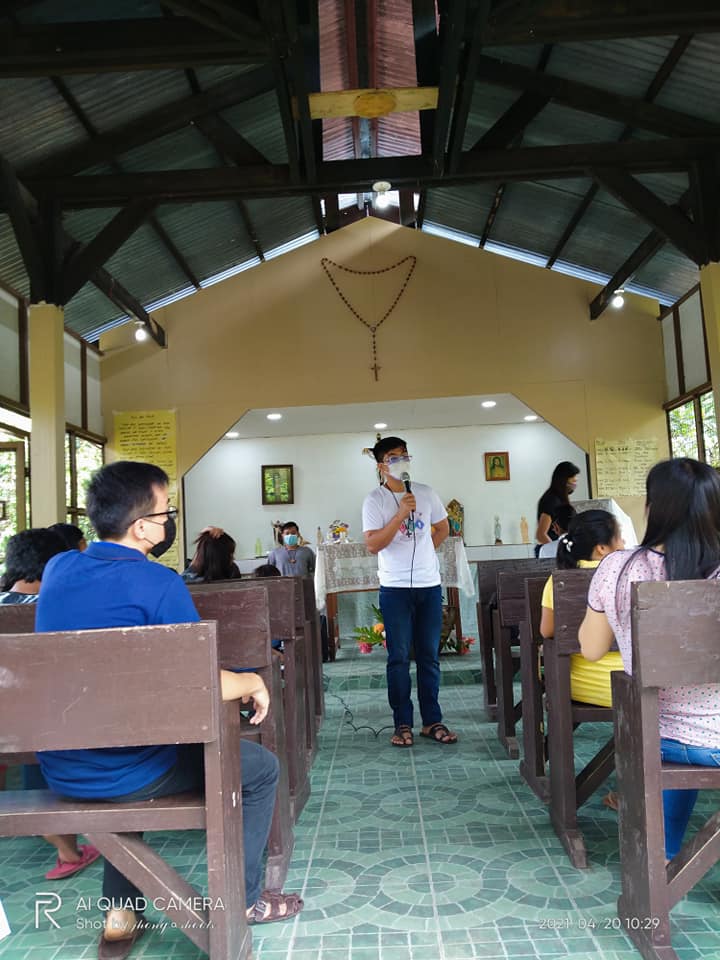
    Miss Portia giving the input of the Lenten Recollection – GIFTED TO GIVE to the Christian Community in Lower Itil, Balabagan, LDS

    It was interesting to note that most of them were willing to give and share their precious gifts, even their own family, their own lives, and their own faith to others.  Although it was just a kind of a game, but they showed how generous they are as a people.

    During the recollection, the participants began with the insight that today, with the idea of “being deserving of something you receive” or “of being entitled”, not many of us have really appreciated our gifts. Some would even lose their sense of surprise, even their gratitude and joy. However, a gift is something one does not expect, even something one does not merit, yet freely given according to the desire of the giver. Indeed, we are all gifted at an unexpected moment. So, one wonders!

    But this year, the parishioners of Balabagan reflected that they cannot only be grateful and joyful but should be awed by the gift of Christianity which the nation received 500 years ago.   At a closer look, it is not just faith that they received but the Gospel of Jesus Christ.  

    At the closest and last look, it is neither just the faith nor the Gospel that they received: It is Jesus Himself!   Thus, the celebration is not just about them; it is about Jesus.  They do not only see the gifts, but the Giver.

    Moreover, during this Lenten Season, the parishioners are reminded of the greatest gift of salvation that they have received from Jesus, through His passion, death, and resurrection!   He has reconciled the people back to the Father!  They are saved from the darkness of sin!   They have become people of the Light!  This is truly a gift that brings genuine joy to all believers, like the parishioners of Balabagan!

    The parishioners then reflected on the meaning of the centennial Logo, and on their mission as lay people.   Most importantly, they echoed that they are called to build Christian families. They put into their hearts and minds that the Vatican Council II calls the laity to develop their own family spirituality and to make their families schools of holiness and defense of family values.

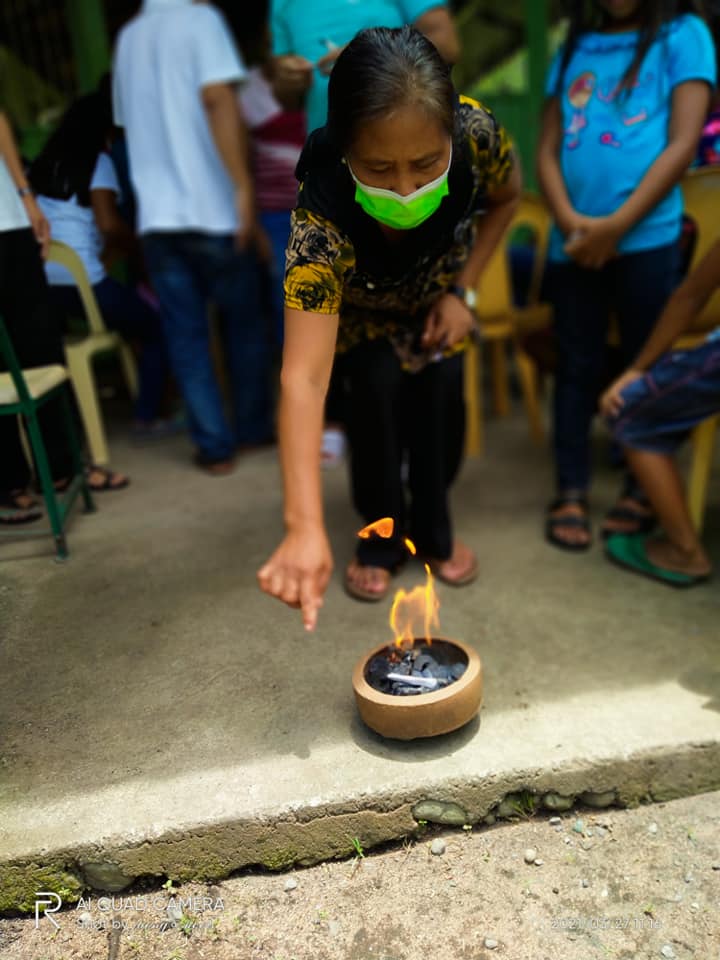
    As we ended every recollection in different communities in Balabagan, they were asked to offer the remaining piece of their treasured gift to the altar, in front of Jesus’ cross.  Without hesitation, they gracefully offered their last gift, showing their generosity as a people.  The members of the mission team could attest to this during their three-month stay in Balabagan.  They have experienced how the people welcomed them, and shared their time, talent, and material goods in all mission activities.  The team especially witnessed the kind hearts and helping hands of simple people, despite their underprivileged conditions.  No wonder, Jesus loves the poor, and reserves for them the Kingdom of God!

  • LOVE IS THE FULLNESS OF GOD

    LOVE IS THE FULLNESS OF GOD

    June 11, 2021 – Solemnity of the Most Sacred Heart of Jesus

    Click here for the readings (https://bible.usccb.org/bible/readings/061121.cfm)

    In the Book of Prophet Hosea, we have been presented with an image of God as a parent and as a healer. Hosea beautifully captures these images of God who only fills with love His child, Israel. God’s love, indeed, nurtures and heals, builds and forgives. Such way of loving from God is written in the whole Scripture that is why we are always reminded how God calls us again and again through love.

    This is best described in the Responsorial Psalm today taken from the Book of Isaiah. The Prophet expresses his confidence in God because he has experienced with God the love that gives strength and courage. God’s presence is water that fills and satisfies our empty heart, quenches the thirst in us for love and support.

    In the same confidence, Paul also reminds the Ephesians of the love of Christ which surpasses knowledge. This is love beyond idea or any ideology, but this is in its most concrete expression of love that sacrifices oneself for the sake of the beloved. This is love that gives life. This is how Paul affirms that the love of Christ truly fills us because love is the fullness of God.

    In that fullness of God, God only desires to share that love that will fill every empty but insecure and fearful heart. This is how the Gospel of John reveals to us the physical and literal overflowing of blood and water from the pierced heart of Jesus. The soldier who thrusted his lance into the side of Jesus witnessed this.

    The seemingly dead body of Jesus, flowed out blood and water which only gives life and joy, satisfies emptiness and also nurtures and heals, builds and forgives. This tells us that even when Jesus was being hurt, the Lord continues to bring out his love and only love.

    This is the very message of the Most Sacred Heart of Jesus. This Solemnity is not a mere worshipping of an organ, “the heart” per se, but of Jesus himself who constantly showed us the love of God spoken about in the Scriptures.

    There are two invitations for us today.

    First. Be filled by that love of Christ. His love only brings fullness in us. Thus, learn to be confident in his love! Be overwhelmed by his love! Seek his love that will satisfy our every hunger and thirst for love and intimacy, for acceptance and support.

    Second. Learn from his way of loving. Let our expression of love to truly give life. Let our love nurtures immaturity, builds the confidence of the fearful, heals the brokenhearted and in pain, forgives the sinner and does not plant hate and violence. Hinaut pa.