
April 15, 2026 – Wednesday of the Second Week of Easter
Click here for the readings (https://bible.usccb.org/bible/readings/041526.cfm)
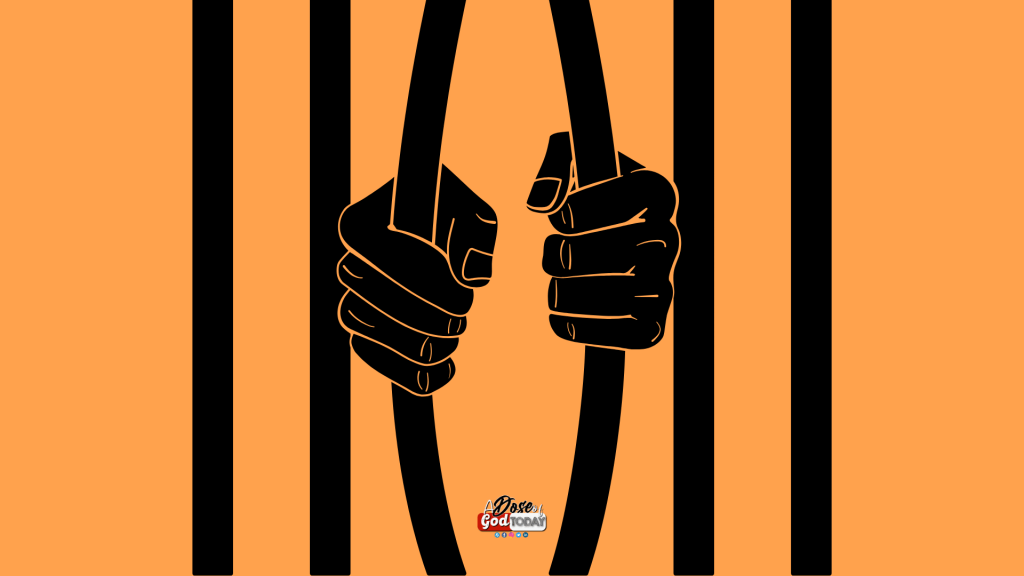
There was once a man who had already finished serving his sentence in prison. The day finally came when he was allowed to leave and return to his family. Everyone expected him to be happy because he was now free. But as he walked out of the prison gate, he quietly told one of the guards, “I am leaving this place, but I feel that the prison is still inside me.”
Those words are painful, but very true. Because there are many people who are physically free, yet remain imprisoned inside. Some are imprisoned by fear, by guilt, by anger, by jealousy, by the need to control, by the shame of the past, or by the opinions of others. A person may smile outside, work every day, and even appear successful, but deep inside, the heart can remain trapped.
This imprisonment is what we find in today’s readings. Let us discern about this and find how our hearts can trapped and how we can be free.
In the Acts of the Apostles, Peter and John were deprived of their liberty. This was not the first time. They had already been imprisoned once before, and now they were imprisoned again because the religious authorities were filled with jealousy. The Jewish leaders could not accept that the Apostles were doing good, healing the sick, helping the poor, and preaching about the resurrection of Jesus.
What Peter and John did were concrete expressions of what they believed and held in their hearts. They believed in the Risen Christ. They believed that Jesus was alive, and because of that, they were willing to continue doing good no matter the cost.
Of course, Peter and John must have been afraid. They were human after all. They worried about what might happen to them. Yet, something had changed in them. They had learned to trust in God. The constant invitation of Jesus, “Do not be afraid,” had already grown in their hearts. That is why, even when they were imprisoned physically, their hearts remained free.
This is very important for us to understand. There are at least two kinds of imprisonment in today’s reading. The first is physical imprisonment, like what happened to Peter and John. But the second is deeper and more dangerous. It is the imprisonment of the heart.
The chief priests, Sadducees, and Pharisees who persecuted the Apostles were actually more imprisoned than Peter and John. They were imprisoned by jealousy, by greed, by pride, by fear, and by their refusal to believe in Jesus. They were blinded by their own insecurity. They could not rejoice in the good that others were doing because their hearts were trapped in darkness and bitterness.
This is exactly what Jesus says in the Gospel. He says that some people prefer darkness to light because their works are evil. Darkness here is not only about sin. Darkness is also anything that keeps us from becoming the person God wants us to be.
And so, the question of the Gospel becomes very personal, “What is imprisoning me today? What traps my heart?”
Perhaps it is fear, the fear of failure, fear of rejection, fear of what people might say about us. Perhaps it is shame from the past that we cannot let go of. Perhaps it is jealousy because we compare ourselves too much with others. Perhaps it is anger, pride, or the need to always control and dominate.
There are also people imprisoned by their desire to be recognized all the time. They think that they need to become somebody else just to be accepted. Others are imprisoned by material things, believing that more money, more possessions, or more success will finally make them happy and contented.
However, all of these can only make the heart heavier. Yet, the good news is this, “Jesus did not come to condemn us but to free us.”
The Gospel reminds us today, “God did not send His Son into the world to condemn the world, but that the world might be saved through Him.” Jesus comes to bring light into the darkness of our hearts. He comes not to shame us, but to heal us. He comes not to imprison us further, but to set us free.
And freedom begins when we become honest with ourselves. Freedom also begins when we stop hiding. Freedom also begins when we allow the light of Christ to enter the areas of our life that we are ashamed of or afraid to face.
So today, let us ask the Risen Christ to help us recognize the prisons within us. Let us ask Him to free our hearts from fear, jealousy, anger, shame, and insecurity.
And let us ask the help of Mary, Our Mother of Perpetual Help, that she may guide us toward the light of her Son. Because only in Christ can we become truly free.
So, I leave you today two concrete takeaways.
First: Ask yourself honestly, “What is imprisoning me today?” Name it before God.
Second: Bring one fear, wound, or insecurity to Jesus in prayer and ask Him to replace it with His peace and light. Hinaut pa.
 A DOSE OF GOD TODAY
Leave a comment