Tag: Youth Ministry

  • Called to Shine: Young Hearts Bearing God’s Light Today

    Called to Shine: Young Hearts Bearing God’s Light Today

    December 16, 2025 – First Day of Misa Aguinaldo

    National Youth Day | Isaiah 56:1–3, 6–8 | John 5:33–36

    Maayong Good Morning! As we begin this first day of Misa Aguinaldo, the Church also celebrates National Youth Day. What a beautiful grace to begin our nine-day journey to Christmas by celebrating the hearts, dreams, and even wounds, and hopes of our young people.

    Today, we focus on one truth that even in the darkness of our times, God calls the young to shine.

    To help us enter this sacred story, we first welcome a young sharer. Her story becomes our doorway into the Word of God on this First Day of the Misa Aguinaldo. Her voice represents for us this morning the many Filipino youth who are also questioning, struggling, hoping, searching for love, and searching for God.

    And so, as a community celebrating the gift of the young to the Church, let us welcome Miss Allysa Joie Ambos.

    (Guide Questions for the Youth Sharer)

    1. As a young Catholic today, what is the biggest struggle or challenge that makes it hard for you to feel close to God? (This brings out real battles like pressures, family issues, identity, faith crisis, loneliness.)
    2. Despite these struggles, when and how have you experienced God reaching out, guiding, or comforting you?
    3. As you look forward, how do you hope to shine God’s light in your family, school, friendships, or Catholic Community despite being young and imperfect? (Invites hope, mission, and  desire to grow as a young disciple.)

    Faith Sharing of Allysa

    I grew up having few friends to spend time and play with. And this has made me feel insecure. As a child, I often wondered what was wrong with me. I felt alone and detached from people. I became guarded and judgmental. There was even a point when I accused God to be the cause of what I thought were my misfortunes in life.

    I never really liked socializing just to fit in. However, I exactly did so with the intention of being seen and accepted. I hated being ignored so much, that I was desperate to do the things that are against my will. But even when I had a lot of friends, I felt uneasy, sensing that something was amiss.

    You see, I had a very poor understanding of who God is. I’m not sure when I had recognized it. My thirst to knowing Him came from a need, a calling, a search that I thought unrealistically must be satisfied, followed and found.

    At first, I relied upon books to know Him. Later on, I switched to fishing affirmations and chasing people. Up to this point, I’m still confused.

    In the loudness and overpopulation of our modern world, I realized He is actually nowhere to be found.

    To know someone, you must be able to converse and soak in their presence. But God’s language is the hardest to learn. You have to really listen, because He speaks in silence.

    I nearly thought this treatment implies His lack of love and care. I’d often ask when praying, “Why do you hide yourself from me?” I figured I was unworthy and that if even God doesn’t love me, who will?

    It took me a couple of years to realize and admit that it was me who was in hiding. I was too focused on myself that I failed to consider what others might feel because of my dismissive words and behavior. I subjected myself to the wrong kind of introspection and censure, overemphasizing on my faults and lapses. I was worried I couldn’t keep up with the fast paced world. I felt helpless and anxious as I thought how uncertain I am of Him and even of myself. I was scared and terrified.

    But God has always been there. Whenever I secretly starve myself as punishment for my unpreparedness or poor performance at school, my family would always remind me to take care of myself. My mom and sister Janna personally cooks me delicious meals that’s hard to resist. Whenever I’m dejected and in isolation, my Kuya AJ knocks on my door, offering his weird humor and comforting presence. He is the reason why I joined CSO. Although I had the intention of avoiding house chores then, God has indeed, a way of transforming our hearts.

    Sojourning with my family and peers in CSO has taught me invaluable lessons. They taught me that faith does not mean we know all the answers; that in spite of the uncertainty, we still dare and have the courage to let our questions be asked, unafraid, to be convinced of the reliability of God. And that the service we offer in helping each other to believe may be the best and authentic service we can render.

    After listening from a young person speak, we cannot also ignore that our youth today are carrying heavy and often silent burdens. Recent youth studies in the Philippines reveal that…

    1 in 5 Filipino youth aged 15-24 wrestles with depressive symptoms, anxiety, or emotional distress.And most consider ending their lives by suicide.[1]

    Many also face family instability—broken families, long-distance parenting, financial strain, or domestic conflict.[2]

    With 8 hours and 52 minutes online per day,[3] youth battle comparison, insecurity, identity confusion, cyberbullying, and disinformation.

    Many struggle with self-worth, nomophobia[4] or smartphone addiction, pornography, or the pressure to appear “okay” even when they are breaking and hurting inside.

    A significant number feel far from the Church, saying faith seems distant from real-life problems. Yet,Filipino youth are more and more looking for authentic expressions of faith that they would not necessarily find in conventional practices or conventional piety.[5]

    And so countless youth worry about their future, education, safety, jobs, and mental well-being.

    These ate realities that can create darkness. Sometimes quiet and sometimes overwhelming where many young hearts would whisper, “Lord, am I enough?” “Do I still belong?” “Is there a place for me?”

    Now, allow me to bring you into our readings today and let us also realize how God invites us.

    Isaiah speaks to a wounded community who have just returned from exile but broken, unsure, and feeling unworthy. Some believed they didn’t belong in God’s house because of their status or imperfections.

    But God proclaims in the Book of Prophet Isaiah something radical and touching. God says, “My house shall be a house of prayer for all peoples.” Yes, for all peoples not just the perfect, not just the strong, and not just the holy.

    This is God’s message to the Filipino youth and to everyone. You belong. You are welcome. You are seen. Yes, your struggles do not disqualify you. Your wounds do not push you away. And your doubts and questions do not make you unworthy.

    Isaiah’s prophecy tells us now that belonging comes before perfection. God gathers first then God heals us. This speaks powerfully to a generation longing for acceptance, for identity, for a safe place to return to, and for a home to be embraced.

    Moreover, in the Gospel, Jesus describes John the Baptist as a “burning and shining lamp.” John is not the Light but he reflects the Light he receives. Jesus affirms that God’s work in the world is shown through our real action of healing, loving, welcoming, lifting people up.

    This is the invitation for every Filipino youth now that you do not need to be perfect first to shine. Just receive God’s light and share it. Our young generation longs for authenticity. You are indeed, searching for faith that heals, not just teaches; a Church that listens, not just speaks; and a community that embraces, not just corrects.

    John the Baptist shows that shining for God is not about age, power, educational attainment or status. Bringing light is about courage, our honesty and humility, and our heart willing to love and be loved.

    Our readings today, Allysa Joie’s faith story, and the realities of our time converge into one powerful truth that God certainly, calls young people to shine not later, but now.

    And your context is there in  our families struggling with tension, in schools full of pressure, in online spaces filled with noise and disinformation, and in a society hungry for justice. These are the spaces that the youth can be God’s light.

    Remember that your compassion, your creativity, your voice for peace, your desire for truth, all these can illuminate the darkness around you. You are not the Church of tomorrow. You are the Church of today. This is what Pope Francis had told us, and now Pope Leo reminded us. God calls you now to witness, to serve, to love, to hope, and to shine.

    With all of these, I leave you now two takeaways.

    First, grow in God’s Light. You may choose one small spiritual commitment this Misa Aguinaldo. This can be a short daily prayer, or reducing online noise, in forgiving someone, or helping at home. Remember, small lights change dark rooms.

    Second, share God’s Light. You may do one act of kindness or honesty each day. You can encourage a friend, listen without judgment, stop online negativity, or say a sincere “thank you.” Be a lamp so that others can follow.
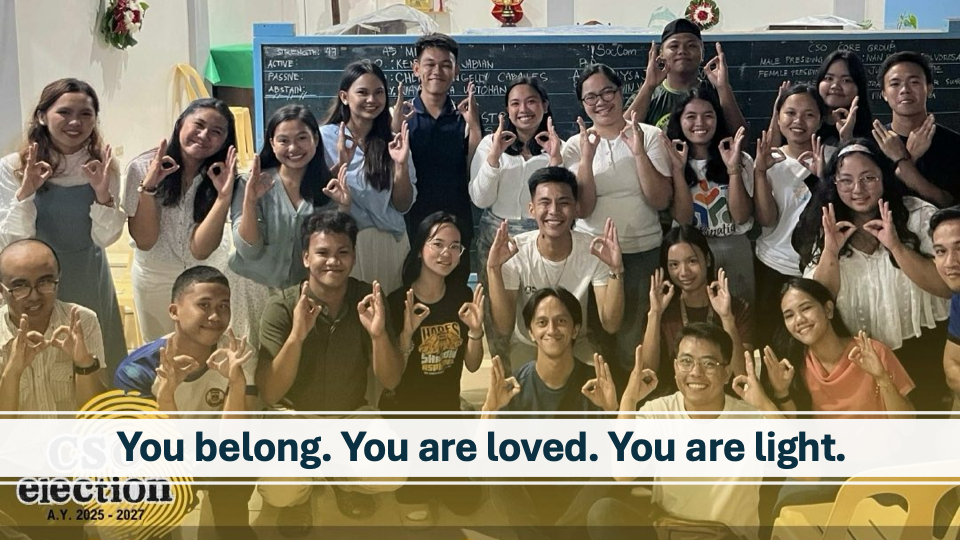
    Indeed,may this first dawn of Misa Aguinaldo awaken our young people and inspire every generation present this morning. Embrace this now that – You belong. You are loved. And You are light. Hinaut pa.


    [1] https://www.uppi.upd.edu.ph/news/2022/pinoy-youth-in-worse-mental-health-shape-today

    [2] Donna B. Dioquino, UNRAVELING LIVES: THE FAR-REACHING CONSEQUENCES OF BROKEN FAMILIES, https://eprajournals.com/pdf/fm/jpanel/upload/2024/December/202412-01-019460

    [3] https://www.meltwater.com/en/blog/social-media-statistics-philippines

    [4] Nomophobia is the fear of having no smartphone or losing it.  See https://www.sciencedirect.com/science/article/pii/S2590291120300243

    [5] From Jayeel Cornelio, see https://preda.org/young-filipinos-keep-the-faith-but-shun-conventional-piety/

  • We are digital natives. We are missionaries.

    We are digital natives. We are missionaries.

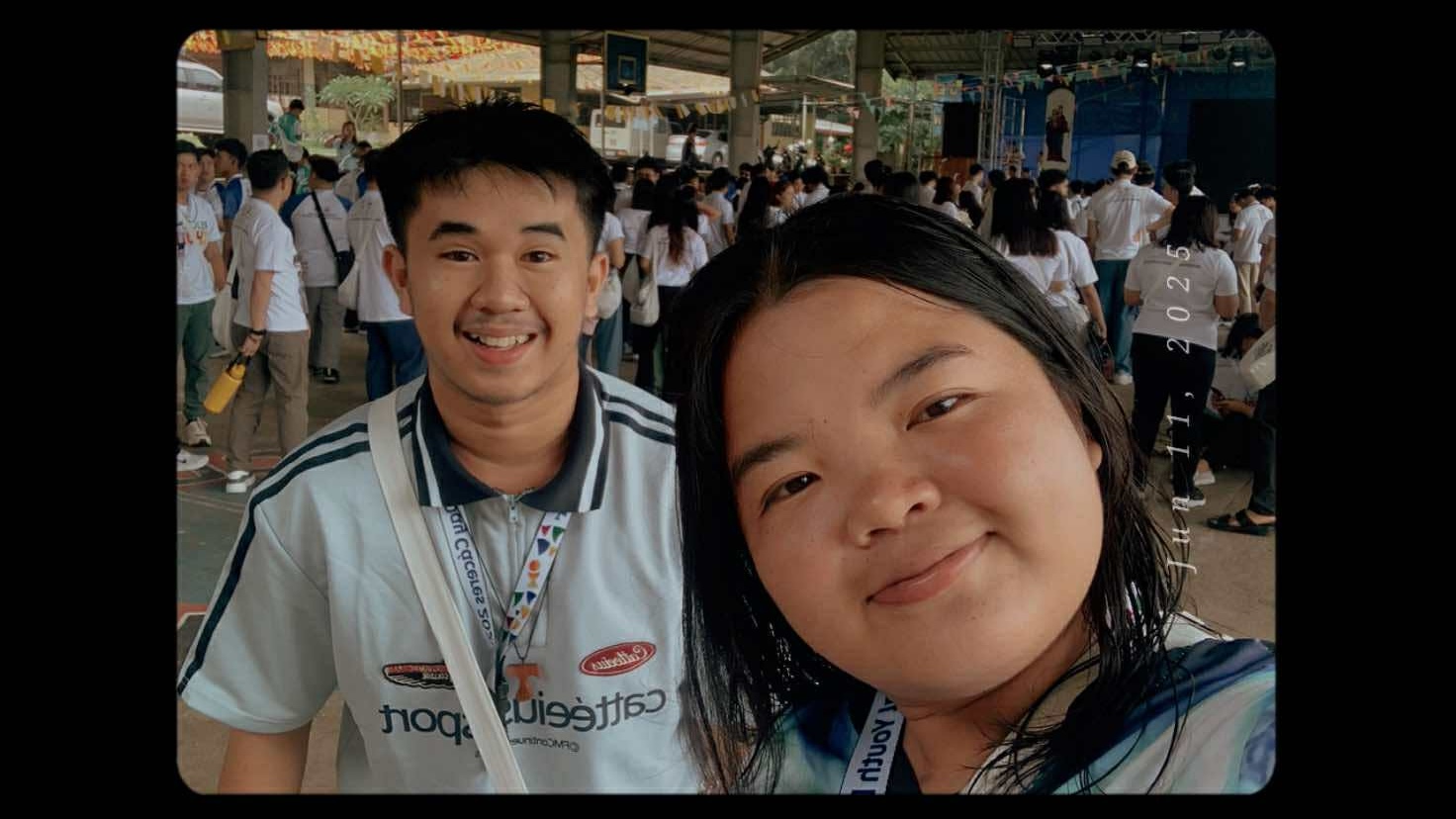
    The 9th DOPIM Youth Congress, guided by the theme ‘Rejoice in Hope, Digital Natives!’, empowers young people to embrace their identity as modern missionaries, using digital platforms not just for connection but as spaces of evangelization, joy, and hope rooted in Christ.”

    It has been a profound experience—a pilgrimage of faith, community, and mission that calls each of us, especially as digital natives, to live our identity as joyful missionaries in a rapidly changing world.

    The theme “Rejoice in Hope, Digital Natives!” is both a challenge and an invitation. In a time when the digital world can often be a source of anxiety, isolation, or distraction, this theme reminds us that hope is not outdated—it is alive, dynamic, and very much needed in our generation. “Hope is not optimism, it is something beyond indifferent” – Rev. Ryan Jill H. Joaquin. We are not only consumers of digital content, but proclaimers of Good News in this digital age.

    Throughout the congress, I have been inspired by stories of mission and sacrifice, and by the reminder that our faith is not something passive. Faith is a living fire meant to be shared. As a digital native, I realize that the internet is not just a tool for connection. It is a mission field. In every click, every post, every message, we have the opportunity to reflect Christ’s light, to encourage others, and to witness to our faith.

    In addition, Rev. Ryan Jill H. Joaquin and Rev. Fr. Jomil C. Baring, CSsR, highlighted how technology affects our lives. In fact, Social Media and Artificial Intelligence (AI) both having advantages and disadvantages as to how we use and apply in our everyday living.

    The event helped me realize too that being a missionary today is not about going to faraway lands. It’s about being present where people are, and increasingly, that place is online. Through a hopeful heart, a joyful witness, and wise engagement with digital tools, we can transform timelines, chats, and even algorithms into pathways of grace.

    In this rapidly changing world, our mission is clear: to rejoice in hope, even in the digital space. We are not just users of technology, we are bearers of light in the digital age. Let us post with purpose, share with sincerity, and allow our faith to animate every part of our online presence.

    We are digital natives. We are missionaries. And we rejoice in hope, for Christ is alive—even in the cloud.

    This journey has strengthened my sense of purpose. I am reminded that I am not too young or too small to make an impact. With my skills, my creativity, and my faith, I am called to be a missionary of hope—online and offline.

    In the end, the 9th DOPIM  Youth Congress is not just something we attend—it’s something we carry forward. We are the Church in mission. We are the Church online. And we rejoice in hope, because Christ is with us, even in the digital age.

    A reflection by Richly Allin King B. Vildosola. “King” is an active Youth Leader of the Prelature Youth Ministry. Currently, he is a first year college student majoring Bachelor of Science in Accountancy in Pagadian City.

  • TO AFFIRM, TO REJECT, TO BE ALONE

    TO AFFIRM, TO REJECT, TO BE ALONE

    I learned three things in my recent Youth Encounter Facilitators’ Training – To Affirm, To Reject, To be Alone is Good.

    Indeed, these three lessons are part of our life situations. Some of us may have avoided one or all the three. Some are afraid to face it. Some may not be able to recognize that they are doing something good. During our sessions, a question popped up in my head, “ Is it okay to not experience this or feel such emotions?

    I used to struggle with receiving affirmations from others. When someone would complement me, I would easily downplay it or say ‘it’s nothing special.’ I would respond with ‘dili uy’ or ‘taka raman ka’  (It is not true) instead of simply acknowledging it and saying “thank you.”

    I felt uncomfortable receiving praise. I worried that people were just joking or being insincere. This made it hard for me to give affirmations too. I feel pressured to maintain a certain image and expectations. Even in expressing my faith like in simple praying, felt challenging. I struggle to acknowledge God’s blessings and goodness in my life.

    Yet, I was so touched with Simon’s story who became Peter after Jesus’ affirmation. That story inspired me. It challenged me to practice receiving and giving affirmations, genuinely. I want now to acknowledge others’ efforts and kindness, and express gratitude for God’s blessings. Though, it is still a work in progress, but I’m learning to embrace affirmations as a way to build connections and celebrate goodness.

    When we too are rejected or doing the rejection towards others, it can leave us feeling disappointed, hurt, and uncertain. However,  the story of the 2 blind men shows me a different perspective. They were rejected by the crowd, who saw them as helpless and dirty. The crowd judged them and got angry, but Jesus listened to their cries for help. Jesus stopped, called them over, and asked what they needed. At that moment, the blind men felt seen, heard, and valued. Jesus recognized their worth and importance, and they felt accepted.

    This story teaches me that even in rejection, we can find acceptance and love. Jesus’ actions show me now that everyone deserves to be heard, seen, and valued. I learned that I must offer kindness, compassion, acceptance. It is a call for me to listen to others and to recognize the worth and value in every person I encounter.

    I used also to fear being alone, left out, or not chosen. Many young people, including myself, dread silence, thinking that it means being alone. Yet, I’ve learned that being alone can also be good. To be alone, we can also sense God’s presence, recognize His work, and find peace. When we are feeling down, it’s okay to be alone because God is always with us.

    In silence, we can Hear God’s gentle voice, reflect on our thoughts and emotions, find calmness and peace and grow closer to God. I realized that being alone doesn’t mean being abandoned, it can also mean being with God. Embracing silence helps us trust in His presence and love.

    Is it okay to not experience this or feel such emotions? It can be yes or no. Yet, for me, this is necessary to be in touched with myself and be closer with God. It teaches me to  also rely on God’s strength in my weakness or darkest time

    A reflection by Joseph S. Funo-an, who was sent in Cebu City last August 17-22, 2025 for the Youth Encounter – Virac Model and YE-Facilitators Seminar Workshop (YE-FSW). He recently graduated at Mindanao State University, Main Campus, Marawi City, in Bachelor in Elementary Education.

  • From HATE to LOVE: A Journey of Humility

    From HATE to LOVE: A Journey of Humility

    A reflection by Roger E. Miranday

    The First Reading from Sirach 3:17-18, 20, 28-29 reminds me of the beauty and importance of living with humility. It teaches that the greater I become, the more  I must humble myself before God, for humility is the foundation of true wisdom and strength. This passage calls me to recognize that pride and self-centeredness only lead to downfall, while a humble heart finds favor with the Lord. My own experiences have shown me how fragile life can be, and how much I need humility to see beyond myself and return everything to God.

    Roger E. Miranday


    The Struggles of Humility (H.A.T.E.)

    Humility is difficult for me because of the challenges I face in my attitudes and emotions. These can be summarized in the word H.A.T.E.


    H – Humiliating others: Sometimes, I hurt people by putting them down to make myself feel better. Even when corrected, I find it difficult to admit that I am wrong.


    A – Anger: When I am humiliated, I react immediately with anger. I hold grudges and find it hard to forgive, which only distances me from others.


    T – Tactlessness: I often rely on my own thinking, believing that I am always right. This makes me insensitive to the feelings and suggestions of others.


    E – Envy: I sometimes desire what others have, and  to the point that i forget to value the blessings of God has already given me.


    These weaknesses make humility a constant struggle because they pull me towards pride and selfishness


    One painful day, I saw my eldest brother fighting against his illness. I witnessed how much he struggled because he wanted to live for his children, who were still very young. I cried because I knew his desire to live was strong, but sadly, he passed away. That experience humbled me deeply. It made me realize that everything returns to God. It reminded me to live with humility and not to take life for granted.


    The Power of Humility (L.O.V.E.)

    As a young person, I believe humility builds strong relationships. It can be expressed in the word L.O.V.E.


    L – Love: Because doing everything with love, even in small ways, helps me live with humility and connect meaningfully with others.


    O – Openness: Because for me, openness means not only sharing myself with others but also embracing my own flaws and imperfections. And i believe it allows me to build stronger bonds with others.


     V – Valuing: Because learning to value even the smallest things helps me live with gratitude and nurture deeper relationships.


    E – Equality: Because seeing everyone as equal, regardless of status or background, allows me to treat others with fairness and respect.


    Through L.O.V.E., humility becomes a bridge that strengthens my connection with others and with God.


    Through my experiences, I have learned that humility is not always easy to practice, but it is one of the most valuable virtues I can embrace. The loss of my brother made me realize how fragile life truly is, and that both material possessions and even our dearest relationships ultimately belong to God.

    At the same time, I recognize the struggles within myself summarized in H.A.T.E. that make humility difficult to live out. Yet, by choosing L.O.V.E. every day, I now see that humility is the key to becoming a better person. In the end, humility teaches me to appreciate life, to respect others, and to live with a heart grounded in gratitude and love.

  • FAITH AND MY NYD JOURNEY

    FAITH AND MY NYD JOURNEY

    Faith is the quiet strength that carries us through life’s most uncertain moments. It is not simply a belief in something unseen, but a deep trust that no matter how unclear the path may be, we are not walking alone. There have been times in my life when doubts, fears, or hardships threatened to overshadow hope—but faith reminded me to keep moving forward.

    A Reflection by Vanezza L. Olivar

    What makes faith so powerful is that it does not require certainty. It asks only for willingness—a willingness to believe, to hope, and to endure. It does not promise a life without struggle, but it offers the courage to face challenges with grace and the resilience to rise again when we fall.

    Despite being the smallest delegation in the recent National Youth Day 2025, faith has been a source of peace. Whether through prayer, reflection, or simply trusting in a higher purpose, I have come to understand that faith is not about having all the answers. Faith in God is about finding strength even in the many questions. Faith leads to light that continues to shine, even when everything else feels dark. Faith does not remove life’s storms, but it anchors us through them. And that, I believe, is the greatest gift I have received.

    The journey of many young people during the National Youth Day 2025 in the Archdiocese of Caceres, was a unique and transformative chapter in life. It has become a time filled with discoveries, challenges, and growth. The opportunities given allowed us to explore who we are, what we believe in, and what we hope to become. Along the way, we encountered both triumphs and failures, each shaping our character and helping us understand the world around us.

    Being youth is often marked by energy and ambition, but it is also a time of confusion and vulnerability. There are moments that I too feel lost or unsure, questioning my own choices and direction. Yet, these very struggles are what built resilience and inspire wisdom. I realized, mistakes are not signs of weakness—they are powerful lessons that guide us toward maturity.

    As I reflect on the journey of being young during this NYD2025, I see it as a time of endless potentials. It is the foundation on which our dreams are built, relationships are formed, and values are developed. It is also a reminder that we are constantly evolving, and that it’s okay not to have everything figured out.

    Most importantly, the youth-journey is not meant to be walked alone. With the guidance of family, mentors, friends, and faith, we find the strength to face life’s uncertainties. As we grow older, we carry the lessons of our youth with us. These are lessons of courage, identity, and hope. In every step, whether forward or backward, there is purpose. And in every young heart, there is the promise of a bright and meaningful future.

    Despite not having the support from my parish, I made it. It’s with God’s guidance and grace. The NYD celebration was certainly not easy to many young pilgrims. But with God’s mercy, I also met individuals who made my prayers into reality. Many helped to heal my wounds of not having the support coming from my home parish.

    In the end, I’ve come to see this pain as part of my own growth. It reminded me of the importance of kindness, the strength in being gentle, and the power of choosing to speak with care. Though hurtful words can leave scars, they also teach us to be more thoughtful, compassionate, and strong.

    But all of those come from my faith and service . And so I end this reflection with this quote, “A heart touched by faith learns to rise after every fall, love after every loss, and believe after every doubt.” DIOS MABALOS! SHUKRAN.