Tag: Youth

  • DOPIMories

    DOPIMories

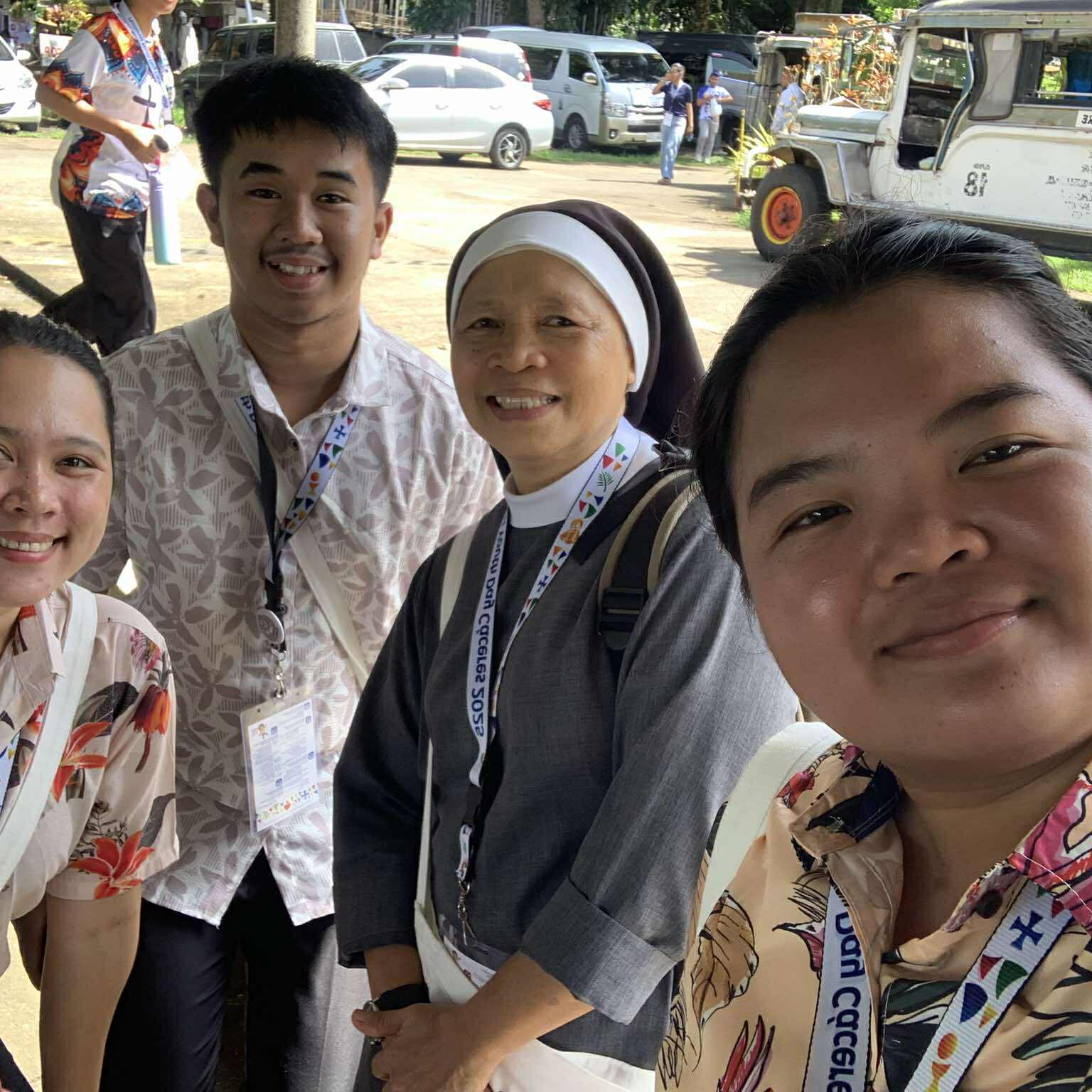
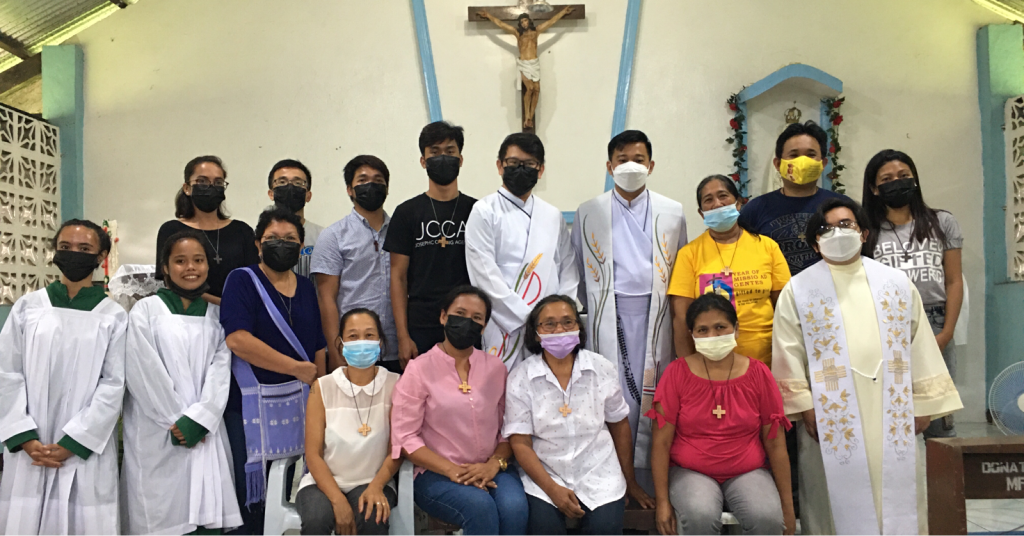
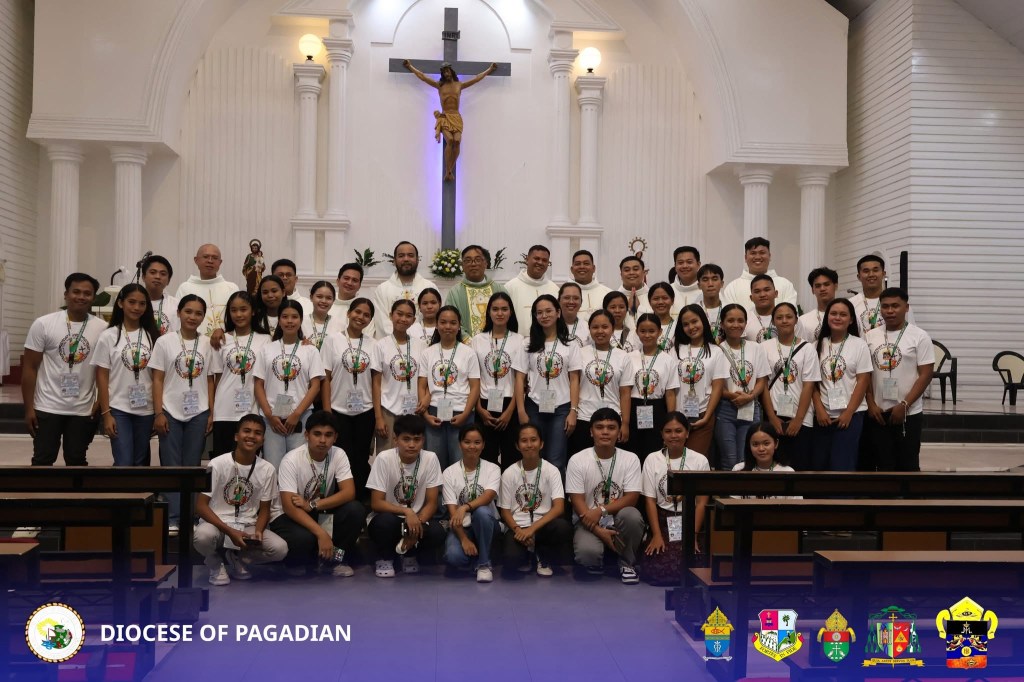
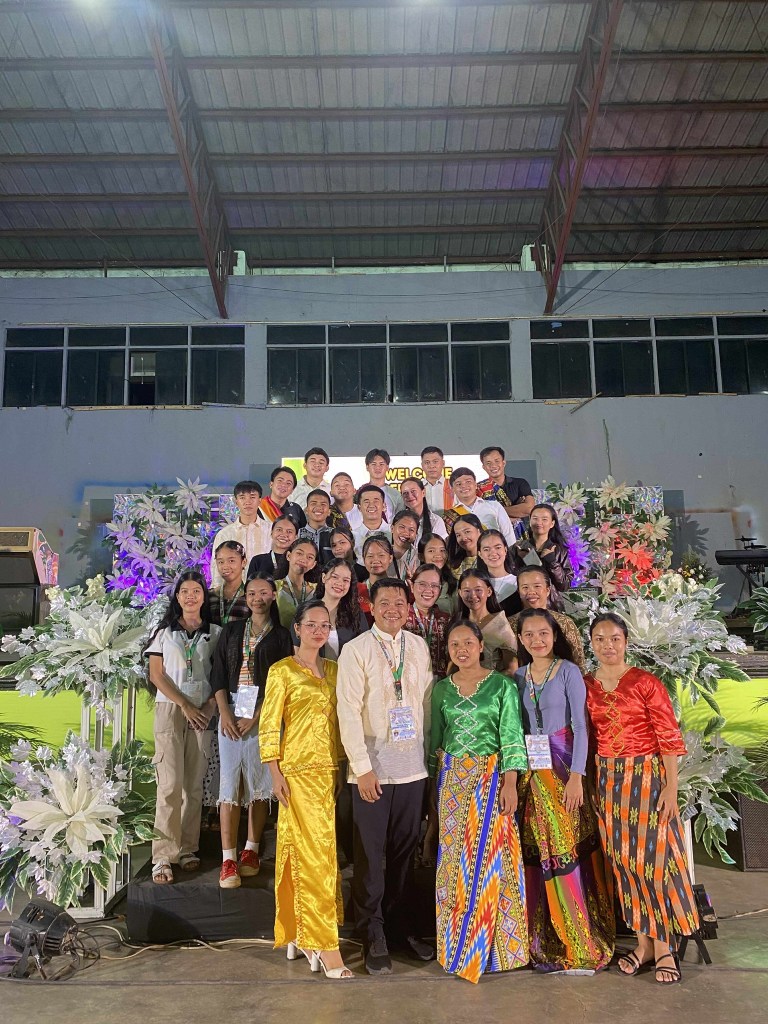
    Sometimes, the greatest lessons come not from classrooms, but from the encounters with people. When I joined the DOPIM Youth Congress in Molave, Zamboanga, I expected a simple gathering like talks, activities, and meeting new people. But what I did not expect was how the experience would eventually reshape the way I see life, faith, and relationships. In just a few days, I have realized a lot of things. One of those, is how God speaks through experiences, through strangers, and through the moments we often take for granted.

    At first, I was nervous about going to our foster homes. I kept asking myself, “What if strict ang tagbalay? What if makasab-an mi didto?” Yet, when I met Nanay Magno, all my fears disappeared. She welcomed me and Ate Tina warmly, fed us dinner, and even told us that she considered us like her own granddaughters in our very first meeting. That simple act of kindness moved me deeply. She made me understand that hospitality is not only about offering food or a place to stay, it is about making someone feel valued and loved. I also realized that to welcome others is to mirror Christ’s love. Just as how Nanay Magno made us feel at home in her own home.

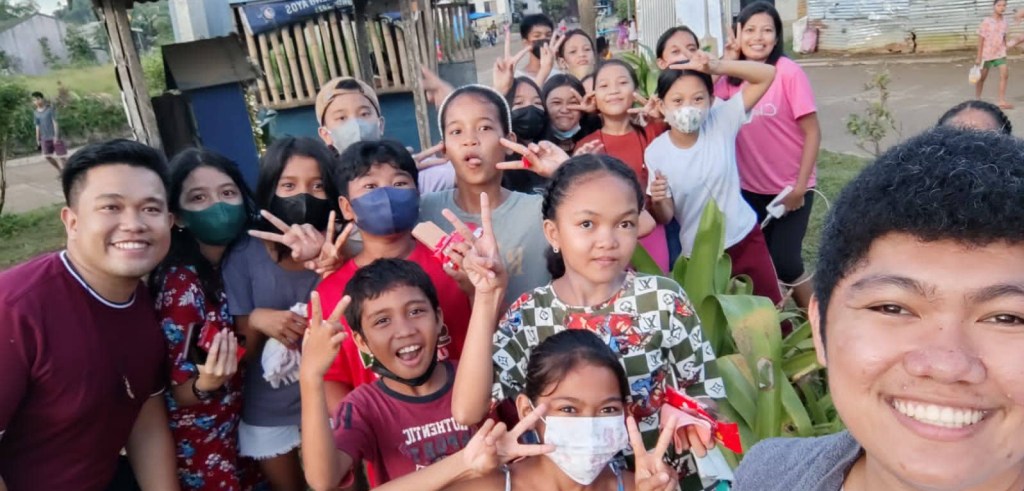
    Another special part of the congress was meeting other youth from different dioceses. I really enjoyed this because we got to know each other and joined in different activities like the recreational activities and open fora. It made me appreciate the importance of making friends, share experiences, and support one another in our faith. It also reminded me that we are not alone in our journey, since many others are walking the same path with us.

    The next lesson I learned, was about the responsibility of the youth. During the talks of Rev. Ryan Jill H. Joaquin and Rev. Fr. Jomil C. Baring CSsR, I learned how powerful technology can influence our lives. Social media and Artificial Intelligence can either build us or break us. They can form our values or deform them. As young people, we are the natives of this digital world. It is very easy to fall into the traps of algorithms, trends, and even toxic comparisons. But as youth, we must be responsible users, to use social media as a tool for good, to speak truth instead of spreading hate, and to evangelize others.

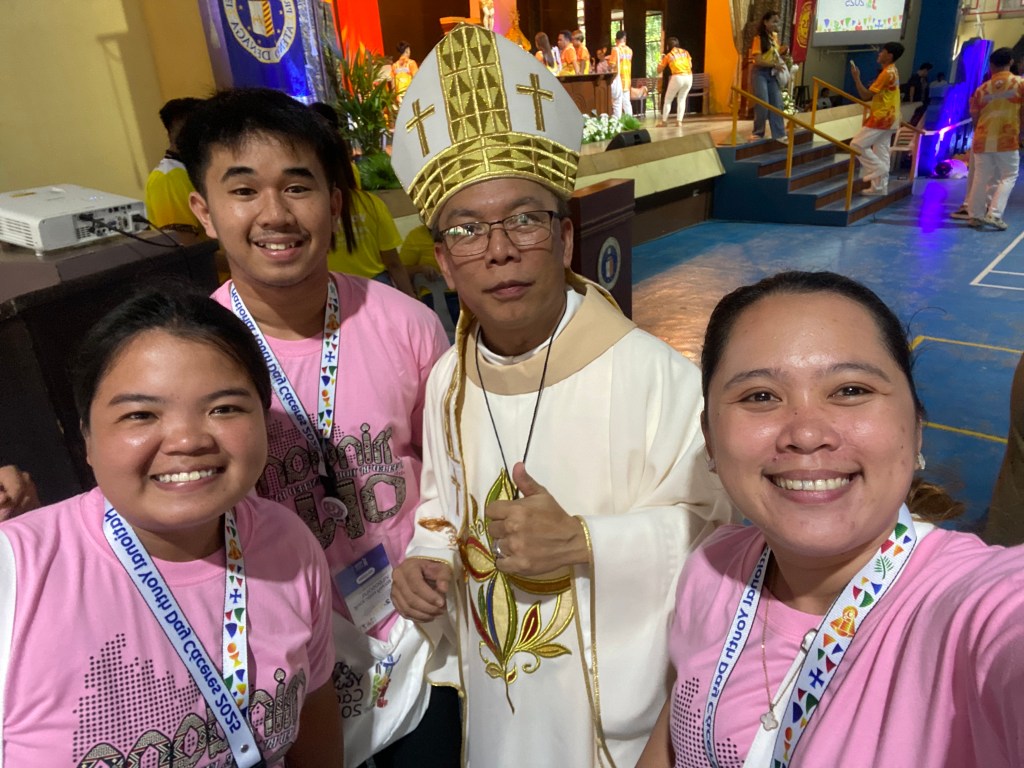
    One line that struck me the most, was from the homily of Bishop Edwin, “As youth, be the best of what you can be, and be the best of what the world expects you to be.” For me, this is more than just a statement, it is a mission. I realized that we, the youth, are not just the future. We are also the present. Our words, choices, and actions online and offline can influence people around us.

    The last lesson was to cherish our elders. Staying with Nanay Magno reminded me of my own lola back home. I noticed how Nanay faithfully prayed the rosary, even though her family at home did not join her. Both me and Ate Tina felt her loneliness. It made me wonder how many times Nanay hoped that her family would also join her, because even I cannot deny that there is a different kind of happiness when we pray to God with our love ones.

    Perhaps, somewhere around the world, many of our elders suffer quietly, even when surrounded by loved ones. They give. They serve. They pray. But sometimes it felt like they are left unnoticed. It made me see how important it is to take better care of them, to listen to their stories, to value them, and to love them while we still can. Because tomorrow is never promised and we do not know what happens next.

    Looking back, DOPIM gathering was more than just a congress. It was a chance to meet God through people, talks, sharing and experiences. At first, I felt scared and unsure, but I went back with peace and direction. I learned that hospitality means opening my heart, responsibility means being a good example in today’s digital world, and valuing elders means showing love before it’s too late.

    Joining the 9th DOPIM Youth Congress was such an eye opener for me and specially for us youth. They brought us closer to God, to ourselves, and to others. They reminded us that as youth, we are not there just to participate, but to understand how to live with purpose, responsibility, and love.

    A reflection of the 9th DOPIM Youth Congress by Maria Jorean D. Traya from Agusan del Sur. Jorean is a first year Biology student at Mindanao State University – Main Campus, Marawi City. She is a member of the Catholic Students’ Organization of the Blessed Virgin Mary Chaplainy, MSU Main, Marawi City.

  • FAITH AND MY NYD JOURNEY

    FAITH AND MY NYD JOURNEY

    Faith is the quiet strength that carries us through life’s most uncertain moments. It is not simply a belief in something unseen, but a deep trust that no matter how unclear the path may be, we are not walking alone. There have been times in my life when doubts, fears, or hardships threatened to overshadow hope—but faith reminded me to keep moving forward.

    A Reflection by Vanezza L. Olivar

    What makes faith so powerful is that it does not require certainty. It asks only for willingness—a willingness to believe, to hope, and to endure. It does not promise a life without struggle, but it offers the courage to face challenges with grace and the resilience to rise again when we fall.

    Despite being the smallest delegation in the recent National Youth Day 2025, faith has been a source of peace. Whether through prayer, reflection, or simply trusting in a higher purpose, I have come to understand that faith is not about having all the answers. Faith in God is about finding strength even in the many questions. Faith leads to light that continues to shine, even when everything else feels dark. Faith does not remove life’s storms, but it anchors us through them. And that, I believe, is the greatest gift I have received.

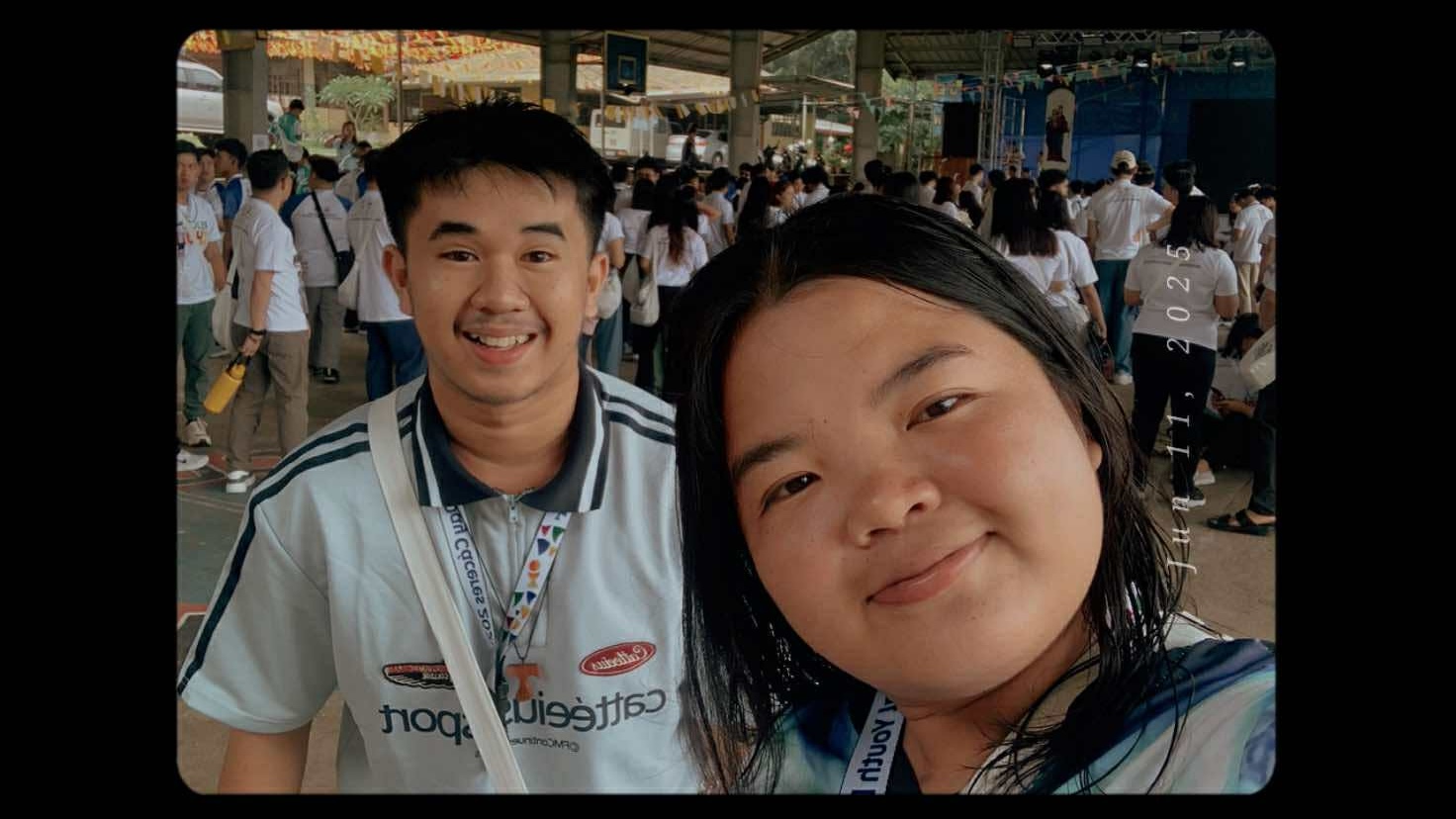
    The journey of many young people during the National Youth Day 2025 in the Archdiocese of Caceres, was a unique and transformative chapter in life. It has become a time filled with discoveries, challenges, and growth. The opportunities given allowed us to explore who we are, what we believe in, and what we hope to become. Along the way, we encountered both triumphs and failures, each shaping our character and helping us understand the world around us.

    Being youth is often marked by energy and ambition, but it is also a time of confusion and vulnerability. There are moments that I too feel lost or unsure, questioning my own choices and direction. Yet, these very struggles are what built resilience and inspire wisdom. I realized, mistakes are not signs of weakness—they are powerful lessons that guide us toward maturity.

    As I reflect on the journey of being young during this NYD2025, I see it as a time of endless potentials. It is the foundation on which our dreams are built, relationships are formed, and values are developed. It is also a reminder that we are constantly evolving, and that it’s okay not to have everything figured out.

    Most importantly, the youth-journey is not meant to be walked alone. With the guidance of family, mentors, friends, and faith, we find the strength to face life’s uncertainties. As we grow older, we carry the lessons of our youth with us. These are lessons of courage, identity, and hope. In every step, whether forward or backward, there is purpose. And in every young heart, there is the promise of a bright and meaningful future.

    Despite not having the support from my parish, I made it. It’s with God’s guidance and grace. The NYD celebration was certainly not easy to many young pilgrims. But with God’s mercy, I also met individuals who made my prayers into reality. Many helped to heal my wounds of not having the support coming from my home parish.

    In the end, I’ve come to see this pain as part of my own growth. It reminded me of the importance of kindness, the strength in being gentle, and the power of choosing to speak with care. Though hurtful words can leave scars, they also teach us to be more thoughtful, compassionate, and strong.

    But all of those come from my faith and service . And so I end this reflection with this quote, “A heart touched by faith learns to rise after every fall, love after every loss, and believe after every doubt.” DIOS MABALOS! SHUKRAN.

  • KUMUSTA NA, MGA MILLENNIALS?

    KUMUSTA NA, MGA MILLENNIALS?

    Last March 16, 2023, I was struck with a short item in The New York Times. It indicated  in the paper’s Opinion Essay written by Jessica Grose, the author’s opinion that millennials today are already hitting middle age. The sub-text is that it is happening much sooner than other generations of the past.

    Just to review: who are the millennials of the world today? They are those born between 1981 and 1996  (ages 27 to 42 in 2023). Previous to this group is Generation X and on the other hand, those born in 1997 onward are now referred to as Gen-Z. Ordinarily the onset of a middle life crisis hits only after 50 years old or even in the 60s. One common belief about this stage of life is that one should expect to face a crisis that brings inner turmoil about one’s identity, life choices and the question of mortality.

    What are the causes of an earlier mid-life crisis among millennials, especially in First World countries such as the USA and Western Europe. Grose lists the following: the overlapping economic crises, growing fears about democracy, multiple wars and a pandemic that lasted two years. Thus, she claims that the generation’s once-mocked optimism has been deflated and a sense of precariousness has taken root instead.

    Grose adds that despite the fact that the millennials do not have the same income level as the boomers (the one of their parents), there has been an increase in the usage of Lexapro. Lexapro is brand name of Escitalopram an antidepressant of the selective serotonin reuptake inhibitor class. Escitalopram is mainly used to treat major depressive disorder and generalized anxiety disorder. A disturbing fact, indeed, but then many psychiatrists and psychologists have complained that since the pandemic, the demand for their services have exponentially rose to higher levels.

    How relevant is this piece of information to Third World countries like the Philippines? Being underdeveloped perhaps there might be differences as to how the millennials in the Third World are coping with the global and national changes occurring. But then, the economic woes and the impact of the pandemic are worst in the Third World, so one can conclude that our very own millennials may not be too different from those in the West. Besides, especially the millennials of our urban centers (and even in rurban areas where the internet technology has reached the youth), they too have been captive to the gadgets made available by high-technology manufactured mainly from the West (and of course China!).

    What are the implications for institutions like the Church and cause-oriented groups (e.g. non-government organizations including those that are faith-based)? Specifically for the vocation recruitment program of dioceses and religious congregations? There are those who actually still recruit from senior high school to college level (who are mainly now the Gen-Z), but there are more efforts to recruit young professionals, who are mostly in the 27-42 age range, namely the millennials of today.  It is even said that where before of the boomer’s generation, at age 18 one was already considered an adult and presumed to be a matured person, today one is not even sure if some of the millennials are at this maturity level.

    Nonetheless there are more efforts now attracting the attention of this age range in the hope that they can be recruited to join the formation program to become either a priest or religious.  There goes the rub. As hard as they will try, vocation promoters may have a more difficult time these days attracting the attention of the millennials if it is true that they are into their inner turmoil! Or they will have to find more creative ways to convince those – who might consider the possibility of a vocation to the priesthood or religious life – to at least attend a search-in and hopefully to pursue a formation program.

    And once they have joined a formation program, there is great need as to how to assist them in dealing with their inner turmoil if this has remained an agenda for them.  Fortunately, formation programs today do incorporate processing through which the formands are provided psychological or other forms of assistance so they can deal with their troubled “inner child.”  The challenge, however, remains how these processing methods could be inculturated into our Philippine context.  And needless to say, the kind of formators required today are those adept at dealing with millennials with their issues, not intimidated with the peculiarities of this generation and have the required compassion to be true companions to a generation that are “wounded.”

    This, too is a challenge for those who are in civil society organizations (formerly referred to as cause-oriented groups) especially non-government organizations and faith-based agencies.  Second-liners are so much in demand as those who are still holding on to positions of authority are the remnants of the boomers generation and also the martial law babies (the Gen Xers). CSOs are greatly demanded in countries with pretensions to democracy and yet have authoritarian elements in its governance system.  However, the continuity of these CSOs is dependent on how present generations can take over from their elders. With this phenomenon of millennials faced with a crisis, how many can we hope to recruit from them to take over the leadership roles in CSOs?

    Or shall we pin our hopes on the upcoming Gen Z?  But as the world remains in a VUCA reality (Volatile, Uncertain, Complex and Ambiguous) Reality,   is there much hope for the future?  Are those in the Gen Z generation (age range from 6 t0 27) the upcoming youth  that might not fall into the same trap as the millennials and will face the future with greater optimism?  We can only hope so in the belief that in life there are ups and downs. And that possibly GenZ might emulate more the example of the boomers.

    And for as Redemptorists: if we are to be messengers of HOPE in the footsteps of the Redeemer, we can only hope that even among the troubled millennials we can still attract a few of them who would join us as they opt for a life where they can be instruments of plentiful redemption!

  • AM I READY TO LISTEN?

    AM I READY TO LISTEN?

    Rizza Mae O. Malalay, an RYM-Youth Minister, RYM Key Representative to FNYO, and a Missionera.

    This is a reflection by Rizza Mae after the recent online National Conference of Youth Ministers 2022 and her Mission Experiences in Tacloban and Oslob, Cebu.

    In one of our recollections with the Eastern Visayan Redemptorist Mission Team, we were asked to reflect upon “What is God trying to say to you now?” I shared within the group that I do not usually listen to God. Aside from I do not understand His ways, it was also really hard for me to identify His voice. So, thinking about it again, “Am I now, ready to listen?

    I joined the National Conference of Youth Ministers for three consecutive Saturdays online. It was so challenging for me because at the same time I was in Oslob helping the Cebu Redemptorist Urban Mission Team in their mission engagement there, in the most possible way that I could.

    photo from CBCP-ECY Facebook Page

    We rushed there after our mission engagement in Tacloban city. I said that it was challenging because there was no mobile signal in the area. But they have Piso Wi-Fis and Wi-Fi routers though the internet would fluctuate. I was anxious during the Conference because we had activities in between. It was too hard for me to put my focus in the meeting but then I have realized that certain things happened for a reason. I can choose to not attend the NCYM for so many reasons or attend the NCYM despite all the challenges that I have encountered. However, I chose the latter. Right at that moment it occurred to me that God wanted me to learn to turn my challenges into opportunities. That this will definitely help me grow as a youth minister.

    In our calling to be a Synodal Church, in participation, in communion and in mission. I have seen that though a lot of people are with us walking in synodality, there are still more people who are left behind.  After the NCYM 2022, I have reflected that me as a youth minister, should;

    *Live and share my faith.

    The easiest way to make people believe in you is on how you live your life. In one of our synchronous workshops that I was in, the facilitator talked about that the Basic Ecclesial Community (BEC) is being considered by many especially young people as a mere activity and not as a way of life, which I totally agree. Looking back, asking myself if I am really doing something? Am I living and sharing my faith? After leaving the mission area, it warms my heart hearing that the youth continues to serve the church, not just them but the community also is continuing what we have started. If we experience God and see God in others, then we should allow others also to experience God in us.

    *Reach-out and build relationship.

    I figured out that we can reach out and not build relationship. However, we cannot build relationship without reaching out. I understand that the Youth in our church, they come and go. But, deep in me I cannot understand why they would go. Of course aside from those who have valid reasons for leaving. I had encountered young ones who left the ministry and changed their religion. I had also conservations with youth members who told me that they described their leaders as flying and they were crawling. This is a description of having youth leaders who do not know what to do and so members have to figuratively crawl in order to make the ministry alive. It saddened me to hear all of those because as youth ministers we are called to become God’s instruments of helping the young to grow according to God’s purpose, that we are all in one mission and God is alive in us. If we would only always reach out and build relationship with everyone, I do believe that it would be easier for us to bring Christ in the lives of the so many young people today.

    *Have a listening heart

    For me as a youth minister I should listen to understand and not listen to respond. It is true that the younger generation now is quite different from mine as a millennial, so I am called to listen more. I have my own biases and I easily judged the younger generation. I can sense that every time we will plan-out an activity, they become more concerned if the senior members would approved it or not or Father will be okay with it or not. They tend to be more anxious to the point that they do not want to do more because of fear of being rejected. It feels like I also somehow kill their creativity to create new things, to explore, to learn, to dream and to learn new concepts or point of view because I myself would limit them. I should be the one to encourage them to serve and to make them realize that their unique contributions are welcomed by the Christian Community.

    Indeed, I will really find it hard to listen if I am not willing to listen. And it is hard for me to identify God’s voice if I am disturbed. In life, I realized that at some point I need pauses and breaks to understand what God is trying to say to me. God definitely resides in us and we can only hear Him by listening through our hearts.

    I pray that I may not harden my heart if I hear God’s voice and may I continue finding comfort in His love as a young person and as a youth minister.

    photo from CBCP-ECY Facebook Page
  • MY LIFE BEGINS AT THE END OF MY COMFORT ZONE

    MY LIFE BEGINS AT THE END OF MY COMFORT ZONE

    Mission Reflection by Rizza Mae O. Malalay of RYM-Iligan

    There is a quote that says, “Life begins at the end of your comfort zone. ” So, I was wondering if it is true or just a mere quote. The Balabagan Parish Mission was my longest mission exposure so far. It was also my first time away from home for almost three months. I did feel scared, nervous and I also had doubts about myself. But my excitement in joining the mission outweighed all of those. I was thinking of what would be my part in the mission team? And in what way I could be of help? Occupied by those thoughts, little did I know that it was the other way around.

    Balabagan is one of the municipalities of Lanao del Sur. They do not have malls or fast food chains. When you buy things it is quite pricey. They also have power interruptions every now and then and they do not have signals in some of the areas.  But despite that, they have the most generous and happy hearts. I remember every time I was at the parish health center, they would always offer me some snacks. They shared not only their food but also their stories, their life-lessons, their story of faith, their  love, their warmth and themselves.

    There was a particular Nanay whom I got close with in one of the areas. She would just let me do what I want. I also loved to tag along with her wherever she goes. She would let me scratch the ‘buko’ for our snacks and told me many times not to include the inner brown one, for it will only add bitterness to the buko. And yes for the record, I always include to scratch the brown one 😁. She would also let me do the traditional grating of coconut meat, even though I do not know how to do it. She was just there smiling patiently waiting for me to give up. And who would have thought that she would let us dug their sweet potatoes in their backyard? So, I asked her why she was so good to us, even though she was kind of disconcerted when we were around. She just replied to me that she was grateful and joyful that God sent us there, that’s why she wanted to provide us all the best that she have.

    What I also loved in Balabagan was the presence of the youth. They were just one call away. They were willing to help in any of the activities of the parish. And I just have to inform them ahead. One time, I had this conversation with them, I asked them about the situation of the youth in their community. They casually told me about teenagers getting married at a young age and about teenage pregnancy.  They also told me that they want to learn and discover more about themselves and to have a deeper relationship with God.

    Those encounters led me to these realizations.

    • There is beauty in simplicity. I grew up where when you buy coconut,  you will just add 15-20 pesos and the machine will do all the work, no sweat. We do not have coconut trees or even land for crops. So technically I have to buy everything. Living there for almost three months, made me dream of a simpler life, doing things manually, not checking my social media accounts every now and then, or not binge watching K-Drama series for the whole day. In this world of artificial intelligence, I yearn to always go back to simple things, looking above to see the stars, the moon, beholding sunsets, sunrises, mountains, seas, hiking under the heat of the sun and getting wet in the rain.
    •  It may sound absurd, but I was so touched when the youth talked about their concerns about their fellow youth. It shows that they were not blind at all about what is happening around them. They can see and they can hear. They knew what is wrong and right, they just don’t know how to make a move with regards to it. They were also afraid that they will make a wrong move or they will fail. These are reasons why they were too shy to show their talents and creativity. They felt afraid that they were too young to involve themselves in the community.

    So, here are my takeaways in this journey;

    • People who are joyful and grateful do not complain, instead they just live for the moment. Life is neither perfect nor it is easy. But, being joyful and grateful would help us lighten all the loads and burdens that life throws at us. Not to mention the truth that in this life’s journey, we are never alone. When we have a grateful and joyful heart, we will be able to see God in everything that we do and we will be filled with His grace.
    • When you love what you are doing, you don’t count the cost. You are willing to give more and you always do your best. That is how powerful love is.
    • To make a better world, we are called to empower the young. That they should be confident about themselves, that their thoughts and their views, matters. That they matters. We should form them to be Christ-centered, fully human and mission oriented. Reminding them that they are beloved, gifted and empowered. So that they can maximize their gifts and resources. Allowing them to use them for God’s glory. To have a better world we need to be a better citizen first.

    The quote “Life begins at the end of your comfort zone” may be true to some. My life has started as I am going through this rollercoaster of emotions and phases of life.

    We are a little lost in life, aren’t we? As for me, life begins when you find out your purpose in life and when you share your life with others. When you discover your purpose, then you will know where you are going and you will never be lost. At the end of the day, it is not about me, it is about the lives of the people whom I have touched. Because by others, by serving others, one will be able to know who we are and will be able to discover more about ourselves.

    I pray that I may fill my heart with love and my life with service.