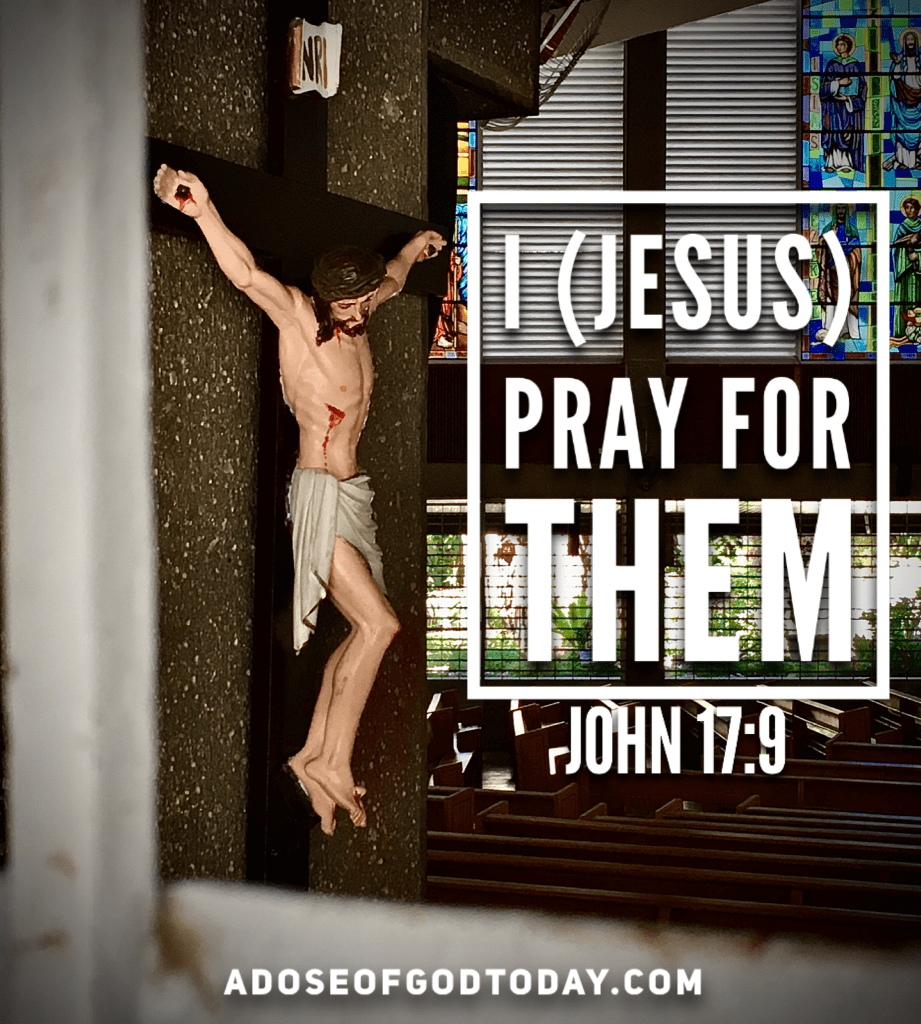
Tag: Weekday

  • The Word of God nourishes and challenges us at the same time

    The Word of God nourishes and challenges us at the same time

    Advertisements

    June 5, 2020 – Friday 9th Week in Ordinary Time; Memorial of St. Boniface

    Click here for the readings (http://www.usccb.org/bible/readings/060520.cfm)

    The Holy Scriptures or the Bible is of great importance and gift to our Christian faith. The Second Letter of Paul to Timothy tells us that the scriptures will give us wisdom that leads to salvation, through faith is Christ Jesus. This means that by knowing and developing a relationship with Jesus brings us to freedom being experienced as individuals and as a community, as a church.

    Paul reminds us too that “all scripture is inspired by God.” As this is inspired by God, the Bible teaches us how God reveals the Divine Plan of Salvation. Hence, God in his great love for us has become man like us to feel what we feel, that God may be in solidarity with us.

    Moreover, the scriptures also refute error and corrects us. It means that the bible is not merely a passive literary work of some people, but it confronts us of what is wrong with us, of what is unjust and oppressive, of what is sinful. The scriptures then, bring us to be closer to God’s presence and to understand better the wisdom of God working in our life.

    Consequently, the scriptures serve as our guide to follow closely the Lord in our life. This is what Paul shared with Timothy. Following the Lord gives us peace and confidence in what we do yet this will also bring us challenges and difficulties as Paul experienced persecution from people who rejected Jesus.

    Paul was inspired by the Lord and committed his life to God. This was how Paul’s heart was captured by God. Paul’s heart gladdened at the revelation of Jesus to him which made Paul to be converted. This is what we have heard from the Gospel today, “many people came to Jesus and listened to him gladly.”

    That gladness came from that revelation of God, of God speaking to us. As Jesus spoke to Paul, Paul could not keep silent then. This was how Paul turned from being a brutal persecutor to a life-giving apostle of the Lord.

    Today, the Lord invites us that as we celebrate the Liturgy of the Word, let us also listen gladly to the Lord.

    Thus, let us allow the Lord to speak to us, to nourish us and at the same time to teach, correct and challenge us. Let the Lord confront us of our passivity and indifference towards others, of our sin and guilt, to confront us when we only settle to what is only comfortable and beneficial for us and to confront our hearts and conscience when we choose to keep our eyes blind from an unjust system.

    In this way, we may become Christians who like St Paul and St Boniface who were martyred because of what they preached, to also become a light and inspiration in this time of pandemic where our religious freedom is also being tested. Hinaut pa.         

    Jom Baring, CSsR
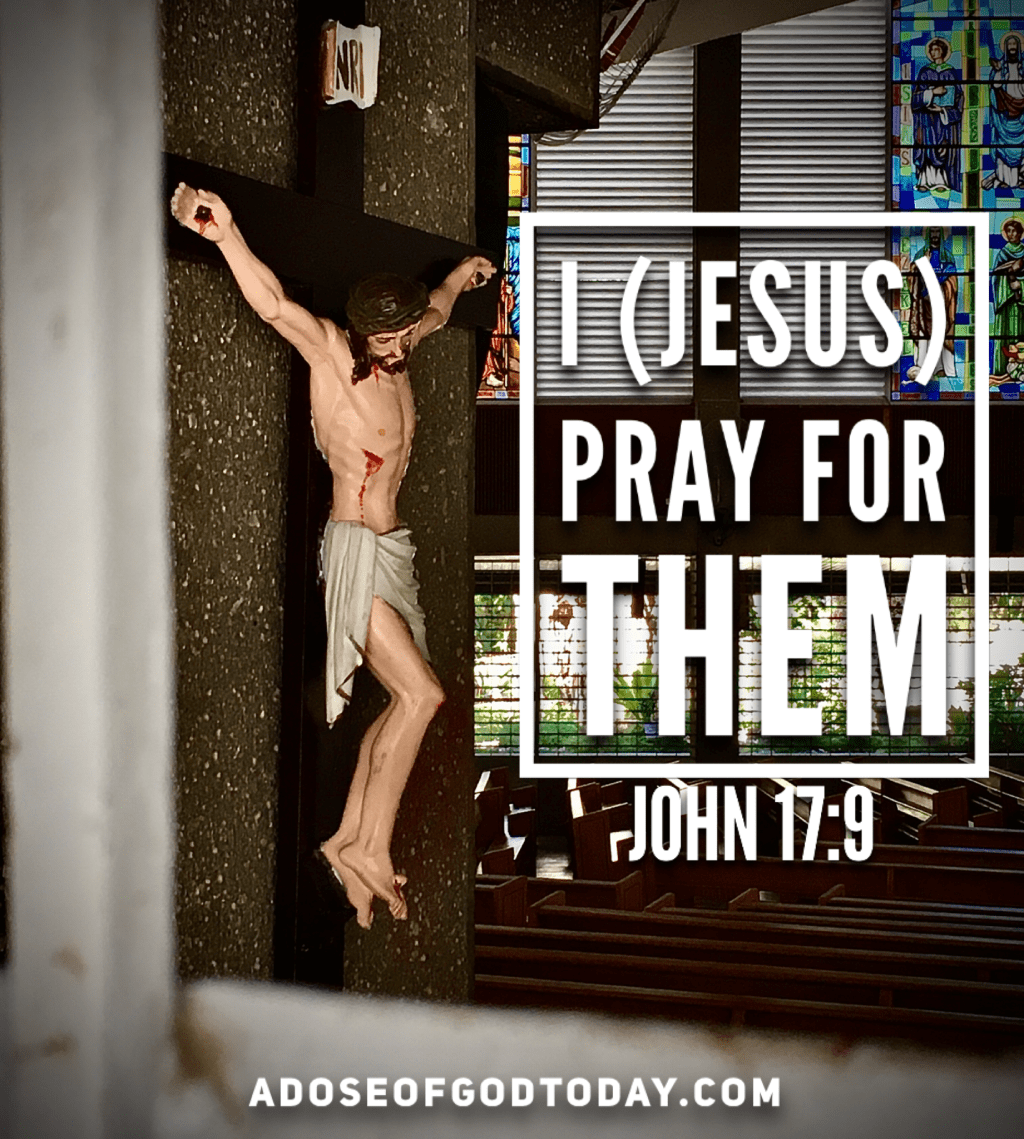
  • Jesus prays for me today, and so I pray for others too

    Jesus prays for me today, and so I pray for others too

    Advertisements

    May 26, 2020  – Tuesday of the 7th Week of Easter

    Click here for the readings (http://www.usccb.org/bible/readings/052620.cfm)

    During these days of Covid-19 pandemic when Churches were forced to close and people to be quarantined at home, we have also realized how we need each other’s prayer. Prayer gives us comfort in these difficult times. Prayer helps us develop a close and intimate relationship with the Lord despite the deprivation of the public celebration of the sacraments.

    To pray for one another has given us hope too. To pray has helped us to grow in our faith and widen our consciousness to respond to those in need. 

    Today’s Gospel reminds us of the intimacy Jesus shared with his Father. This is evident in the way the Lord Jesus prayed to his Father in heaven. There is tremendous confidence in Jesus and at the same time, that oneness he has with the Father. This is expressed by Jesus saying, “everything of mine is yours and everything of yours is mine.” This is how the glory of Jesus is also the glory of the Father. Hence, the suffering and pain of Jesus at his passion and even death is also shared intimately by the Father.

    All of these have been revealed to Jesus’ friends who were also dear to the Father. Jesus treasures this friendship. And as a friend, Jesus manifests his concern by expressing his desire to pray for them. 

    Jesus is about to leave physically in the world. But it does not mean that Jesus will abandon his friends. In fact, Jesus prays for his friends. “I pray for them,” said Jesus. This means that Jesus remembers his friends in his thoughts.

    Being in the thoughts of Jesus also means that Jesus makes his person present in the life of his friends. It is a promise of faithfulness and of constant presence of God in our life, in each of us.

    Advertisements

    Today, Jesus reminds us too, that he prays for us and with us. Jesus joins us in our prayer. The Lord is there every time we pray. The Lord makes himself ever present the moment we also dispose ourselves in prayer. We can say this confidently, Jesus prays with me because he remembers me and he is with me.

    Being remembered by Jesus in his prayers, let us make an effort too, to pray for others today. Pray for your friends, for your family members and those who really need our prayers. Prayer will make us more conscious of others as we become one with them in their hopes, joys and suffering. Prayer moves us also to respond and to be in solidarity with those who are in need of our help. In prayer, we also become more present with God as we grow in our confidence and faith in Him who calls us and loves us. Hinaut pa.

    Jom Baring, CSsR

  • Ask anything and you will receive. Really? Anything?

    Ask anything and you will receive. Really? Anything?

    Advertisements

    May 23, 2020 – Saturday of the 6th Week of Easter

    Click here for the readings (http://www.usccb.org/bible/readings/052320.cfm)

    What do I usually ask and pray? 

    We have realized how Covid-19 brought us so much difficulties these days. During the Enhanced Community Quarantine, the world seemed to stop spinning. Our movements have been halted and so our economic/financial concerns also heightened. As more and more infected cases were confirmed we have become so worried. Perhaps others have come to the point of paranoia for fear of being infected. And for those who have been infected, and succumbed to death, most surely, they have been more embattled by fear and uncertainty.

    Hence, these must have been the concerns that we bring up now to God in our prayers. These are evident in the countless comments and prayer requests we received in our Facebook page (@OMPHRedemptoristDavao).

    We believe in the power of prayer and many of us can testify how God pours His blessings and graces to a prayerful heart. Moreover, Jesus told his disciples in today’s Gospel to “ask anything in my name and you will receive.”  Really? Anything? 🙂

    Hmmm, what does it really mean?

    Does Jesus mean that we can just ask anything we want? Does it mean that I can also ask Jesus to give me a lifetime premium subscription on Netflix with an unlimited supply of popcorn and bottomless four-season juice drink? Or can I also ask a top managerial position in a company though I don’t have the qualification?  And then expect that everything will certainly be given to me? Or to make the virus disappear by tomorrow and to bring the world back as it was before the virus came?

    Some of my close friends shared with me that at some point in their life, they felt that God was unfair to them. They have earnestly asked God to grant their prayers and so they visited Churches as many as they could. They would attend the mass faithfully and did novenas to the Saints. They would do these so that God may hear their prayers and their wish will be granted. However, those prayers were unanswered. Consequently, feelings of inadequacy, unworthiness, guilt for the sins committed and even disappointment and being upset may arise. This may lead to a spiritual confusion believing that God is not fair.

    However, we might not be aware also that what we are praying could be filled with selfish reasons. Our prayers might be more focused on ourselves, on what “I shall have and on what I can gain.” Then, our prayer remains self-centered.

    Today, Jesus tells us to ask and to pray “in his name.” The beauty here lies in the prayer that considers the desire of God for us. It means that in our prayer we do not forget Jesus, we do not forget his desire for us and his will for us. 

    Jesus did not say to just ask anything because he, then, would merely be a magician or a genie in a bottle or like an automated money dispenser. Jesus tells us “to ask anything in his name.” 

    Our prayer, then, includes a discernment of God’s will for me and of God’s desire for me. God is not a mere “dispenser” like a machine or a “biometric device” that records our time-in and out to record how much time we spent in our novenas and rosaries. However, God is a person who wants us that he becomes part of our thoughts, of our decisions and actions.

    Advertisements

    Thus, in the Gospel, the disciples had actually already prayed. They asked God many things. However, their prayers were also filled with their own desires and personal wants. This was the reason why Jesus said, “until now you have not asked anything in my name…” The self-centered prayers and requests to God did not make the disciples joyful and contented. They remained insecure and lacking in faith because they did not ask in Jesus’ name.

    Instead of praying – “this is what I want and wish Lord,” ask and pray rather first in this way, “what is your desire for me Lord?” Only then that we will be able to get away from our selfish tendencies and intentions because we shift our focus from ourselves to God – from praying that comes only from personal wants to praying in his name.

    Certainly, God will never say no to a sincere heart that seeks His desire. Jesus will answer our prayers when our hearts and minds are one with him. As we continue to brawl in this time of pandemic, we may also discover more God’s desire for us in our troubles and in our prayers. Hinaut pa.

    Jom Baring, CSsR

    Join 2,864 other subscribers
  • Grace and Freedom in letting go

    Grace and Freedom in letting go

    Advertisements

    May 21, 2020 – Thursday of the 6th Week of Easter

    Click here for the readings (http://cms.usccb.org/bible/readings/052120-day.cfm)

    When a thing or a person becomes important, essential and vital in our life, we also find it hard to let go of it when time calls us to. Moreover, there are also cases when a thing or a person, or an experience, though not so important and vital in our daily existence, that it becomes inseparable from us. Thus, when it becomes so attached to us emotionally/psychologically, we find it then, so difficult to let go.

    When I was already about 6 years old, I would still carry my baby bottle with me and drink any liquid – milk, coffee, water or soda out of that. Once, I brought it with me at school during my Kindergarten and then my older sister found it out. The next day as I searched for my baby bottle in its usual place, I could not find it. The baby bottle was gone. My sister threw it away. So cruel! 🙂

    I was so mad and cried really hard for throwing that away. Perhaps, I thought the world was about to end at that time of losing my “dear baby bottle.” Yet, the day after that and the next day and the following days seemed to be just okay without that baby bottle.

    Advertisements

    Now, I realized, I must have been so attached to that baby bottle that letting go of it was surely difficult. In one way or another, others may find it challenging also those that have become so attached to them. These are not just limited with material things but also our dreams and aspirations in life, relationships and even our memories.

    Thus, when we talk about letting go, we certainly find it  difficult especially with those that we love so much or so attached to our emotions. Our basic tendency is to keep those closer to us because we do not like them to leave from us. That is why, when we are confronted with the reality of loss, then, we experience pain. It breaks our heart. We become anxious and fearful because life may not be the same.

    As a response, we may refuse to let go and in the process become controlling, suffocating and manipulating particularly towards those people we do not want to let go. Moreover, we could become paranoid and obsessed because we continue to linger and attach ourselves with a painful memory, or to a material thing or in a desire.

    What really is the concern here?

    Going into the process of letting go and the letting go itself is what makes our life wonderful. It is in letting go that we actually find more life and express life, to find love and express love. This manifests grace and freedom in us.

    This is what Jesus was asking from his disciples. The disciples who thought that they have lost Jesus when he was crucified rejoiced at his resurrection. However, when Jesus told them that soon, he will no longer be with but will go back to his father, the disciples also became anxious and fearful. They wanted to keep Jesus closer to them. The disciples believed that they were more confident if Jesus was nearby. They were not willing to let him go.

    However, this is not what God wants. Jesus had to go so that he will be able to join and be one with his Father in heaven. It will only be in this way that Jesus will be able to bring us closer to the Father. By returning to the Father, Jesus will open a way for us to the heart of the Father. By this also, Jesus will become ever closer to each one of us, closer than what we can imagine because Jesus will be in our hearts and minds.

    Hence, the words of Jesus to his disciples, “A little while and you will no longer see me, and again a little while later and you will see me,” means that Jesus becomes ever present in each of us.

    In this process of letting go of the Lord, then, the disciples also allowed God to work in them. This was how the early Church found grace and freedom in letting go.

    Today, we are also asked to let go whatever is hindering us to encounter the Lord. We may ask ourselves,What is it that I continue to linger? What is that attachment that I find difficult to let go for me to grow?

    In identifying these, let us also ask the grace to courageously let go of those that hinder us so that we may find the grace for more life, more love and freedom. Hinaut pa.

    Jom Baring, CSsR

    Join 2,864 other subscribers
  • On Idols and Obsessions

    On Idols and Obsessions

    Advertisements

    May 20, 2020 : Wednesday – 6th week of Easter

    Click here for the readings (http://www.usccb.org/bible/readings/052020.cfm)

    The Community Quarantine and Lockdowns caused the closing of malls, shops, small and big businesses. We are all asked to “stay at home” as a preventive and protective measure against the Corona Virus. At the beginning of this “stay at home,” more and more people also found ways to entertain themselves while staying at home. One of the most popular entertainments that one could easily observe now is how people where drawn towards their screens to watch South Korean Drama Series.

    Somehow, the audiences “idolized” South Korean actors and actresses because of their good looks, good acting qualities and the good chemistry that a particular couple show in a movie. With these qualities of South Korean actors and actresses, they captured their audiences internationally. They are truly entertaining that netizens began to post on Facebook mimicking how South Koreans speak, dressing and wearing make-up just like famous South Korean actors and actresses do, posting memes and short clips of the series they have watched. This craze is all over Facebook.

    From https://ramenswag.com/crash-landing-on-you-quotes/5/
    From https://images.app.goo.gl/rSdD1KCATcpoV5Ca9

    This form of idolizing an actor or actress or a culture is a kind of admiration. However, there is another form of having idols that can be pretty serious. This is what St. Paul identified in our first reading today. 

    Paul was in Athens and saw the many idols the Athenians had. The Greeks were known to have many gods and goddesses. Yet, Paul also realized how deeply religious the people were because of that expression. But what touched Paul the most was the shrine dedicated to the “Unknown god.” With this, Paul being a witness and apostle of the Risen Jesus had the responsibility to introduce the Athenians to the one True God.

    Paul preached to them about Jesus, the Son of God, who became like us, and who lived among us. For it is through Jesus that we are saved by dying on the cross and by rising from the dead. However, this is the very reason as well why many of the Athenians did not believe him, only few of them.

    Many could not accept that kind of God who died for us and was being resurrected. This was something beyond their imagination and beyond any human explanation. But what hindered them also to believe was their own absorption of their many idols, of their many gods. This was something, they could not give up.

    This form of “idolizing” was not a mere admiration but rather, obsession.

    Though this happened long time ago, yet, at present this reality is still happening. Idolatry is still creeping in our culture today. We are still somehow captivated by some idols in one way or another that make God a lesser priority, making our Christian life and faith less significant. We may ask, in what way then?

    When a thing or a person is being loved, wanted, desired and even treasured and enjoyed “more” than God to the point that we have become obsessed, then this could be the “idol” that we worship. That could be your boyfriend or girlfriend or even your good looks. It could be the approval of other people, your attractiveness that tend to seek recognition from others. It could also be your successful career or business or work. Or could be your own passion in sports or any hobbies.

    Nonetheless, reflecting on these, they are actually not evil or bad in themselves. These things are good but they become bad when they do not serve the purpose – which is to be closer to God, by knowing him better, by being grateful to him and by being generous to others. 

    In one way or another, these forms of idolatry are also forms of addictions in us. It means that we may tend to be selfish, prioritizing only our own satisfaction – as a result, we will become insecure and not free at all because we are imprisoned by our own obsessions.

    This is not what God wants us to be. God wants us to be free by knowing and loving him more and more. And so, let us remember what Jesus told us in the Gospel. “The spirit of truth will lead us; the spirit will guide us to discover God and know him better.” 

    Advertisements

    What do those words mean to us now? Jesus wants us to pray, to converse with God truly and that is not just to tell God what we “want” but also to ask God what God “wants” for us; not my own “selfish desires”, but to ask what is “God’s desire for me.”

    Today, I would like to ask you to include in your prayers, to ask God to help us identify our actions, attitudes or things that preoccupy us. This may hopefully lead us to recognize our “idols” that hinder us to know God better, to be closer to Him and that continually prevent us to be generous to others.

    Let us ask, then, the guidance and prayers of Our Mother of Perpetual Help, who is a model for all of us. Hinaut pa. 

    Jom Baring, CSsR

    Join 2,864 other subscribers