Tag: Wednesday

  • A Contradiction

    A Contradiction

    November 23, 2022 – Red Wednesday, 34th Week in Ordinary Time

    Click here for the readings (https://bible.usccb.org/bible/readings/112322.cfm)

    A friend who believes in integrity and honesty in his work, who is filled with passion to be at the service of others found himself in an environment of conflicts and contradictions. In his desire to be fair and be always honest, the more he got into trouble in his company. This started when he found anomalies and dishonest transactions within their department. And so he called the attention of the person and warned the workmate of such anomaly. Yet, he was brushed off. He reported it to their superiors, presented the evidence and his workmate was terminated. However, after that, his other workmates in that company turned sour to him. He was even blamed for being harsh and cruel because his workmate lost a job whose family will struggle. And so, this friend got confused and felt guilty for being honest and upholding integrity in his work. What a contradiction!

    Indeed, the values he upholds and his commitment to be honest are signs of contradictions to a group, organization, a society or a nation that does not believe in such values and commitment but condones and tolerates dishonesty, corruption and abuse of power. And those who would stand up against such culture, are being persecuted, unwanted and reviled for being a contradiction.

    This is what happened as well to the many martyrs in our Church and of those brothers and sisters all around the world who became a contradiction because of their way of life as Christians. This is what we remember today on this Red Wednesday. And so, for a little bit, allow me now to break the Word of God with you so that we may be able to see and discover God’s invitation for us on this Red Wednesday.

    Our Gospel from Luke, certainly, sounds a bit disturbing and discouraging for us especially when we only tend to seek and aspire for comfort and security in life. In many ways, we usually choose the easiest, the fastest and relaxing ways. Our parents would hope and do their best to provide the best security and comfort for their children. I would also rather take what is easy for me rather than choosing a difficult one, in taking the less challenging and less self-sacrificing. However, Jesus tells us differently.

    Jesus tells us, “if you decide to come and follow me, then, you will experience difficulties, conflicts, contradictions and even persecutions from those who deny me and do not believe in me. Friends and family members will not understand you and even insult you for choosing me. You will be hated by all because of my name.

    Is it not, that what Jesus is saying to us and inviting us to do is foolish? Why would we take the risk of being hated and abhorred by friends and family members and by those who have power? Why should we take that risk of believing in him, only to suffer and be hated?

    Indeed, to believe in Jesus is a risk. This was the experience of the first disciples who endured persecutions not just from the Roman soldiers or fellow Jews but even from their own families and close friends. The Apostle John, who wrote the Book of Revelations, suffered oppression. He was exiled and imprisoned in a Greek island called Patmos because of the anti-Christian persecutions under the Roman emperor, Domitian.

    Moreover, this reminds too us of the many Christians who suffered from persecutions. Obviously, many of them had become confused and afraid because of the difficulties of being a Christian, of being a believer of Christ.

    Remember, to believe in Jesus is a contradiction; to believe in Him was against the prevailing belief and culture of the people. Because we are supposed to take revenge and hate our enemies but Jesus tells us to love and forgive our enemies. Because we are supposed to aspire wealth and power, to be famous and successful but Jesus said, “Blessed are the poor, the sorrowful and the persecuted for theirs is the kingdom of Heaven.” Jesus also promised us that “by our perseverance, we will secure our lives.”

    This reminds us of what we commemorate today, the Red Wednesday as our way of remembering and recognizing the martyrdom of many Christians until today. Truly, Christians are being discriminated, violated, oppressed, tortured and murdered in many countries of which we are not aware and even here in our own country.

    Thus, as we remember all those persecuted because of the Christian faith, this calls us too to become true Christians, no matter what. And let us remember, a real Christian is always a contradiction to what the world wants us to be. Therefore, we might be hated and become unwanted in the midst of culture that condones and tolerates violence, dishonesty, corruption and cheating. Yet, the Lord calls us to persevere in being true and honest Christians even in our daily and common affairs. That is – to be honest in our relationships with others, to be just to the people we work with, to have the integrity in serving others even in the midst of corrupt practices in our institution or community, to be dedicated and self-sacrificing, to be generous and life-giving. Kabay pa.

  • Remain in Love because there is No Fear in Love

    Remain in Love because there is No Fear in Love

    January 6, 2021 – Wednesday after Epiphany

    Click here for the readings (https://bible.usccb.org/bible/readings/010621.cfm)

    Christmas is not yet over. The excitement of the celebration may have subsided by now because the joyful spirit of the Misa de Aguinaldo, the Christmas Day and Christmas celebrations are over, but then, the spirit of Christmas is still very alive. It’s the 12th day after the Christmas day but we are still in the Season of Christmas.

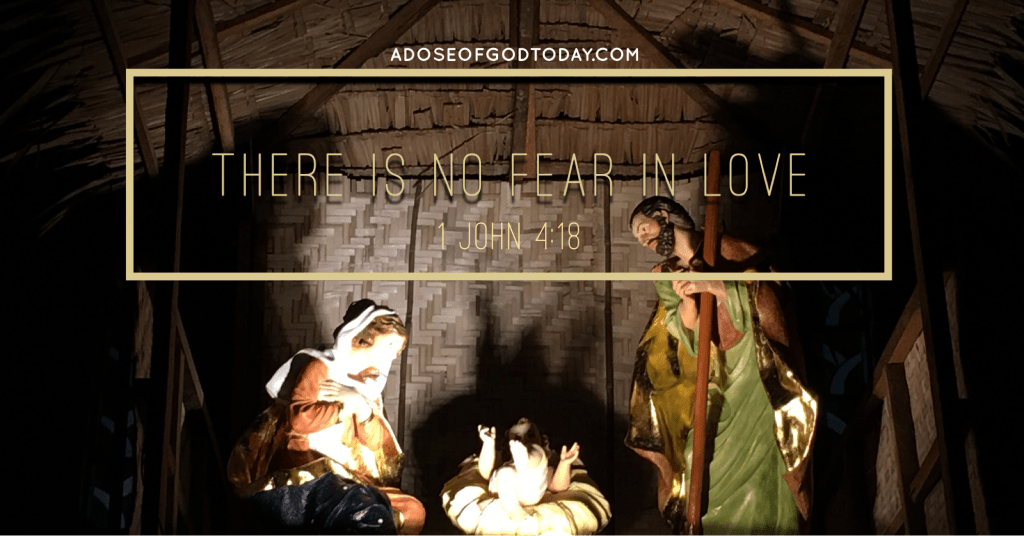
    That is why, John, in his First Letter today reminds us of the spirit of Christmas. John said, “God is love, and whoever remains in love remains in God and God in him.” The Babe of Bethlehem, Jesus is the very love of God made into flesh. He is love in its fullness, love in its perfection. Even when we would just behold the image of the Child Jesus in the manger, what we find is only love. It is love that compels us to recognize that we are indeed loved though we are not worthy.

    God becoming man is not a question of our worthiness because we will never be worthy. It is God’s greatest assurance to us that God continually chose us as His people. The “love” that rests on the manger calls us lovingly to come near and to be embraced by this God who truly loves us.

    God becoming man is statement to us that God does not come to terrorize us with His might. God became man not because God wants to bring eternal punishment to us and make us fearful of His presence. God became man, born of a woman and took the form of a baby, because God wants to express His affection to us. Hence, we are called to remain in love so that we remain is God.

    When we learn to remain in God, God also pours his love to us. Being loved and taking confidence that we are loved will definitely dispel any fear and any insecurity in us. This is what John is also trying to say to us telling us to love one another and to show concretely that love in our words and actions.

    This is the reason why John also reminds us today that “there is no fear in love.” There is only confidence and true joy in love because love drives out fear! Wow! If only we embrace this, then, we will be bold in our loving, courageous in our loving and daring in our loving. This reminds us too that when our way of loving has a trace of insecurity or manipulation or jealousy or anger or selfishness motivated by fear, then, our love is not perfect.

    This is what Mark in his Gospel also recalls today. Jesus reminds his disciples not to be afraid. The disciples seemed to be terrified and forgot that Jesus was always with them. Jesus is always close to us if only we are conscious of this, then, the Lord will make us courageous enough in what endeavor we will initiate.

    Let us also take note how Mark described this story. Jesus responded to his frightened friends because Jesus was aware of their situation. What could have made Jesus to be so thoughtful of them? Mark told us that Jesus went off to the mountain to pray. To pray is a way of loving too. To pray is making ourselves aware of the situation of those who are in need. Certainly, true prayer moves us to respond in love to those who need our help. This is what Jesus showed us today. Jesus responded in love to assure his friends not to be afraid because he was with them.

    As we continue to cherish and savor this season of Christmas, let the words of John echo in our hearts today “to remain in love because there is no fear in love.” Let us allow the Lord to accompany us always so that we will also remain in him, remain in love and to respond in love all throughout this year. Hinaut pa.

  • Why do we worship? Who should we worship?

    Why do we worship? Who should we worship?

    November 18, 2020 – Wednesday of the 33rd Week in Ordinary Time

    Click here for the readings (https://bible.usccb.org/bible/readings/111820.cfm)

    Homily

    We can be in the Church the whole day but not worshipping. We can be kneeling during the whole hour but not worshipping. We can be singing in the Church but not really worshipping. We can be in a particular ministry but not worshipping God at all.

    Why do we really worship God? To worship God is to express our belief and to live what we believed. Worshipping the Lord our God is a celebration of God’s gift of Himself to us. Jesus as the very image of the Father, is God’s ultimate gift of presence to us.

    Moreover, to worship the Lord is not just limited in our worship services in the Church. Worship is basically a way of life. The way we live our life according to God’s desire is an essential part of our personal and community worship.

    The Book of Revelation tells us of the right attitude of worship. The twenty-four elders, who can be the representation of the twelve sons of Israel and the twelve apostles, are worshipping the one who sits on the throne, the Lord our God.

    John also described to us how they worshipped the Lord our God. The elders who were honored greatly in heaven, have thrown down their crowns before the throne to exclaim the glory, the honor and the power of God. This means that these elders did not cling to their own crowns but letting them go to worship the giver of their crowns.

    Thus, when we learn to let go of our own glory, of our achievements and successes, then we also learn to truly worship the Lord our God who is the source of everything that is good. To worship God, then, is actually to celebrate also our life, to celebrate our giftedness, to celebrate who God is and what God has done to us.

    Besides, worship allows us to focus on the Lord. That is why, even when we are in pain and confused, in worship, we re-channel our gaze from bitterness to God who strengthens us. In worshipping God, we regain our balance by reminding ourselves that we are unworthy of God’s grace yet, we are blessed because we are loved.

    This is what we also find in today’s Gospel, in the Parable of the Ten Gold Coins. Those who truly worship the Lord are those who are productive and fruitful in their lives. The servants who used well the gifts given to them have lived and celebrated wonderfully the King’s gifts.

    However, the unproductive servant lived in fear. He decided to hide the gifts given to him because he was afraid. He was afraid actually of losing them, because he could not let go of those, so he kept them. As a result, this servant turned to worship his fears because he lived in fear. This was how he lost the opportunity to celebrate life, to celebrate his gifts and to celebrate with the King.

    Each of us today, we are called to truly worship God by living not in fear or in bitterness or in our arrogance or in our personal glory but by living and celebrating our life with God.

    Thus, as we come to church and proceed with our daily affairs, let us also remind ourselves that we worship the Lord our God and not some other “gods,” that we worship the Lord by living honestly and generously, that we worship God by celebrating life and we worship God by making God’s presence more alive in us.

    Let us be inspired today through Mary, Our Mother of Perpetual Help, so that like her, our decisions in life including our words and actions may become our very worship to God. Hinaut pa.

  • Awareness of God’s Grace calls us to gratitude and graciousness

    Awareness of God’s Grace calls us to gratitude and graciousness

    November 11, 2020 – Wednesday of the 32nd Week in Ordinary Time

    Click here for the readings (https://bible.usccb.org/bible/readings/111120.cfm)

    Homily

    In a conversation with a friend, he told me that he was doing some form of sacrifices because he was asking God of something, to grant his prayer intentions. This really reminds me of our usual attitude in our prayers and in the way we relate to God. We make sacrifices so that God may grant our prayers for healing, for success or for material graces that we need. We also take time to light a candle, to offer a mass intention, to say our novenas and rosaries, even visit churches and shrines, and ask the intercession of our favorite saints so that God will grant our prayers and desires.

    This kind of action is also similar to that 10 lepers in today’s Gospel. They too begged Jesus. They cried out to the Lord to heal and grant them freedom from the curse they endured. Certainly, Jesus listened to them. As Jesus told them to make themselves appear before their priests, on their way, each of them was healed from leprosy and experienced freedom from the curse of that illness. However, out of ten healed lepers, only one leper came back to Jesus. This leper came back to thank and to praise the Lord. This leper may not be fully aware yet, that Jesus is Lord, but he was sure enough that God was working in Jesus.

    Hence, Jesus actually wondered on what happened to the nine lepers who were all Jews like him. The leper who came back was a Samaritan, considered as a foreigner by the Jews. And Jews considered Samaritans as enemies, worthless and good for nothing. Yet, it was this enemy of the Jews, this worthless and good for nothing person who became aware not just that he was healed but also of the grace of healing. Becoming aware of the grace he received, this made the Samaritan leper to also recognize the giver of the grace. His awareness of the grace filled him with joy and gratitude. He must have been running back to Jesus out of joy to thank the Lord.

    However, Jesus indeed wondered about the nine Jewish healed lepers. We would wonder and could also ask, “What could have prevented them to thank Jesus like the Samaritan?” Well, we can only suspect. The nine Jewish healed lepers might have become indignant that the Samaritan was also healed and was given the grace. For them, a Samaritan was not worthy of God’s grace because they were traitors. They might have not accepted that an enemy had been blessed and healed by God. That happy occasion of healing must have turned into bitterness. Instead that the nine should be grateful to God, their hearts turned bitter at the sight of someone whom they thought was not worthy, useless, a mere disturbance in their society, and would only bring nothing good but problems and crimes.

    Because of such attitude, they forgot that everything was a grace and so forgot to express their gratitude to God. God’s generosity is endless yet our memory can sometimes become very short especially when we are filled with bitterness. We always remember to ask, but we tend to forget to give thanks.

    Thus, we should be careful on this. We might tend to think that those who always go to Church are the only ones worthy of God’s grace of mercy. We might tend to believe that our enemies, people we hate, people we don’t like are useless and insignificant. Then, this kind of attitude will only cloud our heart with hate and bitterness instead of gratitude and graciousness.

    Thus, we are called not just to be grateful with what we have but also to be more grateful for others who are also blessed by God. This makes us gracious too. And this also was the attitude of the Samaritan who went back to Jesus to thank him, to praise God and also to follow the Lord.

    This healed leper’s action showed how grateful his faith was. Indeed, he was not just healed physically but also spiritually. Jesus told him, “Stand up and go, your faith has saved you!” This healed leper teaches us today to show our gratitude to God so that we may also become gracious.

    St. Paul’s letter to Titus reminds us about this, he said, “the kindness and generous love of God our savior appeared, not because of any righteous deeds we have done but because of his mercy.” And because of this, Paul urges us to “exercise all graciousness towards everyone.”

    Indeed, by becoming more and more aware of God’s grace in us and in each of us, we may also grow not in bitterness but with a grateful and graceful heart. Hinaut pa.

    Jom Baring, CSsR

  • Towards a healthy and holy human relationships

    Towards a healthy and holy human relationships

    November 4, 2020 – Wednesday of the 31st Week in Ordinary Time

    Click here for the readings (https://bible.usccb.org/bible/readings/110420.cfm)

    Homily

    Why do some human relationships cause more pain and harm than joy and peace in us? Why do some human relationships fail and eventually hurt us for the rest of our life? We have seen how broken human relationships bring people towards desperation, loneliness, bitterness, anger and hatred. The jealousy, unfaithfulness, insecurities, betrayal and irresponsibility can cause havoc and damage to our human relationships whether at home, at work, among lovers and couples, among friends and communities.

    But if we would really look at its roots, we will surely find “selfishness” as the active agent that corrupts our human relationships. Our tendency to advance our personal agenda, to prioritize what is only good for ourselves, to secure benefits for ourselves alone and to satisfy our personal desires above others will eventually make us very toxic to our relationships.

    Thus, a selfish lover or spouse will turn out to be abusive and emotionally manipulative. A self-centered parent can become controlling and even violent in words and actions towards the children. A self-centered friend can be constantly seeking recognition and praise from others or could be insisting to always consider his or her comfort but unwilling to compromise for the sake of others. These are just few examples of possible actions and tendencies of selfishness that can certainly destroy and cause damage to our relationships.

    That’s why, we also long for a relationship that will truly help us as persons and mold us to become better persons. The readings today have very important message for us and for our human relationships.

    For our human relationships to have a grounding and a better foundation, our relationships must be rooted in God not to our personal preferences and selfish intentions. This means that becoming a disciple of Jesus leads towards a healthy and holy human relationships. This is what Jesus meant as he said, “If anyone comes to me without hating his father and mother, wife and children, brothers and sisters, he cannot be my disciple.”

    Though hating one’s family member seems to be so harsh for us today, but Jesus did not mean the English word “hatred.” This is a Jewish idiom that meant for “preferences.” Thus, Jesus meant that when we give more preference or priority to others than God, then, we cannot be his disciple. Our human relationships too will lose a good foundation.

    Hence, Jesus also said, “everyone of you who does not renounce all his possessions cannot be my disciple.” The possessions, which could be our wealth and material things, self-image and fame, position and influence, achievement and status in the community, may possess us to the point that they become our priority rather than God and loving others through service.

    God asks us today to make Him as our priority over our other priorities. What is more beautiful here is God’s invitation for us to make our relationship with Him as the “life and soul” of our human relationships. It is from our relationship with God that, hopefully, we will become responsible and generous persons especially as we relate with others as a parent, sibling, a child, a friend or as a professional or whatever work, profession and status we have now.

    This is what Paul also expressed in his letter to the Philippians. A community that lives in the presence of God and rejoices in God’s presence “will shine like lights in the world.” Therefore, giving priority to God and making God the very center of our human relationships will transform us like lights in the world.

    Consequently, we will also witness how a couple whose relationship is grounded in God becomes loving and inspiring to others. A family whose relationship prioritizes God becomes a source of comfort, security and joy, becoming a true home. A friendship where the Lord plays the most important part among friends becomes welcoming and discerning.

    This is how the Lord moves us as we make God the very priority of all our human relationships. We may all work on this so that we will also become less and less self-centered and selfish and become more self-giving and life-giving. Hinaut pa.

    Jom Baring, CSsR