Tag: Sto. Niño de Cebu

  • Parenting Jesus

    Parenting Jesus

    January 19, 2024 – Sunday, Feast of the Sto. Niño de Cebu

    Two brothers went for school enrollment. The school registrar found out that both of them are eight years old. However, one of them was born April 8 & the other was born April 21. When asked to explained about this, the boys just smiled & said: “We also asked our parents about it. And they just replied to us, “We don’t mind anymore who is natural & who is adopted among you. But rest assured, that we love & choose both of you.”

    This story reminds us that parenthood is a choice, and the very first people who acknowledge  us by choice as their own are our parents. Yes, to parent children is a Choice. Parenthood happens when parents choose our children &  they have chosen us as their children. We cannot be children of everybody or anybody, but we are particularly chosen by our parents to be their own. Whether by birth or adoption, our parents choose & have chosen, & is always choosing us to be their very own & not somebody else’s. Because our parents choose us as their own, we are their children because of them. And they cannot be our parents, if they would not choose us to be their own children.

    This is also the story of our salvation. God chooses us to be His own. By sending us His son Jesus into our lives, God chooses to adopt & parent us to be His own, for us to be part of His sacred & eternal family. And so also God’s blessings continues to be with us, because We also adopted Jesus to be our own & choose to parent Jesus into our lives as started by Mary, our mother. Much as salvation is God’s choice to adopt & parent us to be His own, Our salvation then is also our choice to parent & accept responsibility for Jesus as our own.

    Mary choosing to be mother & parent of our Lord Jesus in our lives paved the way for God’s holiness be upon us. And we accepting Jesus as part of our family faith-life perpetuates God’s graces to be with us always into our lives. Because of God’s choice, we are His children. Because of Mary & Joseph choice for Jesus, we are Christian. Because of our Christian faith, Jesus is our Lord & Brother.

    We also know that parenthood & parenting a child is all about persevering faithfulness. From womb to tomb, challenging & demanding it may have been – as our gospel today reminds us, Mary endures the birth, life, mission, suffering & death of our Lord Jesus Christ. From the manger to the cross & tomb, Mary did not abandoned her choice & responsibility for her son Jesus.

    In the same way, by choosing to parent Jesus to be our own, like Mary we are called & challenged to always persevere in our Christian faith for God’s salvation to continue on to happen & flourish into our lives, as we choose to parent our Lord Jesus in our day to day faith & life with our own growing chosen children.

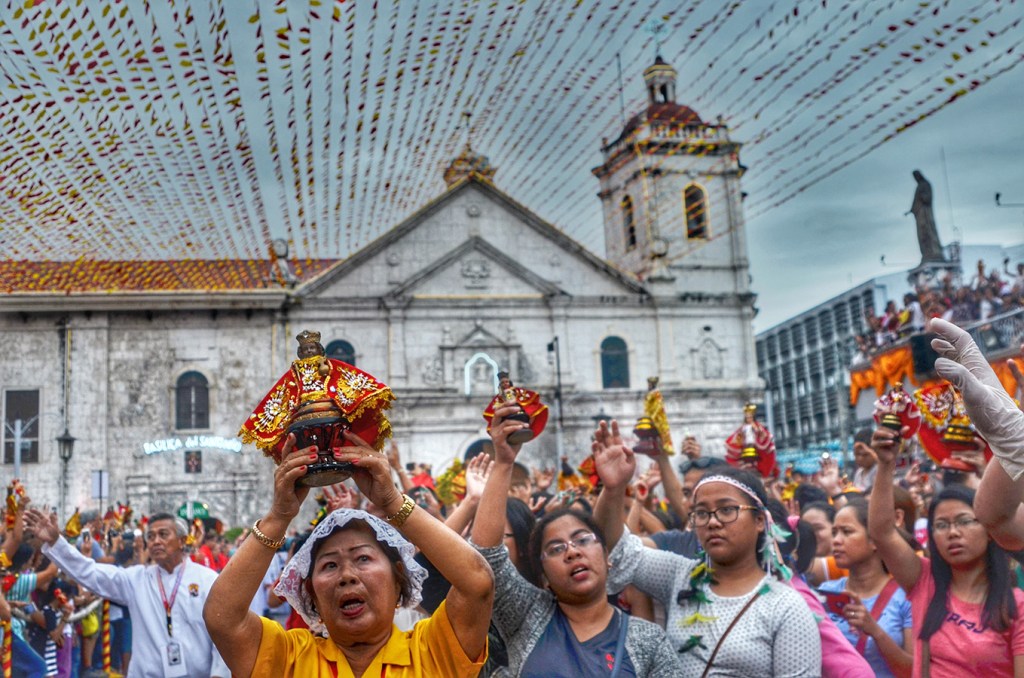
    We take account now that we are now on the 504 years of Filipino Christianity this year. And our Filipino Christianity started when we adopted & took care of the Sto. Nino into our Filipino culture. Even without knowing much about Jesus, we Filipinos accepted to adopt & parent the Sto. Nino into our life as family & community. Because of our choice to parent Sto. Nino to be own very own, we since then, until now, & will always be God’s beloved children & Filipino Catholic Christians here & abroad.

    Daghang Salamat Maria. Thank you Mary, because by your parenting Jesus, God’s blessings thrives in our lives. And through your example & help, we also choose to parent our Sto. Nino into our Filipino life & culture that in effect, we become persevering faithfuls & believers of Jesus Christ now & forever.

    May God continue to bless us to be a blessing of Jesus to ourselves & to others.

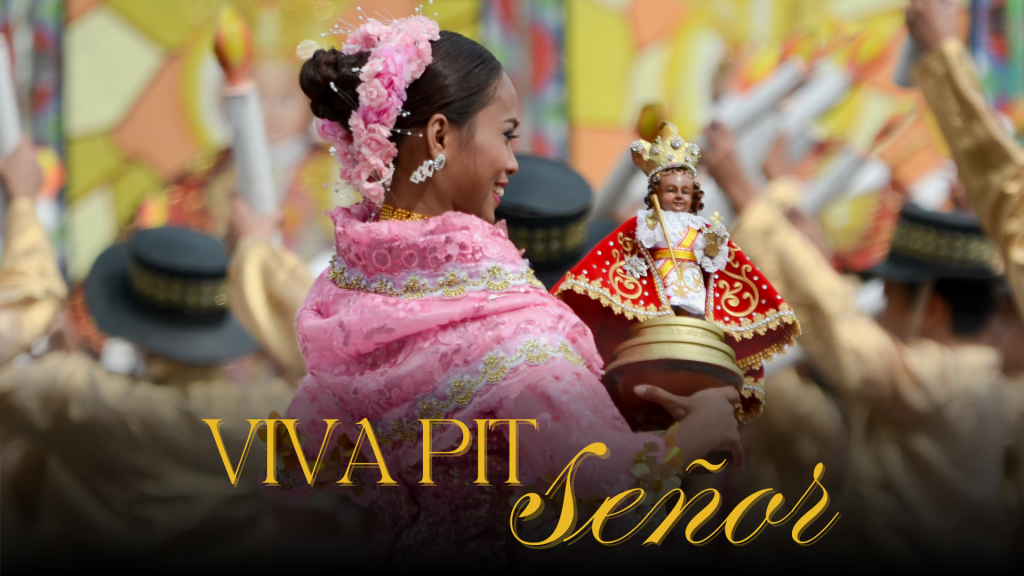
    And above all, we invite Jesus again & anew into our lives this year as we ….SangPit Señor. HaPit Señor. Pit Senor.

    So may it be. Amen.

  • THE CHILD IN US

    THE CHILD IN US

    Is. 9:1-6; Ps 98; Eph 1:3-6,15-18; Mk 10:13-16

    What kind of a child do we have in our heart? We may not be a child physically, but we may still ack like a child. To act like a child does not necessarily connote negative sides. Recognizing the child in us will surely make us more aware of who we are, the intentions of our heart, the kind of dream and hopes we have as well as the pain, the sadness or the trauma that we have endured.

    Hence, on this feast of the Sto. Niño, I would like to focus on the qualities of the child that may be in us, and to see how the Lord Jesus, born as a child to Mary and Joseph, invites us today.

    Psychologists and Psychiatrists have coined the term “adult children” or adults with unresolved childhood issues. This term tells us that though we may be already an adult or even in advanced age, yet, we still carry issues and problems in us that originated in our childhood. Not being able to reconcile or not able to find resolutions to the issues before may affect us greatly in the way we relate with others and with God, being shown in our patterned behaviors and attitudes.

    Dr. Charles Whitfield an American physician and psychotherapist refers to the inner child in us as the “real self.” This inner child in us may have suffered or wounded by armed conflicts which is common here in our region in Lanao, or caused by natural disasters, family problems, deprivation of basic needs like food and clothing, parental neglect and lack of affection and affirmation or by abuse (physical, verbal, emotional or sexual).

    As adult children or adults with unresolved issues we manifest childish behaviors. Being “childish” reveals our negative and selfish attitudes. A child can throw up tantrums when displeased and does not get what he/she wanted. This attitude of a child is an unconscious form of control and manipulation to get what he/she desired.

    Being childish is being selfish to get what we want no matter how unfair that would be to others. Being childish focuses on what “satisfies me” and on what “I can gain.”  To be childish prevents us to “listen” to what is more important. It also prevents us to believe and to accept other ideas because we are already convinced of our own judgments and beliefs. Thus, being childish is also characterized by being indifferent.

    Thus, because of the unresolved and unreconciled issues we have in the past, we become childish. Our inner child is trapped in that painful past, in that trauma or deprivation, hence, making us in the present to be insecure, fearful, and selfish.

    That is why, there is a need for us to find healing and reconciliation so that our inner child will be free. Only then that we become “childlike,” a quality of a child that expresses confidence, innocence, trust, faith and affection. Being childlike, we see the world through the eyes of a child, non-judgmental and free of prejudices. Being childlike, we express our hopes and dreams without being terrified of what lies ahead of us. Being childlike, we embrace and enjoy the present moment and become more contented of what we have. Being childlike, our heart is always filled with gratitude and faith.

    This is the call and reminded of Jesus to his disciples as proclaimed by the Gospel of Mark. The disciples of Jesus who at first did not like people bringing children to Jesus, as being scolded by the Lord. Jesus made a point and taught a very important lesson and that is in finding the kingdom of God among the presence of the children.

    Children, who at that time, had no legal identity. They less important in the society because they are not adults yet, thus, not fully developed persons. However, the Kingdom of God belongs to the children. This is true because of the very qualities of children, and that is of being trusting, open and dependent.

    Yet, to our hearts that have become cold, indifferent, judgmental, corrupt and selfish, the Kingdom of God becomes too far from us, not because God does not want us, but because we do not want to be with God. That is why, Jesus reminded all of us, “whoever does not accept the Kingdom of God like a child, will not enter it.” Only by having the heart of child that expresses true confidence and faith in the Father, that we shall also be able to embrace Kingdom of God already in us.

    This is the message and the call for us today as we celebrate the feast of the Sto. Niño, Jesus’ image as a child who have shown us what it is to be childlike, how it is to be childlike. Hence, there are three invitations for us today.

    BE RECONCILED WITH THE PAST. Let us not burden ourselves today with our issues when we were children. Let not what happened in the past, control or manipulate us at present. Seek resolution, reconciliation and healing so what we may be able to live in freedom and peace.

    PROTECT THE CHILDREN. Let us nurture a home, a community and a church that protects the rights of children, that nurtures the potentials of our children and encourages growth and maturity of our children. To us adults, be mindful not to cause harm, danger or abuse to children. Rather, express love and affection, affirm and recognize the worth and value of our children.

    LET US ALL BE CHILDLIKE. Let not selfishness limit our heart. Let not insecurities and negativities ruin our relationships. Let us rather re-claim and re-affirm our inner child and become trusting, dependent to God, open and embracing. Hinaut pa.

  • Our Capacity to Receive and Embrace

    Our Capacity to Receive and Embrace

    January 15, 2023 – Sunday, Feast of the Sto. Niño

    Is 9:1-6; Eph 1:3-6, 15-18; Mt 18:1-5,10

    A study by the Save the Children revealed that one in three households around the world reported violence during the Covid-19 pandemic.[1] The study also found that 1 in 6 children suffered violence at home. This study also said that there is an increase of negative feelings and psychological distress when lockdowns were imposed. This explains the significant cases of depression and suicide during this time as reported by Department of Health and World Health Organization.[2]

    Moreover, according to UNICEF Philippines Representative, “The Covid-19 pandemic is worsening the incidence of online sexual abuse and exploitation in the country. Children are increasingly becoming victims of circumstances that are harmful to their development and well-being.”[3]

    While I was stationed in Iligan City at the height of this pandemic, there were concerned neighbors who asked for help in our Church. They asked for a counseling and legal assistance for a girl who was raped at home. The parents were not that concerned on how to take care of their daughter because of poverty. Both parents lost their job when the lockdown was imposed in the city. It was the neighbors who responded and wanted to rescue and help the girl. But then, when the incident was reported, the police authorities even suggested not to pursue the case because it will only become troublesome to them and will cost them a lot of money. It was suggested to just settle it with some money and let it go.

    What have we become? Have we succumbed to darkness to abuse and oppress the weak among us?

    These situations are just few reported examples of rejecting, ignoring and hurting attitudes towards the small and the weak and to children particularly. No wonder why Jesus expressed indignation towards those who try to abuse the weak and try to promote themselves to be great.

    On this feast of the Sto. Niño, the Gospel of Matthew tells us how the disciples asked Jesus as to who is the greatest in the Kingdom of heaven. Naturally, each of them must have been boasting one another about their closeness with Jesus, their great qualities, their faithfulness, on who was the first to be called and who was the favored one among them.

    At this point, the disciples must have thought that Jesus’ kingdom will be like those of kings sitting on a golden throne in the palace with a great army, a political king. They must have believed that Jesus will inherit political power and vast riches and material wealth. Thus, obtaining a position and having a closer relationship with Jesus will give them the security and assurance of a higher and influential position when Jesus reigns. What they aspired was to have power. This was their idea of greatness in the kingdom of heaven.

    As Jesus knew them, he had to teach them and to mold their hearts according to God’s desire. That’s why Jesus taught the disciples an important lesson through a child. Jesus took and placed the child in their midst and said, “Unless you turn and become like children, you will not enter the kingdom of heaven. Whoever humbles himself like this child is the greatest in the kingdom of heaven.”

    Children, at the time of Jesus were considered not important because they were dependent, they have no rights and thus cannot be called as fully man at all. Jesus teaches us that in the Kingdom of heaven, greatness is measured in the capacity to receive God. To receive God is best expressed in welcoming, in embracing and in receiving the least in our community.

    We are called to receive God in the person of those who are the least in our church and society. We are called to aspire to be great but not in the way that we will be above others, or to seek a higher position at the expense of others, but in the way of embracing others.

    This capacity to embrace others and to embrace God fully is the message and call on this feast of the Sto. Niño. Jesus, the Prince of Peace, our God Almighty, has appeared to us as a child, who was born in a manger because through the image of a child, God shows us gentleness, not wrath and violence; the Lord embraces us with mercy, not anger and death.

    Hence, Jesus also calls us, “See that you never despise one of the these little ones.” On our part as a Church, as a community and you as parents and guardians, and all those in the position of authority and power, may we be instruments of protecting the weak in our communities. Let not our hearts be corrupted by our desire to be great and be above others by abusing the weak but we aspire to be great in the kingdom of heaven through our loving and life-giving service. Let our decisions and actions in life, let our relationships and our very person be filled with the grace of the Sto. Niño that brings freedom and the fullness of life. Kabay pa.


    [1] See https://www.rappler.com/world/global-affairs/one-third-households-globally-report-violence-home-during-coronavirus-pandemic-study

    [2] See report https://www.who.int/philippines/news/detail/10-09-2020-doh-and-who-promote-holistic-mental-health-wellness-in-light-of-world-suicide-prevention-day

    [3] See https://globalnation.inquirer.net/190923/unicef-pandemic-worsening-child-online-sexual-abuse-exploitation-in-ph#:~:text=%E2%80%9CThe%20COVID%2D19%20pandemic%20is,their%20development%20and%20well%2Dbeing.&text=The%20child%20has%20no%20interest%20in%20school%20and%20friends.

  • GREAT in God

    GREAT in God

    January 15, 2023 – Feast of the Sto. Niño de Cebu

    Is 9:1-6; Eph 1:3-6, 15-18; Mt 18:1-5,10

    During our Wednesday novena to Our Mother of Perpetual Help, we always ask our mother to help us learn to adapt to our growing children. Praying this, we acknowledge before the Lord that as Christians and in particular as parents, we are imperfect. We recognize that we encounter problems and difficulties in dealing with our growing children and that, at times we fail to love and respect the children as persons and as God’s children. And for this, we implore Our Mother’s guidance and assistance.

    Filipinos love the Sto. Nino, the child Jesus, and today – every third Sunday of January, we celebrate the Feast of Sto. Nino. Like the Sto. Nino, we honor our children of today as also God’s gifts and instrument of salvation for humanity. They are God’s blessing and signs of hope for our Christian families and communities. As gifts, children must be accepted, love and provided with the love and care they need for their growth and well-being. As God’s instrument, they must also be respected for what they are and will be, with talents and limitations, for in their own unique way children can contribute to the building up of Christian families, and communities, and in God’s kingdom as well.

    In our gospel today, we hear how Jesus  emphasize Greatly the value of us being God’s children, and of being children in God’s kingdom. For Jesus, our being beloved children of God is our very dignity and rights as a person. As God’s beloved children, we enjoy personal relationship with Jesus and the Kingdom of God. We have the right and duty to grow in faith, to grow in our own personal relationship with God. It is also our vocation to be His disciple – to come and follow Jesus Christ and express our response, by our love and respect for others. Today, Jesus invites us to especially love and respect our children, as much as we demand respect from them. Our today’s children are also God’s beloved children, like us now adults Christians.

    Now if we wish to learn how to adapt to our growing children – to respect God’s beloved children, take a good look at the picture of Our Mother Perpetual Help, a portrait of Mary carrying her child Jesus. By merely looking at the picture of Our Mother of Perpetual Help, we readily notice the relationship between Jesus and Mary – Mary as the mother, the parent of Jesus the Redeemer. As a mother, Mary presents to us the child Jesus, a child who like any other child needs nourishment, love, guidance, protection and care of a parent. We see Mary as the model of Christian Parenthood for she teaches us how to love,  care and protect our children. The picture also shows us Jesus growing and gradually learning that in fulfilling his vocation in life, there will be coming great changes and suffering (as shown by angels at the side bearing cross & hyssop on spears). And Mary has to adapt gradually to the changes going in her son’s life. As Jesus grew, so did Mary grow to respect and share the giftedness of the growing Jesus to others.

    As we honor today the Sto. Nino, Jesus want us to remember that our devotion to the Sto. Nino must reflect not only our deep joy and thanksgiving to God for sharing us His only Son, but also expresses our love and concern for today’s God’s little children, His ninos and ninas. And the most relevant and meaningful way of honoring the Sto. Nino is not by merrymaking, parades or street dancing, but by concretely expressing our Christian respect, love and concern to our growing children, especially the poor and abandoned little children.

    Concretely, I invite you BE with children & spent a quality time with them these days. Listen to their stories, their concerns, and their hopes in life. Respect and Learn from them for they are also God’s children and messengers. As a Filipino song would say: “Itanong mo sa mga bata. Ang buhay ay hawak nila… at Ang sagot iyong makikita.” Ask the children. Life is in their hands… and you will find the answers.

    Through our children, may we discern and respect God’s ways and plans for a better life ahead of us.

    So May it Be.

  • Bless Me, Father

    January 16, 2022 – Feast of the Sto. Niño

    Once, after Mass, I saw a child sitting alone on the Church floor worried and crying. I approached her and asked: “Oh, what happened? Why are you all alone and crying?” She replied: “Father, I thought it was your hand that I reached to get your blessing, but it was the hand of another child. I was not able then to receive your “Amen” – your blessing”. Cute as it is, I was so touch of her reply because she only aspires to get my hand for blessing but failed. So, I told her then, “Don’t worry, Inday. I am here now. You can have my hands for blessings”. After wiping her tears, she took my hands and happily pulled it to touch her forehead for blessings. And she was so happy to hold my hands to walk with me. And more so happy and proud, when I carry her up until her parents took her, at the envy of other kids.

    In most churches in the Philippines, especially in Redemptorist Churches, it is unavoidable that children and young people would approach us, priest, and ask our hands for a blessing after the mass. Different types of children, (big-small, active-weak, shy-gregarious) would gather around the priest with only one desire, that is to receive “Father’s blessings”, while asking: “Bless me, Father”. And I am sure they were not (or just) forced by their parents to do so, because for children, to be blessed or to be touched in their foreheads by the priest is a great, meaningful, and wonderful experience and affirmation. One simple act or gesture of the priest can be a meaning experience and can bring joy not only to the children but also to their parents, because they are affirmed and appreciated for their child.

    Even we ourselves, when we were kids, we really enjoy when somebody affirmed and gave us attention, especially by the priest.

    I could still remember and never forget of the joy I experienced when the priest gave me attention and affirmation. It was my first confession. I was so small and weak then when I fearfully approached a big Irish Redemptorist priest smiling, had me sit in his lap and piously listen to my first confession.  Because of that even in my childhood years, I am so happy and courageous to receive the blessing of the priest, see and talk to them because they know me and I know them. We are friends and they are human as I am. I feel like and I consider myself as KASALI, KABARKADA, KABERKS, KAPUSO, AT KAPAMILYA nila Father. One with Father and with the Church, Part of the group, friends, family and church. Even now as a priest, I would really appreciate when I am blessed and prayed over by my brother priests, by elders and by my loved ones.

    Like the little children, especially for us Filipinos we also need attention, affirmation, and blessing. Because for us, to receive blessing is not only a gesture of our respect and reverence but an expression of affirmation, attention, love, and support from somebody we love and respect for all our endeavors in life so far. When our elders or leaders touch our foreheads to give us their blessings, it is an affirmation, a positive stroking for us that would mean, “I am ok. I am good and am doing fine in life”. That is why I really don’t mind and even love to bless or partake God’s blessing to people (both young and old), as a priest.

    Our gospel today reminds that God has blessed us with His child Jesus. God gave us His continuing blessing by sharing us His Son Jesus into our lives. And since God’s blessing comes to us a child, like us, Jesus also needs our blessing – needs our acceptance, attention, and responsibility. Same way as Mary & Joseph parent the child Jesus into their lives, in response we also need to welcome and take care Jesus and our children and young generation in our lives today. In other words, like children, as we need God’s blessing and care, we should bless others same way as God blessed and blessing us. If you are happy to receive God’s blessings, why are you sad and slow to give and share God’s blessing to others?

    Today, the whole Philippine Church celebrates the feast of the Sto. Niño.  We particularly honor today the child Jesus, who became part of our humanity and history. We, Filipino Christians, have high regards for the Sto. Nino.  We do love and respect the Sto. Nino for we Filipinos came to know our Lord Jesus Christ first in our history through the image of Sto. Nino, as a Child Jesus.  

    Our gospel reminds us also that the child Jesus has grown in obedience and God’s favor, and did not remain a child. He has grown up and has made a stance or an option in life for the God’s kingdom and our salvation. As the child Jesus grew up, like many of us, he has asserted his independence as a person, to the extent of leaving behind his family to take up his mission of proclaiming God’s kingdom to all people.  Eventually, he made a stance for life, which we all know has gained him disciples as well as enemies, and which has led to his death on the cross as well as to our redemption.

    Again, we are reminded today that the child Jesus, our Sto. Nino, the Prince of Peace, became a Grown, Independent, Mature and Responsible Person who made a decision for his own life, to the extent of going against and disobeying the accepted norm of his time, in order to share and partake God’s blessings to us now and always. In response for such blessing, we in return should also bless Jesus and our children and youth of today by becoming mature faithful Christians – taking care and responsibility for their growth and mission in life. As we honor today Holy Child Jesus, the Sto. Nino & as we take responsibility for one another during these pandemic times & on our 500th year of Filipino Christianity, may we continue to accept Jesus to be part of our lives, and so involve & share Him and all God’s children to others, and thus fully enjoy continuing God’s blessings with us all the days of our lives. Amen.