Tag: St. Alphonsus

  • SEEKING OUR HAPPINESS AND FULFILLMENT

    SEEKING OUR HAPPINESS AND FULFILLMENT

    August 1, 2023 – Solemnity of St. Alphonsus Maria de Liguori

    Readings

    From the Book of Prophet Isaiah (61:1-3)

    The spirit of the Lord is upon me; because the Lord has anointed me;

    He has sent me to bring good news to the oppressed, to bind up the broken hearted, to proclaim liberty to the captives, and release to the prisoners;

    To proclaim the year of the Lord’s favor, and the day of vengeance of our God;

    To comfort all who mourn; to provide for those who mourn in Zion –

    To give them a garland instead of ashes, the oil of gladness instead of mourning,

    The mantle of praise instead of a faint spirit.

    They will be called oaks of righteousness, the planting of the Lord, to display his glory.

    Responsorial Psalm : Forever I will sing the goodness of the Lord.

    From the Gospel of Matthew (9:35-10:1)

    Then Jesus went about all the cities and villages, teaching in their synagogues, and proclaiming the good news of the kingdom, and curing every disease and every sickness.

    When he saw the crowds, he had compassion for them, because they were harassed and helpless, like sheep without shepherd.

    Then he said to his disciples,

    “The harvest is plentiful, but he laborers are few;

    Therefore ask the Lord of the harvest to send out laborers into his harvest.”

    Then Jesus summoned his twelve disciples and gave them authority over unclean spirits, to cast them out, and to cure every disease and every sickness.

    Who would not want to be happy? Who would not want a fulfilled life? To be happy and to have a fulfilled life is everyone pursuit in life. This is the very reason why we dream, aspire things for our life and others, hope for a better and comfortable life.

    And in our search for happiness, we also realize that there can be actually many reasons to make us happy from small things to the big and great things. We may also do many things just to make ourselves happy or make other people happy. We can also actually make our life busy in pursuing happiness. This is not just true among adults or old people but even among the young generation. Yet, in making ourselves busy to find happiness we might also lose the opportunity to be really happy. The question now, is on the quality and endurance of our happiness.

    There are many young people today, who entertain themselves with a lot of things. Many are drawn towards online or mobile games to experience a surge of happiness in winning a game. Others would also keep their eyes on the screen to watch Korean TV Series and be entertained with the Korean Idols. Others make themselves busy on everyday TikToks and selfies to be uploaded on Facebook and Instagram.

    Though these are forms of short-term happiness but they can also lead us to what would really make truly happy and fulfilled. However, in our sear, we may be prevented by many things as well especially when expectations from our families and friends are different from what we truly desire. People around us may have something in mind for us, believing that what they think is better for us. Yet, this is not always the case. That is why, there would be individuals whose lives become miserable because they have to follow the desires from others for them.

    This reminds me of the life of Alphonsus whose feast we celebrate today. That is why, I also wonder of the kind of life Alphonsus had when he was young and what led him to affirm his vocation by giving his life for the poor and the most abandoned.

    Alphonsus came from an aristocratic family in Naples, Italy. As the eldest in the family, his father had so much expectations from him. We were told in his biography that an early age he had books on his hands instead of toys. He must have been deprived of playing with other children because as an aristocrat, he needed to receive instructions from various teachers. He was an exceptional boy who even finished his studies in both civil and ecclesiastical laws at the age of 16. In his twenties, he was already a known lawyer in Naples. Not just that, he also excelled in arts and music and authored many books.

    With all these things on him, I am very sure that Alphonsus had felt so much pressure from the family and particularly from his father. His father expected him to succeed and follow him as what had been practiced in their family. His relatives and the whole clan had surely expected him also to follow the footsteps of his father as an aristocrat. This was the reason why at an early age he was expected to follow whatever was told to him. Alphonsus was very careful to follow everything and not to commit any mistakes.

    At that time, any mistake will not go unpunished. We could imagine how Alphonsus had to endure the corporal punishments and the shame, every time he would commit a mistake or a failure. This kind of upbringing had actually a deep influence on the spiritual life of Alphonsus. He was a very scrupulous man. Alphonsus was very afraid of hell and of eternal damnation. He was very careful not to sin and not to commit any mistake because he believed that God would not be able to forgive him.
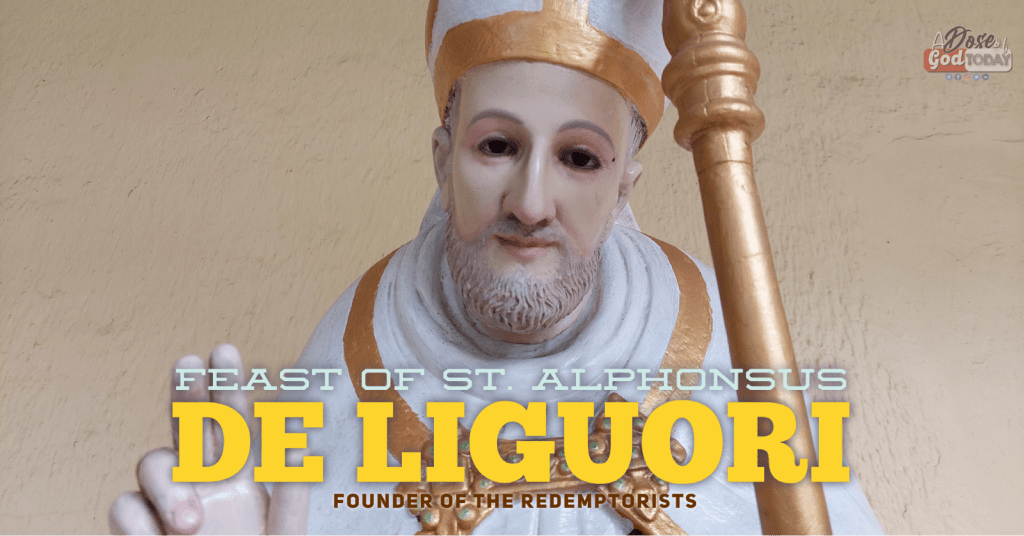
    Being scrupulous prevented him to be free from shame. He was always haunted by guilt too. Now, we understand how family pressures and his severe upbringing affected his relationship with God. In his lifetime, he struggled to believe that God could forgive him. No matter how small was the mistake or the sin he committed, he would go anxious and worried. Somehow, Alphonsus struggled to find what truly makes him happy and what would truly fulfill his life.

    However, there was something in Alphonsus that really desired for freedom, to be free from pressures, from shame and guilt, and from that severe childhood upbringing. Deep within, Alphonsus desired to express what he really wanted. He searched ways were he could truly express his true self without any pressure or expectation from others. Alphonsus was searching to what would really give meaning and true happiness in his life. This was the reason why he excelled in many things but most importantly with his encounter with the common people.

    It was with the patients at the House of Incurables, the prostitutes of Naples, the men and women in the marketplace and later on with the people in a remote area of Scala, that he found himself, and found God more alive, where he found happiness and fulfillment of this life.

    This was the beginning of the continual conversion of Alphonsus. By becoming more in touched with his struggles and questions, he too became more aware of God’s desire for him more than the pressures of the people’s desire around him. Hence, Alphonsus gave up his profession and his status as an aristocrat by becoming a poor priest. With this decision, it greatly upset and broke the heart of his father to the point of disowning Alphonsus as his son.

    However, God’s desire for Alphonsus cannot be prevented by anybody. God has so much plan for Alphonsus. And for Alphonsus, he willingly sought God’s desire and he found it among the people. This was where Alphonsus also found how good God is to him. He realized how God loved him so much despite his imperfections and weaknesses.

    Our Psalm today proclaims to us, “Forever I will sing the goodness of the Lord.” Alphonsus was indeed singing the Lord’s goodness not just expressed in his paintings, music and writings but also in his person, in the way he related with people. This happiness and fulfillment in Alphonsus touched many men and women including his father. Later on, his father discovered also how God worked in the life of his son and that God had a bigger and better plan for Alphonsus than him.

    Despite the deprivation Alphonsus had and the strict upbringing in his childhood, he did not become a bitter person but rather, his negative experiences allowed him to become understanding and generous to those who were deprived with many things in their life. Consequently, Alphonsus affirmed that the spirit of the Lord is upon him because the Lord anointed him and chose him.

    Today, on this blessed feast day of Alphonsus, the Lord is inviting each of us to continually seek our own happiness and fulfillment , and in our search, we may also be continually converted into God’s heart. Let our search leads us deeper and intimately into God.

    Let us allow the Lord then, to unfold before us his desires for us by being open and welcoming to his invitations to change and to be converted in his ways and thinking. May our encounter with people allow us to affirm God’s desire for us whatever that may be in bringing happiness, joy and peace not just to ourselves but also to people around us. Hinaut pa.

  • THE CALL TO MISSION

    August 1, 2021 – Feast of St. Alphonsus Ma. de Liguori

                                                                                                 + Manny Cabajar, C.Ss.R. D.D. – Bishop Emeritus of Pagadian

    Can you recall occasions in your life, which you can call moments of discernment or conviction or moments of decision? Alphonsus had that experience. With clarity and finality, he decided to respond to the Father’s call to mission.

                Alphonsus belonged to a rich nobility in Naples, in Southern Italy. He was a very gifted musician, painter and sculptor. At the age of 16 he was already a doctor of both canon and civil law. As a young, brilliant and successful lawyer in 17th century Naples, he was handling an important case for the Duke of Tuscany. But most likely because the judge was influenced, the judgment went against him. It was shocking. For three days, he would not eat nor leave his room. Then he began to visit the Hospital of the incurables, the equivalent of our AIDS patients today. There he had an inspiration. He heard the Lord say to him, “leave the world and give yourself to me.” He interpreted this as telling him to leave the social class to which he belonged and to become a pastoral priest. He called his experience a vision – a moment of clarity and decision when he knew exactly what God wanted him to do and felt ready and willing to do it.

    While praying and meditating in the cave of Scala he noticed the poor goatherds in the hills and had compassion for them. Not only were they marginalized by society, they were also neglected by the Church. Thereafter, he decided to spend his whole life preaching the Word of God to the most abandoned poor. He founded the Congregation of the Most Holy Redeemer, whose members are more popularly known as the Redemptorists. Drawing inspiration from Alphonsus the Redemptorists try to preach the Word of God to the poor, especially the most abandoned and try to go where many in the Church would not want to go.

                What motivated Alphonsus in his self-sacrificing life? It was no other than the son of a carpenter who also experienced a moment of decisive action when, at about 30 years old, he emerged from his hidden struggle to be his authentic self. Looking around him the carpenter’s son saw a culture of egotism in the pursuit of power, wealth and prestige often at the expense of the poor. It was a culture deeply steeped in sin. Searching for a model to follow he could only find his cousin, John, who was a simple and honest man but a fearless preacher proclaiming a message of powerlessness, simplicity, and humility and demanding of others and of himself to let go of all that was false and inauthentic. So, he went all the way from Galilee to Judea and lined up with sinners to be baptized by John at the river Jordan. His baptism was significant as it was a moment of definite decision, a radical option to accept the call to mission. It signified that a new time has begun in which God would reach out to the poor in a new way through a carpenter’s son. Jesus was His name.

                In lining up for baptism like a sinner, Jesus set aside all exemption. He lined up before someone who would be beheaded for his convictions. Jesus would also die for his convictions. That was a horrific decision and commitment to a non-violent struggle that will win salvation for all. But it had its consolation. God manifested His presence in a form of a dove and a voice was heard, “This is my beloved son in whom I am well pleased.” The human Jesus needed that affirmation. God so loved the world that he sent his only begotten Son who would reverse the conventional way of doing things. Instead of using power to destroy enemies, He would become poor and powerless, like his cousin, John, allowing his enemies to apparently destroy him.

                In the first 300 years of the Church’s life, baptism and ordination to a leadership role, were a very serious commitment. Leadership in the Church was a passport to martyrdom in the tradition of John and Jesus. Christianity opposed the values of the world and the human leaders espousing those values. That’s why authorities saw the Christians as a threat and wanted to silence them through cruel persecution. A huge  change took place in the 4th century when the Bishop of Rome crowned Constantine Emperor. Christianity became the official religion of the Empire. Bloody persecutions ceased. Many bishops and priests became partners of kings and princes and were given titles like “Prince-Archbishop,” “Your Grace,” “Honorary Prelate.” The Church gained power and prestige but sadly lost some of her prophetic freedom. The irony was that it now became harder to follow Jesus as a Suffering Servant.

                Today, are we not victims still of a similar situation? Don’t we see vestiges of power, prestige and wealth in the Institutional Church to which we also belong?  Don’t we see that what we criticize in the Church’s leadership also lurks in our communities and in ourselves as individuals? In our prayer, don’t we often court power, prestige or wealth for ourselves or our families? We need a serious soul-searching as community and as individuals to help us see that the challenge of our baptism is to let go of all control, of all wealth and privileged positions. Many are afraid of this challenge. To let go is not easy. But let us remember that when we face the challenge in big or small things we validate our baptismal promise!


               Can we not do that? Of course, we can. Just as the Spirit empowered Jesus at his baptism, the same Spirit empowers us and makes a dwelling place in us in a special way at baptism. We take courage from this. If we connect with the Spirit in us through prayer and meditation we can let go of all directing of God. We can open ourselves up and say, “Speak Lord my heart is listening.” Meditating and being still in the center of our being surely helps. It is when we are still at the center that we can hear our own inner wisdom blending with the wisdom of the Spirit. It is when we are still that God speaks to our hearts, telling us what he really wants us to do now.

                We find our efforts at being still and silent at prayer quite frustrating at times, but we don’t give up. We keep struggling at it because at some time we don’t expect the truth will surface from the Spirit within us, like a bubble rising to the surface of a calm sea indicating there is a diver below. Dear confreres and friends: remember this about prayer and meditation – they dispose us in decisive moments to accept our baptism and its consequences just as it disposed St. Alphonsus to hear the truth within and follow Christ in seeking and doing God’s will through preaching His word among the most abandoned poor no matter what the cost was for himself. St. Alphonsus’ constant union with God through prayer empowered him to follow the Lord with fidelity and zealously proclaim the good news of the Kingdom to the poorest of the poor. Amen. 

  • A LOVING AND REDEEMING PRESENCE

    A LOVING AND REDEEMING PRESENCE

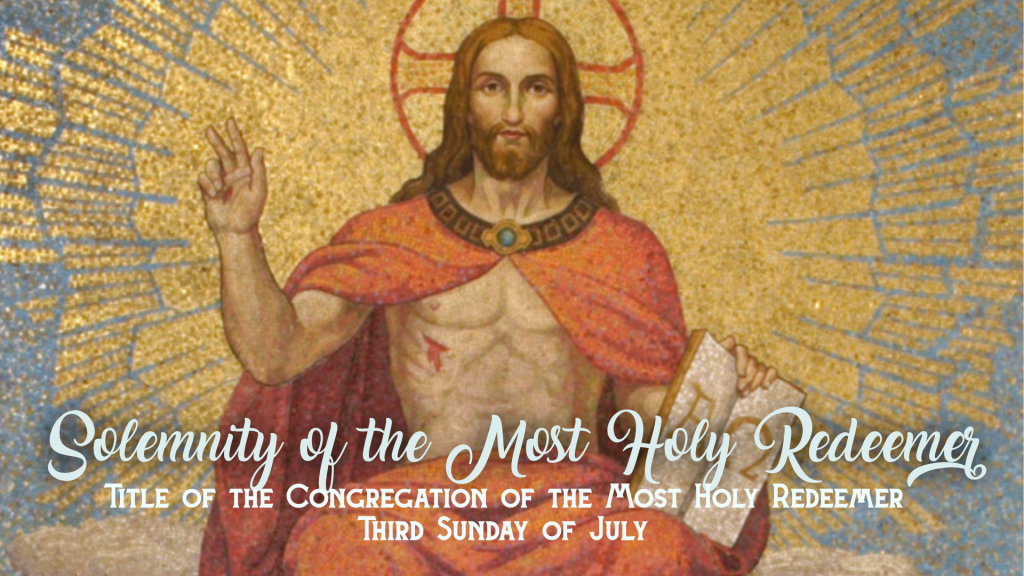
    July 18, 2021 – Solemnity of the Most Holy Redeemer

    Is 55:2b-6; Is 12:2-6; Rm 5:12-21; Jn 3:13-18,21

    How was your God-experience when you were a child?

    Certainly, each of us has our own experiences of God. Our God experiences and even image of God during our childhood would somehow paint the picture of God’s image as we grow older. Our early thoughts and ideas about God would somehow color also on how we relate with Him. Moreover, these thoughts and ideas were greatly influenced by our human experiences. How we were being brought up by our parents and adults around us will surely have an influence.

    In fact, this has been the personal experience of St. Alphonsus Ma. De Liguori, our holy founder of the Redemptorist Missionaries. As it was the culture and popular belief at that time, the young Alphonsus was introduced to a God who immediately would punish the sinner. God was believed to be too far and too high and remote. Yet, God was terrifying because God can put a person into eternal misery and damnation.

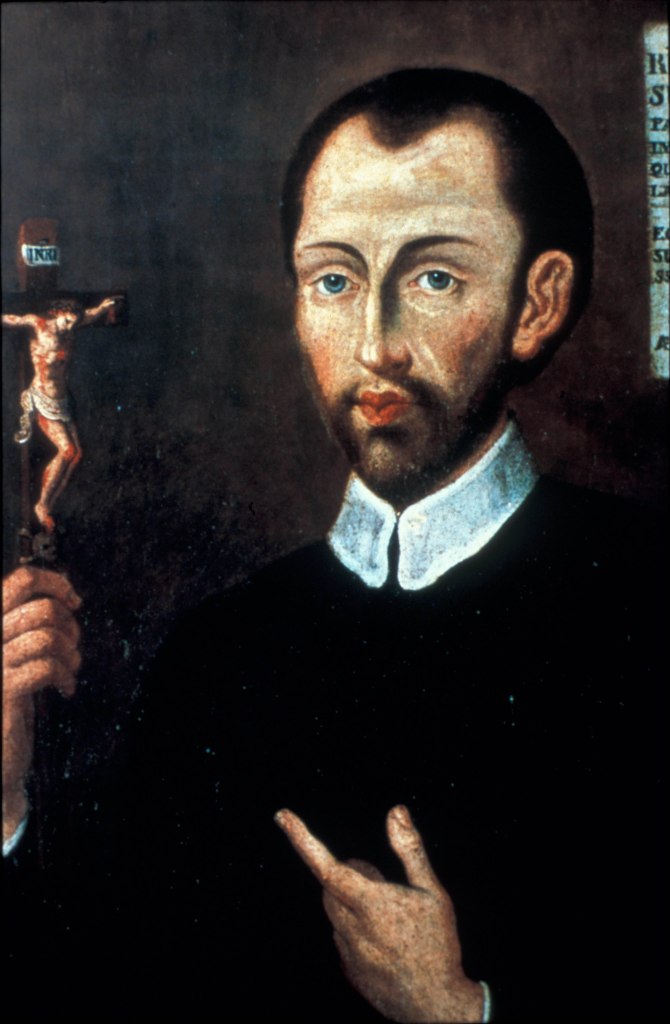
    St. Alphonsus Ma. de Liguori, Founder of the Redemptorists.

    This was in the consciousness of the young Alphonsus. Such belief in this kind of God was even reinforced because of his upbringing at home. His father who was a naval officer and a captain was a strict disciplinarian. One would just expect that Alphonsus must have been terrified by his father. If Alphonsus would commit any mistake, surely, Alphonsus would receive beatings or insults from his father.

    No wonder, Alphonsus became a scrupulous person who was overly concerned that something he thought or did might have been a sin. In modern language, Alphonsus could have suffered OCD or Obsessive Compulsive Disorder. Alphonsus was always terrified that he might have done something wrong, that he might have sinned and will be damned to the point that his guilt would haunt him.

    However, later on, slowly Alphonsus realized God’s true character. Experiences would actually tell him that God is kind and generous, loving and forgiving. Alphonsus felt this as he allowed himself to be at the service of the poor and the sick. This realization of Alphonsus was the very reason of the name of our congregation, the Congregation of the Most Holy Redeemer.

    Christ and his loving and redeeming presence and action brings out God’s true character. God does not condemn. God does not desire our death and eternal misery. God rather desires life that is free and filled with joy for us.

    This is the very message that Alphonsus preached, wrote and sang about that Jesus redeems us and liberates us from sin and death and to whatever that makes us miserable and lifeless. And this is God’s initiative because it is God’s desire.

    Our first reading and Psalm proclaimed about this. The first reading told us how Yahweh made an everlasting covenant with His chosen people. God makes the initiative to relate to us in love. Our Psalm reminds us about the faithfulness of God that we should rather not fear God but trust Him because God is our strength.

    This revelation tells us that God does not threaten us with God’s power to punish and bring us to eternal death. God rather related with us in the most personal and intimate way. This is what we affirm as we celebrate the Solemnity of the Most Holy Redeemer.

    The scriptures tell us that the God who created the world is a God who hears the cry of the poor and the entire creation. This God is neither apart nor alien to us but a God who is near and close to us. Our God is not “somewhere out there” but rather “here with us” who tirelessly journeys and lives with us from the beginning.

    Thus, despite our sinfulness, stupidity, and unfaithfulness, God never surrenders on us. St. Paul proclaimed in his letter to the Romans, “where sin increased, grace abounded all the more.”

    This is how the Gospel reminds us too that God “so loved” the world that he gave his only Son. In our pains and struggles in life, God stays with us. With Jesus, God walks and speaks to us. God even laughs with us and cries with us and to the point of suffering and dying for us.

    See, though God is almighty and all-powerful but God never threatened us with His power of control and dominance. God builds intimate friendship with us, showing care and compassion, offering healing and salvation.

    Hence, this feast of the Holy Redeemer is all about that relationship with a God who desires to be with us and to share life with Him.

    This is how we are invited to grow today – that we too will also live in friendship with others, by showing concern and love, offering healing and peace.

    We have to be watchful then, when we gain power over others and will tend to exercise control and dominance over them. With this tendency, we will be inclined to abuse the weak and that instead of building bridges, we build walls, instead of developing friendship, we promote fear. As a result, we will become indifferent to the struggles of others and intolerant to the mistakes of those who are around us. This is not what God wants us to be.

    God wants us to make friends, to show our affection and concern in the way Jesus makes us his friends so that we too shall learn to become individuals and a community with a loving and redeeming presence. Hinaut pa.