Tag: Redemptorists

  • CHALLENGE TO US FILIPINO REDEMPTORISTS FOR THE 2023-2028 SEXENNIUM

    CHALLENGE TO US FILIPINO REDEMPTORISTS FOR THE 2023-2028 SEXENNIUM


    The XXVI General Chapter of the Redemptorists recently concluded its deliberations on October 7, 2022 after it convened on September 11 in Rome. Three statements were given during and after the Chapter which should make us Filipino Redemptorists reflect on where we are today and the challenges we face in the future which we should face squarely during our incoming Provincial Chapters.

               First was that of Pope Francis.  On the first of October, Pope Francis addressed the delegates and he offered to them these words of inspiration and exhortation:

    Do not be afraid to tread new paths, to dialogue with the world, in the light of your rich tradition of moral theology. Do not be afraid to get your hands dirty in the service of those most in need and of the people who do not count…

    In your Constitutions there is a very fine expression, where it says that the Redemptorists are available to face any trial to bring Christ’s redemption to all.  Availability. Let us not take this word for granted! It means giving oneself entirely to the mission, with all one’s heart, dies impendere pro redemptis, unto the final consequences, with a gaze fixed on Jesus.

    The Church and consecrated life are living a unique historical moment, in which they have the possibility of renewing themselves to respond with creative fidelity to the mission of Christ. This renewal passes through a process of conversion of the heart and mind, of intense metanoia, and also through a change of structures. At times we need to break the old pots, inherited from our traditions, which have carried a great deal of water but have now fulfilled their purpose. And breaking our pots, full of affections, of cultural customs, of histories, is not an easy task; it is painful, but it is necessary if we want to drink the new water that comes from the wellspring of the Holy Spirit, the source of all renewal.”

              After reading his statement, he had an impromptu address in which he said:

    Photo from http://www.catholicnewsworld.com/

    I was struck by a phrase your group said: ‘Leave your comfort zones and go out on the mission.’ I wonder, what are the comfort zones that a congregation has, that a province has, that a community has and that each one of us has? Ask yourselves that question, because it was said that each person accommodates the vows as he pleases. And so, you can practice poverty with a bank account, you can practice chastity with a companion, and you can practice obedience by talking and deciding what you want. These are very distorted forms. But the one that always produces a distortion in the three vows is comfort. That is where the evil comes in, in trying to be comfortable, to be at ease, to live a bourgeois life, without going out, and going out on the mission…Each one of us must analyze our own temptation to be comfortable. We all have that temptation; we all face that temptation.”


    From such statements, clearly Pope Francis is exhorting all of us to reflect on where we are today in terms of our mission and lifestyle and to be engaged missionaries truly immersed among  “those in need and the people who do not count.” 

                Second was the statement of Fr. Rogerio Gomez CSsR, our new Superior General who sent this to the Union of Redemptorists of Brazil on October 12. While this statement is meant for his confreres in Brazil, it might as well be addressed to all of us Redemptorists, for in the document, he highlights the complex and challenging times in which we live and asks for courage from all of us:

    We are experiencing a phenomenon to which we must be very attentive: the erosion of democracy, the use of religion to manipulate reality and to impose fear and exclusion on the poor. This reality should make us think. We must be wise as children of light,’ says one of the excerpts from the letter.

    The spread of fake news can be related to the sin against the eighth commandment: ‘Thou shalt not bear false witness!’ It is an enormous disservice to the truth.”

    “How can we believe in the true God and defend weapons, persecute traditional religions, destroy Mother Nature, and not invest in public health, education, science and social policies for the benefit of the poorest and the country’s development? How can we believe in the motto ‘the truth that sets us free’ (Jn 8:32)? However, we live with the flood of lies that deceive people and create reality.

    How is it possible to speak out against abortion yet advocate the death of blacks, indigenous people, homosexuals, and women, the death penalty, cover up domestic violence, reaffirm machismo, promote prejudice against northerners and minorities, and cause social mistreatment? The teaching of the Church is evident in affirming ‘the inviolability and dignity of life from conception to natural death (JPII Evangelium vitae, 2)’.”

             Third is the recent letter of Fr. Gomez to all Redemptorists around the world, issued on the Feast of St. Gerard last October 16 addressed to everyone in the congregation from superiors to Council members, Secretariats to Formation Teams, professed and lay missionaries and even the formandi. In this letter he affirms the important role of the Brothers in the congregation, but is in crisis owing to lack of promotion and attention and calling on everyone to find creative ways to recruit and form Brothers to reverse the present reality of their dwindling numbers.

                All these are framed within the call for the coming sexennium, namely that we all strive to be missionaries of hope in the footsteps of the Redeemer. There are many reasons why sometimes we feel discouraged owing to the sad global realities (the impact of climate change, the repercussions of the pandemic, wars and conflicts, consumerism, secularism, individualism, etc.), the national situation (return of dictatorship, unchecked corruption, patronage politics, inflation, rising prices, etc.) and even dynamics within our own congregation.

    But we are supposed to be children of the light, filled with hope that God never abandons His people. However, that hope can only be nurtured if – through following in Jesus’ footsteps – we are truly able to witness to plentiful redemption which is reflected in our faithfulness to the mission of serving the most abandoned, and sharing a community life lived not in affluent comfort but following the model of Jesus and his disciples.

                 We pray that the Provincial Chapters that will be unfolding in our two units would lead us to the path earlier taken by St. Alphonsus, St. Clement, St. Gerard and all our confreres who through the years since we were founded followed in the Redeemer’s footsteps!

  • AN INCOMING SEMINARIAN’S MISSION MUSINGS AND REALIZATIONS

    AN INCOMING SEMINARIAN’S MISSION MUSINGS AND REALIZATIONS

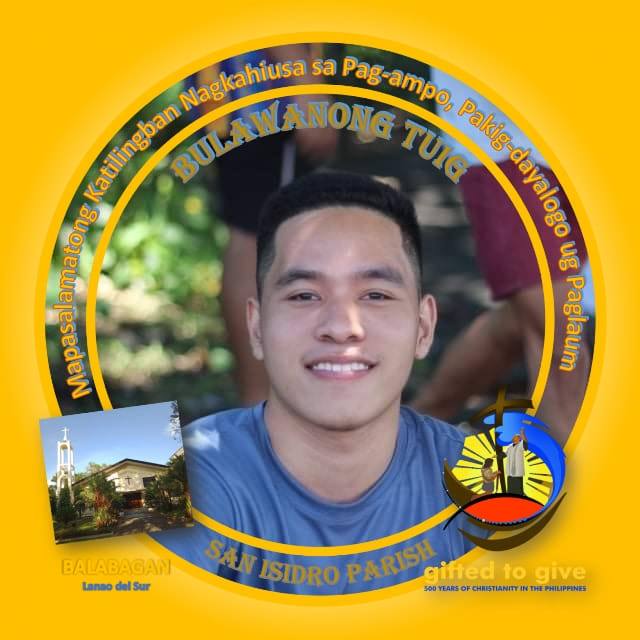
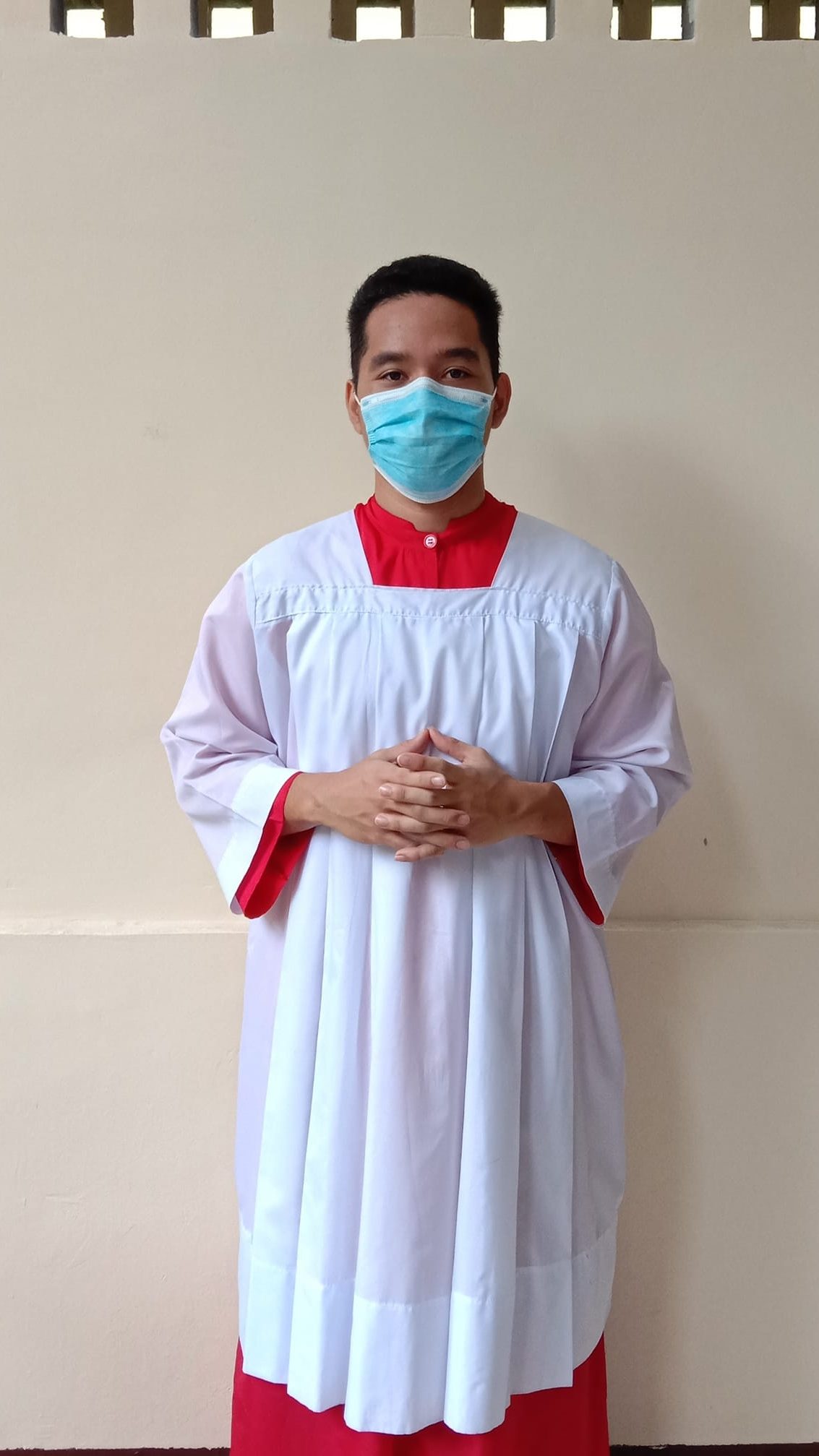
    Reflection by Charles James Somontan Antolan, a Local Youth-Mission Volunteer

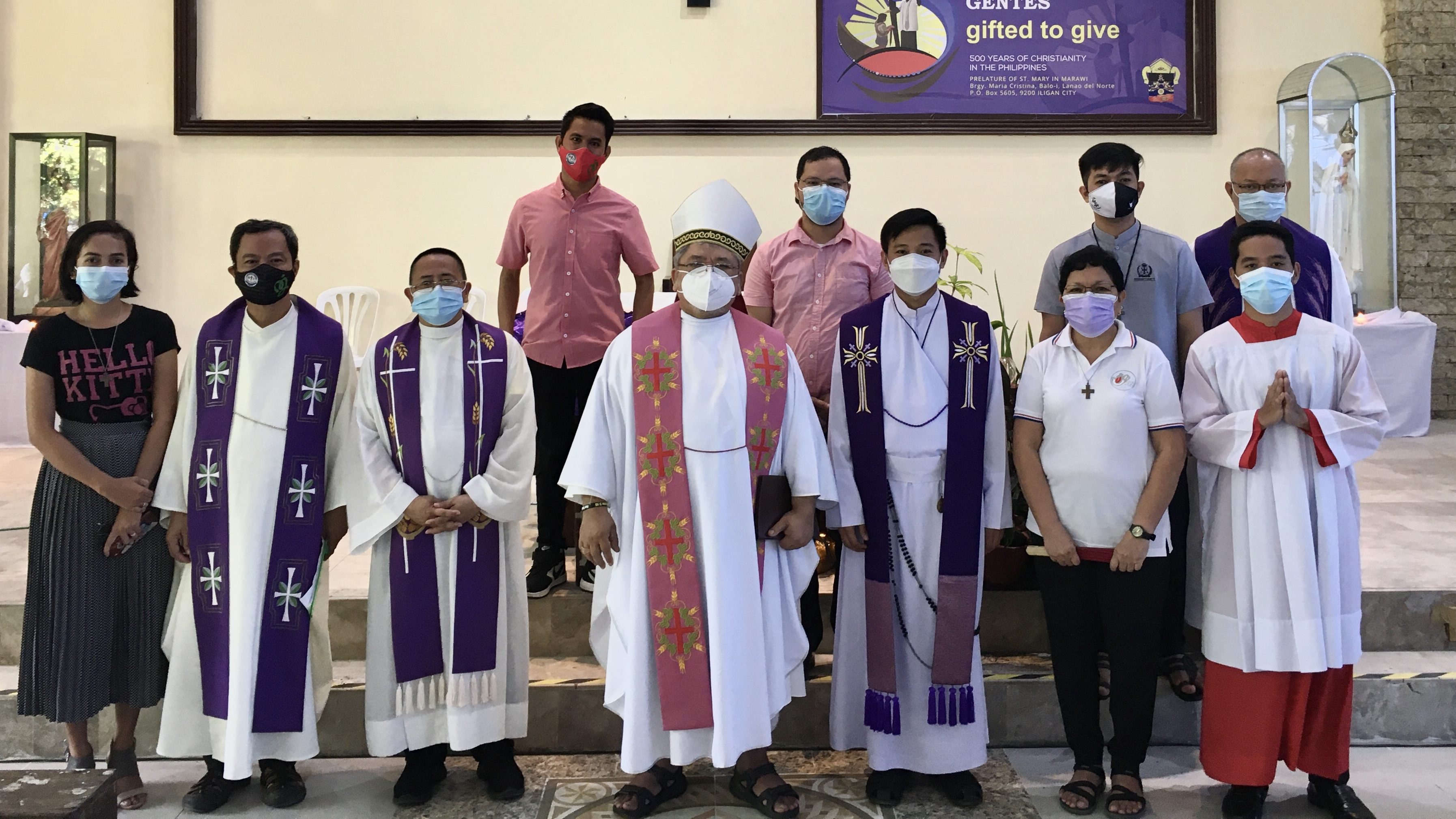
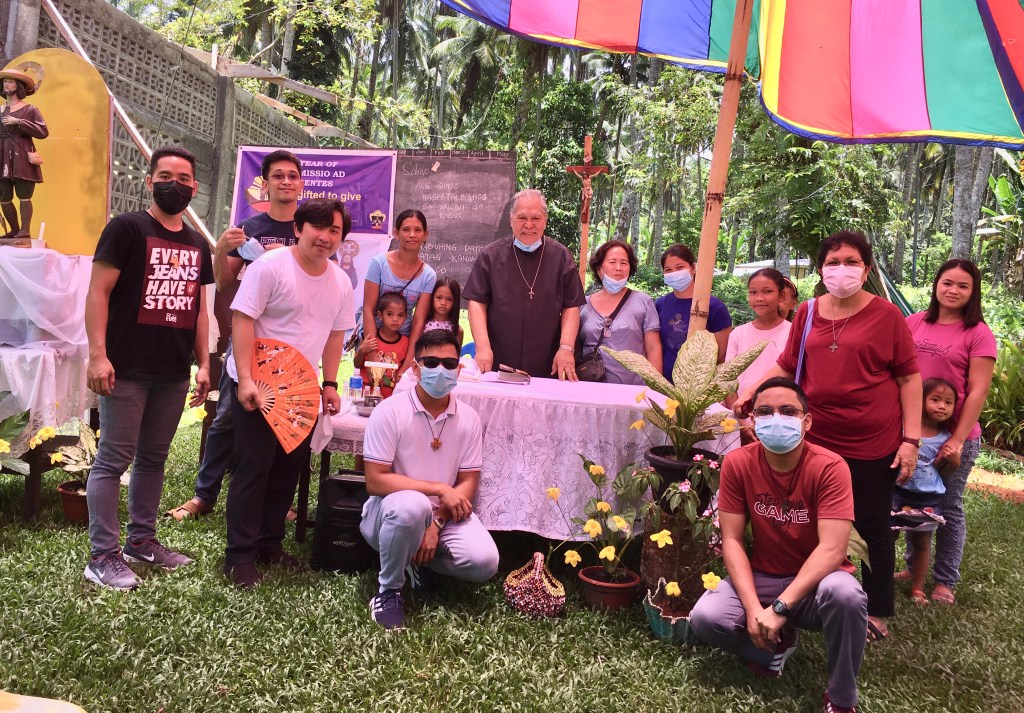
    Before the Mission in our Parish of San Isidro Labrador in Balabagan which lasted from March to May 2021, I have been serving already as an Altar Server. In fact, I am entering the seminary this August and while I am still in our Parish, I was invited by the Mission Coordinator to join the mission as one of the Local Youth Mission Volunteers. Indeed, I accepted the invitation even though I did not have much knowledge on how the mission will go. What I only thought at that time was this year’s theme of the Philippine Church, “Year of the Missio Ad Gentes: Gifted to Give,” and that through this opportunity I would be able to share myself to others.

    However, behind my “yes” to the mission, I felt worried just like my co-local youth mission volunteers, on how I could be of help to the team. I know that I lack talents and knowledge. I was also anxious on how I would socialize with the Mission Team especially as they were composed of priests, lay-missionary, seminarians, deacons and other youth mission volunteers. I am aware that I am an introvert person. Though I am not shy but I tend to be more silent and a serious type of person. I thought that these traits in me will prevent me as I join the mission. Yet, when the missionaries arrived and stared the mission, what I expected never happened because each of them was very friendly. It was not difficult to meet and encounter each of them. And I felt at home with them.

    It is true that the mission brought many changes in our parish particularly to myself. Undeniably, the people here in our parish are in thirst of the living Word of God especially those chapels and communities that can only celebrate the Holy Eucharist once a month. Through the mission, the people quenched and have been satisfied in their thirst to joyfully celebrate the Holy Mass and to listen to the regular formations and teachings. I myself witnessed this visible scenario especially during the team’s delivery of talks. The people would always pay attention. In fact, every time I would give a part of the talk, I would see in their eyes their willingness to learn and of their joy because of the presence of the mission.

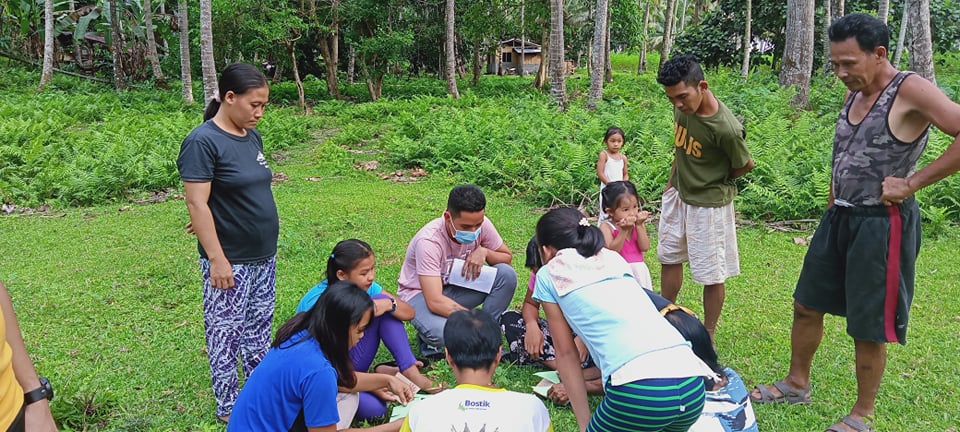
    I am glad that through my participation in the mission, I was able to visit areas in our municipality which I have not been to before. I was able to encounter other people and made friends with other youth who were also serving their chapel like me. Through these encounters, I have witnessed and realized the beauty in their life that even in simplicity they remained grateful and joyful in sharing their graces.

    I remember, there was one time that four of us in the team (a priest, a deacon, myself and another co-youth volunteer) slept in the area because there will be a dawn novena-mass at 4 AM. It was a mountainous area and most of the people are farmers like their Patron Saint, San Isidro Labrador. We stayed overnight in their newly made waiting shed made of bamboo. The area was fresh and there was no presence of mosquitos around. However, what amazed me so much during our stay were their act of generosity and welcoming spirit. They didn’t just provide us food and shelter, they also spent their time socializing, eating with us, and most of all providing security by guarding the vicinity the whole night. These might be simple things but these meant a lot. For me, they showed concern, willingness to sacrifice and to show their love for visitors.

    The three-month mission helped me to be closer to God. The Redemptorist Itinerant Mission Team lived a prayerful life. Aside from celebrating the Holy Mass, we regularly have our morning prayer and the prayer I would never forget, the grace before meals. During our team study of the modules, I learned a lot especially about our Catholic Faith. Those learnings gave me other perspectives in looking at life. Like my co-youth volunteers, I have also proved to myself that I can really face and talk in front of a crowd, even among professionals, to give and deliver formation talks. Though there would be many times that I would perspire excessively while giving talks, but I have become happy about myself because at the end of the day, I was able to touch and impart knowledge to the people. And I believe, this is all for the greater glory of God.

    My journey in the mission brought me into these three general realizations.

    THE PRESENCE OF GOD IS TRULY ALIVE. Wherever I was, I always saw the image of Jesus to people who are kind-hearted, to the simple and poor, to the grateful and generous, to people who are always ready to sacrifice for the sake of others, to the witnessing, serving and prayerful individuals.

    GOD CREATED US WITH PURPOSE AND MISSION. The Redemptorist Missionaries were sent by God in our Parish in Balabagan to accompany us in celebrating our Golden Jubilee as a Parish, to preach the Gospel and to share their lives for the good of the people. Our people in the parish and in every area also helped for the success of this mission. Thus, each one of us has his or her own purpose and mission in life. What we need is to discover and to realize its fulfillment for the sake of others and for the glory of God.

    Third and lastly, I also came up with a personal realization.

    THE LORD HAS PREPARED ME FOR MY VOCATION IN LIFE. I realized that I have been called by the Lord to join the mission not just that I will be of help to the team, but also to prepare myself as I am about to enter the seminary for my priestly formation. I became more aware of myself. I have discovered some of my potentials and those that needs to be developed. Through the mission, I am reminded of the need of priests in our Parish and in the Prelature as a whole. This awareness gives me now the courage to continue. As I lived with the Mission Team for three months, I closely witnessed and experienced the life of priests. Their dedication and joy in serving inspires me to also aspire and become a priest like them, “puhon” (hopefully/in God’s time).

    I am much grateful that God gave me this privilege to experience the life of being on a mission. Thank you so much. Maayong Good Morning!

  • WORLD DAY OF THE CONSECRATED LIFE: REFLECTION OF A MILLENIAL PRIEST

    WORLD DAY OF THE CONSECRATED LIFE: REFLECTION OF A MILLENIAL PRIEST

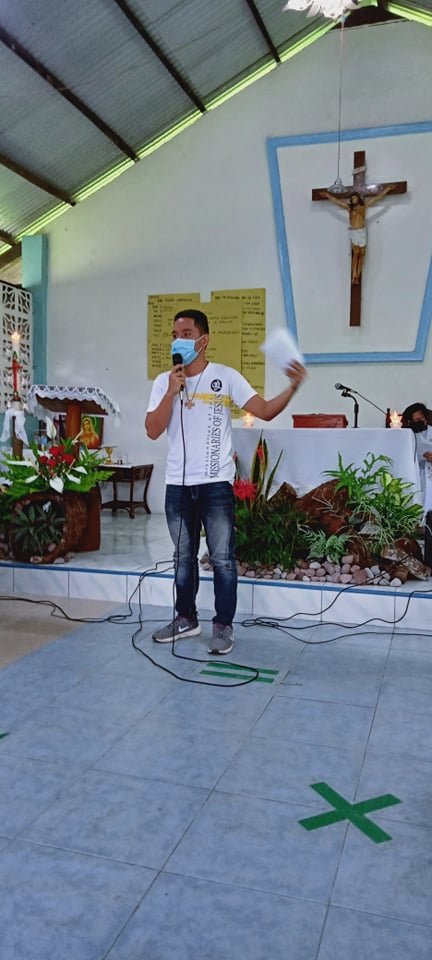
    February 2, 2021 – On this Feast of the Presentation of the Lord, Bishop Jose Rapadas III, Bishop of Iligan presided the mass to celebrate the “World Day of Consecrated Life.” Bishop Rapadas asked these questions among us religious in his diocese, “As a consecrated person, what are you most grateful for? What gift you are asked to give in return?”

    Video Clip from the Facebook Page of St. Michael’s Cathedral, Diocese of Iligan.

    Below is the transcript of my own reflection delivered during the mass.

    “I am Jom. I am a Redemptorist Missionary. I was professed in 2012 and was ordained in 2017. I am 31 years. I was recently asked to move here in Iligan last August 2020.

    As a consecrated person, what am I you most grateful for?

    RELATIONSHIPS, FRIENDSHIPS – These are the gifts that I have grown in gratitude this time. (aside from the usual like the gift of life) And as a millennial priest I also recognize the need to relate, to build friendship, to feel being loved and to love. These are facts and gifts that I believe what I really need that I may be able also to grow continually as a person and as a Redemptorist Missionary.

    Thus, my Redemptorist community, with all its imperfections and weaknesses is something that I am very grateful for. It is through my community that I have been affirmed many times. People also have recognized and affirmed me. This did not only boosted my self-confidence but also added to my conviction that I am gifted in one way or another. And that these gifts in me are not for me alone but to be shared in my own way of life as a Redemptorist Missionary. However, it is also around here that at times I feel uneasy being affirmed, simply because affirmation and recognition can also be intoxicating.

    Indeed, affirmations and recognitions can be quite overwhelming. I recognize that these can be forms of temptations where I will grow over-confident, self-satisfied and arrogant because of what I have achieved and gained. And my Redemptorist community served also as my own mirror to see my own inadequacy and the need to grow more and to develop as a better person. Thus, being corrected and being confronted of my own weaknesses and failures have helped me a lot to know myself better and to respond responsibly.

    Hence, being a Redemptorist, my community is a gift that I have grown really to be grateful for.

    Outside my own Redemptorist Community, I also recognize the gift of friendship that I have developed among the people, among our parishioners, among the different ministries that I am involved in and the gift of friendship that I continue to develop and to nurture.

    These friendships outside my religious community have given me not just affirmations but also opportunities for me to express intimacy, to express love and concern without crossing and abusing boundaries. Those friendships that I have with individuals and families have helped me better understand that it is indeed possible to love without exclusivity in the religious vocation, and that it is possible to express intimacy, to be loved and to be loving in my religious vocation.

    Now, both of these, have helped me too to become more grateful of my personal relationship and friendship with the Lord. Those human relationships I have with my religious community and with others have helped me certainly to have a grounding in growing in my relationship with God whom I cannot see physically but through the people who surround me.

    With all of these, through the gift of relationships and friendships, what I also believe that I am called to give now in return is the gift of my presence as a friend, as a pastor, as priest and as a missionary. The gift of my presence, as I have become aware, involves many demands from me. I know that to give ones presence will not be easy. To be able to give fully my presence into the other would always require me to let go of my own comforts, to let go of my biases and even in many ways, to let go of my tendency to keep myself at a safe distance.

    Yet, as Pope Francis said, as a religious, I too am called to live the gospel with joy which can only be possible when I also become more generous of myself to others most particularly in my ministry.

    Being called to give that gift of presence to the people or the church, calls me further to be life-giving both in my words and also in my actions. And I recognize that this will not be easy and again it will demand more from me. But joy and the fullness of life will surely be a reality for me once I will be able to give more life to others. Hinaut pa.

  • HOW THE ORIGINAL STATUE OF THE STO. NINO DE CEBU SURVIVED THE WORLD WAR II

    HOW THE ORIGINAL STATUE OF THE STO. NINO DE CEBU SURVIVED THE WORLD WAR II

    Edited by Fr. Manoling Thomas, CSsR

    Kept in a bomb-proof vault; the historic icon of the Sto. Niño de Cebu, spent seven months in the safekeeping of the Redemptorists at the close of World War II. This is a little-known page of history which took place when an emergency arose at the close of 1944.   The Augustinian friars had to find a safe place for the icon because the basilica located at the Cebu City’s pier area had been heavily bombed. According to an account of the emergency transfer written by Fr. Antonio Dizon, OSA, the icon of Our Lady of Perpetual Help was kept in an underground chamber by the Redemptorists, who were mostly Australian and Irish missionaries.

    The icon of the Holy Child was hidden in a vault in the Redemptorist monastery. The vault was placed under the image of the Blessed Virgin Mary.  [The metal vault still exists today. It is on display at the left side of the main entrance to the church.]

    For Catholics, the symbolism is clear: the child Jesus took shelter in the home of his mother. The Augustinian friars’ account appears in a devotional booklet of the Redemptorists printed in 1984:

    Among gidala kining dyutay’ng Bata sa balay sa Iyang Inahan, siya karun nagabantay kaniya.” (We brought this little Child Jesus to the house of His Mother who now takes charge of Him.)

    Why the Redemptorist Monastery?

    Its location at the time was in a countryside setting. The Redemptorist Monastery was standing there alone; amid mango trees and cornfields. It made the place far enough from trouble.

    Heavy bombardment had badly damaged other Cebu City churches, including the Sto. Niño or San Agustin Church and convent near the harbor. At one time, a bomb dropped inside the Sto. Niño Church near the main altar, Dizon wrote.  The sacred image, which was at the center with no protective glass case, shook but did not fall directly on the ground.

    Instead, it was found tilting and hanging with the cape snagged on the electric candles of the altar. The original icon of the Sto. Niño de Cebu, fell from its niche and acquired a “chipped eye and scratched cheek”.

    The incident left a visible “scar” on the right upper cheek, which remains one of the signature marks of the Sto. Niño de Cebu for devotees who wonder if this is the original 16th century icon given as a gift by Ferdinand Magellan to Rajah Humabon as a baptismal gift in 1521.

    The archive photo shows the end of the seven-month sanctuary on April 20, 1945; with Fr. Thomas McHugh, CSsR, the Irish rector at the time, turning over the image of the Sto. Niño, with its crown, cape, and pedestal intact to Fr. Leandro Moran, OSA.  The photo is kept in the McArthur memorial Museum in Norfolk, Virginia, USA.

    After that, the Augustinian friars took the image from the debris of the church and hastily carried it to the Redemptorist Monastery. This was the first time that the Sto. Nino icon had left its base since its enthronement in 1740. First-hand accounts are sketchy, so a photo of the return of the statue is a precious evidence of the cooperation between the Augustinians and the Redemptorists during this war-time emergency. The archive photo shows the end of the seven-month sanctuary on April 20, 1945; with Fr. Thomas McHugh, CSsR, the Irish rector at the time, turning over the image of the Sto. Niño, with its crown, cape, and pedestal intact to Fr. Leandro Moran, OSA.  The photo is kept in the McArthur memorial Museum in Norfolk, Virginia, USA.

  • Painful and Negative Experiences Can Be Opportunities For Growth and Freedom

    Painful and Negative Experiences Can Be Opportunities For Growth and Freedom

    October 16, 2020 – Feast of St. Gerard Majella,CSsR – Redemptorist Brother

    Homily

    When we experience rejections and deprivations in life, is it not that we also experience discouragements? And when there is a series of tragedies happening in our life, we would certainly feel desperate and begin to have a sense of hopelessness. A possible reaction could be self-blame, or blaming others or blaming God because of the unfortunate events in our life. This is a possible reason why there are people who would yield to a very low self-worth and low self-esteem because of such negative experiences. For others, this leads to desperation, depression and chronic loneliness. Others too would go to the other side that leads to a life filled with bitterness and then to that desire to always seek recognition, acceptance, and satisfaction. To compensate what had been deprived, what was lost or lacking, the person may seek them in many ways. When these desires remain unconscious and become unsatisfied, the person turns to be selfish, corrupt and abusive in his or her relationships.

    However, negative experiences can also become opportunities for us to grow more as a person and into how God desires us to be. Our painful experiences of rejections, deprivations and even traumas in life are also doors that will lead us into a life filled with confidence, meaning and freedom.

    This possibility of living life fully is the life shown to us by St. Gerard Majella whose feast we celebrate today. Before St. Gerard was known to be a patron for mothers and particularly in time of pregnancy and for their infants, the young Gerard experienced hardships.

    At a very young age he was deprived of a father. His father died and being the only boy, he became a father to his sisters. Though he was very young, he was forced by that circumstance to work and support his family. Consequently, the hard work that he endured caused his health to fail. He had a very poor health as a young man. However, despite these difficult circumstances, Gerard was never bitter towards others who were better and well-off. He never blamed God for the difficulties he experienced.

    In fact, Gerard desired that he will offer his whole life in the service of God. But then, because of his poor background and poor health, he was rejected by a religious congregation that he wanted to join. Despite this rejection, Gerard never wavered his decision. When the Redemptorists came in his hometown, he was inspired by them and asked to join their group. Again, because of his poor health, he was rejected. But because of his persistence, he was able to join, but the Redemptorists reluctantly accepted him.

    In terms of intellectual capacity, Gerard was very far from St. Alphonsus, yet, what inspired the people around him was his sincerity. In all the things that Gerard did, he was always sincere, kind and grateful. The words that he expressed were filled with sincerity. Gerard was not after any recognition or just to satisfy his cravings because of the many deprivations in his life.

    Gerard was just happy and sincere because he was very confident with Jesus. His confidence and intimate friendship with the Lord made this poor and sickly Gerard satisfied and filled with gratitude. This is the very attitude proclaimed in our Psalm today, “You are my God, my only good.” Consequently, the very presence of Gerard uplifted and inspired others particularly those who were afflicted with illness, with loneliness, with poverty and other needs. Thus, even in his poverty, Gerard was generous; even in the midst of rejections, Gerard was most compassionate.

    In the same way, Paul expressed this in his letter to the Philippians, he said, “I regard everything as a loss… for his sake I have suffered the loss of all things, and I regard them as rubbish, in order that I may gain Christ and be found in him.”

    This is what Jesus told us in the Gospel today. The life of Gerard was a concrete example after Jesus, of a seed that dies and bears much fruit. Those painful and negative experiences of Gerard were his experiences of dying; his choice to make others happy and to bring others closer to Jesus were his ways of self-denial and denial from his personal cravings. Hence, by his sincere actions and words, Gerard’s life bore much fruit.

    This is the message also for us today. Let us not allow our negative experiences of rejections, deprivations and traumas to bring us farther away from ourselves, away from others and away from the grace of God. Let us rather make them as opportunities for us to grow deeper in the knowledge of ourselves, in our relationship with God and others. As we become sincere and more grateful in our words and actions, we may also become God’s instruments in bringing miracles in your community. Hinaut pa.

    Jom Baring, CSsR