Tag: Redemptorist Saint

  • SEEKING OUR HAPPINESS AND FULFILLMENT

    SEEKING OUR HAPPINESS AND FULFILLMENT

    August 1, 2023 – Solemnity of St. Alphonsus Maria de Liguori

    Readings

    From the Book of Prophet Isaiah (61:1-3)

    The spirit of the Lord is upon me; because the Lord has anointed me;

    He has sent me to bring good news to the oppressed, to bind up the broken hearted, to proclaim liberty to the captives, and release to the prisoners;

    To proclaim the year of the Lord’s favor, and the day of vengeance of our God;

    To comfort all who mourn; to provide for those who mourn in Zion –

    To give them a garland instead of ashes, the oil of gladness instead of mourning,

    The mantle of praise instead of a faint spirit.

    They will be called oaks of righteousness, the planting of the Lord, to display his glory.

    Responsorial Psalm : Forever I will sing the goodness of the Lord.

    From the Gospel of Matthew (9:35-10:1)

    Then Jesus went about all the cities and villages, teaching in their synagogues, and proclaiming the good news of the kingdom, and curing every disease and every sickness.

    When he saw the crowds, he had compassion for them, because they were harassed and helpless, like sheep without shepherd.

    Then he said to his disciples,

    “The harvest is plentiful, but he laborers are few;

    Therefore ask the Lord of the harvest to send out laborers into his harvest.”

    Then Jesus summoned his twelve disciples and gave them authority over unclean spirits, to cast them out, and to cure every disease and every sickness.

    Who would not want to be happy? Who would not want a fulfilled life? To be happy and to have a fulfilled life is everyone pursuit in life. This is the very reason why we dream, aspire things for our life and others, hope for a better and comfortable life.

    And in our search for happiness, we also realize that there can be actually many reasons to make us happy from small things to the big and great things. We may also do many things just to make ourselves happy or make other people happy. We can also actually make our life busy in pursuing happiness. This is not just true among adults or old people but even among the young generation. Yet, in making ourselves busy to find happiness we might also lose the opportunity to be really happy. The question now, is on the quality and endurance of our happiness.

    There are many young people today, who entertain themselves with a lot of things. Many are drawn towards online or mobile games to experience a surge of happiness in winning a game. Others would also keep their eyes on the screen to watch Korean TV Series and be entertained with the Korean Idols. Others make themselves busy on everyday TikToks and selfies to be uploaded on Facebook and Instagram.

    Though these are forms of short-term happiness but they can also lead us to what would really make truly happy and fulfilled. However, in our sear, we may be prevented by many things as well especially when expectations from our families and friends are different from what we truly desire. People around us may have something in mind for us, believing that what they think is better for us. Yet, this is not always the case. That is why, there would be individuals whose lives become miserable because they have to follow the desires from others for them.

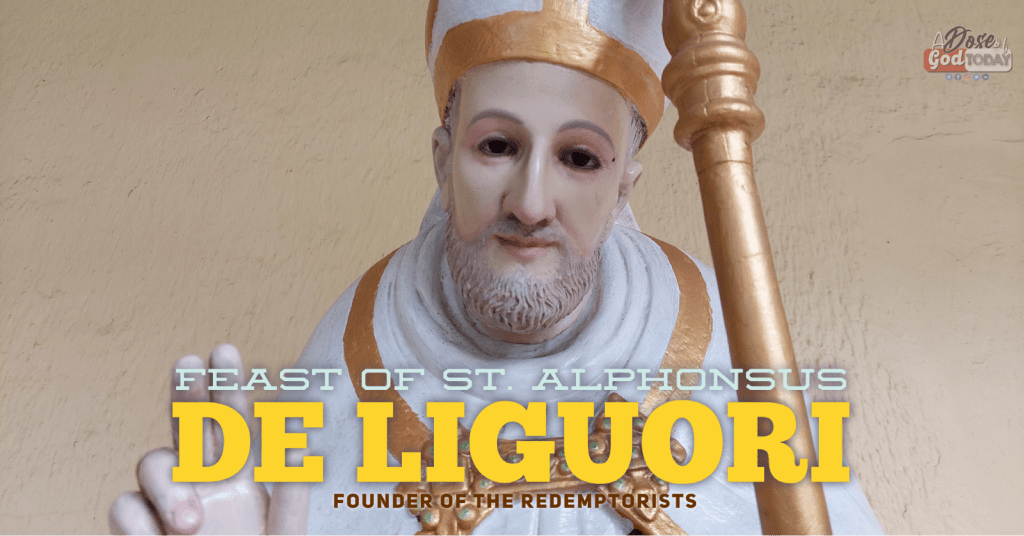
    This reminds me of the life of Alphonsus whose feast we celebrate today. That is why, I also wonder of the kind of life Alphonsus had when he was young and what led him to affirm his vocation by giving his life for the poor and the most abandoned.

    Alphonsus came from an aristocratic family in Naples, Italy. As the eldest in the family, his father had so much expectations from him. We were told in his biography that an early age he had books on his hands instead of toys. He must have been deprived of playing with other children because as an aristocrat, he needed to receive instructions from various teachers. He was an exceptional boy who even finished his studies in both civil and ecclesiastical laws at the age of 16. In his twenties, he was already a known lawyer in Naples. Not just that, he also excelled in arts and music and authored many books.

    With all these things on him, I am very sure that Alphonsus had felt so much pressure from the family and particularly from his father. His father expected him to succeed and follow him as what had been practiced in their family. His relatives and the whole clan had surely expected him also to follow the footsteps of his father as an aristocrat. This was the reason why at an early age he was expected to follow whatever was told to him. Alphonsus was very careful to follow everything and not to commit any mistakes.

    At that time, any mistake will not go unpunished. We could imagine how Alphonsus had to endure the corporal punishments and the shame, every time he would commit a mistake or a failure. This kind of upbringing had actually a deep influence on the spiritual life of Alphonsus. He was a very scrupulous man. Alphonsus was very afraid of hell and of eternal damnation. He was very careful not to sin and not to commit any mistake because he believed that God would not be able to forgive him.
    Being scrupulous prevented him to be free from shame. He was always haunted by guilt too. Now, we understand how family pressures and his severe upbringing affected his relationship with God. In his lifetime, he struggled to believe that God could forgive him. No matter how small was the mistake or the sin he committed, he would go anxious and worried. Somehow, Alphonsus struggled to find what truly makes him happy and what would truly fulfill his life.

    However, there was something in Alphonsus that really desired for freedom, to be free from pressures, from shame and guilt, and from that severe childhood upbringing. Deep within, Alphonsus desired to express what he really wanted. He searched ways were he could truly express his true self without any pressure or expectation from others. Alphonsus was searching to what would really give meaning and true happiness in his life. This was the reason why he excelled in many things but most importantly with his encounter with the common people.

    It was with the patients at the House of Incurables, the prostitutes of Naples, the men and women in the marketplace and later on with the people in a remote area of Scala, that he found himself, and found God more alive, where he found happiness and fulfillment of this life.

    This was the beginning of the continual conversion of Alphonsus. By becoming more in touched with his struggles and questions, he too became more aware of God’s desire for him more than the pressures of the people’s desire around him. Hence, Alphonsus gave up his profession and his status as an aristocrat by becoming a poor priest. With this decision, it greatly upset and broke the heart of his father to the point of disowning Alphonsus as his son.

    However, God’s desire for Alphonsus cannot be prevented by anybody. God has so much plan for Alphonsus. And for Alphonsus, he willingly sought God’s desire and he found it among the people. This was where Alphonsus also found how good God is to him. He realized how God loved him so much despite his imperfections and weaknesses.

    Our Psalm today proclaims to us, “Forever I will sing the goodness of the Lord.” Alphonsus was indeed singing the Lord’s goodness not just expressed in his paintings, music and writings but also in his person, in the way he related with people. This happiness and fulfillment in Alphonsus touched many men and women including his father. Later on, his father discovered also how God worked in the life of his son and that God had a bigger and better plan for Alphonsus than him.

    Despite the deprivation Alphonsus had and the strict upbringing in his childhood, he did not become a bitter person but rather, his negative experiences allowed him to become understanding and generous to those who were deprived with many things in their life. Consequently, Alphonsus affirmed that the spirit of the Lord is upon him because the Lord anointed him and chose him.

    Today, on this blessed feast day of Alphonsus, the Lord is inviting each of us to continually seek our own happiness and fulfillment , and in our search, we may also be continually converted into God’s heart. Let our search leads us deeper and intimately into God.

    Let us allow the Lord then, to unfold before us his desires for us by being open and welcoming to his invitations to change and to be converted in his ways and thinking. May our encounter with people allow us to affirm God’s desire for us whatever that may be in bringing happiness, joy and peace not just to ourselves but also to people around us. Hinaut pa.

  • Here the will of God is done, as God wills, as long as God wills

    Here the will of God is done, as God wills, as long as God wills

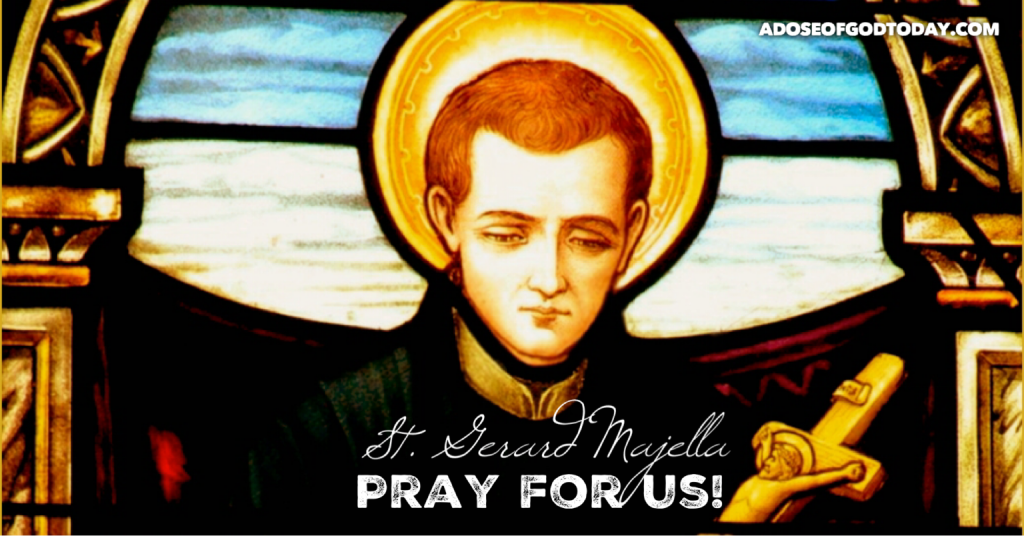
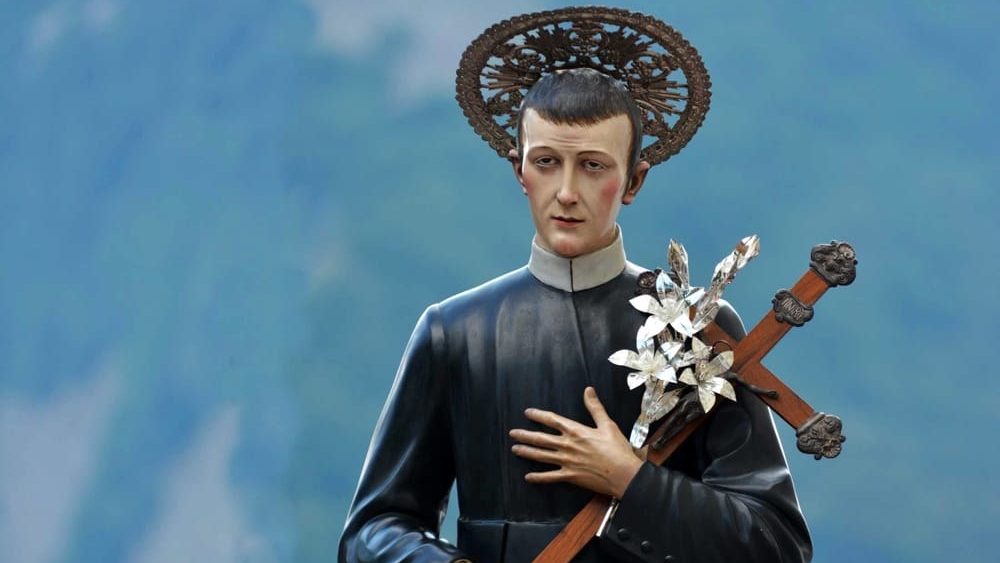
    October 16, 2021 – Feast of St. Gerard Majella, Redemptorist Saint

    “Here the will of God is done, as God wills, as long as God wills.”

    These are St. Gerard’s words of wisdom to us, and to himself. Until now, on the door of his room in Deliceto, Italy where he was formed as Redemptorist & in Materdomini, where he was assigned until his death, Gerard placed a sign with these words: “Here the will of God is done, as God wills, as long as God wills” to remind others & himself who he is, & what his life is all about. 

    Somehow these words reflect the content, the means & the purpose of his life, as Christian. “Here God’s will is done”… His life is all about doing God’s will. “As God wills”… and he does God’s will, by means & through God’s ways, & none other. “As long as God wills”…  and he does God’s will in God’s design & purposes. Somehow this is Gerard’s way of proclaiming that, as God’s will for us, our Lord Jesus Christ is His Way, His Truth & His Life.

    His words of wisdom are based on his lived experience of faith and life, & not just product of inspirations from prayers & contemplation. As frail child, Gerard experienced a lot of bullying & rejections. While working as apprentice tailor, many times he was rejected entrance to seminary & religious life. Not until that he became involved with Redemptorists on mission in their town in Muro Lucano that he was able to join the Redemptorist, though not without the recommendation: “I am sending you a useless brother.” As young Redemptorist, Gerard had bouts of mistreatments, even from his fellow Redemptorists. Like, Alphonsus disciplined Gerard for being humbly silent about a false accusation made against. His deep empathy & remarkable apostolic zeal of counselling & taking care of the poor people have also garnered jealousy & hatred among his very own confreres. And in a highly feudal society & clericalized church of his time, he ran into conflict with his superiors & brother priests vis-à-vis the witness & practice of religious life.

    Despite these odds, all along what sustained Gerard are these words to himself: “Here the will of God is done, as God wills, as long as God wills.” Like St. Paul, Gerard deeply believed that Jesus Christ made him His own, and thus Gerard made Christ his Own. Same way, as Jesus also said in our gospel: “the Father will honor whoever serves me”, Gerard served & followed the Lord, and in life has been favored with many spiritual gifts, among which were prophecy, reading people’s heart & miracles. And now honored in the church as our Saint & patron of expectant mothers.

    Like Gerard, may our Christian faith & life always be attuned with God’s will, so that we may enjoy God’s plentiful redemption now and always. Amen.

  • Influences

    Influences

    Advertisements

    October 16, 2020 – 28th Week in Ordinary Time

    Feast of St. Gerard Majella, Redemptorist Brother and Patron of Mothers, Parents-to-be and their Infants

    Click here for the readings (https://bible.usccb.org/bible/readings/101620.cfm)

    Homily

    A wise man once said, “Never underestimate our power of speech. It can make life better or bitter”. True indeed, the words we use, either written or spoken, for better or for worse, can affect and influence us & others. Like, better or bitter. Simple play of spelling and pronunciation may invoke both courage and discouragement, can be empowering as well as alarming, and may connote many meanings and messages. That is how powerful our words are. They can influence LIFE (yours and mine) for better or for worse, better or bitter.

    Along with these words is also a warning that we should also be conscious of our influences, i.e. – either by words or action, we should be careful on how others are influencing you and on how you are influencing others as well. Nowadays, by the words you post, comments you made, posts you shared, you are already influencing others. And the vloggers, life-coaches, and so-called influencers you follow, the book you read, the movies & news you watch are already influencing you. That is why we should be conscious and careful of our influences, and be cautious of our words for it can make or break our lives.

    This is what Jesus warns us in our gospel when he said: “Beware of the leaven – the hypocrisy- of the Pharisees”. For Jesus, we should be conscious of the many influences in our lives – and should prefer to choose the life-giving and encouraging influences that recognize our worth and value before God, over and against soul-crushing and life-breaking worldly influences in our lives. Here, Jesus challenges us to direct and allow our minds, heart, life and soul to be influenced by God’s grace & spirit rather than be influenced by rigidity and oppressiveness of our earthly hypocrisy of human laws and practices.

    Same way with Paul. He believes that God has a better plan for each and everyone of us, but it can only happen in our lives, if and when we allow God’s will and plans to influence our very lives rather than be influenced by the soul-crushing, demanding, and life-breaking influences of our world nowadays.

    Consider St. Gerard. In our Redemptorist house in Caposele, Italy where he lived until his death, you can find at the very door of his room a wooden signage posted by St. Gerard that says: “Here the will of God is done, as God wills, and as long as God wills it.” These words represent the very orientation and spirituality that influence the life & faith of St. Gerard, which is God’s will. For him, Everything (life here & now, has been, & will be) is all about and centers on God’s will. All that has happened, is happening & will happen is a chance-encounter & a fulfillment of God’s will, according to God’s plans & ways, and in accordance with God… rather than of ours, & by ours. These words are reflective of St. Gerard’s single-minded devotion to God & his straight forward messages & influences to all those he has ministered and shared his witness of faith and life.

    Again like our power of speech, let us be cautious then of our influences on others & influences in us of others, for it can be life-giving or life-breaking. And like St. Gerard may our influences be of God rather than of men, be for the better than for worse, be for the better & not for the bitter. Amen.

    By  Fr. Aphelie Mario Masangcay, CSsR 

  • Painful and Negative Experiences Can Be Opportunities For Growth and Freedom

    Painful and Negative Experiences Can Be Opportunities For Growth and Freedom

    October 16, 2020 – Feast of St. Gerard Majella,CSsR – Redemptorist Brother

    Homily

    When we experience rejections and deprivations in life, is it not that we also experience discouragements? And when there is a series of tragedies happening in our life, we would certainly feel desperate and begin to have a sense of hopelessness. A possible reaction could be self-blame, or blaming others or blaming God because of the unfortunate events in our life. This is a possible reason why there are people who would yield to a very low self-worth and low self-esteem because of such negative experiences. For others, this leads to desperation, depression and chronic loneliness. Others too would go to the other side that leads to a life filled with bitterness and then to that desire to always seek recognition, acceptance, and satisfaction. To compensate what had been deprived, what was lost or lacking, the person may seek them in many ways. When these desires remain unconscious and become unsatisfied, the person turns to be selfish, corrupt and abusive in his or her relationships.

    However, negative experiences can also become opportunities for us to grow more as a person and into how God desires us to be. Our painful experiences of rejections, deprivations and even traumas in life are also doors that will lead us into a life filled with confidence, meaning and freedom.

    This possibility of living life fully is the life shown to us by St. Gerard Majella whose feast we celebrate today. Before St. Gerard was known to be a patron for mothers and particularly in time of pregnancy and for their infants, the young Gerard experienced hardships.

    At a very young age he was deprived of a father. His father died and being the only boy, he became a father to his sisters. Though he was very young, he was forced by that circumstance to work and support his family. Consequently, the hard work that he endured caused his health to fail. He had a very poor health as a young man. However, despite these difficult circumstances, Gerard was never bitter towards others who were better and well-off. He never blamed God for the difficulties he experienced.

    In fact, Gerard desired that he will offer his whole life in the service of God. But then, because of his poor background and poor health, he was rejected by a religious congregation that he wanted to join. Despite this rejection, Gerard never wavered his decision. When the Redemptorists came in his hometown, he was inspired by them and asked to join their group. Again, because of his poor health, he was rejected. But because of his persistence, he was able to join, but the Redemptorists reluctantly accepted him.

    In terms of intellectual capacity, Gerard was very far from St. Alphonsus, yet, what inspired the people around him was his sincerity. In all the things that Gerard did, he was always sincere, kind and grateful. The words that he expressed were filled with sincerity. Gerard was not after any recognition or just to satisfy his cravings because of the many deprivations in his life.

    Gerard was just happy and sincere because he was very confident with Jesus. His confidence and intimate friendship with the Lord made this poor and sickly Gerard satisfied and filled with gratitude. This is the very attitude proclaimed in our Psalm today, “You are my God, my only good.” Consequently, the very presence of Gerard uplifted and inspired others particularly those who were afflicted with illness, with loneliness, with poverty and other needs. Thus, even in his poverty, Gerard was generous; even in the midst of rejections, Gerard was most compassionate.

    In the same way, Paul expressed this in his letter to the Philippians, he said, “I regard everything as a loss… for his sake I have suffered the loss of all things, and I regard them as rubbish, in order that I may gain Christ and be found in him.”

    This is what Jesus told us in the Gospel today. The life of Gerard was a concrete example after Jesus, of a seed that dies and bears much fruit. Those painful and negative experiences of Gerard were his experiences of dying; his choice to make others happy and to bring others closer to Jesus were his ways of self-denial and denial from his personal cravings. Hence, by his sincere actions and words, Gerard’s life bore much fruit.

    This is the message also for us today. Let us not allow our negative experiences of rejections, deprivations and traumas to bring us farther away from ourselves, away from others and away from the grace of God. Let us rather make them as opportunities for us to grow deeper in the knowledge of ourselves, in our relationship with God and others. As we become sincere and more grateful in our words and actions, we may also become God’s instruments in bringing miracles in your community. Hinaut pa.

    Jom Baring, CSsR