Tag: Redemptorist Missionaries

  • Be Young. Be Renewed. Be Life-Giving

    Be Young. Be Renewed. Be Life-Giving

    November 9, 2020 – Feast of the Dedication of the Lateran Basilica in Rome and Foundation Day of the Congregation of the Most Holy Redeemer

    Click here for the readings (https://bible.usccb.org/bible/readings/110920.cfm)

    Homily on RYM Day of Prayer

    Today is a joyful and wonderful day that aside from celebrating the Feast of the Dedication of the Lateran Basilica, which is the Cathedral of Pope Francis, and which is also called as the “Mother and head of all churches of Rome and the world,” we Redemptorist Missionaries are also celebrating our 288th birthday!

    On this day, St Alphonsus together with the first members of the Redemptorists, founded the Congregation in the Island of Scala, Italy in 1732. For 288 years, God’s faithfulness and generosity manifested in the life of the Congregation in many ways. This experience with God has been shared in many missions and apostolate of the Redemptorists throughout the world.

    One of the most important missions of the congregation where God’s faithfulness, generosity and abounding love being shared, is the Youth Ministry. That is why, this livestreaming mass today is dedicated to our Redemptorist Youth Ministry, who in many parts of the Philippines have gathered today to celebrate November 9 as a Day of Prayer.

    Yes, today is a Day of Prayer of the young gathered physically and virtually. This gathering is so significant because this Day of Prayer, on this wonderful day, it invites all of us to remind ourselves that we are God’s Temple and God’s holy people. Our readings today expressed this identity in us that we are indeed God’s Temple and God’s holy people.

    For us to remember this and make this Day of Prayer more wonderful and powerful for us today, I have three invitations, something that you can bring and something you can celebrate.
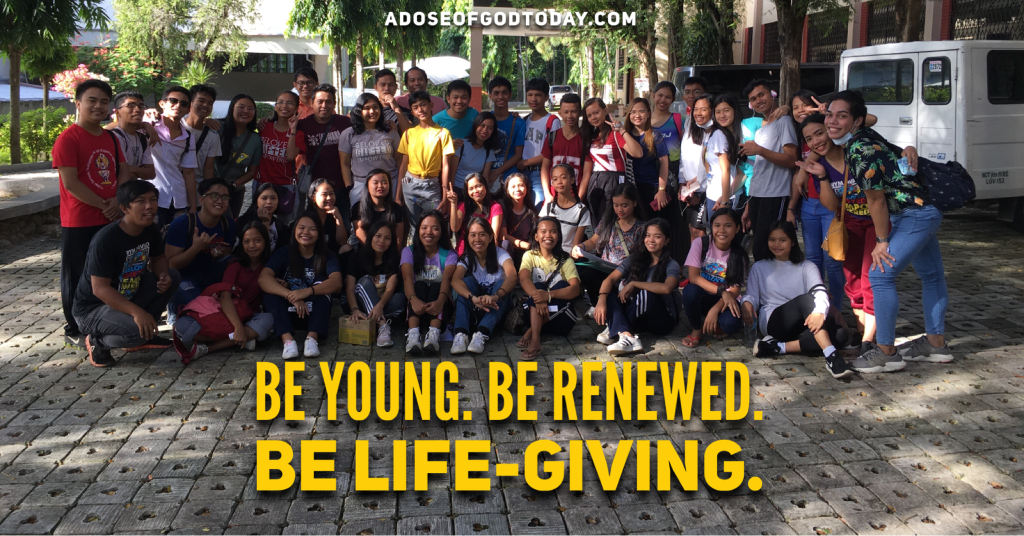
    First, BE YOUNG. Pope Francis reminds us that “God is Young and is always New.” This means that God really brings surprises and freshness in us because God is ever young. God will never have an expiration because God is always new. That is why, all of us who are God’s building and God’s Holy Temple as what St. Paul reminds us in his first letter to the Corinthians,  are called to be always young. Remember, we may grow old in age, however, to be “young at heart” is not limited to a particular age group. We may be young in terms of age, but when our heart is filled with anger and hatred, with bitterness and indifference, then, we have surely grown old. Moreover, to be advanced in age does not also mean that we will never be young at heart. Even when we have grown in age, a senior citizen may still be young at heart when he or she remains welcoming, warn-hearted, joyful and alert of God’s daily invitations. Let us remember the words of Pope Francis, “True youth means having a heart capable of loving, whereas everything that separates us from others makes the soul grow old.” Thus, be young and celebrate being young at heart.

    Second, BE RENEWED. As God is always new, God also brings fresh graces and fresh experiences. Our true relationship with God is always fresh, it will never be spoiled. Prophet Ezekiel tells us in the first reading that the water from the temple overflows and it reaches the barren and dry desert, and the water brings life. Salt waters also turn into fresh waters where every living creature shall live. This means that when we allow God’s love to transform us, to challenge and to call us, then God brings renewal into our dry and empty hearts. Hence, allow God today to reach our hearts to transform, challenge and call us  so that we will be renewed.

    Third, BE LIFE-GIVING. Jesus came to give us life. Jesus manifested his life-giving mission in his ministry. That’s why when there were people who suck the life of others, Jesus also expressed dismay and disappointment. This is what happened in today’s Gospel. Jesus drove out the merchants and money-changers who were sucking up the life of the poor through their scandalous and oppressive business inside the Temple area. When we turn out to be driven by our selfish desires and selfish intentions, we will also become vicious in our relationship with people around us. When we are more concerned in bloating our ego then we turn out also to become abusive and corrupt because our heart has become indifferent to God.

    However, such way of life is lonely because we will constantly be haunted by insecurity and fear. Certainly, there is no life here but sadness. Pope Francis in his latest Encyclical, Fratelli Tutti said, “go outside the self in order to find ‘a fuller existence in another.’ ” Meaning, that when we begin to think less of ourselves, to step outside our comfort zones, and outside our insecurities and fears, then, we also discover the fullness of life with the people around us. Thus, to experience truly what life is, is to be able to give life. When I commit myself fully to love another then I find joy and meaning in life. When I generously give something to someone in need, I do not only help a person but also experience the joy of helping another. Therefore, to live life joyfully and truly, is to be life-giving.

    Now, may I repeat the three invitations on this Day of Prayer and birthday of our Congregation, BE YOUNG, BE RENEWED AND BE LIFE-GIVING. Hinaut pa.

    Jom Baring, CSsR
  • Being a Christian and a Citizen

    Being a Christian and a Citizen

    October 18, 2020 – 29th Sunday in Ordinary Time; World Mission Sunday

    Click here for the readings (https://bible.usccb.org/bible/readings/101820.cfm)

    Homily

    You must be familiar with our own inconsistencies like for example, being a devout Christian in the Church but a vicious neighbor at home. Or being a devout Catholic on Sundays, but a corrupt person at work. Or observing faithfully religious devotions and practices but dishonest and unfaithful in our relationships. These are some of our inconsistencies that perhaps where we could ourselves.

    To be trapped in this kind of way of life makes us similar to the Pharisees who were only after gaining praise and recognition from others but filled with insecurities and evil intentions deep within. However, being a Christian, to be a Catholic is not just limited with our explicit observation of rituals, doing devotional practices and prayers. Our very identity rests on who God is to us. For us to discover and understand this a bit deeper, let us explore more our readings this Sunday and grasp God’s invitations for us, as Christians and at the same time as citizens.

    Prophet Isaiah in our first reading tells us who God is. Twice, Yahweh said, “I am the Lord and there is no other.” It affirms the power of God and that all others are subjected to him. Yahweh is supreme for in Him everything came into being. He is the source of all riches, all things and all life. That is why, King Cyrus of Persia who was considered by the Hebrews at that time, as God’s anointed, was only a subject to God’s power. Cyrus was chosen by God even though Cyrus did not know God.

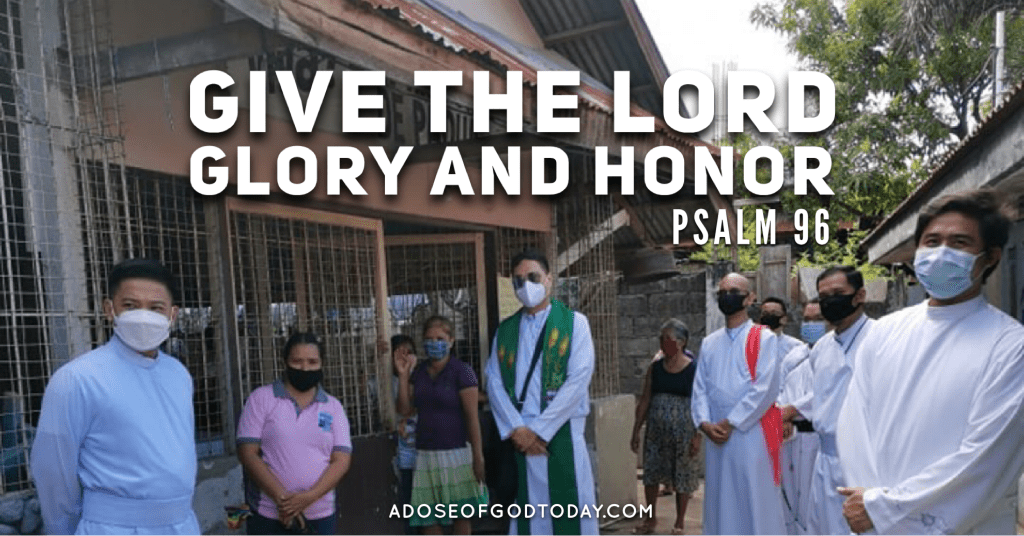
    Thus, our highest praise and worship only belongs to God who has called us and who blessed us with so many things. Our psalm also affirms this as it says, “Give the Lord glory and honor.”

    St. Paul in his letter to the Thessalonians gives us the hint on how to give true glory and honor to God. It is through “preaching the Gospel” in words and in deeds. This is our calling, the vocation of every Christian, of every believer of Jesus Christ.

    In the Gospel, Jesus reminded us of our identity, duties and responsibilities as we are to give Caesar what belongs to Caesar (which means the Emperor of Rome) but to give God what belongs to God. Yes, we are citizens of this Republic but we are also Christians.

    It means that…

    We have the duty to give due respect to our political leaders. To support and to cooperate with the leaders of the land. But remember, “they are not gods,” they are not to be worshipped.

    Thus, we are called to be responsible citizens of our country by exercising our rights as to vote during elections and even to protest when a law or a leader becomes oppressive to the people.

    We are called also to participate and cooperate in ways that will make our society peaceful, harmonious, just and progressive. We are called to do our duties well as citizens and to exercise justice and responsible leadership especially with those who are working in the government.

    But remember that we too are Christians. We are called to preach Christ, to preach the Gospel by our life, whoever we are and wherever we are.

    Are you a vendor, a driver, a teacher? You are called to preach the Gospel. Are you an engineer, a nurse, doctor, a lawyer? You are called to preach Christ. Are you a Tanod, Brgy Captain, a City Councilor, Mayor, Congressman? You too are called to preach the Gospel and to give glory and honor to God who has blessed you, who gave you influence, your family and friends and all the things you are enjoying now.

    Each of us is called to give glory and honor to God by our words, our deeds, through our professions, through our work and role in our society. It is in this way that we will be able to give to God what is due to Him.

    This call that we share as Catholic Christians of our country reminds us of what we celebrate today, the World Mission Sunday! This Sunday tells us that we priests, deacons, and religious are not the only ones who are called to preach the Gospel but each one of us. We who experienced and witnessed God’s goodness and mercy are called in the mission of preaching and spreading Christ to all, not just in our words but also in our actions.

    This identity makes us different from the rest of other Christian denominations because the call to preach the Gospel of Christ is not only limited in our Eucharistic celebration. My faith and your faith, is not only confined within the walls of our Church for an hour on Sundays.

    Our Christian belief, our confidence in the risen Christ calls us to actively participate and to involve ourselves in all aspects of human life and the whole community not just in the spiritual aspect but also in cultural, social, economic and political aspect of life. This is the beauty of being a Christian and a citizen.

    May we always remember this and become true Christians in the way we live our life, in the way we perform our work and in the way we relate with others and with one another so that we will be able to give God what truly belongs to Him and become true to our identity as Christians and citizens. Hinaut pa.

    Jom Baring, CSsR

  • Painful and Negative Experiences Can Be Opportunities For Growth and Freedom

    Painful and Negative Experiences Can Be Opportunities For Growth and Freedom

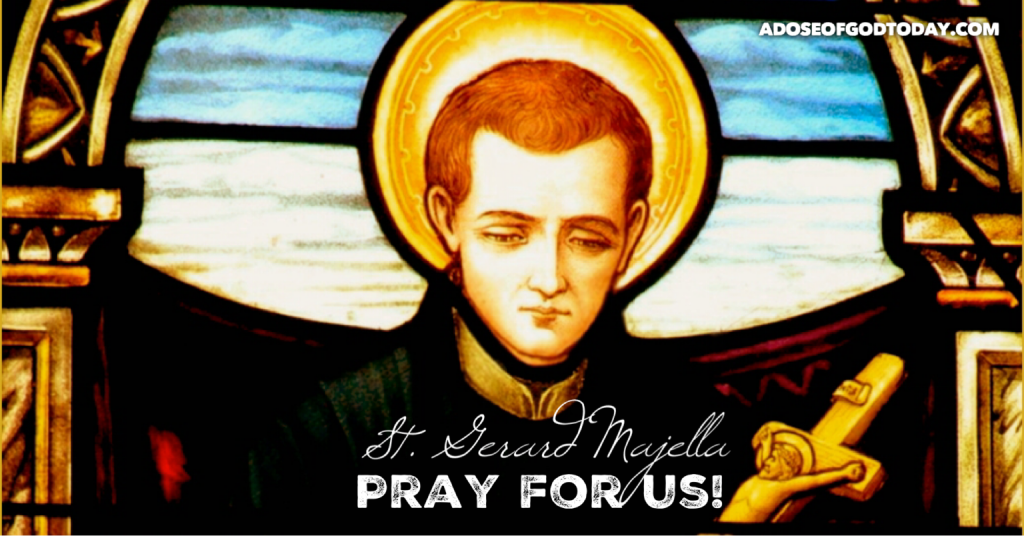
    October 16, 2020 – Feast of St. Gerard Majella,CSsR – Redemptorist Brother

    Homily

    When we experience rejections and deprivations in life, is it not that we also experience discouragements? And when there is a series of tragedies happening in our life, we would certainly feel desperate and begin to have a sense of hopelessness. A possible reaction could be self-blame, or blaming others or blaming God because of the unfortunate events in our life. This is a possible reason why there are people who would yield to a very low self-worth and low self-esteem because of such negative experiences. For others, this leads to desperation, depression and chronic loneliness. Others too would go to the other side that leads to a life filled with bitterness and then to that desire to always seek recognition, acceptance, and satisfaction. To compensate what had been deprived, what was lost or lacking, the person may seek them in many ways. When these desires remain unconscious and become unsatisfied, the person turns to be selfish, corrupt and abusive in his or her relationships.

    However, negative experiences can also become opportunities for us to grow more as a person and into how God desires us to be. Our painful experiences of rejections, deprivations and even traumas in life are also doors that will lead us into a life filled with confidence, meaning and freedom.

    This possibility of living life fully is the life shown to us by St. Gerard Majella whose feast we celebrate today. Before St. Gerard was known to be a patron for mothers and particularly in time of pregnancy and for their infants, the young Gerard experienced hardships.

    At a very young age he was deprived of a father. His father died and being the only boy, he became a father to his sisters. Though he was very young, he was forced by that circumstance to work and support his family. Consequently, the hard work that he endured caused his health to fail. He had a very poor health as a young man. However, despite these difficult circumstances, Gerard was never bitter towards others who were better and well-off. He never blamed God for the difficulties he experienced.

    In fact, Gerard desired that he will offer his whole life in the service of God. But then, because of his poor background and poor health, he was rejected by a religious congregation that he wanted to join. Despite this rejection, Gerard never wavered his decision. When the Redemptorists came in his hometown, he was inspired by them and asked to join their group. Again, because of his poor health, he was rejected. But because of his persistence, he was able to join, but the Redemptorists reluctantly accepted him.

    In terms of intellectual capacity, Gerard was very far from St. Alphonsus, yet, what inspired the people around him was his sincerity. In all the things that Gerard did, he was always sincere, kind and grateful. The words that he expressed were filled with sincerity. Gerard was not after any recognition or just to satisfy his cravings because of the many deprivations in his life.

    Gerard was just happy and sincere because he was very confident with Jesus. His confidence and intimate friendship with the Lord made this poor and sickly Gerard satisfied and filled with gratitude. This is the very attitude proclaimed in our Psalm today, “You are my God, my only good.” Consequently, the very presence of Gerard uplifted and inspired others particularly those who were afflicted with illness, with loneliness, with poverty and other needs. Thus, even in his poverty, Gerard was generous; even in the midst of rejections, Gerard was most compassionate.

    In the same way, Paul expressed this in his letter to the Philippians, he said, “I regard everything as a loss… for his sake I have suffered the loss of all things, and I regard them as rubbish, in order that I may gain Christ and be found in him.”

    This is what Jesus told us in the Gospel today. The life of Gerard was a concrete example after Jesus, of a seed that dies and bears much fruit. Those painful and negative experiences of Gerard were his experiences of dying; his choice to make others happy and to bring others closer to Jesus were his ways of self-denial and denial from his personal cravings. Hence, by his sincere actions and words, Gerard’s life bore much fruit.

    This is the message also for us today. Let us not allow our negative experiences of rejections, deprivations and traumas to bring us farther away from ourselves, away from others and away from the grace of God. Let us rather make them as opportunities for us to grow deeper in the knowledge of ourselves, in our relationship with God and others. As we become sincere and more grateful in our words and actions, we may also become God’s instruments in bringing miracles in your community. Hinaut pa.

    Jom Baring, CSsR