
November 20, 2022 – Solemnity of our Lord Jesus Christ, King of the Universe
Click here for the readings (https://bible.usccb.org/bible/readings/112022.cfm)
What is your image of a king? How does he look like? What does he do? With so much influence from the cartoons, anime and movies that I watched since I was young, I would imagine a king who wears a golden crown, covered in a golden robe, sitting on a golden throne and living in a big palace. In fact, in the middle ages, a king is a powerful man who has thousands of armies, defeated countless enemies, or conquering other territories by waging bloody wars. Yet a king is untouchable. Commoners, slaves and servants cannot talk to him directly. Everyone serves him and pays tribute to him. His throne is too far from the ordinary people.
Even up today, in other countries in the world some have kings, or emperors or sultans who give identity to their people and serve as a symbol of unity in their own kingdoms. They may not anymore engage in bloody wars unlike before, but still they have enormous wealth and riches. The royalties are reserved and ought to be served by the people.
This is not far from how we imagine Jesus Christ our King. Influenced by the western culture of royalties, we also imagine Jesus Christ the king who wears a golden crown, wrapped in a golden robe and sits on a golden throne. However, this image, for me, seems to be a distant king who does not know the daily affairs of his people. A king who merely shows greatness, triumph and wealth, but has no concern and no close relationship with his own people.
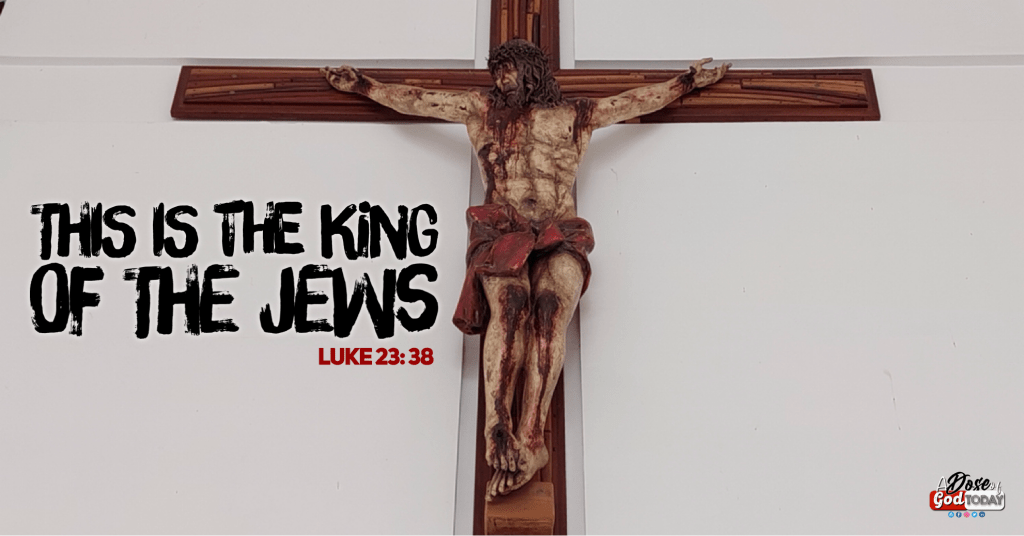
Indeed, the kingship of Jesus is not one who stays in a comfortable throne and pampered situation, but in a humiliating and humbling position, there on the cross. Yes, the Gospel speaks nothing of a king who is intoxicated with comfort and riches. What we have is a powerless king, crucified on the cross. This is Jesus’ statement that he is not an earthly king who only shows grandeur, control and domination over his subjects. He is a king who became like us, who lived with us and journeyed with us in every story of our life especially in those difficult and dark moments of our life. He is a king who knows your pain, who understands your struggle and who desires you and me, no matter what.
He is not an unreachable king sitting there on the high golden throne but he is a God-with-us (Emmanuel). He is a king who knows us and our deepest secrets and desires. But he is a king who does not control and impose himself on us. He only calls and invites us to come to him. “Come to me and be embraced by my friendship,” this is the invitation of our King to us.
This is the very reason why Jesus’ determination to call us and to gather us brought him into that difficult situation. Despite the danger and the suffering he would endure as king, he is always ready to take the risk to offer his life for our sake, that we may have freedom and healing. We find now his invitations for us through the three different people in the Gospel and their individual response to Jesus. So, let us look at them once more and discover how we are all called today, young and old alike.

The first was the group of people such as the Jewish authorities and soldiers. These people refused to recognize Jesus as King and Messiah because he was a threat to them, a threat to their comfort, a threat to their influence and threat to their earthly power. Their hostile rejection of Jesus was a decision they made despite the invitations of Jesus for them to believe in Him. Jesus did not condemn them, he even asked forgiveness on their behalf. God’s offer of salvation and life is for all. Yet, our rejection of God’s friendship is our self-condemnation.
The second was one of the criminals who insulted and reviled Jesus. He was actually confused and did not make any stand. He was lukewarm. He neither condemned Jesus nor accepted him as Lord, King and Redeemer. Despite the closeness of God in him on the cross, he did not recognize God in Jesus because he was still full of himself. He was unrepentant. Indeed, the Lord never imposes himself on us, but he waits for us.
The third was the other man on the cross. He was the one who recognized God in Jesus and decided to accept Jesus as his Lord. This made him say, “Jesus, remember me when you come into your kingdom.” Being powerless on that cross, he was able to recognize the face of the Lord, his king. This person felt a God who accompanied him in his suffering and even towards death. Through his very suffering, he found God to be so close to him. In his shame and guilt, he found God at his side forgiving him. Jesus indeed, is the image of the invisible God, as Paul told us in his letter to the Colossians.
This tells us now of a king who is close to us. Jesus is not a king who is distant from our sufferings and fears but a king who patiently and lovingly walks with us. God, indeed, meets us where we are and he is ready to be at our side in order to encounter us in the saddest and darkest part of our life.
Yet, let us also remember that Jesus requires our participation, our response. To every person that Jesus met, he gave them the chance to recognize him but the hardness of their hearts and because of their arrogance, they refused to see Jesus. But with this other man on the cross, in recognizing his sins and failures in life, that brought him into that realization that he was in need of God. This means that when we humbly recognize our weaknesses and sins we also recognize God’s love for us. This becomes, then, an opportunity for God to transform our life. And so let that redeeming love, that un-imposing and self-sacrificing love of our King who hangs upon the cross to embrace us, to renew us and to empower us as young people and as God’s people. Kabay pa.


 A DOSE OF GOD TODAY