When you come to church, when you pray, and beg the Lord – what do you ask? What attitude do we have in asking the Lord for grace? What inner desires do we foster as we beg the Lord?
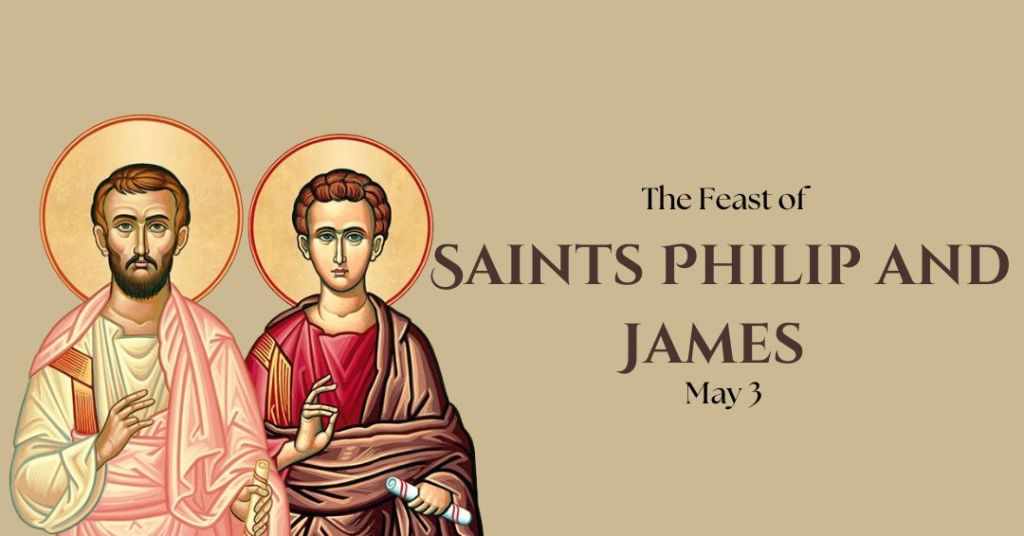
On this feast day of Sts. James and Philip, Jesus tells us, “if you ask anything in my name, I will do it.” But, what does it mean anything? And what does it mean to ask in Jesus’ name?
Does Jesus mean that we can just ask anything we want? Does it mean that I can also ask Jesus to give me a lifetime premium subscription on Netflix with an unlimited supply of popcorn and bottomless four-season juice drink? Or can I also ask Jesus to make me Summa Cum Laude this coming graduation? Is this the kind of prayer that Jesus invites us?
Today, Jesus tells us to ask “in his name.” The beauty lies in the prayer that considers the desire of God for us. It means that in our prayer we do not forget Jesus. We do not forget Jesus’s desire for us and his will for us.
This tells us of our relationship with Jesus. This should not be understood as a mere limitation with the options we have in asking. Instead, “asking in his name” widens our perspective in asking grace from the Lord.
This invites us to a deeper awareness of Jesus’ heart, of Jesus’ desires and of Jesus’ plans for us. It is certain that what Jesus desires for us is always good, always for our growth, always for our freedom.
Therefore, to ask in Jesus’ name is to allow letting go on what we only want. We let go also of our own preferences which may be influenced by our selfish desires, guilt, sin and evil.
Instead of praying – “this is what I want and wish Lord,” ask and pray rather first in this way, “what is your desire for me Lord?”
Only then that we will be able to get away from our selfish tendencies and intentions because we shift our focus from ourselves to God. We begin to shift from praying that comes only from personal wants to praying in his name.
This is now our prayer and our desire that in asking grace from the Lord, we may also grow more in our knowledge of Jesus. Know Jesus not just on our head level but also of the heart.
Through the intercession of St. Philip and St. James, may we dare to encounter the Lord among our brothers and sister; to encounter the Lord in our human experiences; and to encounter him in our daily struggles in life. Hinaut pa.
Prayer is one of pillars in this Season of Lent. As we are called in this season to return to God, to mend our hearts and relationships with one another, prayer plays a vital role. We remind ourselves that prayer makes us more aware of God’s presence in our life. As we become aware of the Divine, then, it also allows us to recognize ourselves together with our faults and failures. Hence, to humble ourselves before God makes our prayer more effective.
This also tells us that prayer is indeed not limited with our memorized and devotional prayers. Moreso, it is allowing ourselves to be intimately connected with God. This is what Jesus revealed to us today.
In the Gospel of Matthew, the Lord teaches us how to pray. Jesus himself taught us how to approach the heart of God. this is expressed with a greater confidence to God whom we also call as our Father. Jesus directed the disciples on how to truly ask and seek the will of the Father by praying sincerely.
This is where we also find Jesus’ warning. The Lord exhorted us not to babble in our prayers that are only meant to impress people. Jesus was conscious how the pagans would use many words but merely babbling. This was influenced from the beliefs of the pagans to use many words in order to appease a violent and angry god.
Yet, our God is not violent neither angry not needed to be appeased. God, as Jesus introduced to us, is our Father. In fact, the Psalm acknowledges this, “the LORD is close to the brokenhearted; and those who are crushed in spirit he saves.”
By calling God as our father, this brings us into the affection that we have with God. God certainly loves being called as our Father, whose only desire is for us to grow in love.
This invites us now that our prayers and other forms of devotions are not meant to impress others. Do not pray to flatter or manipulate the Lord because of our long, wordy, high-falutin and unintelligible prayers. Instead, the Lord wants our sincere and humble heart that recognizes God as our Father.
The Lord’s Prayer brings us, indeed, into sincerity and humility because the prayers acknowledges first God, as our Father whose “divine will” takes priority than our own. Thus, we seek and recognize the will of God for us and not our wants. This brings us to be more aware of our needs of the present moment, of today, and not to be burdened by our past or to be anxious of tomorrow.
This is very important to remember that the prayer Jesus taught allows us to be more aware of our present moment, of our needs and graces of the here and now. This will make us more contented and confident in life for we shall see how God provides and works for us in the present moment.
Jesus invites us and teaches us on how to seek God’s desires because God knows what is best for us by praying the way he prays. May this simple but powerful prayer of our Lord gives us more confidence in the presence of God dwelling among us whose only desire is the best for us. Hinaut pa.
The Season of Lent begins today. Just few days ago, our Muslim brothers and sisters also began their month-long Ramadan of fasting, praying and giving. This is an invitation to be spiritually nourished, to be closer and more intimate with God and with the rest of the community.
As Christians too, this 40-day Season of Lent also brings us into that season of praying, fasting and giving. In today’s liturgical readings we are called to make our whole heart available and free for God and for others. In the Book of Prophet Joel, the Lord says, “return to me with all your heart…rend your hearts and not your garments…return to the Lord, your God.”
Hence, there are three best practices that by tradition as also revealed in the Holy Scriptures, would make our desire of returning and mending our closeness with God and others to be possible.
First, Prayer. It is an invitation to be closer to God by becoming more aware of God’s presence in our life. Prayer is not limited with expressing and blurting out what we need and want. Prayer is first and foremost our way of relating, communicating and being intimate with God who is faithful and loving to us despite our sinfulness and imperfections.
Prayer brings us closer into God’s presence so that in humility we recognize our own limitations and sinfulness. We realize that when our prayer focuses on God rather than on our personal wants and needs, the more we also see and know clearly who we are. Indeed, awareness of God brings us into self-awareness.
In prayer, we do not have to use plenty of words. To sit in silence for few minutes and being aware of God’s tremendous presence in that very moment would suffice and bring us into a greater consciousness of ourselves and of the needs in our community.
Second, Fasting and Abstinence. As we become aware of God, it helps us to be more aware of ourselves. Fasting and abstinence are invitations for us to recognize our thoughts, habits, behaviors and ways that prevent us from becoming closer to God and to others. Fasting and abstinence are not limited in consuming pork and beef or to other comfort foods. These are forms of self-denial so that we will be able to make ourselves free from those that are holding us back in doing good and expressing our concern.
So, we can alsoreflect and discern deeper. We can ask questions like – what is it that I will make myself free for this season of lent, what vice shall I stop or regulate? What habit or attitude shall I minimize? What thoughts and cravings should I discipline?
As we confront these questions in us, we also confront our selfish tendencies. In hope, this may make us take a step in going out of our comfort zones in order to encounter God and others.
Third, Almsgiving. The Lenten practice of almsgiving is a way of making ourselves generous to those who are in need. We recognize that prayer makes us aware of God and ourselves. Fasting and abstinence form our heart to be free and available for others. And so, almsgiving is giving ourselves for the sake others.
Almsgiving is not limited to giving few coins to a poor beggar or a spare of our material resources. To give alms is to generously give what is dear to us. We allow ourselves to be the gift to others.
We can also ask ourselves and discern more, “what is it that I can generously and joyfully give to others? Is it my time and wealth, talents and knowledge? It is my presence and comfort? My helping hand and listening ear? My understanding and love for my friends and family members? My concern, sincerity and honesty in my work?”
Empowered by hope for renewal, may we enter this Holy Season of Lent with the grace of Holy Spirit. Hinaut pa.
February 20, 2025 – Thanksgiving Mass (Baccalaureate)
Mt 7:7-11
A reading from the holy Gospel according to Matthew.
Jesus said to his disciples:
“Ask and it will be given to you;
seek and you will find;
knock and the door will be opened to you.
For everyone who asks receives;
and the one who seeks finds;
and to the one who knocks, the door will be opened.
Which one of you,
would hand his son a stone
when he asked for a loaf of bread,
or a snake when he asked for a fish?
If you, then, who are wicked,
know how to give good gifts to your children,
how much more will your heavenly Father
give good things to those who ask him,
do to others what you would have them do to you,
this is the Law and the Prophets”
I would like to ask you first to look at the person beside you now, on your right and on your left. Look at that person and say “thank you.”
It is just fitting for us to say thank you to people around us; especially, to you graduates, to be grateful to people who have been part of your journey as students. And so please take time to express your gratitude to your friends and classmates, to your teachers and the non-teaching staff of this university, to your nanay and tatay and your brothers and sisters here in the Chaplaincy, to your parents and siblings, and of course to God the source of all wisdom and knowledge.
Now, as you go forward in life with your different paths and career; you will have a new environment, new people to meet, new experiences to behold, new realizations and discoveries that will mold you and mistakes and failures that will continue to teach you lessons.
As you go forward, I want you to remember always to have an attitude of GRATITUDE, of just being thankful as a person. So, if I would ask you, “With all the pains and joys, successes and failures, sins and graces, how grateful are you today?”
GRATITUDE makes us see what surrounds us, both the good and the bad. GRATITUDE also allows us to be embracing and accepting of the things and people around us. It is when we are grateful too that we become joyful persons. We shall see the goodness and uniqueness of others. Through this joy within us, we also become aware of God’s tremendous generosity to us despite our weaknesses and sins. In fact, this is what we recognized in our Responsorial Psalm, “We are nourished by the hands of the Lord.” The Lord indeed, is generous and provides what we need.
And so, as we express our thanksgiving today on this special day of your life, remember that when we become joyful, we also become generous of ourselves towards the people around us, no matter who they are, whether they are our friends or strangers. Such acts of joy and generosity are expressions of a heart that is filled with gratitude.
However, if our heart is without gratefulness but rather bitter, hateful and vengeful because of our personal failures and failures of others towards us, then, we become close-minded, rejecting, and vicious in the way we relate with one another and even in the way we relate with God.
And so let us discern together how the Lord invites us today to grow in this confidence of being grateful particularly as we grow in our Christian faith and in prayer as our way of life.
In Matthew’s Gospel, Jesus tells a parable to his disciples that basically highlights the attitude of persistence in prayer. “Ask and it will be given to you; seek, and you will find; knock, and it will be opened to you. For the one who asks receives, and the one who searches finds, and to him who knocks the door will be opened.”
Jesus tells us of the generosity of the Father and of His availability for us. It signifies that God wants to give what is best for us and what is wonderful for us. Yet, what Jesus tells us should not be misunderstood also. We might think that we can just ask anything we want according to our selfish desires.
True prayer keeps us away from our selfishness but brings us closer into God. This means that this relationship found in our prayer is a process of letting go of ourselves and letting God to work in us. This can be possible when we also learn to ask, to seek and to knock. This is an invitation for us to grow in confidence with God despite the many uncertainties that we may face in life, whether in our relationships, in our personal struggles, in our work and in any endeavor we are in at the moment.
Thus, ask the Lord but we can only ask the Lord once we know what we desire. Hence, name what you desire. Name your problems to be solved. Acknowledge your concerns and recognize your issues. Only then, that we will be able to allow God to work in us.
Moreover, Jesus would like to remind us that in these many areas of our life they also require more than asking. We too are in need to seek. This means that prayer is also a form of searching what is hidden or what remains undiscovered in us. To pray is not about searching God but to seek ourselves and to let God find us.
Thus, seek for a deeper insight, seek for understanding and wisdom because God answers us not outside of us but within our own context, experiences and relationships.
After such understanding and unfolding of mysteries in our life, we also want to move on, to go forward to where God is leading us. This requires now the attitude of knocking, which means seeking entrance, to enter into it. We might have realized that we have been so hurt by a loved one or a friend who betrayed us. And the pain that we have experienced made us inaccessible, scared and resistant to forgiveness. Now, Jesus tells us to knock, to look for an opportunity to take the risk of entering. Indeed, knocking a door is a risk because knocking here does not only mean one knock but a persistent knock repeated many times until the door opens for reconciliation and peace.
The Lord in his mercy wants us to exercise our freedom, that we can make a choice for ourselves. To knock God’s door will lead us to many opportunities for growth, for peace and freedom. Jesus assures us that as we come before God to boldly and persistently knock, it shall be opened to us. God would willingly and lovingly open his door of forgiveness and affection to embrace us and to welcome us.
In this way, we become children who are transformed into the likeness of Jesus, who will not throw tantrums when we do not get what we want just for our selfish reasons, but children who are fully aware that God’s desire for us is far better than our own.
Therefore, as we ask, seek and knock may these become the very attitudes of our heart so that it will be molded into a grateful heart that finds God’s abiding presence and faithfulness in our life.
Let us be more grateful then of the gifts and blessings that we have already received each day, no matter how small that would be. But if we have received so much also, be more thankful and be more generous.
Remember, a grateful person is a person who goes forward, because when we are grateful we also become contented of the present, whatever there is. We also become reconciled with the past, whatever that was. And we become hopeful and positive of the future, whatever there will be. So, be grateful as you go forward by building and cherishing your relationships with your family and friends and people whom you will meet along the way of your journey. Be grateful and be generous! Hinaut pa.
Christmas is a joyful season. The music, decorations, the variety of food and the many gatherings during this season give the festive and joyous atmosphere. Yet, the liturgy today, just a day after the birth of Jesus reminds us how faith and commitment to the Word-made-flesh will make us a contradiction to many.
Indeed, yesterday we celebrated the joyful birthday of a child and today we celebrate the cruel death of an innocent man. In some ways, the birth of Jesus led to the death of Stephen, one of the first deacons of the church and the first Martyr. Stephen was put to death because of his faith in Jesus, declaring him to be the glorious Son of Man standing at the right hand of God.
St. Luke describes Stephen dying with two prayers on his lips. First, a prayer of surrender, “Lord, Jesus, receive my spirit.” Second, a prayer of petition for his executioners, “Lord, do not hold this sin against them.”
When Jesus was dying on the cross, he had two similar prayers on his lips as well, a prayer of surrender, “Father, into your hands I commend my spirit” and a prayer of petition for his executioners, “Father, forgive them for they know not what they are doing.” We can see that Jesus prays to the Father while Stephen prays to the risen Lord.
Mary’s child is now the risen Lord and can be prayed to as we would pray to God. In the church, we often pray to the Father through Jesus, but we are also invited to pray directly to Jesus. Stephen died as Jesus died because he was “filled with the Holy Spirit.”
We have been given the gift of the same Holy Spirit, and it is the Spirit who empowers us both to live like Jesus and to die like Jesus. On this feast of Saint Stephen, we pray for a fresh outpouring of that Spirit into our lives in this Season of Christmas that we may also be filled with grace and power like him. Hinaut pa.






 A DOSE OF GOD TODAY