Paul’s letter today reveals how warm his heart to people who were significant in his life. The Philippians who were Paul’s converts had a special place in his heart. This is how Paul also expressed his affection and longing of friendship with them. Moreover, Paul was even more grateful for the friendship he had with the Philippians, something that gave so much confidence and strength to Paul.
This tells us how friendship supports and gives assurance to people especially in difficult times. Paul was in prison, probably in Rome or in Ephesus, when he wrote his letter to them. While in prison, Paul must have a hard time. However, his friendship with these people was a source of comfort to him. Remembering them gave him joyful memories that must have eased the pain and loneliness while being persecuted.
Paul, indeed, gave life to this community through his ministry of preaching of the good news. In return, the community also gave him the Spirit of friendship and love.
This is a true loving response between people bounded in their friendship with the Lord. Paul’s deep friendship with the Lord compelled him to preach Jesus and bring the Risen Lord to the communities he encountered. Those communities like that of the Philippians developed such friendship too with one another and with Paul that mutually guides, supports and gives life to them.
Such loving response is the prayer of Paul also to the Philippians, he said, “and this is my prayer: that your love may increase ever more and more.”
This kind of loving response is what we also witnessed in today’s Gospel. Jesus seeing a man suffering from dropsy was moved to heal and free the person. Jesus had so much affection for this man that he could not stand anymore seeing him suffering. The Lord’s desire was for every man and woman to have the fullness of life.
Despite the very situation of Jesus, he took the risk of healing the sick man in front of the those powerful people, the Pharisees. Though the Pharisees were silent when Jesus asked them, “Is it lawful to cure on a Sabbath or not?,” but their silence was filled with malice and hostility against Jesus.
Jesus took the risk because what he had was a loving response to a person in need. What matters most was his action to love and to assure the person that God has not left him.
This is what Jesus is also reminding and calling us today. We are called to respond in love and show our affection to people. Like Paul, let us also show with confidence our love and affection to those who are special in our life. Like Jesus too, let us not forget to assure, even the strangers, that as Christians, we are here to love and show concern to those who are in need. Hinaut pa.
Who wants to be corrected? Who wants to be criticized? Being with our friends, with our family or with a community, we cannot really avoid conflicts and tensions. However, a particular difficult situation can be more problematic when we become unwelcoming to corrections and to criticism.
Jesus, in today’s Gospel offers us practical steps to overcome such situations in order to arrive in a mature way of attaining peace and reconciliation.
Let us also bear in mind that because of the biases and discriminations that have been built up in us, we can become vicious when we are confronted by others because of our faults. That’s why, Jesus told us how to approach gently a person when we confront them of their faults or when we are being confronted. Yet, knowing that we can exercise forms of denial and refusal to admit our mistakes, then, Jesus affirms the need of the participation of the community. The Lord affirms this as he told us, “for where two or three are gathered together in my name, there am I in the midst of them.”
Before I proceed deeper into the participation of the community, I would like to invite you that we look first and remind ourselves of our tendency to deny and refuse to be confronted and criticized of our sins and failures.
Thus, I would like to share with you the two forms of denial that may become our attitude when confronted by others.
First, when confronted, we might tend to overemphasize the faults of others yet; there will be no acknowledgement of our personal defects and sinfulness. This overemphasis of the faults of others is a mere cover up of one’s skeletons hidden in the closet. It is a way of taking revenge cruelly.
Second, when confronted, we could display an air of self-righteousness and arrogance in our hearts; claiming that we are always right and good and never committed any mistake. As a result, we could become violent to our critics and would even seek to destroy them. This kind of attitude boasts oneself of his or her good image but hungry of recognition and praise from people around him or her.
Moreover, there is actually wisdom and goodness in criticism in itself and by being confronted by others. This is how others, friends, family members and our community play a big role in conversion and transformation.
Nevertheless, we also remind ourselves also of these two kinds of criticism. There is a constructive criticism and destructive criticism.
A constructive criticism seeks the good of my brother and sister. In this criticism, we do not seek to ridicule the person but to help the person to grow and learn from mistakes and failures. It gives both positive and negative feedbacks. This is done with honesty and sincerity. St Paul in his letter to the Romans reminded us too to express our love for one another. Indeed, in this way we express it concretely because this seeks the good of the others. We fulfill, then, the law, because it does no evil to our neighbor, but goodness and love.
This is basically what Jesus offers us in the Gospel today.
Jesus offers us to do it intimately and confront the person personally. If this will not work, then, Jesus suggests to bring a common friend to serve as a mediator. Yet, if the two will not work and the person continues to refuse, then we seek the judgment of the community or of the Church.
On the other hand, what we avoid and what Jesus does not want to happen is when we choose the destructive criticism, which is hateful because it desires damage to my brother and sister. It is destructive because it puts down and humiliates the person and has no desire to help the person to grow and to learn. Destructive criticism is a mere accusation that is filled with bitterness and hate.
Thus, this is done with evil intent. It is usually done when we talk behind the person in initiating, perpetrating and joining others to destroy the image of a person, like in gossiping.
Advertisements
Jesus does not want us to be that bitter and hateful accuser of our brothers and sisters but rather disciples of him who are humble enough to recognize our wrongdoings, and courageous enough to speak what is unjust and oppressive around us. Jesus desires that each of us becomes free by being able to recognize our sins so that transformation of hearts will be possible. It is in this way that we become a help to one another, so that as parents, leaders, mentors and authority figures, we will not be leading others blindly but with humility and willingness to be corrected, affirmed and challenged.
This is where we can find the need of the participation of the community, and that is to be united in prayer. To be united in prayer is to become discerning both in our words and actions. To be united in prayer also practically suggests that we are in a community, and we are a community. When we become united in prayer, then, we allow the Lord to be present in us.
Thus, to be able to truly confront the sins and failures present in our community, we are called also that we unite in prayer. This also include that we bring, in the spirit of prayer, our effort to confront and correct one another so that we will grow and become the persons God wants us to be.
To be united in prayer is not just about asking God’s favor to grant our petitions. To be united in prayer then, is to pray in the name of Jesus and that is according to the mind, heart and will of the Lord.
To be united in prayer also means to change our hearts and minds according to the will of God and not changing God’s mind and heart according to our own desires. As a community, this will help us to be able to trust in God and to give our hearts to God so that we can grow according to God’s desire for us. Hinaut pa.
How do I pray? What are those that I usually ask from the Lord?
Others usually pray spontaneously asking what they want and desire for themselves and for their loved ones. Others also are more comfortable of using the memorized prayers as forms of meditation and deeper reflection of the mystery of God. We usually ask many things from the Lord. Others would even have a litany of requests and petitions. And as a form of asking God’s favor others would even observe number of days of prayer, like observing 9 days novena, or the 9 days Misa de Gallo during December, believing that God would grant ones desires and prayers.
Well, today we are starting the first day of our novena in preparation for the feast of our mother. I am sure all of us, devotees of our mother have countless petitions these days especially as we are now experiencing a very difficult time. People get sick of corona virus that has no vaccine yet. As a result, our movement has been limited to stay at home. People are having so much difficulty with the status of their jobs and businesses. Others get paranoid of getting sick and some have become anxious of what lies ahead and on what the coming months are offering us. We might have friends and family members too who have become desperate while waiting for their turn to come home as thousands of OFWs and migrant workers were left at the mercy of their Local Government. Thus, the environment itself that we have now has become gloomy and stressful.
Our theme for today’s novena really speaks of this recent experiences we have now, “OMPH: Source of Help for Families Fragmented for Various Reasons.” Even before this lockdowns and quarantines, we come and ask the help of Mary for our families suffering and being tried from various reasons. Hence, our own family might be wounded by broken relationships, by unfaithfulness and betrayal, poverty, sickness and death. Moreover, covid-19 joined and added to these current concerns we have and has made more difficulties in our families.
Advertisements
Thus, we, as devotees would always find comfort and recourse to Mary, Our Mother of Perpetual Help. I have witnessed it myself recently also. The gate of our parish is left open at some certain time of the day to welcome people to pray in the Church. One afternoon as I was walking in the Church grounds, a woman caught my attention as she prayed before the Icon of Our Mother displayed at the entrance. She stayed there gazing at the icon long enough for me to notice her. Perhaps, she too has been carrying so many burdens and has ran to Mary to ask for help. For many of us, that has been our experience too.
As many concerns are brought into our prayers it would be good also to take a look in the way we do our prayer, of the intentions we make in our prayer and of the consciousness that we have in our prayer. This is something very important too because this will help us to evaluate our personal relationship with God and with others.
Now, in today’s Gospel Jesus reminds his disciples of the importance of prayer and also of the importance of the kind of consciousness in their prayer.
Jesus mentions about the way the pagans pray. These pagans love to use many words in their prayers because they believed that it was in that way that they would be able to get the attention of their gods and goddesses. They believed that these gods and goddesses were unforgiving, impulsive and frightening. These pagans babbled in their prayers in order to get the favor from these difficult and terrifying deities.
However, Jesus reminds his disciples that our God is not like that. God is not vengeful, not inconsistent or terrifying but rather God is loving and forgiving. Hence, to use many words would not be necessary because God knows the desires of our heart.
Moreover, as Jesus reminds his disciples, he also tells us now that our prayers are not meant to appease an angry and hateful god or to gain favor from a terrifying God. This also means that the content of our prayers should not be self-centered. To pray is not just to ask something for ourselves but also for others. That is why Jesus taught us his own prayer.
This prayer starts with these two words, OUR FATHER. It did not say My Father and not even Their Father. This tells us that when we pray we always remember others. We are always together as people. Our relationship with God though can be personal but it is also founded in our community. That is why it starts with “OUR” because this includes you and me and everyone else.
This prayer (Our Father/Lord’s Prayer) tells us that God is a Father. This means that God relates to us personally. God is not somewhere out there who is so far away from us but God is here with us. This means also that we are invited to seek God’s will and God’s desire not just our desire. Most of the time, when we pray we only think of what we want and desire but we forget to ask, what is it that you desire for me Lord?
It invites us also to become dependent to God because God is generous and faithful to us. To pray, give us this day our daily bread, means to be more focused of today, this day not tomorrow because tomorrow has not yet come. Indeed, we can be too anxious of what will happen tomorrow that it will prevent us to see what is more important today. Thus, Jesus invites us to be more contented of today and to ask sustenance enough for today also.
Notice also that in this prayer, it recognizes our sinfulness and need to be forgiven. It is necessary that we become humble and ask God’s mercy because this is the way that we make ourselves open to God’s grace. When we remain arrogant and unrepentant of our sins, then we prevent God to transform us and prevent others to come into our life.
Advertisements
And finally, we make ourselves aware that there is also the presence of the evil one around us. The evil one constantly tempts us to move away from God and to cut our relationship from the Lord. The evil will always try to allure us to think that it is better not to pray and that we do not need God. The evil will seduce us to think that we can do everything in our power without the help of God and that we do no need to think of others but ourselves alone.
In this seemingly hopeless situations, the evil one may tempt us also to believe that we are beyond hope, beyond salvation and beyond the grace of God. Thus, the evil one may bring us into a hopeless scenario to bury ourselves into self-doubt and guilt, into depression and death. Be careful then of these temptations.
So hopefully, being made aware of the consciousness behind the Lord’s Prayer, we too shall grow in our relationship with God and with one another, that we may become less self-centered and self-serving but to become self-sacrificing and life-giving as God desires us to be.
May our devotion then to Mary, Our Mother of Perpetual Help, bring us closer to the real source of our hope and help, to Jesus. Hinaut pa.
During these days of Covid-19 pandemic when Churches were forced to close and people to be quarantined at home, we have also realized how we need each other’s prayer. Prayer gives us comfort in these difficult times. Prayer helps us develop a close and intimate relationship with the Lord despite the deprivation of the public celebration of the sacraments.
To pray for one another has given us hope too. To pray has helped us to grow in our faith and widen our consciousness to respond to those in need.
Today’s Gospel reminds us of the intimacy Jesus shared with his Father. This is evident in the way the Lord Jesus prayed to his Father in heaven. There is tremendous confidence in Jesus and at the same time, that oneness he has with the Father. This is expressed by Jesus saying, “everything of mine is yours and everything of yours is mine.” This is how the glory of Jesus is also the glory of the Father. Hence, the suffering and pain of Jesus at his passion and even death is also shared intimately by the Father.
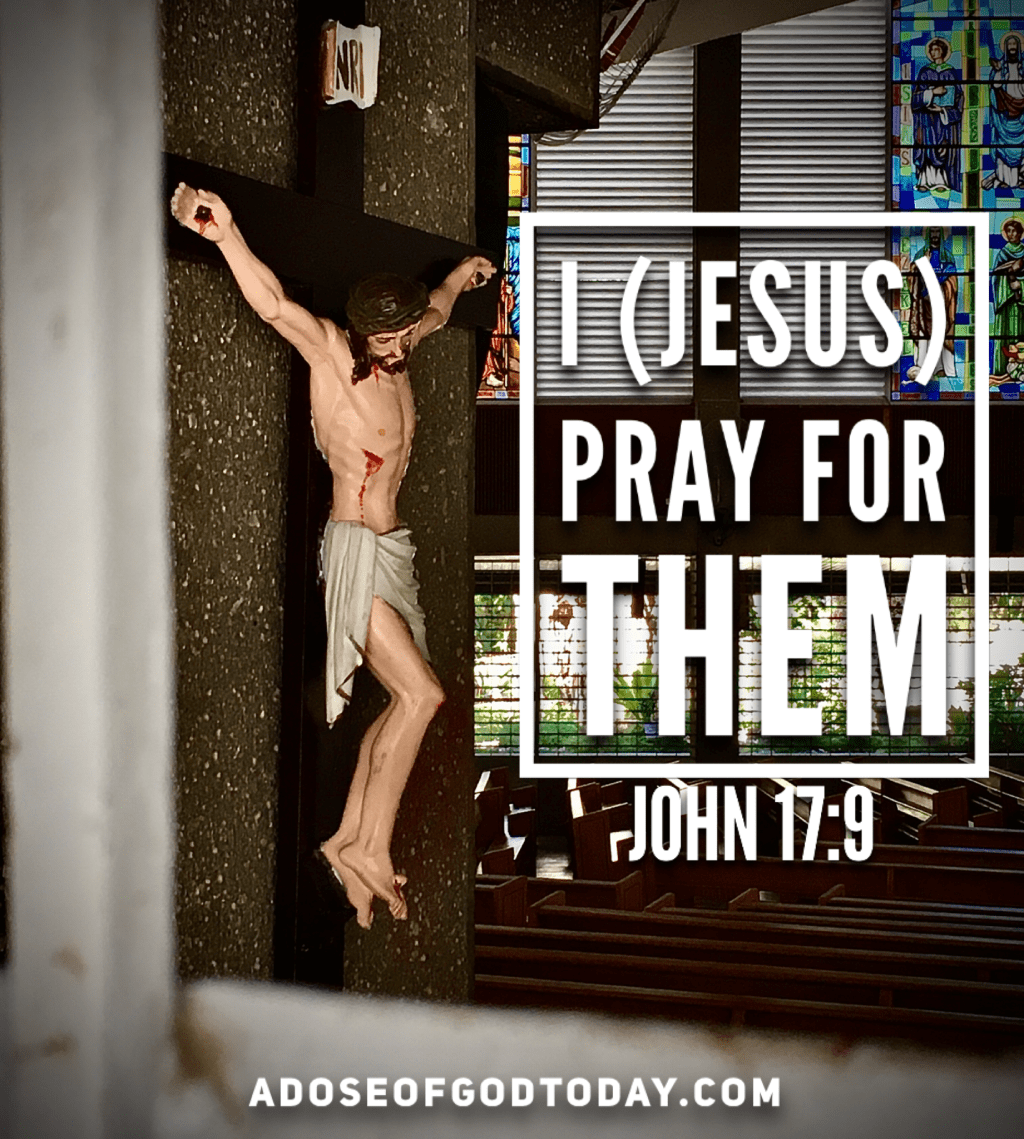
All of these have been revealed to Jesus’ friends who were also dear to the Father. Jesus treasures this friendship. And as a friend, Jesus manifests his concern by expressing his desire to pray for them.
Jesus is about to leave physically in the world. But it does not mean that Jesus will abandon his friends. In fact, Jesus prays for his friends. “I pray for them,” said Jesus. This means that Jesus remembers his friends in his thoughts.
Being in the thoughts of Jesus also means that Jesus makes his person present in the life of his friends. It is a promise of faithfulness and of constant presence of God in our life, in each of us.
Advertisements
Today, Jesus reminds us too, that he prays for us and with us. Jesus joins us in our prayer. The Lord is there every time we pray. The Lord makes himself ever present the moment we also dispose ourselves in prayer. We can say this confidently, Jesus prays with me because he remembers me and he is with me.
Being remembered by Jesus in his prayers, let us make an effort too, to pray for others today. Pray for your friends, for your family members and those who really need our prayers. Prayer will make us more conscious of others as we become one with them in their hopes, joys and suffering. Prayer moves us also to respond and to be in solidarity with those who are in need of our help. In prayer, we also become more present with God as we grow in our confidence and faith in Him who calls us and loves us. Hinaut pa.



 A DOSE OF GOD TODAY