Tag: Peace

  • Friendship over a Meal

    Friendship over a Meal

    April 18, 2021 – Third Sunday of Easter

    Click here for the readings (https://bible.usccb.org/bible/readings/041821.cfm)

    “Have you anything to eat?” Jesus asked his disciples. It was a very ordinary question from Jesus yet, this question brought the disciples into a deeper realization of themselves and a deeper encounter with the Risen Jesus in a meal, in a form of sharing food.

    In many cultures, a shared meal plays a vital role. Sometimes important decisions in the family happen over a meal because that will be a time where family members are gathered. It is also true with our friends, we gather, remember past experiences and share stories over a meal and drinks.

    It is when we are able to sit down and share the meal with one another that we come into terms, make decisions, connect with one another and become more intimate with our family members and friends. Indeed, it is over our shared meal that we come to understand each other.

    This is what we find in the Gospel. It was through that ordinary meal shared by the disciples with Jesus that the disciples were able to realize that it was the Lord. It was through this simple meal with Jesus that they have been commissioned to preach repentance and forgiveness of sins to all nations.

    It started with two disciples who were talking about Jesus who appeared to them. Yet, even though the Lord has revealed to them, these two disciples were still doubtful. They have recognized the Lord in the breaking of the bread but then, after that revelation, they seemed not so convinced yet.

    That is why, when Jesus appeared to them once again, the two were terrified and couldn’t believe that they were seeing Jesus. Because of their disbelief, Jesus has to give and assure them with peace! “Peace be with you!” is Jesus’ repeated gift to the disciples after his resurrection.

    After the death of Jesus, the disciples were filled with fear, disgust and shame for themselves. They all ran away and hid themselves while their master was beaten and crucified. Judas Iscariot betrayed the Lord, Peter denied Jesus three times and the rest of them were nowhere to be found. They might have blamed themselves for what happened to Jesus. They might have considered themselves failures and worthless because of what happened. They might have thought that what they did to their master was beyond forgiveness and mercy from God.

    The disciples must have believed that they failed Jesus. Consequently, they couldn’t believe Mary Magdalene’s testimony that the Lord is alive. That feeling of being a failure is also the reason why these two disciples still doubted and were terrified upon seeing Jesus once again. They couldn’t believe that they were forgiven, that they have been accepted and loved by Jesus.

    Despite what they did, Jesus has forgiven them and the resurrection of Jesus is God’s action of forgiveness. But because the disciples found it hard to believe God’s forgiveness, Jesus made the effort to let them understand that they have been forgiven. Jesus has to do it repeatedly to assure his disciples. Thus, Jesus did not just appear to them once but several times and each time he reveals himself to them, Jesus gives his peace – the peace of forgiveness, of mercy and of being loved. This is what Peter proclaimed to the Jews in the Acts of the Apostles and also what has been proclaimed in the First letter of JohnGod’s peace of forgiveness.

    This peace was concretely showed by Jesus in the breaking of the bread, in the shared meal with his disciples – which was in a very ordinary way of eating with friends. This is how eating with friends becomes symbolic in the Bible because Jesus made this event as an occasion where he reveals himself to his friends. At the same time, eating with friends becomes an occasion also for his disciples to lay down their fears, shame and doubts but to be accepting and open to God’s revelation to them.

    This is the hope expressed to us by our Psalm today, “Lord, let you face shine on us.” Like the disciples, we too, shall glimpse God’s face when we learn to accept God’s invitation to sit down and dine with Him.

    These are the invitations for us today.

    First, Jesus says to you and to me, “Peace be with you,” because Jesus is with us. We might have been so burdened right now because of something wrong we did, Jesus says to us, “Peace – because I am with you!” Jesus assures us that peace has come upon us because he is alive and we are forgiven.

    Second, Jesus invites us to dine with him, to sit down with him so that we will be able to recognize him in our life. The Eucharist is Jesus’ invitation for all of us so that like the disciples our minds will be opened too and will be able to understand his message for us.

    Third, like the disciples, we are called to become his witnesses to others, to be his preachers of forgiveness especially to people around us. Thus, each of us is also called by Jesus to dine with our friends, to eat with those who have hurt us, who have caused us disappointment and pain and show to them that they have been forgiven just as Jesus forgives us. Hinaut pa.

  • There is more in our Faith

    There is more in our Faith

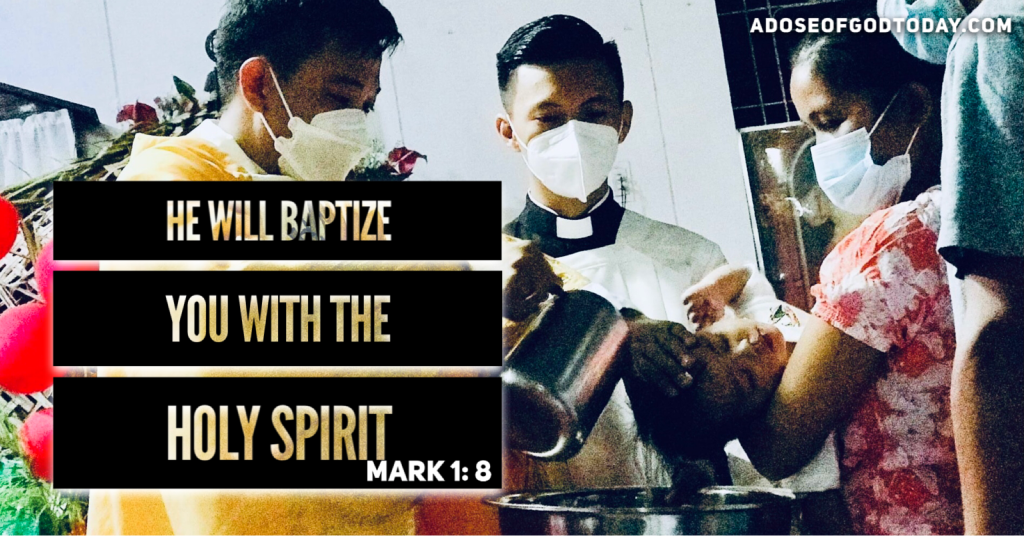
    January 10, 2021 – Feast of the Baptism of the Lord

    Click here for the readings (https://bible.usccb.org/bible/readings/011021.cfm)

    Are Filipinos more religious because of Covid-19? This is the title of the analysis of Jayeel Cornelio, PhD, a sociologist of religion.[1] This article was published in October 25 at rappler.com. The article discussed significant subjects particularly on the survey done by Pulse Asia last September 2020.

    The survey revealed that 51.8% of Filipinos have become more religious during this pandemic. According to Dr. Cornelio, this is not surprising because of two reasons.

    First, we are known to be one of the most religious societies in the world. And according to Pew Research Center, 96% percent of Filipinos find it “necessary to believe in God in order to be moral and have good values.”

    Second, Dr. Cornelio said, “faith is our immediate resource in times of crisis.” Citing another survey by the Veritas Truth Survey, it revealed that 89% percent of the responders of the survey said that faith is “very important” in the fight against Covid-19.

    From here, the sociologist also concluded that because of the “vulnerable social and economic context,” that is, being a third world country, the pandemic promotes a higher religiosity in us. In his words he said, people in poor social conditions such as having “inadequate health care, high incidence of conflict, and unreliable state agencies”  – people feel that they can turn to nothing else but faith in God.

    Indeed, it is when we become vulnerable and poor that we become more conscious of God’s presence. When we become more aware that we have actually nothing and are nothing in this world, that we also begin to realize of that great presence of God.

    A very comfortable life, a rich and powerful lifestyle can easily bring us into the attitude of indifference. It is indifference that prevents us to recognize that God is with us and continues to be present in the world.

    Moreover, at the end of his article, Dr. Cornelio also wrote that “there is so much more to COVID-19 than simply challenging the core of people’s religious convictions. In the end, it’s not just that Filipinos have become more religious because of this crisis. They are also beginning to seek something ‘more’ from their faith.”

    This sociological analysis brings me now to our very identity as baptized Christians. More than this survey of our religiosity, there is also a need to examine ourselves whether we have grown really in our faith, in our relationship with God and with one another. Our faith is not just about kneeling and standing, holding a rosary and saying our novenas. As Dr. Cornelio said, there is something “more” that we begin to seek from our faith. This “more” is something that I invite you now to pay attention as we celebrate this Sunday the Feast of the Baptism of our Lord Jesus.

    To be able to discern this “more” from our faith, allow me to journey with you through the readings and to see how God reveals His invitations for us today.

    In the first reading, Prophet Isaiah proclaimed the presence of the Servant of the Lord. The servant’s identity were described in three points. First, the Lord said,  “he is my chosen one with whom I am pleased.” This servant is loved very much by the Lord God, thus, God’s presence rests upon him. Second, the servant is to bring justice through compassion and gentleness of his presence and not through violence and force. Isaiah described and said, “a bruised reed he shall not break, a smoldering wick he shall not quench.” This servant is hope for those who are hopeless and are suffering. Third, the servant is to open the eyes of the blind and free prisoners and those who live in darkness. The servant who brings hope also brings peace, freedom and new life.

    The Psalm also stated this, “The Lord will bless his people with peace.” Peace here is living in the presence of God who is present in all creation. And the recognition of God’s presence in everything and in everyone brings us to show respect and love.

    This very promise of God is fulfilled and revealed in the Acts of the Apostles and in today’s Gospel. In the Acts of the Apostles, Peter proclaimed that this servant whom God chose is Jesus of Nazareth. He is anointed with the Holy Spirit and power. This is shown in the ministry of Jesus “in doing good” and in “healing the oppressed by the devil.”

    This is what we also find in the Gospel of Mark. The baptism of Jesus was a revelation to us that Jesus is the servant spoken by Isaiah. The scenarios in the Gospel are also very important told to us in three actions.

    First is the “immersion of Jesus in the water” was an expression of complete confidence in the Father. The Psalm proclaimed to us that “the voice of the Lord is over the waters, the Lord, over the vast waters.”  Here, Jesus allowed the power of His Father to embrace him.

    The second action is the “Spirit descending like a dove.” This is the very presence of God allowing our eyes to behold where it rests. The Spirit of God is in Jesus, the Lord who is among us. This tells us of the presence of God not just above us, but here among us.

    The third action is the voice heard coming from heaven saying, “You are my beloved Son, with you I am well pleased.” This has been proclaimed also by Isaiah.

    Indeed, this feast of the Baptism of the Lord tells us something important about our own baptism which we share in Jesus. This is where we also find the “more” in our faith. The “more” in our faith asks us not to be passive-believers but to be active-believers. The “more” in our faith tells us now of four points. These are invitations that you can bring with you today.

    • First, we are all loved. Never forget that.
    • Second, God’s presence is among us. We do not have to look above and seek God’s presence in the clouds. Look around also. God’s Spirit rests here among us.
    • Third, our baptism compels us to bring justice and peace. Isaiah reminds  us that this will be realized not through violence and force but through compassion and gentleness of our presence.
    • Fourth, to bring justice and peace is to also participate in the ministry of Jesus. This ministry is to open the eyes including our eyes blinded by greed, anger and indifference. And to free our hearts imprisoned by hatred, sin and guilt.

    Thus, the “more” in our faith is to make Jesus more present in our actions and words, and more present in our hearts, homes and communities. Hinaut pa.


    [1] See his article in https://www.rappler.com/voices/thought-leaders/analysis-are-filipinos-more-religious-because-covid-19

  • Comfort in the midst of darkness and sin

    Comfort in the midst of darkness and sin

    December 6, 2020 – Second Sunday of Advent

    Click here for the readings (https://bible.usccb.org/bible/readings/120620.cfm)

    Homily

    To look for comfort once in a while is a human necessity. To take comfort when we are experiencing stress from work allows us to relax. To take comfort when our relationship becomes suffocating allows us to gather our mind. To take comfort when we are sad, sorrowful and suffering allows us to breath, to be heard and to be embraced. For this very reason we seek the things that we know would give us some comfort like the presence of our friends and family members, the people who care and love us. Others can also take comfort even from small and simple things like eating their favorite dish, going to a fun-filled place, taking a vacation in a peaceful beach or just retreating into the recesses of their rooms and personal space.

    Some forms of comfort too would sometimes develop into unhealthy habits and even addictions. In the search of experiencing comfort and joy, we could also fall into traps. We may believe that it is the comfort that we have been looking for, yet, because it is easy and can be made available then we settle for it. This is the case when we begin to foster a cycle of habit, the early stage of addiction, and later on will also become a compulsive behavior in us. This can compulsion can be in any form. This is not limited to chemical substances but also in relationships and in our attitudes to material things. Thus, those that become excessive in us can be forms of obsessions and addictions that are actually expressions of our desire to be comforted.

    Such desire to be comforted brings me now into the theme on this Second Sunday of Advent. Today, we light the second candle, which is the candle of peace. Is it not that we indeed desire peace – peace in our hearts, peace in our homes, peace in our communities? This desire for comfort which peace will bring to us, is what we also hear in our readings today.

    The first reading from the Book of Isaiah wonderfully proclaimed to us God’s response to the people who longed for peace. “Comfort, give comfort to my people, says your God. Speak tenderly to Jerusalem and proclaim to her that her service is at an end, her guilt is expiated.” This passage was proclaimed to the people of God who were exiled to Babylon and were made slaves. They were in a foreign land, captives of foreign masters, removed from their homeland, subjected to suffering and misery. Indeed, they longed for comfort in midst of darkness and sin which can only come from God.

    But, at last, the exile shall come to an end, for God is faithful and merciful. The sins of the people were forgiven and peace shall be theirs.

    This promise of God to give comfort to the people shall be delivered by God himself and not just by any messenger. God comes to comfort the people because God’s presence means peace. That is why, Isaiah tells us too that when God comes, God will be like a Good Shepherd to us. The Lord will gather us in his arms, carry us in his bosom and lead us with care.

    These images of God’s actions tell us that God also longs for us. God longs to be closer with us. God desires to be really with us. This is peace. This is the true comfort that we too are looking for.

    Moreover, in order for us to be more welcoming and accepting of God’s comfort, Isaiah tells on what to do. What Isaiah proclaimed was also re-echoed in our Gospel today, through the person of John the Baptist. It says, “prepare the way of the Lord, make straight his paths.”

    John reminds us that salvation is possible, that peace and freedom from sin is possible. Thus, comfort of peace will dawn on us when we start recognizing our sinfulness rather than the sins of others. Peace is felt when we humble ourselves before God to accept that we are in need of mercy.

    However, we too might feel impatient with God because we expect that we should be comforted right away and immediately when we need it. Peter in his second letter reminds us today also, he said, “Do not ignore this one fact, beloved, that with the Lord one day is like a thousand years and a thousand years like one day. The Lord does not delay his promise, as some regard “delay,” but he is patient with you, not wishing that any should perish but that all should come to repentance.”

    Therefore, as we welcome the Lord to come and comfort us with peace, let us also make ourselves ready by preparing our heart. Let us reflect today, “What are my unhealthy habits or even forms of obsessions and addictions that prevent me from welcoming God? What are my un-confessed sins, my selfish tendencies and desires that are keeping me away from my true self, from others and from God?

    As the candle of peace has been lit, may this promise of God to us today, ignite for our desire to be comforted by God’s presence dwelling among us. Hinaut pa.

  • Disturb our complacency, O Lord

    Disturb our complacency, O Lord

    Advertisements

    October 22, 2020 – Thursday of the 29th Week in Ordinary Time

    Click here for the readings (https://bible.usccb.org/bible/readings/102220.cfm)

    Homily

    We desire for peace. We long for harmony. We want a life without disturbances and troubles. This is the reason why we also ask God for peace of mind and peace in our homes because in one way or another, we are experiencing some sort of difficulties. One may be having some sleepless nights because of some personal or family issues or conflicts and misunderstanding. Another must be bothered by an illness or because of demands at work. Some students these days, must be having some troubles too in fulfilling their school projects and finishing their modules.

    However, one may be disappointed with what Jesus told us in today’s Gospel. The Lord said, “Do you think that I have come to establish peace on the earth? No, I tell you, but rather division.”

    We heard it right. Jesus does not bring peace but division. He is here to disturb us. Yet, what does he really mean? It is very important that we understand the words of Jesus in the context of those who wanted to follow him. The very environment where Jesus spoke these words was characterized by corrupt and self-righteous leaders. The Pharisees and the scholars of the law represented those people who wanted to stay in power, preserve the status quo and secure their comfort. There were Jewish leaders too who became puppets to the Roman Empire in order to secure their wealth and influence.

    And these people who succumbed to the cycle of corruption at the expense of the common people, did not want anybody to challenge their peace. Thus, anyone who will dare to confront them was deemed to be a threat to that peace they were enjoying. However, was this “true peace” at all?

    This peace is about the comfort and routine of life or ‘business-as-usual.’ This means that one goes and proceeds to what one usually does in life. We may do what we want by satisfying our desires, from mere complacency. This peace only knows about maintaining the status quo, that we are comfortable with and preserving an environment that will not disturb us. Yet, this peace is shallow and remains self-centered. It focuses on our ego. This is not true peace.

    That is why, the Lord comes to disturb us when we have grown so attached with our comforts and when we are so caught up with maintaining to what is only beneficial for us.

    When we become complacent and passive, we do not want to be challenged, we do not want to go beyond and become life-giving. We do not want to confront ourselves and others because it might cost us conflict and division or to sacrifice the contentment that we apparently enjoy. We might find ourselves to settle to what is only easy, comfortable and beneficial by doing the same things, thinking the same thoughts and imagining the same ideas to the point that we refuse to do more and give more.

    However, Jesus does not want us to just settle with this seemingly peaceful environment. God does not want us to become a person who becomes a prisoner of his/her own selfish desires who will become abusive and corrupt yet  most insecure. Jesus does not want us also to just go with the flow and remain passive.

    The Lord wants us to find freedom. Jesus is not in favor in making ourselves passive, complacent, and self-satisfied yet stagnant. Jesus wants us to grow, to be mature and to become the person He wants us to be.

    The invitation for us is to allow the Lord to touch and to disturb our complacency and passivity so that we will be able to see things differently and wonderfully. As Christians, we too are called to call and confront others when our community and our leaders become passive and complacent.

    As we allow the Lord to disturb us, we may be able to see new perspectives in life despite its monotony, more dynamic and life-giving ways of relating with people around us, and a deeper and life-changing encounter with God through the ordinary expression of our faith. And remember, this calls us to be pro-active, honest and courageous in expressing our faith and to the values that we believe as Christians. Hinaut pa.

    Jom Baring, CSsR

  • How to find peace in our days filled with worries

    How to find peace in our days filled with worries

    October 6, 2020 – Tuesday of the 27th Week in Ordinary Time

    Click here for the readings (https://bible.usccb.org/bible/readings/100620.cfm)

    Homily

    Are you feeling overwhelming pressures from all sides these days? Pressure from work, pressure in your family caused by conflicts or demanding responsibilities, pressure caused by financial difficulties, pressure from your personal and trouble-filled romantic relationship could pile up until you feel suffocating. Students, perhaps, because of the new mode of learning, though are already familiar with latest technology, but still struggling these days due to the demands in their online classes and at home while suffering from emotional pain. These are just few examples that we are feeling these days considering also how we adjust ourselves with this pandemic around us.

    With all of these, we also desire and hope for ways to better handle and manage these pressures that make us worry and troubled emotionally and spiritually. We desire peaceful nights where we can sleep free from worries. We long for a mind and a heart that though we continue to live in the midst of troubles and worries in life, but we could maintain a balanced way of life.

    With the extra challenge of Covid-19 pandemic, the more we long for this today. Thus, it would be very good to find better ways and healthy ways of handling and managing the different pressures and worries we have in life for our mental and spiritual health. Our Gospel today suggests something that we could learn and adopt and develop into a habit. What the Gospel teaches us is a good way indeed, of maintaining balance and healthy awareness of oneself and of God’s presence in us.

    This Gospel story tells us of Martha and Mary, sisters of Lazarus and good friends of Jesus. Let us see a bit deeper the different responses of Martha and Mary as they welcomed Jesus into their home.

    It was Martha who welcomed Jesus into her home. Being friends of the Lord, it was Martha’s delight to welcome and receive Jesus. Martha being a concerned woman wanted to make the Lord and the disciples comfortable. Her concern and generosity made her busy with many things in the house. She must have been very busy cooking, providing food and drinks and serving the Lord. Yet, in her effort to do all of these, she grew worried and pressured. She must have done that out of generosity. Though she was not duty bound, but felt responsible. Yet, along the way, Martha must have lost her focus on the Lord. She was dominated by the pressures of serving the men and providing their comfort. She must have felt tired.

    This was the reason why Martha sounded annoyed, troubled and restless. She became more concerned in “doing” that in the process she lost and forgot that “one important thing – Jesus.” With this, Martha lost her peace of mind and had lost the opportunity of spending quality time with Jesus who have come to visit them.

    Well, Martha just did what was natural in their culture, and that was to express her hospitality to Jesus. However, when we let the different pressures around us to dominate our mind and heart and attitude, then, we too, like Martha will lose the opportunity of enjoying the presence and the company of people who love us.

    Indeed, as Jesus identified Martha’s problem, “of being worried and troubled about many things,” he also emphasized the value of taking the opportunity of enjoying the comfort of the presence of those who love us. This was what Mary did. Mary sat at the feet of Jesus and listened to the words of the Lord. Mary set aside those troubles and worries first in order to make more time with the Lord. Mary did this because she knew that what the Lord requires her to do was not to do many things, but just to “waste time” with God at that moment.

    Mary’s response made her more aware of Jesus’ presence and thus of her need of God. It was Jesus who visited them. This means that it was God who initiated the visit. Jesus came to visit them. Jesus wanted their company and desired that his friends will spend more time with him. Certainly, Mary found peace even in the midst of the worries and troubles in life.

    There are three invitations that I would like you to remember today so that like Mary, we too shall find peace even though worries and troubles, difficulties and challenges remain. What surrounds us is beyond our control but what we can do is to change our attitude and response to what surround us. So, remember these.

    1. Be aware of God’s visits. God visits us to surprise us any day and in any time of the day. God’s presence could be revealed through a friend, an encounter with a stranger or an event. We are called to be always welcoming of God’s presence and be filled with God’s peace through others.

    2. Develop a habit to spend time alone with God. To be able to spend few minutes alone will allow us to gather our thoughts, to subside our strong feelings and emotional reactions, and to see things clearly. Having this time allows us also to become discerning in our actions and thoughts for us to respond to a particular situation in a mature and healthy way and according to God’s desire for us.

    3. Spend quality time with people whom you love and who love you. To do this, we also need to be more aware of what is happening in us and around us. By recognizing what troubles us and what makes us worry, allows us to be more open to our loved ones. Thus, by spending quality time with them, we become more assured of their presence and find comfort in their love for us. This was the experience of Mary. She indeed found assurance in God’s love and comfort in God’s presence, thus, she found peace. Hinaut pa.

    Jom Baring, CSsR