Tag: Peace

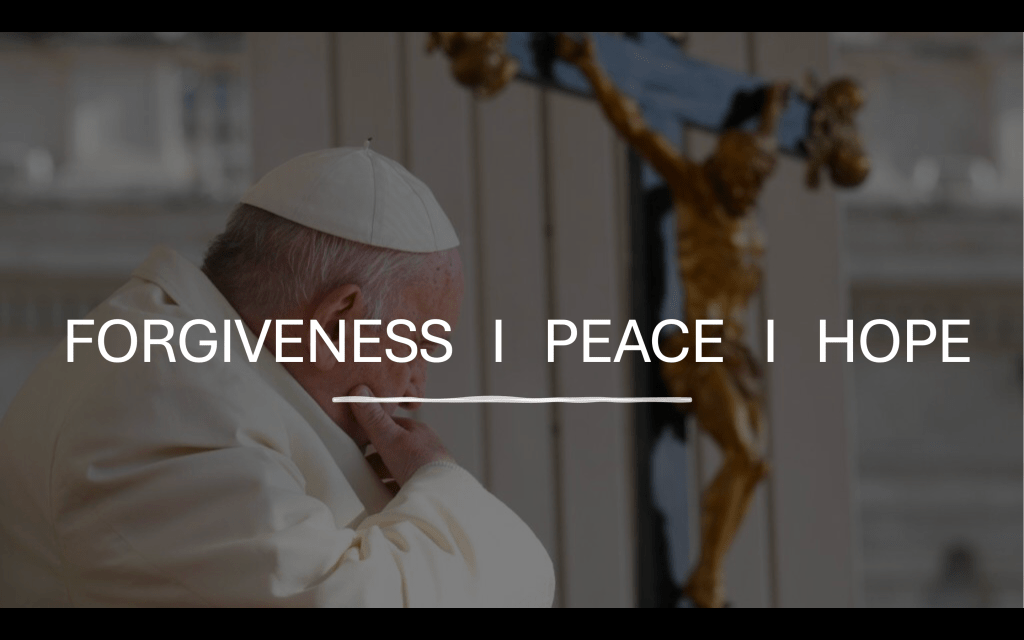
  • Pope Francis’ Message: Forgiveness, Peace, and Hope

    Pope Francis’ Message: Forgiveness, Peace, and Hope

    (A Moment of Reflection: A Talk – with Christ the King College de Maranding, Campus Ministry Office)

    There are three important words that I want you first to remember as we reflect today the message of Pope Francis on the occasion of the World Day of Peace published on January 1, 2025.

                First, FORGIVENESS. Second, PEACE. And third, HOPE.

                These three words served as the central theme of the message of Pope Francis addressed to world leaders and to all people of good will, including you and me. We have to understand then that the challenges and invitations set by Pope Francis are not only applicable to people who play important role in political, economic and cultural arena of our society. The call towards the path of peace is call to all.

                Hence, the theme of Pope Francis’ message reminds us now, “FORGIVE US OUR TRESPASSES: GRANT US YOUR PEACE.”

                As I join you in this short recollection, watch first this short video of the message of Pope Francis.

    From that short video presentation, it tells that Pope Francis invites us to look at the challenges that our world is facing today. These challenges are particularly those that endanger the survival of humanity and the whole creation because of human greed and manipulation for power, wealth and control.

                But how shall we look at these realities?

    We can actually look at it from the perspective of anger and hatred because of the injustices yet, that will only lead us to the cycle of violence. We can end up towards arm struggle and rebellion. Nevertheless, it will not lead us to peace but only towards more suffering and despair.

     We can also look at it with apathy and indifference. Well, the many issues and realities happening around the world are not directly experienced by us. Each of you here is not living on a war zone. You are not unemployed. You don’t have children who are undernourished, experiencing severe hunger on a daily basis. You don’t have overwhelming debt that will take you more than a lifetime to pay. And so, passivity and looking at these realities with indifference would be very easy for us to do. Yet, such attitude would only make our hearts calloused and numbed at suffering of others even with those who are nearest to us.

    Pope Francis proposes to look at the realities of the world, as well as of our own experiences of suffering from the perspective of hope, of having a heart full of hope.

    Now, for us to better understand and have a good grasped of what the Pope reminds us, let’s have a step by step moments of reflection of his message. The entire message is actually divided into four sections. In each section, let us also recognize its relevance in us, in our own context, work and status especially to you as a team of Campus Ministry in your college.

    Going back to that proposal of Pope Francis to look at the realities of the world from the perspective of hope, it triggers us to also ask, how? How do we look? And where should we start? This brings us into the first section of the message.

    The First Section

    1. LISTENING TO THE PLEA OF AN ENDANGERED HUMANITY (A CALL TO LISTEN)

    Pope Francis brings to our awareness as he greets every man and woman, and especially to those whom felt more connected – the downtrodden, those burdened by their past mistakes, those oppressed because of being judged by others, those who are desperate and hopeless.

    This is each of us! These are the experiences of many and perhaps of those students under your care. The many burdens they carry and issues they face in their own lives. This means that suffering is experienced by everyone. This is the significance of the sound of a ram’s horn (in Hebrew, jobel) calls us to listen.

    This is why the Jubilee Year of Hope becomes more relevant to each of us, individuals and as a community of faith. This is an invitation again for us that our hearts be filled with hope. This hope leads us and moves us to aspire and work for forgiveness and reconciliation, for freedom and healing.

    That is why, the Jubilee Year of Hope is meant to echo throughout the land (cf. Lev 25:9 – to every hearts and to every homes and communities) so that God’s justice will be restored in every aspect of life.

    We are called to listen and recognize now the many “desperate plea for help.” These include the exploitation of our natural and human resources in the guise of progress and profit. Pope Francis affirmed what St. Pope John Paul II called as “structures of sin” committed not only by principal agents but also by many of us who participate indirectly because of our support or because of our indifference.

    Indeed, this is a call for us to listen – to heed the plea for help of the suffering humanity for example the “inhuman treatment towards migrants, environmental decay, confusion caused by disinformation, refusal to engage in any form of dialogue, and the immense resources spent on the industry of war.” These are all “distinct yet interconnected” to each other. Do we also find these in our context? Maybe not all, but perhaps some of these.

    By acknowledging the forms of suffering in our own context, then, it calls us to work for justice. And what Pope Francis wants us to realize as well is “the cultural and structural changes” from us so that change will endure and will not be passive. This brings us now to the second section.

    Second section

    2. A CULTURAL CHANGE: ALL OF US ARE DEBTORS  (A CALL TO HUMILITY)

      After looking and recognizing at the many realities present in our communities, Pope Francis leads us to also realize the many gifts that are already in us. Yet, the many resources that we enjoy are not meant for us alone or for the “privileged few” in the case of the those whose hearts have become so wealthy and entitled.

      Pope Francis wants us to grow in gratitude, he said, “without gratitude, we are unable to recognize God’s gifts.” Certainly, we won’t be convinced as well that we are actually gifted. We will not be confident of what we have, as well of the potentials and talents that we already have. Meaning, without gratitude, it leads us to bitterness and despair. Look at how a person, you might have encountered one already, whose heart have grown ungrateful – the person becomes so stingy of many things and so mean to people around him or her.

      Indeed, when we become ungrateful this also leads us to easily get irritated or even feel unfair at the blessings of others. It makes us entitled but corrupt, even when we have received so much, in our practices because our heart is not convinced that what we have are God’s grace.

      We have to understand then, that God’s grace cannot be earned. It is a pure gift not because of our good deeds and qualities but undeserved and unmerited. That is why, the Lord would not abandon the sinful humanity, or no matter how sinful we have become, because God’s infinite mercy is a gift. In fact, God reaffirmed this “gift of life by the saving forgiveness offered to all through Jesus Christ.”

      This is how we discover the central teaching of the “Our Father.” As Jesus told us to pray : “Forgive us of our trespasses,” the Pope reminds us to recognize our collective sins that we are all indebted to the Father and with one another.

      Hence, we rely now on the mercy of God who forgave our debts, through Jesus. And through him, the gift of life, being renewed gives us hope for one another. In consequence, Pope Francis appeal echoes to every heart – “the appeal for solidarity, but above all for justice.”

      Hope becomes more alive in us now because it opens us up and lead us towards that cultural and structural change. The cultural change happens in our way of life, in the way we relate with one another and in the way we look at the world from the perspective of hope. Eventually, through this cultural change then structural change happen and begin to recognize that we are all brothers and sisters, we have a shared and diversified responsibilities and that we are not enemies or business competitors.

      This leads us now to the third section.

      Third Section

      3. A JOURNEY OF HOPE: THREE PROPOSALS (Call to Action)

        This change in us begins in our hearts. This also fuels and renews our hope, of our journey of hope, as being emphasized in this Jubilee 2025. Acknowledging God’s constant grace and mercy to all, makes us again realize God’s infinite generosity and love because we are forgiven.

        Yet, let us not also forget the challenging words in the Lord’s Prayer, “as we forgive those who trespass against us.” Forgiveness becomes a reality in us as we also learn to forgive others. From such grace, hope and peace shall overflow in our hearts. That overflow will only become concrete from our own experience of forgiveness and generosity,

        In fact, Pope Francis also said, and I quote, “Hope overflows in generosity; it is free of calculation, makes no hidden demands, unconcerned with gain, but aims at one thing alone: to raise up those who have fallen, to heal hearts that are broken and to set us free from every kind of bondage,” end of quote.

        This is the best gauge for us as we express our generosity to others. And so let us be mindful also of our attitude when our generous actions (things that we give like of materials resources, presence, our personal time and talents) are fueled by our personal agenda or selfishness then, our generosity is not from hope. Rather, it is from corruption.

        From here Pope Francis leads us to the path of peace with three proposals as our call to action.

        1. First, Forgiveness of International Debt. “Reducing substantially, if not canceling outright, the international debt which seriously threatens the future of many nations”, said Pope Francis. This is a call to world leaders especially of rich countries to be in solidarity with neighboring nations.
          1. Second, Abolition of Death Penalty. This means that we are called to have a firm commitment to respect for the dignity of human life from conception to natural death. Through this commitment, we promote a culture of life that gives every man and woman the hope of forgiveness and rehabilitation, freedom and healing.
          1. Third, To Establish a World Fund aimed at Eliminating Hunger. This is to use a “fixed percentage from armament investments to establish a global fund to eradicate hunger, facilitate educational activities in poorer countries to promote sustainable development, and to combat climate change.” This means that, certainly, war is for profit, for business and thus, it is an industry. Political conflicts or ideological beliefs or territorial disputes can easily be manipulated by profit-oriented groups in order to create war and so gain immense profits. Yet, what the world needs are not bullets but food and water, education and home.

        These three proposals though aimed at the world leaders and all those who play significant role in our global village, however, ourselves and those at the grassroots remain significant so that we may be able “to pave new paths of peace together in our communities.”

                    This brings us to the final section.

        Final Section

        4. THE GOAL OF PEACE  (Towards Freedom)

        Pope Francis quoted Saint John XXIII who convened the Second Vatican Council in 1962, “true peace can be born only from a heart ‘disarmed’ of anxiety and the fear of war.”

        This means that the goal towards peace is first directed at our own hearts that are perhaps trapped in despair and hopelessness because of our failures, or hearts thickened by indifference and selfishness, or hearts traumatized by abuse and oppression, or hearts covered with pretensions that everything is okay but not realizing the realities around, or hearts filled with worries and anxieties because of the thought of “nothing might be left for me, then I have to accumulate more” or the thought of “nothing is for me, I am pitiful” or having a heart that is constantly threatened by tensions, conflicts and wars. Then, our hearts are indeed troubled.

        Yet, know that the Lord brings us peace, grants us pardon and gives us freedom. What we are called to do now is to disarm our heart from whatever shackles of pain, trauma and imprisonment it is suffering from.

        Pope Francis wonderfully expressed the call towards freedom in these words, and I quote, “May we seek the true peace that is granted by God to hearts disarmed: hearts not set on calculating what is mine and what is yours; hearts that turn selfishness into readiness to reach out to others; hearts that see themselves as indebted to God and thus prepared to forgive the debts that oppress others; hearts that replace anxiety about the future with the hope that every individual can be a resource for the building of a better world.

                    Indeed, each of us now is a resource in building a better world. Your position as educators puts you now at the pedestal in your own context to realize peace. Pope Francis even continued to express that “disarming hearts is a job for everyone.” So that, as we heed the call to disarm our hearts, then, it will inspire us and give us hope to also become a catalyst in disarming the hearts of people around us even through our simple gestures “such as a smile, a small gesture of friendship, a kind look, a ready ear, a good deed” or having an understanding heart over a troubled student, or having a welcoming hand shake for anxious new students, or un-judging (without judgment) attitude towards a colleague who is emotionally sensitive.

                    These are small steps, simple gestures yet will also become powerful and effective as we hope to build a community in loved with peace.

                    And so as I end this reflection let us pray together the prayer for peace composed by Pope Francis at the end of his message.

        PRAYER FOR PEACE by Pope Francis

         Lord, grant us your peace!

        Forgive us our trespasses, Lord,

        as we forgive those who trespass against us.

        In this cycle of forgiveness, grant us your peace,

        the peace that you alone can give

        to those who let themselves be disarmed in heart,

        to those who choose in hope to forgive the debts of their brothers and sisters,

        to those who are unafraid to confess their debt to you,

        and to those who do not close their ears to the cry of the poor.

        Amen.

        Points for Reflection towards the Path of Peace

        Look and Listen: Recognizing the Cry for Help in my own context

        As an educator/religious/seminarian – what are the different pleas/cry for help that I can identify which I encounter with myself, with my students or community?

        Embracing our Gifts leads us to Gratitude and Generosity

        What resources/gifts/talents do I have that I can offer for others and for my community?

        Call to Action: A Commitment to make

        What do I need to change in me? What do I need to disarm from my heart? (attitudes, beliefs or perspectives) What concrete actions I can commit to promote peace?

        1. GOD SORROUNDS US

          GOD SORROUNDS US

          December 5, 2024 – Thursday of the First Week of Advent

          Click here for the readings (https://bible.usccb.org/bible/readings/120524.cfm)

          What kind of storms do you have now? Big storms? Small storms? Few or many storms? Well, these storms in our life may struck us in the forms of crises in our family or marriage life, friendship, with our health, job, business or studies. These can also be in the form of our personal struggles that we carry alone like the guilt that we hide in our hearts, the fears that paralyze us, the trauma that haunt us day and night or the anxiety that we could not escape of.

          This Season of Advent, we are reminded that as we wait for the Lord to come and bring us peace, we might also find ourselves troubled and our hearts filled with fear.

          Hence, Isaiah proclaims, “Trust in the Lord forever.” As Isaiah brought a joyful hope to the people of his time who were oppressed and exploited by the rich and powerful, and so he does again to us today. Indeed, it is very evident in the Book of Isaiah that God favors the poor, the weak and the powerless. As the prophet pictures out how the Lord shall bring the arrogant, the corrupt and shameless into their own destruction and misery, the Lord shall also bring freedom, life and  salvation to the oppressed.

          The Prophet, whose words echo until today point us how the very presence of God becomes our strength. Though we await for God’s arrival but God’s presence can already be felt in the here and now. And it is because God sustains us and God strengthens us.

          Consequently, Isaiah powerfully described God as our strong city because God surrounds us. God is beneath us. God is above us. God is beside us. God is before us. God is after us. And God is within us. This requires now, faith in us to fully trust the Lord who is always with us and who is always for us. In trusting the Lord, we shall have peace because God will keep us in peace.

          As Isaiah calls us now to faith by trusting God. Jesus also calls us to action. This is what Jesus invites in the Gospel of Matthew. And this means that to believe and to trust in the Lord is not a mere ideology, an idea or a thought and not even a lip-service. Our faith that trusts in the Lord needs action. Thus, Jesus reminds us today, “everyone who listens to my words and acts of them will be like a wise man who built his house on rock.” This is an invitation to listen and to act on it, making the Word of God as our way of life.

          Indeed, by cherishing the Word of God and translating the word into our life, thoughts and actions, then, we become a wise person, whose foundation is God, our eternal Rock. By loving the Sacred Scripture and receiving the Sacraments, we make ourselves more familiar to God’s presence. As we make ourselves available for God, this will mold us to become persons for others and with others.

          Hence, God invites us today to be with others, to allow others to be part of our life. This is how we shall discover the strength, love and support from our friends, families and communities. To trust in the Lord leads us to become confident that the Lord is with us through the people who surround us.

          And so, as we will be tossed by the storms these days that we encounter in life, whatever that may be, we now take comfort by trusting the Lord who is with us, through our friends, our family member the very people who love and cherish us and the Church. Hinaut pa.

        2. Our Everyday Waiting

          Our Everyday Waiting

          October 22, 2024 – Tuesday 29th Week in Ordinary Time

          Click here for the readings (https://bible.usccb.org/bible/readings/102224.cfm)

          What kind of attitude do we show when we wait for something or someone? It might depend on the situation, the urgency and of our inner desire and need. A friend told me that as he waited for his wife to labor and give birth to their first child, he was anxious but also excited. When the baby came and his wife was also safe, he was filled with joy. A patient who has been waiting for the biopsy result may be overwhelmed with anxiety and fear when the result may not be favorable. Once, when I was in an airport for a domestic flight and waiting for the boarding, the airline announce that the flight was delayed by 4 hours. I was mad and demanded that I will be rebooked to the next earliest flight to catch up for my connecting flight. A parent waiting late in the evening for the return of his/her child to come home may feel worried.

          There are also other small waiting that we experience daily like waiting for our parcel to arrive and be delivered by the rider. We delight when we like what we have ordered or feel deceived when it is not what we expect. We also wait on the road when there is a heavy traffic and even feel exhausted. We wait for the long queue at the supermarket and has to extend our patience when the counter seems to be so slow.

          These are indeed, just some experiences of waiting. There are those that are simple and routinary for us. There are also those waiting that can be long, exhausting and tiring. There are even those kinds of waiting that takes for a lifetime.

          However, let us also warn ourselves of “waiting in vain” especially of some other things in our life. Waiting in vain is waiting for nothing. This kind of waiting leads us to misery and hopelessness. This actually happens when we immersed ourselves in those waiting that are purely with selfish intentions, waiting based on our impulses, compulsions and whims.

          True enough, waiting is part of our life and it is even very important to us as Christians. The parable that Jesus told us in today’s Gospel basically reminds us of the value and the grace in and while waiting. Jesus said, “Blessed are those servants whom the master finds vigilant on his arrival.” Jesus teaches us that in “waiting patiently” we are already blessed. No matter how long or tiring that waiting can be, we are called to patiently wait and exercise vigilance. Meaning, to become passive or indifferent will make lose the opportunity of welcoming fully what the Lord has prepared for us.

          Jesus expressed this promised clearly in the parable. It is the master himself who finds his servant waiting for him who will prepare the table and serve the servants who becomes his friends. The servants receives the presence of their master who brings peace and friendship with them.

          This is also revealed to us in Paul’s Letter to the Ephesians. Jesus who came and gave his life to us “broke down the dividing wall of enmity,” “for he is our peace.” This is again reechoed in Psalm, “The Lord speaks of peace to his people.”

          This brings us now that God’s coming, and we who waits for it will surely be graced by this peace. This peace shall fade our fear and anxieties, our worries and tears, forgives our sins and failures and unites those that have been divided and broken because of hatred, violence and indifference.

          Certainly, the Lord calls us today to be more patient and pro-active in our waiting especially in our waiting of God’s coming and visits. Jesus comes and visits us in simple and ordinary ways even through familiar people or events and places around us. The very presence of God that brings us peace will surely give us as well a dose of surprise and joy. Thus, let us also be more attentive, more sensitive and discerning of the Lord’s countless manifestations and revelations in our life. Hinaut pa.

        3. Kalilintad. Kalinaw, Kapayapaan. Peace

          Kalilintad. Kalinaw, Kapayapaan. Peace

          A Reflection by Charles James S. Antolan – a College Seminarian of the Prelature of Marawi

          Kalilintad, kalinaw, kapayapaan, these are just some of the many other translations of the word “peace” that most people seek to live in. It is a state which people especially in Mindanao, thirst for over the years, decades, even centuries.

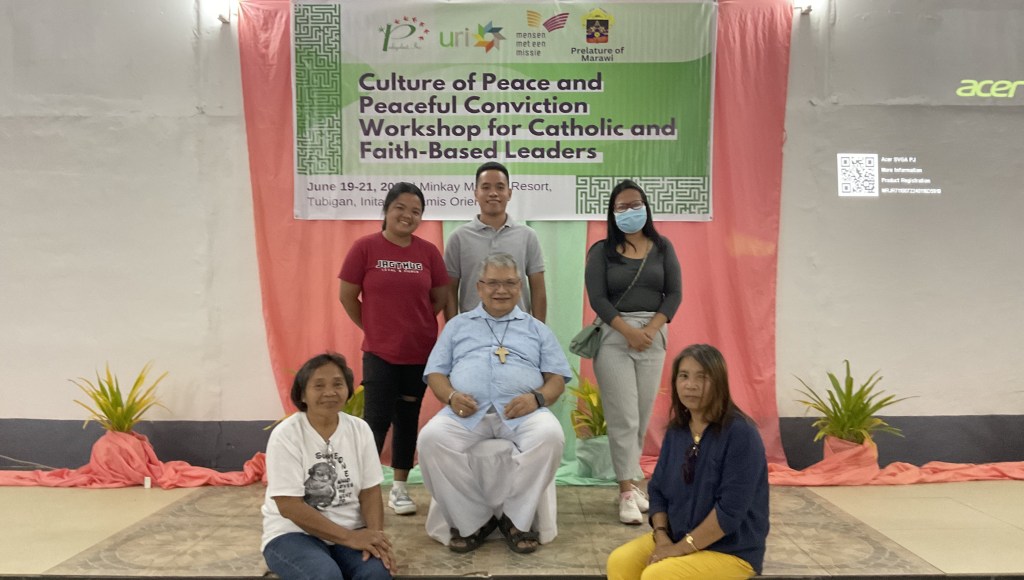
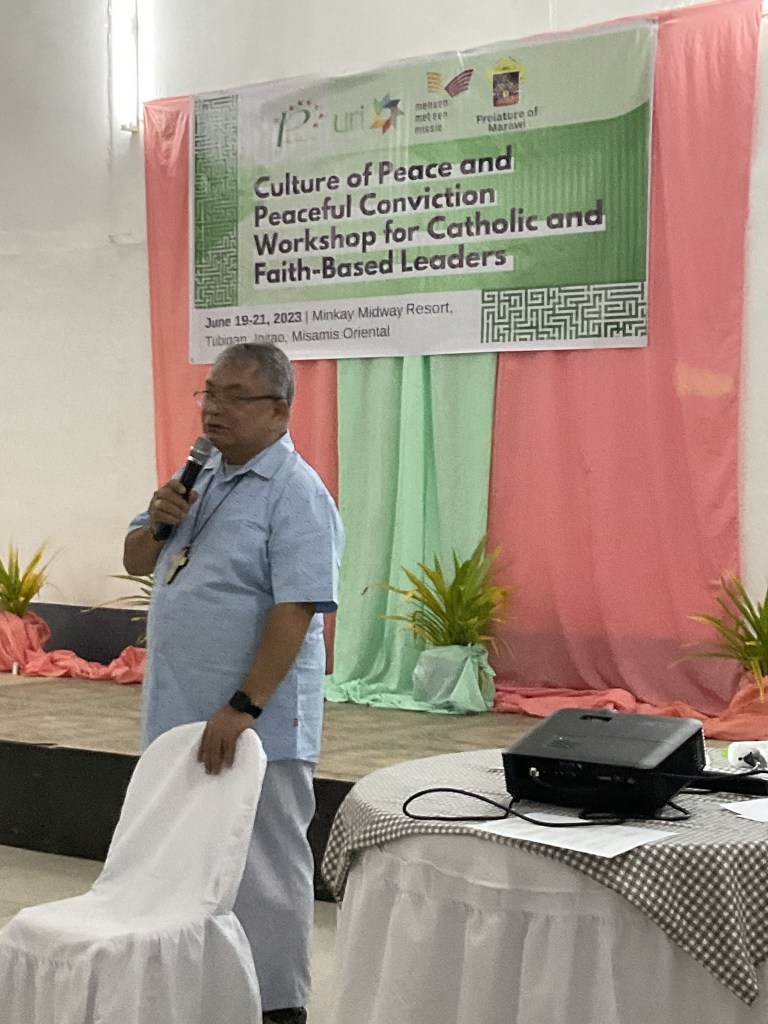
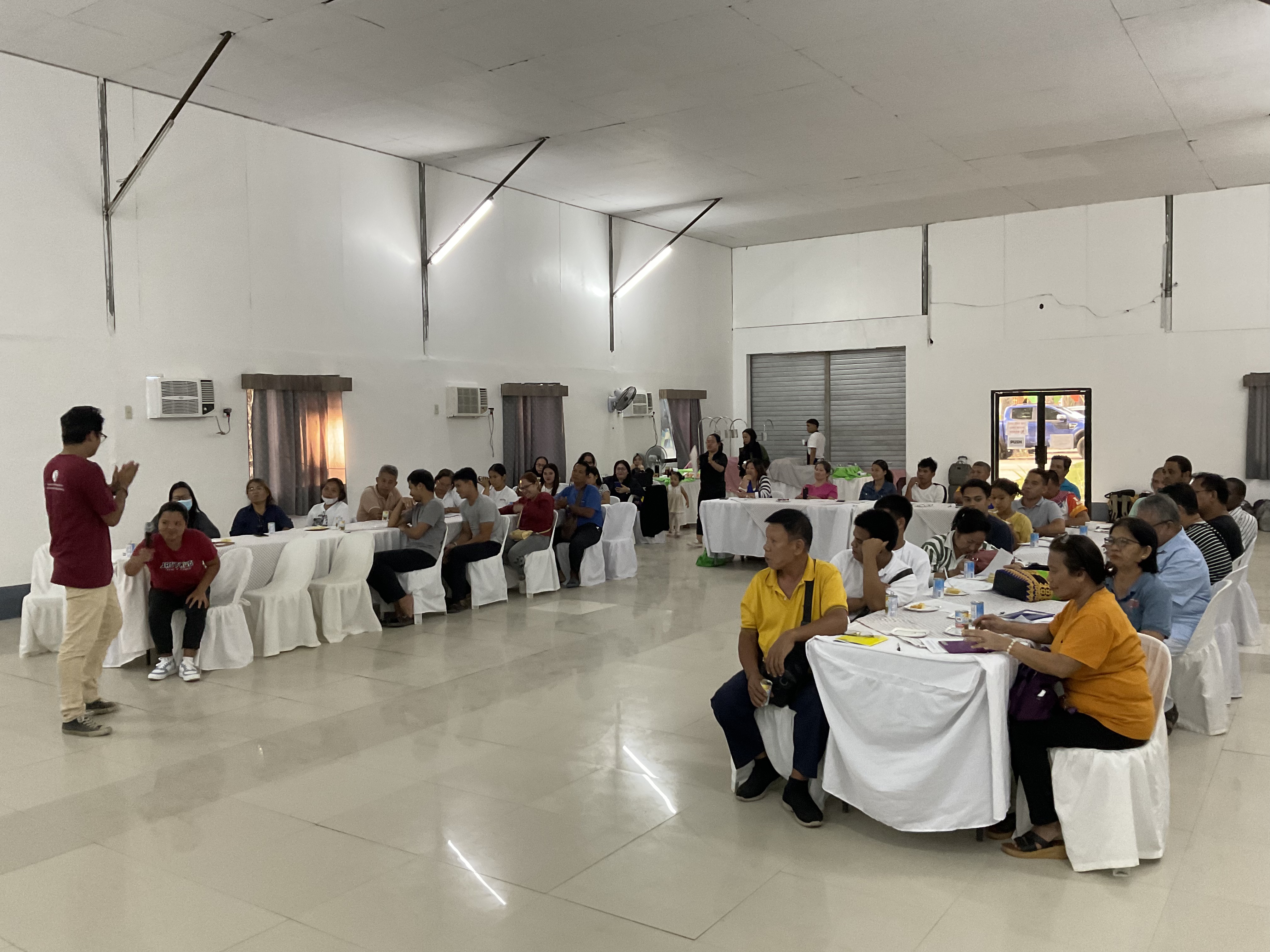
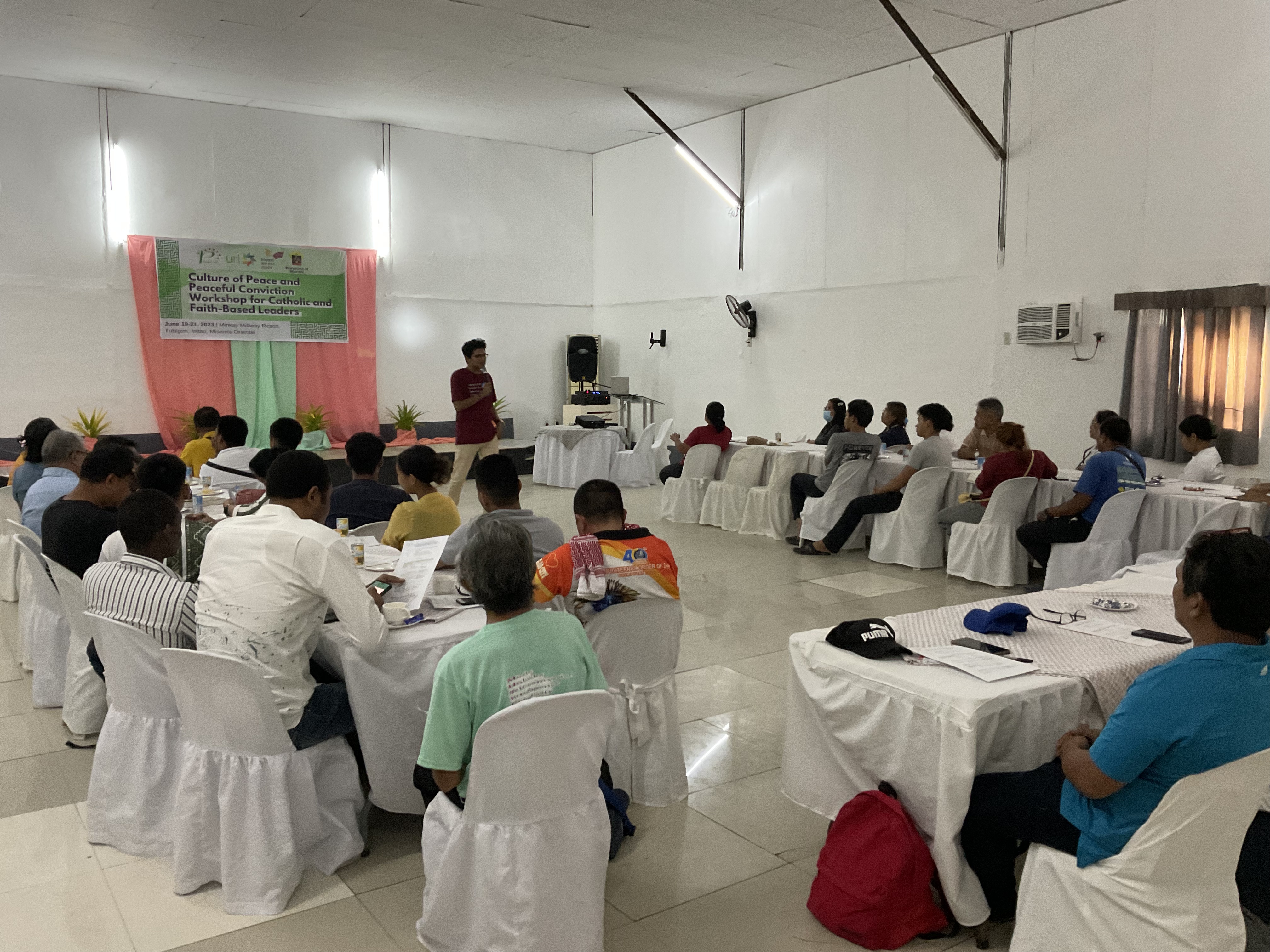
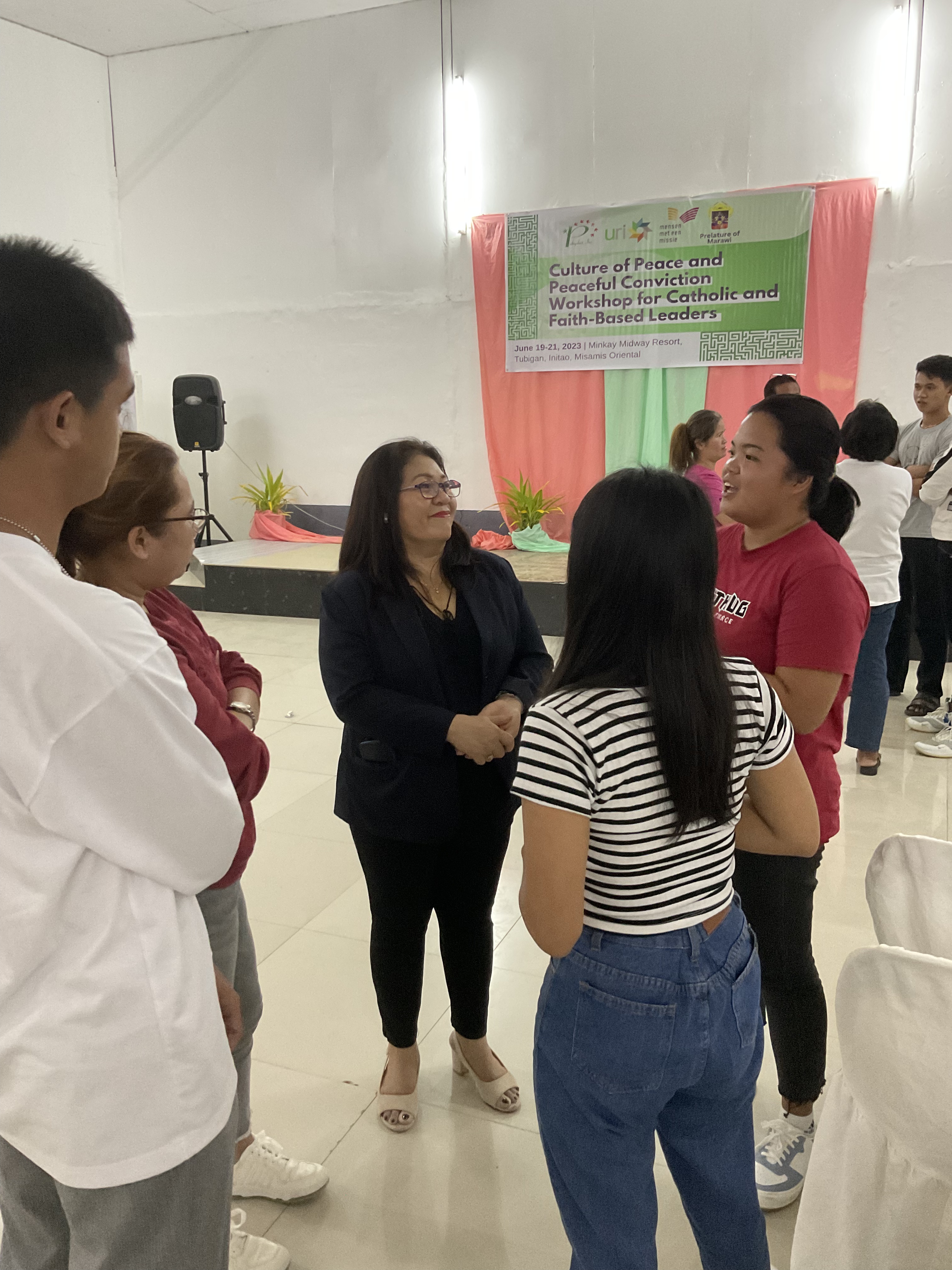
          On June 19-21, 2023, I attended a Peace-Building Seminar held in Midway Minkay Resort, Tubigon, Initao, Misamis Oriental. The said program was actually entitled “Culture of Peace and Peaceful Conviction Workshop for Catholic and Faith-Based Leaders“,  organized intentionally for the Lay Parishioners/Leaders of the Prelature of Marawi, by Pakigdait, Inc., a Non-Government Organization composed of Muslim, Catholic and other Christian-denomination leaders. The workshop aimed to provide a safe space for interfaith conversation and to co-learned on peaceful convictions and connections.

          The three-day peace-building workshop was composed with three inputs and series of team building activities. The first input was given by the Bishop of the Prelature of Marawi and Pakigdait BIL Chairman, Most Rev. Edwin A. dela Peña, MSP, DD. His talk narrated the history and interfaith journey of the Prelature of Marawi where the late Bishop Bienvenido “Tatay Bidu” Tudtud was remembered and paid homage. Bishop Edwin put emphasis and elaborated the Prelature’s Vision, “To offer a reconciling presence among Muslims through dialogue of life and faith“.

          The second input was given by Ma’am Jenny T. Sanguila, the Program Manager with her topic “Introduction to Peaceful Conviction and Culture of Peace“. And the third input was about “Islam and Peacebuilding” given by Ustajdh Abdul Kareem Ambor.

          With all of these three inputs, the common thing that struck me the most is the word “dialogue.” It is through dialogue that we overcome conflicts. I agree that conflict is a normal part of any relationship; people tend to have conflicts because each of us has our own unique history and character, and perspectives in life. But it is dangerous, in the sense that, if not addressed properly, it might lead to violence. Thus, the challenge is to direct this conflict towards a process of positive change.

          Throughout my life, I have experienced several kinds of conflicts in the family, among my friends, and even with myself. Years ago, I remember specific persons where I had conflict with, it just started with a small miscommunication and led to ignoring and avoiding which lasted for several months before becoming friends again. Honestly, I am not proud of saying it because the relationship was restored not through dialogue or any process of reconciliation. It just so happened through a particular situation where there was a need to deliver a word and from then slowly repairing the broken relationship without dealing the problem.

          I recognize that I was driven by my ego to choose not to make an initiative to reconcile. The same situation happened in me four times with different persons. Now, whenever I got conflicts with other persons, I struggle to set aside my pride yet I also strive to manage myself and try to start dialogue with the person I’m having the conflict with. For me, it does not just give peace but makes me more humane and to grow in my humanity.

          Before her input,  Ma’am Jenny Sanguila gave us an activity of drawing our sign of peace. On the blank sheet of paper, I drew three intersecting circles. For me, it shows that despite of our differences, culture, religion, philosophies, personalities, we still have lots of similarities that bind us, that make us united, and that we are all human persons sharing the life and a home entrusted to us.

          So much for that, I enjoyed every team-building activities we had. Teamwork was enhanced and messages were pondered. The “Build that bridge” activity taught me how important communication skill is, the capacity to understand and to be understood, and most especially the capability to connect with others despite differences.

          My most meaningful activity for me was that activity (activity name unidentified) where a representative from a group was blind folded and had to pick up specific emojis as many as possible that were scattered on the ground with the help of team members’ guidance. With that activity, I realized the importance of listening skills. When I was blindfolded, I found myself in need of others’ guidance by listening to their voices. What made the challenge difficult was that there were many shouts, dictations, and directions that even the other team was also giving me false directions.

          For me, one of the significant messages it conveyed was to identify the most reliable and trusted individuals. Today, there are many deceiving voices that we may hear that claim to be right but would only lead us to misfortunes and wrong outcomes. In line with our faith, we have to identify the voice of God constantly calling and talking to us.

          The peace-building seminar was fun, enjoyable and full of takeaways. I am glad to meet some parish leaders and youth in the Prelature and made memories with them. I hope and pray that we may continue to become peace builders in our respective parishes and communities. May God continue to bless all of us. Maayong Good Morning.

        4. SEEK LOVE, SEEK PEACE

          SEEK LOVE, SEEK PEACE

          February 19, 2023 – Seventh Sunday Ordinary Time

          Click here for the readings (https://bible.usccb.org/bible/readings/021923.cfm)

          As my niece was growing up, it was also the time that we directly and indirectly taught her ways of behaving and of different attitudes, which may be good or bad. Unconsciously, there were many things and ways that we taught to the child that were not really good. For instance, when she would misstep and fall, she would cry because of pain. Our immediate response is to comfort the child and tell her, “hapaka ang salug aron makabalos ka” (hit the floor so that you may have your revenge).Then, this would somehow bring comfort to her as if hitting back would take away the pain.

          A situation like this can easily be taken for granted since this looks and sounds normal to us. However, what we are not aware of is that we are actually introducing a very unhealthy attitude to the child. In fact, this kind of situation would only teach children the “culture of revenge” and the “culture of hate.” It is a form of teaching a child not to be comfortable with pain but to take comfort with vengeance. Hence, this is an unconscious way of teaching hatred to a young heart. Yet, is this the attitude and way of life that Jesus is teaching us as his disciples now?

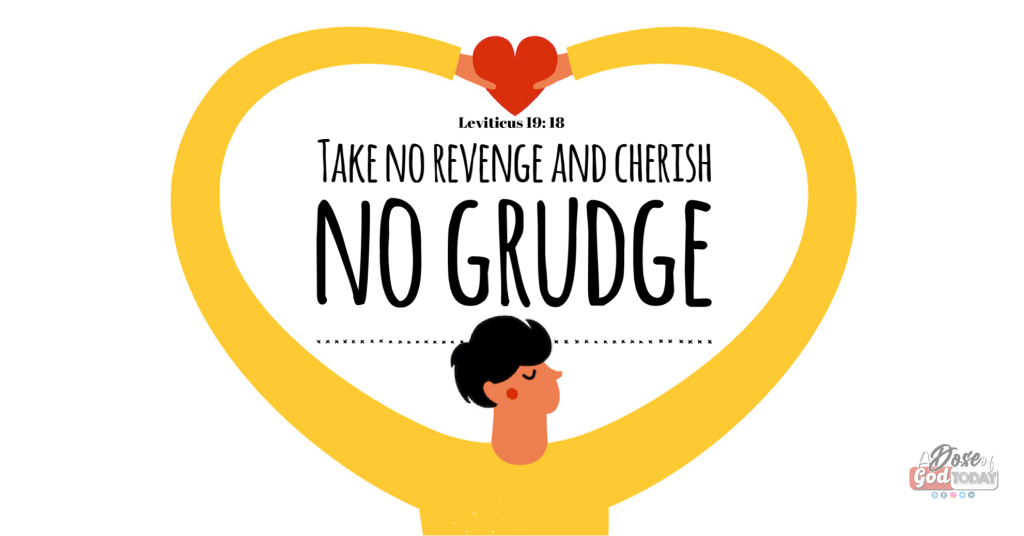
          Well, we have heard from the Book of Leviticus what the Lord said to the Israelites, “You shall not bear hatred for your brother or sister in your heart… Take no revenge and cherish no grudge against any of your people. You shall love your neighbor as yourself.” The Lord God commanded this because this is how the Lord shows his heart and compassion to the people despite their unfaithfulness and sins. Moreover, the Psalm today also expressed God’s nature, “The Lord is kind and merciful.”

          This nature and attitude of God is the call for all of us Christian believers. Jesus also tells us, “be perfect, just as your heavenly Father is perfect.” This perfection, which is much better translated as completeness or wholeness, that Jesus said, is meant to love all, not just loving those who are close to us but also those whom we do not like, those who caused us pain and shame, those who betrayed us and those whom we hate and those who have hatred against us.

          Indeed, it is also true that this sounds impossible to do especially if we would follow what Jesus said, “when someone strikes you on your right cheek, turn the other one as well.” This really sounds ridiculous and outrageous not just to us now but also to people who listened to Jesus at that time. We can possibly ask, “How can I love someone who betrayed me? How can I love the person who abused us, physically, materially, emotionally o sexually?

          Let us remember that it is certainly true that there may be people who caused pain to us and even unrepairable damage to us, but then, let us also be honest that we too, may have caused pain and damage to others in one way or another, or in many ways which we may not be totally aware of.

          So, what is this message of Jesus really all about? Love and peace, not hatred, not vengeance, not violence. This is what Jesus revealed to us. This is the very experience of Jesus with his Father in heaven as well. Indeed, the Lord God is not a violent Father. The Lord God cares for all sinners and righteous alike. And that God’s power rests in unconditional love and not in bringing us to damnation and eternal death because the Lord is slow to anger and does not hate.

          From this realization of God’s nature and attitude towards us, we are called to grow and become more like Jesus – in the sense, that we become “a complete person or a whole person” as Psychology says. Being a complete and whole person means a person who is healed through forgiveness, love and peace, who does not nurture grudges and not being controlled by anger or hatred.

          Indeed, we are called to get rid of that culture of hate, revenge and violence because healing, reconciliation and peace are not possible when we linger on these attitudes.

          This challenges us now that in our relationships, as we may face the possibilities of being hurt, let us also do our best not to keep feeding our hearts with hate and the thirst for revenge and violence. Let us also consciously teach our children of the culture of forgiveness and not the culture of hatred. Kabay pa.