
March 12, 2022 – Third Sunday of Lent
Click here for the readings (https://bible.usccb.org/bible/readings/031223.cfm)
Kyle (not his real name) seemed to be so kind and warmhearted around his friends. He would always be there when someone would be in need of help. He was always filled with smiles. He was generous of his resources and time. Yet, he also tended to just please everyone around but very afraid of any conflict and tension. As a result, his pleasing personality would turn to become submissive to his friends and family members.
Deep within, Kyle was filled with insecurities and fear of being left alone and abandoned by people whom he valued. Kyle, at a very young age was abandoned by his mother and left by his father at the care of their relatives. Kyle grew up believing that he has to earn the love of people around him so that he would never be lonely and alone again. This was the reason why Kyle would do anything, overly pleasing his friends, earn their approval and acceptance and as much as possible cling on them. However, his goodness and kindness, his very person was easily abused by opportunists.
Kyle actually experienced a deep longing of love and acceptance because of an emptiness in his heart caused by that deprivation in the past. This is, indeed, a form of thirst, emotionally and spiritually. His ways, beliefs, attitudes and relationships followed the pattern of “people-pleasing” because he was in search of fulfillment, to quench that emptiness within. Yet, because he did not know at that time, what and why he was doing such things, he too experienced more hurts and pains.
Like Kyle, we too might have our own thirsts and ways of quenching those thirsts for love and acceptance, for healing and reconciliation, for independence and freedom, for justice and peace. And so, on this Third Sunday of Lent, this is something I want to expound and share with you, as the readings evoked the symbolism of water and the need to be fulfilled and satisfied by the Living Water.
Hence, in the Book of Exodus, the people became thirsty while they were in the desert. They became desperate. They began to complain and become bitter of their situation. They also began to blame Moses and God for bringing them out of Egypt. Moses had become desperate too and afraid of what the people might do to him. Moses pleaded with God.
However, despite the ingratitude of the people to God for saving them from slavery in Egypt, the Lord responded generously to them. Striking the rock implied trust in God. The rock is hard and empty of water but out of that emptiness, God brings forth abundance, life and assurance of God’s love. There was flowing water. In the words of St. Paul in his letter to the Romans, he said, “the love of God has been poured out into our hearts.”
In the Gospel, the Samaritan Woman, who experienced deep thirst in her soul, had a dialogue with Jesus. This was something that was forbidden at that time. But then, this was the initiative of Jesus to meet the woman “where she was at that moment.” This tells us that God meets us where we are too. She had been with different men, and with this, people around her must have condemned and judged her.
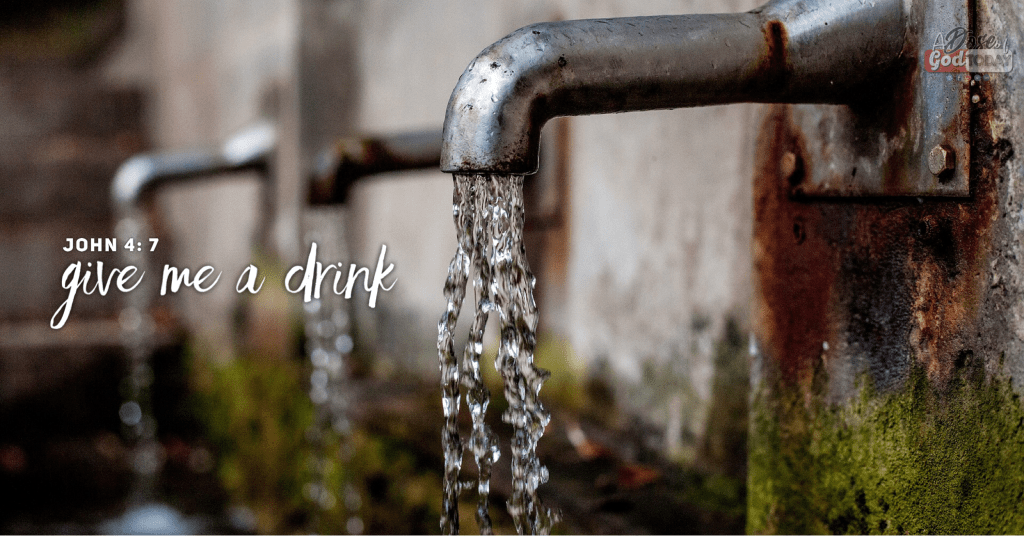
“Give me a drink,” was an invitation of Jesus to allow him to dialogue with her and to know her deepest longing in her heart. Jesus wanted her to allow God to feel her thirst for love and acceptance. The woman was indeed thirsty for such love and acceptance.
This encounter with Jesus allowed her to look deeper into her life, into her many experiences of thirsts for love, for acceptance, for true friendship, for true and lasting intimacy with people whom she loved and those who loved her.
Her dialogue with Jesus turned her bitterness, desperation and sadness into hope and joy. At the end, the words of Jesus, “Give me a drink,” had become her words too, she said, “Give me this water, so that I may not be thirsty again or have to keep coming here to draw water.”Such statement is very deep. This does not only mean to the water itself, but to the deepest thirst and longing of the woman. What she was asking was freedom and comfort from her sadness, desperation, and bitterness from those negative or traumatic experiences in her life that have made her constantly seek what was only temporary.Hence, she realized and found that the “Living Water” is in Jesus, in a person, in God who showed true compassion to her, lasting friendship with her and acceptance of her painful and sinful life.
This is the invitation for us also on this Third Sunday of Lent. Jesus invites us to dialogue with him, because it is in dialoguing with God, is expressing our heart to God and listening to God that we begin to dig deeper into our own well, to recognize the dryness and thirst that we experience in life. Moreover, this will allow us to discover the abundance of God’s love and forgiveness for us.
When we begin to recognize and own fears and failures, sinfulness and weaknesses that we also ask God to fill us, to love us, to forgive us, to give us peace and freedom, to give us life.
We are not called to bury ourselves in fear and anxiety, or in shame and guilt when difficulties come in our life, or to turn towards bitterness and complaints when our struggles become confusing and overwhelming. Like Moses and the Samaritan Woman, let us turn towards God who shall direct us to that Living Water, to life itself, to our life’s contentment and joy with Jesus.
As an exercise for this week, I invite you also to find time of at least 10 to 15 minutes every day, spend those moments in silence. You do not have to say your memorized prayers, but just stay in silence and be comfortable with that. Allow ourselves for self-examination and self-listening and to dialogue, to express to God what is in our heart, to listen to what God would like to tell us, and to allow the Lord to satisfy our thirst. Kabay pa.

Guide Questions:
How have you experienced “thirst” or deep longing in your life? How did you seek to be satisfied?
In searching to be satisfied, how have you encountered and dialogued with Jesus, the true living water in your life?


 A DOSE OF GOD TODAY