Whenever death & disasters happen in our lives, we cannot help but raise the question about the end-time or the end of the world. Ever-present war, pandemic, famine, pestilence, super typhoons, tsunami, hunger, earthquakes, flooding, landslides, and countless death-crimes in life render us anxious and helpless towards our coming future. Our worries about the coming end-times are not only felt around us but also within us. We are not ignorant as to how it feels when our world seems have broken and ended whenever we experience heartache as to the death and loss of our loved ones, or failed in our studies, business endeavors, plans and dreams, or diagnose with serious illness and others. Even worse, Scripture and Jesus himself warns us of these coming end-times as inevitable and surely to happen to our human life.
Related with our uncertainty about end-time are the questions: “What’s the point? What’s the meaning of all these life-endeavors? Is there hope in life?” And above all, at its very heart, raises the question: “What now… and then? Is there Life AFTER Death?”
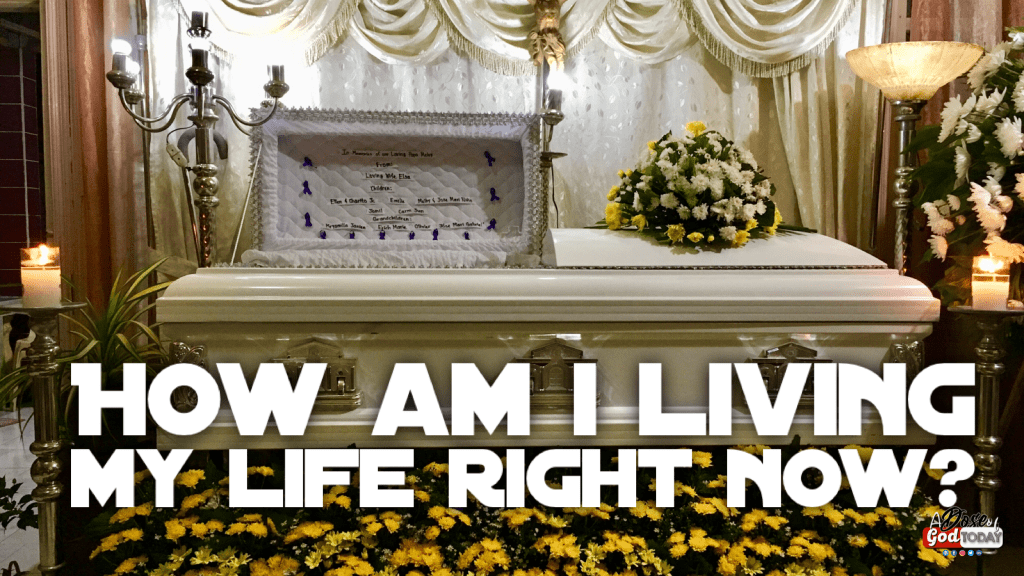
A wise man once said: “The question should not be: ‘Is there life after death’ but rather ‘Is there life BEFORE death’?
True enough, while life-disasters and death surely to happen in life, we should concern ourselves less about what happen to us after life, but rather more so concern about how we live our life before our inevitable death. Regardless whether there is life after death or not, we should never forget the fact that there is life before death that we are still now in. If we come to think of it, we are still now here alive for a reason and purpose to be in this world. It is for us now, as we live this life, to discover and fulfill in life our real reason and purpose to be and live. Our task and concern in life is to live our life now before death to the fullness of our very life-purpose.
Life Before Death would also mean that the greatest loss in life is not death, but what dies inside us while we live. Sadly there are people nowadays who have reasons to die than to live, and people who are still alive but dying and already died inside. Though painful, confusing and disheartening, our experiences of disasters and loss should move us still alive to deeply discover and enable the very reason and meaning of our life-existence. For Jesus, life-death and disasters are not only about end-times or world’s end, but more so about the opportunity for us to testify, that is, to rise to the occasion,…. stand up and witness in life our faith in God through Him, and…. to live-up to our very life-purpose and reason in life. In other words, Jesus is saying to us, that these things will surely happen to us, but with a reason and for a purpose. So, we should consider more our life now before death, rather than our life after death, and as He promised, “By your perseverance in life, you will secure your lives.”
Practical advice then to ponder: Whenever disaster strikes and happens in life, ASK NOT , “Why is this happening TO me?” but rather, “why is this happening FOR me?” Because…. Asking, “why is this happening TO me?” leads to unhealthy self-doubt, blame, guilt, anger, and inner death. Asking, however, “why is this happening FOR me?” leads to meaning, purpose, challenge, responsibility, and resolution.
As we grapple then with the concern about our experience of death & disasters in life, as per advised, ask not: “Why is this happening to me?”, “Is there life after death?” but rather ask, “Why is this happening FOR me?”, “Is there life before death?”, “Do I have or am I having a life now before my death?”. With this, we may be more hopefully grounded to live our lives by its very reason, meaning and purpose, as well as to be a living testimony and witness of our Christian faith, and God’s grace to our present world.
Are you living to die? Or are you dying to live? Do we seek to give life? Or do we suck out life? We have just celebrated All Souls’ Day and remembered the lives of our departed loved ones. We remember not just their life but also how they died. Some may have died in tragic and painful events. Some also may have died peacefully. Remembering their death and being aware also of our own, sooner or later, what gives us hope is the promise of the resurrection, a blessed life that we will share with Jesus.
However, the promise of the resurrection is not just something that will be for the future alone. Its grace and mystery are so vast and beyond any boundaries that we are already being invited in the here-and-now. And so, as we are being invited to hold on to that promise and have a taste of that blessed life in our present context, allow me now to journey with you a bit deeper on this 32nd Sunday in Ordinary Time.
In 2019, I was in a funeral wake of a young professional in his mid-twenties. Because of much pain and hurts that he was experiencing in his young life, he couldn’t endure them. He was helpless and felt hopeless. He felt alone and lonely. All of these directed him to depression until his depression clouded his mind and heart which also led him to kill himself.
Without judging him, such situation brought me to ask myself, how am I living my life right now? Am I letting hopelessness and despair to deprive me to live fully and meaningfully with others?
Back in college, I met a leper in Cebu, an old woman in her 70s, abandoned by her family in her teen-age years when leprosy began to manifest in her body. Yet, despite being abandoned and left alone in the hospital for lepers, she remained hopeful in life by resisting to be eaten up by despair, by emotional hurts, by abandonment and by the very suffering she was enduring. Thus, she even adopted an abandoned baby girl with cerebral palsy whom she named Nancy. She found Nancy in a garbage bin in Cebu. Despite her poverty, she accepted Nancy in her life and let Nancy feel a mother’s love, affection and care. Yet, as Nancy grew up and due to her failing eyesight and old age, she has to let go of Nancy and bring her to a group of Sisters who could provide better the needs of Nancy. Despite the pain of separation and of the loneliness she would endure by losing Nancy beside her, she let her go. In that way, she gave life to Nancy even though she herself struggled to live. She died peacefully in the hospital for lepers knowing that she was capable of loving and being loved.
With this encounter, I also asked myself, am I giving life? Have I tried to give myself in order to give life to others? Or am I just busy living only thinking of myself without any regard and care for others?
In the second book of the Maccabees, we have heard the story of the seven brothers and their mother who were tortured and killed. The king wanted them to violate the law of God. Despite the trials and persecution, the reverence they gave to the law of God made them commit their whole life even up to death. This was their expression that there is more in this life, and that is, the resurrection.
Their story tells us that suffering and persecution, trials even sickness and death are nothing because the righteous, those who are favored by God will be raised up.
This is what Paul also tried to express in his second letter to the Thessalonians. Paul confessed, “The Lord is faithful.” This was his experience and his reminder to the Christians in Thessalonica that amidst trials and persecutions, they too will be confident in God’s faithfulness. Paul also asked for prayers and hoped that the Thessalonians, their hearts, will be directed to the love of God and to the endurance of Christ. Christ is therefore, our strength and confidence in times of trials and the fullness of our joy. This fullness of joy reminds us of the blessed life in the promise of the resurrection.
But let us remember, this fullness of joy or blessed life or the promise of the resurrection begins to unfold today, in our present moment, in the quality of our life and relationships.
This was the failure of the Sadducees, the fundamentalists at the time of Jesus categorically denied the promise of resurrection. For them, this was completely foolish because this was not clearly affirmed in the Pentateuch or the Torah. However, the situation they gave to Jesus of a woman marrying the brothers of her dead husband, one after another death, was a complete misunderstanding of life and the resurrection.
Their denial of the resurrection was a denial of God’s power over death. Their misunderstanding of life that only ends in death expressed hopelessness. And their perversion of one’s life that remains the same if there is ever a resurrection, referring to their question to Jesus, is an insult to the fullness of joy in the resurrection. Resurrection, as Jesus said, is not a state of life that we have now but the fullness of joy and total blessed life shared with the God of hope and of life.
How are we invited now so that the hope of the resurrection shall grow in our hearts, mold our faith and develop the quality of our life and relationships? There are three invitations for us now.
First, live to share hope. This invites us that we ourselves will become an instrument of hope not discouragement or fear. Let our very person and our presence express hope for those friends who may be struggling now, needing support and understanding, company and acceptance. Living to share hope is call from us that we are anchored and secured in our relationship with God, who is our hope.
Second, live to share love. This calls us to go beyond ourselves and beyond our comforts in order to show concretely our love. Living to share love requires our commitment in our relationships which can be difficult, or even painful at times. Yet, it is in truly living to share love that we too experience what life is.
Third, live to share life. This directs us to recognize that we can actually regenerate life, inspire life, defend life and motivate life. Indeed, this is an invitation to us not to suck the life of others, or to abuse, oppress and kill the life of others. All of these are not from the God of life but of evil. Like what Jesus did, this could be quite challenging because living to share life is giving totally our life for the sake of others.
And so, as we are called to live to share hope, love and life, may the God of the Living and not of the dead, bless us with a joyful and blessed life today and tomorrow. Kabay pa.
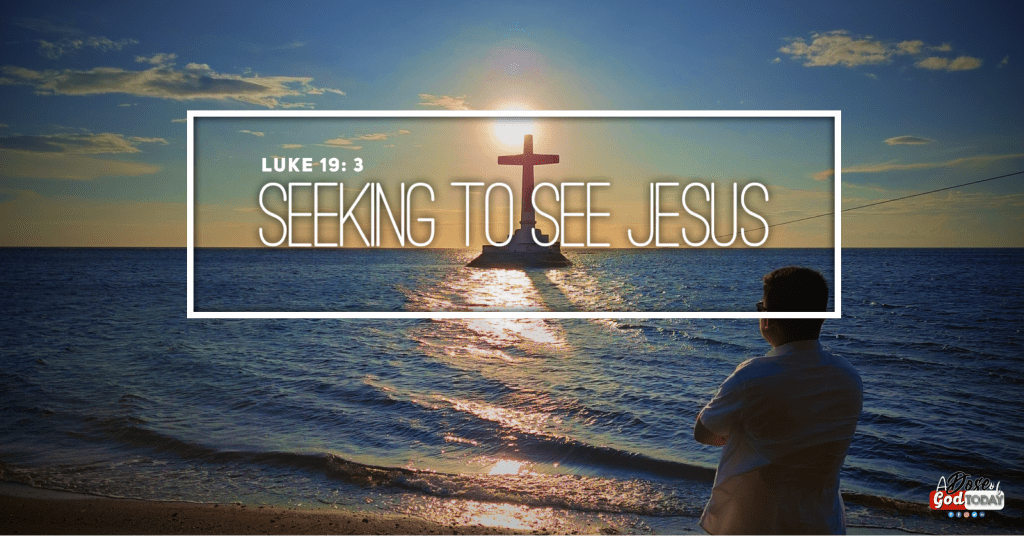
What do I seek in life? Love and acceptance? Understanding and friendship? Comfort and contentment? Health and wealth? In seeking what matters most in our life, we could experience discouragement, rejection, failure, pain or even shame. We know that not everything we can have in life. We also know that life can be sometimes too tough and overwhelming. There are those who may just enjoy life because of the privileges they have. There are also those who at the moment of their birth, pain and struggles seemed to be never ending.
So, in seeking what really matters in our life, which may not necessarily be always material, others may resort to unhealthy and destructive ways especially when they too are not guided. Some may also be led and helped by others to come into right decisions and good discernment in life until they also discover God’s invitations for them and live a happy and holy life.
On this 31st Sunday in Ordinary Time, this is something I want to share with you through an interesting biblical person, Zacchaeus, a Chief Tax Collector, hated and despised by many Jews of his time. He is quite interesting because his very life characterizes each person’s desire to seek what matters most in our life. So, allow me to journey with you today and let us discover together how God calls us.
Zacchaeus, as described by Luke, was short in stature and a wealthy tax collector. His fellows Jews hated him for being a tax collector and someone who was affiliated with the Romans. Remember, at that time, Israel was under the a foreign invader, the Roman Empire who imposed tax on them.
However, we could also ask, how Zacchaeus, a Jew, ended to the side of the Romans, working for them as a tax collector. We could actually imagine the life of Zacchaeus. Thus, being short in height, Zacchaeus as a young boy must have been a subject of bullying. Even until now, among our friends we actually make fun of people who are short or those people who do not belong to the standard of the majority like those who are too tall or too dark, etc.
Because of the physical limitation of Zacchaeus, people looked down on him. It must have been so terrible for Zacchaeus to be bullied publicly and to be hurt emotionally. Zacchaeus must have felt the pain of rejection and disrespect towards him as a person. However, he was helpless against those playmates and other people who had bullied him.
That emotional pain in him must have created a deep emptiness also within him. Thus, being bullied and rejected, Zacchaeus was in search of respect, of acceptance and of affirmation. But then, he could not gain those by just being who he was because people disrespected him for being who he was. Zacchaeus needed a way of getting his revenge. He won’t be able to get what he wanted if he would remain helpless and meek. He needed power and wealth to make those people who have bullied and rejected him to bow down to him.
Zacchaeus grabbed the opportunity the Roman Empire could offer him. The Romans were feared, though hated by the Jews, but were forced to show their respect. People had to bow down to the powerful Romans. Thus, Zacchaeus made himself available in the service of the Romans. This was how Zacchaeus got his revenge against his fellow Jews. He became the chief tax collector and becoming one also meant becoming powerful and wealthy.
Now, Zacchaeus was above those who have bullied him. Zacchaeus could now play the bully himself. As a chief tax collector, he could get his revenge by raising the tax against those people whom he also despised. Because of this, people would now please him, affirm him, and show their respect to him because he had power over them.
Perhaps, Zacchaeus would love to see the faces of those who have abused him emotionally to beg for mercy. He could now demand what he needed and force the people to accept him and pay respect to him.
However, Zacchaeus was never peaceful. He was always restless. At the beginning, this was not what he wanted but because of those pain of rejection and emotional wound, he turned out to be corrupt and a monster in the eyes of the people.
Indeed, like Zacchaeus, to be bullied or to be rejected could create a deep emotional wound in us as well. Because of being helpless, we could not protect ourselves from people who hurt us emotionally such as bullying and rejection at school, in our neighborhood or even at home. As a result, we do not only begin to hate those people who were bullying and rejecting us, but we also hate ourselves for being who we are. We hate ourselves because of the imperfection that people find in us.
Thus, we also begin to think that if only we are not like this, then, people might accept us and love us. This consciousness begins to develop in us until we become a person whom we are not, just for the reason of being accepted, recognized, respected and loved by people around us. This is how we could be seeking what matters most in our life – that is, of being loved, being accepted, being welcomed for who we are.
Now, back to Zacchaeus, in the very depth of his heart, Zacchaeus was seeking to be accepted by the community, which he never experienced. However, he heard about this man, named Jesus. Jesus was a miracle worker, a famous preacher who healed the sick, raised the dead and forgave sinners. St. Luke described to us how Zacchaeus became curious about Jesus. This curiosity actually showed the desire of a human heart to see and encounter God. Yet, we are also confronted by the fact that it is the Lord first who tenderly seeks for us.
This is what the Book of Wisdom tells us. It says, “for you (Lord) love all things that you have made… you spare all things because they are yours, O Lord and Lover of souls… for your imperishable spirit is in all things.” Further, the author of the book tells us how the Lord will confront us of our sins and calls us back to his presence because God seeks for us and desires that we may have the fullness of life. indeed, God desires our salvation, our happiness and complete joy because God sees Himself in us, for we breathe God’s breath.
This explains to us that, indeed, the longing in our heart for God and God’s longing for us is mutual. This is what we also find in Zacchaeus, the bullied who turned to be the bully.
And Luke, described to us the limitations Zacchaeus had, not just his physical limitation of being a short man but also because of his hardened heart, his emotional wounds, his corrupt practices as a tax collector and insecurities. These prevented him to see clearly Jesus, when the Lord was about to pass by. But, these limitations of Zacchaeus did not discourage him to seek further the Lord. There was certainly, a deep longing in his heart. So, Zacchaeus ran ahead and climbed the sycamore tree that he may see Jesus clearly. And truly, Zacchaeus saw the Lord. And Jesus saw him and called him.
For the very first time in the life of Zacchaeus, he felt accepted and welcomed the way he was, thus, he felt being loved. Jesus addressed him with respect and with dignity without conditions and without pretensions. This encounter with Jesus, changed Zacchaeus completely because at last he was loved.
This attitude reminds us of every human heart’s desire to encounter the Lord. We are made for God. God is imprinted in our hearts as we are created in God’s image and likeness. This is what the Book of Wisdom remind us. And so, let us be conscious on that. Let us be aware that we desire and seek God.
Yet, in our desire for God, there will be things that will prevent us to see and encounter God. This is what we find in the story of Zacchaeus. Perhaps, our fear and shame of admitting that we have sinned prevent us in truly meeting the Lord. Fear causes us low self-esteem and to hide because we are afraid of being judged by others, and by the people around us. Shame also prevents us to hold God’s love in our hearts and his forgiveness because we feel that we are not worthy. Our emotional hurts from the past could also hold us back especially when they hardened our hearts to be welcoming of others like that of Zacchaeus.
Our arrogance can also prevent us in meeting the Lord. Our indifference stops us from true conversion. Let us ask then, ourselves, what are those things, addictions, or attitudes that may hinder us from truly seeking God?
Paul in his second letter to the Thessalonians, hoped, “that the name of the Lord Jesus may be glorified in us.” This means that through our very person, our thoughts, actions and works, the presence of our Lord may be revealed.
This is what Zacchaeus challenges us also. Like him, each of us has actually the capacity to overcome anything that holds us back to see God clearly. We are called to run ahead and overcome those attitudes that prevent us from seeing clearly Jesus. Let us look for a sycamore tree where we can climb over our sins and fear. Look for a friend whom you can share you own problems and struggles. Seek the guidance and direction from people who can truly help you. Come to the sacraments with a heart that truly longs for the Lord, because only then, that we are able to overcome those that prevent us from being near the Lord.
We too are reminded in the story that though our heart desires for God, but God desires more to see us, to be with us. Thus, the Lord is constantly looking and searching for us. Jesus was in fact searching for Zacchaeus, searching for a sinner, indeed, we are all the Zacchaeus in the Gospel that Jesus has been searching for. Jesus desires to be with us and that we will be reconciled to him and will be healed from our past hurts and pains. Let us allow then the Lord to search us, to find us and to heal us.
Hopefully, our encounter with Jesus will bring us also into that joy of forgiveness and assurance of love from God that we are forgiven, accepted and respected. This may hopefully lead us too to repair the damage that we have caused to others and to make amendments for our sins like Zacchaeus who promised Jesus to give to the poor half of his possessions and repay four times over those he extorted. A sign of true repentance and conversion and of a heart that has found what really matters most. Kabay pa.
There are people who are fond of paying more attention to trivial things and minutest details. When artists show this to their work of art, the result would really be stunning. However, when a friend or a colleague does this to us, he or she can be irritating. When we also become a person who is obsessed of paying more attention to small things and minutest details, things and people can be stressful to us as we would always find mistakes and failures.
This can also be true in the way we practice our faith and move to the tendency to give more emphasis on structures, physical elements and regulations. This is not surprising as others would always find themselves feel guilty when their prayers or devotional practices were not done properly. Thus, a person would already feel a terrible guilt because he/she fall asleep while praying the rosary. Another, would feel sinful because he/she was not able to go to a Sunday mass while being sick. Some may even judge others for not observing the proper ways of praying, in receiving communion and observing religious practices.
While it is also important to pay attention to what is physical and to structures, there is also a need to find balance. Today, Jesus reminds us to be not so over conscious and obsessed of what is merely external. Jesus invites us rather to draw our attention deeper into our hearts and minds where our intentions and motivations are to be found.
The Gospel of Mark was actually addressed to a community of Jews and non-Jews who became Christians. As these two groups of people lived together as a community, the Jews became imposing to non-Jewish Christians by controlling them to follow their ways, and I mean, external ways of doing things. To follow strictly the external practices became a controversy then. This was how Mark reminded them of the teaching of Jesus.
Jesus reminds us that what comes out from within us, matters most. Jesus pointed this out on how our evil intentions and motivations can be kept hidden within our hearts.
We might be too focused on trivial and external things in the practice our faith but then our attitude towards others is filled with insults and malice, envy and lust, or anger and hatred. Jesus wants us to examine our own motivations and intentions in the way we relate with others, in the way we perform our duties as parents, workers, leaders, professionals or as students. Jesus wants us to bring us closer to ourselves and that is to our hearts and minds so that we will also discover God within us.
Let us remember that though evil intentions and motivations can be kept hidden within our hearts, however, our hearts are also capable of nurturing goodness and kindness. Our first reading from the Book of Genesis reminds us of this today. The second account of the creation tells us that as God created us, God blew into our nostrils the breath of life. That breath of life was God’s breath of the Spirit. What gives us life and what makes us alive is God’s Spirit within us.
God is truly alive in each of us. Every time we breath in, may we remember how God breath his Spirit into us. Every time we breath out, we may also realize that we can give life to others through our sincere devotions and practice of the faith founded in God’s goodness and kindness. Hinaut pa.
O, Kamusta na? Nakakahinga pa? Ginhawa pa? Still breathing?
With a lot of things happening & going on, to say the least, life nowadays is and can be suffocating. We do find ourselves at times breathless & drowning with a lot of restrictions & limitations that even it takes a lot of effort for us to do simple things as natural as breathing. Wearing face masks & shields outdoor limits us to breath naturally & renders us at times gasping for our breath. So, Jal Jineazoyo? How are you? Are you well, okay? Still breathing?
After putting order into chaos, through his breath, God in our first reading creates life. Yes, by means of his “pneuma” – His breath, God has created, creates, & will continue to create life. All the blessings, graces, & good we have always in life are created by God through His breath. When God breathes, life is created, nourished, protected & sustained. And through the Pneuma – the Spirit of His resurrected Son, Our Lord Jesus Christ, God continues to create & renew our Life now & always.
As God continues to do so, however, His creative & creating actions are also hindered by our human ways & traditions.
From our gospel today, we get a sense of how limited & limiting it is for Jesus to continue to God’s work of creation in our lives. While Jesus proclaims & partakes God’s blessing of creation and redemption for all, people then were only concerned about limits, boundaries & restriction as to the proper norms & practices based on traditions. Here we get a glimpse of the tension between God’s offer of fullness of Life and the restrictions of our human ways & standards. Somehow God is giving us His breath – air to breath & live, but we are still struggling on how to breath naturally. We concern ourselves as to how to control our breathing that we are missing & wasting the air, breath, life being given us. That is why Jesus cannot help but to complain: “You nullify God’s word (ways & means) in favor of your tradition you have handed on.” Instead of cooperating in God’s creation, we try to program, limit, control, & restrict His offer of life by our handed-on traditions & practices. Thus, when God breathes, life is created & given us. But when we program & control our breathing, we limit & restrict life and creation.
Be conscious then of our handed-on traditions & standards we expect from life itself for it might not be of God’s life-giving Breath but of our own self-imposed impaling restrictions & limitations. And then, when things are suffocating & breathless, don’t forget to breath. Breath in God’s offer of life to us. Let His Pneuma, breath, Spirit flow into our whole being. Allow it to transform & renew us, rather than be restricted, drowned & strangled by our human traditions & standards.








 A DOSE OF GOD TODAY