Tag: Leadership

  • OUR FAITH IN THE MESSIAH

    OUR FAITH IN THE MESSIAH

    December 4, 2022 – Second Sunday of Advent

    Click here for the readings (https://bible.usccb.org/bible/readings/120422.cfm)

    Have you ever encountered a leader who is filled with vanity and only thinks of himself or herself? A leader in a group or in an organization, or in a company or community or in a nation who has become pretentious but insecure can be very dangerous. It would be in this kind of leaders that we find persons who have no intentions to serve others but rather abuse the authority conferred upon them for their personal advantage and comfort. This is how we suffer because of such ruthless, incompetent and corrupt leaders which may happen even in our small groups, organizations, companies, communities, churches or even countries.

    Our failure as people is when we become indifferent, lenient and have no concern when our leaders turned against the weak and powerless. When members of an organization or even in a small community would play blind over the dishonest dealings of a leader, then, members start to condone and perpetuate such abuses.

    The Hebrew people to whom the Book of the Prophet Isaiah was written had this similar experience. The people had been through a lot of suffering and disgrace. The people suffered because of their incompetent, selfish, abusive and corrupt leaders. Both their religious and political leaders had turned against the weak and the powerless in their society. The appointed leaders who were given authority to build the nation and uplift the people, were the very ones who caused suffering to many. This was how the prophets were chosen in order to call the attention of the leaders and give hope to the suffering people.

    This is what we have heard in the first reading on this Second Sunday of Advent. Isaiah tells us of the birth of a child who will be the Messiah. This child shall restore order, peace, harmony and prosperity through reconciliation and forgiveness of sins, through change of our way of life.

    Isaiah tells us of the person of the Messiah. His arrival will be as silent as a shoot sprouts or as a bud blossoms. Many will not notice his coming for it will be completely no grandeur. It will be simple yet powerful because he has the Spirit of the Lord. He confronts the wicked and the corrupt. He defends the poor and heal the afflicted. He is just and faithful. He brings peace and harmony to all. He is gentle and not violent.

    This is the very hope also expressed in our Psalm today that, “Justice shall flourish in his time and fullness of peace forever.” This is God’s promise which reminds us of the event in Bethlehem, the place of birth of the Messiah. Holding on to this promise of the birth of the Messiah, calls us now to faith. Thus, the second candle of advent has been lit. That is why, that candle is called the Candle of Bethlehem and Candle of Faith.

    Besides, the second reading from the letter of Paul to the Romans invites us to be open and welcoming of everyone, not to be discriminating. Paul expresses this call in two points. First, Paul prayed, “May the God of endurance and encouragement grant you to think in harmony with one another.” This tells us that living in harmony is an act of giving glory to God because the Lord is a God of community. Second, Paul taught, “Welcome one another, as Christ welcomed you.” This tells us that to be able to embrace one another despite our differences, also gives glory to God. Welcoming others is an expression of God’s presence among us.

    Therefore, having harmony in our community, showing compassion, justice and concern for each one is what the Lord calls us to be. This is also what we are hoping for, a time of peace.

    Both readings from Isaiah and Paul are addressed to the unfaithful and the faithful people, to the oppressors and oppressed, to the poor and the rich, to the powerless and the powerful. Indeed, a time of peace shall come through the “birth of a child.” This is the birth of the Messiah who shall come with peace and joy. This is God’s expression of faithfulness to us.

    Yet, this promise also brings an invitation for us and that is to REPENT, to change our wicked ways, to reform our selfish and evil intentions. This is what the Gospel of Matthew tells us through the person of John the Baptist. John, a cousin of Jesus, prepares us to welcome the Lord fully and joyfully, without reserve, pretentions or conditions. John also expressed this in two points. First, to repent, for the kingdom of heaven is at hand. Second, to prepare the way of the lord and make straight his paths.

    The very life of John is a testament of that call to change our ways by “acknowledging our sins.” However, the acknowledgement of sins here is not about our petty-personal-habitual sins that we usually confess. Indeed, there is something lacking in our conscience when we can only see those petty-personal-habitual sins and limit our awareness on our failure to attend Sunday Mass, in our failure to say our prayers, or in telling white lies and our sexual fantasies. Yet, when our heart is blind and indifferent to the many “social sins” in our institutions and communities, our conscience is truly limited or worst damaged! This makes us sick!

    Social sins exist in our groups and communities that condone any structure, or belief or culture that oppresses and abuses people or even the environment, that violates human dignity, suppresses freedom and imposes great inequality.[1]

    That is why, John especially called the attention of the many Pharisees and Sadducees who came to see him. These people were leaders in their communities who cannot even get along with each other but both held power over the people. Both tend to abuse their influence over the people for their own personal advantage.

    Therefore, John calls us to acknowledge our sins of “indifference to corruption and dishonesty, in condoning and tolerating these practices in our institutions and communities, in our failure to side with the poor and the economically disadvantaged, and in our failure to uphold justice.

    Thus, this Second Sunday of Advent invites us now with these three points of reflections.

    First, to fully acknowledge our social sins as individuals and as a community.

    Second, to be more available for God and others. This means that we are called to build among us a culture that is sensitive and aware of the needs of others.

    Third, this calls us to faith, faith in the Messiah that we ourselves will become his presence today as we commit to work for justice, to defend the powerless and to resist the temptation of dishonesty and corruption in our institutions, workplaces, organizations and communities. Kabay pa.


    [1] https://www.wearesaltandlight.org/learn-together/understanding-social-sin

  • CALLED TO BE SHEPHERD

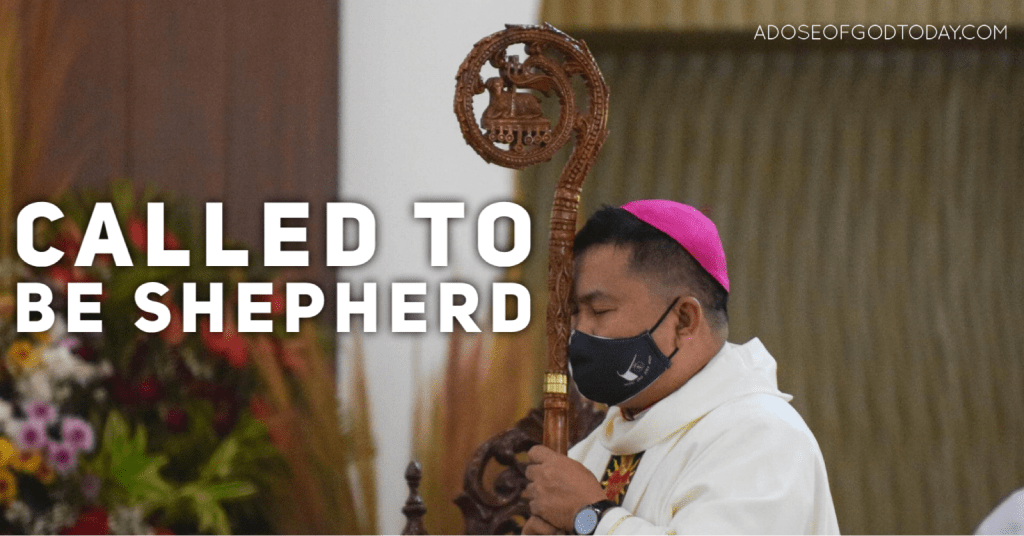
    CALLED TO BE SHEPHERD

    April 25, 2021 – Fourth Sunday of Easter; Good Shepherd Sunday

    + Manny Cabajar, C.Ss.R., D.D.

    Click here for the readings (https://bible.usccb.org/Bible/readings/042521.cfm)

    What is the value of the priesthood in our life? St. John Vianney says, “Without the priest, the passion and death of our Lord would be of no avail. It is the priest who continues the work of redemption here on earth…The priest holds the key to the treasures of heaven…He is the steward of the Lord…Leave a parish for twenty years without a priest and they will end up worshiping the beasts there.” Pope Benedict XVI adds that without priestly ministry “there would be no Eucharist, no mission, not even the Church.”

              Today we celebrate Good Shepherd Sunday and the World Day of Prayer for Vocations. We are blest and rejoice that we belong to the flock of the Good Shepherd, who continues to take care of us through the human shepherds He chooses – the bishops and priests. Through their ministry we are ensured access to the means of our salvation. God may not call us to their kind of life but He invites us to promote and to pray for priestly and religious vocations. There is a decline of young people joining the priesthood or religious life. That may partly be attributed to the materialistic and egoistic culture that regards material comfort and luxury as the way to happiness. But maybe it is also because we have not prayed enough to the Lord to send more laborers to the harvest.

     As we intensify our prayer for more vocations, let us also pray for good and true leadership among those responsible for tending the flock. Jesus sets himself as their model through the image of the Good Shepherd who takes care of His flock. He knows and leads His sheep to green pastures; He seeks out the lost sheep. If needed, He is ready to die for His sheep. The happy priest is one who is not interested in having or getting more, but rather in self-emptying in the service of his flock. The happy priest is one who intimately knows the Good Shepherd and shares his experience of Him with the flock under his care.


    Lord of the Harvest, we pray in a special way for our priests, deacons, seminarians and religious women and men. We beseech You, O Lord, to grant them the grace of fidelity to their vocation. We also ask You to bless their families who continually show great generosity through their spiritual and material support for those who try to listen to Your call and follow You. Amen.

              Brothers and sisters may you have a prayerful and restful Sunday!

  • “Feel Ko? Feel Mo?”

    “Feel Ko? Feel Mo?”

    April 25, 2021 – Fourth Sunday of Easter

    Click here for the readings (https://bible.usccb.org/Bible/readings/042521.cfm)

    Once while giving a graduation speech, the late-Philippine lady senator Miriam Santiago made a joke. She said… Beside the swimming pool, two girls are having this following conversation. G1 said to G2: Know what? you are going to float (Alam mo. Lulutang ka). G2 to G1: Why? Is it because I’m slim, light & sexy? (Bakit? Dahil ba, magaan, slim at sexy ako? G1 replied: No, it’s because you are Plastic (Dahil plastic ka). Funny & rude it maybe, but it tells a lot.

    How do we distinguish a GOOD parent, teacher, friend, politician, leader, mentor or coach from a BAD one? How do we know if that person is real, true, authentic, deep, honest & trustworthy? How do we know that person is fake, shallow, liar & unreliable?

    Nowadays it is normal for us to suspect things simply because it is not easy to know whether it is real or fake. Because it is difficult to detect the authentic from artificial or plastic, the durable from disposable, nowadays we do tend to be suspicious of things & even of one another. Same way with our relationships with others, we rather suspect, doubt, and distrust one another, than believe and trust others because it is more challenging to distinguish who are real or fake, honest or deceitful, smart or shrewd.

    Jesus in our gospel today introduced and made Himself known to us as The Good Shepherd who knows His sheep and His sheep knows Him, and who will lay down His life for His sheep. As Jesus distinguished Himself from a Hired Worker who work for pay and no concern for the sheep, He reminds us here that as OUR good shepherd He is a hands-on and committed caretaker/caregiver of His sheep who maintains a personal intimate relation with His sheep, and will commit His life to live and work with His fold in life.

    Be reminded the risen Lord reveals Himself in FLESH. In last Sunday gospel, as the risen Lord reveals Himself in the midst of the disciples, he showed and asked them to touch and see His wounded hands and feet. Thus, the risen Lord reveals Himself not as ghost but in flesh and bones with wounds. This is very significant because how we witness/recognize the Lord in our life is easily clouded by how we want Him to reveal to us. In other words, “We do not see things as they are, we see them as WE are.” Like, there are Christians who would like to see the risen Lord as “Jesus without a cross”. Jesus here is the risen Lord – without wounds and cross – who reveals to us in full transfiguration and perfect glory who will save our day and provide us success and wealth in life. He is a CEO Jesus of the prosperity gospel who is enjoying and sharing the luxury and pleasure of the so-called “Good” life with all His followers. There are also Christians who would like to see the risen Lord as “Cross without Jesus”. Jesus here is the risen Lord not in flesh but in spirit – a ghost. Here Jesus is believed to be not anymore in this world but in another spiritual realm waiting & welcoming us to the next life, but remain at a distance from our daily life-struggles.

    However we like to see our risen Lord in our lives now – whether as “Jesus without a cross” or “Cross without Jesus”, the fact remains that, the risen Lord has made Himself known to us as “Jesus with a Cross” – a risen Lord in wounded flesh and bones who struggles and sacrifices painfully yet victoriously in life. The risen Lord then is a seasoned/experienced life-hero who, by letting us touch and see His wounds in Life – not His glorified body or His spirit, is now willing to shepherd, coach and journey us in life. In other words, the risen Lord is Our Good Shepherd because He is hand-on and committed in making known Himself and in journeying with us in our day-to-day humanity and struggles with joys, pains, and wounds of life.   

    We Christians proclaim that our risen Lord Jesus Christ is OUR good shepherd. We believe that He is our Shepherd, who knows and loves us personally. We also believe that we know Him personally for we know His voice.

    Particularly For us Filipino Catholic, we do have special or unique take in knowing our Good Shepherd. We know Him not only because Kilala natin siya but because Dama natin siya. Culturally sense-feeling perceptions are important to us. Like,… I may know you, but I may not feel you. I may feel you though I may not know you. (Kilala kita, pero di kita ramdam. Ramdam kita kahit di kita kilala). This is how we distinguish real from fake & how we discern good & bad.

    Same way as we Filipinos have this natural felt-instinct & sense to distinguish the real from fake, to discern the good from evil, we also come to be familiar with & know more the shepherd’s voice through our gut-sense and feelings. We do come to know the risen Lord as our true Good Shepherd in life not only by our volition, consent & reasonings, but most of all through our sense & feeling perception (damdamin at kalooban). By our sense-perception & feeling-gut insights, we come to know the risen Lord with us – in person & in flesh. Knowing the Shepherd is thus not only for us an intellectual or cognitive familiarity but more so a deep felt-sense knowledge and insight of His presence, love & blessing.

    We pray then that the Easter Season this year be our moment to enhance and improve our special felt-sense of knowing our True & Good Shepherd, so that we may not be gone astray from His fold but rather have a much deeper relationship with Him, and be always attuned with His will & plan for us now, especially during these pandemic times.

    So Help Us, God. So May it Be. Amen.

  • Great Leaders

    Great Leaders

    March 3, 2021 – Wednesday of the Second Week of Lent

    Click here for the readings (https://bible.usccb.org/bible/readings/030321.cfm)

    Months from now, we will find ourselves preparing for national and local election. Campaign fever will then be on the hype. Candidates will have their own way and gimmicks of selling and advertising themselves. Meaning, they broadcast their own greatness, i.e. how great they are that they should deserve our votes.

    But what is greatness? What does the world consider great nowadays? Who do we regard as great people today? Where does greatness rest? How do we measure greatness? Is it in popularity, good looks, eloquence, wealth, family heritage, influence, prestige or power? Do we still fall for the allurement that greatness of leaders lay in guns, gold and goons? Are people great because of their successes, achievements, awards and credentials?

    Jesus has indeed a different view and perception of what greatness is. Here, Jesus was warning his disciples of his coming suffering, persecution and resurrection, but his disciples were more pre-occupied and concerned about who is the greatest among them. He then rebuke and warned them: “whoever wishes to be great among you, you shall be your servant; whoever wishes to be first among you, you shall be your slave.” In other words, if you want to be great, be servant of all.  If you want to be first, be a slave to all. For him, there is greatness in humble service and true greatness resides in humble service. He wants us to be servant-leaders, leaders who lead not by power or greatness but through humble service to others.

    Many candidates for government office and leadership today declare that they decide to run because they claim they want to serve the Filipino people. They also advocate that only through their greatness and power they can serve us, Filipino. They promise that if we vote for them, they will serve us more and better than before and others.

    If they are really serious with their promise of service, the test is after the election. If they win, would they serve us or serve themselves? If they lose, would they still serve us?

    Jesus is telling our would-be leaders today: “If you want to be great, if you want to lead, if you want to be first, be a servant and slave of all. Practice what you preached. Walk the talk.”

    For us now who have another chance to practice our right to vote our leaders, may we be wise enough to choose our leaders by their humble service to the nation rather than by their popularity, power and authority-based greatness.

    As we pray to have good conscientious leaders, may we also be conscientious and wise enough to elect & vote rightful servant leaders for the future of our country & society. So Help Us God. So May it be. Amen.

  • Be Influenced & Influencing

    Be Influenced & Influencing

    January 31, 2021 – Fourth Sunday in Ordinary Time

    Click here for the readings (https://bible.usccb.org/bible/readings/013121.cfm)

    It is once said that “Leadership is about making others better as a result of your presence and making sure that impact lasts in your absence.”

    We do all know something about leadership & authority. Many people have exercised their leadership and authority on us. In many ways, they have influenced us. And we have also exercised leadership & authority on others and in one way or another has influenced them. We do know how to be influenced by others & to influence others, as well.   

    Sometimes it is even easy to tell who mostly influences other people’s lives. They will quote their parents or a teacher or someone they grew up with who have greatly influenced & lead their lives for better than worse. Yes, influences can be negative. But as soon as someone says: “As my mother always used to say…” practically what follows is surely something that influenced the life of the speaker in a positive way. We consider these leaders or authorities as the great peoples in our lives – the one who made us feel great about ourselves & helped us grow. They have in one way or another helped us form our values & principles in life, and have greatly impacted our lives to be a much better person.

    That is what real authority does. It is life-giving, growth-giving, affirmative, positive and helpful. The word itself is an indication of this. It comes from a Latin word “augere”, meaning “to make grow”. Authority then is power or influence not to lord over and control others but to help others grow. Leadership lies not on the power or control you have on others but on the influence & impact you have for others to grow. Not power to lord over others but power to influence & form others.

    That is why true indeed, “Leadership is about making others better as a result of your presence and making sure that impact lasts in your absence.” It is all about our influence to foster growth on others & help them become much better version of themselves, even with or without our presence.  

    In our gospel today we heard that “his teaching made a deep impression on them… because he taught them with authority.” The people who listened to Jesus that day in Capernaum were struck by his authority & leadership.

    That is what happened to the people when they listened to Jesus in their synagogue. Hearing him they (even the demoniacs & possessed) began to open up & understand their own potentials & possibilities for life & growth. He gave them hope. He treated them as friends and equals. He did not talk them down, did not flatter & sweet-talk them as the scribes do. He told them instead to be true & be realistic about themselves than they had ever been before. Through the words of Jesus with authority, they realized that God calls them to greater things than they never had thought possible. They come to experience then God’s leadership in their lives.

    The same thing happens to us whenever we listen to Jesus, as God’s word for us through the Scriptures. Every time we read or listen to the Word of God, especially to the gospels, challenging it might be, we are influenced by the wisdom and message of Jesus. The words of Jesus have greatly influenced our lives that whenever it is proclaimed to us again and anew, it constantly offers us life, faith, and hope. It challenges to grow to be a much better person before God and other, and it also empowers us to do great things for others.

    Being led & influenced by Jesus in our lives do not usually make life easier, but definitely it makes life much more worthwhile! His authority, leadership, & influence do make us now do what all leaders should do: Foster growth and life in oneself & others. In other words, influenced & led by Jesus’ authority, we should also now lead & influence others, by fostering growth & making other people’s lives better.   In this Eucharist today, may Jesus, the Word of God continue to influence and direct our lives so that we could also be a better influence in fostering growth in our church, society & nation. Amen.