When a heart becomes “lukewarm,” it is neither moved nor affected in any way from what is happening around. A lukewarm-heart becomes indifferent, denying or incapable of understanding others and seeing others or worst no compassion towards others. It is equivalent to say that we have become “numbed and insensitive.” This leads to spiritual death and deaths to our relationships with people, disconnected with what surrounds us.
This is what John confronted in today’s first reading calling out the Christians in Sardis and Laodicea who were neither hot nor cold, but lukewarm. They seemed to have lost the spirit or denied perhaps the spirit of God among them because of the challenging and difficult circumstances. Moreover, another reason was the affluence they have experienced. The Christians became rich, comfortable and gained influence that they thought they have no need of anything not even God. This was a clear denial of God and made the self to be at the center.
This what made the first Christians in these cities to be lukewarm for they were neither anymore moved nor challenged by the Gospel and by the needs and sufferings of their neighbors. The SELF has become the most important. Comfort, material riches and influence intoxicated the self to the point that they have become detached.
Yet, John expressed his love for these people and did not want to lose them. Hence, John said, “For those whom I love, I reprove and chastise. Be earnest, therefore, and repent.” John called them again because he wanted to gather them and to let the Lord work more wonders with these people.
This is how we also witnessed the conversion of Zacchaeus in the Gospel. Zacchaeus who were unmoved by the difficulties of his fellow Jews over the high taxes imposed on them, finally found meaning in his life. Though Zacchaeus tried to look for Jesus, but little did he know that the Lord was first looking out for him. Jesus was in search for Zacchaeus because the Lord has a surprise for him.
We heard that as soon as Jesus saw Zacchaeus from a tree, Jesus called him by name and declared to bring blessings into the home of Zacchaeus. This encounter was not merely a meeting of the two, but it was the Lord’s way of letting Zacchaeus know his own pains and suffering, his own sins and failures, yet, the Lord remains all-embracing and forgiving. This moved Zacchaeus very much and found himself once again, loved and forgiven.
Such encounter also made Zacchaeus to come closer to the Lord that as a sign of his own conversion, he offered to repay those whom he extorted. The presence of Jesus in his house is God’s presence indwelling. Freedom and life has come to Zacchaeus and to his household.
The Lord also invites us today to allow him to confront us when we have become lukewarm, unmoved, unmotivated and unenthusiastic. Like Zacchaeus may we find forgiveness and the fullness of life in Jesus and in our true human relationships and not in our personal comforts, not in our affluence and not in our successes. Kabay pa.
How would the end of time look like? What would happen to us and to the world? When the pandemic struck us in 2020, I have friends who really asked if that was the beginning of the end of time. Even in social media sites and radio stations, there were people who entertain such thought because of the massive anxiety it caused us and the millions of the lives lost in this pandemic growing daily. Indeed, it was terrifying and horrifying seeing dead bodies of covid patients wrapped and buried in mass graves in many countries, even here. Hence, many of us would perhaps express fear of the end of time and imagine the destruction of the world, that there will be calamities and unimaginable tragedies, that there will be great suffering, pain and death.
Our readings this Sunday seemed to have the same horrifying images also. The first reading from the Book of Prophet Malachi prophesied about the destruction of the evildoers. In the Gospel of Luke, Jesus described the signs that will come like the powerful earthquakes, famines, plagues, wars, and persecutions.
However, does the end of time really mean to be terrifying and horrifying for us? To answer this question let us see closely the prophesy of Prophet Malachi and the words of Jesus in the Gospel of Luke so that we too will be able to discover God’s invitation for us on this Sunday.
The prophecy from the Book of Prophet Malachi was addressed to all the Israelites who have returned from exile. However, at their return the prophet saw how the leaders of the Jewish community had become corrupt, abusive and indifferent to the common people.
Those words of destruction and death are meant for those who continually reject God and oppressed His people. Yet, the prophecy is also a hopeful promise to end the evil institution and the end of corruption and death. And for those who remained faithful and in friendship with God, the words of Malachi meant comfort and strength, for to them, the Lord will come to bring healing. And this will be the most wonderful and joyful time.
In the Gospel of Luke, Jesus warns us of those who acted like a “god” and not to follow them because they only lead us to death and not to life. Jesus also reminds us of the sufferings in life that may come but he comforts us not to be terrified and not to be afraid. Jesus promises us with his presence abiding in us. He will never leave us alone. Jesus will walk with us and accompany us.
Moreover, at the fulfillment of time, Jesus will be with us in person with his power and glory. And when he comes, Jesus will gather His people who believed in him and trusted him even in difficult times. His coming will be the end of the corrupt and the murderers. It will be a destruction of the powerful and arrogant, the ruthless and the violent.
Now, the beautiful message lies here. The message of comfort and strength, of joy and peace is for us who are waiting patiently for the end of time. This is what St. Paul tells us for us who believe in Jesus that the end of time is not something that we should be afraid. It is not a terrifying event but it will be the most joyful moment of our life. Meeting the Lord is a moment of fulfillment of all our hopes, prayers, desires and dreams.
However, it will surely be a destruction to what is evil. It will be the most terrifying moment for those who continually reject God and for those who pretend and act like a god.
With all of these, what can we do then, as we patiently wait for the second coming of Jesus? God in His generosity and love prepares us daily for that wonderful moment of our life. God prepares us by making Himself felt daily and in every moment and event in our life. Jesus reveals himself in us and through us. Indeed, Jesus’ words will not pass away, his promises will never fade. God is faithful and He is ever present with us. That is why, it is very important that we become discerning and welcoming of Jesus’ presence being revealed in us and around us.
How do we do it then? Our prayers as constant communication with God, both individually and as a community, will help us to make ourselves open to God. When we pray, we allow God to transform us and transform the way we look at things, the way we judge things and people and our way of relating with others. Thus, the effect of constant talking and listening to God forms us to be more aware of His presence in our life. Prayer is here not about murmuring our memorized prayers and novenas but being able to talk to God, listen to him by being able to reflect and contemplate God’s voice and actions in our life.
This calls us to recognize God in everyone and in everything. What would be its consequence now? When we grow tired from praying because our dreams and desires were not granted, remember that God never grows tired in making Himself known to us. God also reveals himself in moments of failures and defeats. When we become confused and doubtful of our faith, remember that God never surrenders on us. God makes himself known even in moments of our pain and suffering. When we feel that we are surrounded by evil, corruption and deaths, remember that God brings justice and makes himself bright even in the darkest part of our lives as Christians and members of our community.
As we are about to end the liturgical calendar and begin the Season of Advent in few weeks’ time, let us make this week more wonderful and exciting. Let us intensify our “Wi-Fi connection” with God, by making our prayer frequent and sincere. Hopefully, this will lead each of us to see and feel the face of God among ourselves and even among those people who are not familiar to us and events that may be surprising and strange for us. In this way, we hope that we too will grow in our faith and become more excited in the end of time where we will certainly meet the Lord, who is the fulfillment of all our dreams and hopes. Kabay pa.
Whenever death & disasters happen in our lives, we cannot help but raise the question about the end-time or the end of the world. Ever-present war, pandemic, famine, pestilence, super typhoons, tsunami, hunger, earthquakes, flooding, landslides, and countless death-crimes in life render us anxious and helpless towards our coming future. Our worries about the coming end-times are not only felt around us but also within us. We are not ignorant as to how it feels when our world seems have broken and ended whenever we experience heartache as to the death and loss of our loved ones, or failed in our studies, business endeavors, plans and dreams, or diagnose with serious illness and others. Even worse, Scripture and Jesus himself warns us of these coming end-times as inevitable and surely to happen to our human life.
Related with our uncertainty about end-time are the questions: “What’s the point? What’s the meaning of all these life-endeavors? Is there hope in life?” And above all, at its very heart, raises the question: “What now… and then? Is there Life AFTER Death?”
A wise man once said: “The question should not be: ‘Is there life after death’ but rather ‘Is there life BEFORE death’?
True enough, while life-disasters and death surely to happen in life, we should concern ourselves less about what happen to us after life, but rather more so concern about how we live our life before our inevitable death. Regardless whether there is life after death or not, we should never forget the fact that there is life before death that we are still now in. If we come to think of it, we are still now here alive for a reason and purpose to be in this world. It is for us now, as we live this life, to discover and fulfill in life our real reason and purpose to be and live. Our task and concern in life is to live our life now before death to the fullness of our very life-purpose.
Life Before Death would also mean that the greatest loss in life is not death, but what dies inside us while we live. Sadly there are people nowadays who have reasons to die than to live, and people who are still alive but dying and already died inside. Though painful, confusing and disheartening, our experiences of disasters and loss should move us still alive to deeply discover and enable the very reason and meaning of our life-existence. For Jesus, life-death and disasters are not only about end-times or world’s end, but more so about the opportunity for us to testify, that is, to rise to the occasion,…. stand up and witness in life our faith in God through Him, and…. to live-up to our very life-purpose and reason in life. In other words, Jesus is saying to us, that these things will surely happen to us, but with a reason and for a purpose. So, we should consider more our life now before death, rather than our life after death, and as He promised, “By your perseverance in life, you will secure your lives.”
Practical advice then to ponder: Whenever disaster strikes and happens in life, ASK NOT , “Why is this happening TO me?” but rather, “why is this happening FOR me?” Because…. Asking, “why is this happening TO me?” leads to unhealthy self-doubt, blame, guilt, anger, and inner death. Asking, however, “why is this happening FOR me?” leads to meaning, purpose, challenge, responsibility, and resolution.
As we grapple then with the concern about our experience of death & disasters in life, as per advised, ask not: “Why is this happening to me?”, “Is there life after death?” but rather ask, “Why is this happening FOR me?”, “Is there life before death?”, “Do I have or am I having a life now before my death?”. With this, we may be more hopefully grounded to live our lives by its very reason, meaning and purpose, as well as to be a living testimony and witness of our Christian faith, and God’s grace to our present world.
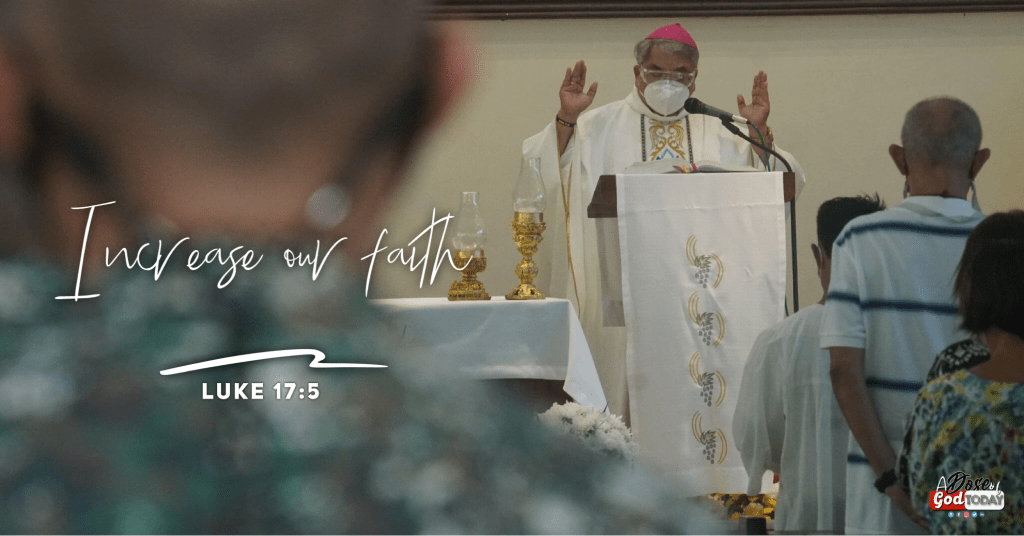
It must have been difficulty and almost an impossible task to do what Jesus said to his disciples. Not to cause another to sin and to forgive one’s brother or sister many times are reasons why the Apostles of Jesus asked him, “Increase our faith.”
The weight of the call of duty of being a believer is so great for it requires commitment of oneself to the Lord and to what the Lord asks us to do and to be. Faith is therefore neither an affiliation to some group or organization nor to be partially accepted and practiced in one’s life. This reminds us again, that faith, is basically our relationship with the Lord who has called us. It is our response to the Lord who first loved us, as Pope Emeritus Benedict XVI said. Thus, faith molds our way of life, our way of thoughts and actions and affects significantly our relationships with each one as a community and those outside of our community.
What the Apostles asked of Jesus to increase their faith is a prayer to grow deeper, closer and more intimately in their relationship with Jesus that will make them more like him.
In a way, Paul expressed this in his letter to Titus. He directed Titus on what qualities to look for in appointing presbyters or elders and bishops in those Christian Communities. These people who shall be God’s steward are called to be Christ-centered and faith-oriented for they represent God and lead God’s people closer to the Risen Christ. This is their call of duty as leaders and as Christians. Hence, being a person that causes people to sin and becoming unforgiving is tantamount to being unchristian, being an unbeliever.
This is the very invitation for us today, that like the Apostles we may also ask the Lord to increase our faith. When we are tempted to give in to our selfish desires that may lead others to also sin, we pray, increase our faith Lord. When we are tempted to resort to violence because of our frustrations, failures and unfulfilled hopes which will affect our relationships with people, we pray, increase our faith Lord. When we are overwhelmed by our anger and hatred that our hearts become unforgiving, we pray, increase our faith Lord. When our heart will also tend to choose to be indifferent, cold and unconcerned of others, not wanting to relate and be involved in the struggles of others, we pray, increase our faith Lord. Kabay pa.
Are you living to die? Or are you dying to live? Do we seek to give life? Or do we suck out life? We have just celebrated All Souls’ Day and remembered the lives of our departed loved ones. We remember not just their life but also how they died. Some may have died in tragic and painful events. Some also may have died peacefully. Remembering their death and being aware also of our own, sooner or later, what gives us hope is the promise of the resurrection, a blessed life that we will share with Jesus.
However, the promise of the resurrection is not just something that will be for the future alone. Its grace and mystery are so vast and beyond any boundaries that we are already being invited in the here-and-now. And so, as we are being invited to hold on to that promise and have a taste of that blessed life in our present context, allow me now to journey with you a bit deeper on this 32nd Sunday in Ordinary Time.
In 2019, I was in a funeral wake of a young professional in his mid-twenties. Because of much pain and hurts that he was experiencing in his young life, he couldn’t endure them. He was helpless and felt hopeless. He felt alone and lonely. All of these directed him to depression until his depression clouded his mind and heart which also led him to kill himself.
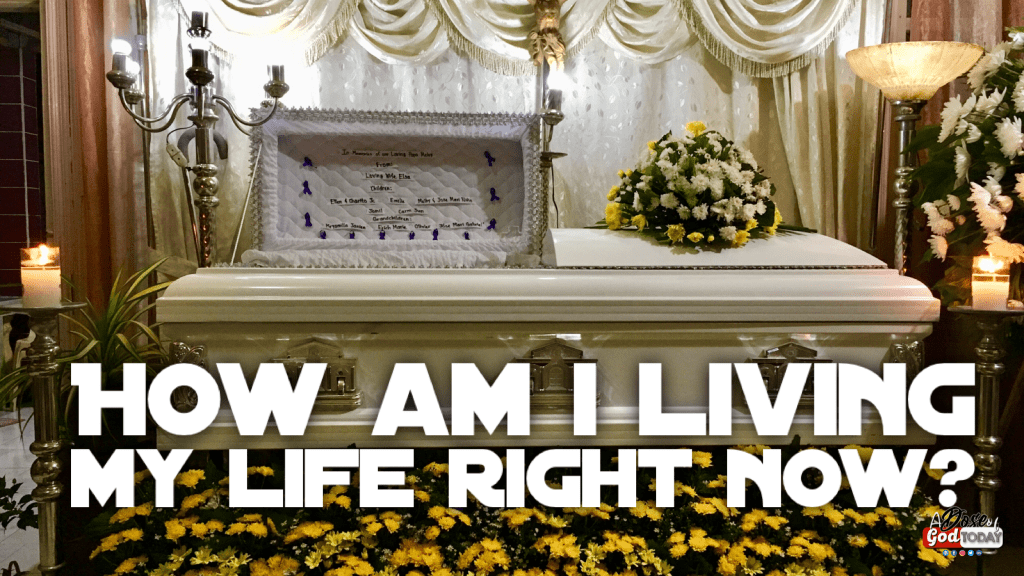
Without judging him, such situation brought me to ask myself, how am I living my life right now? Am I letting hopelessness and despair to deprive me to live fully and meaningfully with others?
Back in college, I met a leper in Cebu, an old woman in her 70s, abandoned by her family in her teen-age years when leprosy began to manifest in her body. Yet, despite being abandoned and left alone in the hospital for lepers, she remained hopeful in life by resisting to be eaten up by despair, by emotional hurts, by abandonment and by the very suffering she was enduring. Thus, she even adopted an abandoned baby girl with cerebral palsy whom she named Nancy. She found Nancy in a garbage bin in Cebu. Despite her poverty, she accepted Nancy in her life and let Nancy feel a mother’s love, affection and care. Yet, as Nancy grew up and due to her failing eyesight and old age, she has to let go of Nancy and bring her to a group of Sisters who could provide better the needs of Nancy. Despite the pain of separation and of the loneliness she would endure by losing Nancy beside her, she let her go. In that way, she gave life to Nancy even though she herself struggled to live. She died peacefully in the hospital for lepers knowing that she was capable of loving and being loved.
With this encounter, I also asked myself, am I giving life? Have I tried to give myself in order to give life to others? Or am I just busy living only thinking of myself without any regard and care for others?
In the second book of the Maccabees, we have heard the story of the seven brothers and their mother who were tortured and killed. The king wanted them to violate the law of God. Despite the trials and persecution, the reverence they gave to the law of God made them commit their whole life even up to death. This was their expression that there is more in this life, and that is, the resurrection.
Their story tells us that suffering and persecution, trials even sickness and death are nothing because the righteous, those who are favored by God will be raised up.
This is what Paul also tried to express in his second letter to the Thessalonians. Paul confessed, “The Lord is faithful.” This was his experience and his reminder to the Christians in Thessalonica that amidst trials and persecutions, they too will be confident in God’s faithfulness. Paul also asked for prayers and hoped that the Thessalonians, their hearts, will be directed to the love of God and to the endurance of Christ. Christ is therefore, our strength and confidence in times of trials and the fullness of our joy. This fullness of joy reminds us of the blessed life in the promise of the resurrection.
But let us remember, this fullness of joy or blessed life or the promise of the resurrection begins to unfold today, in our present moment, in the quality of our life and relationships.
This was the failure of the Sadducees, the fundamentalists at the time of Jesus categorically denied the promise of resurrection. For them, this was completely foolish because this was not clearly affirmed in the Pentateuch or the Torah. However, the situation they gave to Jesus of a woman marrying the brothers of her dead husband, one after another death, was a complete misunderstanding of life and the resurrection.
Their denial of the resurrection was a denial of God’s power over death. Their misunderstanding of life that only ends in death expressed hopelessness. And their perversion of one’s life that remains the same if there is ever a resurrection, referring to their question to Jesus, is an insult to the fullness of joy in the resurrection. Resurrection, as Jesus said, is not a state of life that we have now but the fullness of joy and total blessed life shared with the God of hope and of life.
How are we invited now so that the hope of the resurrection shall grow in our hearts, mold our faith and develop the quality of our life and relationships? There are three invitations for us now.
First, live to share hope. This invites us that we ourselves will become an instrument of hope not discouragement or fear. Let our very person and our presence express hope for those friends who may be struggling now, needing support and understanding, company and acceptance. Living to share hope is call from us that we are anchored and secured in our relationship with God, who is our hope.
Second, live to share love. This calls us to go beyond ourselves and beyond our comforts in order to show concretely our love. Living to share love requires our commitment in our relationships which can be difficult, or even painful at times. Yet, it is in truly living to share love that we too experience what life is.
Third, live to share life. This directs us to recognize that we can actually regenerate life, inspire life, defend life and motivate life. Indeed, this is an invitation to us not to suck the life of others, or to abuse, oppress and kill the life of others. All of these are not from the God of life but of evil. Like what Jesus did, this could be quite challenging because living to share life is giving totally our life for the sake of others.
And so, as we are called to live to share hope, love and life, may the God of the Living and not of the dead, bless us with a joyful and blessed life today and tomorrow. Kabay pa.






 A DOSE OF GOD TODAY