We cannot deny Life during Covid pandemic times had rendered our lives unstable, unclear, and unknown. With the challenging reality upon us then, we found ourselves disable & limited. Somehow someway, not unlike Blind Bartimaeus in our gospel today, if not blinded by the overwhelming difficulties we were facing, we were sightless & without a vision.
And when the Lord would ask us then, “What do you want Me to do for You?” without a doubt, we do have a lot of wants and needs from Him, to at least save our day. But over & above our urgent needs & wants from the Lord, we do want always some clear vision & direction as we face the life-challenges. Like Blind Bartimaeus, our difficult condition calls for more than just sympathy, concerns & assistance but most of all, a new clear set of meaning, ability & purpose in life. Like Bartimaeus, deep inside we cry before the Lord praying: “Lord, I want to see”. Somehow this is what we want the Lord to do for us: “Lord, we want to see.”
Without question, the Lord will show us & reveal to us life amidst, behind & beyond challenging realities. He will give us sight, direction & vision in life as we struggle with it now and ahead. But we also have to do our part for the miracle to happen & blessings to be revealed to us, for us to see not only in sight, but in Faith. And we have much to learn from Bartimaeus here.
First, same way as he listens of the Lord’s arrival, we do need to be sensitive of the Lord’s presence in our midst. Second, we do need to call the attention of our Lord & others about our own presence: “Lord, have pity on Me.” Third, we need to throw ourselves on His mercy & express our needs & intentions, praying: “Lord, I want to see.” And above all, we must trust & have faith in Him with His plans, ways & will for the grace of sight, vision, inspiration & direction to happen.
The LORD’s Presence, OUR presence, our Needs & His Graces with our Faith are somehow the essential ingredients for us to taste & see God’s greatness in our lives despite challenging times. Same as Bartimaeus, somehow we are to (L.O.N.G. : L-ord’s, O-ur presence, in our N-eed of His G-races) LONG in FAITH for miracles to happen in our lives.
Lord, as we look in sight what is going on with us & ahead of us, make us also long to SEE in faith what better You in store for us now & always.
What motivates me most these days? What drives me to do my best? What is it that I desire for myself? What is it really that I am looking for? – these few questions bring us into more awareness of where we are at the moment and how our actions and decisions are molded by what we nurture in our heart and mind.
It is basic and natural to each of us to seek what would give us security and assurance in life. In every stage of our life, since our infancy until towards our older adulthood, having a sense of security and assurance is a must. This is the very reason why we do things and aspire to make our life comfortable, easier, and independent. We want and we need security in terms of material things in life and also security in our relationships. We seek security in our studies and jobs as well as in our friendship, family and marriage. We want a secured future for ourselves and for people whom we love.
People, because of this nature in us, would also risk to invest their time, talent, treasure and whole person in order to achieve and gain a return of investment. In fact, just this month, political aspirants have just filed their certificate of candidacy. And as early as the first quarter of this year, there were already hundreds or even thousands of big tarpaulins with the over-sized photos of politicians along the streets and highways, in every corner and post. Such move is a way of securing themselves a seat in the political arena. And what drives and motivates our political aspirants? Public service? Political manipulation? Self-giving to the people? Or selfish political agenda?
These are just few examples of our need and reality of wanting security in life. This reality is what this 29th Sunday in Ordinary Time has also reminded us. And so, allow me to reflect with you how the Lord calls and challenges us to become better Christians.
James and John, who were close relative of Jesus, cousins actually, dared to ask favor from Jesus. They said, “Teacher, we want you to do for us whatever we ask of you.” What they actually wanted was to have a secured seat when Jesus reigns in his kingdom. Each of them asked that each one will be able to sit one at his left and one at his right.
The two actually imagined that Jesus’ kingship is like of this world filled with political power and manipulation, wealth and influence. Having a seat at his side will make them superior above other disciples. Why not? They were close relatives of Jesus. These two used this closeness with Jesus to secure their future and to advance such a selfish desire of being comfortable and staying in power.
In our culture today, we call this “Padrino System.” This is value system in our Filipino Culture that gains favor, promotion, or political appointment because of family affiliation (called as nepotism) or through friendship (called us cronyism).[1] And this happens even if the person has no qualifications or not deserving at all.
Nevertheless, this is motivated by selfishness. That is why, Jesus confronted the two that such selfish desire cannot be possible in the kingdom of God. To be entitled to it is futile because only God knows and only God grants.
This irked the other disciples of Jesus because of the selfish intentions of the two. They wanted security in their life by securing a seat of power, thus, leaving the others behind. Indeed, it was expected that they must have compared each other as to who was better, brighter and closer to Jesus because each one also wanted security and assurance of what was to come.
However, this became an opportunity for Jesus to teach the disciples of the value of the kingdom of God. What matters most is not what one can gain, or what we will be able to achieve, not even the influence, power or wealth that we gather and possess. In the Kingdom of God, to be great is to be able to give oneself for others. Greatness then is not measured as to how much people adore or praise us, but with our capacity to serve and to love. It is by being able to give oneself for the sake of others.
Our security then is found not with the comforts and riches we have in this world, but with our relationship with the Son of Man, with Jesus. The Lord himself is our true security and assurance that above all else, the Lord gives us true comfort and contentment in life who first gave himself to brings to the fullness of life.
This is what Prophet Isaiah told us in the first reading that through the life of the Suffering Servant (Jesus), we shall see the fullness of light and life. The letter to the Hebrews also reminds us of such security with Jesus as our High Priest for with him and in him we are given “confidence to approach the throne of grace to receive mercy and find grace.”
Hence, as we celebrate World Mission Sunday today, let Jesus himself be our true security and assurance and our contentment through our capacity to serve and love others without any selfish intentions to seek praises and favor.
Let our Christian faith then be a true expression of that capacity in us to serve and love others even when we called to make a sacrifice, for giving and in loving that we are already secured and assured in the kingdom of God. Hinaut pa.
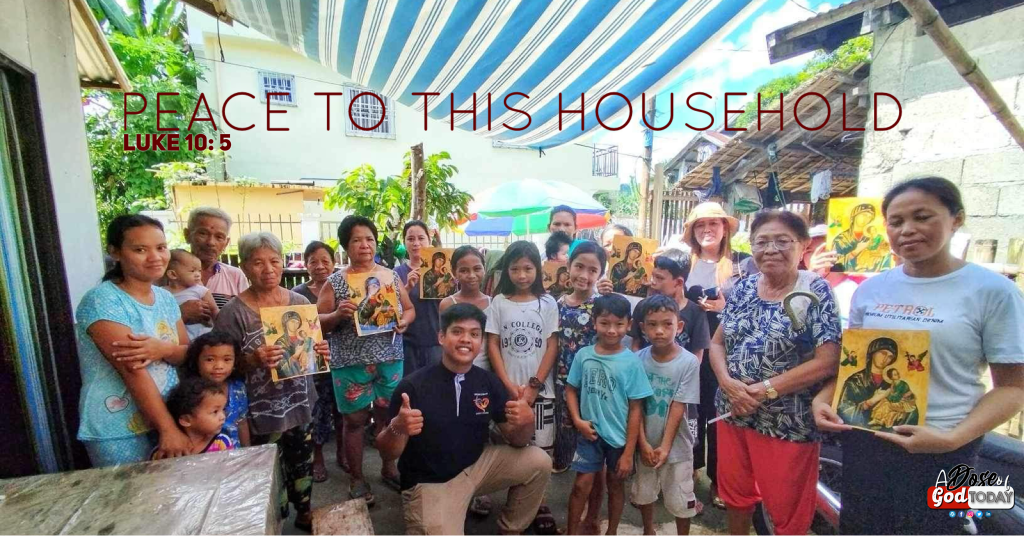
For the past days, our sub-mission team in Barangay Opong, in the Municipality of Catubig, Northern Samar (Diocese of Catarman), has been visiting houses and conducting house blessings. Since Monday, the Sacraments of Anointing of the Sick to several old and sick persons, Reconciliation/Confession to countless residents, Baptism to 4 children, Confirmation to 2 couples and their Marriage and the First Communion of elementary pupils and several high school students were celebrated this week. The participation in the Holy Eucharist celebrated daily since Sunday increased day by day as well.
Despite the short days spent in this Christian Community, the many encounters I had with the people, allowed me as well to develop rapport and some kind of friendship among them and not just with the team. This is the wonder and the beauty as we bring and share the Gospel and encounter Christ who is already there in the hearts of the people. As one of the Mission Volunteers, Rizza Mae Malalay, has shared, we are “meeting God in between.”
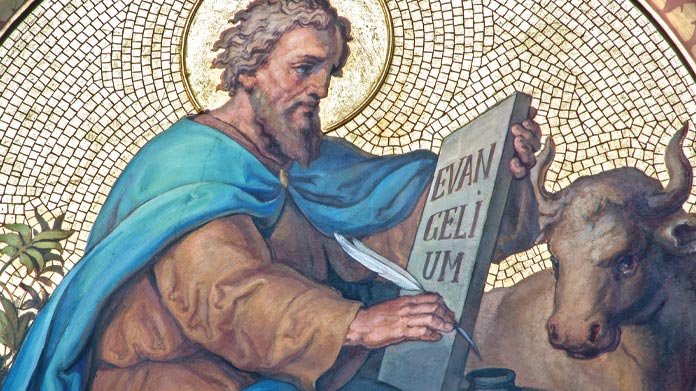
This very encounter, indeed, allowed me to meet God in the “in between” where the Lord brings healing, friendship and blessings. I am certain that this is also the very ground experience of St. Luke, an evangelist, whose feast the whole Church celebrates today.
St. Luke who is known as Patron of Physicians and Surgeons, was himself a healer, a doctor. Though it was believed that Luke was actually a slave, but it was common at that time in the antiquity that even slaves were educated in the service of their masters. Hence, Luke as a healer met God in his ministry of healing. This must be the very reason why Luke recorded many healing stories in his Gospel. Luke realized that healing not just in our physical bodies but also our spiritual and emotional healing bring us to the fullness of life. Salvation and the promise of freedom is certainly integral and whole.
St. Paul in his Second Letter to Timothy expressed the many difficulties and struggles he went through. Many had left him and persecuted him because of the Gospel, yet, only one remained to support and help him. It was Luke who became a faithful friend and companion of Paul. Through Paul, Luke also met Christ. Even though Luke was a Gentile, a Greek from Antioch, Syria, yet despite the cultural and religious differences between them, Christ became the bond of that friendship. Indeed, this very friendship formed between these two great men made them more convinced of their friendship and closeness with Jesus, whose Gospel they preached with joy.
St. Luke was also well-educated in classical Greek. He himself was a writer, no wonder, why the Gospel was written and the Acts of the Apostles. Thanks to him we have another angle of the life and ministry of Jesus. This was how Luke brought blessings to many until today. In fact, the very Gospel on his feast tells us of the 72 disciples sent by Jesus two by two in order to bring peace and blessing. The visitations of the disciples were to prepare the people of the coming of Jesus. This is meeting God.
Celebrating now the feast of St. Luke also calls us to these three points. First, we too are called to bring healing. Let our words, our actions and presence become channels of healing especially to a friend, family member, co-worker or anybody who need healing. May we not be a source of pain and hurts in homes and communities and so we ask the Lord himself also to heal any wounds in us so that we can bring that grace to others.
Second, we are called to develop and nurture friendship. Our presence may also become a source of comfort and assurance to those who feel alone and lonely. Let us also develop our friendship with Jesus through the sacraments and Holy Scriptures. May we not be a source of division and tension then.
Third, we are called to bring blessing. Let our presence also be a blessing and not curse. May our encounter and visits to people then, will also become God’s visitation to others. We do this as we also allow the Lord to work wonders through us.
Indeed, may we be channels of healing, friendship and blessing. Hinaut pa.
A wise man once said, “Each one of us are angels… But, with one wing. We can only fly by embracing each other.” Reflecting on these words, such wisdom somehow reflects our daily experience and journey of being human and Christian in this life. Human as we are, these words of wisdom affirm our being HOLY – our promise and desire to be holy and sacred in life, as somewhat angel-like. But Holy may we be, these words also reveal our being HUMAN – our limitations and constraints to become holy in life, as one-winged angel.
“Angels with one wing” somehow describes our aspirations and our frustrations of being and becoming Human and Holy in this life, and highlights our experience of loneliness – of being alone in life, and our need for one another as well. However, as these words of wisdom suggest we can only fulfill our longing for sacredness in our human nature, by way of flying via embracing each other.
This calls for us then not to be weighed down by our human limits, but to fly – that is to resolve and commit ourselves to rise up and respond to the occasion and chance to become angels in life. And also this calls us to do the flying together in relationship along and with one another. In other words, we are inter-related. (Magkaugnay). Only by flying-journeying with others – not by walking alone, each and all of us can reach the destination we are promised and we longed for in life, as “angels with one wing.”
Surely our readings today can teach us a lot of things about our life-experiences of being Holy & Human. But aside from the themes of creation, marriage, divorce, adultery, parents and children, our readings today are all about our human need to have a committed relationship in life, i.e. to be in covenant relationship with God and with One another.
We are told in our first reading today that as God created us, He also sees our human need to have a partner in life for “It is not good for man to be alone” and even animals and pets are not enough for us. He ensures a suitable human partner for us in life, so that we can leave our parents and be with our God-given partner in life.
God thus has created us not to be alone and/or be with our parents, but to be with our own God-Given suitable partners, for us to live the life God has created us to be. Jesus in our gospel today reminds us not to block and be a hindrance in letting ourselves and others to come to God and live the life God has called us to be, and challenge us to remain faithful and steadfast in our relationship with one another as we live our life-mission God has called us to be as well.
Both readings give importance to our human need to have and be in a committed relationship as God sees & wills it. More than just having a friendly, convenient, and secure relationship in life, God appreciates that we, human as we are, should be committed to the life God has chosen us to be, and to live such-committed life in relationship with our own suitable partner God has destined us to be with.
In other words, though with one wing, we should be angels – flying, coming to God’s glory, rising up and committing to the occasion to live the life God has called us to be, and by means of interdependence, embracingly flying/journeying in relationship with our God-given suitable partners in life.
Perhaps beyond our concerns for our civil status or even FB Profile status, whether we are Single-Married, in relationship, in love or complicated, we should moreso ask ourselves, “Am I committed to the life God has called me now to be? Am I also in a covenant-relationship with my God-given suitable partner in the journey?” Simply asked, “Am I committed and committing to where I am going and with-whom I am going with toward the life God has chosen me and us to be?”
Nowadays we hear loud noises proclaiming “Walang Forever”, i.e. there is no promise of forever, eternity, constancy and always in life. True it may be for those who cannot commit, who refuse to rise to the occasion but be remain burdened by their limits and choose to be on their own and alone in their own life-struggles, still dependent on their own parents and others.
But “There is forever, always, and eternal life”… for commit-able people, people who can commit, still committed and committing to live the life God has chosen them to be and to the partner they are to be with. We could say also that committed relationships are measured by faithfulness & not by success, for our journey in life is not about gaining heights but moreso about remaining steadfast/faithful in our efforts to fly & journey along with others.
Though not of this world but in this world, Christian and human as we are, we are Holy and Sacred for we are also God’s children and Jesus’ brothers and sisters. And difficult it may be, we can always be holy and sacred in this life, if and whenever we commit to the life God has called us to be and to the suitable partner God has given us to be with.
Again as the saying goes: “Each one of us are angels… But, with one wing. We can only fly by embracing each other.” With these words, may we learn and grow with holiness despite our human limits, in our Christian lives today. Amen.
When we walk, we hardly take cognizant of the footsteps we take unless – like the Buddhists – we are so mindful of the here and now, the precious present moment. It is only when one focuses on the movement of his feet while walking down a path, that one is struck with the importance of taking footsteps. For as the Chinese proverb posits: A journey of a thousand miles begins with a single step!
As we celebrate Easter Sunday today, it might do as good to reflect on the value of taking footsteps vis-à-vis our faith as followers of the Risen Lord. After all, his admonition – “Come follow me!” – involves literally moving our feet as we go after the Redeemer!
Jesus lived on earth at a time when people could only move from place to place by walking. In some cases, horses and donkeys assisted them as they travelled. Unlike today when the advancement of transportation technology allows us to travel long distance through planes, boats, trains, buses, cars, even the lowly habal-habal, those living in the first century had to rely on their feet if they wanted to be in another place.
Being an itinerant preacher-healer, Jesus himself walked practically all over Israel. While born in Bethlehem, he grew up in Nazareth. When his public life unfolded and he went out to preach the Good News, he travelled from Nazareth to Bethany, Bethesda, Capernaum, Cana of Galilee, Jerico, reaching the Jordan River and the Sea of Galilee. In his three-year public life, he walked more than a thousand miles.
Some of the footsteps he took would take on biblical significance! Among these were those footsteps traversing the desert for forty days when he needed to get ready for his mission, his walk cum ride-the-donkey from the countryside to Jerusalem, his walk across the seashore as he met the fishermen who would become his loyal followers and later when he appeared to them after rising from the dead, and his walk with two forlorn followers on the road to Emmaus.
The most dramatic, of course, were the footsteps he took from the garden of Gethsemane to the palace of King Herod, to the court of Pontius Pilate until he ended up on Calvary Hill. This route – now labelled the Via Dolorosa – has become the focal point of interest for tourists who fortunately find their way in Israel on Good Friday.
On top of this mournful hill, the carpenter from Nazareth – reviled by the Pharisees as a false prophet; who hobnobbed with drunks, sinners and prostitutes; who the powers-that-be considered a rebel out to subvert the established regime and tortured by the Roman soldiers as a means to warn other potential would-be “terrorists,” – was subjected to a crucifixion on a cross, fit for criminals!
That last step Jesus took as he faced death, eventually ended his earthly life.
At dawn of Eastern morn, the sound of footsteps echoed across the graveyard where Jesus and others were buried. These were footsteps first of women, later followed by a few of the more courageous apostles curious as to the women’s testimony that the tomb was empty! And most interesting, it was a woman – Magdalene – to whom Jesus first appeared as the Risen Lord!
After Jesus appeared to more of his main followers and trusted disciples, he gathered them together for what is now known as the Great Commission (Matthew 28:19-20) and left them with these words: “Therefore go and make disciples of all nations, baptizing them in the name of the Father and of the Son and of the Holy Spirit, and teaching them to obey everything I have commanded you. And surely I am with you always, to the very end of the age.”
Gifted with the Holy Spirit on Pentecost, many of them, including a new convert – Paul of Tarsus – walked to many directions beyond Israel to give witness to the life and teachings of the Lord. And despite the passage of time and the great advancement of transportation technology, in many Third World countries today, those who bring the Good News to the hinterlands, follow the way of the early disciples. They walk miles to reach the isolated villages.
It is thus, very appropriate that in 2021 Pope Francis inaugurated what would be a synodal Church for these present times. To be a synodal church involves getting all the baptized to journey together as one in the footsteps of the Lord, with great effort exerted to make sure that those who for so long have not been afforded a place in the Lord’s banquet, can finally find themselves in the place of honor!
This was Jesus way; moving from village to village, his focus was to journey with his society’s excluded, the sinners considered unclean and worthless. He avoided the elite, the powers-that-be, the ones who oppressed the poor even as he did not exclude them from his circle if they showed an openness to repent and make amends! He disdained pomp and pageantry, he lived simply without benefit of having a place to stay, comforted the widows and healed the sick. In the process, the Good Shepherd smelt like the sheep!
Alas, when Christianity shifted to Christendom and the Church’s memory of the way of life of Jesus faded, the ugly head of institutionalization and clericalism penetrated the walls of churches, monasteries and convents. Patronized by kings and emperors. ensconced in palaces to enjoy the perks of power, the Church’s heads veered away from the footsteps of the Lord! And the Gospels they preached held no relevance anymore to the lives of the majority who remained in the margins and disenfranchised of their human rights.
If the Church today hopes to return to the dangerous memory of Jesus’ act to save humanity, she has to embrace Pope Francis’ synodal agenda. The question is: how many of our church leaders and engaged laity are making sure that this agenda is not lost in the quadmire of a Church’s struggle to remain relevant in these post-modern times?
In the VUCA (Volatile, Uncertain, Complex and Ambiguous) reality of the world today, Christianity is faced with a major challenge to return to its roots. Jesus presented the model of a synodal church – his footsteps made possible his journeying with society’s excluded – which challenged an established religion that was hijacked by those who would promote a faith that was blind and obedient to those in power. It was in this context that Christianity was born. If we are to redeem what Jesus founded, we, too, in our times will need to do our best to help build a synodal Church, in spite of the reluctance of our leaders to forge this kind of journey with the rest of us!
Along with Pope Francis, we take the footsteps towards this goal buoyed by the Risen Lord! Happy Easter everyone!





 A DOSE OF GOD TODAY