After the joy of Christmas Day, after the lights and songs, the Church gently asks us today an important question. Do we still know how to see the light, and are we willing to live by it?
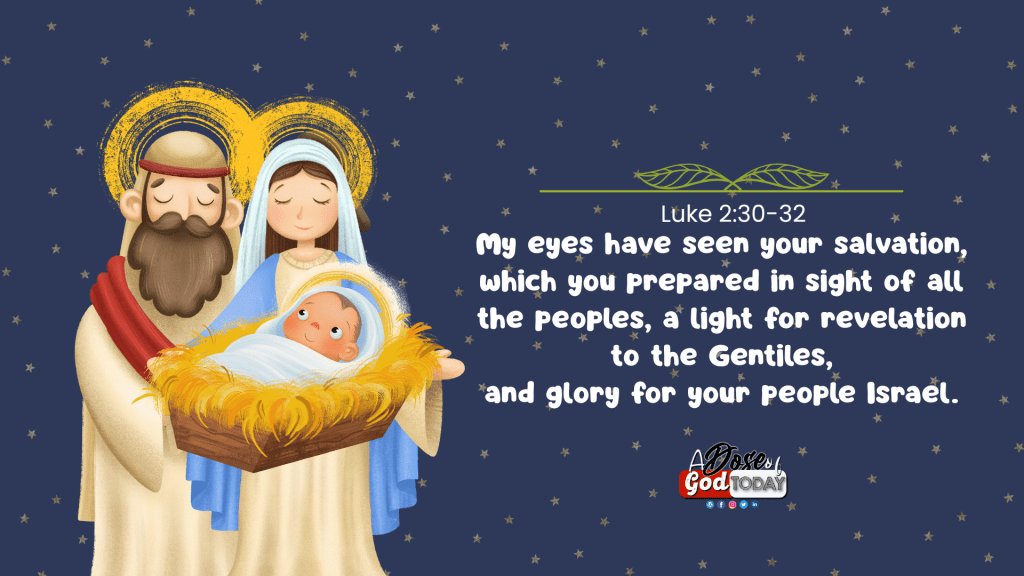
In the Gospel, we met Simeon, an old man who had waited his whole life for this moment. He carried no title, no power and no influence. What he had was patience, faith, and a heart trained to recognize God’s presence. When Mary and Joseph brought the child Jesus to the temple, Simeon saw what many others did not. He saw salvation and the light. And holding the child, he said, “My eyes have seen your salvation, a light for revelation.”
Simeon teaches us something important. Seeing the light is not about having sharp eyes, but about having a faithful heart. Many people were in the temple that day. Only Simeon recognized the Messiah. Why? Because he waited, listened, and remained open to God even when the years were long, boring and quiet.
However, Simeon also spoke words that were hard to hear. He told Mary that this child will be a sign of contradiction, and that a sword will pierce her heart. Indeed, Christmas joy is real, but it is not shallow. The light that comes into the world will reveal what is true in every heart. Hence, as light brings comfort to us, but it also exposes. As light gives warmth, but it also demands a response from us.
This is where the first reading from the First Letter of John speaks clearly to us. John told us that knowing God is not just about words or feelings. “Whoever says, ‘I know him,’ but does not keep his commandments, is a liar.” These are strong words, but they are honest. Thus, faith that remains only in speech is incomplete. And love that is not lived becomes empty.
Now, John even went further. He said that those who walk in the light do not hate their brother or sister. It is when we linger to hatred, resentment, jealousy, and indifference that we belong to darkness. Because they blind us and make us stumble without even realizing it. This is very close to our daily lives. We may celebrate Christmas, attend Mass, and speak about love, yet still carry anger, silent grudges, or coldness toward others.
Hence, the message of today is simple but challenging. We are reminded that to see the light of Christ is to choose to walk in love. This tells us that light is not just something we admire from a distance. It is something we follow.
Like Simeon, we know what it means to wait. Waiting can make us tired. Sometimes it can harden our hearts. But Simeon showed us that waiting with faith sharpens our vision. It teaches us to recognize God even in small and ordinary moments.
Today, Jesus is still presented to us not only in the temple or in our Churches, but in people. Jesus comes to us in those who are difficult to love, in those who test our patience, in those who need forgiveness. How we respond to them reveals whether we are walking in light or still choosing darkness to linger in our hearts.
As we continue the Octave of Christmas, let us ask ourselves honestly, “Do my actions reflect the light I claim to see? Do my relationships show that I am walking in love?”
May Simeon teach us patience. May John teach us integrity. And may Christ teach us how to live as children of the light not just in season, but every day in our ordinary lives. Hinaut pa.
Have you experienced of having the thought of “I might need this… I might need that”? And because this can grow into a form of anxiety, this could develop to be a kind of compulsion in us. We could experience it when we are about to travel to somewhere else. Just because there are many things that we thought might be useful for us, then, we realize that we are being burdened by many things that are not useful at all. We also experience it even just by staying at home or in our own rooms and personal space.
Indeed, things would clutter from small things to big things. Perhaps from small old toys, papers, clothes, shoes, plastics, containers and many other things. And having the thought of “I might need this… I might need that” would make us accumulate more to the point that we find it difficult to let of things even when those are not essentials.
I also had a similar experience like this. Years ago, during my theological studies, I was sent abroad for a mission exposure. Few nights before my flight, I had my inventory on what I should bring for the one year mission experience in Indonesia. I kept looking at my things worried that I might forget something important and something that “I might need.”
So aside from clothes, I prepared small things, vitamins and preventive medicines against malaria, books, camping and survival kit, treats and sweets for my sweet tooth and many other small things. Expectedly, my luggage was overweight and so I had to pay a few thousand pesos for the excess weight.
However, when I was already in the mission area, there were many things that I brought but I was not able to use. I realized I had more than enough.
And again, such a situation can also be true in other aspects of our life. One could be overburdened in his or her relationship because of the emotional baggage the person brings into that relationship. Trauma from the past, or guilt, shame, fear, anger, hatred or other insecurities could make our life more difficult and at times overwhelming and suffocating.
Realizing this attitude which may be present in us, Jesus in the Gospel today offers us a different approach. As Jesus gathered his disciples he began to send out the Twelve, two by two.
They were given power to cast out unclean spirits and heal the sick. Though, in their journey, Jesus instructed them “to bring nothing except a walking stick.” They were “allowed to wear sandals but not a second tunic.” This means that there were no other things to be brought by them, only the most essentials in the journey.
And looking at it at a very human perspective, the journey sounds a quite harsh and difficult. A disciple could feel so vulnerable and insecure for not having other things in the journey. Yet, Jesus “gave them authority.” That authority is power. And that power is to bring blessing, healing and peace.
Despite the poverty they had, the small things they possessed, the very presence of God among them and the power given to them suffice what they need.
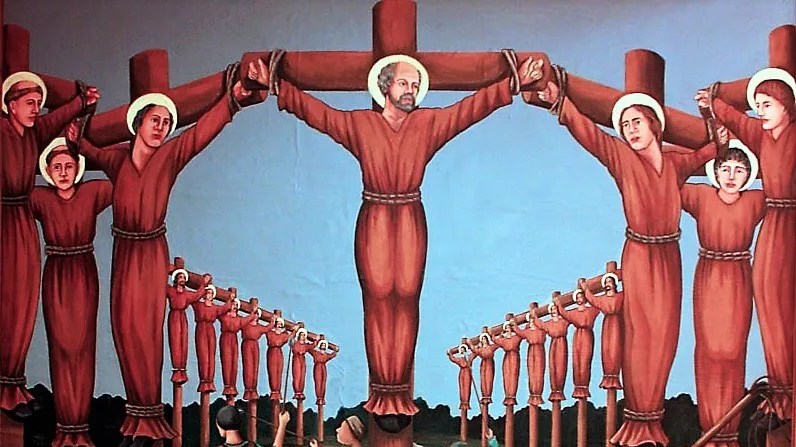
The same spirit and attitude of the heart has been shown by St. Paul Miki and his many companions. This Japanese Jesuit Priest together with his friends continued to bring blessing even to their persecutors until their death. Paul Miki was from an affluent family but left influence and comfort to embrace Christianity and a missionary. In the midst of Christian persecution in his own land in Japan, Paul Miki and his companions remained steadfast and committed to bring blessing to people.
This tells us now that true power does not rest in our capacity to destroy others but in our capacity to give life, to heal, to bless and make peace even in the midst of poverty, persecutions and insecurities.
There are two essentials now that we are invited to bring.
First, to trust God’s generosity and power. The Lord provides the needs of His friends and this is experienced by us through the generosity of people around us. The abiding presence of God is with us. And to fully trust in God’s Providence is an act of faith. This is the reason why the twelve were to bring nothing. It was to allow themselves to become companions and friends of the people whom they were to encounter. They may have the power given by God, yet, they were not above the people or apart from the people. They were equal in status as companions and friends. They were to live among the people and be immersed in the life of the people.
Second, to carry and give blessing, always. This makes the Kingdom of God to grow more in our hearts, homes and communities. As we carry and give blessing, the more we also receive blessing because we become more conscious of the essentials and able to let go what prevents us. Even in the midst of our poverty or persecution may we remain blessed. Hinaut pa.
(A Moment of Reflection: A Talk – with Christ the King College de Maranding, Campus Ministry Office)
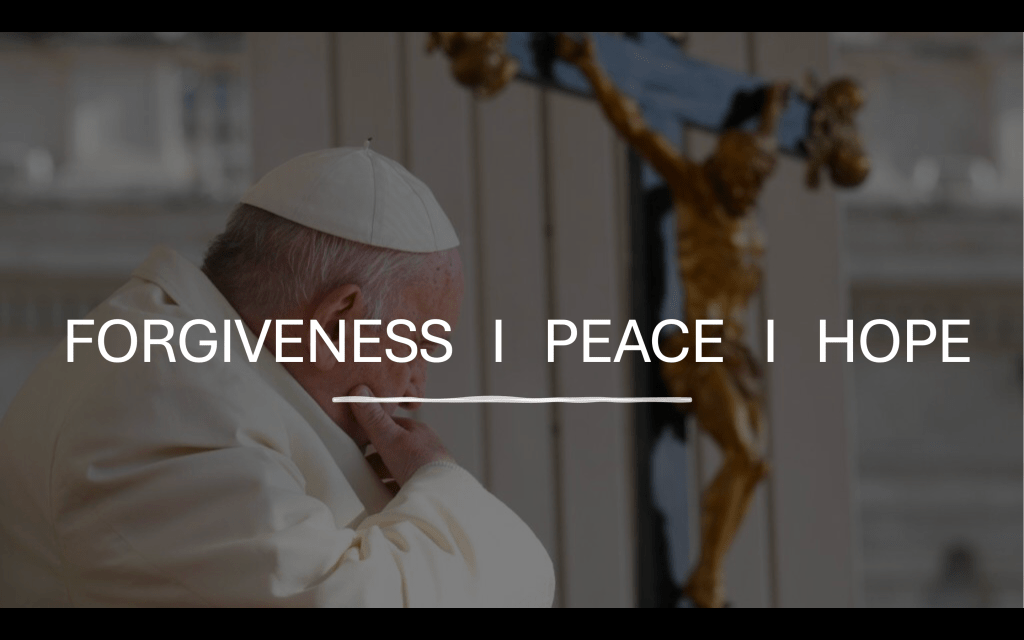
There are three important words that I want you first to remember as we reflect today the message of Pope Francis on the occasion of the World Day of Peace published on January 1, 2025.
First, FORGIVENESS. Second, PEACE. And third, HOPE.
These three words served as the central theme of the message of Pope Francis addressed to world leaders and to all people of good will, including you and me. We have to understand then that the challenges and invitations set by Pope Francis are not only applicable to people who play important role in political, economic and cultural arena of our society. The call towards the path of peace is call to all.
Hence, the theme of Pope Francis’ message reminds us now, “FORGIVE US OUR TRESPASSES: GRANT US YOUR PEACE.”
As I join you in this short recollection, watch first this short video of the message of Pope Francis.
From that short video presentation, it tells that Pope Francis invites us to look at the challenges that our world is facing today. These challenges are particularly those that endanger the survival of humanity and the whole creation because of human greed and manipulation for power, wealth and control.
But how shall we look at these realities?
We can actually look at it from the perspective of anger and hatred because of the injustices yet, that will only lead us to the cycle of violence. We can end up towards arm struggle and rebellion. Nevertheless, it will not lead us to peace but only towards more suffering and despair.
We can also look at it with apathy and indifference. Well, the many issues and realities happening around the world are not directly experienced by us. Each of you here is not living on a war zone. You are not unemployed. You don’t have children who are undernourished, experiencing severe hunger on a daily basis. You don’t have overwhelming debt that will take you more than a lifetime to pay. And so, passivity and looking at these realities with indifference would be very easy for us to do. Yet, such attitude would only make our hearts calloused and numbed at suffering of others even with those who are nearest to us.
Pope Francis proposes to look at the realities of the world, as well as of our own experiences of suffering from the perspective of hope, of having a heart full of hope.
Now, for us to better understand and have a good grasped of what the Pope reminds us, let’s have a step by step moments of reflection of his message. The entire message is actually divided into four sections. In each section, let us also recognize its relevance in us, in our own context, work and status especially to you as a team of Campus Ministry in your college.
Going back to that proposal of Pope Francis to look at the realities of the world from the perspective of hope, it triggers us to also ask, how? How do we look? And where should we start? This brings us into the first section of the message.
The First Section
LISTENING TO THE PLEA OF AN ENDANGERED HUMANITY (A CALL TO LISTEN)
Pope Francis brings to our awareness as he greets every man and woman, and especially to those whom felt more connected – the downtrodden, those burdened by their past mistakes, those oppressed because of being judged by others, those who are desperate and hopeless.
This is each of us! These are the experiences of many and perhaps of those students under your care. The many burdens they carry and issues they face in their own lives. This means that suffering is experienced by everyone. This is the significance of the sound of a ram’s horn (in Hebrew, jobel) calls us to listen.
This is why the Jubilee Year of Hope becomes more relevant to each of us, individuals and as a community of faith. This is an invitation again for us that our hearts be filled with hope. This hope leads us and moves us to aspire and work for forgiveness and reconciliation, for freedom and healing.
That is why, the Jubilee Year of Hope is meant to echo throughout the land (cf. Lev 25:9 – to every hearts and to every homes and communities) so that God’s justice will be restored in every aspect of life.
We are called to listen and recognize now the many “desperate plea for help.” These include the exploitation of our natural and human resources in the guise of progress and profit. Pope Francis affirmed what St. Pope John Paul II called as “structures of sin” committed not only by principal agents but also by many of us who participate indirectly because of our support or because of our indifference.
Indeed, this is a call for us to listen – to heed the plea for help of the suffering humanity for example the “inhuman treatment towards migrants, environmental decay, confusion caused by disinformation, refusal to engage in any form of dialogue, and the immense resources spent on the industry of war.” These are all “distinct yet interconnected” to each other. Do we also find these in our context? Maybe not all, but perhaps some of these.
By acknowledging the forms of suffering in our own context, then, it calls us to work for justice. And what Pope Francis wants us to realize as well is “the cultural and structural changes” from us so that change will endure and will not be passive. This brings us now to the second section.
Second section
2. A CULTURAL CHANGE: ALL OF US ARE DEBTORS (A CALL TO HUMILITY)
After looking and recognizing at the many realities present in our communities, Pope Francis leads us to also realize the many gifts that are already in us. Yet, the many resources that we enjoy are not meant for us alone or for the “privileged few” in the case of the those whose hearts have become so wealthy and entitled.
Pope Francis wants us to grow in gratitude, he said, “without gratitude, we are unable to recognize God’s gifts.” Certainly, we won’t be convinced as well that we are actually gifted. We will not be confident of what we have, as well of the potentials and talents that we already have. Meaning, without gratitude, it leads us to bitterness and despair. Look at how a person, you might have encountered one already, whose heart have grown ungrateful – the person becomes so stingy of many things and so mean to people around him or her.
Indeed, when we become ungrateful this also leads us to easily get irritated or even feel unfair at the blessings of others. It makes us entitled but corrupt, even when we have received so much, in our practices because our heart is not convinced that what we have are God’s grace.
We have to understand then, that God’s grace cannot be earned. It is a pure gift not because of our good deeds and qualities but undeserved and unmerited. That is why, the Lord would not abandon the sinful humanity, or no matter how sinful we have become, because God’s infinite mercy is a gift. In fact, God reaffirmed this “gift of life by the saving forgiveness offered to all through Jesus Christ.”
This is how we discover the central teaching of the “Our Father.” As Jesus told us to pray : “Forgive us of our trespasses,” the Pope reminds us to recognize our collective sins that we are all indebted to the Father and with one another.
Hence, we rely now on the mercy of God who forgave our debts, through Jesus. And through him, the gift of life, being renewed gives us hope for one another. In consequence, Pope Francis appeal echoes to every heart – “the appeal for solidarity, but above all for justice.”
Hope becomes more alive in us now because it opens us up and lead us towards that cultural and structural change. The cultural change happens in our way of life, in the way we relate with one another and in the way we look at the world from the perspective of hope. Eventually, through this cultural change then structural change happen and begin to recognize that we are all brothers and sisters, we have a shared and diversified responsibilities and that we are not enemies or business competitors.
This leads us now to the third section.
Third Section
3. A JOURNEY OF HOPE: THREE PROPOSALS (Call to Action)
This change in us begins in our hearts. This also fuels and renews our hope, of our journey of hope, as being emphasized in this Jubilee 2025. Acknowledging God’s constant grace and mercy to all, makes us again realize God’s infinite generosity and love because we are forgiven.
Yet, let us not also forget the challenging words in the Lord’s Prayer, “as we forgive those who trespass against us.” Forgiveness becomes a reality in us as we also learn to forgive others. From such grace, hope and peace shall overflow in our hearts. That overflow will only become concrete from our own experience of forgiveness and generosity,
In fact, Pope Francis also said, and I quote, “Hope overflows in generosity; it is free of calculation, makes no hidden demands, unconcerned with gain, but aims at one thing alone: to raise up those who have fallen, to heal hearts that are broken and to set us free from every kind of bondage,” end of quote.
This is the best gauge for us as we express our generosity to others. And so let us be mindful also of our attitude when our generous actions (things that we give like of materials resources, presence, our personal time and talents) are fueled by our personal agenda or selfishness then, our generosity is not from hope. Rather, it is from corruption.
From here Pope Francis leads us to the path of peace with three proposals as our call to action.
First, Forgiveness of International Debt. “Reducing substantially, if not canceling outright, the international debt which seriously threatens the future of many nations”, said Pope Francis. This is a call to world leaders especially of rich countries to be in solidarity with neighboring nations.
Second, Abolition of Death Penalty. This means that we are called to have a firm commitment to respect for the dignity of human life from conception to natural death. Through this commitment, we promote a culture of life that gives every man and woman the hope of forgiveness and rehabilitation, freedom and healing.
Third, To Establish a World Fund aimed at Eliminating Hunger. This is to use a “fixed percentage from armament investments to establish a global fund to eradicate hunger, facilitate educational activities in poorer countries to promote sustainable development, and to combat climate change.” This means that, certainly, war is for profit, for business and thus, it is an industry. Political conflicts or ideological beliefs or territorial disputes can easily be manipulated by profit-oriented groups in order to create war and so gain immense profits. Yet, what the world needs are not bullets but food and water, education and home.
These three proposals though aimed at the world leaders and all those who play significant role in our global village, however, ourselves and those at the grassroots remain significant so that we may be able “to pave new paths of peace together in our communities.”
This brings us to the final section.
Final Section
4. THE GOAL OF PEACE (Towards Freedom)
Pope Francis quoted Saint John XXIII who convened the Second Vatican Council in 1962, “true peace can be born only from a heart ‘disarmed’ of anxiety and the fear of war.”
This means that the goal towards peace is first directed at our own hearts that are perhaps trapped in despair and hopelessness because of our failures, or hearts thickened by indifference and selfishness, or hearts traumatized by abuse and oppression, or hearts covered with pretensions that everything is okay but not realizing the realities around, or hearts filled with worries and anxieties because of the thought of “nothing might be left for me, then I have to accumulate more” or the thought of “nothing is for me, I am pitiful” or having a heart that is constantly threatened by tensions, conflicts and wars. Then, our hearts are indeed troubled.
Yet, know that the Lord brings us peace, grants us pardon and gives us freedom. What we are called to do now is to disarm our heart from whatever shackles of pain, trauma and imprisonment it is suffering from.
Pope Francis wonderfully expressed the call towards freedom in these words, and I quote, “May we seek the true peace that is granted by God to hearts disarmed: hearts not set on calculating what is mine and what is yours; hearts that turn selfishness into readiness to reach out to others; hearts that see themselves as indebted to God and thus prepared to forgive the debts that oppress others; hearts that replace anxiety about the future with the hope that every individual can be a resource for the building of a better world.”
Indeed, each of us now is a resource in building a better world. Your position as educators puts you now at the pedestal in your own context to realize peace. Pope Francis even continued to express that “disarming hearts is a job for everyone.” So that, as we heed the call to disarm our hearts, then, it will inspire us and give us hope to also become a catalyst in disarming the hearts of people around us even through our simple gestures “such as a smile, a small gesture of friendship, a kind look, a ready ear, a good deed” or having an understanding heart over a troubled student, or having a welcoming hand shake for anxious new students, or un-judging (without judgment) attitude towards a colleague who is emotionally sensitive.
These are small steps, simple gestures yet will also become powerful and effective as we hope to build a community in loved with peace.
And so as I end this reflection let us pray together the prayer for peace composed by Pope Francis at the end of his message.
PRAYER FOR PEACE by Pope Francis
Lord, grant us your peace!
Forgive us our trespasses, Lord,
as we forgive those who trespass against us.
In this cycle of forgiveness, grant us your peace,
the peace that you alone can give
to those who let themselves be disarmed in heart,
to those who choose in hope to forgive the debts of their brothers and sisters,
to those who are unafraid to confess their debt to you,
and to those who do not close their ears to the cry of the poor.
Amen.
Points for Reflection towards the Path of Peace
Look and Listen: Recognizing the Cry for Help in my own context
As an educator/religious/seminarian – what are the different pleas/cry for help that I can identify which I encounter with myself, with my students or community?
Embracing our Gifts leads us to Gratitude and Generosity
What resources/gifts/talents do I have that I can offer for others and for my community?
Call to Action: A Commitment to make
What do I need to change in me? What do I need to disarm from my heart? (attitudes, beliefs or perspectives)What concrete actions I can commit to promote peace?
Fr. Bonn Barretto, CSsR sang a song entitled Hasten that day[1] in 2020 at the height of the Covid-19 Pandemic. And the lyrics of the song remains relevant until today. Personally, I am touched as the lyrics of the song tell us, “So hasten that day, a day without fear. When the world will rejoice, salvation is near, gone are the tears, the hurt and the pain.”
This is a day that we continue to hope. Individually, we may be going through some kinds of struggles within. We may be carrying emotional baggage that affect so much our relationships, work, or study. Our physical illness and limitations may have bothered so much that make us desperate to long for healing and recovery. Others, because of poverty, have to endure the hardships just to survive for a day.
And so we long for that day of comfort and consolation, joy and fullness of life. Indeed, our longing now was also prophesied by Isaiah in the first reading. The prophet tells us of a day of feast and celebration. Everyone, regardless of our status and differences, is invited to dine together with the Lord. This celebration is an image of the fullness of life to be shared with God.
This is meant to comfort us all and to give us hope that indeed the Lord will come and bring contentment, joy and fullness of life for us. What Isaiah prophesied also became a reality in the ministry of Jesus. In Matthew’s Gospel, this fulfillment presents to us two important points.
First was the arrival of many people who have come to be near the presence of Jesus. The people had realized that the presence of Jesus brings healing and recovery to the sick. The physical illness and limitations of many were healed. This is a testament that the Lord indeed heals our body.
Second was Jesus compassion for the crowd. Upon seeing the great number of people who had been following him for three days, Jesus also realized the hunger of the people. Jesus mas moved with compassion for them. This is where we can find the invitation of Jesus for his disciples to participate in the mission to bring the fullness of life.
The seven loaves and few fish reserved for the group were shared for the many. The miracle happened here and it started when the disciples learned to share the little things they had for the benefit of many. Despite the insecurity of not having enough and the thought of “what will be for us?” – the disciples trusted more the Lord.
Indeed, everyone ate and was satisfied. And so, people from all walks of life dined together with the Lord, the very image of the Kingdom of God.
For today, as we pray and long to hasten that day of comfort and peace, joy and fullness of life, we too are called to participate in realizing the ministry of Jesus to bring healing, comfort, peace and fullness of life. There are three take aways that I want you to bring today.
First, like Jesus, be moved with compassion. This is the antidote when we become numbed and indifferent to what is happening around us. Ask the Lord to make our hearts be moved as we encounter the realities we face. Being moved with compassion is making hope more alive in us that indeed, the day of salvation and freedom shall be realized.
Second, like Jesus, be an instrument of healing and comfort. Remember, our very presence can bring healing and comfort to others. Hence, never be stingy to give even words of encouragement and affirmation to people, to give appreciation and gratitude to others, to give an understanding heart free of judgments and biases, to offer a listening ear to a friend who felt afraid and anxious. Though small, but these are ways of being able to bring healing and comfort.
Third is to give in the spirit of joy and gratitude. Like the disciples who despite the insecurity of not having enough, the very presence of Jesus gave them the assurance of being satisfied. Hence, as we give our material resources or talents and self to others, make sure that we do it out of joy and gratitude to God and not as a way of making ourselves be praised. Hinaut pa.
[1] Composed by Nathaniel Cabanero and lyrics by Buddy Sutton.
We make prayer requests every now and then for our personal and communal intentions. We believe in the power of prayer because we also believe that the Lord is merciful and good to us. Such ways are already expressions of faith filled with hope which this Season of Advent is all about.
In fact our readings express such faith filled with hope. This is what I would like emphasize today. The first reading from the Book of Isaiah envisions a future where there will be peace and harmony. Wars and violence shall end, hatred and anger in the hearts of many shall vanish. This is captured by Isaiah in his words where swords and spears that were meant to kill one another will be transformed into agricultural tools. People will begin to come together despite the differences to support and help each other, to nurture and cherish one another. This is how peace and harmony will dwell in our hearts, homes and communities.
In those times of war and violence, this was proclaimed that expressed faith filled with hope and this is because we all belong to God. This calls us now this Season of Advent to examine our hearts, are we also ready to put down our biases and prejudices against each other?
This is what the disciples of Jesus were invited to do the same. The Roman centurion (meaning a commander of a hundred soldiers) approached and beg Jesus to heal his servant. This Roman soldier represented the foreign power which dominated Israel at that time. He was an image of an oppressor, an enemy who brought pain and suffering to the people.
Yet, this very encounter challenged the disciples to recognize the faith of another person different from them. Hence, the humility and faith of this Roman soldier was praised by Jesus because of the concern he showed not for himself but for his sick servant, for another person.
This is where we find the familiar words of the Roman soldier which we also pronounce almost word for word as we receive the Body of Christ, “Lord, I am not worthy to receive you under my roof, but only say the word and my servant will be healed.”
This is where the miracle of hope was unfolded, the sick servant was healed, biases and prejudices as well as hatred and anger towards one another vanished. This means that when our faith is filled with hope, it heals not just our physically illness but as well as our fearful hearts, bruised hearts, traumatized hearts, hearts filled with anger and hatred. This is how the miracle of hope transforms us into a people invited to live in peace and harmony. Hinaut pa.




 A DOSE OF GOD TODAY