Tag: Homilies

  • Awareness of God’s Grace calls us to gratitude and graciousness

    Awareness of God’s Grace calls us to gratitude and graciousness

    November 11, 2020 – Wednesday of the 32nd Week in Ordinary Time

    Click here for the readings (https://bible.usccb.org/bible/readings/111120.cfm)

    Homily

    In a conversation with a friend, he told me that he was doing some form of sacrifices because he was asking God of something, to grant his prayer intentions. This really reminds me of our usual attitude in our prayers and in the way we relate to God. We make sacrifices so that God may grant our prayers for healing, for success or for material graces that we need. We also take time to light a candle, to offer a mass intention, to say our novenas and rosaries, even visit churches and shrines, and ask the intercession of our favorite saints so that God will grant our prayers and desires.

    This kind of action is also similar to that 10 lepers in today’s Gospel. They too begged Jesus. They cried out to the Lord to heal and grant them freedom from the curse they endured. Certainly, Jesus listened to them. As Jesus told them to make themselves appear before their priests, on their way, each of them was healed from leprosy and experienced freedom from the curse of that illness. However, out of ten healed lepers, only one leper came back to Jesus. This leper came back to thank and to praise the Lord. This leper may not be fully aware yet, that Jesus is Lord, but he was sure enough that God was working in Jesus.

    Hence, Jesus actually wondered on what happened to the nine lepers who were all Jews like him. The leper who came back was a Samaritan, considered as a foreigner by the Jews. And Jews considered Samaritans as enemies, worthless and good for nothing. Yet, it was this enemy of the Jews, this worthless and good for nothing person who became aware not just that he was healed but also of the grace of healing. Becoming aware of the grace he received, this made the Samaritan leper to also recognize the giver of the grace. His awareness of the grace filled him with joy and gratitude. He must have been running back to Jesus out of joy to thank the Lord.

    However, Jesus indeed wondered about the nine Jewish healed lepers. We would wonder and could also ask, “What could have prevented them to thank Jesus like the Samaritan?” Well, we can only suspect. The nine Jewish healed lepers might have become indignant that the Samaritan was also healed and was given the grace. For them, a Samaritan was not worthy of God’s grace because they were traitors. They might have not accepted that an enemy had been blessed and healed by God. That happy occasion of healing must have turned into bitterness. Instead that the nine should be grateful to God, their hearts turned bitter at the sight of someone whom they thought was not worthy, useless, a mere disturbance in their society, and would only bring nothing good but problems and crimes.

    Because of such attitude, they forgot that everything was a grace and so forgot to express their gratitude to God. God’s generosity is endless yet our memory can sometimes become very short especially when we are filled with bitterness. We always remember to ask, but we tend to forget to give thanks.

    Thus, we should be careful on this. We might tend to think that those who always go to Church are the only ones worthy of God’s grace of mercy. We might tend to believe that our enemies, people we hate, people we don’t like are useless and insignificant. Then, this kind of attitude will only cloud our heart with hate and bitterness instead of gratitude and graciousness.

    Thus, we are called not just to be grateful with what we have but also to be more grateful for others who are also blessed by God. This makes us gracious too. And this also was the attitude of the Samaritan who went back to Jesus to thank him, to praise God and also to follow the Lord.

    This healed leper’s action showed how grateful his faith was. Indeed, he was not just healed physically but also spiritually. Jesus told him, “Stand up and go, your faith has saved you!” This healed leper teaches us today to show our gratitude to God so that we may also become gracious.

    St. Paul’s letter to Titus reminds us about this, he said, “the kindness and generous love of God our savior appeared, not because of any righteous deeds we have done but because of his mercy.” And because of this, Paul urges us to “exercise all graciousness towards everyone.”

    Indeed, by becoming more and more aware of God’s grace in us and in each of us, we may also grow not in bitterness but with a grateful and graceful heart. Hinaut pa.

    Jom Baring, CSsR

  • God’s grace is a sheer gift not earned

    God’s grace is a sheer gift not earned

    November 10, 2020 – Tuesday of the 32nd Week in Ordinary Time

    Click here for the readings (https://bible.usccb.org/bible/readings/111020.cfm)

    Homily

    As Jesus reminded his disciples that a master need not be grateful to his servant and so is God need not be grateful to us. Like the servant in today’s Gospel, we too do not earn anything. Our good works and even expression of our devotion do not merit anything.

    Do you think that this is too bad? Well, if our mindset believes that our relationship with God is like when we are working, that what we do must be compensated with some wages, then, this really looks bad. However, our relationship with God is not something like this where we do good works, love others and love God, do our prayers and Church obligations and expect something good in return from God. God has no obligation whatsoever to us. We do not need to be compensated for our good works on earth.

    Nevertheless, our relationship with God  is entirely based on “grace.” God’s grace is not a compensation to us, not a reward and not a merit given to us. God’s grace is a sheer gift given to us because God is generous, because God is pure love.

    If God would rate and give points to the way we live our life, all of us may fail for God’s standard is not like ours. However, this sheer gift of God’s grace is given to us as God’s expression of love. It is not that God is indebted also to us because we adore and worship God, but because God’s love naturally overflows and God indeed is the fullness of love.

    Thus, just as Jesus reminded again his disciples, we too are “unprofitable servants,” yet blessed and loved by God. Should we not be grateful then?

    We are called to be grateful. This is our response to that pure gift of grace from God. Paul tells us that as the grace of God has appeared to us, then, we are to live our lives having self-control not driven by our selfish-intentions and impulses, to be honest in our words and deeds and to live a holy life. In this way, then, we are to express our gratitude to the Lord who is all good and generous to us for God is full of love. Hinaut pa.

    Jom Baring, CSsR

  • Be Young. Be Renewed. Be Life-Giving

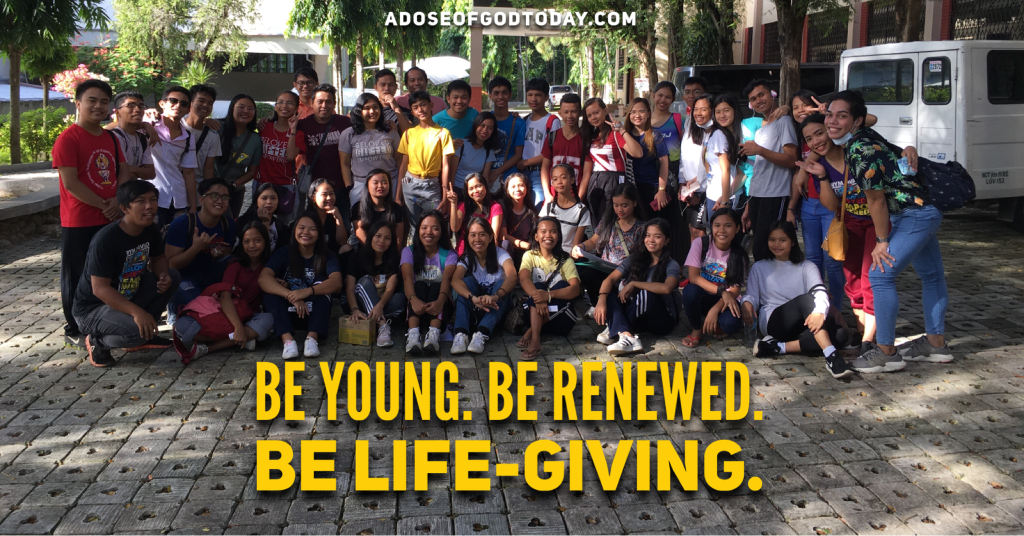
    Be Young. Be Renewed. Be Life-Giving

    November 9, 2020 – Feast of the Dedication of the Lateran Basilica in Rome and Foundation Day of the Congregation of the Most Holy Redeemer

    Click here for the readings (https://bible.usccb.org/bible/readings/110920.cfm)

    Homily on RYM Day of Prayer

    Today is a joyful and wonderful day that aside from celebrating the Feast of the Dedication of the Lateran Basilica, which is the Cathedral of Pope Francis, and which is also called as the “Mother and head of all churches of Rome and the world,” we Redemptorist Missionaries are also celebrating our 288th birthday!

    On this day, St Alphonsus together with the first members of the Redemptorists, founded the Congregation in the Island of Scala, Italy in 1732. For 288 years, God’s faithfulness and generosity manifested in the life of the Congregation in many ways. This experience with God has been shared in many missions and apostolate of the Redemptorists throughout the world.

    One of the most important missions of the congregation where God’s faithfulness, generosity and abounding love being shared, is the Youth Ministry. That is why, this livestreaming mass today is dedicated to our Redemptorist Youth Ministry, who in many parts of the Philippines have gathered today to celebrate November 9 as a Day of Prayer.

    Yes, today is a Day of Prayer of the young gathered physically and virtually. This gathering is so significant because this Day of Prayer, on this wonderful day, it invites all of us to remind ourselves that we are God’s Temple and God’s holy people. Our readings today expressed this identity in us that we are indeed God’s Temple and God’s holy people.

    For us to remember this and make this Day of Prayer more wonderful and powerful for us today, I have three invitations, something that you can bring and something you can celebrate.

    First, BE YOUNG. Pope Francis reminds us that “God is Young and is always New.” This means that God really brings surprises and freshness in us because God is ever young. God will never have an expiration because God is always new. That is why, all of us who are God’s building and God’s Holy Temple as what St. Paul reminds us in his first letter to the Corinthians,  are called to be always young. Remember, we may grow old in age, however, to be “young at heart” is not limited to a particular age group. We may be young in terms of age, but when our heart is filled with anger and hatred, with bitterness and indifference, then, we have surely grown old. Moreover, to be advanced in age does not also mean that we will never be young at heart. Even when we have grown in age, a senior citizen may still be young at heart when he or she remains welcoming, warn-hearted, joyful and alert of God’s daily invitations. Let us remember the words of Pope Francis, “True youth means having a heart capable of loving, whereas everything that separates us from others makes the soul grow old.” Thus, be young and celebrate being young at heart.

    Second, BE RENEWED. As God is always new, God also brings fresh graces and fresh experiences. Our true relationship with God is always fresh, it will never be spoiled. Prophet Ezekiel tells us in the first reading that the water from the temple overflows and it reaches the barren and dry desert, and the water brings life. Salt waters also turn into fresh waters where every living creature shall live. This means that when we allow God’s love to transform us, to challenge and to call us, then God brings renewal into our dry and empty hearts. Hence, allow God today to reach our hearts to transform, challenge and call us  so that we will be renewed.

    Third, BE LIFE-GIVING. Jesus came to give us life. Jesus manifested his life-giving mission in his ministry. That’s why when there were people who suck the life of others, Jesus also expressed dismay and disappointment. This is what happened in today’s Gospel. Jesus drove out the merchants and money-changers who were sucking up the life of the poor through their scandalous and oppressive business inside the Temple area. When we turn out to be driven by our selfish desires and selfish intentions, we will also become vicious in our relationship with people around us. When we are more concerned in bloating our ego then we turn out also to become abusive and corrupt because our heart has become indifferent to God.

    However, such way of life is lonely because we will constantly be haunted by insecurity and fear. Certainly, there is no life here but sadness. Pope Francis in his latest Encyclical, Fratelli Tutti said, “go outside the self in order to find ‘a fuller existence in another.’ ” Meaning, that when we begin to think less of ourselves, to step outside our comfort zones, and outside our insecurities and fears, then, we also discover the fullness of life with the people around us. Thus, to experience truly what life is, is to be able to give life. When I commit myself fully to love another then I find joy and meaning in life. When I generously give something to someone in need, I do not only help a person but also experience the joy of helping another. Therefore, to live life joyfully and truly, is to be life-giving.

    Now, may I repeat the three invitations on this Day of Prayer and birthday of our Congregation, BE YOUNG, BE RENEWED AND BE LIFE-GIVING. Hinaut pa.

    Jom Baring, CSsR

  • Ready? Handa ka naba?

    Ready? Handa ka naba?

    Advertisements

    November 8, 2020 – 32nd Sunday in Ordinary Time

    Click here for the readings (https://bible.usccb.org/bible/readings/110820.cfm)

    Homily

    “Last two minutes”. Usually in a basketball game, the last two minutes is scheduled as “Time-out” for both teams. At that moment, the game is paused for a minute break to allow both teams to assess their situation in view of the coming end-game. This is the chance for both teams to have a wider look on where they are and how they fair at that period of the game. It is an opportunity for teams to have a reality-check in terms of their strengths and weaknesses as well as of the possible opportunities and threats at this stage of the game, in view of plotting a game-plan strategy for the end-game. The “last two-minutes time-out” of the basketball game is thus an occasion for each team to consider at the last two minutes of the game their resources and limitations in relation to their aspired goal and end-game and their remaining game-plan. 

    Just recently early this month of November, our observance and celebration of All Saints Day and All Souls Day respectively may have been also “a last two-minutes time out” occasion for us, Christians. As we prayed for the eternal repose of our saintly and beloved dead brothers and sisters, we may have also slowed down, have a pause and break from our busy schedules in order to consider not only the death and lives of those who have gone before us, but also our own lives so-far now as we are still in this life. Yes, as we considered the lives of those who have gone before us these days, we are also confronted with the reality of the mortality of our very lives now as we are still alive living here. Like the last two minutes time-out in a basketball game, the last two months of the year can be a chance for us to consider where and how we are in our lives in relation to our game in life – our dreams and aspirations as well as what we are to do to improve our lives now for the better, and above all in relation to our salvation.    

    Behind the story of the five wise and five foolish virgins in our gospel today is the call for us to be vigilant and ready. Jesus wants us to be Wise enough to be prepared and awake, and not to be foolish enough to be not ready and unaware. When we hear this challenge, many people think that they have to be ready for death so as not to be caught unaware. Rightly so, because when we came into the world, death has become natural to us. We know that no man lives forever in this world. Death is our lot, and reminds us of how limited our life is. We have only one life, lived in a given time. And it is wise enough to be prepared for our coming death.

    However, much more than our coming death are meant in our gospel today. Our gospel today is all about how ready and prepared are we to meet and experience the Lord IN our lives here and now, and not in our coming death later. In other words, the challenge of Jesus for us to be wise enough to be vigilant and ready is for Here and Now while we are still living, and not for There and Later on our death.  Thus, the readiness and vigilance we are to be is not in view of our end – our death, but as to how we have lived and spent our life so-far here and now as we meet and encounter the Lord in our daily lives.

    Ralph Waldo Emerson once said, “When you were born you were crying and everyone else was smiling. Live your life so at the end, you are the one who is smiling and everyone else is crying”. True enough, in our death, we wish to be remembered not how we died, but how we live our lives to the fullness with the Lord. It is not the end-game itself – the Winning or Losing but about the GAME itself – How we lived our lives and play our game with the Lord in life, that matters most. 

    As we are still living in this world now – most especially during this pandemic times, we have yet to learn how to be wise & street-smart enough to be aware and ready to meet the Lord now in the many ways he comes to us. He is the “Word of God made flesh”, the God with Us, our companion in the journey of life, who lives with Us. Blessed then are those who are ready and alert to Welcome the Lord in our lives, not in our death. So, Are you ready now? Handa ka na ba?

    On our “last two-minutes time-out” moment, we pray that we may be wisely awake and cleverly prepared enough to welcome Him in our lives now as we meet Him in our church, our brothers & sisters, our fellowmen and others, in our day to day lives. Amen.

  • Desiring God Always

    Desiring God Always

    Advertisements

    November 8, 2020 – 32nd Sunday in Ordinary Time

    Click here for the readings (https://bible.usccb.org/bible/readings/110820.cfm)

    Homily

    The first reading was very interesting. We have heard that Wisdom was personified by a “she,” by a woman who hastens to make herself known to us in anticipation of our desire to have her. Wisdom even makes her rounds, “seeking those worthy of her, and graciously appears to us with great attention and care.” This is a sign of intimacy from God being shown to us. This image actually makes me remember of my own experience with my mother, surely with your own mothers too. Usually, if not most of the time, a mother always knows what her son or daughter needs and wants. As soon as I pronounce the word, “Ma,” my mother knows what I need.

    This is wisdom described to us in the first reading. Now, wisdom is innate in each of us as we are created in God’s image and likeness, who is the source of wisdom. Our Psalm reveals what is innate in each of us. Our Psalm says, “My soul is thirsting for you, O Lord my God.” Yes, our human heart is designed to long for God, to be with God. Acknowledging our “thirst for God” is in fact the beginning of Wisdom which makes us become conscious of the importance of God in our life. Wisdom is also faith because it leads us to believe in God who has been “seeking to find us.”

    Let us remember this, that God seeks to find us as wisdom has been seeking for us in anticipation of our desire to find her. This is a hint for us that though God seeks to find us first, yet God wants something from us also – and that is to have “the desire to long for him.” It means acknowledging our desire for God. It is in recognizing our desire for God that our heart will keep burning. Our desire to be with God makes us hopeful, generous and joyful as we wait to welcome the Lord in our life.

    This is basically what our Gospel is teaching us today. The Parable of the 10 virgins gives us the image of people who lose hope and forget their desire for God and people who hope against adversities and difficulties and still remember their desire to welcome God in their life.

    Thus, the Gospel actually assures as that in our Christian life we may fail, we may fall asleep in the middle of the night because we have become so tired from waiting for the Lord, because our prayers remain unanswered, because you have failed several times in your exams despite your reviews and daily devotion, or your partner or family member is still problematic despite the prayer intentions you have offered, or until now you are not yet healed from your illness which gives you suffering despite the many “pamisa” you’ve made, or your loved one was taken away from you because of a sudden death even though you have been a good catholic, or because this pandemic is taking too long to disappear and your job or business is losing and you have grown tired from this quarantine and in following the protocols while powerful political people in our country enjoy the comforts of life yet people are growing hungry, homeless and sick, etc.

    These experiences are truly disappointing. They discourage us and so we feel that our faith is weakened. This happens when we lose our desire for God and tend to focus more on our personal wants, personal assurance of comfort and security.

    This was the situation of the five foolish virgins. It was not just about running out of oil in their lamps but losing their desire for God. They were losing the light and oil of their lamps and so was their enthusiasm to meet the bridegroom. They felt tired from waiting and waiting for the bridegroom to come.

    This situation was also the condition of the Christian Community under St. Matthew’s. His people had grown tired, felt hopeless because Jesus seemed not to come back anymore as he promised. At this time, the belief of the immediate “parousia” or the second coming of Jesus was so strong that anytime during their lifetime – Jesus will come to welcome them all in his kingdom. Yet, the first disciples were already being martyred by the Romans and as if nothing was happening. Therefore, Matthew addressed them here and challenged them to be like the other five wise virgins and that is “to be always vigilant” – “to be always ready to welcome God” despite the difficulties and discouragements that they were experiencing.

    This is the invitation for us this Sunday and that is to be wise enough, to seek wisdom from God, to desire Him even in the midst of trials, of discouragements, of boring and dry moments, and even in the most ordinary days of our life.

    Remember, God reveals his abiding and loving presence to us in any moment of our life. Let us keep our hearts then to always desire God through our constant and intimate communication with God through our personal prayer and through this Eucharist.

    Let us hope that as we are able to meet the Lord in our ordinary life may it become a moment of joy for us and a life-changing experience for us and for our community. Hinaut pa.

    Jom Baring, CSsR