There was once a man who desired to know the difference between heaven and hell. He went through a lot of painstaking investigation as to the distinction between heaven and hell. But in vain, because all he got were some descriptions, pictures and stories depicting about heaven and hell.
One night in his sleep, he dreamed that he found himself in front of the Lord. The Lord asked him, “What is it that you desire?” He replied, “Lord, I like to experience the difference between heaven and hell.” So, the Lord said, “Go into that room.” So, he went into a room filled with sad, hungry, sick, weak and malnourished people. While observing around, he noticed that at the center of the room, there is a big pot of steaming delicious rice soup (arrozcaldo).
However, he realized people could not enjoy the food because they are using spoons with long handle. He thought, “to eat your food using spoon with long handle must surely be hell.” Outside he told the Lord, “Now I know what hell is. How about heaven?” The Lord directed him to another room. Upon entering, he met happy, healthy and alive people, and he said to himself : “This must be heaven”. He also observed that at the center of the room lies a big pot of steaming hot delicious arrozcaldo, and also people were using spoons with long handle.
Coming out from the room more confused, he then asked the Lord: “Now what’s the difference? Both are in the room with delicious food in their midst while using spoons with long handles to feed. How come people in hell are s and people in heaven are healthy?” The Lord replied, “Sadly people in hell never learned to use their spoons properly. Their long-handle spoons are meant to feed others than themselves. In heaven, people enjoys instead the food together by feeding each other and one another in kindness and communion.
Our gospel today reminded us of the miracle of the multiplication of loaves. Although caused by Jesus, the miracle-happened is not only the multiplication of food and the feeding of multitudes but more so on the agape or communion: food-blessings shared and enjoyed by all.
Same as today, people then must had bought their own meal for themselves to attend the big meeting and gathering. But as the people witnessed what Jesus did with the little bread kindly offered, blessed, distributed and shared with others, they were also inspired and move to offer, pray, and share in kindness the small food-baon they have with others.
The real miracle then is the Agape-Communion, i.e. food-shared and the sharing in kindness of the food. Thus heaven be-like and miracles do happen whenever people share whatever little blessings that we have with one another & others in loving kindness.
For the past three Sundays, we put value to the treasures the risen Lord has gifted us to sustain in our Christian daily lives. Jesus once said: “I am the Way, the Truth, and the Life”.
Through the gift of the Holy Spirit, we come to believe and proclaim the TRUTH that our Lord Jesus is the Son of God, who makes us know and call our God as our Father, and thus we are God’s children. With the gift of the Holy Trinity, we learn the WAY to aspire for God’s love and life by glorifying our Father through the witness of the Son, and in the power of the Holy Spirit.
As shown to us by our Lord, the gift of His Body and Blood offers us the LIFE to nourish, sustain and direct our faith-life journey toward our heaven – God’s life and glory.
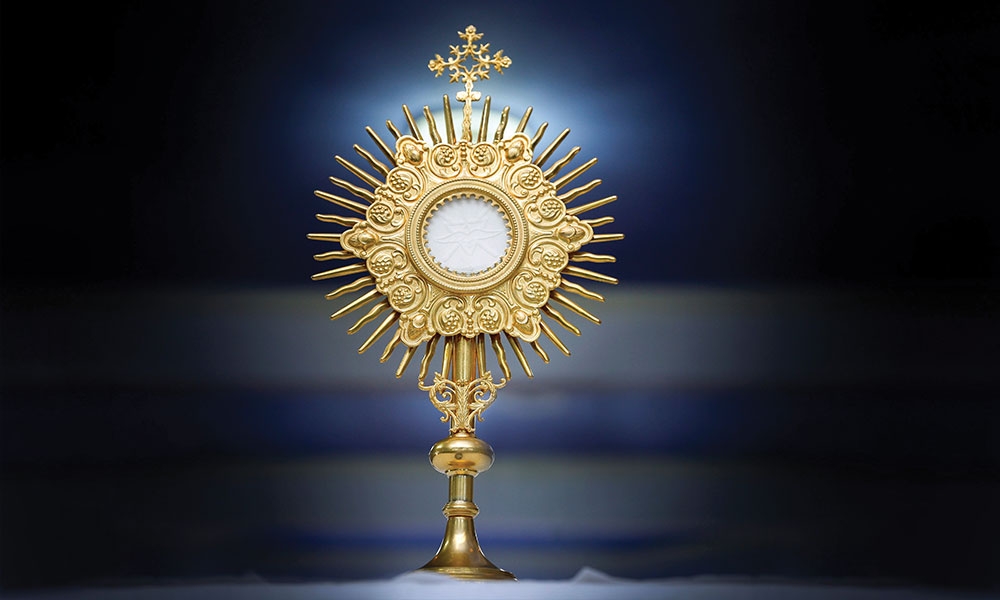
Today the whole Church celebrates the Solemnity of Corpus Christi: the Body and Blood of Christ. This is to remind us that we are Eucharist-gifted, i.e. the Lord has given and left us the gift of Eucharist as life to live and follow as Christian.
Our readings today reminded us that God has continually nourished us in Life. Through the Body and Blood of Christ, God offers us Jesus as our food to nourish and sustain us in daily faith-life journey. However, for miracles to happen and a taste of heaven be enjoyed in life, the Eucharist as food for our journey are meant to be shared in kindness with others and one another.
In other words, food and graces given to us are not only meant for ourselves but must be blessed and shared in communion and kindness with others & one another in life as community of faith. The food and life God offers us through the Most Holy Eucharist then are meant to be in agape and communion with others and one another, and not to be keep only for oneself.
We might say nowadays: “You are what you eat, and who you eat with” or “The food you eat reflects your identity and your company to keep.” Like, a vegetarian eats vegetables with vegetarians. Meat-eater parties with meat-eaters. Drinkers hangs-out with drunkards.
In the same way, Catholics who attend and receive Eucharist regularly are spiritually healthy, happy, more kind and generous to share with others. Catholics however who rarely attend and receive Communion (as some would even prefer just to attend via live-streaming mass nowadays) tends to be spiritually weak, usually sad, stingy and selfish to share with others.
Again for miracles to happen and for us to have a glimpse and taste of heaven in life, we must learn to properly receive our blessings by attending, taking and sharing Holy Eucharist with others and one another in community.
As we are continually nourished by God through the Eucharist, the Life of the Body and Blood of Christ, may we be more inspired, nourished, and moved to share our faith and blessings in kindness and communion with others & one another.
Power is an ability to influence, to create and transform. It can be either positive or negative. When power is expressed as a positive force via affirmation, then, power builds respect. When is expressed through love, then, power transforms into service and giving of oneself. However, when power is expressed as a negative force, it leads to coercion, manipulation, abuse, exploitation and even to death
Each of us is a bundle of energy, of power. We possess power as long as we live with others because power can only exist and be exercised in the context of community. Hence, power is entirely about relationship because power is an exercise of influence, which can be realized only in the context of community.
We remind ourselves that it is also in the context of our relationships that we discover who we are, our talents and capacities, strengths and potentials, as well as our weaknesses and limitations. It is in the community that we also understand ourselves the “I am.” I am – is the uniqueness of the person whatever his or her status in life. Our person regardless of our social standing, sexual orientation, age, educational attainment or role in the family or community, is called by the Lord to share in God’s fullness of life, living in a community. Our person also is gifted with THINKING, FEELING, and ACTING. These are forms of power which can be expressed positively or negatively within our community
Our thinking, feeling and acting can, indeed, influence others. Through thinking we create ideas, we make plans and decisions. Through feeling or emotions, our thinking and acting can be influenced. Our feeling may dictate our thinking and in the process also affect our actions. Through our actions we initiate movements that may directly and indirectly affect our environment, which include the people around us.
Thus, when we become anxious of ourselves and less aware and knowledgeable of who we are, there is a tendency of insecurity. Insecurity leads us to compensations, which means that what is lacking in us, we try to compensate in other forms. For example, a child who is abused physically or verbally at home, may tend to be a bully at school to exercise dominance. Or a person who is deprived of things, like food, toys, and clothes at home may tend to become a hoarder later on. The person will try to collect and possess more, to feel some sense of security. While trying to satisfy himself/herself, the person may in turn deprive others too.
These are expressions of power that are also being unfolded as we begin the Paschal Triduum of Christ beginning today and will culminate in the Resurrection of Christ. Yet, for now, what I want to focus more is on how power in its positive and negative forms give influence to people and transform us. It is good then, that we become aware on how the power of Satan suppresses life and how the Power of God gives life.
Let us look first at the power of Satan and on how it controls and brings death. The Gospel of John clearly tells us that the devil had already induced Judas, to hand Jesus over (John 13:2). In the same Gospel, it was also described that as soon as Judas took the morsel, Satan entered him (John 13:27). The intentions of the heart and actions of Judas were already leaning towards the evil spirit, hence, it was easy for Satan to get hold of Judas and bring him deeper into darkness and sin. This was how the devil influenced the mind, decisions and actions of Judas.
Judas must have thought that his desires and longings will be fulfilled through these actions and decisions of him. Yet, he was wrong. He was controlled and manipulated. He was not himself anymore. Judas was in total darkness. Satan was controlling him, perhaps, even without fully realizing that the evil spirit was already manipulating him farther away from the grace and light of Jesus and closer to darkness and death. This led him to his pitiful death. This is how the power of Satan controls us and brings us farther away from the grace of God.
However, let us also not forget how Jesus turned upside down this terrible event. Even though that happened to Judas, but Jesus turned that night of betrayal and pain through the power of love and mercy.
This was described to us as Jesus assumed the humble position of washing the feet of his disciples. It was power expressed through service and humility. Jesus tells us that being a person with power as an authority figure or leader is not about controlling others or manipulating others.
As Jesus washed the feet of his disciples, he gives a model of a life-giving way of expressing power and that is through service and love. This tells us too that the power of being a Christian is having the capacity to serve and love without pretention, without manipulation and that does not count the cost. Christian Discipleship is indeed a form of power, a life-giving power.
This call and invitation to exercise power as a Christian Disciple applies to all, regardless of our age, gender and sexual orientation, social status, educational attainment or state in life. Indeed, to be a disciple of Christ is to give life just as Jesus gives his life for us. And this is the true expression of power which is sacramentally given to us through the shared meal on that Last Supper of Jesus. This is what we powerfully remember today.
It cannot be denied that at the Last Supper of Jesus, his Body and Blood were given also to a disciple, a friend and a companion who betrayed him on that night. Yes, even Judas was in that meal. He too received the body and blood of Jesus even though he was not in the “state of grace.” Jesus gave and offered his body and blood for Judas and for us who are also potential Judases[1] today. This is the power of forgiveness, the power of unconditional love, the power self-giving. This is the power of God.
As we enter into the Paschal Triduum, let us also allow the power of serving, of loving, of caring and of compassion to be the very power we express in our relationships, in our roles and leadership, and in our life through our thinking, feeling and acting. Let the power of God transform any forms of control, manipulation, and abuse into life and into love. Kabay pa.
[1] In the words of Bishop Pablo David, DD, Bishop of Kalookan.
A man once never thought that he would donate blood in all of his life. Once, however, his child got very ill & hospitalized, and badly needed blood transfusion. Luckily, they were able to get a blood donor for his sick child. Now, as he watched the donated blood dripping through into his child’s veins, he suddenly realized that someone had shared & donated the blood that is keeping and helping his child alive. Straightaway he made up his mind to become a blood donor, himself, and he was as good as his word – regularly as needed donating blood as thanksgiving for the gift.
Last Sundays’ readings were all about `Faith’. Particularly, in last Sunday’s gospel, we heard the apostles’ request to increase their faith. But Jesus reprimanded them by pointing out to them that God has given them enough faith and no need to ask for more because it is already given. In a way, Jesus directed us now and his disciples then that we cannot demand God to grant us the gift of faith because faith is God’s grace. It is God’s free gift given to us voluntarily of His love, and not out of our requests, wants or needs, or even payment for our good deeds.
Today’s readings are also about FAITH but faith not only as God’s gift but faith as our response in gratitude and thanksgiving to God’s love.
Naaman in our first reading, having cured of his leprosy, in return comes to believe in the true God and commits himself to praise the God of Elisha. St. Paul in our second reading resolves to preach the Good News to others despite persecutions, oppositions, and hardships so “that they, too may obtain the salvation given to us in Christ Jesus and share eternal glory” – meaning, that others may also share what is given us. In our gospel, ten lepers were cured of their leprosy, because of their faith in Jesus. But only one Samaritan came back to thank him and praise God – only one is grateful enough for what God has done to his life.
All of these would mean that inasmuch as faith is a gift from God, faith is also our commitment to respond in return to God’s generosity and goodness to us. Faith is then our personal decision to commit ourselves in resolving to give something back in gratitude to God’s love and goodness to us. Like that of the man & the healed Samaritan leper, our faith should compel us to do something in response to God’s love and grace-given us.
Having faith may have saved us, healed us, cured us and… it thus also makes us acknowledge God’s grace in us anew, and challenges us to change our ways and be renewed in our relationship with God. Inasmuch as faith without action is useless, God’s gift of love and generosity to us are also useless without our faith-response. It is not sufficient then to have more than enough faith. But as we receive God’s gifts & miracles of faith in our lives, we need also to express our faith as thanksgiving in return.
To share in God’s grace then, it is not only a matter of having faith, but also a matter of how we live out and practice our faith in Christ as our response in gratitude to God’s grace. Rather than being worried about how we can avail of, how we can benefit more from & be entitled of God’s grace, we should be more concern on what return can we make to God in gratitude, and how can we reciprocate or “pay-forward” God’s goodness to us with others.
But still, many would like most to avail of the generosity & benefit from the help of others, but few are willing to give something back in gratitude. Remember, out of ten lepers who were cured, only one came back to thank. Thus, gratitude is so important. Gratitude makes us want to give something back in grateful response for such great gift. Gratitude makes us help others and celebrate-exchange our gifts-received with others.
As followers of Christ, the Holy Eucharist is our expression and celebration of our faith-response in praise and thanksgiving to God for all the blessings he has given us through His Son Jesus, in life so-far. We are supposed to be a Eucharistic people, a people constantly grateful to God. So, don’t be so pre-occupied with the beautiful things God has given us that we forget to thank the Giver of the gifts, and fail to share such gifts with others. What matters most then is not the gifts but the Giver of the gifts, and how gifts are shared and celebrated – that is how it is freely given and gladly received by one another.
So perhaps every time and next time you attend Mass, ask beforehand not for what gifts you need and want from God, but instead, ask how God has been generous and good to you lately that made you grateful to celebrate & share with others now here in our celebration of the Holy Eucharist.
And may our prayer now be: For all that has been… Thanks you Lord. For all that will be… Yes, Lord. Amen.
Our Loving God who has been with us since the very beginning. You are our ever faithful friend and companion in the journey. Many times, you have shown to us in concrete ways what love can do.
Because of so much love, you created us in your image and likeness. When we first sinned against you, though the paradise has been closed for us, yet, you walked with us. When we were made slaves in Egypt, you rescued us. When we grew hungry in the dessert, you provided manna for us. When we felt that our enemies made blows in every corner, you sent saviors to tell us that we are never alone.
When, we felt that you were too far from us, you have become like us except sin. You were born as an infant and grew up into a man. You walked with us, ate with us, taught us and even cried with us. You have brought hope and life in us even to the point of offering your life for us. Though you never sinned, but because of us you suffered. We were the ones who crucified you, yet, you forgave us. We were the ones who put you to death, yet, you resurrected for us – to tell us that we are never beyond redemption, that there is always hope in us, there is more in our sinfulness and weakness. You see love in us.
Indeed, you are a God who have showed us concretely what love is, now expressed through the sacraments of the Church. And so grant us Lord, the spirit to understand and embrace fully the grace that flows from the sacraments of your love, so that each of us will also become the very sacrament of your presence, of your faithfulness and love to people around us. We ask this through Christ our Lord. Amen.
Have you been in love? I am sure that you have been in love too. The first time I realized that I was in love, it made me restless until I could have a glimpse of her. I realized that my attitude towards her had changed. I suddenly became more caring and thoughtful towards her. Though that puppy love did not last as it was based on emotional and physical attraction only, but that gave me a bit of understanding how love can change a person’s behavior.
With that, how would we define love? Can we really define it? According to my Tita, Miss Meriam-Webster, she gave 9 different definitions of love. Yet, I am not personally satisfied with her definitions since most are descriptions of love. Well, she said that love is a strong affection towards another, or attraction based on sexual desire, or based on admiration, or devotion, or an assurance of affection or a concern for another, etc.
Moreover, our Christian understanding of Love is much deeper than that. It is beyond romantic love, beyond physical attraction or emotional attachment. It is more concrete than those. If you have been listening to the prayer earlier, what we have prayed described “who love is.” Notice, I did not say, “what love is,” but “who love is.” Meaning, love is a person who concretely showed to the beloved that love. Yes, love is a person, God’s self-revelation is love and made visible through Jesus. What I prayed and shared with you in that opening prayer is the story of love being revealed to us, in our human history. It’s love that creates, that liberates, gives life and gives hope.
This is what sacrament is. This is what I want to share with you, to always remember that the sacraments in our Church are concrete expressions of Love, expressions where the grace of love, of loving and of being loved made visible. Thus, Sacraments are expressions of love made visible.
You may have some knowledge about the Sacraments already, and it would be too long to share in details the theology and historical development of each sacrament. So, just let me share with you in short its background and how each sacrament is an expression of love made visible.
What are the seven sacraments?
The seven sacraments are baptism, confirmation, Eucharist, penance/ reconciliation, anointing of the sick, marriage and holy orders. They are divided into three categories: sacraments of initiation, sacraments of healing and sacraments of service.
What is a sacrament?
Before we get into the details of each sacrament, I want to reiterate one of the most important things about the sacraments — that they are means which God uses to show His grace and help us achieve salvation. The word sacrament means “a sign of the sacred,” which is fitting as they are all outwards signs from God to us.
Not only are they signs, they’re also celebrations of a continued journey and relationship with God, teachings to help live out His word and ceremonies to show devotion to Him. This means that our participation in the sacrament is our response of love to the one who loves us.
Take for example, a parent who does everything to send his/her child to school, provide basic needs and give a good life and ensuring that the parent’s presence also provides comfort and assurance to the child, and a child who out of gratitude to the parent maximizes everything given to him/her succeeds in life and makes the parent proud – is an image of sacrament.
Where did the sacraments originate? (origin?)
In the Bible, Christ gives his followers instructions on how to administer and receive each of the sacraments. This is seen through his work with the Apostles, in healing the sick, in the parables, feeding the multitude and giving his body and blood for the salvation of all and in forgiving sinners. The Church now administers these holy sacraments as instructed, in order for all to worship God and receive God’s gift of salvation.
This means that all the sacraments have a biblical origin. Though each of them have developed and has its own vast history over centuries until its present form. Hence, there might be some changes in performing the rituals, changes in languages, differences in doing it that varies from one culture and rite to another, but the very essence of each sacrament remains the same, it is the grace of LOVE MADE VISIBLE.
The Sacraments of Initiation
The three sacraments of initiation are baptism, confirmation and Eucharist.
Each is meant to strengthen our faith and forge a deeper relationship with God. Baptism frees us from original sin and making us children of God. Confirmation strengthens our faith and gives us fully the Holy Spirit. And Eucharist allows us to taste the body and blood of eternal life, be reminded of Christ’s love and sacrifice, and becoming one with the whole Church.
Sacrament of Baptism
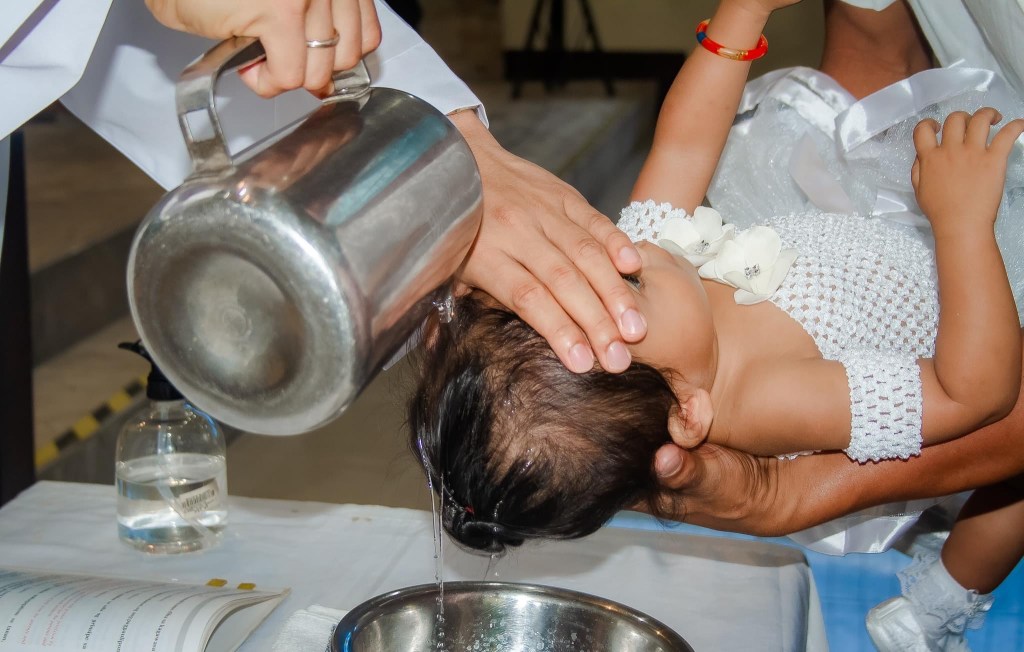
In particular, baptism is the first sacrament where we become united with Christ and with the Church – no other sacrament can be received without it. Matthew 28:19 says, “Go therefore and make disciples of all the nations, baptizing them in the name of the Father and the Son and the Holy Spirit.”
A priest performs this rite through the use of water, which is the matter, by immersion or by pouring, and while using the formula, “I baptize you in the name of the Father and of the Son and of the Holy Spirit.”
This is the first step in our relationship with God. This is the only sacrament also that can be administered by anybody as long as he has the right intention and using the matter and the formula, but only in case of emergency.
Remember also that it is in baptism that God claims us as His children. The name of God is imprinted in us. That is why, baptism gives us an “indelible mark.” Meaning, once we are baptized, the grace can never and will never be taken away from us, because we have been claimed and marked as God’s beloved.
Hence, baptism is indeed love made visible because we are being assured of God’s faithful presence in our life, as a parent, as a friend and a companion in our journey. That is why, just as we remember our birthday every year, it is also good to become aware of the day of our baptism and celebrate it, because on that day we were formally received in the Church and had been claimed as God’s child.
Sacrament of Confirmation
Peace be with you! Receive the Holy Spirit. – This is the greeting of the Risen Christ to the terrified Apostles. At Pentecost, each of the disciples of both men and women received the Holy Spirit with an image of fire resting on their head. And filled with the Holy Spirit, they begin to speak though in different languages but understood each other and by the people around them.
with Most Rev. Edwin dela Peña, MSP, DD, Prelate of the Prelature of Marawi
Indeed, this is the sacrament where the candidate receives the gift of the Holy Spirit and continues their journey with Christ. During Confirmation, the candidate is anointed on the forehead with holy chrism (oil made of olive oil mixed with some perfume or aromatic oil) by a bishop or by a priest delegated by the bishop and saying the formula, “be sealed with the gift of the Holy Spirit.”
Since baptism typically happens when we were babies, confirmation allows an older child to acknowledge that he or she still wants to continue the journey with God and grow in relationship with Him. Like the baptism, confirmation also leaves an “indelible sign” in us, meaning, it is something that cannot be repeated and will never be taken away from us.
Remember, it was the promise of Christ given to the apostles that as he was going back to the Father, he assured them that He will be sending an ADVOCATE also called as PARACLETE – the comforter, consoler or helper. In this way, the sacrament of confirmation is indeed love made visible because it is a testament that God comes to comfort us, to console us and help us. And since we have received it, be assured, be confident because the Holy Spirit is with you to give comfort, consolation and help especially when you need it the most. Thus, as a response also, be a helper to others, be the sacrament of God that gives comfort and consolation to those who are in pain, confused and suffering.
Sacrament of the Holy Eucharist
Eucharist means thanksgiving. This is when Christ’s body and blood are offered and then received by us in the form of bread and wine. Matthew 26:26-28 says, “While they were eating, Jesus took some bread, and after a blessing, He broke it and gave it to the disciples, and said, “Take, eat; this is My body.” And when He had taken a cup and given thanks, He gave it to them, saying, “Drink from it, all of you; for this is My blood of the covenant, which is poured out for many for forgiveness of sins.”
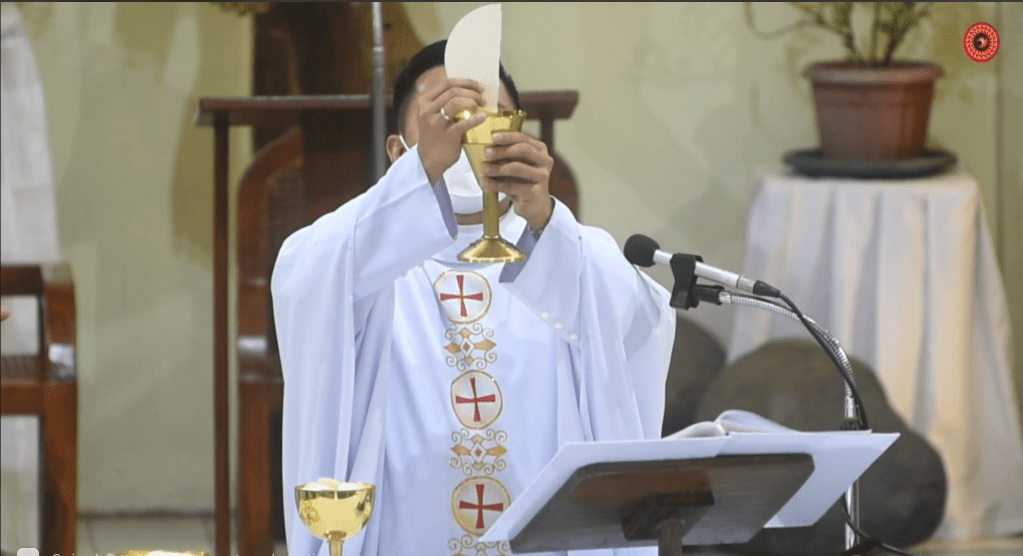
Now the priest, through the words of consecration, blesses and administers the Holy Communion during every mass to remind followers that they are one with Christ. Food and drink nourishes our bodies ‒- Christ’s blood and body being shared to us nourishes us.
Moreover, this sacrament reminds us of this wonder of being grateful and of sharing. This tells us that when we become grateful of the gifts that we have no matter how small that could be, we also become generous. Thus, the bread and wine turning into true body and blood of Jesus is not done out of “magic.” This happens really, because of the act of thanksgiving of Jesus and his willingness to share his very self to us. Jesus is grateful of the love of the Father and so he gives himself to us as his concrete action of loving us. And the Lord does it every time we celebrate the Mass. Indeed, this is love made visible.
The eucharist that we celebrate and receive calls us now towards sharing. And to be able to share the body and blood of Jesus means that we become one with him or that we actually become him, becoming the Jesus of today!
That’s why, during the consecration, before raising the chalice, the priest remembers what Jesus said, “Do this in memory of me!” I find this very powerful because this is also the only sacrament that Jesus said explicitly, do this to remember me. Every time we celebrate the eucharist, it is not just a thing of remembering a distant past, but making the memory of Jesus alive again today.
Thus, “To remember Jesus means to become part of Jesus.” To know that Jesus is with us and within each of us is to be able to find peace and serenity, satisfaction and contentment despite the troubles, problems, concerns and hungers, wants and other desires that we have. When we become more conscious of the meaning of being one with Jesus and having Jesus in us, we also become, hopefully, Jesus for others.
This is the implication when we participate in the memory of the Eucharist because the Eucharist is not supposed to stay only inside the church building. When we go out from Church, it also means that we carry in us the Eucharist, we carry in us Jesus. The Eucharist continues when we step out from the Church and go back to our homes or to your workplaces and meet people.
This is the call of the sacrament of the eucharist, “to be the Jesus today! Consciously, with gratefulness in our hearts and with generosity bring Jesus with us because he is truly in us!” express the Jesus in you, through your words and deeds as you meet people today and tomorrow, as you talk and dine with your friends and family, and as you encounter strangers and the needy on the street and in the places where you go. In this way, we also become the sacrament of God’s love made visible.
The Sacraments of Healing
The two sacraments of healing are penance/reconciliation and anointing the sick. Penance allows for spiritual healing and absolution for people who have distanced themselves from God through sin. Anointing the sick allows for both physical and spiritual healing. When one falls seriously ill, a minister anoints them and prays over them, calling on Christ for strength and the gift of healing.
The Sacrament of Penance or Confession or Reconciliation
Personally, I actually like its other name, “RECONCILIATION.” Penance focuses of the punishment of sin while reconciliation focuses on the grace received in this sacrament.
During the sacrament of reconciliation, a person confesses his/her sins to God through me (as the priest). I forgive the confessed sins through God’s mercy, and I order the penitent to live a more faithful life through the gift of absolution.
Confession is essential in cultivating and fruitfully living out the word of God. We are not perfect people, even if we try to be. Many times we fail and commit sin and that’s why it is good that we are always conscious of our sinful nature in order to counter healthily those tendencies. By acknowledging our sins, we also acknowledge our need of God. This helps us have a stronger relationship with God and better awareness of ourselves and of our needs and desires.
As a priest, I find this sacrament really powerful because as it brings healing to a soul wounded by sin, this sacrament also heals a heart wounded and bruised by painful, shameful and traumatic experiences of the past. Despite being young in the ministry, I have heard confessions that brought shocks and terrifying chills. I have heard sins confessed that I thought only in movies could happen, yet, those happened and to be able to console a penitent through God’s gift of mercy and peace, that gave me the joy of being a priest. It is not easy to sit down and listen to the sins of the people. Being in the confessional for two hours is physically and emotional draining. However, the joy and peace that I always see and feel in the person after the granting of absolution would always paint a smile on my face.
Hence, this powerful sacrament of reconciliation is indeed love made visible because God reminds us always that His mercy and gift of peace is never far from us. God through this sacrament tells us that God is always willing and waiting to embrace us. Hopefully, each of us too, who received such embrace of forgiveness becomes a witness of God to others by being compassionate to sinners like us, by forgiving those who have hurt us and embracing those who feel unworthy like us.
The Sacrament of Anointing of the Sick
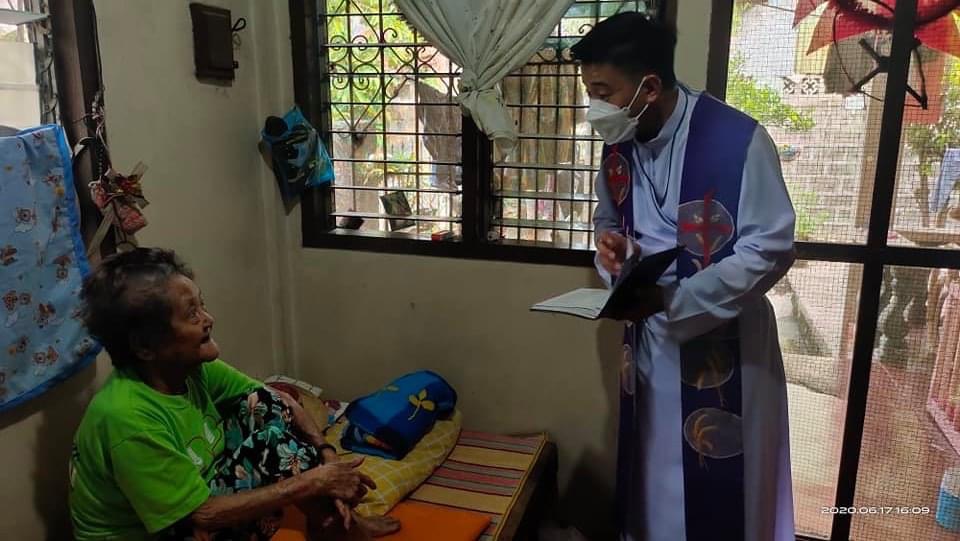
This sacrament is the most misunderstood and even taken for granted by many. Before, this was called as the “Extreme Unction” meaning the “Final Anointing.” This sacrament was usually administered to those who are about to die. That’s why, even until now, people think that this sacrament of anointing of the sick is only for those who are at point of death. People refuse to receive this sacrament because of the fear of dying.
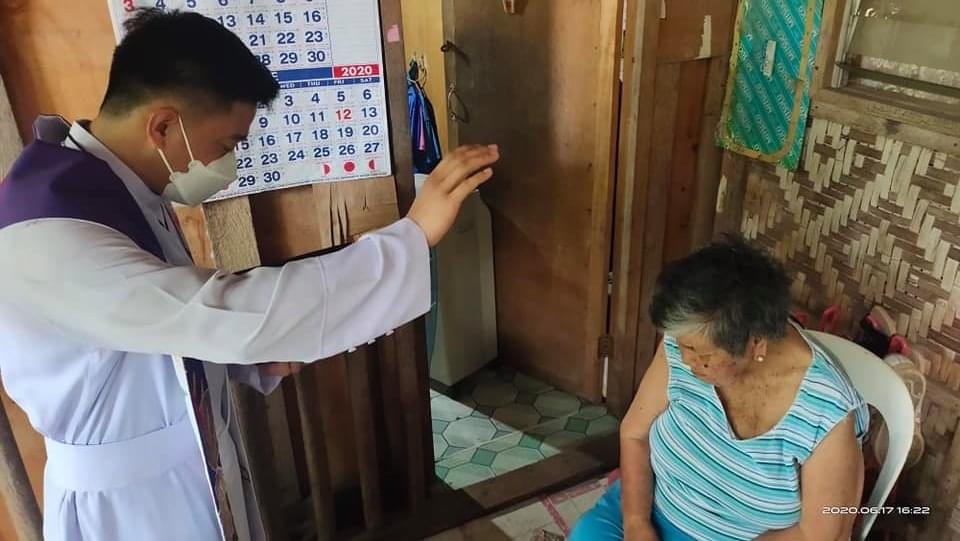
Anyhow, this sacrament now is bestowed upon those who are ill or suffering, which then are united with Christ’s passion. Anointing the forehead and hands of the person with “oil for the infirm” or “oil for the sick” while a priest is saying the words or the formula of the sacrament. (on the forehead: Through this holy anointing, may the Lord in his love and mercy, help you with the grace of the Holy Spirit. Amen; the hands: May the Lord who frees you from sin, save you and raise you up. Amen.)
This special blessing is a way to make the sick receive the strength in his body and spirit and be more connected with God in both mind and body.
In the letter of James 5:14, it says, “Is anyone among you sick? Let him call for the elders of the church, and let them pray over him, anointing him with oil in the name of the Lord.”
And since, people only asked for it when most of them are dying, this is the sacrament also that as a priest, I would always hold myself not to cry. Though there were times that I was not able to hold my tears and administered it with broken words in between my silent sobbing. Indeed, it is just painful and terrifying as well to witness a person who struggles for his/her last breath on earth while those who love him/her gathering around. Despite the pain, but I always feel blessed to have been part of those moments where the reality of death is being embraced.
Moreover, many times also I have witnessed how those were sick recovered after receiving the sacrament. It is a joy for me to witness that wonder and miracle of simple healing stories. Indeed, this sacrament of the anointing of the sick is love made visible because God continues to touch us to bring healing to our tired, wounded and sick body as well as our spirit. Thus, with this sacrament, this calls us too to become God’s healing touch to others. Yes, touch others to bring healing and comfort. Touch them with your presence of assurance and friendship especially those who are ill at the moment. Let them know that you remember them, that you are praying with them and for them. In this way, we too become the sacrament of love made visible.
The Sacraments of Service
Through marriage and the holy orders also called Ordination, couples and the clergy promise to serve and build up the church community.
The Sacrament ofMarriage
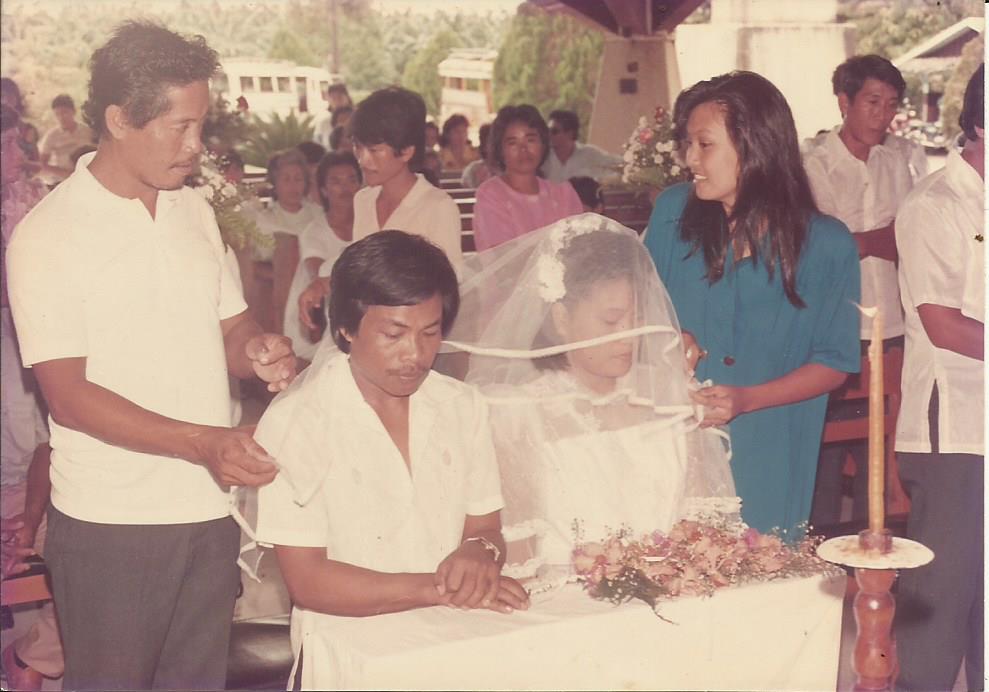
Marriage is a very important sacrament. Just think, without it, no one will come for baptism and confirmation. Nobody will gather to celebrate the Eucharist. And since no one is there, nobody will get sick and ask for the anointing. And most of all, no one will be ordained to the priesthood to celebrate the sacraments. 🙂
The commitment, love and union of husband and wife extends and bears fruit. This is how a wife and a husband enrich the church, and that is through procreation. The openness of the couple to God’s grace of children, makes the church more alive. Without their commitment and openness to the grace of having children, there will be no people, no community at all.
Of course, we also know that there are many couples who were not gifted with children because of some physical difficulty, yet, this does not stop them from becoming fruitful in the community. All couples are called to build up the church in ways they can.
Thus, through marriage, a couple promises to help build each other up, in faith, serve each other and the church and be faithful to each other until death. Through this lifelong commitment, this also mirrors God’s faithfulness in us. Remember, our covenant with God is always in the image of marriage. As God makes a covenant with us (I AM your God and you are my people), God expresses concretely His faithful and abiding love for us.
For those who are called to this life, prepare yourself and always make yourself welcoming to God’s invitation. Faithfulness is a key element in this life. For those who are not called for this life, let those married couples around you like your parents especially as well as your friends, be your inspiration in your other relationships. They may not be perfect but let them know also that you pray for them and supportive for their lifelong commitment.
Thus, this sacrament, indeed, is love made visible in many ways. God reminds us of his faithfulness in our covenant through this sacrament. The couple mirrors the love of Christ with the Church and the Church’s response of love to Christ. Hopefully, each of us too will become sacrament of love made visible by being faithful and committed to our relationships, with our friends, families and communities.
The Sacrament of Holy Orders/Ordination
This sacrament is for those who choose and called to become a priest, bishop or deacon. This is the composition of the clergy. Through ordination, they are able to perform sacred duties and serve the church community. This is a sacrament that everyone cannot partake in, rather it is reserved to those who are called by God chosen among God’s people.
Yet, this does not mean that this kind of life is higher than being married. As married couples have their own mission and call in the Church, we priests, deacons and bishops also have our own calling and mission in the Church.
Like the baptism and confirmation, ordination also leaves an “indelible mark.” As there are three different categories among us clergy, there are also different rites for ordination for deacons, priests and bishops.
Without going deeper into these three categories, all three share a common ground and that is the gift of ordination is received through the imposition of hands and the words of the consecratory prayer that also differs from one another.
Moreover, we priests and the bishops, receive the mission and the capacity to act in the person of Christ the Head, while the deacons are empowered to serve the people of God in the ministries of the liturgy, in preaching and in charity.
Thus, through this sacrament, God reminds us too of His continuing presence in the world, in our communities and in our hearts through the gift of person whom God has called and chosen to be his image in the Church. This indeed, is a sacrament of love made visible.
For all of you who do not share in this vocation, I would like to ask you humbly to pray for me, to pray for us clergy. Pray not just for our perseverance, not just for our good health; pray that we may always be faithful as God is faithful to us, pray that our commitment is for the church and not for our personal comfort and enrichment, pray that we always find joy in this life because there are many of us who are sad and lonely.
Hopefully, you have found this empowering and life-giving.






 A DOSE OF GOD TODAY