
July 14, 2020 – Tuesday 15th Week in Ordinary Time
Click here for the readings (http://www.usccb.org/bible/readings/071420.cfm)
Homily
Jesus was very disappointed at the response of the people. Three places were mentioned to have been the places where Jesus did many wonderful things. These are Chorazin, Bethsaida and Capernaum. Miracles were performed as God’s sign of blessing and presence. However, Jesus found the heart of the people hardened and unrepentant. The people refused God’s offer of friendship.
They did not want to be disturbed from what they were usually doing. They were just satisfied with the kind of life that they were leading. Thus, God’s invitation for them to change became a threat to what was comfortable, advantageous and beneficial for them.
This is the reason why Jesus gave the uncompromising warning to these people because of their refusal of God’s offer of salvation, and that is, damnation. However, remember that it is not God’s desire for the people’s damnation. It was the people who chose to be damned and to reject God.
There might be times where we will find ourselves in this kind of situation. We can easily take for granted the everyday miracles that are happening in our life. As a result, we could become ungrateful in the way we live our life, in the way we relate with others and even in the way we relate with God. And from these, there are three reasons that I see on why we would hold back and refuse God.

First is the refusal to admit and recognize that there is something wrong in us, in the way we live our life, and in the way we relate with people around us. Unacceptance of our faults means distancing ourselves from our responsibility. This attitude will make us self-righteous and arrogant, making us blind of our own sins. Thus, when we refuse to admit our failures and sins, we point our fingers to others. We would find ways of covering up our sins by bringing up the sins of others or making reasons that we have become the way we are because of the faults of others.
Second is the confidence of being self-satisfied. When we are filled with ourselves, filled with our selfish desires and wants, we also become self-satisfied. When this happens, we will not realize that we are also in need of God. This attitude comes from the tendency that tries to accumulate more for the self. The forms of accumulation is not just limited with our desire to enrich ourselves with material things but also, praises and recognitions from others, or even forms of compulsive behaviors and addictions. These forms of accumulation make ourselves busy and filled with many things, consequently, preventing God to occupy a space in our life. We would not dare to make a room for God because our heart is full, our mind is occupied and our day is busy.
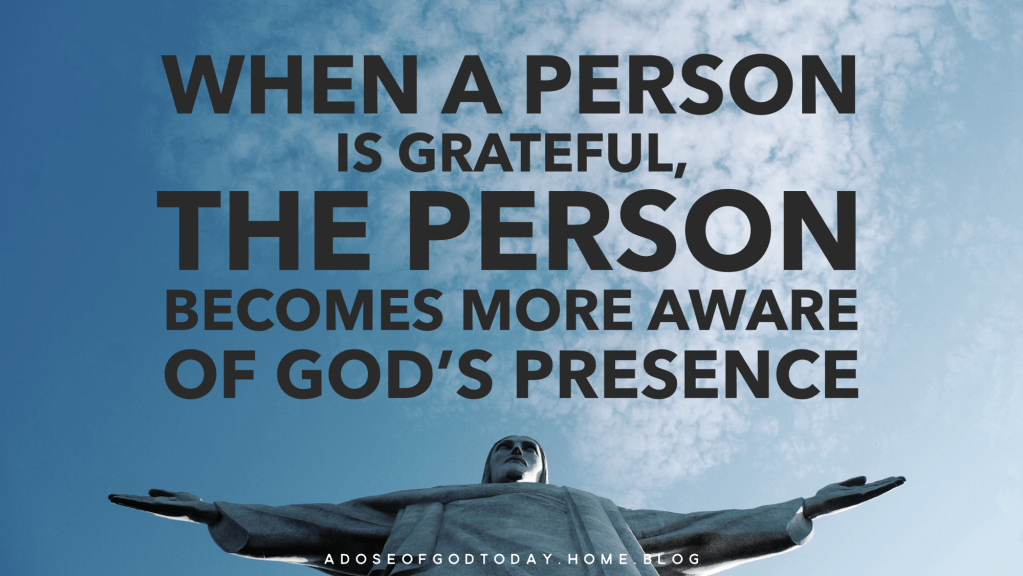
Third is being ungrateful. A self that refuses to admit sins and becomes self-satisfied also becomes ungrateful. When we become ungrateful, we easily take for granted the giver of gifts and the worker of miracles, and thus, the presence of God in our life. With this attitude, we also become self-entitled. We become demanding in our relationships. We become critical of those people around us and we tend to only see what is wrong in the other person. We will become stingy of our time and energy and ungenerous of our resources and presence to those who are asking for our help. And most of all, we become indifferent to people around us and indifferent to God, the source of all blessings and miracles. We will easily notice this in us because we will tend to become bitter, impatient and cranky.
However, as the Lord continues to reveal himself in us, he desires that we become the person God wants us to be. That is why, the Lord never tires in calling us closer to Him, again and again. The Lord has blessed us and shown us many wonders to invite us. Thus, the invitation for us today is to be more aware of the many blessings and miracles God is doing for us today even in the midst of this pandemic.
Hopefully, by recognizing God’s blessings and miracles in our life, it will lead us to the three movements that will allow us to see and recognize the Lord in these difficult times.
First. Humble ourselves by recognizing our failures and our need for mercy and forgiveness.
Second. Recognize our emptiness and so of our need of God to fill our empty hearts. Never be afraid to be vulnerable and to show our weakness so that God can work miracle in us.
And finally, be always grateful to the many good things that God has given us even small and simple things. This calls us to be more aware of God’s presence revealed even in ordinary ways and to be sensitive to the needs around us. Hinaut pa.
Jom Baring, CSsR
 A DOSE OF GOD TODAY