Tag: Good Shepherd

  • Gut-Felt Sense Recognition

    Gut-Felt Sense Recognition

    April 21, 2024 – Fourth Sunday of Easter

    Click here for the readings (https://bible.usccb.org/bible/readings/042124.cfm)

    Once while giving a graduation speech, the Late-Philippine lady senator Miriam Santiago made a joke. She said… Beside the swimming pool, two girls are having this following conversation. G1 said to G2: Know what? You are going to float (Alam mo. Lulutang ka). G2 to G1: Why? Is it because I’m slim, light & sexy? (Bakit? Dahil ba, magaan, slim at sexy ako? G1 replied: No, it’s because you are Plastic (Dahil plastic ka).

    Funny & rude it maybe, but it tells a lot how do we distinguish a GOOD parent, teacher, friend, politician, leader, mentor or coach from a BAD one? How do we know if that person is real, true, authentic, deep, honest & trustworthy? How do we know that person is fake, shallow, liar & unreliable?

    Nowadays it is normal for us to suspect things simply because it is not easy to know whether it is real or fake. Because it is difficult to detect the authentic from artificial or plastic, the durable from disposable, nowadays we do tend to be suspicious of things & even of one another. Same way with our relationships with others. We rather suspect, doubt, and distrust one another, than believe and trust others because it is more challenging to distinguish who are real or fake, honest or deceitful, smart or shrewd.

    Jesus in our gospel today introduced and made Himself known to us as The Good Shepherd who knows His sheep and His Sheep knows Him, and who will lay down His Life for His sheep. As Jesus distinguished Himself from a Hired Worker who work only for pay and no concern for the sheep, he reminds us here that as OUR good shepherd He is a hands-on and committed caretaker/caregiver of His sheep who maintains a personal intimate relation with His sheep, and will commit His life to live and work with His fold in life.

    Be reminded the risen Lord reveals Himself In FLESH. In last Sunday gospel, as the risen Lord reveals Himself in the midst of the disciples, he showed and asked them to touch and see His wounded hands and feet.  The risen Lord then reveals Himself not as ghost but in flesh and bones with wounds.  The Lord has made Himself known to us as “Jesus with a Cross” – a risen Lord in wounded flesh and bones who struggles and sacrifices painfully yet victoriously in life who understands & feels with our own daily crosses in life. He is then our seasoned/experienced life-hero who, by letting us touch and see His wounds in Life -not His glorified body or His spirit, is now willing to shepherd, coach and journey us in & thru life.

    In other words, the risen Lord is Our Good Shepherd because He is hand-on and committed in making known Himself to us, journeying with us and feels  with & for us in our day-to-day humanity and struggles with joys, pains, and wounds of life. And We Christians proclaim that our risen Lord Jesus Christ is OUR good shepherd. We believe that He is our Shepherd, who knows and loves us personally. We also believe that we know Him personally for we His sheep know His voice & recognize His presence among us.
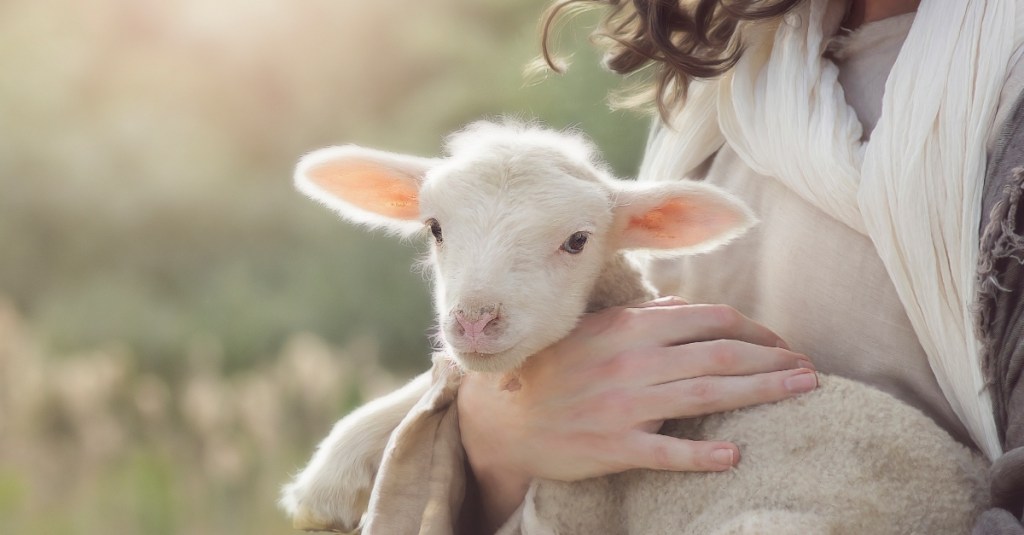
    Christ Holding a lamb.

    Particularly For us Filipino Catholic, we do have special or unique take in knowing our Good Shepherd. We know Him not only because Kilala  natin siya (Kaila ta niya) but because Dama natin siya (Bati nato Siya). Culturally gut-felt recognition is important to us. Like,… I may know you, but I may not feel you. I may feel you though I may not know you. (Kilala kita, pero di kita ramdam. Ramdam kita kahit di kita kilala). (Kaila ta, pero Koy pagbati nimo/ Bati ta ka, bisan dila ta Kaila) This is how we distinguish real from fake & how we discern good & bad.

    Same way as we Filipinos have this natural felt-instinct to recognize & felt-sense to distinguish the real from fake, to discern the good from evil, we also come to be familiar with & know more the shepherd’s voice through our gut-sense and feelings. We do come to know the risen Lord as our true Good Shepherd in life not only by our volition, consent & reasonings, but most of all through our sense & feeling perception (damdamin, pagbati at kalooban).

    By our sense-perception & gut-feeling insights, we come to know the risen Lord with us – in person & in flesh. Knowing the Shepherd is thus not only for us an intellectual or cognitive familiarity but more so a deep felt-sense knowledge and insight of His presence, love & blessing.

    We pray then that the Easter Season this year be our moment to enhance and improve our special felt-sense of knowing our True &Good Shepherd, so that we may not be gone astray from His fold but rather have a much deeper relationship with Him, and be always attuned with His will & plan for us now, especially during this Easter season.

    So Help Us, God. So May it Be. Amen.

  • GOD-Struck

    GOD-Struck

    April 30, 2023 – Fourth Sunday of Easter

    Click here for the readings (https://bible.usccb.org/bible/readings/043023.cfm)

    During the time of the desert monks, around 450 AD, a young monk went to an old and holy monk and asked him, “Father, how is it that so many today leave the monastery? The old monk answered him, “When a good hunting dog sees a rabbit, he will immediately run after it, howling, and barking with excitement. This will, of course, attract other dogs, and they in turn will run and bark and howl like the one that saw the rabbit, although they have not actually seen it themselves. After a while the ones who did not really see the rabbit, but relied only on barking and howling of the first dog, will get tired and give up the chase, because they are no longer interested. They drift off and go home. Only the dog that really saw the rabbit will go on running and eventually catch up with it. That is the way with many who enter the seminary,” the old monk concluded. “Only the one who has his or her eyes on Christ and has seen Him will and can survive. The others, who came only because the enthusiasm of others had drawn them, will lose interest and leave.

    Once I had been involved with the formation of our seminarians as assistant Postulancy director in my years of priesthood. As of those who had been with me, only one out of nine in the first batch, one out of six in the 2nd batch, and three out of seven the last batch are still in the seminary. Meaning, only 5 out of 22 seminarians have persevered in their formation in the seminary. With this, we cannot help but think if there is hope in religious life or priesthood. Some would even blame us, their directors or formators for being too strict. I say, as the story suggests, it is not the Formators but the dynamic and intimate relationship between the seminarian and the Lord Jesus Christ. I believe growth and perseverance in vocation to priesthood or religious life must be based on the personal faith relationship of the person with the Lord Jesus Christ.

    Jesus in our gospel today claims himself as the Good Shepherd, who knows His sheep. He is a Good Shepherd who has a deep personal relationship with His sheep. He knows His sheep and His sheep knows Him. We, Christians proclaim that Jesus is our Good Shepherd not only because we believe that He is the Shepherd but He is OUR very OWN Shepherd. Our faith moves us to proclaim that Jesus is yours and ours Good Shepherd. He is not like any other shepherd but He is your personal shepherd, who knows and loves you. We believe in Jesus as our Good Shepherd, because we choose Him to be our own shepherd. 

    If Jesus is our Good Shepherd, and we are His sheep, what does it mean to be His sheep? There are three important things.

    First, to be His sheep is to believe in Him. The basic message of Easter is to have faith in the risen Christ. Like the hunting dog to the rabbit, we must believe in what we have encountered & witnessed Him, as Jesus reveals himself to us in our day to day life-experiences.

    Next, we must listen. Jesus said, “My sheep listens to my voice.”  We ought to be sensitive to hear and listen to His words in the Scriptures and in the movements of the Holy Spirit in our midst. Meaning, we should lead a life of prayer to nurture our faith.

    And lastly, to be His sheep is to follow Him. Jesus said, “My sheep follows me.” We must heed His voice, i.e. we must live what we believe and practice what we preach. We must be like the hunting dog that is persistent in its following and fulfilling what it believes.

    While our world today promotes the Star Struck motto: “Dream – Believe – Survive”. Jesus, our Good Shepherd calls us today to God Struck motto: Believe – Listen – Follow. If seminarians want to grow and persevere in their vocation, they must believe, listen, and follow their calling. And if as Christian, we want to grow and persevere in Faith, we must believe, listen, and follow Jesus our Good Shepherd.

    Particularly for us Filipino Catholic, we do have special or unique take in knowing our Good Shepherd. We know Him not only because Kilala natin siya but because Dama natin siya. Culturally sense-feeling perceptions are important to us. Like,… I may know you, but I may not feel you. I may feel you though I may not know you. (Kilala kita, pero di kita ramdam. Ramdam kita kahit di kita kilala). This is how we distinguish real from fake, depth from superficial, good from bad.

    Same way as we Filipinos have this natural felt-instinct & sense, we also come to be familiar with & know more the shepherd’s voice through our gut-sense and feelings. We do come to know the risen Lord as our true Good Shepherd in life not only by our volition, consent & reasonings, but most of all through our sense & feeling perception (damdamin at kalooban).

    By our sense-perception & feeling-gut insights, we come to know the risen Lord with us – in person & in flesh. Like the hunting dog who first sees the rabbit, knowing the Shepherd is thus not only for us a cognitive familiarity or herd-mentality but more so a deep felt-sense knowledge and insight of His presence, love & blessing.

    We pray then that during this Easter Season may be our moments to be God-Struck in believing, listening & following Jesus, and so enhance and improve our special felt-sense of knowing our True & Good Shepherd, & ensure that we may not be gone astray from His fold but rather have a much deeper relationship with Him, and be always attuned with His will & plan for us now, especially these new normal times. So Help Us, God. So May it Be. Amen.
  • CALLED TO BE SHEPHERD

    CALLED TO BE SHEPHERD

    April 25, 2021 – Fourth Sunday of Easter; Good Shepherd Sunday

    + Manny Cabajar, C.Ss.R., D.D.

    Click here for the readings (https://bible.usccb.org/Bible/readings/042521.cfm)

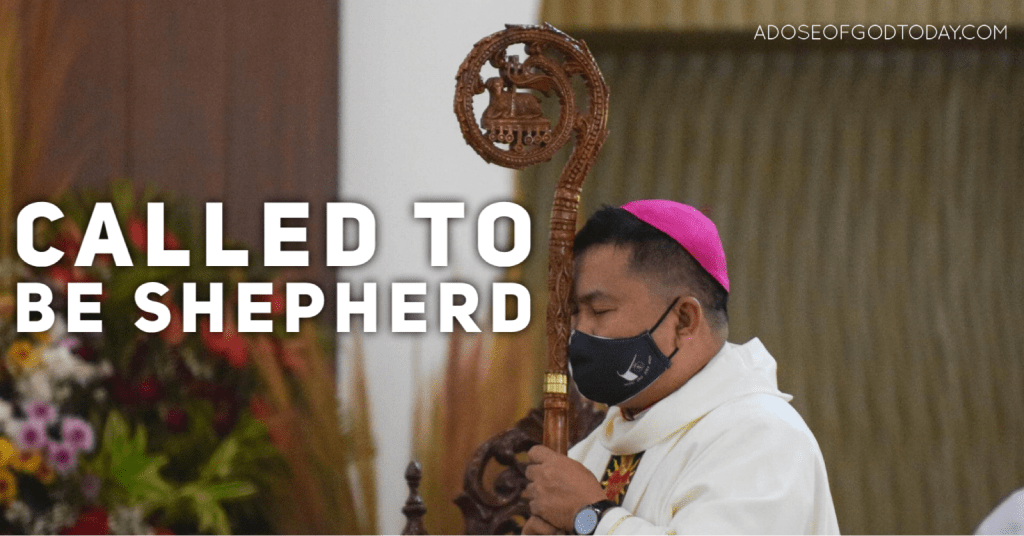
    What is the value of the priesthood in our life? St. John Vianney says, “Without the priest, the passion and death of our Lord would be of no avail. It is the priest who continues the work of redemption here on earth…The priest holds the key to the treasures of heaven…He is the steward of the Lord…Leave a parish for twenty years without a priest and they will end up worshiping the beasts there.” Pope Benedict XVI adds that without priestly ministry “there would be no Eucharist, no mission, not even the Church.”

              Today we celebrate Good Shepherd Sunday and the World Day of Prayer for Vocations. We are blest and rejoice that we belong to the flock of the Good Shepherd, who continues to take care of us through the human shepherds He chooses – the bishops and priests. Through their ministry we are ensured access to the means of our salvation. God may not call us to their kind of life but He invites us to promote and to pray for priestly and religious vocations. There is a decline of young people joining the priesthood or religious life. That may partly be attributed to the materialistic and egoistic culture that regards material comfort and luxury as the way to happiness. But maybe it is also because we have not prayed enough to the Lord to send more laborers to the harvest.

     As we intensify our prayer for more vocations, let us also pray for good and true leadership among those responsible for tending the flock. Jesus sets himself as their model through the image of the Good Shepherd who takes care of His flock. He knows and leads His sheep to green pastures; He seeks out the lost sheep. If needed, He is ready to die for His sheep. The happy priest is one who is not interested in having or getting more, but rather in self-emptying in the service of his flock. The happy priest is one who intimately knows the Good Shepherd and shares his experience of Him with the flock under his care.


    Lord of the Harvest, we pray in a special way for our priests, deacons, seminarians and religious women and men. We beseech You, O Lord, to grant them the grace of fidelity to their vocation. We also ask You to bless their families who continually show great generosity through their spiritual and material support for those who try to listen to Your call and follow You. Amen.

              Brothers and sisters may you have a prayerful and restful Sunday!

  • “Feel Ko? Feel Mo?”

    “Feel Ko? Feel Mo?”

    April 25, 2021 – Fourth Sunday of Easter

    Click here for the readings (https://bible.usccb.org/Bible/readings/042521.cfm)

    Once while giving a graduation speech, the late-Philippine lady senator Miriam Santiago made a joke. She said… Beside the swimming pool, two girls are having this following conversation. G1 said to G2: Know what? you are going to float (Alam mo. Lulutang ka). G2 to G1: Why? Is it because I’m slim, light & sexy? (Bakit? Dahil ba, magaan, slim at sexy ako? G1 replied: No, it’s because you are Plastic (Dahil plastic ka). Funny & rude it maybe, but it tells a lot.

    How do we distinguish a GOOD parent, teacher, friend, politician, leader, mentor or coach from a BAD one? How do we know if that person is real, true, authentic, deep, honest & trustworthy? How do we know that person is fake, shallow, liar & unreliable?

    Nowadays it is normal for us to suspect things simply because it is not easy to know whether it is real or fake. Because it is difficult to detect the authentic from artificial or plastic, the durable from disposable, nowadays we do tend to be suspicious of things & even of one another. Same way with our relationships with others, we rather suspect, doubt, and distrust one another, than believe and trust others because it is more challenging to distinguish who are real or fake, honest or deceitful, smart or shrewd.

    Jesus in our gospel today introduced and made Himself known to us as The Good Shepherd who knows His sheep and His sheep knows Him, and who will lay down His life for His sheep. As Jesus distinguished Himself from a Hired Worker who work for pay and no concern for the sheep, He reminds us here that as OUR good shepherd He is a hands-on and committed caretaker/caregiver of His sheep who maintains a personal intimate relation with His sheep, and will commit His life to live and work with His fold in life.

    Be reminded the risen Lord reveals Himself in FLESH. In last Sunday gospel, as the risen Lord reveals Himself in the midst of the disciples, he showed and asked them to touch and see His wounded hands and feet. Thus, the risen Lord reveals Himself not as ghost but in flesh and bones with wounds. This is very significant because how we witness/recognize the Lord in our life is easily clouded by how we want Him to reveal to us. In other words, “We do not see things as they are, we see them as WE are.” Like, there are Christians who would like to see the risen Lord as “Jesus without a cross”. Jesus here is the risen Lord – without wounds and cross – who reveals to us in full transfiguration and perfect glory who will save our day and provide us success and wealth in life. He is a CEO Jesus of the prosperity gospel who is enjoying and sharing the luxury and pleasure of the so-called “Good” life with all His followers. There are also Christians who would like to see the risen Lord as “Cross without Jesus”. Jesus here is the risen Lord not in flesh but in spirit – a ghost. Here Jesus is believed to be not anymore in this world but in another spiritual realm waiting & welcoming us to the next life, but remain at a distance from our daily life-struggles.

    However we like to see our risen Lord in our lives now – whether as “Jesus without a cross” or “Cross without Jesus”, the fact remains that, the risen Lord has made Himself known to us as “Jesus with a Cross” – a risen Lord in wounded flesh and bones who struggles and sacrifices painfully yet victoriously in life. The risen Lord then is a seasoned/experienced life-hero who, by letting us touch and see His wounds in Life – not His glorified body or His spirit, is now willing to shepherd, coach and journey us in life. In other words, the risen Lord is Our Good Shepherd because He is hand-on and committed in making known Himself and in journeying with us in our day-to-day humanity and struggles with joys, pains, and wounds of life.   

    We Christians proclaim that our risen Lord Jesus Christ is OUR good shepherd. We believe that He is our Shepherd, who knows and loves us personally. We also believe that we know Him personally for we know His voice.

    Particularly For us Filipino Catholic, we do have special or unique take in knowing our Good Shepherd. We know Him not only because Kilala natin siya but because Dama natin siya. Culturally sense-feeling perceptions are important to us. Like,… I may know you, but I may not feel you. I may feel you though I may not know you. (Kilala kita, pero di kita ramdam. Ramdam kita kahit di kita kilala). This is how we distinguish real from fake & how we discern good & bad.

    Same way as we Filipinos have this natural felt-instinct & sense to distinguish the real from fake, to discern the good from evil, we also come to be familiar with & know more the shepherd’s voice through our gut-sense and feelings. We do come to know the risen Lord as our true Good Shepherd in life not only by our volition, consent & reasonings, but most of all through our sense & feeling perception (damdamin at kalooban). By our sense-perception & feeling-gut insights, we come to know the risen Lord with us – in person & in flesh. Knowing the Shepherd is thus not only for us an intellectual or cognitive familiarity but more so a deep felt-sense knowledge and insight of His presence, love & blessing.

    We pray then that the Easter Season this year be our moment to enhance and improve our special felt-sense of knowing our True & Good Shepherd, so that we may not be gone astray from His fold but rather have a much deeper relationship with Him, and be always attuned with His will & plan for us now, especially during these pandemic times.

    So Help Us, God. So May it Be. Amen.

  • VENERATION OF THE CHAIR OF PETER

    VENERATION OF THE CHAIR OF PETER

    February 22, 2021 – Monday, Feast of the Chair of St. Peter, Apostle

    Fr. Manoling Thomas, CSsR

    Click here for the readings (https://bible.usccb.org/bible/readings/022221.cfm)

    Last February 13th, Saturday, part of the celebration of the Lunar New Year, by the Chinese, was the practice of paying respects to their ancestors. This used to be called the “ancestor worship”. But those Chinese who embraced Christianity re- named it to “veneration of the ancestors”. We Catholics venerate and honor the “saints”, those who have gone ahead of us; and have now entered the Kingdom of God. We set aside November 1st, as a day for them!   

    Today’s feast originated from the ancient Roman practice of remembering departed family members. Part of the celebration was a formal meal. An empty chair was reserved during the meal, to represent the ancestors. This ancient Roman practice was “Christianized” after the spread and legalization of Christianity throughout the Roman Empire. This feast originated in the 4th century.

    The “veneration of the chair of Peter” became an occasion for remembering the apostle Peter as “the ancestor in faith” of the Christian community in Rome. Pope Benedict XVI pointed out that this celebration highlights the “privileged sign of the love of God, the eternal Good Shepherd who wanted to gather his whole Church and lead her on the path of salvation.”

    Peter was chosen by Christ to be the “shepherd of Christ’s flock” [Jn. 21: 15-17]. Jesus called Peter to be “the rock” on which Jesus’ church would be built. [Mt. 16: 18-19]. Peter, in the 1st Reading, advised the other Church elders on how to care for the “flock entrusted to their care.” [1 Pet. 5:1-4].

    The chair represents the authority of St. Peter and his successors. The chair represents the unity of the Church founded on the Apostle Peter.