Tag: Good Friday

  • Peter on that Good Friday

    Peter on that Good Friday

    Peter was a man who have many inconsistencies. If you remember, it was him who first realized that Jesus was the Messiah, the Son of the Living God. Because of the close friendship with Jesus, Peter knew in his heart that this man Jesus is someone bigger. Yet, it was Peter also who was scolded by Jesus and was told, “Get behind me Satan!”

    After confessing that Jesus is Lord and the Messiah, Peter also wanted to prevent Jesus from doing the will of the Father by not undergoing pain and suffering. Peter wanted Jesus to escape from pain and suffering. This was how he was named Satan at that time because Satan will always tempt us to take a short-cut, to prevent us to go through pain and suffering. Yet, at the end, Satan will only bring us to destruction and death.
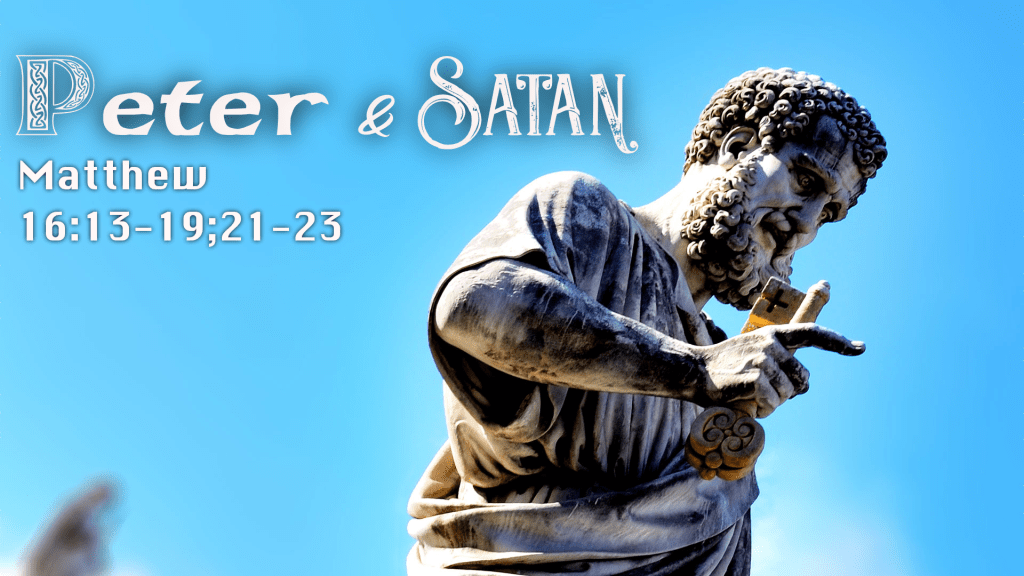
    Peter and Satan: A Reflection[1]

    With this particular attitude of Peter, let me ask these questions to you.

    Who wants a life without suffering, without sacrifices and difficulties? That would be nice, right?

    We dream of a life that knows only comfort, that is easy, and that we’ll always feel good. Today, we are actually being offered with different ways to make our life comfortable, fast, easy and smooth.

    There is actually nothing wrong of dreaming a life filled with comfort and without sacrifices and difficulties, to always feel blessed and good. This is a desire from us to feel secured. Nevertheless, the danger lies within the heart that denies sacrifice and suffering as part of our life, and as part of our Christian way of living.

    I remember a story being told to me when I was in college. There was a boy who went out into their garden and found a cocoon. It was so timely that he saw how the cocoon moved. The butterfly was about to come out from its cocoon. However, the butterfly was struggling. The boy felt pity for the butterfly. And so, the boy immediately, ran back to his room, got a pair of scissors. He wanted to help the butterfly and so, with scissors in his hand, he cut the cocoon carefully in order not to wound the butterfly. He was so successful that the butterfly was in her perfect shape and out of her cocoon.

    But then, something was wrong with the butterfly. She did not fly. Why? She couldn’t fly because her wings were too weak. When the boy cut the cocoon, the butterfly lost the opportunity to make her wings strong. She was supposed to go through in that struggle, in that difficulty of coming out from her cocoon. Because of the easy way out, her wings were not made strong to enjoy the wind as she was supposed to fly.

    You know, Jesus scolded Peter when he denied that Jesus should suffer and die. Even though, Peter confessed that Jesus is indeed the Messiah, the Christ sent by the Father, but then, Peter did not understand the commitment of being sent by the Father.

    Peter only knew of the victorious image of the Christ who will bring salvation and glory. Peter held on to his belief that in Jesus, there will be only blessings, power, and praises. This means that to follow Christ is not just about feeling good, feeling blessed, with abundance and material prosperity.

    This was the mistake of Peter. He couldn’t accept that Jesus will undergo suffering, persecution and death. He couldn’t accept of a vulnerable and weak God. This caused Peter to be scolded by Jesus and even called Satan because Peter only wanted an easy one, an easy life. Peter only considered what he wanted, not what God desired.

    This is also the consequence when we encounter Jesus. Before Peter was being rebuked by Jesus, the Lord actually asked the disciples, “Who do you say that I am?

    This question of Jesus was a question of commitment. And Peter responded this question with conviction. Peter said, “You are the Christ, the Son of the Living God.” Like Peter, if we confess that Jesus is the Christ, our Lord and Savior, then, this confession implies commitment and risk.

    After all, when we commit ourselves to somebody we love, risks and sacrifices are implied. We are reminded neither to fear nor deny the reality of making a sacrifice, of experiencing pain and difficulty in our life. Life is found when we go through the process of struggling. Never cut the cocoon or else there will be no life. When we experience pain, struggles, and difficulties never lose those opportunities because those are ways where we too shall find life, meaning and purpose.

    When we are called to make a sacrifice for others, never fear, because life is brought forth there. Take the example of parents and to mothers especially, giving birth is painful and excruciating, but the beauty of life is found when the baby finally comes out.

    Hence, do something concrete this Holy Week that would best express your faith and knowledge of Jesus. Hopefully, having this consciousness, this will further help us in knowing Jesus all the more because it is in knowing him that we also grow in our faith, in our commitment and relationship with God and with one another.

    Peter and His Denials

    When Jesus was arrested, Peter was confronted by the people and recognized him as a disciple of the Lord. However, Peter denied Jesus three times which can be found in all four Gospels (Mt. 26:33-35; Mk 14:29-31; Lk 22:33-34; Jn 18:15-27).

    He denied the Lord because he was afraid of going through the same pain and suffering of Jesus. But then, Jesus never condemned Peter. Jesus only looked at Peter in the eyes.

    In the same way, Jesus also looks at us lovingly. Individually, he looks at our eyes, calling us by our name. The gaze of Jesus is an assurance to us that we are not judged and we are not condemned.

    Even though we might consider ourselves as unworthy and useless, yet, Jesus would never point his finger on us condemning us for being sinful and unfaithful. Rather, Jesus looks at us with affection and love, wanting us to be with him.

    With that look of Jesus, Peter realized what he had done. He denied the Lord because he was afraid and did not have the courage to stand and be true to his faith. Peter was filled with shame and guilt. But then, Peter also realized that he was sorry.

    With that look of Jesus, he found not condemnation nor judgment from the Lord. Peter only saw forgiveness from Jesus. This moved Peter to come out from his fear and accept God’s forgiveness. That is why, Peter was given the gift of Jesus after the resurrection to lead the Church because Peter acknowledge his failure and sins, but also he accepted God’s forgiveness. With this, it transformed Peter into a better person.


    [1] Matthew 16:13-19;21-23 (He said to them, “But who do you say that I am?” Simon Peter said in reply, “You are the Messiah, the Son of the living God.” Jesus said to him in reply, “Blessed are you, Simon son of Jonah. For flesh and blood has not revealed this to you, but my heavenly Father. And so I say to you, you are Peter, and upon this rock I will build my church, and the gates of the netherworld shall not prevail against it. I will give you the keys to the kingdom of heaven. Whatever you bind on earth shall be bound in heaven; and whatever you loose on earth shall be loosed in heaven.” n From that time on, Jesus began to show his disciples that he* must go to Jerusalem and suffer greatly from the elders, the chief priests, and the scribes, and be killed and on the third day be raised. Then Peter took him aside and began to rebuke him, “God forbid, Lord! No such thing shall ever happen to you.” He turned and said to Peter, “Get behind me, Satan! You are an obstacle to me. You are thinking not as God does, but as human beings do.”)

  • Death is never the end

    Death is never the end

    April 7, 2023 – Good Friday of the Lord’s Passion

    Click here for the readings (https://bible.usccb.org/bible/readings/040723.cfm)

    “It is finished.” These were the last words of Jesus as he bowed down and completely handed over his spirit to the Father. The scenes of betrayal, denials, tortures, insults, humiliations and indifference towards him were overwhelming. Yet, Jesus remained silent in many instances to allow humanity to look at the growing hatred in the hearts of many and to recognize as well how God patiently gazed at each of us, calling us to that kind of loving and self-giving that is of complete madness.

    Yet, in this madness, we are spared from eternal death through the life, suffering and death of Jesus. This is what makes this horrible day turned into Good, because evil and death is to be overcome by love and life. Hence, we call this Good Friday.

    Indeed, Jesus suffered and Died. Jesus knew that he will suffer and die but at the beginning he did not know how he will it be. This was something that Jesus had a control but he let go of his power to have full control of his life. Jesus rather submitted himself to the will of his Father. He emptied himself, did not cling to his power and divinity, for us to be given life.

    God’s commitment to us and in our covenant with him, is so deep and great. God is most willing not just to become like us but also to suffer and to die like us and for us. But what is really sad, is that Jesus was a victim of an unjust political system, a victim of manipulation of the powerful in the society. He suffered because of the greed of the powerful. He died because of the corrupted heart of those in power.

    The Lord embraced suffering and death because that was his ultimate expression of “solidarity with the suffering.” His suffering and death was an insult to those who wanted to stay in power. The all-powerful God embraced human suffering and death to tell us that everything in this world will also end. No matter how much wealth and power we will have, those will come to an end.

    However, let us also remember that Jesus’ death was a REDEEMER’S PAYMENT. The punishment of human sin is eternal death and misery. But because of the death of Jesus, God paid our debt, so that we won’t have that eternal death and misery.

    Photo by Agree Portraits

    Remember again, the sin of Adam and Eve to become like God, was the image of the whole humanity’s sin to act like God and to be like God. Thus, Jesus’ death on a shameful cross broke also that separated us from the grace of God. Jesus brought us back again into God’s presence. Nevertheless, death is never the end. Suffering and death is not everything in this finite world. There is more, even beyond death.

    From here, we are called to silently gaze upon the cross, to look at Jesus and see ourselves. Yet, let us also look beyond, let us also see our families on that cross, our friends, our communities, our nation and world that is suffering and in need of redemption.

    Let our silence and God’s silence on the cross, bring us more into the heart of God that constantly calls us into life and freedom. Kabay pa.

  • Total surrender to God and putting our life in Him

    Total surrender to God and putting our life in Him

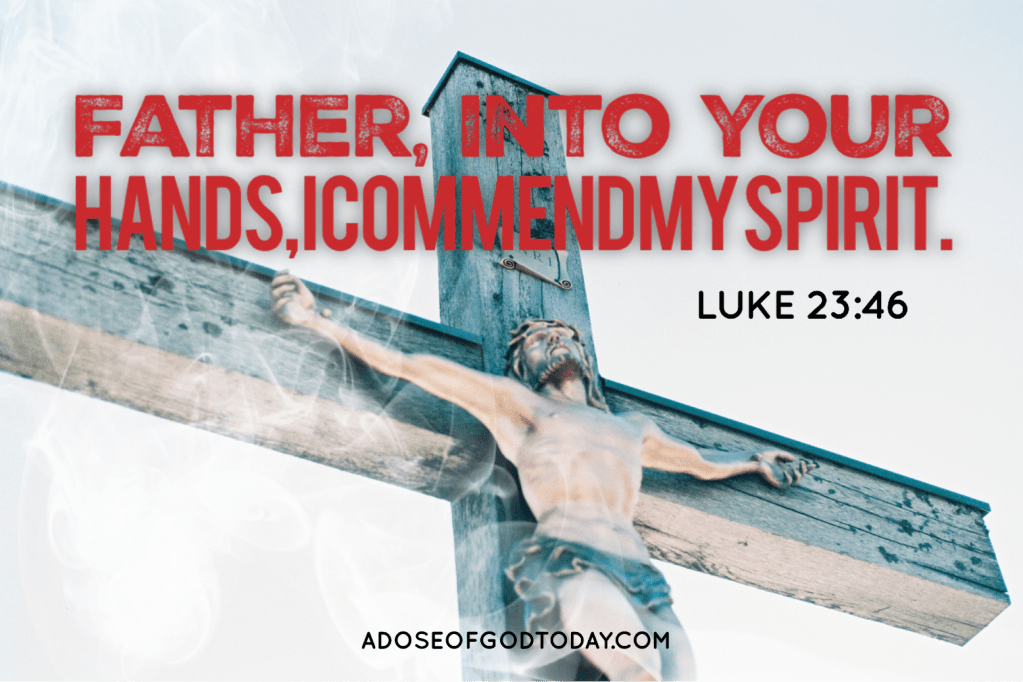
    “Father, into thy hands, I commend my spirit.” (Luke 23:46)

    The Seventh of the Seven Last Words of Jesus on the Cross.

    Shared by Bro. Froilem Bonn Barreto, CSsR, on Good Friday, Siete Palabras

    When I was informed to be the seventh sharer for this Siete Palabras, I asked myself silently, why me? What will I say since it is going to be live-streamed on Facebook. However, my formator told me that the seventh, which is “Father, into thy hands, I commend my spirit,” fits me well. Trusting in the support that was given to me by my formator, I accepted this task to courageously speak in front of you about my reflection and to share something about my life. 

    One of the most challenging and difficult times in our life is when we get into an experience where seemingly life does not allow us to breathe, and when life seems so unfair. When this thing happens, it does not meet our expectations. It does not let us see the beauty of life. This experience only brings us pain and misery instead of joy and comfort. 

    Like the rest of you, I too, have my own share of life’s ups and downs. I joined the seminary right after I graduated from high school. I enjoyed my seminary formation. However, as the old saying goes, “life is not a bed of roses.” 

    It was in 2002 when my life started to change. I was then a fresh graduate from college, working as a faculty member in a college institution when my mom passed away. She died of cancer at the age of 43. With my mom’s untimely death, things changed. Her death would mean missing a lot of things: her, waking us up early in the morning and cooking our meals. For me, I would surely miss her putting a hand towel on my back when I would sleep because I sweat a lot. 

    I believe that the words of Jesus “Father, into your hands, I commend my spirit,” invite us to re-examine our relationship with God. 

    I was not done yet in grieving over my mom’s death when another unpleasant surprise beset my family. In December of 2006, while on a mission exposure, around 2 a.m.,  I received a phone call. A  woman on the other line was crying, and it took her a while until she was able to tell me the reason for her call – my aunt said that my father died of cardiac arrest. I was speechless. I did not know how to react. The first thing that I thought was my siblings. What I remembered then was that I caught myself picking and packing up my stuff because I wanted to go home. With my parents’ death, life will never be the same. 

    Growing up without my parents was a life filled with uncertainties. It felt like groping in the dark. I was anxious most of the time but I pretended to be strong. As the eldest in the brood of six, I was forced to take up a responsibility that was too heavy for me. I left the seminary and embraced anxieties and the responsibility to become a mother and a father not only to my siblings but myself as well. 

    It was difficult growing up without those people who are supposed to be there for their children. I was faced with a whole lot of concerns and issues ranging from personal, psycho-emotional, financial, and a lot more. And so, I braced myself. I worked hard from being a faculty member to being a customer service representative to being a resto-bar singer. On my rest days, I sang at weddings and other occasions just to augment the salary that I was receiving from the company. 

    But often, I caught myself complaining to God. In my moments of solitude, I kept on telling myself, had only my parents lived, we would never have experienced this kind of life. This particular experience created in me a feeling of resentment towards God.

    In my prayer, I questioned him, “What kind of God are you?”, “What have we done, Lord, to deserve this?” Is the offering of my life to follow you not enough that in exchange, you are treating me like this? It is unfair! 

    In other words, I blamed God. I blamed him for everything. I was at the brink of losing my faith. I stopped going to church. And, what I disliked the most during those times was when people would come to us and comfort us by saying, “God has a purpose for doing this” and “God has a reason for everything.” Such insensitive comments! 

    I would react by saying, “kindly stop over spiritualizing things.” But like any other telenovelas, the story continues, the drama anthology continues. In 2006, a sister of mine, closest to me, was diagnosed with lupus, an autoimmune disease that has no cure at all. A health condition that is slowly killing her. She has been in and out of the hospital. She has two lovely and adorable kids. And thinking about her health condition bothers me a lot. In my prayer, I asked God, “Lord, please don’t allow her children to experience what we have experienced growing up without a mother.” I even shared this with my formator in one of our colloquiums. I expressed to him my fears and anxieties over the things that are beyond my control. 

    My dear brothers and sisters, Jesus’ last words are very powerful and compelling, I asked myself, why despite his agony, the humiliation he experienced, and unbearable pain on the cross, Jesus never blamed his Father. He instead uttered these words like a perfect prayer from the depths of his heart “Father into your hands, I commend my spirit.” 

    Into your hands, I commend my spirit” is part of the psalm traditionally believed to be written by David and prayed by devout Jews. No wonder Jesus himself uttered these words before he breathed his last.  It is a prayer of complete surrender, a prayer of unwavering trust to his Father. Jesus entrusted himself to his Father. “Father, into your hands, I commed my spirit” speak of a deep level of intimacy of Jesus with his Father. This line demonstrates what it is to be in a relationship with God. We see here that trust is such an essential element in a relationship. It is where a relationship should be anchored. We can only entrust something when we trust the other. There can be no genuine relationship when trust is absent. Trust brings a relationship to a deeper level and we see this concretely in the life of Jesus. No amount of pain, humiliation, and persecution prevented him from fulfilling his mission. This is because Jesus trusted his Father wholeheartedly.

    Oftentimes, when we are faced with problems and difficulties, when we are carrying heavy crosses, our human tendency is that we lose track of our faith. We rely much on our human capacities and strengths. We become too focused on our suffering and pain, on what we can do to the extent that our energies are depleted, and we become exhausted. We start to complain, self-pity, regret, become anxious about what the future holds, and perhaps blame others, or even blame God. Jesus has given us a glorious example of total surrendering to God. 

    I believe that the words of Jesus “Father, into your hands, I commend my spirit,” invite us to re-examine our relationship with God. 

    Do we trust God wholeheartedly? It is so easy to say I believe in God, and I trust in Him when everything that happens is favorable to us. The real test of faith is when life offers us exactly the opposite, “Do we still manage to say, Yes Lord, I trust in you?

    Trusting God does not remove our pains and suffering but transforms the meaning of these things in our life. Our faith and trust in God will sustain us as we go through this life, like Jesus whose trust in God sustained him in and through his sufferings even up to death, his death on the cross. 

    We continue to ask for the grace of God to strengthen our faith, to trust in His words, “come to me, all who labor and are heavily laden, and I will give you  rest. .. for my   yoke is easy, and my burden light.” God is indeed faithful to His promises. 

    Let me end this sharing with a song that speaks about total surrender to God and putting our life in Him. Let this be my prayer for you and your prayer for me as we continue this journey called life. 

    Click here for the full video (https://www.facebook.com/OMPHRedemptoristDavao/videos/2986892808037601/)

  • FORGIVENESS: A RADICAL LOVE

    FORGIVENESS: A RADICAL LOVE

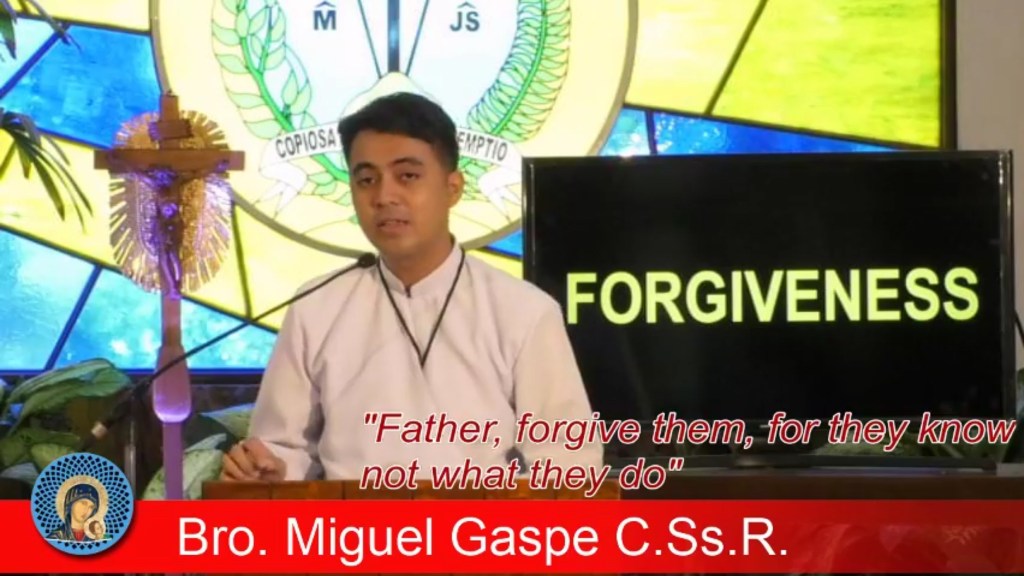
    FATHER, FORGIVE THEM, FOR THEY KNOW NOT WHAT THEY DO (Luke 23:34)

    The first of the Seven Last Words of Jesus on the Cross.

    Shared by Bro. Miguel A. Gaspe, CSsR on Good Friday, the Siete Palabras.

    Click here for the link of the Video (https://www.facebook.com/OMPHRedemptoristDavao/videos/2986892808037601/)

    Forgiveness, indeed, is of God, and it is only through His grace that we may be able to give it to persons who have wronged us. 

    “Radical Love” is a documentary on forgiveness and healing of Ms. Cherry Pie Picache. Cherry Pie, is a Filipino actress, best known for her dramatic roles in Movies and Television. The film captures her experience of meeting her mother’s murderer five years after the dreadful event. One of the highlights in that film features the most heart-wrenching scene where Cherry was able to forgive her mother’s murderer. As she underwent the process of healing, she affirmed how difficult and challenging it is to forgive the person who literally “broke her life.” 

    In her words, “It took me a lot of courage, strength, and prayers from God to be able to forgive the person who murdered my mother.” Painful though it is, She took the road of forgiveness for her to be healed and move on. Her story is indeed exceptional, but for many who are drenched in pain, grief, and revenge, to forgive is such a rare thing do. What does it mean to forgive and how to forgive?

    We look back to the scene where Jesus uttered these words, Jesus at this hour was on the brink of death, nailed to the Cross with the Roman soldiers at his feet. As he addressed these men, we could picture how exhausting the scene was. By this time, these Roman soldiers had been executing many criminals and had seen death day after day.  They are reduced to mere functionaries. They have no choice and freedom to do what is just and right at that moment as they were only following orders.  Familiarity with violence and brutality causes these soldiers to be numb and deaf with their emotions. Their society has allowed them to be stripped of their dignity as human persons gifted with freedom and compassion. It is in this human frailty and desperate condition where Jesus uttered to them, “Father, forgive them for they do not know what they are doing?

    Like us, Jesus understands what it means to be a human person. He showed in his life that a human person is a being created, loved, and cared for by God.  Jesus believes that in every human person, there lies within goodness. Despite our weaknesses, short-comings, and sinfulness, each has the capacity to go beyond our human conditions. Each of us is called towards goodness. Each of us can share this innate goodness to our fellow beings. When Jesus addressed “Father, forgive them…” these are not words of condemnation and self-righteousness. Instead, these are words of prayers addressed to his Father. Even in suffering, He went beyond our underlying tendency for revenge and offered a path for us to be reconciled with God, our Creator. Forgiveness, for Jesus, is an act of prayer and unselfish concern for the good of the other.

    Does forgiveness also mean to forget? I think we are familiar with the phrase “to forgive is to forget.” Forgiveness, to some, may come in the non-recognition of the wrong done. Or to forget, others would condone the transgression in exchange for shallow healing and reconciliation. But if we look into the truth of its meaning, forgiveness in Greek means “to send away.” A word used for commercial language meaning “to release from an obligation or to cancel one’s debt.” That is why in other translations of the “Lord’s Prayer,” sin or transgressions is equated with debts. In Matthew, it says, “forgive us from our debts as we forgive our debtors.” To cancel one’s debt includes a thorough acknowledgment of the debt owed by that person.  In other words, from every transgression we commit with ourselves and with others is a debt we owed to God. And this debt has to be paid in full. 

    Here comes the Good News. The debts we owed to others, to our environment, and God, are now paid in full, with and through, Jesus our Lord. His life, death, and resurrection are in itself the entire process of what it means to forgive and be forgiven. Forgiveness is a process where it involves acceptance of undergoing pain, anger, and grief which in the end will lead to an experience of “resurrection.” What it requires is our openness and obedience to the movements of God’s Spirit already working within us. 

    In the film’s last scene, as Cherry was able to meet the Convict, both of them were in tears. She could not imagine doing such an impossible thing of finding the grace to forgive. What is most striking in their encounter was that she was able to bless and pray for the healing of her mother’s murderer. She forgave not only for her good but to the person who wronged her, who is significantly in need of healing as well. 

    Watching that scene made me realize that it only brought into reality what Jesus’ words on the Cross truly meant. Forgiveness, indeed, is of God, and it is only through His grace that we may be able to give it to persons who have wronged us. 

    My brother and sisters, today is a time of grace, let these words of Jesus penetrate in our hearts. Let his words be a reminder that God, our Father, is madly in love with us despite and in spite of our human conditions. And in realizing this truth, may we see that innate goodness which moves us to a genuine reconciliation with our brothers and sisters in Christ. My friends, let us ask to our Father for that grace.

  • WHAT MAKES GOOD FRIDAY, GOOD?

    WHAT MAKES GOOD FRIDAY, GOOD?

    April 10, 2020 – Tenebrae: Morning Prayer of the Passion of the Lord

    Sermonette Shared by Bro. Vincent Chloe Que, CSsR

    “And have faith in the resurrection, have faith that better days will come in God’s perfect time.”

    Greetings of Peace!

    We are in the liturgical time called Holy Week, and today is Good Friday. But what makes this week Holy? Or this day Good? Is it not that were are reminded today of a terrible suffering, an unimaginable fate that befalls Jesus, our Lord? In fact, this morning’s prayer is called Tenebrae, which is a Latin word that means “darkness.

    Brothers and sisters, what makes it holy and good is precisely presence of Jesus, even in darkness, even in suffering. Suffering is a human reality that many have tried to explain. Yet Jesus never explained it, instead he willingly suffered so that in our suffering we will meet him there. Amidst this Pandemic, we find ourselves vulnerable and in great suffering:

    • As we are confined in our homes, under quarantine, we may experience anxiety and fear. Yet last night we remember Jesus in the garden sweating blood in deep anxiety and fear for death is lurking around.
    • Because of physical distancing and travel bans we may be separated from our loved ones or unable to hug and kiss our elderly parents and young ones, we may feel lonely. Yet we remember how lonely Jesus was when his friends abandoned and even denied him.
    • Our “frontliners” come face to face with danger on a daily basis, their burden is compounded by the lack of support for them. Yet we remember Jesus facing Pilate, scourged, mocked, and sentenced to death.
    • When our daily-wage earners are forced to stay home even if it means losing their means of sustenance, today we remember Jesus forced to carry his heavy cross.
    • And when we are sick or when we feel God has abandoned us, the voice of Jesus reechoes: “my God, my God, why have you forsaken me.”
    • And yes, even in death, Jesus is there.

    But also, two days from now, Jesus is also present in Easter: in our recoveries, in the heroism of our frontliners and our daily victories in fighting this pandemic. Yes Jesus is present in our Joys and in our triumphs! Indeed the cross would not make full sense without the empty tomb. 

    Today we begin the paschal triduum. Pascha or Pesach means passage. A capuchin priest, Fr. Cantalamessa referred to this as: “the passage of the Jewish people from slavery to freedom, the passage of Christ from this world to the Father, and the passage from sin to grace for those who believe in him.”

    John the evangelist also sees the passion, death, and resurrection as one event, one moment. Let us bask in Hope, something that these days’ celebration brings. Hope, Pope Francis says, is not an illusion, if we put our hope in Christ, it is never wasted.

    Therefore, brothers and sisters, a great invitation is before us in these trying times and as we celebrate the Holy Week, let us unite our suffering with the suffering of Jesus, allow these to purify us and bring us back closer to God, let us entrust to him our anxieties… rest assured that He understands us. And have faith in the resurrection, have faith that better days will come in God’s perfect time. This is what makes this week holy and this day good, we are celebrating a perfect act of Love by our God who, even in our sinfulness, will never ever abandon us. 

    Have a blessed days ahead!