Tag: God is Love

  • Imitating God by living in love

    Imitating God by living in love

    October 24, 2022 – Monday 30th Week in Ordinary Time

    Click here for the readings (https://bible.usccb.org/bible/readings/102422.cfm)

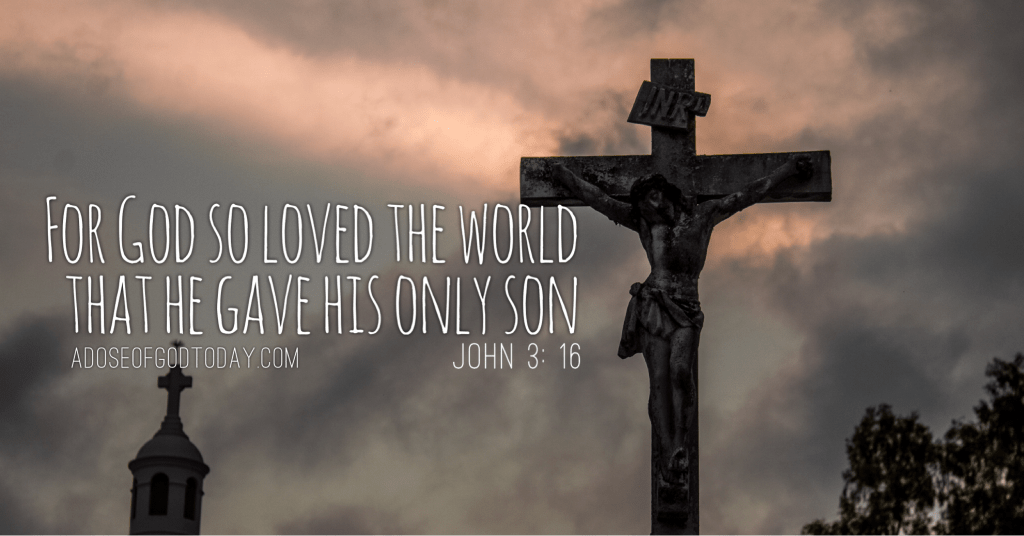
    We constantly hear that God is love and that through love we are all created in God’s image and likeness. Also through love, God sent His only Son to redeem the world. Though we often read or listen about this fundamental grace of love in our faith to the point that it is somehow treated like a cliché, the grace of love and the act of loving remain constant call for us.

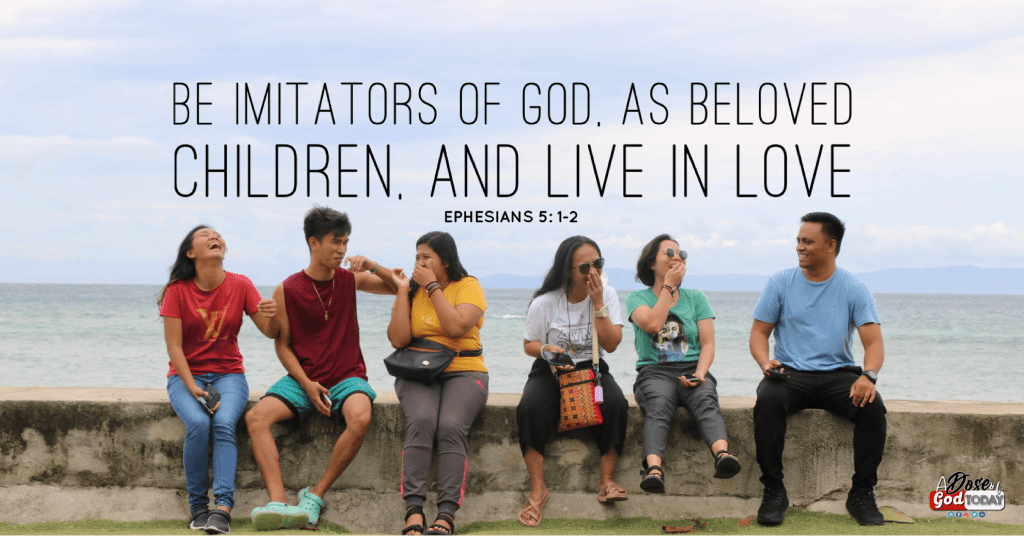
    This is what Paul wrote in his letter to the Ephesians, reminding and calling the believers in that city to “be imitators of God and to live in love.” What Paul means about imitating God is not in the way of becoming “like god” or “being god” which may connote “domination, overpowering and subjugating” others.

    Rather, what we are all called to imitate is the way of LOVING, hence, Paul said, “live in love.” What kind of love is this then?

    This is love that sacrifices one’s life for the sake of others. Such love never corrupts others or brings others to danger or to evil. This love has the capacity to offer life so that others may also have life.

    This is love that generates life and does not suppress the life of others. This means that this way of loving brings inspiration and motivation for others to live fully because of the love they receive.

    This is love that frees or unburdens others because such love only desires freedom, peace, reconciliation and the fullness of life. This also means that this way of loving forgives and heals.

    These are all God’s way of loving of which the Responsorial Psalm also calls us today, to behave like God and that is to be able to learn love-sacrificing, love-generating and love-freeing ways of God.
    In fact, in today’s Gospel, Jesus showed this to us as he healed a woman. Thus, Jesus showed kindness and compassion to the woman who was suffering for 18 long years. Jesus’ kindness and compassion went beyond the restrictions of human law. Though, the local leader of the synagogue was indignant to Jesus’ way of loving, yet, this did not stop Jesus to truly express his love so that the woman may have life.

    With that, Jesus freed her from that suffering by touching her. Through his touch, an expression of his way of loving, he freed the woman from the spirit that crippled her over those many years.

    By this way of loving of Jesus, the Lord restored her hope to live by giving her the fullness of life expressed in the way the woman responded to Jesus. The woman got up, stoop up straight and was glorifying God. This was an act of thanksgiving from a heart filled with so much love.

    However, the people who were indignant to Jesus and furious over his actions of loving, never understood how love works and manifests in the life of those who love and in need of love.

    Therefore, this is how we are called today, and that is by concretely expressing our way of loving, by not being afraid and not hesitating to love. In this way, we may truly imitate God who is all love. Kabay pa.

  • LOVE IS THE FULLNESS OF GOD

    LOVE IS THE FULLNESS OF GOD

    June 11, 2021 – Solemnity of the Most Sacred Heart of Jesus

    Click here for the readings (https://bible.usccb.org/bible/readings/061121.cfm)

    In the Book of Prophet Hosea, we have been presented with an image of God as a parent and as a healer. Hosea beautifully captures these images of God who only fills with love His child, Israel. God’s love, indeed, nurtures and heals, builds and forgives. Such way of loving from God is written in the whole Scripture that is why we are always reminded how God calls us again and again through love.

    This is best described in the Responsorial Psalm today taken from the Book of Isaiah. The Prophet expresses his confidence in God because he has experienced with God the love that gives strength and courage. God’s presence is water that fills and satisfies our empty heart, quenches the thirst in us for love and support.

    In the same confidence, Paul also reminds the Ephesians of the love of Christ which surpasses knowledge. This is love beyond idea or any ideology, but this is in its most concrete expression of love that sacrifices oneself for the sake of the beloved. This is love that gives life. This is how Paul affirms that the love of Christ truly fills us because love is the fullness of God.

    In that fullness of God, God only desires to share that love that will fill every empty but insecure and fearful heart. This is how the Gospel of John reveals to us the physical and literal overflowing of blood and water from the pierced heart of Jesus. The soldier who thrusted his lance into the side of Jesus witnessed this.

    The seemingly dead body of Jesus, flowed out blood and water which only gives life and joy, satisfies emptiness and also nurtures and heals, builds and forgives. This tells us that even when Jesus was being hurt, the Lord continues to bring out his love and only love.

    This is the very message of the Most Sacred Heart of Jesus. This Solemnity is not a mere worshipping of an organ, “the heart” per se, but of Jesus himself who constantly showed us the love of God spoken about in the Scriptures.

    There are two invitations for us today.

    First. Be filled by that love of Christ. His love only brings fullness in us. Thus, learn to be confident in his love! Be overwhelmed by his love! Seek his love that will satisfy our every hunger and thirst for love and intimacy, for acceptance and support.

    Second. Learn from his way of loving. Let our expression of love to truly give life. Let our love nurtures immaturity, builds the confidence of the fearful, heals the brokenhearted and in pain, forgives the sinner and does not plant hate and violence. Hinaut pa.

  • Marriage: TO Whom and FOR Whom?

    Marriage: TO Whom and FOR Whom?

    June 3, 2021 – Thursday of the Ninth Week in Ordinary Time

    Click here for the readings (https://bible.usccb.org/bible/readings/060321.cfm)

    Having married to his childhood sweetheart only a year & a half, in fear & anxiety, a man told his father: “Dad, Marriage is not for me.” After few minutes of silence, the father gave this advice: “Son, I make this really simple. You marry not to make yourself happy, but to make someone else happy. Marriage is not for you because you are married for a family & your future child. Marriage is not about you, but about the person you married.”

    Easy for us to think that ordained priests and consecrated religious people are married to God & church. Rightly so, for they dedicate their lives to & for God & the church. It does not mean however that lay Christian couples & family are not married to & for the church. Christian marriage & family life is a discipleship – a way of following Jesus & loving in marriage to God through His people.

    The arranged marriage of Tobiah & Sarah in our first reading may have highlighted the human, social, sexual & cultural dimensions of marriage, but above all it gives importance to the spirituality & sacredness of marriage. What is given value here is that marriage is not about & for oneself but for your beloved whom you love in life, and above all for God.

    Christian couples do have their marriage in the church because they consider their love & marriage to each other as sacred & holy, and they wish to make their life now & always as their sacred offering to God & His church. Their marriage then is not about themselves but about each other living their love-life for God & His Church through their own family & Christian community. Same way with ordained priest & consecrated religious people, Christian married couples are also thus married to the Church.

    Jesus in our gospel today reminds us that it is not enough just to know the commandment to love, but most of all we must live & practice Love. And love is basically not for and about oneself (not for and about you), but Love is all about & for one’s beloved & others. Marriage then is ultimately not for Me and about Me, but for and about An-other than Me. Love lived in Christian discipleship then is not self-centered, self-serving & self-oriented but moreso other-centered, other-serving & other-oriented. If & when we love this way, as Jesus says: “We are not far from God’s kingdom.”

    In this mass, we pray that our love for our beloved & others now in life be our way of following our risen Lord, and be our marriage to God & His Church as our fitting sacrifice & worship to God’s goodness for us.

    So be it. Amen.

  • TO HAVE LIFE WITH HIM

    TO HAVE LIFE WITH HIM

    March 14, 2021 – Fourth Sunday of Lent

    Click here for the readings (https://bible.usccb.org/bible/readings/031421-YearB.cfm)

    We are now on the 4th Sunday of Lent. Meaning, we are already half way through the Season of Lent, the preparation time for us to celebrate the Paschal Mystery of Christ once again.

    Today, we are invited to review – to view again our past weeks of Lenten journey. We began the season of Lent during Ash Wednesday when we hear the first Good News Jesus preached, “Repent and believe in the gospel”, as we received the ashes and bore the sign of the cross on our foreheads. Then on the first Sunday of Lent, we reflected on the temptations of Jesus as real as our experience of occasions of sins in our lives – that human like us, Jesus also have struggled with temptations, as occasions of sin in our life. Again, calling us in the midst of our life-trials & difficulties to “Repent and Believe the Gospel.” Then on the second Sunday of Lent, we heard of the Transfiguration of Jesus, calling us to deeper faith and hope in Him, as even as the Father Himself proclaiming to us, “This is my beloved Son. Listen to Him”. And last Sunday the third Sunday of Lent, we came to know the confrontational Jesus who was angry, making trouble in the public and making enemies along the way in order to stand for what he believes, and to set things right before God & us, as God’s temple.  

    All of these words, the call to repentance and belief, to be steadfast in the midst of temptations and occasions of sin, to listen to God’s beloved Son and to set things right & sacred before God, are demanding challenges for us. Based from our experience and perspectives, we might say those are nice challenging words to hear but difficult to heed and practice. Nice to hear and say but Difficult to do, for these words of God really challenge us to do something to change our lives.

    However, our readings today are more on sober tune. It is a respite, a breathing space from demands and challenges of Lent. It invites us to see the demands and challenges of Lent from God’s perspective, and provides us the context for & the reason behind our need for conversion & upgrade of our faith in our life now.

    We hear Jesus proclaims to us, “God so loved the world that he gave His only Son, so that everyone who believes in Him might not perish but might have eternal life.” This is to remind us of God’s deep love for us to the point of sacrificing His son, so that we might believe in Him. Meaning, God suffered a lot for our Faith at the price of His son. He wants us to heed and do those challenging words of believing again & anew in His Son, so that He could always love and forgive us again.

    And above all, Why? He challenges us now & always because God wants to share His eternal life with us, His beloved children. God wants us to have Life with Him.  

    As we begun Lent, we considered Judas & Peter, as to how and why the sin of Judas is more serious than Peter’s. We come to realize that Judas’ is more serious than Peter’s sin, because Judas did not give the Lord the chance to love and forgive him again & anew, instead he ended his life by killing himself.  Yes, Judas repented but he did not believe anymore. Peter on the other hand, yes, have hidden himself but stayed on until the Lord’s resurrection and got the chance to be forgiven and loved again & anew by the Lord. Peter repented & still believes in God despite what happened. In other words, Judas’ sin is more serious compared to Peter’s because Judas, by committing suicide, did not give the Lord the opportunity, the chance to forgive and love him again. Both may have repented but unlike Judas, Peter believes and remains to have faith in Jesus’ resurrection, in effect, made him experience life – eternal life with God. So also if & when we still believe despite of what happened to us, we could share in God eternal life through the Lord’s resurrection.

    It was also once told a story that in God’s kingdom when everyone lives blissfully in the everlasting life, Peter finds Jesus standing near the heavenly gate. He goes near Jesus, and said, “Well, everyone is looking for you. How come you are here near the gate?” The Lord replied, “Actually, I’m waiting for someone. I hopefully waiting for my dear Judas to come back…. The Lord is thus still & always waiting for our coming home in repentance & faith.

    Remember then that God loves us not because and after we are forgiven, but rather God forgives us because we are loved beforehand and eternally.

    Lent is the time for us to come back home to Him and believe in Him anew. And like Father in the Prodigal Son, the Lord is always waiting for us so that He could always love and forgive us again. So, at this time, as we do our best to respond on the challenges of Lent, let us give God now through Jesus a chance to forgive and love as again and anew, so that we experience eternal life with Him.

    May the fruits of our honest repentance, righteous attitude & deeper faith in the Lord be upon us, & so prepare us to experience & celebrate Easter, as our foretaste of eternal life with God.

    So Help us God. So May it be. Amen.

  • HE IS OUT OF HIS MIND

    HE IS OUT OF HIS MIND

    January 23, 2021 – Saturday of the Second Week in Ordinary Time

    Click here for the readings (https://bible.usccb.org/bible/readings/012321.cfm)

    Jesus is out of his mind. Surely, he must be. It will be very difficult to understand him, the way he thinks and the way he does things for others. Only a man like him, who never thinks like us, can only do those scandalous actions by forgiving the sinners, touching the lepers, eating and drinking with sinners and unlovable, and siding with the poor, with women and children, healing the sick and giving freedom to those slaved by the devil.

    This was what the relatives of Jesus believed that he has gone crazy. Jesus’ schedule became very hectic because people were drawn towards him. They even found it difficult to eat because of the people’s demand of him. Jesus would always welcome them and accommodate them. That is why, his relatives even thought of locking him up because “he was out of his mind.”

    At that time, they never understood Jesus’ actions and his ministry to the sick and in preaching the Kingdom of God. What they saw in Jesus was that he was merely a son, a nephew, a cousin to them. They failed to see and recognize at that time that there was more in Jesus, that his actions and his words were signs of God’s presence in them.

    However, the generosity of the person of Jesus, expressed through concrete actions of loving was madness in the minds of others. True enough, God has gone mad to love us. St. Alphonsus even said, “God is crazy for love.” God has come in the form of a baby, became human like us, suffered like us and died with us to show concretely to us the divine love that frees and gives life.

    May this madness in God to love us remind us always of that power of loving to heal, to forgive and to give life. Let that madness in God to love us make us in return madly in love with God too, to be madly in love with our commitments in life, to be madly in love with our passion to help others, to inspire and motivate others, to teach and nurture others. Hinaut pa.