Tag: God

  • Homecomings

    Homecomings

    March 29, 2026 – Palm Sunday

    Click here for the readings (https://bible.usccb.org/bible/readings/032926.cfm)

    For us Filipinos, culturally there are three occasions in the year that we come home, get together, and spend quality time with our family:   Christmas, All Souls’ Day, and Holy Week. These are the homecoming moments where and when us Filipinos BE with each other, that is where and when we experience, encounter, and meet each other again as family and community which usually lead to renewal, deepening and strengthening of bonding and relationships among family & community as church. While Christmas is for & with our family and friends, and All Souls’ day is to & with our family and relatives remembering our beloved dead, Holy Week is particularly our time and space for & with our God.

    Today, Palm Sunday marks the beginning of our Holy Week this year. Significantly holidays of this week is our church time and space to BE with our God. This week is specifically our God-time and God-space.

    This week then is more than just our chance to be with God but more so, God’s chance to be with us. Meaning, this week is not only our time and space with God but more so, GOD’s time and space with us, His church. It is more like God must be first and foremost “Be with us” rather than “we must be with Him”. The center or focus of this week then is not ourselves but God. This week is not about us and ourselves but about HIM and His being with us now.

    Thus, this is our opportunity to experience, encounter and meet God in His own terms and not on our own terms. The best attitude then is to let Him set the agenda, activities, schedules, and venue of this week. Meaning, to let Him takes the steering wheel. Allow Him to drive & lead your life this week. Let God be God, not be a god as we want or need Him to be.

    And so, these days of Holy week become our homecoming moments with God through the paschal journey of our Lord Jesus Christ, and so that we might be at home again & anew with our God.

    To do this and make the best of this week, some appropriate approaches might be in order as to how we prepare ourselves for this week.

    First, RECALL. As I have said, this is not about us but about Him. So, once again be reminded, that is to put into mind – God’s story with Us which is the Jesus story. We are to call again and remember (to make it member or part of ourselves) what God did, does and is doing to us through the life and mission of Jesus Christ in the past year. So, time and space to “Recall, Remind, Remember” God’s story with us through Jesus rather our story with God.

    Then, REFLECT. This is an invitation to mirror back or reflect back God’s story with and along our faith-story with Him now. In other words, “Manalamin”: to look and see our faith-life experiences from the point of view of God’s story and less from our own perspective, and to understand what happened to us lately with the lessons we realized from God’s story with us. Meaning, Be moved. Be disturbed. Be influenced. Be shaken. Be challenged. Be transformed by God’s story, presence, words, movements, plans, agenda and will for us – you and I, now and ahead.

    And above all, RESPOND to what, when, how, when and where God is calling, inviting, and leading you now in whatever faith-life commitment you choose to be. Meaning, whether you are ordained, married, professed, or baptized Christian, DO be a BETTER version of Christian follower as you choose and committed to be.

    Today we begin our Holy Week this year. Recall, Reflect, and Respond anew to what God did, does and is doing to You and Us now by being with Him, not in our own terms but in His own terms. May we, you and I, have a blessed and inspired homecoming week ahead with Him now & these days.

    So May It Be. Amen.

  • Learning to See as God Sees

    Learning to See as God Sees

    March 15, 2026 – Fourth Sunday of Lent

    Click here for the readings (https://bible.usccb.org/bible/readings/031526.cfm)

    This Fourth Sunday of Lent is traditionally called Laetare Sunday, a word that means “Rejoice.” In the middle of the Lenten journey, the Church invites us to pause and remember that our path of repentance ultimately leads to joy. But the readings today suggest that this joy comes only when something in us is healed and when our way of seeing begins to change. Many times we look at people, situations, and even ourselves through limited human judgments. God, however, invites us to see differently and that is to see with the eyes of the heart.

    In invite you now that we discern together the readings this Sunday and take the invitations and challenges of God for us.

    In the first reading from the First Book of Samuel, the prophet is given the difficult mission of choosing a new king for Israel. Samuel carries this responsibility seriously because the people need a leader who will guide them according to God’s will. Yet in the process of discernment, Samuel almost makes a mistake. When he sees the strong and impressive sons of Jesse, he immediately assumes that one of them must be God’s chosen one. Their appearance, strength, and stature seem fitting for a king.

    However, God corrects Samuel with words that reveal a deeper truth. The Lord said, “Not as man sees does God see, because man sees the appearance but the Lord looks into the heart.” Samuel, despite being a prophet, had also been influenced by ordinary human ways of judging. Hence, Samuel looked at what is visible, impressive, and socially acceptable. Only when he learns to see beyond these appearances does he finally recognize David, the youngest and least expected, as the one chosen by God.

    The Gospel from John presents another story of blindness, but this time it is both physical and spiritual. Jesus encounters a man who has been blind since birth. Interestingly, the man does not ask to be healed. It is Jesus who takes the initiative. At that time, many people believed that illness or disability was a punishment for sin either the sin of the person or of his parents. The disciples themselves ask Jesus, “Who sinned, this man or his parents?”

    Jesus rejects that way of thinking. The blindness of the man is not a punishment but an opportunity for God’s work to be revealed. Jesus heals the man, restoring his physical sight. But the deeper healing unfolds gradually. Through the events that follow, the man begins to recognize who Jesus truly is. His physical sight leads him toward spiritual vision. He moves from simply calling Jesus “the man,” to recognizing Him as a prophet, and finally professing faith in Him as Lord.

    Meanwhile, the Pharisees who physically can see remain spiritually blind. They refuse to accept what God is doing before their very eyes. Their rigid expectations and their attachment to their own interpretations of the law prevent them from recognizing God’s presence. In contrast, the man who was once blind becomes the one who truly sees.

    These readings invite us to examine our own way of seeing. Many of the struggles in our society today arise because we easily judge based on appearances. In our Filipino context, we sometimes value status, wealth, or influence more than integrity of heart. People can easily be dismissed because of their poverty, their mistakes, or their past. Sometimes we even label people permanently by their failures.

    Yet, the Lord reminds us today that He sees beyond what the eyes can see. Indeed, God looks into the heart. And this invites us to a deeper kind of discernment. We are presented with three challenges.

    First, we are challenged to look beyond appearances and recognize the dignity of every person. The poor, the struggling, and those who have made mistakes should not be quickly judged or dismissed. Like David, God often works through those whom society least expects.

    Second, we are challenged to examine our own blindness. Pride, prejudice, and self-righteousness can prevent us from recognizing God’s presence in our lives. Like the Pharisees, we may think we see clearly when in fact we remain blind to God’s grace at work around us.

    Third, we are called to bring light to others. St. Paul reminds us in the second reading that we were once in darkness but are now children of light. When we begin to see as God sees, we become instruments of healing, helping others rediscover hope and dignity.

    Lent is therefore, not only about giving things up. It is also about allowing God to heal the blindness of our hearts. As our vision expands, we begin to recognize Christ more clearly in our lives, in our struggles, and in the lives of the people around us.

    For our takeaways this Sunday, there are two.

    First, look beyond appearances. God sees the heart, and we are invited to do the same.

    Second, ask God to heal your blindness. Through humility and faith, we learn to recognize Christ in the people and situations around us. Hinaut pa.

  • Wider POV

    Wider POV

    March 15, 2026 – Fourth Sunday of Lent

    Click here for the readings (https://bible.usccb.org/bible/readings/031526.cfm)

    By digging a hole underground, a story once told that a prisoner was able to escape prison. And it so happened that he came out through a playground few distances away from the prison. And so in his great joy, before a group of playing kids, he shouted at the top of his voice, “Yesssss. I’m free. I’m free”. Then a little girl approached him and said with confidence, “Oh, Mister that’s nothing, I’m four”. 😉😜😄

    Here is a prisoner, after long years of imprisonment, deprived of his freedom, now got a chance to be free: to do what he wants to do – to be what he wants to be. He finally now gains his freedom. However, here is a little girl, who witnessed the event differently because of her limited awareness. She is not concerned about her safety or his freedom at all, but only her being four years old.

    Same thing could be said about our gospel today. Here, a great miracle has happened. A man born-blind has been healed of blindness. After years in darkness, he can now see the light and become conscious of life – of everything. He can now see everything.

    However, despite of this great event, people around him still refuse to see, refuse to accept the reality that a miracle has happened. They refuse to admit that life & creation has dawned upon them. In the midst of life & creation, their reaction is rejection – refusal to see. They don’t want to see and accept that the blind man can now see. They deny his sight and awareness and prefer he remains sightless and cursed blind man, same way as the girl is more concerned about her age than the prisoner’s freedom.

    Freed from of his blindness, the man also viewed his healing differently. He said, “I don’t know if he is a sinner; I only know that I was blind and now I can see”. He doesn’t care about sins & sinfulness, or whether he or Jesus is a sinner. All he cares about is that he was blind and now gains sight through Jesus. Consider for a blind man to be able now to see… is everything – just as for a prisoner his freedom and for a little girl her four years of age.

    For the blind man, it is his redemption from cursed life of darkness. But for the Pharisees and people, it is a violation of Sabbath. Life has been created, God’s glory has been revealed, a man born-blind can now see… but all they can think of is the regulation about the Sabbath. They still refuse to see and believe in God’s glory and power revealed through Jesus.

    With these, our readings today teach a number of lessons.

    First, whatever happens in our lives whether it is a creation or reaction depends on how we See (phonetically sound as letter “C”) it. Whether things are C-reation or reaC-tion depends on how you C it. Meaning, how we create life or how we react to life depends on how we view and see things.

    And most of the time, our own “ponte vista” – our point of views of reality hinder us to see a much wider perspective of things. Our limited biases and prejudices then can block or blind us to see a much wider picture of life or even to view life in the eyes of faith – based on how God sees it. Our readings today thus are all about awareness, about how limited and how limiting our perspectives can be, about how we can be blinded by our own biases and prejudices.

    Our readings remind us also that God’s perspective is different from our own and much wider and better than our own view. As He directed Samuel, the Lord judges life not on appearances but by our hearts. Like in our gospel today, Jesus also sees the blindness of the man differently – not as a sin or curse but as an opportunity for God’s grace to reveal and create life. For Jesus, the healing of the blind man is not (as commonly perceived) as curse but as God’s glory being revealed and happening before us now. He said, ‘so that works of God might be displayed in him’. For Jesus then, the blind man is not a sinner but a saint, because through his disability, God’s works and graces are made known in the miracle of gaining his sight.

    Through the miracle of his healing from blindness, Jesus also makes people aware of God’s blessings in our midst – that it is through Him God’s salvation comes & in Him whom we should believe.

    Lastly, we are challenged to widen our perspective of life, and try to see things, not only from our own eyes but also in the eyes of faith. As Christian, we are called today to go beyond our biases and prejudices, our own view of reality, and try to widen our perspective and try to see from God’s perspective, that is, to be more aware of God’s blessing, graces, miracles in our midst rather than only seeing our misfortunes, sinfulness & disgraces in life.

    We are invited thus to be like the blind man who after gaining his sight, now searches for his faith. Like him, we are to see not only physically but also spiritually. We are invited to change from blindness to sight toward faith, from being a cursed sinner to a staunch believer and loyal follower & promoter of Christ.

    May God, during this Lenten season, free us from darkness of sins & from the blindness of our limited sight, teach us to go beyond our perspective, and enlighten us to be creative, not reactive to the life-miracles He offers us in life now & always.

    So May It Be. Amen.

  • In Life’s Dryness

    In Life’s Dryness

    March 8, 2026 – Third Sunday of Lent

    Click here for the readings (https://bible.usccb.org/bible/readings/030826.cfm)

    Common people from rural villages teach us a simple wisdom: “If and when the well runs dry, (don’t look for another wells) just dig deeper. (Kon ang atabay mahubsan, ayaw pangita og lain, palawomi lang : Pag ang balon natuyo, huwag humanap ng iba, hukayin lang ng mas malalim.) Simple practical words of wisdom that speak not only of how important water is to our life, but also offers us deeper meaning to our experience of thirst & dryness in life, in our love for others & even in our faith in God. 

    In life we do indeed experience dryness. Like wellsprings “atabay”, there are moments in our lives that we feel dry and thirsty in life and in our relationships with God, others and even oneself. There are periods in our life that like the Israelites, we grumble before the Lord about our life-miseries, challenges, and problems, doubting His presence & wondering “Is the Lord really with us or not?” Yes, we do have moments of spiritual & personal dryness in our relationship with ourselves, others & God in life.

    However, experiences of dryness in life and in our relationships with God & others could be an invitation and opportunity to go and be connected with God himself, the source of life. And so, in our experiences of life’s dryness and thirst, and God’s seeming absence, as the saying goes “If and when the well runs dry, (don’t look for another wells) just dig deeper. (Kon ang atabay mahubsan, ayaw pangita og laing, palawomi lang: Pag ang balon natuyo, huwag humanap na iba, hukayin lang ng mas malalim.)

    Meaning, our experiences of thirst for God’s love and/or dryness in our life and relationships could also then be the opportunity not to search for another wellsprings, but  to dig our own wellspring deeper, which is, the right time and place to examine our life and relationship, be in touch with our realities and ideals, at the same time deepen our relationships and commitments. In other words, dryness in life are moments of encounters or meeting points where we can experience once anew for ourselves our relationship and commitment with others and with God deeply.

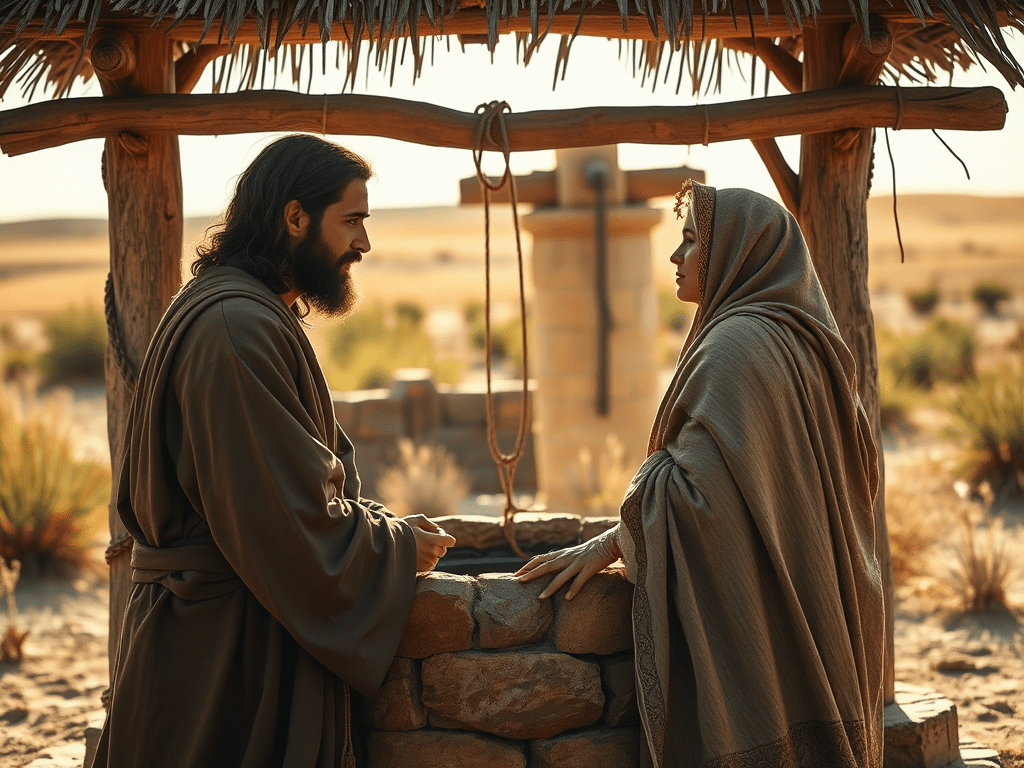
    The gospel we have just heard is an account of the meeting of Jesus with the Samaritan woman at Jacob’s well. This is one of the most touching encounters in the gospels which pictures God’s love and human conversion : a story of God reaching out to us and us reaching back to God through the person of Jesus.

    At Jacob’s well, Jesus expressed God’s thirst for our faith and love for Him as well as offered us God’s life-giving or love-giving life. At Jacob’s well, the Samaritan woman became in touch with her own dryness and thirst, her need for God’s eternal life at the same time quenched her thirst in her encounter-meeting with Jesus. As she met Jesus at Jacob’s well, the Samaritan woman began to know and accept herself deeply (from being a Samaritan, descendant of Jacob, a divorcee to a believer) as well as she began to know and accept Jesus deeply (from a Jew, Sir, Prophet, Christ). At the Jacob’s well, Jesus recognized and satisfied the woman’s need for God’s love, and the woman recognized and fulfilled Jesus’ need for our faith & trust in Him.

    Thus, in dryness and abundance of water, there may be a lot of positive things will happen at wellsprings of life. Usually at the wellsprings of our life we experience, renew, and deepen our life-commitments and relationships with one another and our faith in God through Jesus.

    The season of Lent is also the wellspring moments of our Christian life. Amidst our spiritual dryness & seeming absence of God, Lenten season is the appropriate place and time to once again to encounter and experience God’s life-giving saving act through the Paschal Mystery of Jesus Christ.

    So again, if and when the well runs dry, don’t look and no need to dig for another well, just dig your own wellspring deeper and be in touch and be quench once again with your original life-giving water.

    We pray then that the Lord may grant us the grace to know Him deeply, love Him more dearly and follow Him closely during this another new Lenten Season of our Christian faith & life now & always.

    So May It Be. Amen.

  • M.I.C.E.

    M.I.C.E.

    February 22, 2026 – First Sunday of Lent

    Click here for the readings (https://bible.usccb.org/bible/readings/022226.cfm)

    Every Holy Tuesday, we usually remember the circumstances of the treachery & betrayal of Judas Iscariot that has led to the eventual passion & death of our Lord Jesus Christ. There, we come to know Jesus exposé of Judas’ betrayal as trusted finance officer of the disciples of Jesus who corrupted their funds & conspired with the bashers, detractors & enemies of Jesus that led to the Lord’s arrest & execution.

    We may have known how painful it is & would be, if & when we are betrayed by our own trusted people. Betrayal of trust is surely a difficult & traumatic experience for us that breaks people’s hearts & lives. But we may beg the question & wonder, “what moves and tempts people to betray others?”

    It has been said that in the espionage world or the world of spies, there are four factors that tempt spies to defect & betray their loyalties & people. Its acronym is MICE (Money, Ideology, Compromise & Ego). And somehow we might say that these are the four reasons that we & other may tempt & cause to betray ourselves, others & even God. Temptations & betrayals then somehow always involved with (MICE) Money, Ideology, Compromise & Ego.

    These are very true in the case of Judas Iscariot. Definitely, he was in to betray Jesus for the M-money (30 pieces of silver). He was in for business-influences & market-consumerism of I – ideology, willing to C- compromise his faith, beliefs & values, & to conspire with the enemy. And above all, His selfish E – ego, self-centeredness causes Judas to betrays his Lord. This simply explain why we always associate people who betrayed us as Judas & we consider Judas as betrayer.

    Glimpses of MICE may also be discerned in the temptations of Christ. Same MICE tactics are employed by the tempter. We see in our gospel today how the devil tempts Jesus to turn stone into bread, (which we now associate with M-money); then, the devil dares Jesus to jump from the high cliff to I- ideologize His greatness & C-compromise His faith; and the devil offers the Lord the whole world to boost & boast His E-ego.

    These are the same pitfalls & warning signs that may fall & lead us to the temptations of betraying & betrayals. Same MICE tactics (Money, Ideology, Compromise & Ego) make us betray our suffrage – our right to vote & betrayal of public trust that lead us to vote-buying & vote selling. Somehow same MICE tactics that make building contractors & government officials corrupt & exploit our government projects that cause recent mass death & human disasters.

    And so, let us be aware of MICE tactics (Money, Ideology, Compromise & Ego) that the devil uses & have caused people & even ourselves to be like Judas Iscariot in betraying ourselves, others & our Lord that is making life difficult, harmful & traumatic for all & everyone. And above all, beware of MICE (Money, Ideology, Compromise & Ego) for it could lead us to betray our faith in Jesus Christ, & ourselves as Christians.

    Nevertheless, trials & tribulations have always been part of our life. Somehow sometime we do experience & deal with temptations & tests in life. This is not only life-trials that we choose to do, but also trials & tests imposed upon us by others & by circumstances that we find ourselves into.

    Jesus do understand & know our experiences of temptations, tests & betrayals in life. Our gospel today even describes to us the tests of MICE tactics Jesus has to face as he is about to proclaim the good news of God’s salvation. Same way, as we try to live our Christian values, like Jesus, we will also be tested & betrayed by others as to our stance in faith & life. Easy for us to fall from such temptations, to fail from such tests & compromise our values & principles, whenever we don’t take account for what we are responsible for & with in life. Amid then these evil probes & tests put upon us by others,  and  the expectations & stresses we bring to ourselves, yes, we do need our Father’s protection & guidance.

    Thus, Jesus taught us  to specifically pray that we may not be brought to the tests or be led not into temptation, but be deliver us from evil. We pray these words then not to free us from tests but to grant us the faith & strength to overcome whatever adversities that comes our way in life. For as it is said: “In every age, O Lord, you have been our refuge”, without God we can do nothing, as well.

    And thus, Lord take away everything that distance us from you. Grant us everything that bring us closer to you. Detach us from ourselves to give our All to you.

    So may it be. Amen.