Tag: Faith

  • THE LORD COMFORTS US

    THE LORD COMFORTS US

    December 10, 2024  – Tuesday of the Second Week of Advent

    Click here for the readings (https://bible.usccb.org/bible/readings/121024.cfm)

    How do we live our life as Christians today? How Christian are we, really? These are questions that invite us to re-examine the attitudes of our hearts in the way we live our baptism and prepare ourselves for the coming Christmas. Let us explore, then, the challenges and invitations that our readings bring to us today.

    In the first reading, Prophet Isaiah told us about the promised Messiah. His prophecy was situated when the Hebrew people were exiled in Babylon, hoping for God’s mercy. They believed that their exile was a punishment to their unfaithfulness to God. However, they longed for a wrong Messiah.

    Their misconception about the Messiah was influenced by what their eyes can only see. They only saw the powerful kings from other nations. Those kings were powerful because they had thousands of armies enough to kill and defeat all enemies. Thus, the people had thought that their Messiah should be like them who power and might come from military power to wage war and violence. Indeed, one should fear this God because this is an angry God.

    However, this very image of God of the people is somehow opposite to what Isaiah told us. “Comfort, give comfort to my people…” These were the first words in the first reading. This tells us that God comes to comfort us because the Lord God hears our cries and that the Lord God is not a stranger to our difficulties and suffering.

    This comfort did not mean, “revenge” or a “bloody war” towards our enemies and people we hate. This comfort from God means that God comes to us, that God is with us and God comes with power of love and compassion like a shepherd who feeds his flock and seeks out the lost sheep and rejoices when the lost is found.

    This is what Jesus pictured out for his disciples to understand the love and compassion of God. Certainly, the Lord is like a shepherd searching for his sheep. This shepherd gives importance to every sheep under his care.

    This tells us, that our baptism is also patterned in the identity of the Messiah. We are called to give comfort to each other especially in times of pain and sorrow. We too are called to take care of each other, showing concern especially to those who are in difficult situations and those who are feeling lost.

    Isaiah tells us as well to prepare the way of the Lord because it is in welcoming God into our lives and hearts that we are transformed by God’s loving embrace and presence. This may lead us to comfort each one, to care for each other, and to practice concretely our Christian faith through our concern and generosity. Hinaut pa.

  • FULL OF GRACE

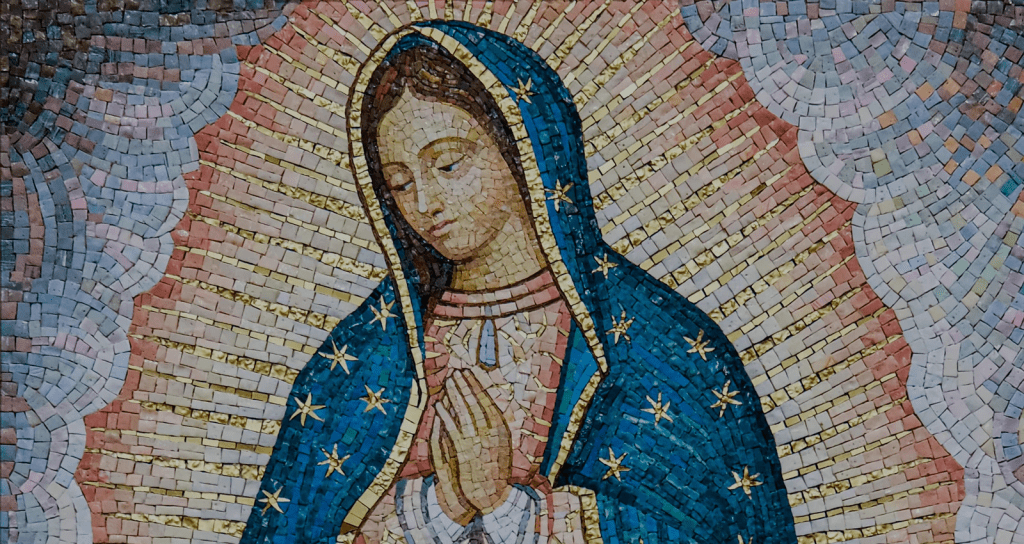
    FULL OF GRACE

    December 9, 2024 – Solemnity of the Immaculate Conception

    Click here for the readings (https://bible.usccb.org/bible/readings/120924.cfm)

    According to (Artificial Intelligence) AI Overview, we, human persons, generally speaking, can easily notice and recognize the negatives in our surrounding and people around us rather than the positive. There is a so called “psychological phenomenon” among us called “negativity bias.”

    As psychology teaches us, this concept called negativity bias causes amplified emotional responses to the negative and painful events compared to positive and joyful events even despite having equal magnitude.[1] No wonder, we can easily react when there is something wrong, ugly or painful that we see or experience. We also feel more troubled and distressed when we have negative and painful experiences. We tend to linger on those and find ourselves difficult to move forward.

    However, having such orientation could greatly affect the way we look at things, look at life and look at ourselves. Our relationships even in the way we make decisions in life can be hampered because of such negativity. Yet, there is also a need for us to develop a sense of positivity and finding balance in our life. To be able to recognize what is good, wonderful and beautiful will add more courage and hope in our life.

    On this Solemnity of the Immaculate Conception of Mary, we are reminded and challenged to see and recognize the good, wonderful and beautiful that God made for Mary and for all of us. Indeed, this is what we have heard in the Gospel. “Hail, full of grace!” these were the words of Angel Gabriel to the young lady, Mary of Nazareth.

    That being full of grace of Mary offers us now a different perspective in the way we look at our life and the world. This is in contrast to what happened in the Book of Genesis in which man and woman sinned against God.

    The fear, shame and guilt that they felt move them back to hide from God. They who first enjoyed the presence of God in paradise where the very first ones to have received the fullness of grace, that was ORIGINAL GRACE in itself. Yet, their desire to “become like god” broke that wonderful grace of intimacy with God.

    That led the man and woman to blame each other without claiming their responsibility. This is where we find the ORIGINAL SIN, a concept from St. Augustine. In this concept, human beings are born with that hereditary sin as a consequence of the sin of the first man and woman. It is understood that we have the natural inclination to do bad things, to sin against God and to hurt one another. Nevertheless, to focus only on this negativity of the past will also cloud our faith and relationship with fear, guilt and shame.

    Yet, let us not forget that before ORIGINAL SIN entered, there was first the ORIGINAL GRACE of God for humanity. This original grace, despite what happened after that, has been preserved in the life of Mary, the favored one of God. God chose her because Mary is most willing to embrace and accept the very presence of God in her heart, in her whole life. This made Mary, indeed, to be full of grace.

    In fact, St. Paul in his Letter to the Ephesians also reminds us that we are blessed “with every spiritual blessing in the heavens… to be holy and without blemish before him.” This is the grace that has been given to the whole humanity, “for in him (Christ) we were also chosen, destine in accord with the purpose of the One.

    As we celebrate this feast, we remind ourselves of this ORIGINAL GRACE, of our first inclination to do good things, of our origin in being filled with the grace of God like Mary.

    And so, what we are called to be and to do today, is to allow also the Lord to fill us with His grace. Like Mary, our Mother, may we be more open to God’s invitations for us, to be more willing to participate in bringing and filling grace in our hearts, homes and communities. Hinaut pa.


    [1]See and read more at  https://thedecisionlab.com/biases/negativity-bias

  • HAVING AUTHORITY IS A LOVING-SERVICE

    HAVING AUTHORITY IS A LOVING-SERVICE

    December 7, 2024 – Saturday First Week of Advent

    Click here for the readings (https://bible.usccb.org/bible/readings/120724.cfm)

    To exercise authority gives us the opportunity and capacity to serve others. This is how we understand “authority” in Christian perspective. This means that when we have authority over other people, this does not give us the right to belittle or put people down just because we have power over them. Having authority is not even about overpowering others where it is easy for us to manipulate and control others for our own benefit.

    In any community, organization or even in our workplaces, when we are given authority, it is rather meant to give us the ability to empower others and to facilitate the community for productivity, growth and maturity.

    Jesus in today’s Gospel also “gave authority” to his twelve disciples. And the authority he has given to them has two functions.

    First, to drive out unclean spirits that terrifies and imprisons people. Second, to cure every disease and every illness of the people to whom they were sent. Through the authority given by Jesus to the Twelve disciples, the Lord gave them the opportunity and capacity to serve others by setting people free and bringing healing to the sick.

    The Gospel tells us now that authority is a gift. It is given to us as an opportunity and giving us the capacity to serve others and not to serve ourselves or to serve those who are only close to us.

    Thus, exercising authority is a form of loving-service. And we will know that it is a loving-service when in exercising authority it sets people free, inspires freedom, brings healing and creates a space for growth and maturity to people around us.

    Yet, let us also remember, when authority is used as a means to serve oneself by manipulating, controlling and overpowering others, then, authority discourages and oppresses people just like unclean spirits or demons would do.

    Moreover, in this case, authority becomes cause of divisions, wounds and toxicity in our community or organization just like a disease or illness would bring suffering to a person.

    Thus, Jesus calls us today that as we exercise authority in our own context and life-situations whether at home, at work or in our communities and organizations, we may always be able to inspire freedom, to allow others to be free and become agents of healing and growth. Hinaut pa.

  • THE LORD HEALS OUR BLINDNESS

    THE LORD HEALS OUR BLINDNESS

    December 6, 2024 – Friday of the First Week of Advent

    Click here for the readings (https://bible.usccb.org/bible/readings/120624.cfm)

    When a person is blind physically, usually, other senses of the body are being enhanced and are more developed. Like for example, the sense of touch or hearing and smell are all heightened to also compensate the deprived sense of seeing. This makes a blind person to be able to recognize things and people and go one with life. However, when we pretend to be blind, not being able to see and recognize what surrounds us, nothing is heightened but in fact we only deteriorate. And it is more difficult to cure this kind of blindness.

    Having such two kinds of blindness, our readings today give us the insight and the humility to recognize our own blindness and to ask the Lord for the grace of healing. Indeed, the miracle of making the blind see was foretold by the prophets. This is a recurring theme the whole Bible.

    Prophet Isaiah in the first reading told us that the Messiah shall open the eyes of the blind. The prophet foretold, “And out of gloom and darkness, the eyes of the blind shall see.” God grants healing to our blindness and insights to our spirit. This gives us joy in the Lord because God shall also bring the tyrant, the arrogant and all those that oppress us to their end. Those were the very people who cannot and even refused to recognize their own blindness.

    In the Gospel of Matthew the two blind men presented to us their interesting encounter with Jesus. They followed Jesus, cried and shouted, “SON OF DAVID, HAVE PITY ON US!”

    Though they were blind physically, but they were one of those who truly recognized Jesus as the Messiah. These men did not see physically the face of Jesus or the miracles done by Jesus. They were only dependent on others who conveyed to them the person of Jesus.

    And despite that Jesus seemed not to hear them when they first cried out, the two persisted and still followed the Lord and begged him. When Jesus was about to enter a house, they were able to catch up with him, and the two seized that opportunity.

    That was their moment of encounter with Jesus. Jesus himself asked them, “DO YOU REALLY BELIEVE THAT I CAN HEAL YOU?” Jesus asked because without their complete trust, Jesus cannot do anything.  And both of them eagerly responded, “YES, LORD!”

    The trust of these blind men allowed Jesus to TOUCH them gently and lovingly. And their eyes were opened. The opening of their eyes was more than physical sight, they gained insight as well as they saw the face of God.

    This very encounter with Jesus overwhelmed their hearts with joy and gratitude. Despite the command of Jesus not to tell others about what happened, they cannot but share to others what they have experienced.

    Jesus indeed is the Messiah and the two blind men taught us that we will only recognize the Lord through the eyes of faith, of complete trust in the Lord even when the Lord seems not to hear our prayers or seems to have not seen our difficulty in life.

    However, with fervent prayer and unwavering trust in God who loves us, God will also ask us, “Do you believe in me?” It is only when we put our complete trust in the Lord, that we allow him to touch and to heal us.

    And so for today, we are called to recognize our own blindness, or areas of blindness in our lives that need healing. Let us recognize that we too struggle with weaknesses and disabilities of one kind or another.

    These areas in our life can be in terms of our own relationships with our friends, family members or co-workers and even within ourselves. It is good then, that we own our blindness and ask the Lord to touch and heal us.

    In this Season of Advent, let this be our prayer too, that the Lord will heal our own blindness so that we will see him more clearly, follow him more closely and love him more dearly. Hinaut pa.

  • GOD SORROUNDS US

    GOD SORROUNDS US

    December 5, 2024 – Thursday of the First Week of Advent

    Click here for the readings (https://bible.usccb.org/bible/readings/120524.cfm)

    What kind of storms do you have now? Big storms? Small storms? Few or many storms? Well, these storms in our life may struck us in the forms of crises in our family or marriage life, friendship, with our health, job, business or studies. These can also be in the form of our personal struggles that we carry alone like the guilt that we hide in our hearts, the fears that paralyze us, the trauma that haunt us day and night or the anxiety that we could not escape of.

    This Season of Advent, we are reminded that as we wait for the Lord to come and bring us peace, we might also find ourselves troubled and our hearts filled with fear.

    Hence, Isaiah proclaims, “Trust in the Lord forever.” As Isaiah brought a joyful hope to the people of his time who were oppressed and exploited by the rich and powerful, and so he does again to us today. Indeed, it is very evident in the Book of Isaiah that God favors the poor, the weak and the powerless. As the prophet pictures out how the Lord shall bring the arrogant, the corrupt and shameless into their own destruction and misery, the Lord shall also bring freedom, life and  salvation to the oppressed.

    The Prophet, whose words echo until today point us how the very presence of God becomes our strength. Though we await for God’s arrival but God’s presence can already be felt in the here and now. And it is because God sustains us and God strengthens us.

    Consequently, Isaiah powerfully described God as our strong city because God surrounds us. God is beneath us. God is above us. God is beside us. God is before us. God is after us. And God is within us. This requires now, faith in us to fully trust the Lord who is always with us and who is always for us. In trusting the Lord, we shall have peace because God will keep us in peace.

    As Isaiah calls us now to faith by trusting God. Jesus also calls us to action. This is what Jesus invites in the Gospel of Matthew. And this means that to believe and to trust in the Lord is not a mere ideology, an idea or a thought and not even a lip-service. Our faith that trusts in the Lord needs action. Thus, Jesus reminds us today, “everyone who listens to my words and acts of them will be like a wise man who built his house on rock.” This is an invitation to listen and to act on it, making the Word of God as our way of life.

    Indeed, by cherishing the Word of God and translating the word into our life, thoughts and actions, then, we become a wise person, whose foundation is God, our eternal Rock. By loving the Sacred Scripture and receiving the Sacraments, we make ourselves more familiar to God’s presence. As we make ourselves available for God, this will mold us to become persons for others and with others.

    Hence, God invites us today to be with others, to allow others to be part of our life. This is how we shall discover the strength, love and support from our friends, families and communities. To trust in the Lord leads us to become confident that the Lord is with us through the people who surround us.

    And so, as we will be tossed by the storms these days that we encounter in life, whatever that may be, we now take comfort by trusting the Lord who is with us, through our friends, our family member the very people who love and cherish us and the Church. Hinaut pa.