Tag: Easter Season

  • Bahala Na

    Bahala Na

    May 7, 2023 – Fifth Sunday of Easter

    Click here for the readings (https://bible.usccb.org/bible/readings/050723.cfm)

    For us, Easter people to fully appreciate the meaning and benefit from the fruits of the mystery of the Lord’s resurrection, we must reflect and try to discover how the Lord has resurrected and can be resurrected in our daily ordinary lives now. Somehow someway during this Easter Season we ponder on the question: Sa unsang pamaagi nabanhaw ug mabanhaw ang Ginoong Dios sa akong kinabuhi karon? In what ways the risen Lord has & may be truly resurrected in our very lives at this very moment?

    As we have recently experienced during the pandemic times, we cannot deny that there are moments in our life that we experience crises and distress. Yes, we do have moments in life when everything seems to fall apart, gets very dark and uncertain, when we are down and at lost, when things get bad, when trouble, sickness, suffering and death strike, when we are left behind and find ourselves on our own, when things have no meaning and doesn’t make sense anymore. These are critical moments in our lives, where usually moments when we have nothing else but faith, have no one else but God, and can do nothing anything anymore but just to trust in God.

    We, Filipinos usually express this faith through the words: “Bahala na”. Usually in moments of crises in life, we articulate our faith in God and in Jesus by saying “bahala na.” Others have criticized such Filipino faith as our fatalistic or defeatist mentality. But for us Filipino, praying and saying, “Bahala na” is more than an expression of resignation to fate or “kapalaran” but articulations of our deep trust and faith in God in times of crisis in life. Because for us, “bahala na” means more than just “come what may” (o pawala nalang), but it is our way of saying, that when after we have already done our part, but things are not complete or finish yet, now “Bathala na” “sumadios nawa”, “gipaka-dios ko na”, “gitugyan ko na sa Ginoo”. “I now entrust to Him.” All now is in God’s.

    This has the same meaning with the word “Amen” “Kabay pa”. “Hinaut pa Unta”. So be it.” This is our expression of deep trust in God, saying, “after all I have done… with God, all will be well. So be it. Siya Nawa. Amen. Bahala na”.
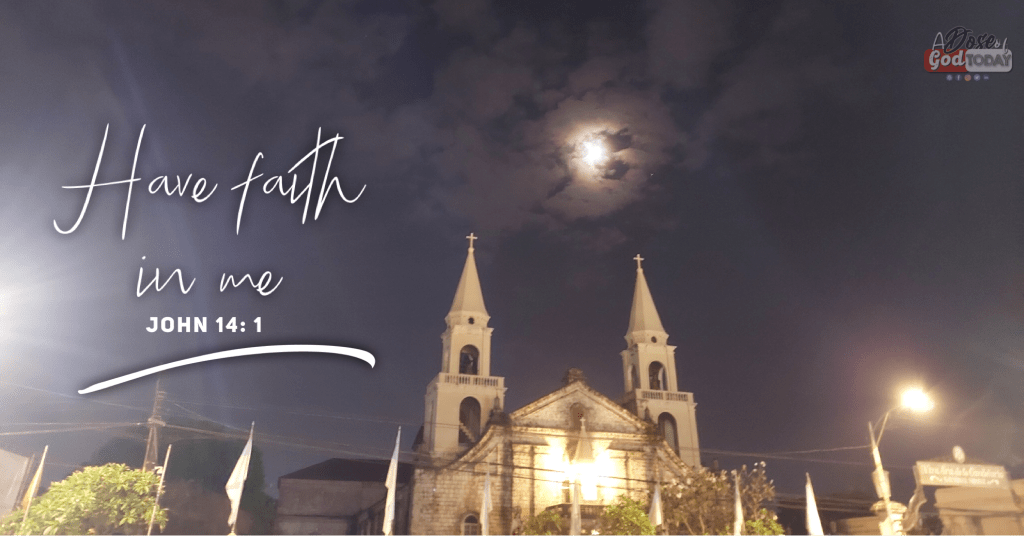
    Here in our gospel today, we hear Jesus saying to his apostles, “do not let your hearts be troubled. You have faith in God, have faith also in me.” These are the farewell words – the ‘mi ultimo adius’ of Jesus to his apostles said during his despidida party – the Last Supper. After he had warned them of the crisis that lies ahead for Him and his disciples, Jesus have also felt the heartbrokenness his apostles must have felt of the coming loss and crisis. Here, at their crisis moment, Jesus consoles and directs his friends to trust in God and in Him – an invitation to: “Bahala na.” He said to them & to us now: “Don’t let your heart’s be troubled. Believe in God. Believe in me.”

    This is Jesus’ way of saying: “Don’t worry, Me & Our Father got this. Have faith in us. Entrust this to Us”. “Ayaw na kabalaka. Kami sa akong Amahan ang bahala. Salig lang kanamo. Isalig, ipasa-Ginoo, ipasa-bahala, ipasa-Dios na kanamo”.

    The same words of consolations and directions are being preached to us today. Jesus feels for us. He feels and knows the heartbreak we feel, and the difficulties we are in – in our every moment of our life-crises. He also invites us to always trust always in God and in Him. When he said “I am the Way, the Truth and Life”, he is also leading us that it is God and Him, not ourselves who will bring and deliver us to our salvation and eternal life. And only when we always follow and persevere in the Lord’s way, which is the way of the suffering and cross, as well as keep on trusting in God – “bahala na” not only during crisis moments of life, we eventually share and enjoy our life and salvation at Home with God, Our Father and Jesus.

    In other words, the Lord has and can be truly resurrected in our daily ordinary lives now, if and when we learn how to trust and have faith in Him, who is our Way, Truth and Life. Thus, by saying Bahala na, Amen to His Way, Truth and Life, and allowing His Way, Truth and Life in our ordinary lives, He has indeed risen and can be truly risen.

    In every moment of our ordinary lives then, as we do our part, we pray that we must always have faith and trust in God and in Jesus. For we know, without the way there is no going, without the truth there is no knowing, without the life there is no growing. Thus, we seek the way that we may go, the truth that we may know, and the life that we may grow eternally, only to discover and realize that Our Way, our Truth and Our Life is the Risen Lord himself in daily ordinary lives now.

    In other words, and simply said, our prayer is  Bahala na. Amen.

  • GOD-Struck

    GOD-Struck

    April 30, 2023 – Fourth Sunday of Easter

    Click here for the readings (https://bible.usccb.org/bible/readings/043023.cfm)

    During the time of the desert monks, around 450 AD, a young monk went to an old and holy monk and asked him, “Father, how is it that so many today leave the monastery? The old monk answered him, “When a good hunting dog sees a rabbit, he will immediately run after it, howling, and barking with excitement. This will, of course, attract other dogs, and they in turn will run and bark and howl like the one that saw the rabbit, although they have not actually seen it themselves. After a while the ones who did not really see the rabbit, but relied only on barking and howling of the first dog, will get tired and give up the chase, because they are no longer interested. They drift off and go home. Only the dog that really saw the rabbit will go on running and eventually catch up with it. That is the way with many who enter the seminary,” the old monk concluded. “Only the one who has his or her eyes on Christ and has seen Him will and can survive. The others, who came only because the enthusiasm of others had drawn them, will lose interest and leave.

    Once I had been involved with the formation of our seminarians as assistant Postulancy director in my years of priesthood. As of those who had been with me, only one out of nine in the first batch, one out of six in the 2nd batch, and three out of seven the last batch are still in the seminary. Meaning, only 5 out of 22 seminarians have persevered in their formation in the seminary. With this, we cannot help but think if there is hope in religious life or priesthood. Some would even blame us, their directors or formators for being too strict. I say, as the story suggests, it is not the Formators but the dynamic and intimate relationship between the seminarian and the Lord Jesus Christ. I believe growth and perseverance in vocation to priesthood or religious life must be based on the personal faith relationship of the person with the Lord Jesus Christ.

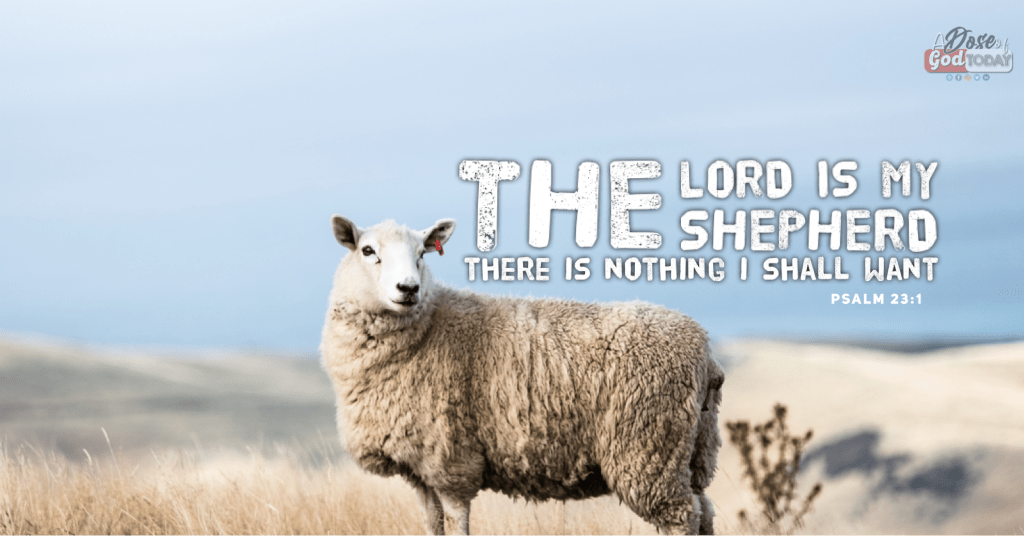
    Jesus in our gospel today claims himself as the Good Shepherd, who knows His sheep. He is a Good Shepherd who has a deep personal relationship with His sheep. He knows His sheep and His sheep knows Him. We, Christians proclaim that Jesus is our Good Shepherd not only because we believe that He is the Shepherd but He is OUR very OWN Shepherd. Our faith moves us to proclaim that Jesus is yours and ours Good Shepherd. He is not like any other shepherd but He is your personal shepherd, who knows and loves you. We believe in Jesus as our Good Shepherd, because we choose Him to be our own shepherd. 

    If Jesus is our Good Shepherd, and we are His sheep, what does it mean to be His sheep? There are three important things.

    First, to be His sheep is to believe in Him. The basic message of Easter is to have faith in the risen Christ. Like the hunting dog to the rabbit, we must believe in what we have encountered & witnessed Him, as Jesus reveals himself to us in our day to day life-experiences.

    Next, we must listen. Jesus said, “My sheep listens to my voice.”  We ought to be sensitive to hear and listen to His words in the Scriptures and in the movements of the Holy Spirit in our midst. Meaning, we should lead a life of prayer to nurture our faith.

    And lastly, to be His sheep is to follow Him. Jesus said, “My sheep follows me.” We must heed His voice, i.e. we must live what we believe and practice what we preach. We must be like the hunting dog that is persistent in its following and fulfilling what it believes.

    While our world today promotes the Star Struck motto: “Dream – Believe – Survive”. Jesus, our Good Shepherd calls us today to God Struck motto: Believe – Listen – Follow. If seminarians want to grow and persevere in their vocation, they must believe, listen, and follow their calling. And if as Christian, we want to grow and persevere in Faith, we must believe, listen, and follow Jesus our Good Shepherd.

    Particularly for us Filipino Catholic, we do have special or unique take in knowing our Good Shepherd. We know Him not only because Kilala natin siya but because Dama natin siya. Culturally sense-feeling perceptions are important to us. Like,… I may know you, but I may not feel you. I may feel you though I may not know you. (Kilala kita, pero di kita ramdam. Ramdam kita kahit di kita kilala). This is how we distinguish real from fake, depth from superficial, good from bad.

    Same way as we Filipinos have this natural felt-instinct & sense, we also come to be familiar with & know more the shepherd’s voice through our gut-sense and feelings. We do come to know the risen Lord as our true Good Shepherd in life not only by our volition, consent & reasonings, but most of all through our sense & feeling perception (damdamin at kalooban).

    By our sense-perception & feeling-gut insights, we come to know the risen Lord with us – in person & in flesh. Like the hunting dog who first sees the rabbit, knowing the Shepherd is thus not only for us a cognitive familiarity or herd-mentality but more so a deep felt-sense knowledge and insight of His presence, love & blessing.

    We pray then that during this Easter Season may be our moments to be God-Struck in believing, listening & following Jesus, and so enhance and improve our special felt-sense of knowing our True & Good Shepherd, & ensure that we may not be gone astray from His fold but rather have a much deeper relationship with Him, and be always attuned with His will & plan for us now, especially these new normal times. So Help Us, God. So May it Be. Amen.

  • Via Magnets

    Via Magnets

    April 23, 2023 – Third Sunday of Easter

    Click here for the readings (https://bible.usccb.org/bible/readings/042323.cfm)

    Easter Season proclaims: “The Lord has risen. Let us rejoice and be glad. Alleluia”. But how do we recognize the risen Lord in our life now?

    In a class inside the seminary, their professor asked the seminarians to discuss how do people recognize the presence of our risen Lord. One of them complained, “Yes, we believe Jesus has risen, but it is not easy to recognize Him in our midst. It is like finding a needle inside a haystack.” The professor continued: “Well, let us start with that. How can we find a piece of needle inside a haystack?” A seminarian answered: “We sort through each straw until we find the needle.” “The scientific approach”, the professor said. “People have done it but it is a futile and time-consuming exercise to examine each element of our lives until we recognize His presence”. “How about if we burn the hay so that we can find the needle?” suggested by one. “The practical approach. You may have found the needle but you lost the hay. You may recognize the Lord but destroyed lives in the process,” commented by the professor. He then continued, “The best way thus to find a needle within haystack is to use magnets. Use magnets to attract the needle from the haystack. Eventually, the magnet will recognize the needle and separate it from the haystack. Via magnets, you will find and recognize the needle, and still have the haystack. This is also how people recognize the risen Lord. The Lord uses magnets for us to sense and recognize His presence in our midst without destroying ourselves.”

    Brothers and sisters, surely, we have heard of our gospel before and are familiar with such one of the great resurrection-story ever told. After the Risen Lord has revealed Himself to women & his disciples, here two disciples have encountered Him in person on the road to Emmaus. With Jesus on the road, they eventually recognize Him through various signs, attractions, and magnets.

    Yes, our gospel today suggests us various signs that would point us to recognize or various magnets to attract us to the presence of the Risen Lord in our midst.

    First, we may recognize the Risen Lord through our ordinary normal lives. He appears on their way back home with their life-griefs, struggles & defeats. In the same way, the Lord accompanies us in our day-to-day lives – especially whenever we invite Him to be with & be part of our ordinary lives in faith. We may also recognize the Risen Lord in our midst through the Holy Scripture.

    Just like when he opened their minds to understand the Scripture concerning Himself, we can recognize the risen Lord whenever we read, reflect, and pray with the Scripture, as we understand the relevance of Jesus’ story in our own lives. We can recognize him further by welcoming a Stranger into our lives. Jesus sometimes crosses our path in a form of a stranger, especially those who are in need, asking us: “Have you anything to eat?” By reaching out and befriending with a stranger who sit with you in the tricycle or you meet along the way – especially the poor, we could have a glimpse of His presence.

    We also recognize His presence in the Holy Eucharist. Whenever we attend mass, and whenever we eat with one another and with the Lord, we witness people gathered in faith to remember and celebrate the Last Supper of the Lord, his offering of sacrifice. Like the disciple, we recognize the Risen Lord through the breaking of the bread – the Holy Eucharist.  Our gospel suggests also that we can recognize the Lord in and through the community of faith. The Risen Lord made himself known not only to them, but also within their community. We can recognize the Lord not in isolation or distancing but whenever we join and be involve in our faith-communities, whenever we participate in the activities of our parish or BECs.

    And finally, the presence of the risen Lord can be recognized through the preaching and witness of His follower. Same way as the two disciples shared their faith-experience with others, whenever we proclaim and preach our faith, we his faithful become the representative of Jesus to other, that through our words and actions, people recognize the Risen Lord in our midst.

    We may then, recognize the Risen Lord through our ordinary lives, through the Scripture, through our act of charity in welcoming a Stranger, through Eucharist, through Christian community and through our faith witnessing.

    Let us rejoice & be glad then for the Lord has indeed risen. And gracefully, He has provided us enough means & magnets to recognize Him in our midst – accompanying us in our journey of life in faith.

    May we continue to encounter & recognize Him in our Emmaus – our road to life & faith with Him who loves & saves us now & always.

    Amen.

  • FINDING MEANING AND JOY

    FINDING MEANING AND JOY

    April 14, 2023 – Friday in the Octave of Easter

    Click here for the readings (https://bible.usccb.org/bible/readings/041423.cfm)

    Do you also escape when you go through difficulties? Do you also hide and retreat when you experience failures and disappointments? Do you go back to your old and unhealthy coping or attitudes when you feel sad, angry, or broken hearted? These are some of our possible reactions when we face these realities in life because we don’t know what to do and where to go. This had been the situation of the disciples. Their hearts were filled with pain, disappointment, with frustrations and doubts.

    The arrest of Jesus, his suffering and his death were so shameful and terrifying that they also hid themselves for fear of the Jews. Because of these negative experiences, they believed that they have failed the Lord, and so they themselves were failures.

    Their immediate response was to go back their old self, to retreat and not to confront anymore what they were going through. Because they believed that they were failures, they succumbed to the temptation to go back to their old ways and that was to fish. They have been called from being fishermen to become fishers of people, yet, having a painful and horrible experience, they retreated, they were giving up.

    However, all night they caught nothing. The “night” in the Gospel is very symbolic because it reveals to us that the disciples were in darkness and they couldn’t find light. They were hopeless. They wanted to give up. But, at dawn a stranger appeared on the shore and said, “cast the net over the right side of the boat and you will find something.” And they did, they trusted that stranger and to their surprise, when they pulled the net they could barely pull it back because there were plenty of fish.

    Then, the “beloved disciple” recognized that it was the Lord Jesus. Jesus is alive and there waiting on the shore. This tells us too that once we have become intimate with Jesus, our heart will always desire for Jesus.

    This inspired Peter to respond immediately and to come near to Jesus. Again, this was symbolically done. Peter let go again of his boat, that is, his old self. He jumped confidently into the sea of his past failures and frustrations because he knew that Jesus was waiting for him.

    This reminds us that we might come to the point in our life when we feel hopeless and helpless because we have failed, because the situation is just too difficult, family problems are just depressing, our poverty is overwhelming, or our relationship with others have failed – and then, our immediate reaction is to retreat, to hide in our own failures and pain, to dwell so much on our problems, to go back to our old and bad habits, becoming fearful, anxious and mediocre – which means going into the darkness of depression, of sin rather into the light of hope and life.

    Yet, Jesus calls us to we find meaning and joy even in the midst of pain, of failures and difficulties. Hence, the Risen Lord invites us today.

    First, when we meet failures and difficulties, do not go back to the old unhealthy ways and old habits, which could only be our emotional reactions. Rather, pray and ask the Spirit of the Lord to give us courage and patience to confront what we are going through.

    Second, as we face them, never think that you can do everything alone. The journey is lighter when we are with somebody whom we can trust, whom we can share our story. Find and build lasting friendship, build a deeper family relationship, invest in your relationships. When we are told to cast our net, to change the course of our boat and to change our life – go for it and trust the Lord because it might be in that direction that we will find the abundance of love and life.

    Third, be always aware of God’s presence. Just like the beloved disciple let us always be intimate with Jesus. It is when we become more familiar with Jesus that we also become aware of his presence in everyone. Hinaut pa.

  • GRACE IN OUR SCARS

    GRACE IN OUR SCARS

    April 13, 2023 – Thursday within the Octave of Easter

    Click here for the readings (https://bible.usccb.org/bible/readings/041323.cfm)

    What scars do you have in your body? And what scars do you have in your heart? What are the stories behind your scars? We both have physical and emotional scars. The physical scars in our bodies are perhaps because of accidents that happened to us in the past. Or other surgical operations that people went through. On one hand, our emotional scars cannot be seen but hidden within our memories which may be evident in the way we relate with others, or in the way we look at our life and the world, or in the way we express ourselves.

    Indeed, every scar would remind us of pain or even of joy. Some scars may become insignificant through time. Other scars especially the big and serious ones may remain bothersome to us even though the pains were gone. The trauma that we have been through in the past could sometimes still shaken us at present or even has shaped us to become who we are today.

    Emotional scars compared to the physical ones carry more weight and longer time to reconcile and heal. The stories behind our emotional scars can also sometimes bring back old memories of pain and sadness. Yet, it is also possible that those scars we have, whether physical and emotional, can become signs of victory, of growth, of wonder, of beauty and even of grace.

    Such possibility of turning our scars into grace is what has been told to us in today’s Gospel. Jesus appeared before his disciples. He greeted them with peace because their hearts were filled with fear and troubles. The very thought of the death of Jesus brought so much sadness and fear into the hearts of the disciples. Because of this, they could not believe that Jesus is alive and in front of them.

    In their disbelief, Jesus invited them, to look at his hands and feet. Jesus said, “touch me and see.” Jesus wanted the disciples to touch and see that indeed he bore the scars from the wounds he endured at his crucifixion. To touch and see the scars of Jesus, those signs of wounds and of his death, means to be able to behold the grace of God.

    This tells us that the resurrection of Jesus has made those scars, now, as signs of victory, of wonder and of grace. Those scars remind us that Jesus went through suffering and he knows very much the feeling of being in pain, being humiliated, being abused and being maltreated. Those scars revealed the cruelty of sin and evil, of human hatred and indifference. Yet, beyond those scars also is the grace of God that brings new life and new hope for all.

    Thus, as the disciples were invited by Jesus to touch and see the scars in his body, the Lord also calls us to look at our own scars. We do have our own scars. Do not deny or hide in forgetfulness those scars in us. The very scars we have, can become opportunities where God shall bring graces to us. Through our own scars, we shall also find healing and life, transformation and hope.

    Hiding in forgetfulness and denying that we are scarred and broken will not help us. These attitudes will only bring us into more fear and sadness. Our heart will remain fearful and troubled like the disciples who were in hiding.

    As we allow the Lord to work wonders in us and make his grace be revealed through our own scars, may we also experience today the grace of new life through his resurrection. Hinaut pa.