
January 23, 2026 – Friday of the Second Week in Ordinary Time
Homily for the Holy Mass of the 4th Mechanized Infantry Battalion, Philippine Army
Click here for the readings (https://bible.usccb.org/bible/readings/012326.cfm)
Many of us know the experience of being invited and especially of the feeling of not being invited. For example, you hear about a meeting yet, you were not part of it. Or perhaps you heard of an operation decided without your feedback. A better assignment may have been given to others instead of you, even though you worked harder. And it stings, it hurts our feelings, even for those who have achieved higher education or among seasoned soldiers. Quietly, it makes us ask about our place, our worth, and whether we still matter.
However, this ordinary human experience would help us enter today’s liturgical readings.
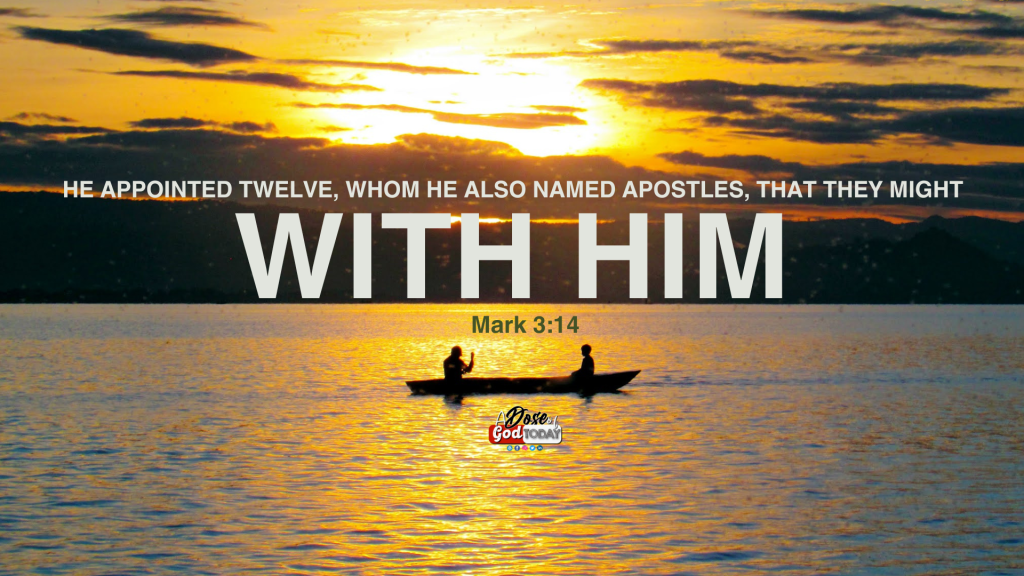
In the Gospel of Mark, Jesus went up the mountain and called those he wanted. It was a deliberate act. He chose people not because they were impressive, flawless, or powerful, but because Jesus desired them. Fishermen, a tax collector, men with strong personalities and clear weaknesses, these were the ones He called. And the Gospel is very clear about the first reason for the call: that they might be with him. Before mission, before authority, before action, there is first the “presence,” of simply just being present.
This is a powerful word especially for you, men and women of the Philippine Army. Your life is shaped by readiness, discipline, and action. You are trained to move, to respond, to protect, often under pressure and risk. These are noble and necessary qualities. Yet, the Gospel gently reminds us that strength without grounding can become dangerous, and action without inner clarity can slowly erode the soul. This means that even the strongest soldier needs an interior anchor, a grounded foundation of the self.
The first reading from the First Book of Samuel, deepens this message. David had every reason and opportunity to kill Saul. Saul hunted him relentlessly because of jealousy. David’s men even interpreted the moment as God’s will. But David refused. Instead, David lowered his weapon and chose restraint over revenge, fidelity over impulse. David knew that power without reverence and respect lead to destruction. He understood that authority must remain under God, not above him.
For soldiers, this scene speaks clearly. You are trained to carry weapons, but also to carry responsibility. You know better than most that not every opportunity to strike is a command to strike. David showed us that moral strength is revealed not only in courage under fire, but also in the ability to hold back when conscience demands it.
Here is the one theme that unites the Gospel and the reading:
that being chosen by God means learning to remain with Him, so that our strength serves life, not fear or pride.
In today’s context, the challenges are real. Long deployments, separation from family, exhaustion, moral injury, frustration with systems, and the temptation to harden oneself just to survive. Some would cope by shutting down emotionally. Others carry anger quietly. Still others struggle with guilt over decisions made in complex situations. These are not signs of weakness. They are rather, signs that you are human.
Jesus knows this. That is why His first invitation is not “to go,” but “to stay with me.” Only those who remain with Him can be sent without losing themselves. Only those who stay rooted can act without becoming cruel. Only those who pray can carry authority without abusing it. And only those who truly love can exercise power not as a form of destruction but to nurture and protect life.
David spared Saul because he knew his identity before God was more important than securing his future by force. The disciples were sent because they first learned how to listen, walk, and live with Jesus. The same is true for you. Your service to the nation is honorable, but it becomes truly life-giving when it flows from a conscience formed by prayer, humility, and reverence for life.
You are not called merely to become efficient soldiers, but to be men and women of integrity. Hence, you are protectors who know when to advance and when to restrain. You are called to become leaders who act firmly without losing compassion. And you are called to be servants who remain human in the midst of conflict.
This means that to be “with Him” (to be with Jesus) today may mean guarding your interior life as carefully as you guard your post. It may mean seeking help when the weight becomes too heavy. It may mean choosing silence and prayer instead of bitterness. This is not weakness. This is the deeper discipline.
Thus, I leave you now two simple and doable takeaways.
First, make space to be with God regularly, even briefly—before duty, after operations, or at day’s end—so that your strength remains rightly ordered.
Second, in moments of pressure or anger, pause before acting and ask: “Does my decision protect life and honor God, or does it come from my fear and pride?”
Remember, to be chosen by God is a gift. To remain with Him is the grace that keeps your service human, just, and truly strong. Hinaut pa.
 A DOSE OF GOD TODAY