
February 23, 2024 – Seventh Sunday in Ordinary Time
Click here for the readings (https://bible.usccb.org/bible/readings/022325.cfm)
When I was a newly ordained priest in Iloilo, there was such a time that while waiting for the mass to begin, I sat in a corner of our church. Few pews away from me, were a couple with their daughter who was probably about 3 or 4 years old. As I observed, she was very playful and while playing she accidentally hit her head on the pew. It was quite hard and painful because there was a loud cry after that. She sought the comfort of her parents. The father took her up. But what surprised me were the words of the father which I cannot forget. He said, “the chair hit you, you hit back then.” The little girl did as she was told and after that she was comforted not to cry anymore because she was able to hit back already. The little girl hushed from crying and rested on the shoulder of her father.
I am sure this is not something surprising to many of us. Some may have done it too to their children or grandchildren and perhaps you yourself experienced this. I have also experienced this at home when I was a little boy – to hit back whenever I am hurt, believing that the pain will fade once I have my revenge.
Indeed, to take our revenge when we are hurt may have been there in our hearts and sub-conscious because that was how we were brought up or perhaps that was how our environment and culture taught us to do. This sounds actually simple yet this has big implications when we are grown up and interact with one another. With this, we may ask now, is the attitude of taking revenge a Christian way?
In the First Book of Samuel, King Saul was in search of David. David had become an enemy to Saul because David became a threat to his kingship. Thus, Saul wanted to eliminate the threat by killing David. However, we were told that David slipped through the soldiers of King Saul and managed to get near to Saul while he was asleep. David had all the opportunity to kill Saul, his enemy, yet, when David had the chance to take his revenge, David spared the life of Saul.
David believed that vengeance and violence against the man that God has chosen was not the answer to a free and good life but rather in showing mercy.
The Psalm which has been attributed to David expressed such attitude of David too. – “The Lord is merciful and gracious, slow to anger and abounding in kindness and the Lord deals with us not according to our sins.”
This story of David prepares us of Jesus’ absurd and seemingly illogical teaching. Many of those during his time, found it radical and crazy. In the Gospel of Luke, Jesus taught his disciples to “love your enemies, do good to those who hate you, bless those who curse you, pray those who mistreat you.” Is it not ridiculous?
We were taught to be vengeful. We were taught to believe that hitting back takes away the pain that we have endured. Yet, Jesus teaches the other way around.
How could we love those who have hurt us? Those who have abused us? Those who betrayed us and caused so much pain in our life? How could we not hate and curse them when we are suffering from what they have done to us? How can we give forgiveness when they do not own the responsibility?
Our immediate response is to retaliate, to take our revenge. Some may result to physical violence which can terrorize the community. And if we cannot express physical violence against them, then, we express it in our words and on how we treat people. But most of all, we linger to hatred, to pain, anger and bitterness.
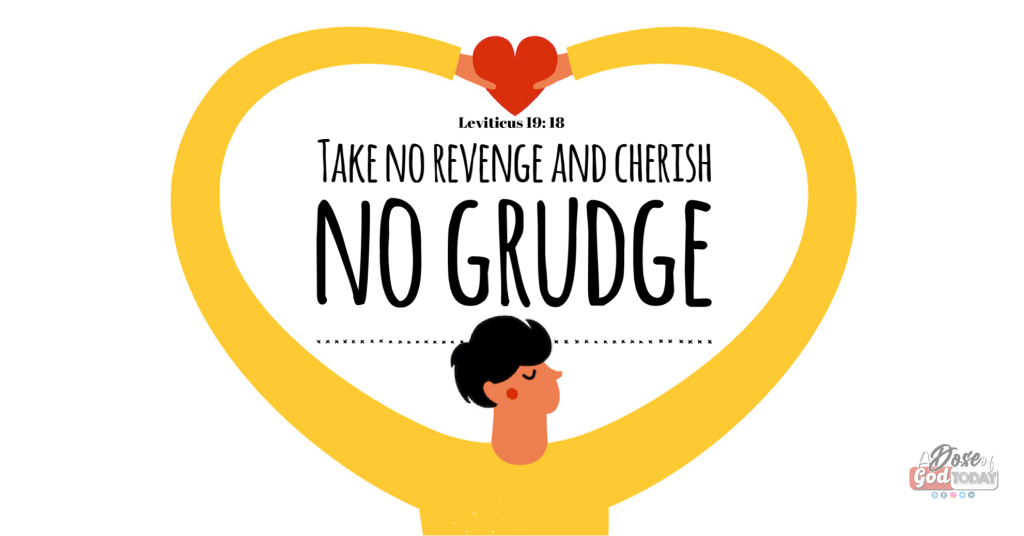
However, we do not realize that once we let aggression, violence, hatred and anger to dominate our hearts and minds, we, in fact, become prisoners of our own pain. Then, the pain that we endure leads us to feelings of anger, hatred and bitterness. When we linger to these they will lead us to a heart that seeks only revenge. This will be our tendency from our belief that by hurting the person back, our anger and hatred will be satisfied. But then we are wrong because anger and hatred will never be satisfied by violence. Violence only makes us angrier, more hateful and more bitter. The more we linger to these emotions; they become a cycle of violence that never ends.
We create our own cycle of violence, revenge, anger and hatred. We become prisoner of our own pain. All of these will control our life, thoughts and actions towards others. This is how our person and our relationships are so affected that we become toxic. We will never be free because we will try to avoid those who have hurt us and avoid occasions of meeting them. We will begin to become suspicious to our other relationships. Yet, we are afraid of trusting others, of loving others again and even ourselves. We are afraid because we linger to that pain thinking that other people might do it again to us. Thus, we become judgmental and condemning to those who are around us and even of ourselves.
However, it is when we find love and forgiveness in our hearts that we will be free. But remember, this begins in accepting and embracing those painful experiences we have so that we can go on with life.
This tells us, that loving one’s enemies or those whom we hate is an expression of mercy and forgiveness that makes us free. It will not erase the scar of betrayal or abuse or pain or any trauma that we endure; but we will be able to stand up, to wipe our tears, to go on with life and to transform our pain into kindness and forgiveness.
This is what Jesus wants for us. Jesus wants us to be free and not to be prisoners of anger, hatred, bitterness and violence. It is in showing love, kindness and mercy that we actually find peace and reconciliation, justice and freedom.
Showing love then, is not about telling the person, that what he/she did was okay and we pretend as if nothing happened. No! Love and forgiveness bring healing to our wounded heart that will make us say to the person, “I forgive you not because of who you are but because of who I am.” This is what the Dalai Lama said. This is a gift from the Lord because we deserve peace and freedom. This also means that I choose to be free and at peace. I choose love and not anger and hatred and I choose God and not evil.
The invitation of Jesus for us now, is an invitation to freedom from hatred, bitterness and violence and freedom to love, to be merciful and forgiving. This the attitude of the heart of a true believer of Christ Jesus. Hinaut pa.
 A DOSE OF GOD TODAY