A friend who believes in integrity and honesty in his work, who is filled with passion to be at the service of others found himself in an environment of conflicts and contradictions. In his desire to be fair and be always honest, the more he got into trouble in his company. This started when he found anomalies and dishonest transactions within their department. And so he called the attention of the person and warned the workmate of such anomaly. Yet, he was brushed off. He reported it to their superiors, presented the evidence and his workmate was terminated. However, after that, his other workmates in that company turned sour to him. He was even blamed for being harsh and cruel because his workmate lost a job whose family will struggle. And so, this friend got confused and felt guilty for being honest and upholding integrity in his work. What a contradiction!
Indeed, the values he upholds and his commitment to be honest are signs of contradictions to a group, organization, a society or a nation that does not believe in such values and commitment but condones and tolerates dishonesty, corruption and abuse of power. And those who would stand up against such culture, are being persecuted, unwanted and reviled for being a contradiction.
This is what happened as well to the many martyrs in our Church and of those brothers and sisters all around the world who became a contradiction because of their way of life as Christians. This is what we remember today on this Red Wednesday. And so, for a little bit, allow me now to break the Word of God with you so that we may be able to see and discover God’s invitation for us on this Red Wednesday.
Our Gospel from Luke, certainly, sounds a bit disturbing and discouraging for us especially when we only tend to seek and aspire for comfort and security in life. In many ways, we usually choose the easiest, the fastest and relaxing ways. Our parents would hope and do their best to provide the best security and comfort for their children. I would also rather take what is easy for me rather than choosing a difficult one, in taking the less challenging and less self-sacrificing. However, Jesus tells us differently.
Jesus tells us, “if you decide to come and follow me, then, you will experience difficulties, conflicts, contradictions and even persecutions from those who deny me and do not believe in me. Friends and family members will not understand you and even insult you for choosing me. You will be hated by all because of my name.”
Is it not, that what Jesus is saying to us and inviting us to do is foolish? Why would we take the risk of being hated and abhorred by friends and family members and by those who have power? Why should we take that risk of believing in him, only to suffer and be hated?
Indeed, to believe in Jesus is a risk. This was the experience of the first disciples who endured persecutions not just from the Roman soldiers or fellow Jews but even from their own families and close friends. The Apostle John, who wrote the Book of Revelations, suffered oppression. He was exiled and imprisoned in a Greek island called Patmos because of the anti-Christian persecutions under the Roman emperor, Domitian.
Moreover, this reminds too us of the many Christians who suffered from persecutions. Obviously, many of them had become confused and afraid because of the difficulties of being a Christian, of being a believer of Christ.
Remember, to believe in Jesus is a contradiction; to believe in Him was against the prevailing belief and culture of the people. Because we are supposed to take revenge and hate our enemies but Jesus tells us to love and forgive our enemies. Because we are supposed to aspire wealth and power, to be famous and successful but Jesus said, “Blessed are the poor, the sorrowful and the persecuted for theirs is the kingdom of Heaven.” Jesus also promised us that “by our perseverance, we will secure our lives.”
This reminds us of what we commemorate today, the Red Wednesday as our way of remembering and recognizing the martyrdom of many Christians until today. Truly, Christians are being discriminated, violated, oppressed, tortured and murdered in many countries of which we are not aware and even here in our own country.
Thus, as we remember all those persecuted because of the Christian faith, this calls us too to become true Christians, no matter what. And let us remember, a real Christian is always a contradiction to what the world wants us to be. Therefore, we might be hated and become unwanted in the midst of culture that condones and tolerates violence, dishonesty, corruption and cheating. Yet, the Lord calls us to persevere in being true and honest Christians even in our daily and common affairs. That is – to be honest in our relationships with others, to be just to the people we work with, to have the integrity in serving others even in the midst of corrupt practices in our institution or community, to be dedicated and self-sacrificing, to be generous and life-giving. Kabay pa.
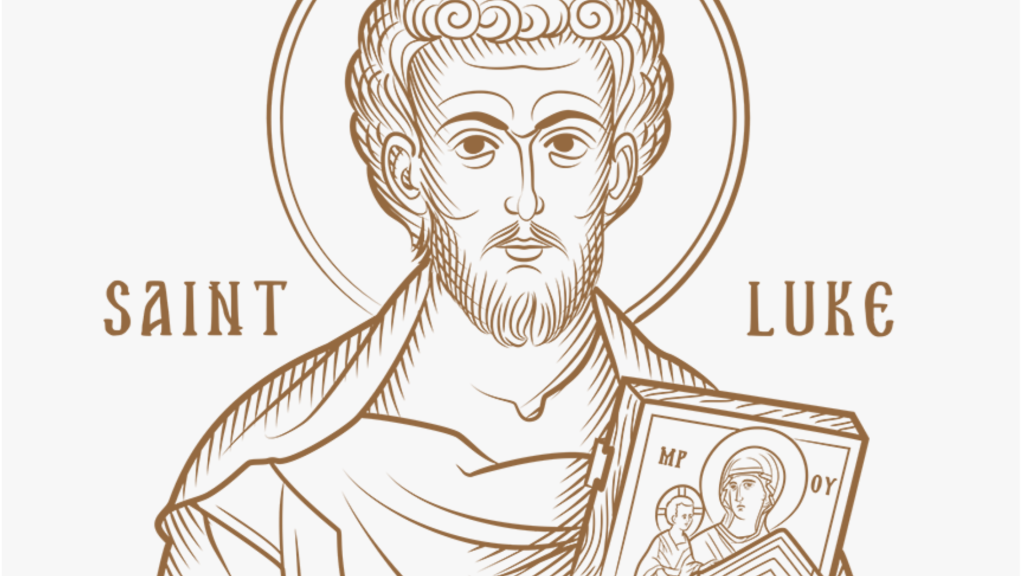
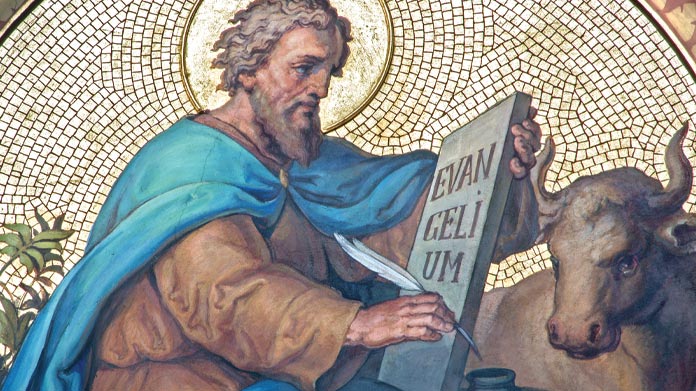
We, as Church today, owe a lot to the evangelist, St. Luke. The Gospel according to him and the Acts of the Apostles which is also believe to have come from the tradition of Luke were two great accounts that tell us more about Jesus, his ministry and the early life of the first Christians.
It is through St. Luke’s account that we have today a lively, heartwarming and inspiring characters of Jesus as described to us in the Gospel. Luke particularly emphasized the character of Jesus that showed compassion and mercy to the sinners, to those who suffer not just of physical and spiritual illness but also those who were subjected to public humiliation and indifference. This is how the poor, the oppressed and the less fortunate were given special attention by Luke.
Thus, as we celebrate the feast of St. Luke today, there are things in his holy life that we can learn today and that serve as the invitations for us to grow in our Christian faith.
Luke as healer. Luke is the patron of physicians and surgeons since Luke himself was a doctor or a healer. Though it was believed that Luke was actually a slave, but it was common at that time that even slaves were given the opportunity to learn medicine in order to serve the family of their masters. Luke learned well the art of healing that when he was graced with faith, he too continued his gift of healing to people. Indeed, Luke allowed the Lord to make him an instrument of healing. This is depicted in the many healing stories that Luke emphasized in the Gospel because Luke can relate well how healing help people to live life fully.
Luke as a faithful friend. Paul in his Second Letter to Timothy confessed that many of his friends had deserted him. Only Luke remained at his side to which Paul was very grateful. Luke, despite the many challenges he and Paul experienced remained at the side of the Apostle to assist him in the mission of preaching the Gospel and brining the presence of Christ to the Gentiles. Luke was a Gentile himself, a Greek from Antioch, Syria and was converted to Christ. Luke lived his life to the full and living it at the service of the Gospel with Paul. This was how Luke proved his faithfulness to Christ by being a faithful friend and companion of Paul.
Luke as a preacher. Luke was also well-educated in classical Greek. This was the reason why we have the Gospel and the Acts of the Apostles. Luke communicated well the story of Jesus to his audiences with the intention to bring more people closer to Jesus by knowing him, his mission and his very life even though he did not meet Jesus personally. In fact, Luke saw the life and mission of our Lord Jesus as God’s visitation to us. This is evident at how the Gospel contains stories of visitations like that of Gabriel to Mary, the visit of Mary to Elizabeth, of Jesus to Zacchaeus’ house, etc. In today’s Gospel passage Jesus also sent 72 disciples to every town and place he intended to visit. In this way, Luke through his writings bring us closer to Jesus who comes to visit us as he too was being visited by the Lord.
Hence, on this feast of St. Luke, we too are called to become agents of healing into our homes and communities. We too are called to become a friend who shall be able to give assurance and confidence to friends who felt alone, afraid and lonely. And lastly, to be a preacher of God’s visitations by actively sharing our God-experiences so that we may be able to bring others closer and intimately to Jesus. Kabay pa.
How does my faith in God mold may ways of thinking, behaving and speaking? How does my faith in God play a role in my relationships, in my career and profession, in my studies and endeavors? How does my faith in God transform me as a person?
These questions would be very good to take into our heart and see how our Christian faith works in our life. Having faith is not limited with doing religious practices and faithfully observing religious obligations. Having faith is not limited on Sundays as well or during seasonal religious celebrations during Holy Week or Christmas only. When faith is only a “part” in our life, then faith becomes our extra-curricular activity. Faith is a way of life and as Pope Emeritus Benedict XVI said, “faith is our human response of love to God who first loved us.”
Faith, therefore, is a human response, an active response of love. This response is basically spontaneous, neither obligated nor mandated by any law. It’s spontaneous because it comes from a heart filled with so much love and gratitude to God. Consequently, faith brings us into an intimate relationship with God who calls us and loves us first. “Through faith we become children of God in Christ Jesus,” as St Paul reminds us today in his letter to the Galatians. And because we are made children of God, it is only right that we call each other sisters and brothers and breaking any division caused by hatred and indifference among us. We become one in Christ Jesus. This is what it means to be a Community of Faith.
Moreover, in today’s Gospel, Jesus reminds us that “blessed are those who hear the word of God and observe it.” And Mary, the mother of Jesus and our mother heard the word of God, accepted and embraced the word in her whole life and let the word to grow within her. This is how faith in the life of Mary transformed her life because the Word of God grew in her heart and was made flesh through her. In that way, the life of Mary became an instrument of bringing God’s presence to all.
This is also how we are called today as we accept and embrace the gift of faith, to let it grow in our hearts, in our lives and allow the Lord to transform our whole life. May our thoughts, actions, words and our relationships, work and our very person become ways of loving that bring blessing to all. Kabay pa.
Many have become accustomed in wearing or bringing rosary beads and keeping them in wallets, bags, pockets or cars. Some would consider it as a spiritual weapon. Others would even believe that it is an amulet or a lucky charm. In fact, the rosary is the most handy religious item we have as Catholics and one of the most common things that many of us bring.
Today, the whole Church honors Mary, Our Lady of the Holy Rosary, a feast that reminds us of the importance of this popular and ancient devotion. Actually, using beads as a way of praying is not unique to us Christians. Even Islam, Buddhism, Hinduism, Shintoism, Sikhism and others use prayer beads as a form of devotion. Thus, this is something that we share with other religious traditions.
But for us, what is the significance of the devotion in praying the rosary in our Christian faith? The rosary which comes from the word “rose,” is indeed, not just any amulet or a lucky charm that we could just bring around or wear to ward off some evil spirits. It is also not a way of bargaining with God that in praying the rosary, then, God will be obliged to grant our requests. This is also not a mere decoration of our identity but a tool for us to contemplate the life of our Lord Jesus and how he calls us today.
The rosary has its own rich history and developed later on into a religious instrument for us to carry in order to pray easily the mysteries of our faith. Moreover, the rosary reminds us of the life of Jesus and the participation of his mother Mary whose life is so significant in the story of our salvation.
This is how the mysteries assigned in each decade allow us to reflect on the actions of God within our story, within our human experiences. Just take for example the latest addition to the mysteries of the rosary, “The Mysteries of Light” which were added by St. John Paul II in October 2002.
“The Baptism of Jesus in the River Jordan” tells us how the Spirit of God coming from heaven in a form of a dove confirms and affirms the identity of Jesus as the beloved Son of the Father to whom we are called to listen.
“The Self-Revelation of Jesus at the marriage in Cana” where Mary his mother played an important role telling the servants to “listen to whatever he tells you.” It was through Mary’s intervention that Jesus revealed the glory in him for the couple in Cana. That self-revelation of Jesus tells us of the abundance of grace that Jesus brings to us and of Mary’s role in the story of our redemption.
“The Announcement of the Kingdom of God with the Call to Conversion” is a time of grace in which we are all invited to be in the presence of God. This implies that we too are called to embrace God’s mercy and forgiveness by humbly recognizing our sins and failures.
“The Transfiguration of Jesus” calls us to be also transfigured into the image of Christ whose glory has touched us. Again, it was in this event in the life of Jesus that we are once again called by the Father “to listen to him.” Indeed, in listening to Jesus that we are empowered to be transformed into his likeness since we too are all God’s beloved.
“The Institution of the Holy Eucharist at the Last Supper as the Sacramental expression of the Paschal Mystery” calls us to make the memory of Jesus ever alive in our life and in the life of the Church. Thus, every time we celebrate the Holy Eucharist, Jesus’ life is not just remembered as something from the distant past, but allowing the Lord to be intimately with us, among us and in us in the here and now.
Indeed, these mysteries of light allow us to discover and contemplate how God brings light into our lives, to break the darkness of sin and to embrace us with the joy that his presence brings today.
Thus, pray the rosary that our heart and mind may change according to God’s desire for us and not the other way around. Pray the rosary and develop it into a habit but not merely to just murmur prayers, but as our way to realize God’s divine revelation in our life. Pray the rosary with our Mother Mary who is our powerful companion that we may dearly see Jesus and discern clearly His desire for us. Kabay pa.
Our Loving God who has been with us since the very beginning. You are our ever faithful friend and companion in the journey. Many times, you have shown to us in concrete ways what love can do.
Because of so much love, you created us in your image and likeness. When we first sinned against you, though the paradise has been closed for us, yet, you walked with us. When we were made slaves in Egypt, you rescued us. When we grew hungry in the dessert, you provided manna for us. When we felt that our enemies made blows in every corner, you sent saviors to tell us that we are never alone.
When, we felt that you were too far from us, you have become like us except sin. You were born as an infant and grew up into a man. You walked with us, ate with us, taught us and even cried with us. You have brought hope and life in us even to the point of offering your life for us. Though you never sinned, but because of us you suffered. We were the ones who crucified you, yet, you forgave us. We were the ones who put you to death, yet, you resurrected for us – to tell us that we are never beyond redemption, that there is always hope in us, there is more in our sinfulness and weakness. You see love in us.
Indeed, you are a God who have showed us concretely what love is, now expressed through the sacraments of the Church. And so grant us Lord, the spirit to understand and embrace fully the grace that flows from the sacraments of your love, so that each of us will also become the very sacrament of your presence, of your faithfulness and love to people around us. We ask this through Christ our Lord. Amen.
Have you been in love? I am sure that you have been in love too. The first time I realized that I was in love, it made me restless until I could have a glimpse of her. I realized that my attitude towards her had changed. I suddenly became more caring and thoughtful towards her. Though that puppy love did not last as it was based on emotional and physical attraction only, but that gave me a bit of understanding how love can change a person’s behavior.
With that, how would we define love? Can we really define it? According to my Tita, Miss Meriam-Webster, she gave 9 different definitions of love. Yet, I am not personally satisfied with her definitions since most are descriptions of love. Well, she said that love is a strong affection towards another, or attraction based on sexual desire, or based on admiration, or devotion, or an assurance of affection or a concern for another, etc.
Moreover, our Christian understanding of Love is much deeper than that. It is beyond romantic love, beyond physical attraction or emotional attachment. It is more concrete than those. If you have been listening to the prayer earlier, what we have prayed described “who love is.” Notice, I did not say, “what love is,” but “who love is.” Meaning, love is a person who concretely showed to the beloved that love. Yes, love is a person, God’s self-revelation is love and made visible through Jesus. What I prayed and shared with you in that opening prayer is the story of love being revealed to us, in our human history. It’s love that creates, that liberates, gives life and gives hope.
This is what sacrament is. This is what I want to share with you, to always remember that the sacraments in our Church are concrete expressions of Love, expressions where the grace of love, of loving and of being loved made visible. Thus, Sacraments are expressions of love made visible.
You may have some knowledge about the Sacraments already, and it would be too long to share in details the theology and historical development of each sacrament. So, just let me share with you in short its background and how each sacrament is an expression of love made visible.
What are the seven sacraments?
The seven sacraments are baptism, confirmation, Eucharist, penance/ reconciliation, anointing of the sick, marriage and holy orders. They are divided into three categories: sacraments of initiation, sacraments of healing and sacraments of service.
What is a sacrament?
Before we get into the details of each sacrament, I want to reiterate one of the most important things about the sacraments — that they are means which God uses to show His grace and help us achieve salvation. The word sacrament means “a sign of the sacred,” which is fitting as they are all outwards signs from God to us.
Not only are they signs, they’re also celebrations of a continued journey and relationship with God, teachings to help live out His word and ceremonies to show devotion to Him. This means that our participation in the sacrament is our response of love to the one who loves us.
Take for example, a parent who does everything to send his/her child to school, provide basic needs and give a good life and ensuring that the parent’s presence also provides comfort and assurance to the child, and a child who out of gratitude to the parent maximizes everything given to him/her succeeds in life and makes the parent proud – is an image of sacrament.
Where did the sacraments originate? (origin?)
In the Bible, Christ gives his followers instructions on how to administer and receive each of the sacraments. This is seen through his work with the Apostles, in healing the sick, in the parables, feeding the multitude and giving his body and blood for the salvation of all and in forgiving sinners. The Church now administers these holy sacraments as instructed, in order for all to worship God and receive God’s gift of salvation.
This means that all the sacraments have a biblical origin. Though each of them have developed and has its own vast history over centuries until its present form. Hence, there might be some changes in performing the rituals, changes in languages, differences in doing it that varies from one culture and rite to another, but the very essence of each sacrament remains the same, it is the grace of LOVE MADE VISIBLE.
The Sacraments of Initiation
The three sacraments of initiation are baptism, confirmation and Eucharist.
Each is meant to strengthen our faith and forge a deeper relationship with God. Baptism frees us from original sin and making us children of God. Confirmation strengthens our faith and gives us fully the Holy Spirit. And Eucharist allows us to taste the body and blood of eternal life, be reminded of Christ’s love and sacrifice, and becoming one with the whole Church.
Sacrament of Baptism
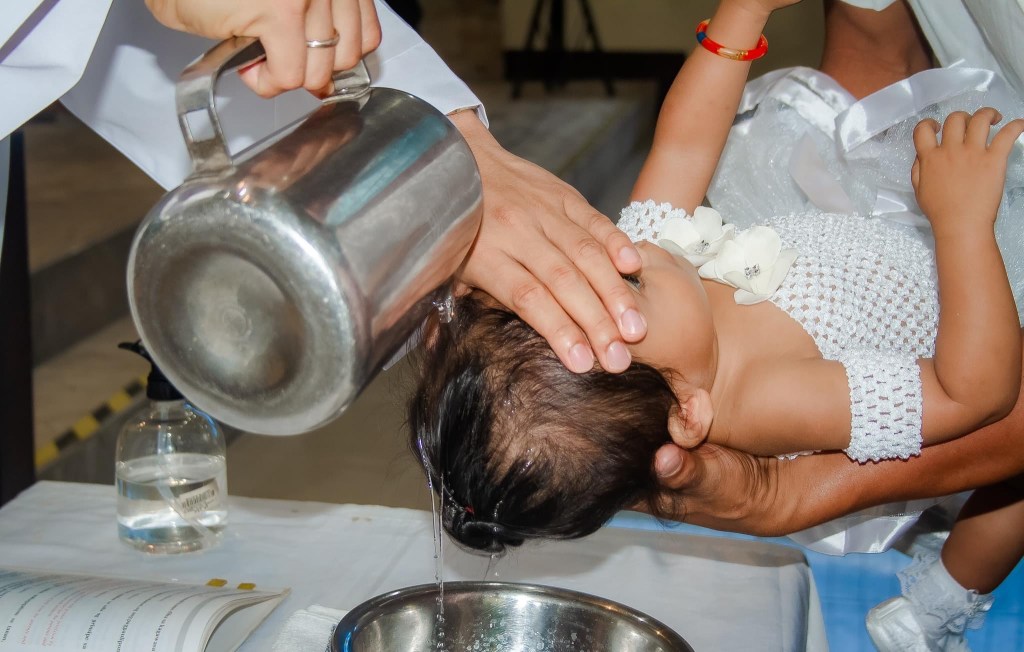
In particular, baptism is the first sacrament where we become united with Christ and with the Church – no other sacrament can be received without it. Matthew 28:19 says, “Go therefore and make disciples of all the nations, baptizing them in the name of the Father and the Son and the Holy Spirit.”
A priest performs this rite through the use of water, which is the matter, by immersion or by pouring, and while using the formula, “I baptize you in the name of the Father and of the Son and of the Holy Spirit.”
This is the first step in our relationship with God. This is the only sacrament also that can be administered by anybody as long as he has the right intention and using the matter and the formula, but only in case of emergency.
Remember also that it is in baptism that God claims us as His children. The name of God is imprinted in us. That is why, baptism gives us an “indelible mark.” Meaning, once we are baptized, the grace can never and will never be taken away from us, because we have been claimed and marked as God’s beloved.
Hence, baptism is indeed love made visible because we are being assured of God’s faithful presence in our life, as a parent, as a friend and a companion in our journey. That is why, just as we remember our birthday every year, it is also good to become aware of the day of our baptism and celebrate it, because on that day we were formally received in the Church and had been claimed as God’s child.
Sacrament of Confirmation
Peace be with you! Receive the Holy Spirit. – This is the greeting of the Risen Christ to the terrified Apostles. At Pentecost, each of the disciples of both men and women received the Holy Spirit with an image of fire resting on their head. And filled with the Holy Spirit, they begin to speak though in different languages but understood each other and by the people around them.
with Most Rev. Edwin dela Peña, MSP, DD, Prelate of the Prelature of Marawi
Indeed, this is the sacrament where the candidate receives the gift of the Holy Spirit and continues their journey with Christ. During Confirmation, the candidate is anointed on the forehead with holy chrism (oil made of olive oil mixed with some perfume or aromatic oil) by a bishop or by a priest delegated by the bishop and saying the formula, “be sealed with the gift of the Holy Spirit.”
Since baptism typically happens when we were babies, confirmation allows an older child to acknowledge that he or she still wants to continue the journey with God and grow in relationship with Him. Like the baptism, confirmation also leaves an “indelible sign” in us, meaning, it is something that cannot be repeated and will never be taken away from us.
Remember, it was the promise of Christ given to the apostles that as he was going back to the Father, he assured them that He will be sending an ADVOCATE also called as PARACLETE – the comforter, consoler or helper. In this way, the sacrament of confirmation is indeed love made visible because it is a testament that God comes to comfort us, to console us and help us. And since we have received it, be assured, be confident because the Holy Spirit is with you to give comfort, consolation and help especially when you need it the most. Thus, as a response also, be a helper to others, be the sacrament of God that gives comfort and consolation to those who are in pain, confused and suffering.
Sacrament of the Holy Eucharist
Eucharist means thanksgiving. This is when Christ’s body and blood are offered and then received by us in the form of bread and wine. Matthew 26:26-28 says, “While they were eating, Jesus took some bread, and after a blessing, He broke it and gave it to the disciples, and said, “Take, eat; this is My body.” And when He had taken a cup and given thanks, He gave it to them, saying, “Drink from it, all of you; for this is My blood of the covenant, which is poured out for many for forgiveness of sins.”
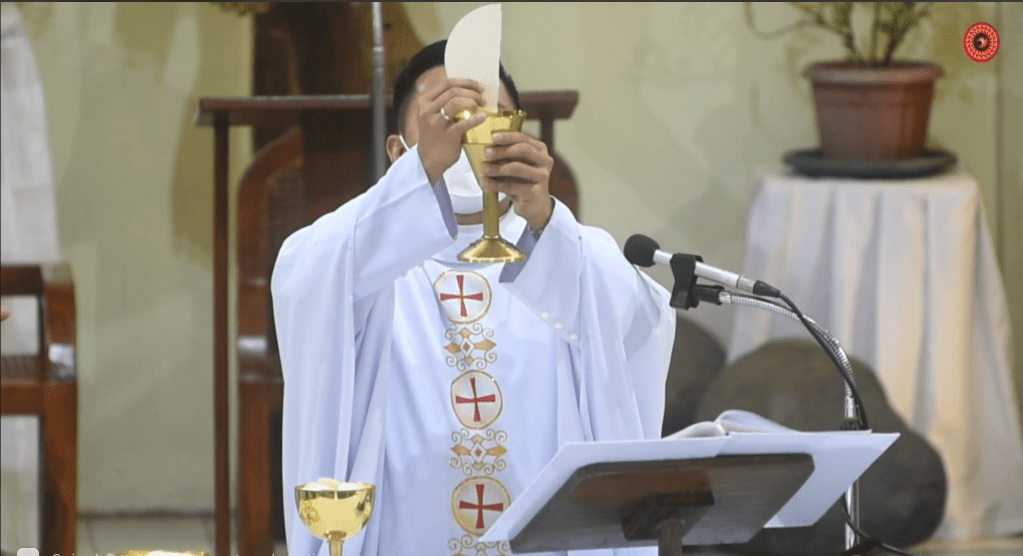
Now the priest, through the words of consecration, blesses and administers the Holy Communion during every mass to remind followers that they are one with Christ. Food and drink nourishes our bodies ‒- Christ’s blood and body being shared to us nourishes us.
Moreover, this sacrament reminds us of this wonder of being grateful and of sharing. This tells us that when we become grateful of the gifts that we have no matter how small that could be, we also become generous. Thus, the bread and wine turning into true body and blood of Jesus is not done out of “magic.” This happens really, because of the act of thanksgiving of Jesus and his willingness to share his very self to us. Jesus is grateful of the love of the Father and so he gives himself to us as his concrete action of loving us. And the Lord does it every time we celebrate the Mass. Indeed, this is love made visible.
The eucharist that we celebrate and receive calls us now towards sharing. And to be able to share the body and blood of Jesus means that we become one with him or that we actually become him, becoming the Jesus of today!
That’s why, during the consecration, before raising the chalice, the priest remembers what Jesus said, “Do this in memory of me!” I find this very powerful because this is also the only sacrament that Jesus said explicitly, do this to remember me. Every time we celebrate the eucharist, it is not just a thing of remembering a distant past, but making the memory of Jesus alive again today.
Thus, “To remember Jesus means to become part of Jesus.” To know that Jesus is with us and within each of us is to be able to find peace and serenity, satisfaction and contentment despite the troubles, problems, concerns and hungers, wants and other desires that we have. When we become more conscious of the meaning of being one with Jesus and having Jesus in us, we also become, hopefully, Jesus for others.
This is the implication when we participate in the memory of the Eucharist because the Eucharist is not supposed to stay only inside the church building. When we go out from Church, it also means that we carry in us the Eucharist, we carry in us Jesus. The Eucharist continues when we step out from the Church and go back to our homes or to your workplaces and meet people.
This is the call of the sacrament of the eucharist, “to be the Jesus today! Consciously, with gratefulness in our hearts and with generosity bring Jesus with us because he is truly in us!” express the Jesus in you, through your words and deeds as you meet people today and tomorrow, as you talk and dine with your friends and family, and as you encounter strangers and the needy on the street and in the places where you go. In this way, we also become the sacrament of God’s love made visible.
The Sacraments of Healing
The two sacraments of healing are penance/reconciliation and anointing the sick. Penance allows for spiritual healing and absolution for people who have distanced themselves from God through sin. Anointing the sick allows for both physical and spiritual healing. When one falls seriously ill, a minister anoints them and prays over them, calling on Christ for strength and the gift of healing.
The Sacrament of Penance or Confession or Reconciliation
Personally, I actually like its other name, “RECONCILIATION.” Penance focuses of the punishment of sin while reconciliation focuses on the grace received in this sacrament.
During the sacrament of reconciliation, a person confesses his/her sins to God through me (as the priest). I forgive the confessed sins through God’s mercy, and I order the penitent to live a more faithful life through the gift of absolution.
Confession is essential in cultivating and fruitfully living out the word of God. We are not perfect people, even if we try to be. Many times we fail and commit sin and that’s why it is good that we are always conscious of our sinful nature in order to counter healthily those tendencies. By acknowledging our sins, we also acknowledge our need of God. This helps us have a stronger relationship with God and better awareness of ourselves and of our needs and desires.
As a priest, I find this sacrament really powerful because as it brings healing to a soul wounded by sin, this sacrament also heals a heart wounded and bruised by painful, shameful and traumatic experiences of the past. Despite being young in the ministry, I have heard confessions that brought shocks and terrifying chills. I have heard sins confessed that I thought only in movies could happen, yet, those happened and to be able to console a penitent through God’s gift of mercy and peace, that gave me the joy of being a priest. It is not easy to sit down and listen to the sins of the people. Being in the confessional for two hours is physically and emotional draining. However, the joy and peace that I always see and feel in the person after the granting of absolution would always paint a smile on my face.
Hence, this powerful sacrament of reconciliation is indeed love made visible because God reminds us always that His mercy and gift of peace is never far from us. God through this sacrament tells us that God is always willing and waiting to embrace us. Hopefully, each of us too, who received such embrace of forgiveness becomes a witness of God to others by being compassionate to sinners like us, by forgiving those who have hurt us and embracing those who feel unworthy like us.
The Sacrament of Anointing of the Sick
This sacrament is the most misunderstood and even taken for granted by many. Before, this was called as the “Extreme Unction” meaning the “Final Anointing.” This sacrament was usually administered to those who are about to die. That’s why, even until now, people think that this sacrament of anointing of the sick is only for those who are at point of death. People refuse to receive this sacrament because of the fear of dying.
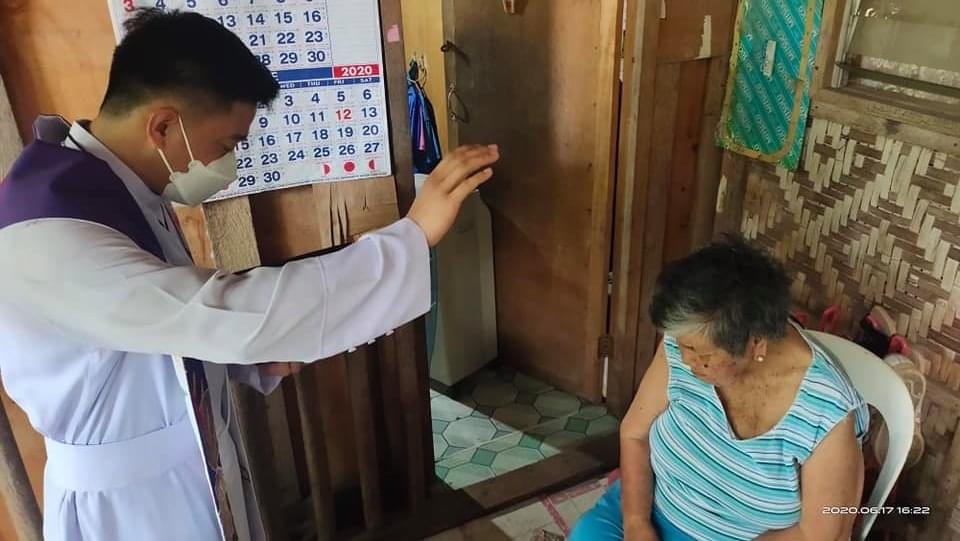
Anyhow, this sacrament now is bestowed upon those who are ill or suffering, which then are united with Christ’s passion. Anointing the forehead and hands of the person with “oil for the infirm” or “oil for the sick” while a priest is saying the words or the formula of the sacrament. (on the forehead: Through this holy anointing, may the Lord in his love and mercy, help you with the grace of the Holy Spirit. Amen; the hands: May the Lord who frees you from sin, save you and raise you up. Amen.)
This special blessing is a way to make the sick receive the strength in his body and spirit and be more connected with God in both mind and body.
In the letter of James 5:14, it says, “Is anyone among you sick? Let him call for the elders of the church, and let them pray over him, anointing him with oil in the name of the Lord.”
And since, people only asked for it when most of them are dying, this is the sacrament also that as a priest, I would always hold myself not to cry. Though there were times that I was not able to hold my tears and administered it with broken words in between my silent sobbing. Indeed, it is just painful and terrifying as well to witness a person who struggles for his/her last breath on earth while those who love him/her gathering around. Despite the pain, but I always feel blessed to have been part of those moments where the reality of death is being embraced.
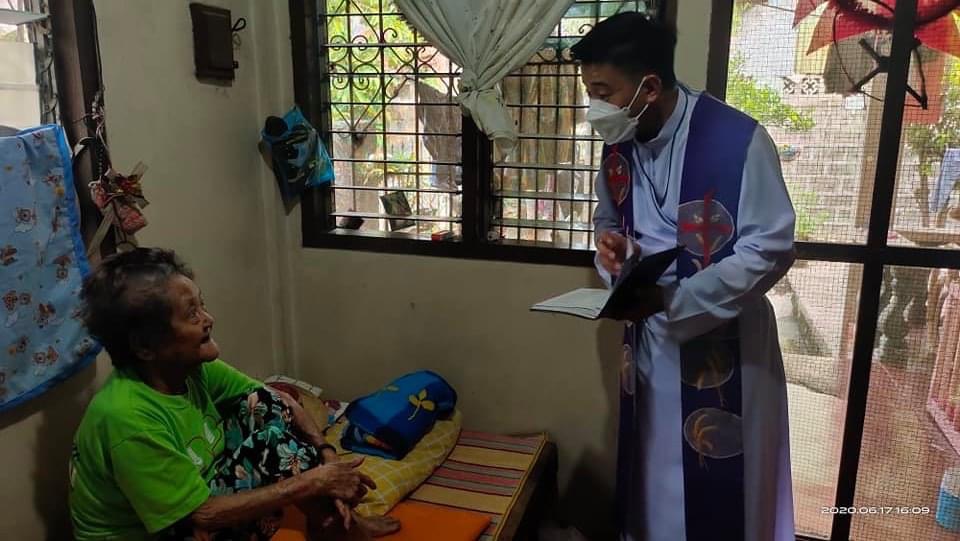
Moreover, many times also I have witnessed how those were sick recovered after receiving the sacrament. It is a joy for me to witness that wonder and miracle of simple healing stories. Indeed, this sacrament of the anointing of the sick is love made visible because God continues to touch us to bring healing to our tired, wounded and sick body as well as our spirit. Thus, with this sacrament, this calls us too to become God’s healing touch to others. Yes, touch others to bring healing and comfort. Touch them with your presence of assurance and friendship especially those who are ill at the moment. Let them know that you remember them, that you are praying with them and for them. In this way, we too become the sacrament of love made visible.
The Sacraments of Service
Through marriage and the holy orders also called Ordination, couples and the clergy promise to serve and build up the church community.
The Sacrament ofMarriage
Marriage is a very important sacrament. Just think, without it, no one will come for baptism and confirmation. Nobody will gather to celebrate the Eucharist. And since no one is there, nobody will get sick and ask for the anointing. And most of all, no one will be ordained to the priesthood to celebrate the sacraments. 🙂
The commitment, love and union of husband and wife extends and bears fruit. This is how a wife and a husband enrich the church, and that is through procreation. The openness of the couple to God’s grace of children, makes the church more alive. Without their commitment and openness to the grace of having children, there will be no people, no community at all.
Of course, we also know that there are many couples who were not gifted with children because of some physical difficulty, yet, this does not stop them from becoming fruitful in the community. All couples are called to build up the church in ways they can.
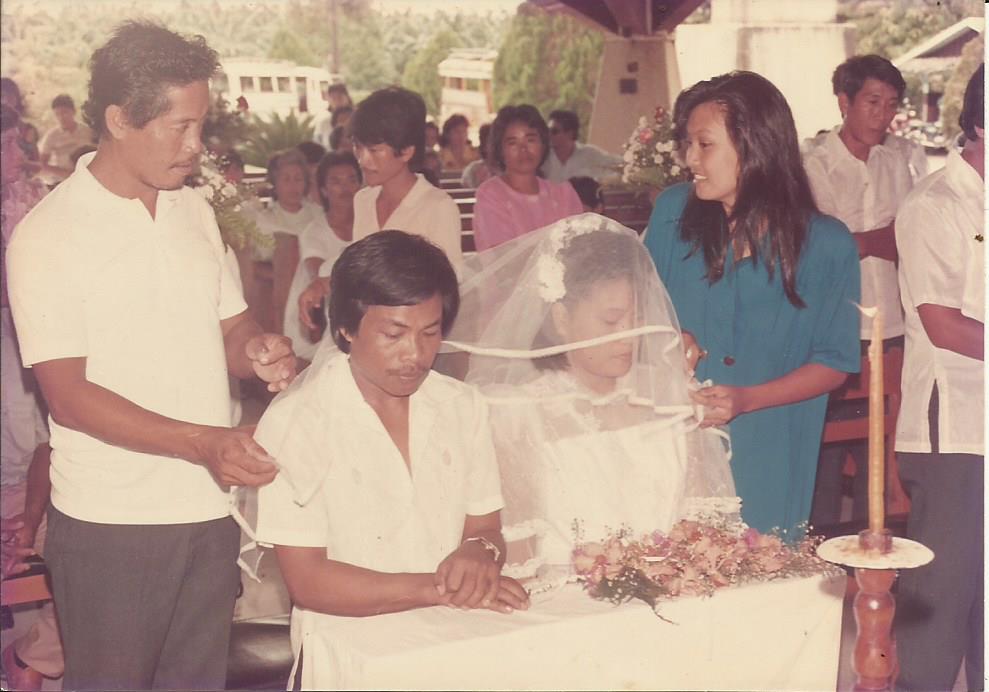
Thus, through marriage, a couple promises to help build each other up, in faith, serve each other and the church and be faithful to each other until death. Through this lifelong commitment, this also mirrors God’s faithfulness in us. Remember, our covenant with God is always in the image of marriage. As God makes a covenant with us (I AM your God and you are my people), God expresses concretely His faithful and abiding love for us.
For those who are called to this life, prepare yourself and always make yourself welcoming to God’s invitation. Faithfulness is a key element in this life. For those who are not called for this life, let those married couples around you like your parents especially as well as your friends, be your inspiration in your other relationships. They may not be perfect but let them know also that you pray for them and supportive for their lifelong commitment.
Thus, this sacrament, indeed, is love made visible in many ways. God reminds us of his faithfulness in our covenant through this sacrament. The couple mirrors the love of Christ with the Church and the Church’s response of love to Christ. Hopefully, each of us too will become sacrament of love made visible by being faithful and committed to our relationships, with our friends, families and communities.
The Sacrament of Holy Orders/Ordination
This sacrament is for those who choose and called to become a priest, bishop or deacon. This is the composition of the clergy. Through ordination, they are able to perform sacred duties and serve the church community. This is a sacrament that everyone cannot partake in, rather it is reserved to those who are called by God chosen among God’s people.
Yet, this does not mean that this kind of life is higher than being married. As married couples have their own mission and call in the Church, we priests, deacons and bishops also have our own calling and mission in the Church.
Like the baptism and confirmation, ordination also leaves an “indelible mark.” As there are three different categories among us clergy, there are also different rites for ordination for deacons, priests and bishops.
Without going deeper into these three categories, all three share a common ground and that is the gift of ordination is received through the imposition of hands and the words of the consecratory prayer that also differs from one another.
Moreover, we priests and the bishops, receive the mission and the capacity to act in the person of Christ the Head, while the deacons are empowered to serve the people of God in the ministries of the liturgy, in preaching and in charity.
Thus, through this sacrament, God reminds us too of His continuing presence in the world, in our communities and in our hearts through the gift of person whom God has called and chosen to be his image in the Church. This indeed, is a sacrament of love made visible.
For all of you who do not share in this vocation, I would like to ask you humbly to pray for me, to pray for us clergy. Pray not just for our perseverance, not just for our good health; pray that we may always be faithful as God is faithful to us, pray that our commitment is for the church and not for our personal comfort and enrichment, pray that we always find joy in this life because there are many of us who are sad and lonely.
Hopefully, you have found this empowering and life-giving.






 A DOSE OF GOD TODAY