Tag: Catholic

  • The Cathedra: A Symbol of Service and Self-Giving

    The Cathedra: A Symbol of Service and Self-Giving

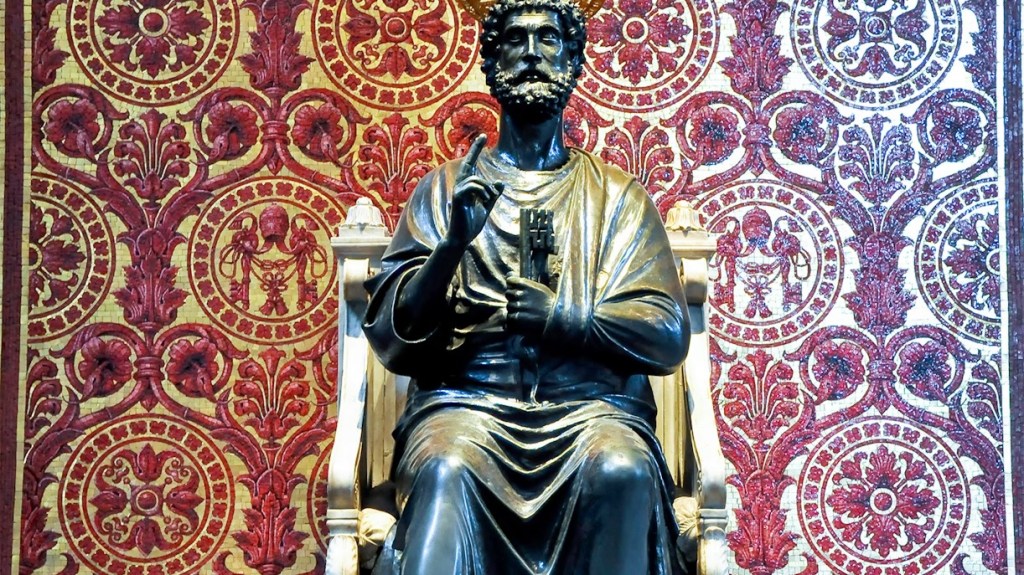
    February 22, 2025 – Feast of the Chair of St. Peter, Apostle

    Click here for the readings (https://bible.usccb.org/bible/readings/022225.cfm)

    Today we celebrate the Feast of the Chair of St. Peter. Yes, what is being revered is the “chair” or the cathedra of our first Pope. This feast reminds us of the importance of our unity with the Bishop of Rome, now under the leadership of His Holiness, Pope Francis.


    As Catholics, let us pray for our Pope, to always remember him in our prayer. When he was elected as Pope, the first thing he asked to the people was to pray for him. Let us continue that for he indeed needs our constant prayer so that Christ may always give him the strength and that the Holy Spirit may guide him and bless him with wisdom.


    These past few days, Pope Francis has been in difficult times due to his illness. Countless Catholics are praying, and we join this multitude of people, praying for the healing and recovery of Pope Francis. Yet, even in this struggle, the Pope remains a beacon of hope for us. He constantly reminds and shows us that “faith is not about fear but love; that leadership is not about power but service.”[1]


    Being true to the mission given to Peter, Pope Francis continues what has been entrusted to the “cathedra of the Pope,” that it is of service and self-giving.


    As members of the One, Holy, Catholic and Apostolic Church, let us also support the Pope’s initiatives and his pronouncements in building closer relationships with all our brothers and sisters across the globe that is in showing mercy and compassion. This is very evident in the ministry of Pope Francis and how he expressed his closeness with all the suffering.

    Moreover, for us individually, the story of Simon’s confession to Jesus posts a call and a reminder to us. Let us closely look a bit into the attitude of Simon Peter and his relationship with Jesus.


    Simon was quite hesitant, doubtful and sometimes inconsistent. In the scriptures we find him having doubts as he was invited by Jesus to walk on water. He was also called by Jesus to get behind him because he refused to believe that Jesus should undergo suffering. He ran and hid himself when Jesus was arrested and even denied him three times when he was questioned by the people.


    However, what was redeeming for Simon was his “openness” to the invitations of God to him. This explains to us why he immediately followed the Lord when his brother Andrew brought him to Jesus. This openness of Simon allowed him to intimately recognize and know Jesus in the most profound way. That is why, when Jesus asked his disciples about their perception of him, it was Simon who was so bold in professing that Jesus is the “Christ, the Son of the Living God.”


    Simon did not depend on others perception of Jesus who might have thought that Jesus was merely a teacher or some sort of magician. Simon had a personal encounter with Jesus and recognized the Lord.

    Though Simon was an imperfect disciple but God revealed himself to him because Simon was open to God. And thus, Jesus called him to follow and to serve him in the best way he could serve God. This attitude of Simon earned him to be named by Jesus as Kephas or the Rock, a responsibility given to him by the Lord to lead the Church.


    This is the message for us now. God knows that each of us is not perfect, yet, our God calls each of us to accept certain tasks in our community. We don’t have to be perfect to be a youth minister, an animator or coordinator, or lector, server, or religious or priest etc. Remember, God never called perfect people. God choose the wounded, the broken, the weak, the fearful and doubtful, the imperfect ones to become His friends and fellow workers.

     Like Peter, God sustains us, he strengthens us and transforms us into mature, faithful and joyful persons if we are also open to God’s call and invitations. We may learn how to open ourselves to God and to be more accepting of his invitations to each of us. Jesus assures us that when we put our trust and faith in him, he will never leave us and will always be with us. That is his promise. Hinaut pa.


    [1] Niere, Harvey Malmis, (https://www.facebook.com/share/p/15hJv2J3VT/).
  • AM I READY TO LISTEN?

    AM I READY TO LISTEN?

    Rizza Mae O. Malalay, an RYM-Youth Minister, RYM Key Representative to FNYO, and a Missionera.

    This is a reflection by Rizza Mae after the recent online National Conference of Youth Ministers 2022 and her Mission Experiences in Tacloban and Oslob, Cebu.

    In one of our recollections with the Eastern Visayan Redemptorist Mission Team, we were asked to reflect upon “What is God trying to say to you now?” I shared within the group that I do not usually listen to God. Aside from I do not understand His ways, it was also really hard for me to identify His voice. So, thinking about it again, “Am I now, ready to listen?

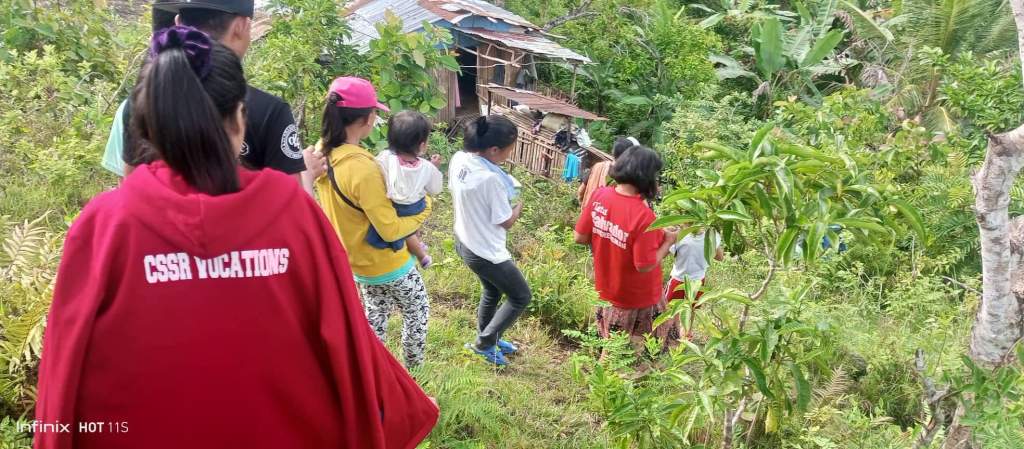
    I joined the National Conference of Youth Ministers for three consecutive Saturdays online. It was so challenging for me because at the same time I was in Oslob helping the Cebu Redemptorist Urban Mission Team in their mission engagement there, in the most possible way that I could.

    photo from CBCP-ECY Facebook Page

    We rushed there after our mission engagement in Tacloban city. I said that it was challenging because there was no mobile signal in the area. But they have Piso Wi-Fis and Wi-Fi routers though the internet would fluctuate. I was anxious during the Conference because we had activities in between. It was too hard for me to put my focus in the meeting but then I have realized that certain things happened for a reason. I can choose to not attend the NCYM for so many reasons or attend the NCYM despite all the challenges that I have encountered. However, I chose the latter. Right at that moment it occurred to me that God wanted me to learn to turn my challenges into opportunities. That this will definitely help me grow as a youth minister.

    In our calling to be a Synodal Church, in participation, in communion and in mission. I have seen that though a lot of people are with us walking in synodality, there are still more people who are left behind.  After the NCYM 2022, I have reflected that me as a youth minister, should;

    *Live and share my faith.

    The easiest way to make people believe in you is on how you live your life. In one of our synchronous workshops that I was in, the facilitator talked about that the Basic Ecclesial Community (BEC) is being considered by many especially young people as a mere activity and not as a way of life, which I totally agree. Looking back, asking myself if I am really doing something? Am I living and sharing my faith? After leaving the mission area, it warms my heart hearing that the youth continues to serve the church, not just them but the community also is continuing what we have started. If we experience God and see God in others, then we should allow others also to experience God in us.

    *Reach-out and build relationship.

    I figured out that we can reach out and not build relationship. However, we cannot build relationship without reaching out. I understand that the Youth in our church, they come and go. But, deep in me I cannot understand why they would go. Of course aside from those who have valid reasons for leaving. I had encountered young ones who left the ministry and changed their religion. I had also conservations with youth members who told me that they described their leaders as flying and they were crawling. This is a description of having youth leaders who do not know what to do and so members have to figuratively crawl in order to make the ministry alive. It saddened me to hear all of those because as youth ministers we are called to become God’s instruments of helping the young to grow according to God’s purpose, that we are all in one mission and God is alive in us. If we would only always reach out and build relationship with everyone, I do believe that it would be easier for us to bring Christ in the lives of the so many young people today.

    *Have a listening heart

    For me as a youth minister I should listen to understand and not listen to respond. It is true that the younger generation now is quite different from mine as a millennial, so I am called to listen more. I have my own biases and I easily judged the younger generation. I can sense that every time we will plan-out an activity, they become more concerned if the senior members would approved it or not or Father will be okay with it or not. They tend to be more anxious to the point that they do not want to do more because of fear of being rejected. It feels like I also somehow kill their creativity to create new things, to explore, to learn, to dream and to learn new concepts or point of view because I myself would limit them. I should be the one to encourage them to serve and to make them realize that their unique contributions are welcomed by the Christian Community.

    Indeed, I will really find it hard to listen if I am not willing to listen. And it is hard for me to identify God’s voice if I am disturbed. In life, I realized that at some point I need pauses and breaks to understand what God is trying to say to me. God definitely resides in us and we can only hear Him by listening through our hearts.

    I pray that I may not harden my heart if I hear God’s voice and may I continue finding comfort in His love as a young person and as a youth minister.

    photo from CBCP-ECY Facebook Page
  • The Unforgivable Sin

    The Unforgivable Sin

    October 15, 2022 – Saturday of the 28th Week in Ordinary Time

    Click here for the readings (https://bible.usccb.org/bible/readings/101522.cfm)

    Do we find ourselves living in the past and unaware of our present? We might find ourselves trapped in this situation when we cannot let go of our past. Our thoughts and actions as well as our perspectives in life may have been tightly tied up by our painful memories or by our glorious past. When this becomes our way of life, we also become detached from the realities of the present. Our perception of the reality in the present may be distorted because we also see and recognize what was in the past. Our relationships could suffer greatly because we will fail to appreciate and affirm what we have at present. It will surely be a challenge also to correct our misconceptions and wrong practices and unhealthy coping at the present because we are so disconnected with reality.

    This is the image of finding ourselves in the difficult situation of moving forward, finding healing, peace and freedom. Indeed, when we are trapped in the cycle of the past we might believe that that is all. This is how a psychological trauma can affect a person as well.

    The invitation for change and transformation, for healing and forgiveness can be quite difficult because such actions can be interpreted as a threat to what we have been used to. This was how Jesus’ call for conversion was actually treated by those in power and influence in the Jewish society. The Pharisees and the lawyers were threatened by the call of Jesus and so they too denied him and did not recognize the presence of God in Jesus.

    For Jesus, this reaction can still be forgiven. However, when one blasphemes the Holy Spirit, then, this one is beyond forgiveness. What does it really mean? Blasphemy against the Holy Spirit is a conscious denial or rejection of the presence of God. This is a willful act of rejecting God. This is not even about the belief in the non-existence of God. In fact, the person believes in the presence of God but deliberately denies God’s presence and also of God’s grace.

    The person chooses to be separated and alienated from the grace of God, thus, becoming indifferent towards God. This surely is blasphemy because such decision and action worship not God but something or someone else. It cannot be forgiven because the person does not ask or welcome the grace of forgiveness. Total indifference, indeed! However, being separated from the grace of God will only bring us into oblivion and endless misery, to meaninglessness and hopelessness.

    The Lord does not want this for us. God’s desire for us is to totally embrace the gift of the Divine Presence so that we may be able to live life in its fullness. This is where we find the meaning in the words of Paul in his letter to the Ephesians, he said,

    I pray that the God of our Lord Jesus Christ, the Father of glory, may give you a spirit of wisdom and revelation as you come to know him, so that with the eyes of your heart enlightened, you may know what is the hope to which he has called you…”

    The Lord invites us today to allow him to reach out to us and to allow our hearts be touched by his grace. The Holy Spirit continuously works and moves in our life, we may become more receptive then of the movements and invitations of Spirit in our individual lives and in our community, to bring transformation and healing, forgiveness, freedom and peace. Kabay pa.

  • To live in the Spirit

    To live in the Spirit

    October 12, 2022 – Wednesday of the 28th Week in Ordinary Time

    Click here for the readings (https://bible.usccb.org/bible/readings/101222.cfm)

    How do I assess my inner-self? Am I dictated by my inmost desires and needs that I tend to be selfish? Am I driven by my passions and impulses to the point that I judge and act thoughtlessly? Am I easily overwhelmed by my emotions that I react harshly and violently towards others? Or do I take the time to gather my thoughts and reflect on what to act and say despite the external tensions? Am I aware of my wants and prioritizes my needs? Am I also socially aware and connected with people around me and of their needs? Do I find balance in all aspects of my life?

    These questions bring us into a greater awareness of ourselves that also invite us to be grounded and become a balanced person, in a holistic sense. We believe that God’s desire for us is indeed, to live life fully and become the person God wants us to become. Hence, anything that dampens our spirit, that suppresses our person to grow and become mature, hampers also our freedom and of our capacity to give life to others.

    This is something we have also heard in today’s readings. In fact, Jesus strongly pointed out the malicious attitudes of the Pharisees and scholars of the law for being so narcissistic yet unconcerned and unmoved of the difficulties of the people around them.

    Moreover, St. Paul in his letter to the Galatians reminded the people of the tendency to be driven and be overwhelmed by the “works of the flesh” that basically are self-centered, malicious and of evil origin. Paul’s warning to the people was his concern for them that they may not to be drowned by human passions and desires. These will only lead them to emptiness and separation from the grace of God.

    Thus, Paul reminded them “to live in the Spirit and to follow the Spirit” because only then that we shall be able to embrace true satisfaction and contentment. Consequently, the Spirit gives joy, peace, love, patience, kindness, generosity, faithfulness, gentleness and self-control. These are the graces that we should seek and that we need.

    This is the invitation for us today and that is to live in the Spirit and to follow the Spirit. Hence, we pray for that grace that we may become more open and welcoming to the movements of the Holy Spirit in us, on the many promptings and invitations for us. Let us allow the Spirit to challenge us and inspire us especially when we are overwhelmed by our human desires and selfish tendencies. Kabay pa.

  • Believing is Loving

    Believing is Loving

    October 11, 2022 – Tuesday of the 28th Week in Ordinary Time

    Click here for the readings (https://bible.usccb.org/bible/readings/101122.cfm)

    When we have people or even just one person at our back who truly believes in us, who believes the goodness in us, the talents we have, the potentials and the gifts we have, this gives us the confidence and the presence we need in life. That is why, we take comfort when we are being cheered up and our back tapped to continue and to hold on in realizing our dreams and hopes because their presence become our strength. And we understand such actions of people at our back as their way of loving us. Yes, in believing in us they also express their love for us. That cheers us and lightens the load that we may be carrying in life.

    Believing in a person is our way of loving. Being present with a loved one is our way of expressing our affection. How much more when we express this to God? When our way of loving is our way of believing? When loving is an act of faith?

    This is the very invitation we have today revealed in our readings. St. Paul wrote his letter to the Galatians to remind them not to be too overwhelmed with the letters of the law and of human practices. Christ has set us free and that’s what is important.

    The Galatians were actually somehow influenced by Jewish Christians to submit themselves to Jewish beliefs and practices particularly of the tradition of circumcision. Paul was quite indignant in this because the Jewish-Christians claimed that the non-Jewish Christians like the Galatians must become Jews first before becoming a Christian. However, such practice was not important at all. Whether circumcised or not, what is essential is faith that works through love.

    Faith in the Risen Christ is not about being faithful to human practices. This is what Jesus also pointed out in today’s Gospel. The Pharisee who invited him for a meal observed Jesus if he would follow the Jewish customs. But, Jesus did not. Jesus did that to make a point to the Pharisee and bring out his warning and invitation. Therefore, Jesus confronted the Pharisee’s over-emphasis to trivial things but with a heart filled with plunder and evil.

    Thus, a person’s over-emphasis on trivial matters, on particular religious customs and practices can become a cover up of a heart that is filled with malice and evil. This is the warning of Jesus and warning to us all.

    We are called to confront such tendency and recover that faith, indeed, works through love and not over trivial matters. Our belief in the Lord is best expressed when we show concrete actions of loving, of taking care of each other, of showing concern and understanding and in having the capacity to welcome others despite our differences. Certainly, believing is loving. Faith works through love, as St. Paul reminds us. May our faith, then, grow more in that area of loving. Kabay pa.