Tag: bible

  • We are digital natives. We are missionaries.

    We are digital natives. We are missionaries.

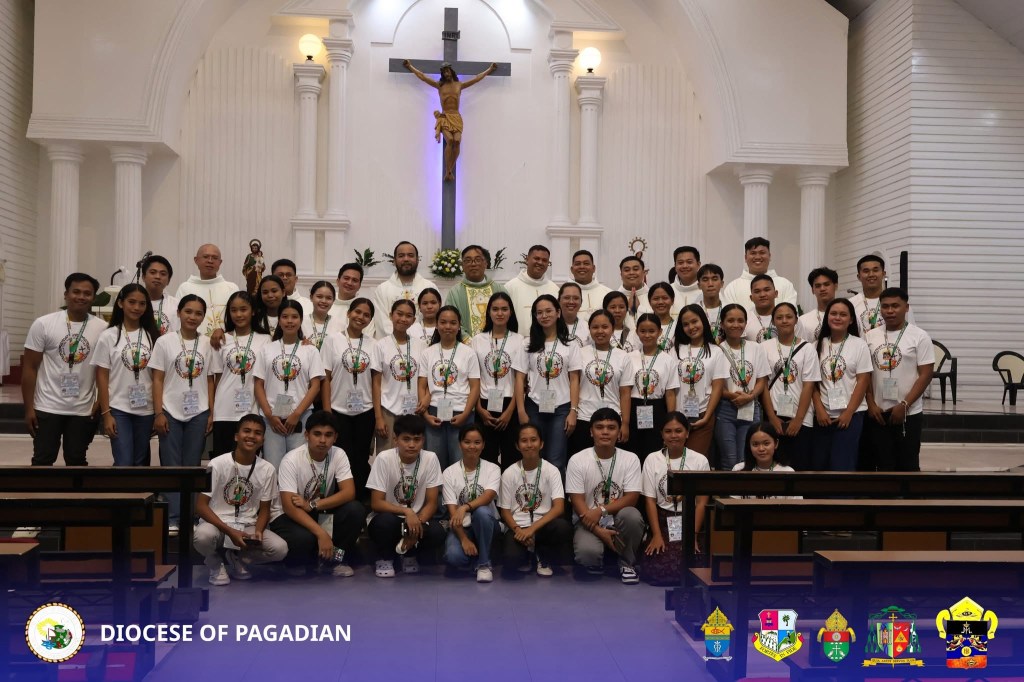
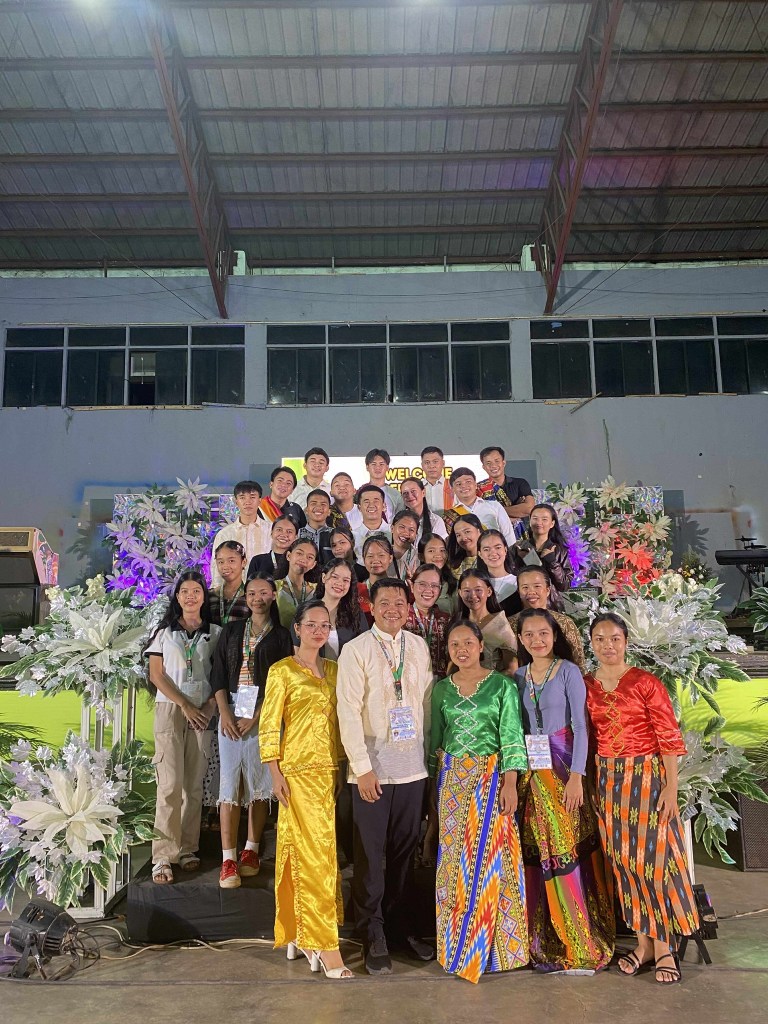
    The 9th DOPIM Youth Congress, guided by the theme ‘Rejoice in Hope, Digital Natives!’, empowers young people to embrace their identity as modern missionaries, using digital platforms not just for connection but as spaces of evangelization, joy, and hope rooted in Christ.”

    It has been a profound experience—a pilgrimage of faith, community, and mission that calls each of us, especially as digital natives, to live our identity as joyful missionaries in a rapidly changing world.

    The theme “Rejoice in Hope, Digital Natives!” is both a challenge and an invitation. In a time when the digital world can often be a source of anxiety, isolation, or distraction, this theme reminds us that hope is not outdated—it is alive, dynamic, and very much needed in our generation. “Hope is not optimism, it is something beyond indifferent” – Rev. Ryan Jill H. Joaquin. We are not only consumers of digital content, but proclaimers of Good News in this digital age.

    Throughout the congress, I have been inspired by stories of mission and sacrifice, and by the reminder that our faith is not something passive. Faith is a living fire meant to be shared. As a digital native, I realize that the internet is not just a tool for connection. It is a mission field. In every click, every post, every message, we have the opportunity to reflect Christ’s light, to encourage others, and to witness to our faith.

    In addition, Rev. Ryan Jill H. Joaquin and Rev. Fr. Jomil C. Baring, CSsR, highlighted how technology affects our lives. In fact, Social Media and Artificial Intelligence (AI) both having advantages and disadvantages as to how we use and apply in our everyday living.

    The event helped me realize too that being a missionary today is not about going to faraway lands. It’s about being present where people are, and increasingly, that place is online. Through a hopeful heart, a joyful witness, and wise engagement with digital tools, we can transform timelines, chats, and even algorithms into pathways of grace.

    In this rapidly changing world, our mission is clear: to rejoice in hope, even in the digital space. We are not just users of technology, we are bearers of light in the digital age. Let us post with purpose, share with sincerity, and allow our faith to animate every part of our online presence.

    We are digital natives. We are missionaries. And we rejoice in hope, for Christ is alive—even in the cloud.

    This journey has strengthened my sense of purpose. I am reminded that I am not too young or too small to make an impact. With my skills, my creativity, and my faith, I am called to be a missionary of hope—online and offline.

    In the end, the 9th DOPIM  Youth Congress is not just something we attend—it’s something we carry forward. We are the Church in mission. We are the Church online. And we rejoice in hope, because Christ is with us, even in the digital age.

    A reflection by Richly Allin King B. Vildosola. “King” is an active Youth Leader of the Prelature Youth Ministry. Currently, he is a first year college student majoring Bachelor of Science in Accountancy in Pagadian City.

  • BY BEING TOGETHER, NOT IN SUFFERING ALONE

    BY BEING TOGETHER, NOT IN SUFFERING ALONE

    September 15, 2025 – Monday, Memorial of the Our Lady of Sorrow

    Click here for the readings (https://bible.usccb.org/bible/readings/091525.cfm)

    Having a wisdom tooth growing can completely destroy your day. Having a headache can affect your daily activities. When pain becomes unbearable, it affects our daily routine and activities, our work and studies, even our relationships.

    Who would really want to be in pain? As much as possible, we avoid pain. The medical science developed pain relievers to take away gradually or instantly the aches and pains we feel in our body. Anesthesiologists are there to assist patients who will undergo surgery through the use of anesthesia.

    Yet, no remedy can be given to a heart that is bruised, abused, betrayed or humiliated. No doctor can inject anesthesia to a deep emotional pain. It can even linger and worsen with time. Emotional pain can also be unbearable and life-threatening when it is faced alone.

    On this memorial of Mary, the Our Lady of Sorrows, we are reminded that pain in itself is part of life. No one can escape pain. All of us will meet pain in different degrees and aspects of life.

    However, this celebration reminds us of the wonder and comfort in facing and enduring pain when we are with others.

    Remember the prophecy of the old Simeon as told to us in the Gospel of Luke. When the baby Jesus was brought by the couple, Joseph and Mary to the Temple, Simeon had caught sight of Light, the salvation of the world. However, this child will be responsible for the rise and fall of many in Israel. This means that the humble, the poor and those marginalized by the society will rise into the heart of God. Yet, he will be the fall of the powerful, the self-righteous and the corrupt.

    Hence, the infant will be a contradiction, a counter-culture. The child will bring change and transformation to all that can be painful to those who seek comfort and power, titles and riches.

    Being a contradiction to the world, the child himself will undergo a terrible pain of betrayal, of dying and death. With this, no amount of pain reliever or anesthesia can aid. The same amount of pain was also given to the mother of the child, to Mary.

    Simeon prophesied, “you yourself a sword will pierce.” Mary’s heart will be pierced with so much sorrow and pain. Every blow to Jesus, Mary also endured. Every insult to her Son, Mary also suffered. Every agony of Jesus, Mary also agonized.

    However, despite all these gruesome and painful events in the life of Mary, she did not hide. Mary did not escape into dreams and denial. Mary bravely confronted pain by being with her Son, by journeying with him until his last breath.

    Unlike the men disciples of Jesus who hid and ran away from pain, Mary bravely faced that sword piercing her heart. She suffered in silence along with her Son.

    Yet, what made Mary, Our Lady of Sorrows to have the courage?It was love that sustained Mary. It was her deep concern and affection to the person whom she loved that moved her to be with Jesus and to also suffer with him. To the suffering Son on the cross, the presence of her mother was the best comfort he had. The presence of Mary was more powerful than any pain reliever and any amount of anesthesia to the dying Son.

    Although, Mary’s presence did not take away the pain, but her presence made Jesus to be more resolved that there is hope in humanity.Mary’s presence on the cross is a testament to God that humanity can show so much concern and love to a suffering person. That’s why pain is never the end, suffering is never the last thing in life. The glory of the resurrection of Jesus tells us of that freedom from pain and promise of joy.

    We can attain that, by being together, not suffering alone. It is in allowing others to suffer with us or by allowing ourselves to suffer with others. We realize then, to live life will bring pain in us, but it will also bear fruit joy because of being with our friends and loved ones.

    On this feast of Mary, we are also called to be an instrument like Mary, to give comfort to those who are suffering and in pain in many ways, physically, spiritually or emotionally. Let our presence be an assurance of friendship, of love and concern to those who are in terrible pain this moment. For those who are in pain also, never retreat, deny or hide the pain or escape from pain, but allow others to journey with you. Allow those who love you to hold you and to embrace you. They may not take away the pain you are feeling, but let their presence, friendship and love be your source of comfort and confidence in your painful moments. Hinaut pa.

  • DOPIMories

    DOPIMories

    Sometimes, the greatest lessons come not from classrooms, but from the encounters with people. When I joined the DOPIM Youth Congress in Molave, Zamboanga, I expected a simple gathering like talks, activities, and meeting new people. But what I did not expect was how the experience would eventually reshape the way I see life, faith, and relationships. In just a few days, I have realized a lot of things. One of those, is how God speaks through experiences, through strangers, and through the moments we often take for granted.

    At first, I was nervous about going to our foster homes. I kept asking myself, “What if strict ang tagbalay? What if makasab-an mi didto?” Yet, when I met Nanay Magno, all my fears disappeared. She welcomed me and Ate Tina warmly, fed us dinner, and even told us that she considered us like her own granddaughters in our very first meeting. That simple act of kindness moved me deeply. She made me understand that hospitality is not only about offering food or a place to stay, it is about making someone feel valued and loved. I also realized that to welcome others is to mirror Christ’s love. Just as how Nanay Magno made us feel at home in her own home.

    Another special part of the congress was meeting other youth from different dioceses. I really enjoyed this because we got to know each other and joined in different activities like the recreational activities and open fora. It made me appreciate the importance of making friends, share experiences, and support one another in our faith. It also reminded me that we are not alone in our journey, since many others are walking the same path with us.

    The next lesson I learned, was about the responsibility of the youth. During the talks of Rev. Ryan Jill H. Joaquin and Rev. Fr. Jomil C. Baring CSsR, I learned how powerful technology can influence our lives. Social media and Artificial Intelligence can either build us or break us. They can form our values or deform them. As young people, we are the natives of this digital world. It is very easy to fall into the traps of algorithms, trends, and even toxic comparisons. But as youth, we must be responsible users, to use social media as a tool for good, to speak truth instead of spreading hate, and to evangelize others.

    One line that struck me the most, was from the homily of Bishop Edwin, “As youth, be the best of what you can be, and be the best of what the world expects you to be.” For me, this is more than just a statement, it is a mission. I realized that we, the youth, are not just the future. We are also the present. Our words, choices, and actions online and offline can influence people around us.

    The last lesson was to cherish our elders. Staying with Nanay Magno reminded me of my own lola back home. I noticed how Nanay faithfully prayed the rosary, even though her family at home did not join her. Both me and Ate Tina felt her loneliness. It made me wonder how many times Nanay hoped that her family would also join her, because even I cannot deny that there is a different kind of happiness when we pray to God with our love ones.

    Perhaps, somewhere around the world, many of our elders suffer quietly, even when surrounded by loved ones. They give. They serve. They pray. But sometimes it felt like they are left unnoticed. It made me see how important it is to take better care of them, to listen to their stories, to value them, and to love them while we still can. Because tomorrow is never promised and we do not know what happens next.

    Looking back, DOPIM gathering was more than just a congress. It was a chance to meet God through people, talks, sharing and experiences. At first, I felt scared and unsure, but I went back with peace and direction. I learned that hospitality means opening my heart, responsibility means being a good example in today’s digital world, and valuing elders means showing love before it’s too late.

    Joining the 9th DOPIM Youth Congress was such an eye opener for me and specially for us youth. They brought us closer to God, to ourselves, and to others. They reminded us that as youth, we are not there just to participate, but to understand how to live with purpose, responsibility, and love.

    A reflection of the 9th DOPIM Youth Congress by Maria Jorean D. Traya from Agusan del Sur. Jorean is a first year Biology student at Mindanao State University – Main Campus, Marawi City. She is a member of the Catholic Students’ Organization of the Blessed Virgin Mary Chaplainy, MSU Main, Marawi City.

  • PUT ON THE NEW SELF         

    PUT ON THE NEW SELF         

    September 10, 2025 – Wednesday of the 23rd Week in Ordinary Time

    Click here for the readings (https://bible.usccb.org/bible/readings/091025.cfm)

    Are we really convinced and feel truly blessed when we are poor and powerless? Are we truly happy when we are indeed hungry, weeping and hurting? Do we rejoice for being hated and rejected by others because we live honestly and justly?

    It would truly be difficult to reconcile these contrasting life situations. A student once shared to me a conversation she had with her grandmother. In her innocence and directness expressed her anguish, “Lola, why are we so poor? It is so tiring to be poor. Will we ever be rich?” The Lola responded to her, “It’s okay. God loves and favors the poor.”

    To a child who does not have the perks and privileges of being born in an affluent family would surely begin to question the difficult life of being poor and underprivileged. Such response is surely difficult to understand.

    Yet, the response of her Lola is certainly the message of the Gospel. God loves and favors the poor. This is the reason why the Beatitude of Jesus begins with “Blessed are you who are poor, for the Kingdom of God is yours.” This first line of the Beatitude already set the favor of God upon those who are less fortunate such as the hungry, those who are weeping and hurting, and those who are rejected and insulted because of living the faith truly.

    From the perspective of wealth, comfort and power, God seemed to be unfair because the Lord favors the other. Yet, it is not that way. The Lord favors the poor and the weak because of what lies in the heart. Only when we are weak, poor, and powerless that the heart recognizes the need for God. The heart truly longs for God’s presence.

    However, when the heart becomes rich, powerful and comfortable, it also becomes self-contained, arrogant and indifferent. Hence, the heart does not need God and even rejects God. No wonder why Jesus’ words bring warning to those who have become rich, powerful and comfortable, “woe to you.”

    In a country plagued by plunder and corruption, dishonesty in public works and blatant abuse of power and public office, Jesus’ warning echoes to every generation. Woe to you for you will go hungry! Woe to you for you will grieve and weep!

    Yet, Paul calls us in his Letter to the Colossians, “Put to death the parts that are earthly; immorality, impurity, passion, evil desire and greed…as well as anger, fury, malice, slander,
    and obscene language.
    All of these make us separate from God and from others. What Paul calls us is to “put on a new self” in Christ and leave the old self that corrupts.

    Putting this new self in Christ, as St. Paul tells us, requires us to “seek what is above, where Christ is seated at the right hand of God.” To seek what is above is to seek the Kingdom of God. And now we realize that the Kingdom of God rests in those hearts that embraces humility and vulnerability, in recognizing our poverty and powerlessness.

    This is how God favors the poor and the week, those weeping and hurting because the Lord is already in their hearts. This calls us to indeed “rejoice and leap for joy.” Hinaut pa.

  • WALK IN HIM, ROOTED IN HIM, BUILT UPON HIM

    WALK IN HIM, ROOTED IN HIM, BUILT UPON HIM

    September 9, 2025 – Tuesday 23rd Week in Ordinary Time

    Click here for the readings (https://bible.usccb.org/bible/readings/090925.cfm)

    How do we make decisions? What are the things that we consider as we choose what is essential in life?

    Paul in his Letter to the Colossians, reminded the people not to be persuaded by selfish desires, “seductive philosophy” and perhaps appealing ideologies at that time. People might be tempted on impulse to choose and make decisions in their life based on what was popular and appealing to many.

    Hence, Paul said, “as you received Christ Jesus the Lord, walk in him, rooted in him and built upon him and established in the faith as you were taught, abounding in thanksgiving.”

    To walk in him, be rooted in him and be built upon him is to make Jesus Christ at the very center of our life, of the decisions we make and the things that we do and we want to be. This is how we share in the fullness of Jesus’s humanity and divinity.

    And the Gospel today gives us the invitation on how we will be able to remain in Jesus and share in the fullness of God’s grace. This is shown himself by Jesus, and that is through the basics of prayer. As Jesus chose his closest disciples whom he also called apostles, Jesus spent a night in prayer to his Father in heaven.

    Jesus prayed. In fact, he spent the whole night in prayer as an act of communion with the Father, He listened to his Father’s voice speaking in him. This means that he did not choose the 12 just out of compulsion or feelings. Jesus chose each of them according to God’s desire. This was how Jesus also saw something in each of them, including Judas. Jesus saw something very good in Judas. Yet, Judas failed to see and recognize what the Lord had seen in him. As a result, Judas betrayed Jesus because Judas failed to recognize God in the person of Jesus.

    The Gospel also tells us that the people who were gathered around Jesus sought to touch the Lord. They realized that by mere touching him, they were healed. Power came forth from Jesus himself. And Jesus allowed them to touch him. This expressed God’s desire that indeed we are welcomed to share in the fullness of God’s grace that brings healing and gives life.

    We too are invited to touch God. Because it is in touching God that we will become grounded in whatever decision we will make. In touching the presence of Jesus in our sacraments, in the scriptures and in the lives of others that we too are able to walk with Jesus. When we become more aware of God in our life, then, the more we become sensitive to God’s desire for us and be rooted in Jesus. So, let us seek God’s desire in prayer and be built upon him. Hinaut pa.