Tag: bible

  • Loud Faith in our Small Voices

    Loud Faith in our Small Voices

    A Reflection by Robert Agustin, a Youth Minister

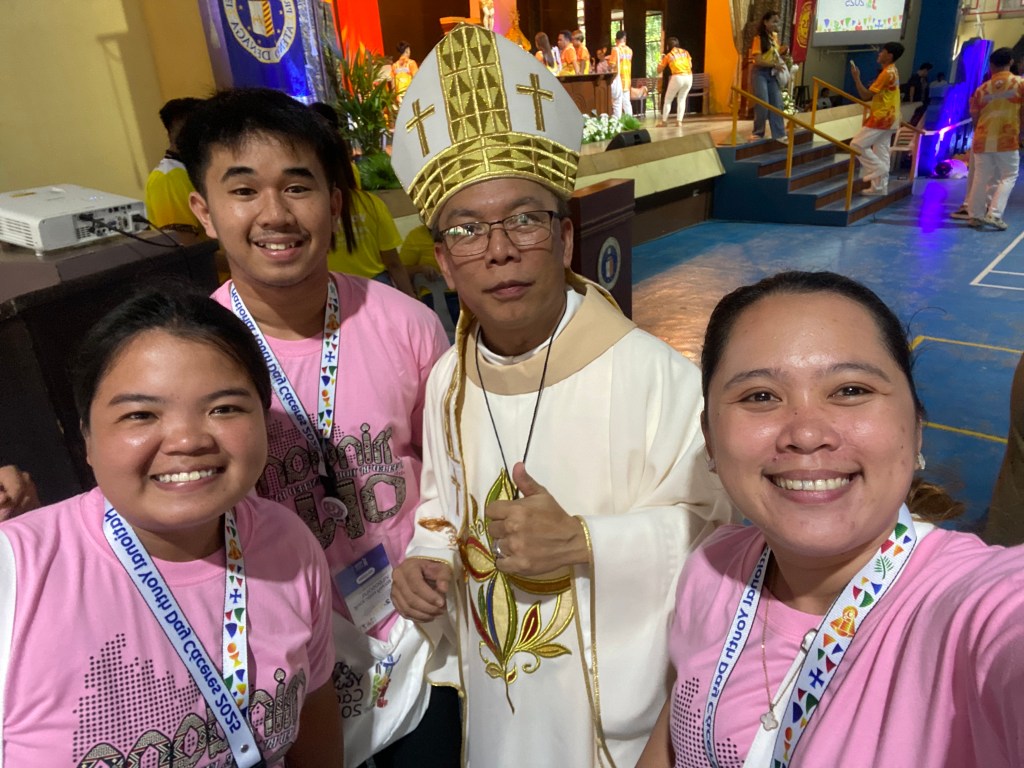
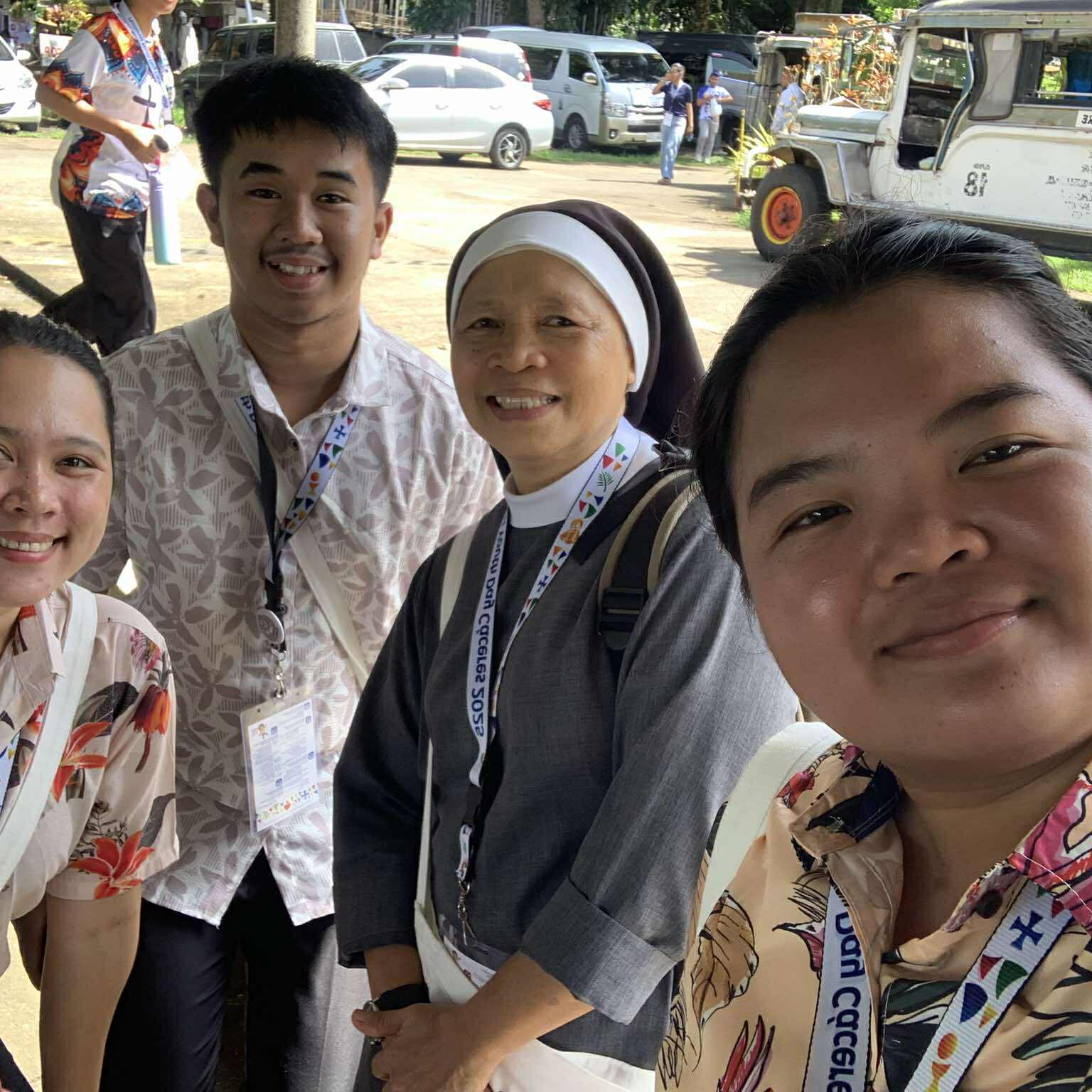
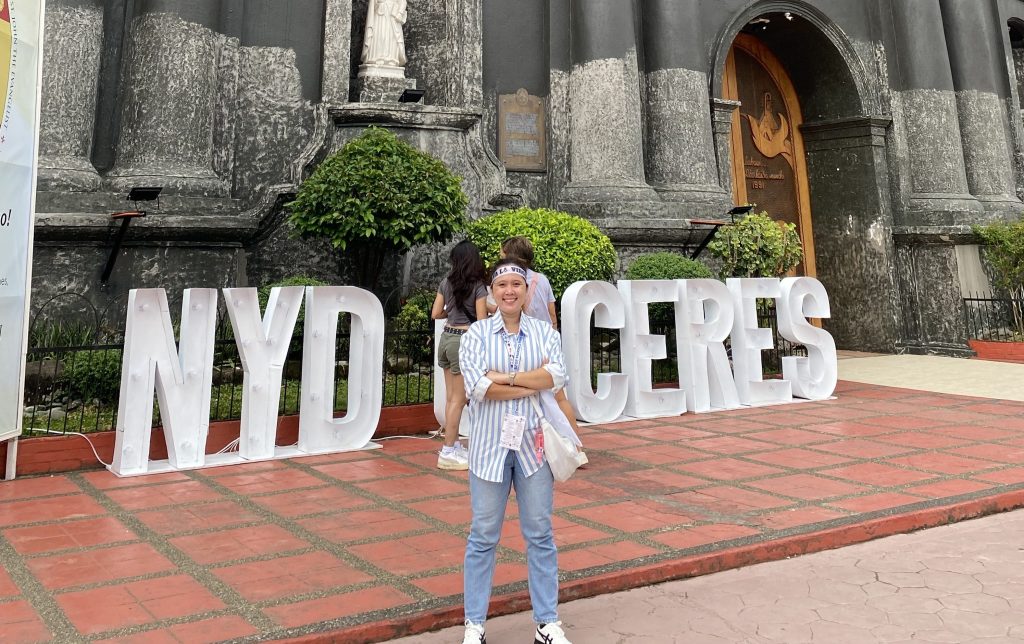
    As I have stepped on the ground of NYD Caceres 2025, I was overwhelmed with the vibrant faces and voices of the different people from all over the country. I was fascinated with their energy and their excitement. What made it more impressive was the great number of their delegates. There were many of them some have even reached hundreds. They were loud, energetic and lively as groups. From there, I began to question myself, what could we contribute? We were only six, negligible, minute and small. We even don’t have big banners, no loud cheers, booms and massive grand entrance. This was in this time where I started feeling the least amidst a well-represented groups of delegates.

    At the beginning of our sessions and activities, I witnessed how animated other delegates were. Each of them showed and gave their extraordinary best in their cheers, claps and performances. At first, I couldn’t help but to feel left out- maybe because of the reason that there were only few of us, with weaker and quieter voice compared to others. There were also moments where we became silent and simply observing while we were also participating in the different group activities. We didn’t talk that much because we were so shy. However, in our stillness we were able to realize something good. Being not the loudest is also sacred because in our quiet moments, we listen, we pray, we understand and we feel God’s presence. 

    Being a minority is no longer new to us. As Youth participants from a Muslim dominated area, we have been taught how to jive, mingle, adapt and respect our surroundings. Handling this kind of situation during NYD was a lot easier since the people around us were no different, they were our companions in the mission.

    One bright side of being few is that, we fully see and feel each other’s importance. Our small number allowed us to stay closer from each other. We got to know each other’s stories, backgrounds and even our good and bad personalities. It also allowed us to lean on each other’s comfort and support whenever things may go wrong. I felt that I’m not alone in the ministry. It seems like I have found new brothers and sisters who are willing to share their strength with me and help me in times of my weaknesses. Indeed, our small number gave us way to be more present in each other’s life. 

    We may be few in number but the love of God is huge. We feel so much love from our “katoods” or friends from the other dioceses. They had never overlooked us but instead they lifted us up, cheer for us, and accompanied us. Things had changed along the way, I began to understand that we were their neither to see the difference in number nor just to impress everyone. We were there to appreciate our similarities, to share our common hope and to live in faith in Christ. We were there to help carry each other’s cross, celebrate each other’s life and to be the living testament of God’s Love, mercy and compassion. 

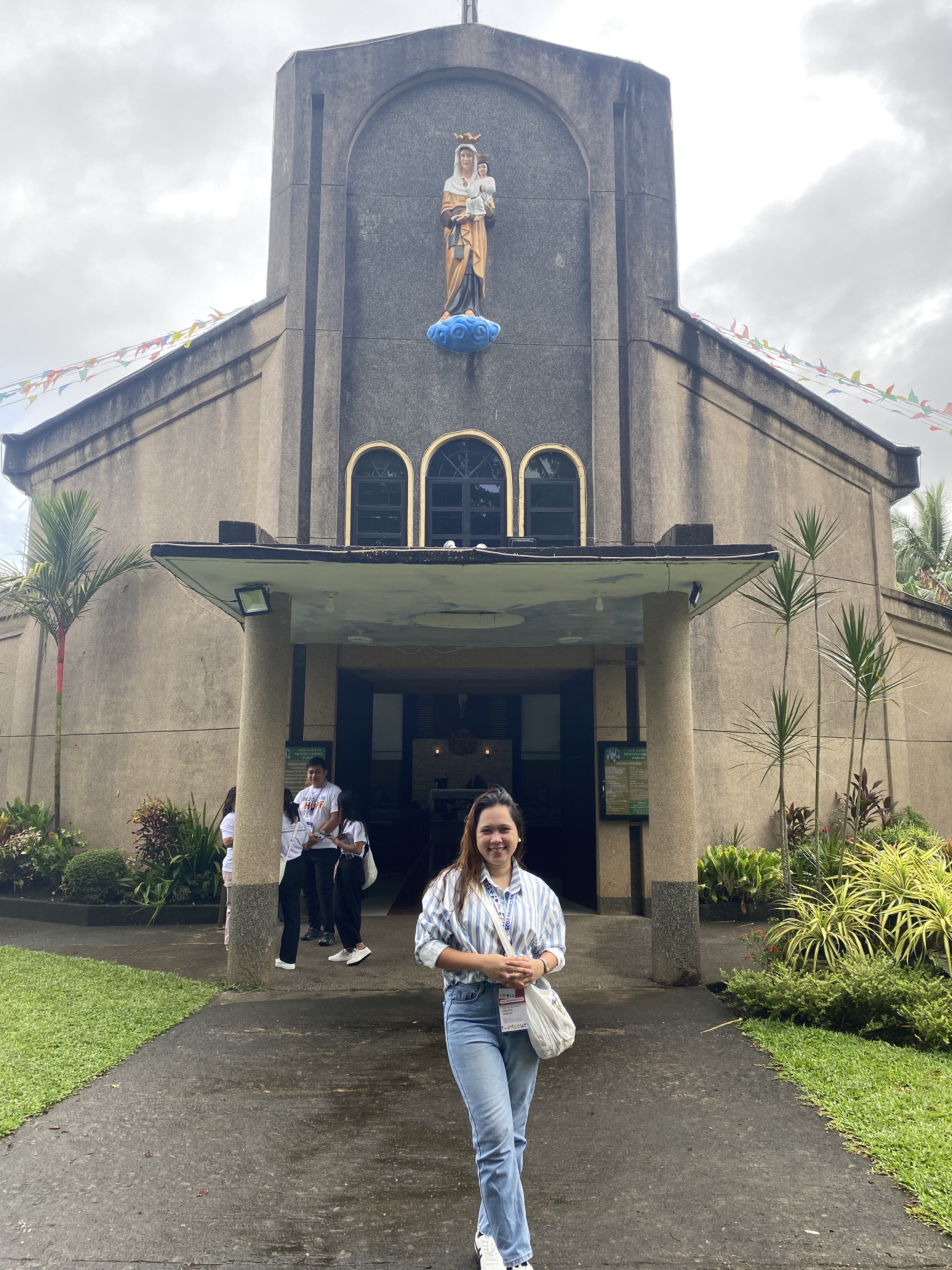
    As I left NYD 2025, I carried more than just photos, smiles and snapshots . I carried a deep sense of peace and hope towards the Filipino Youth. I was reminded that we don’t have to be many in order to see our strength. The strength is within us, within our hearts and mind. No matter how small we are, we can still do great things because God is with us. We don’t need to be at the center to shine. There is  beauty in being the least – a beauty rooted in humility like a child, in simplicity like our Lord Jesus Christ, and in the quiet confidence that we are exactly where we are meant to be.

  • How do I pray? What do I pray?  

    How do I pray? What do I pray?  

    June 19, 2025 – Thursday 11th Week in Ordinary Time

    Click here for the readings (https://bible.usccb.org/bible/readings/061925.cfm)

    (Homily on the Fourth Day of Novena for the Feast of Our Mother of Perpetual Help at St. Clement’s Church, Iloilo City)

    How do I pray? What do I pray? What are those that I usually ask from the Lord?

    Others pray spontaneously asking what they want and desire for themselves and for their loved ones. Others are more comfortable using the memorized prayers as forms of meditation and deeper reflection on the mystery of God.

    We too ask many things from the Lord. Others would even have a litany of requests and petitions. And as a form of asking God’s favor we even observe number of days of prayers. This is what we do in observing our Novenas, or the 9 days Misa de Gallo during December, believing that God would grant ones desires and prayers.

    In fact, this is what we do now as we prepare for the Feast of Mary, Our Mother of Perpetual Help, on this Fourth Day.

    Thus, it would be good to take a look in the way we do our prayers, to look at the intentions we make in our prayers. Let us also include the kind consciousness that we have in our prayers. This is something important because this will help us to evaluate our personal relationship with God and with others.

    Now, in today’s Gospel Jesus reminds his disciples of the importance of prayer and also of the importance of the kind of consciousness in their prayers.

    Jesus mentioned about the way the pagans prayed. These pagans loved to use many words in their prayers. They believed that it was in that way that they would be able to get the attention of their gods and goddesses. At the same time, pagans believed it would appease them. They believed that these gods and goddesses were unforgiving, impulsive and frightening. These pagans babbled in their prayers in order to get the favor from these difficult and terrifying deities.

    However, Jesus reminds his disciples that our God is not like that. God is not vengeful. God is not inconsistent. Our God is not terrifying. The Lord God is rather loving and forgiving. Hence, to use many words would not be necessary because God knows the desires of our heart.

    Moreover, as Jesus reminds his disciples, he also tells us now that our prayers are not meant to appease an angry and hateful god or to gain favor from a terrifying god. This also means that the content of our prayers should not be self-centered. To pray is not just to ask something for ourselves but also for others. That is why Jesus taught us his own prayer. His prayer expressed intimacy and closeness with the Father in heaven.

    This prayer starts with these two words, OUR FATHER. It did not say “My Father” and not even “Their Father.” This tells us that when we pray, we always remember others. We are always together as people, as brothers and sisters. Our relationship with God though can be personal but it is also founded in our community. That is why it starts with “OUR” because this includes you and me and everyone else.

    This prayer (Our Father/Lord’s Prayer) tells us that God is a Father. God relates to us personally. God is not somewhere out there who is so far away from us but God is here with us. God as our Father is, indeed, loving and faithful to us. This is evident at how the Lord God continually revealed the divine presence to us throughout our human history. This means also that we are invited to seek God’s will and God’s desire not just our desire. Most of the time, when we pray we only think of what we want and desire but we forget to ask, what is it that you desire for me Lord?

    It invites us also to become dependent on Him because He is generous and faithful to us. To pray, “give us this day our daily bread,” means to be more focused of today, this day not tomorrow because tomorrow has not yet come. Certainly, we can be too anxious of what will happen tomorrow that it will prevent us to see what is more important today. Thus, Jesus invites us to be more contented of today and to ask sustenance enough for today.

    Notice also that in this prayer, it recognizes our sinfulness and need to be forgiven. It is necessary that we become humble and ask God’s mercy because this is the way that we make ourselves open to God’s grace. When we remain arrogant and unrepentant of our sins, then we prevent God to transform us and prevent others to come into our life.

    And finally, we make ourselves aware that there is also the presence of the evil one around us. The evil one constantly tempts us to move away from God. The evil one wants us to cut our relationship from the Lord, thus from the grace of God.

    The evil will always try allure us to think that it is better not to pray and that we do not need God. The evil will seduce us to think that we can do everything in our power without the help of God and that we do no need to think of others but ourselves alone. Be careful then of these temptations.

    With all of these, we find Mary, Our Mother of Perpetual Help as our guide and best example. Mary showed us how such intimacy with the Lord makes us open and welcoming to the will of God. Mary showed us that to completely trust in the Lord is to make our heart full of love. Mary also showed us that by choosing the Lord, evil has no power over us.

    Being made aware of the consciousness behind the Lord’s Prayer and of Mary’s presence in our life and faith, we too shall grow in our relationship with God and with one another. We may become less self-centered and self-serving and rather become self-giving and life-giving as God desires us to be in our homes and communities. Kabay pa.

  • I pray for you   

    I pray for you   

    June 3, 2025 – Tuesday of the 7th Week of Easter

    Click here for the readings (https://bible.usccb.org/bible/readings/060325.cfm)

    Please pray for me. Please include my loved one in your prayers.” Most likely, we often hear such request from our friends or people we know. Praying for others is also our life as Christians. It is such a comfort that we are being remembered in the thoughts and prayers of others.

    This is true in occasions when we celebrate special moments of our life. When we are sick, leave home for studies or work, take challenging endeavors (such as taking board exams), we ask for prayers. When we too struggle with our problems and concerns, or starting a new chapter of our life, we ask the people we know to pray for us. We ask for the grace of strength and wisdom, courage and faith.

    In today’s Gospel, we have been reminded of the intimacy Jesus shared with his Father. This is shown on how Jesus prayed to the Father in heaven. Jesus expressed his confidence and at the same time the unity he has with the Father. What Jesus has is also of the Father’s. The glory of Jesus is also the glory of the Father. The suffering and pain of Jesus at his passion and even death is also shared by the Father.

    All of these have been revealed to Jesus’ friends who were also so dear to the Father. Jesus treasures this friendship. “I pray for them,” were the words of Jesus as his assurance to his friends of his abiding presence.

    As a friend, Jesus manifests his concern by expressing his desire to pray for them. Jesus is about to leave physically in the world. Yet, it does not mean that Jesus will abandon this friends.

    Jesus prays for his friends. Jesus prays for us. This means that Jesus remembers us, his friends in his thoughts. Being in the thought of Jesus also means that Jesus makes his person ever present in the life of his friends. It is a promise of faithfulness and of constant presence of God.

    Today, Jesus reminds us too, that he prays for us and with us. We can say this confidently, “Jesus prays with me because he remembers me and he is with me.”

    Being remembered by Jesus in his prayers, let us make an effort too, to pray for others today. Pray for your friends. Pray for your family members. Pray for those who really need our prayers.

    Prayer makes us more conscious of others as we become one with them in their hopes, joys and suffering. In prayer, we also become more present with God as we grow in our confidence and faith in Him who has called us and loved us. Hinaut pa.

  • CHRIST’S GLocal Mission

    CHRIST’S GLocal Mission

    June 1, 2025 – Solemnity of the Ascension of the Lord

    Click here for the readings (https://bible.usccb.org/bible/readings/060125-Ascension.cfm)

    We remember that during His public ministry, Jesus summoned his disciples, gave them authority to heal every disease and sickness. He made his disciples share His authority and mission to preach the good news of salvation to all. He thus commissioned them and gave them the tasks to be preachers and evangelizers of God’s kingdom. Jesus added however, that they should start, not elsewhere, but at home. 

    Since then and until now, as followers of Christ, we share the same authority and commission with the disciples to preach and witness the reign of God’s kingdom to all in our world today. And in the same way, we are to begin in our own homes, families, communities, churches and society.

    In doing our tasks and mission as evangelizers and preachers of God’s kingdom, however there is always a tendency or even a temptation for us to blame the evil in the world on others, and to reach out to our poor brothers and sisters in need who are far-away from us.

    But as Jesus would insist, we start to live our faith and practice what we preach in our own homes, in our own neighbors, communities and in our local church. In other word, our charitable mission begins at home, for as He says: “repentance would be preached in His name to all nations (globally), beginning from Jerusalem (locally)… [since] You are witnesses of these things.”

    For who then are our neighbors? As the parable of Good Samaritan reminds us that our neighbor is the immediate person we live with, who needs our immediate attention and care. We don’t have to go out to help others outside out there. We begin then with people whom we are with – our kapatid, kasambahay, kapamilya. We start then to correct the evils and clean the sinfulness in our society within our homes before & as we deal with our wider world outside. 

    Remember it was only later, during Jesus’ ascension that the disciples where sent to all the nations of the world. After they have journeyed at home with Jesus in life, death & resurrection, at His ascension the disciples are now to share their faith to the world. Only after they have witnessed the life & resurrection of their faith in their own life at home, and during the Lord’s ascension that the disciples are able to proclaim & share their faith to us then & now.

    Same way with His disciples, as PCP II (Second Plenary Council of the Philippines) challenges us, Filipino Catholics today are to retell (to tell again & again) the Jesus’ story to ourselves (locally) so that we could tell (witness) – with authority His story to others (globally).

    Thus, in our mission to share the Good News of Christ, we are to approach Glocally, i.e. to start locally and then globally. Begin in your own homes nearby, and then… into the world, and so continue the Lord’s GLocal mission to people’s lives in today’s world. Our risen Lord has already done His part in God’s salvation. Now we are to do our part, beginning at home & into all nations in the world.

    As we celebrated today the Lord’s ascension, being called & sent to be His today’s missionaries, with Our Mother of Perpetual Help, let this be our prayer : “Lord, grant me the grace to be what You want me to be, and to do what You want me to do, not out there & later, but here & now at this very moment now & always.” 

    So May It Be. Amen.

  • Your Sorrow will Turn into Joy

    Your Sorrow will Turn into Joy

    May 30, 2025 – Friday of the Sixth Week of Easter

    Click here for the readings (https://bible.usccb.org/bible/readings/053025.cfm)

    One day, I got a call from a hospital. They asked for an anointing of the sick for a dying man in his 90’s. Honestly, I do not like going to sick calls for the dying. I may carry emotional baggage when I leave the room. Aside from the scary machines and tubes applied to the patient, it is heart-breaking to see a dying person. They are holding on to their last remaining breaths. The sorrow of the family members would creep into my heart. The grief of those who gather around the suffering patient would enter my mind. Yet, I have to appear “okay” in order to do the rites properly. It’s the way of accompanying the dying and the family in prayer.

    With this particular old man holding on to his last breathes, there was something different about him. Behind his transparent respirator, he was smiling as soon as I introduced myself to him. He was actually smiling during the whole rite while looking at me. He was fully conscious but cannot move. He was definitely in pain at that moment. He too must have been so loved by his family gathered around him. They were keeping to themselves, as much as possible their cries, as I did the rite and told him to go in peace.

    After the rite, he removed gently his respirator to tell me something. He told me with a smile (saying in the local language), “Father, thank you. I will go now.” The family members could not hide anymore their tears as they too heard those words. It was heart-breaking that I have to keep myself from breaking down in tears to assure him of my presence.

    Yet, I felt the confidence behind those words. This old man was confident that he was not alone. His loved ones were with him and the Lord was with him too. He was not afraid anymore despite the deep sorrow and pain at that very moment. He knew that after this, everything will turn into joy.

    As I left the room and bid my goodbye, the parish office received a call fifteen minutes later. The call informed me that the old man died in peace.

    This is a testimony that completely trusts in God’s presence and promise of joy. It describes a particular situation. It is a concrete human experience of struggle and confusion. There is fear and anxiety. There is also pain and sorrow. Moreover, such human experience paved the way for the Lord to intervene and bring comfort and confidence.

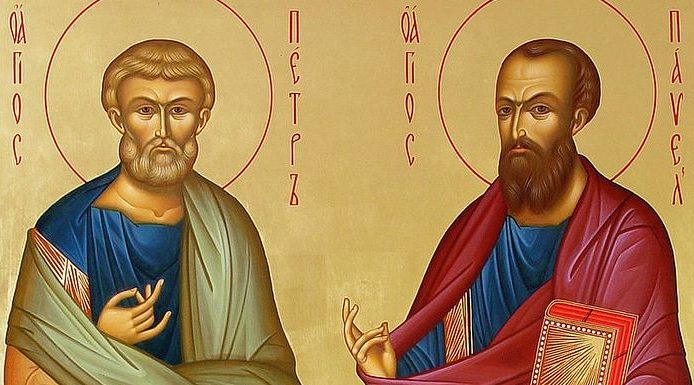
    The readings today convey this message to us. In the Acts of the Apostles, Paul was mistreated by those who refused to believe in Jesus. He was harassed and was accused wrongly to put him in prison and to death. With this kind of situation, Paul must have been so confused and afraid for his life. He must have started to question the Lord for sending him into this kind of trouble in his ministry.

    As a result, Paul’s difficult situation allowed Jesus to enter his life. Jesus assured him and gave him comfort and confidence. Jesus appeared in a vision. The Lord told Paul, “Do not be afraid, continue speaking and do not be silent. I am with you. No one will harm you.”

    In the same way, Jesus also gave this assurance to his disciples. This conversation with Jesus happened just before the Lord was betrayed and arrested in Chapter 18 in this Gospel of John. Jesus prepared his disciples for the horrible and unimaginable events to happen in the coming days.  Thus, the words of Jesus, “You will be sorrowful, but your sorrow will turn to joy,” are the Lord’s assurance to us.

    We might be struggling at this very moment. There might be some of us who experienced being humiliated, harassed, oppressed or abused. Or perhaps who are ill at the moment, or in trouble at work, lost a job or failed in business. There might be some of us too who are now having problems in relationships or in great sorrow for losing a loved one.

    With these difficult and painful human experiences, God also comes to us through this sacrament, through the scriptures, through the love and support of our family and friends and through the gift of the Holy Spirit abiding in us. God intervenes to bring comfort and confidence in us.

    Moreover, this calls us today to truly believe that God is the God of our life. Then, in that faith, we shall see the many good things we enjoy in this life. This is true despite the many difficulties and hardships we encounter. When we truly believe that God is the resurrection and the life, we begin to become true Christians. We see light in the midst of darkness. We find joy in the midst of sorrow. We capture a smile in the midst of pain. We embrace hope in the midst of impossibility. We find healing in the midst of so much sickness. Lastly, we find life in death. Hinaut pa.